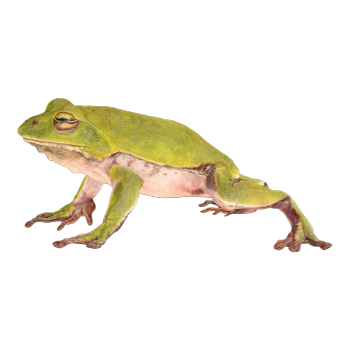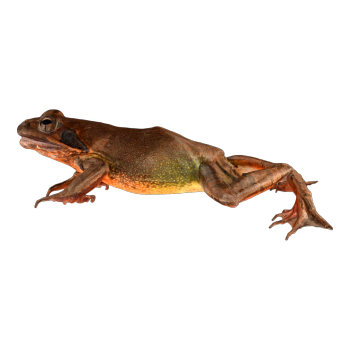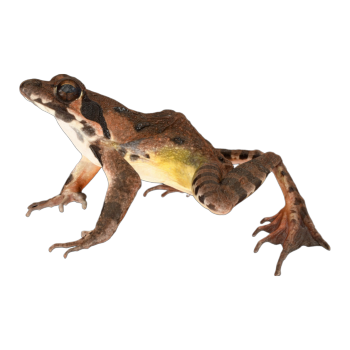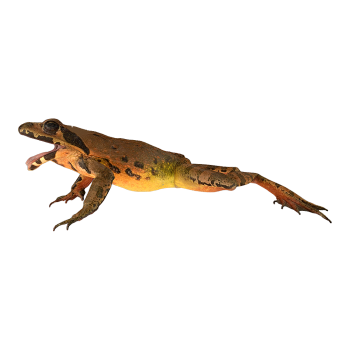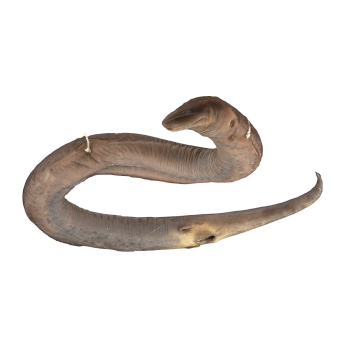
Two-toed Newt Specimen

Two-toed Newt Specimen

large salamander specimen

large salamander specimen

Large salamander, scientific name: Siren lacertina, genus Blunt-mouthed salamander, alias: lizard salamander, swamp salamander. No hind limbs, short forelimbs, mucous glands on the body surface, body length up to 90cm, smooth skin without scales, yellowish brown to dark green, with dark stripes or spots. Freshwater wetlands in southeastern North America, including Florida, Georgia, Alabama and the Mississippi River Basin. It inhabits swamps, peat bogs, streams and rice fields, usually 0.5-1.5 meters deep, and depends on humus substrates. Stamp food aquatic insect larvae (mosquitoes, mayflies), crustaceans.
Tree Frog 3D Model Animation

Tree Frog 3D Model Animation

Tree frogs are a group of small to medium-sized amphibians in the family Arodae, generally between 15 and 120mm in length. The body is mostly slender and flat, the hind limbs are longer, the ends of the fingers and toes are bulging into suckers, and there are developed webbing between the fingers and toes, which can move flexibly between the branches and even "glide" from the trees to the ground. Mainly inhabiting tropical and subtropical forests, bushes and grasses, most species are arboreal and good at living on trees. It is a nocturnal animal, usually hidden in leaves or tree holes during the day. Widely distributed, mainly in tropical and subtropical Asia, including southern and southwestern China.
American Bullfrog 3D model animation

American Bullfrog 3D model animation

The American bullfrog, commonly known as the American water frog, is a large edible frog. It is native to the region east of the Rocky Mountains of North America, north to Canada and south to northern Florida. The body length can reach 20cm and the weight exceeds 0.5kg. The back and limbs are usually greenish brown with dark brown markings. The adaptability is extremely strong and has been introduced all over the world, including China, parts of Europe, South America and other parts of Asia. It mainly inhabits in still water environments, such as ponds, lakes and swamps. It feeds on insects, small fish, other frogs, and even small mammals. It has been listed as one of the world's 100 most dangerous invasive alien species ".
Japanese giant salamander 3D animation model

Japanese giant salamander 3D animation model

The Japanese giant salamander, also known as the big mountain pepper fish, is one of the largest amphibians in the world, second only to the Chinese giant salamander. It is mainly distributed in mountainous rivers in southern Honshu Island, Shikoku and northern Kyushu, Japan, and inhabits cold, turbulent, and high-oxygen alpine freshwater streams and rivers. The body shape is flat and long. The skin is brownish with black spots, the head is broad, and the eyes are small and degenerate, almost hidden in folds of skin. It is a nocturnal animal that hides under rocks or in caves during the day and comes out at night to prey on fish, salamanders, worms, insects and snails. It has been listed in the red list of endangered species, and its protection status is near danger.
Japanese giant salamander 3D model animation glb

Japanese giant salamander 3D model animation glb

Also known as the Big Mountain Pepper Fish, it is an amphibian species belonging to the genus Giant Salamander in the family Heterobranchidae. Its body size is relatively large, second only to the Chinese giant salamander, ranking second in the world. The body length is generally around 60 centimeters and the weight is 25 kilograms; The largest individual can reach a length of 1.5 meters and weigh 45 kilograms. Mainly distributed in mountainous rivers in parts of Honshu to western Gifu, Shikoku, and Kyushu in Japan. They usually live in cold, rocky mountain freshwater streams and rivers, with a distribution range of 300 to 700 meters above sea level. I enjoy nighttime activities and use my sense of smell and touch to search for prey, including fish, salamanders, worms, insects, crayfish, and snails.
rain frog

rain frog

The rain frog is a species of amphibian belonging to the rain frog family. It is distributed in the northern part of South Korea and Mongolia, the northeastern part of China, and the southern part of the Russian Far East. The adult male body length of the rain frog is 2.6 to 4.5 centimeters, and the adult female body length is 2.6 to 4.1 centimeters. However, the average body length of adult males is 3.1 centimeters, and the average body length of adult females is 3.5 centimeters. They have disc-shaped objects on their toes for climbing. This frog is able to lay eggs or fertilize at the age of 3 or 4. They feed on various insects, mainly searching for food at dawn and dusk, but if insects approach, they also feed during the day.
Nagoya Damo Frog

Nagoya Damo Frog

The Nagoya Damo Frog, also known as the Nagoya Damo Frog in Chinese, is a species of amphibian belonging to the family Ranidae and the genus Cichlidae. It is a unique frog species in Japan, distributed from the East China Sea to the coast of the Seto Inland Sea. The Nagoya Damo frog is traditionally divided into two local forms: the Okayama form in the west and the Nagoya form in the east. These two forms differ genetically, but their distribution range is still unclear, so they have never been defined in taxonomy.
Black spotted side folded frog tadpole

Black spotted side folded frog tadpole

The Black spotted Side Fold Frog is a species of amphibian belonging to the family Ranidae and the genus Side Fold Frog. It is distributed in some areas of Russia adjacent to the Heilongjiang River Basin. It can also be seen in Xizang, Qinghai, Gansu, Sichuan, Xinjiang and other provinces and regions in China. It inhabits paddy fields, ponds, lakes and marshes in plains or hills, as well as mountainous areas below 2200 meters above sea level.
Pelophylax nigromaculata

Pelophylax nigromaculata

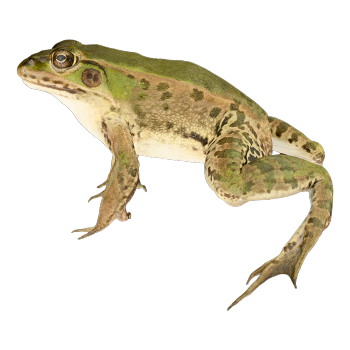
The Black spotted Side Fold Frog is a species of amphibian belonging to the family Ranidae and the genus Side Fold Frog. It is distributed in some areas of Russia adjacent to the Heilongjiang River Basin. It can also be seen in Xizang, Qinghai, Gansu, Sichuan, Xinjiang and other provinces and regions in China. It inhabits paddy fields, ponds, lakes and marshes in plains or hills, as well as mountainous areas below 2200 meters above sea level.
Japanese Flying Frog Female

Japanese Flying Frog Female

The Chinese name is Japanese flying frog, which is an animal belonging to the tree frog family. It is distributed in Honshu, Shikoku, Kyushu, and the Ryukyu Islands of Japan. This frog is named after Hermann Schlegel, a German zoologist from the 19th century. The male body length of Japanese flying frogs is 32-43 millimeters, and the female body length is 43-53 millimeters. Males have yellow white reproductive pads, darker throat color, and a pair of slit shaped glottis. Poor development of webbed fingers and toes; A truncated disc with a circular groove at the tip of the finger. The skin on the back is almost completely smooth.
Japanese Flying Frog Male

Japanese Flying Frog Male

The Chinese name is Japanese flying frog, which is an animal belonging to the tree frog family. It is distributed in Honshu, Shikoku, Kyushu, and the Ryukyu Islands of Japan. This frog is named after Hermann Schlegel, a German zoologist from the 19th century. The male body length of Japanese flying frogs is 32-43 millimeters, and the female body length is 43-53 millimeters. Males have yellow white reproductive pads, darker throat color, and a pair of slit shaped glottis. Poor development of webbed fingers and toes; A truncated disc with a circular groove at the tip of the finger. The skin on the back is almost completely smooth.
Tree frog

Tree frog

Tree frogs are members of the family Ranidae in the order Anura of the phylum Chordata. Tree frogs have a medium or large body, with male frogs generally having a pointed snout and female frogs having a high and blunt snout; The posterior end of the tongue is deeply incised, the pear bone teeth are well-developed, the eardrum is obvious, there are webbed or webbed spaces between the fingers, the toes are almost fully webbed, and the lateral plantar is more developed; The nasal bone is small, the butterfly sieve bone is exposed, the forehead is wide or short, and the head skin is not tightly attached to the skull; The hyoid bone has no anterior protrusion of the lingual horn and a wing like protrusion.
The Island Brown Frog

The Island Brown Frog

The Tsushima Island brown frog, also known as the Tsushima Island leopard frog, is a species belonging to the amphibian class, order Anura, family Ranidae, and genus Ranidae. This species was initially described as a new species by Stejneger in 1907 based on a male specimen (USNM 17519) from Mikayama, Kamida cho, Nagasaki Prefecture, Japan. The altitude of the collection site for this specimen is 160 meters.
Ueno Brown Frog

Ueno Brown Frog

The Ueno brown frog Rana Uenoi is a species of amphibian belonging to the family Ranidae in the order Anura. This type of frog is called the Ueno Brown Frog. It is related to two other brown frogs in South Korea (R. huanreinsis and R. coreana), and researchers used species distribution modeling techniques to predict the distribution range of these frogs under future climate change based on observation points and environmental variables.
Female Field Frog

Female Field Frog

The Tianhou frog is a species of frog belonging to the family Ranidae. This species of frog is endemic to Japan and is widely distributed in Honshu, Shikoku, Kyushu, and some surrounding small islands. This type of frog mainly lives near streams in mountainous areas and forests. During the breeding season from April to May, they lay eggs in the rock crevices or soil at the water inflow points in streams. Their tadpoles can complete metamorphosis and begin terrestrial life without the need for food. During the non breeding season, they can be seen in the fallen leaves on the forest floor next to the stream.
Male Field Frog

Male Field Frog

The Tianhou frog is a species of frog belonging to the family Ranidae. This species of frog is endemic to Japan and is widely distributed in Honshu, Shikoku, Kyushu, and some surrounding small islands. This type of frog mainly lives near streams in mountainous areas and forests. During the breeding season from April to May, they lay eggs in the rock crevices or soil at the water inflow points in streams. Their tadpoles can complete metamorphosis and begin terrestrial life without the need for food. During the non breeding season, they can be seen in the fallen leaves on the forest floor next to the stream.
Female Flying Frog

Female Flying Frog

The flying frog is a species of amphibian belonging to the Rhacophoridae family. This kind of frog breeds in a special way. They make foam nests underground. They will crawl on the edges of rice paddies and swamps, and dig caves above the water surface. The female carries the smaller male on her back, and both are buried in a hole that is 6-9 centimeters wide and 10-15 centimeters above the water surface. The interior of this nest is smoothed out through female movement, and then at night, it is filled with white material filled with air bubbles.
Flying Frog Male

Flying Frog Male

The flying frog is a species of amphibian belonging to the Rhacophoridae family. This kind of frog breeds in a special way. They make foam nests underground. They will crawl on the edges of rice paddies and swamps, and dig caves above the water surface. The female carries the smaller male on her back, and both are buried in a hole that is 6-9 centimeters wide and 10-15 centimeters above the water surface. The interior of this nest is smoothed out through female movement, and then at night, it is filled with white material filled with air bubbles.
Zelu Frog Female

Zelu Frog Female

The Zelu frog (scientific name: Fejervarya Multistriata) is a species of amphibian in the family Ranidae, belonging to the genus Ranunculus. The head length is slightly larger than the head width, the snout end is blunt and pointed, the pupils are horizontally elliptical, and the distance between the eyes is very narrow, which is 1/2 of the upper eyelid; The eardrum is circular. The skin on the back is rough, without dorsal folds, and there are several rows of longitudinal folds of varying lengths on the back of the body. There are small warts between the folds, on the side of the body, and on the back of the hind limbs; The skin on the body and abdomen is smooth.
Zelu Frog Male

Zelu Frog Male

The Zelu frog (scientific name: Fejervarya Multistriata) is a species of amphibian in the family Ranidae, belonging to the genus Ranunculus. The head length is slightly larger than the head width, the snout end is blunt and pointed, the pupils are horizontally elliptical, and the distance between the eyes is very narrow, which is 1/2 of the upper eyelid; The eardrum is circular. The skin on the back is rough, without dorsal folds, and there are several rows of longitudinal folds of varying lengths on the back of the body. There are small warts between the folds, on the side of the body, and on the back of the hind limbs; The skin on the body and abdomen is smooth.
Forest Frog

Forest Frog

The forest frog is a species of amphibian in the family Ranidae of the order Anura, commonly known as the toad, husky horse, snow clam, etc. Flat head, slender limbs; The eardrum is round, with triangular black brown spots on the eardrum; The back of the body is mostly earthy yellow, with dark spots scattered on the warts; The dorsal fold curves diagonally outward above the eardrum.
Male Mountain Red Frog

Male Mountain Red Frog

The mountain red frog is a species of frog in the Ranidae family. The body length of the mountain red frog can reach approximately 4.2-7.8 centimeters. Females are slightly larger than males. The body color on the back is brown, reddish brown, or dark brown, while the belly is light yellow.
Female Mountain Red Frog

Female Mountain Red Frog
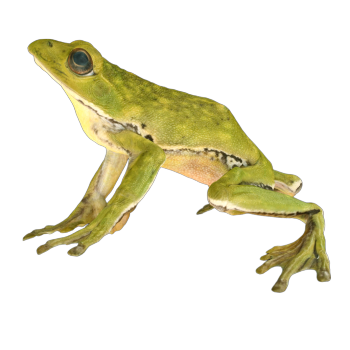
The mountain red frog is a species of frog in the Ranidae family. The body length of the mountain red frog can reach approximately 4.2-7.8 centimeters. Females are slightly larger than males. The body color on the back is brown, reddish brown, or dark brown, while the belly is light yellow.
Forest Green Tree Frog

Forest Green Tree Frog

The forest green tree frog is a species of amphibian belonging to the Rhacophoridae family. This kind of frog breeds in a special way. They make foam nests underground. They will crawl on the edges of rice paddies and swamps, and dig caves above the water surface.
Gekko hokouensis

Gekko hokouensis

Lead mountain geckos are reptiles. The physiological characteristics are similar to lizards, but with one difference, there is nothing between the two ears. We can see inside from one ear of the gecko and directly see outside through the other ear. The central nervous system of geckos is located in the spinal cord. It generally inhabits gaps and holes in buildings, as well as under bricks and grass in the wild. The model habitats of this species distributed in Japan, Taiwan Island and Chinese Mainland, such as Anhui, Jiangsu, Shanghai, Dajinshan Island, Zhejiang, Fujian, Jiangxi and Hunan, are northeast Jiangxi, estuaries and salt mountains.
Zelu Frog

Zelu Frog

The Zelu frog (scientific name: Fejervarya Multistriata) is a species of amphibian in the family Ranidae, belonging to the genus Ranunculus. The head length is slightly larger than the head width, the snout end is blunt and pointed, the pupils are horizontally elliptical, and the distance between the eyes is very narrow, which is 1/2 of the upper eyelid; The eardrum is circular. The skin on the back is rough, without dorsal folds, and there are several rows of longitudinal folds of varying lengths on the back of the body. There are small warts between the folds, on the side of the body, and on the back of the hind limbs; The skin on the body and abdomen is smooth.
Chuancun Land Frog

Chuancun Land Frog

Chuancun Land Frog is a composite species of Zelu Frog, which is distributed throughout Southeast Asia from India to Japan. The Ze Lu frog is distributed from south to north in China, with a wide distribution range and large area. However, there is relatively little research on the relationship between the Ze Lu frog and its composite species in China, and there has been controversy over its taxonomic status.
Toad

Toad

The toad has a sturdy body, a wide head, a wide mouth, and a round tip; Large and protruding eyes; The body is short and wide, the forelimbs are thick and long, the hind limbs are thick and short, and the left and right roots do not meet; The skin on the whole body is extremely rough, and the skin color on the back changes with the seasons, and females and males are different. During the reproductive season, the back of males is mostly black green, with light colored markings on the sides of the body; The female's dorsal color is lighter, with a milky yellow wart and sometimes black longitudinal spots running diagonally along the body from behind the eyes; The ventral surface is not smooth, with brown or black fine flower spots.
Black eyed toad

Black eyed toad

Black eyed toad, belonging to the family Bufonidae in the order Anura. The black eyed toad is relatively large, with a body length of 6-10 centimeters, and male toads are slightly smaller in size than female toads; Rough skin, mostly yellow brown or gray black on the back, with black brown mottled spots on the cloth; The abdomen is mostly milky yellow in color; The forelimbs are relatively slender, while the hind limbs are thicker and shorter, circular in shape, with only half fins and black fingertips. It is named after its appearance with black eye sockets.
Hyla simplex

Hyla simplex

The South China tree frog is mostly slender and flat in body, with long hind legs and large suction cups. It has developed fins between its fingers and toes, which can be used for gliding in the air. There are 10-12 genera and 200-300 species in the tree frog family, widely distributed in tropical and subtropical regions of Asia and Africa, and can also be seen on the island of Madagascar. The most famous South China tree frogs are several flying frogs in Asia, such as the black footed South China tree frog Rhacophorus nigropalmatus and the black webbed South China tree frog R Rewardti and others.
Japanese tree toad male

Japanese tree toad male

The breeding season of Japanese tree frogs is from April to August. At this time, male frogs migrate to still water areas such as low altitude rice paddies and wetlands to chirp loudly, laying about 250-800 eggs at a time. During the non breeding season, it often calls before rain and is a true rain frog.
Japanese tree toad female

Japanese tree toad female

The breeding season of Japanese tree frogs is from April to August. At this time, male frogs migrate to still water areas such as low altitude rice paddies and wetlands to chirp loudly, laying about 250-800 eggs at a time. During the non breeding season, it often calls before rain and is a true rain frog.
Damo Frog

Damo Frog

The wild habitats of the Damo frog include temperate grasslands, rivers, wetlands, ponds, irrigated farmland, waterways, etc. The average size of male frogs is about 3.5-6.2 centimeters, while the average size of female frogs is 3.7-7.3 centimeters. The length of the larvae (i.e. tadpoles) can exceed 5 centimeters. There are significant black spots on the back of the adult, and their jumping ability is poor due to underdeveloped hind limbs.
Japanese toad

Japanese toad

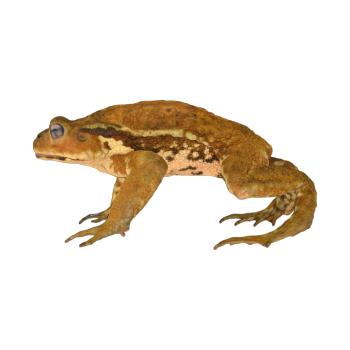
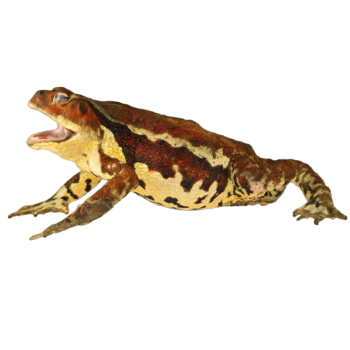
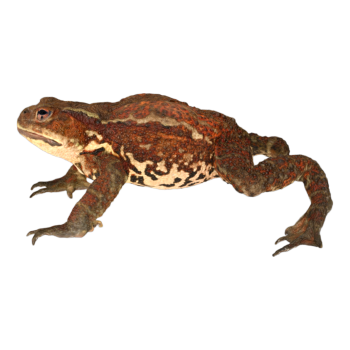
The Japanese toad (Bufo japonicus) is a species of toad native to freshwater waters in Japan. The Japanese use it to make toad oil. The length of the head and tail is 17.5 cm (7 inches), and females are slightly larger. The webbed toes are not obvious, and the body is gray brown, yellow brown, or dark brown. During the breeding season, the body color is slightly lighter.
1 2 Next