Ancient underground tombs in Alexandria, Egypt

Ancient underground tombs in Alexandria, Egypt

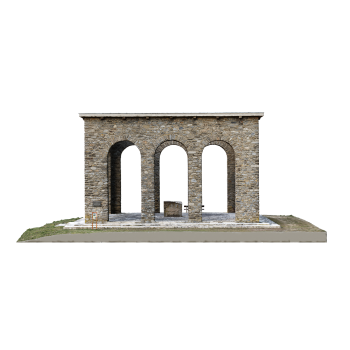
An ancient underground tomb in Alexandria, Egypt, known as Kom El Shoqafa Catacombs. It is one of the most important archaeological sites in Egyptian history and also one of the most famous tourist attractions in Alexandria. Built in the 2nd century AD, it is a cemetery from the ancient Roman era. This underground tomb was built to bury members of a wealthy Roman family during the reign of Alexander the Great in Alexandria, and is believed to be the burial site of a wealthy Roman family. The design is unique, combining art and religious elements from ancient Egypt, Greece, and Rome.
Linhai Jinshan Xiaowenfeng Pagoda

Linhai Jinshan Xiaowenfeng Pagoda

The Linhai Jinshan Xiaowenfeng Pagoda is an ancient pagoda located in Linhai City, Zhejiang Province, China. This tower, also known as Xiaowenfeng Pagoda or Xiaowenfeng Temple, is one of the important historical relics and cultural attractions in Linhai City. Built during the Northern Song Dynasty, around 960 to 1127 AD. It is a wooden pagoda with a height of about 33 meters and a total of seven floors. The tower body is slender and beautiful, with an elegant architectural style, making it one of the exemplars of ancient Chinese wooden towers. It is a landmark building in Linhai City and also a place for Buddhist activities. The tower houses Buddha statues and other religious relics, attracting numerous believers and tourists to worship and visit.
Ancient temples on Java Island, Indonesia

Ancient temples on Java Island, Indonesia

An ancient temple located in the central part of Java Island, Indonesia. It is located in Sleman District, Central Java Province, about 30 kilometers away from Yogyakarta City. It is a cultural heritage of Indonesia and is considered one of the oldest temples on Java Island. Built between the 8th and 9th centuries, it is a relic belonging to the ancient kingdom of Matron. This temple is built of stone, showcasing the ancient architectural style and religious beliefs of Java Island at that time. Its architectural style combines elements of Hinduism and Buddhism, which is common in many ancient temples in Indonesia. The architectural site is not large, but it still showcases the essence of ancient Javanese culture.
Balongseli Chapel

Balongseli Chapel

Baroncelli Chapel is a Renaissance chapel located inside the Basilica di Santa Croce in Florence, Italy. This chapel was completed by Italian painter Taddeo Gaddi in the late 14th to early 15th century. Known for its exquisite murals, which are works of Tadao Gadi. The mural depicts the life story of the Virgin Mary, as well as the suffering and resurrection of Christ. It is one of the important religious and artistic heritages of Florence.
Akadi Monastery on Crete Island

Akadi Monastery on Crete Island

Arkadi Monastery, located on the island of Crete in Greece, is an Eastern Orthodox monastery with a long history and religious significance. This monastery was built in the 14th century and is considered one of the most important religious and cultural heritages of Crete. Renowned for its beautiful architecture and exquisite mural art. It is an important center of Eastern Orthodoxy, where monks live a devout life, dedicated to prayer, chanting, and serving believers. The monastery is equipped with facilities such as a church, residences for monks, and a library, providing a place for religious ceremonies and cultural activities for believers and tourists.
Darami Mosque

Darami Mosque

The Damri Masjid is a mosque located in Ahmedabad, Maharashtra, India. Located in the central area of Ahmedabad city, it is an important religious site in the region. It is a place where Muslim communities conduct worship and religious activities. The architectural style usually follows Islamic tradition and has typical mosque features. Built during the reign of the Sultanate of Ahmednagar in 1568. It has been designated as a monument of national importance.
Vietnamese Hindu temples

Vietnamese Hindu temples

A Hindu temple in Vietnam. It is the religious center of Hindus in the region. This temple was built to worship Hindu deities and provide a place for local Hindus to conduct religious ceremonies and celebrations. The activities of temples include religious rituals, sacrifices, celebration of festivals, and hosting community events. It showcases one of the seven Hindu architectural styles that evolved in Vietnam between the 8th and 16th centuries. It is a rare four story brick temple with a square plan, and the top of the tower is a scaled down replica of a classic Champa Hindu temple. These activities attract believers and tourists to visit and participate, to learn about Hindu culture and religious traditions.
Beishan Stone Carving Art Site in Chongqing, China

Beishan Stone Carving Art Site in Chongqing, China

A famous stone carving art site in Chongqing, China. It is one of the important representatives of Chinese stone carving art and also a world cultural heritage. It contains many reliefs and murals carved on rocks, covering historical periods from the Tang Dynasty to the Song Dynasty. These stone carvings showcase religious and philosophical ideas such as Buddhism, Taoism, and Confucianism, as well as historical and folk stories. It combines elements of Buddhism and Taoism, with exquisite carving techniques and vivid expression. Some of these works depict Buddhist scriptures and legendary stories, showcasing the spiritual essence of Buddhist faith and practice. Attracting the attention of numerous tourists and art enthusiasts.
Vicine Castle, France

Vicine Castle, France

Ch â teaudu Vexinfran ç ais is a historic castle located in the Vincennes region of France. It is a masterpiece of French architectural art, showcasing unique architectural styles and exquisite craftsmanship. Its architectural features include magnificent towers, elegant arches, and gorgeous decorations. As a historical heritage site, the Ch â teau de Vilaine in France attracts numerous tourists. People can feel the past glory and honor here, and learn about the history and culture of this region. The open area of the castle also frequently hosts exhibitions, concerts, and other cultural events, providing visitors with a rich experience.
Zhenru Temple

Zhenru Temple

Zhenru Temple is a Buddhist temple with a long history in Changning District, Shanghai, China. Built around 270 AD, it is one of the oldest Buddhist temples in the Shanghai area. The temple is located in a picturesque environment and occupies a vast area. It is an important Buddhist activity center that attracts numerous believers and tourists to visit and worship. Buddhist ceremonies, meditation classes, and other religious and cultural activities are often held in temples, providing people with opportunities to learn and experience Buddhist teachings. In addition to religious activities, Zhenru Temple also focuses on social welfare undertakings. Temples actively participate in charity and relief activities, helping impoverished and vulnerable groups.
Circular Romanesque Church

Circular Romanesque Church

The circular Romanesque church is a unique and beautiful architectural style that was prevalent in Europe from the 11th to the 13th century, blending elements of Romanesque and Byzantine styles. Known for its unique circular flat layout, it is typically constructed using sturdy stones. Usually, there is no traditional cross shape in the center of a church, but rather a circular, elliptical, or octagonal plane with a dome or semi-circular dome at the top. It was very popular in Europe at that time, representing the heyday of medieval architecture. Becoming the religious and cultural center of the local community, attracting believers and tourists to visit and worship.
German Outdoor Museum

German Outdoor Museum

It is an outdoor museum located near Trier, Germany. This museum aims to showcase the traditional way of life and culture of rural communities in Germany. In this museum, you can see the reconstruction or original sites of buildings, farms, workshops, and other facilities in German rural communities from the 19th and early 20th centuries. One of the exhibition areas is Dorfrathaus, which stands for village houses, showcasing the architectural styles and interior layouts of traditional village houses from different historical periods and regions. In addition, the museum also displays other types of buildings such as farms, barns, workshops, schools, and churches.
Carolingian Chapel

Carolingian Chapel

Carolingian Chapel refers to a church built in Europe during the Carolingian dynasty (8th to 9th centuries). It is a special type of medieval European architecture, whose design and decorative style were influenced by the Carolingian dynasty at that time. These chapels were usually built by Charlemagne and his successors for religious ceremonies and prayers of the royal family, nobility, or monasteries. The architectural style is usually simple and balanced, incorporating elements of Roman and Byzantine architecture. It is an important component of medieval European architecture with unique historical and cultural value.
Krishnabai Temple

Krishnabai Temple

The Krishnabai Temple is located on Mount Mahabali in Maharashtra, India, and is a highly respected ancient temple. This temple enshrines the Hindu deity Krishna, hence it is also known as the Krishna Temple. Built in the 13th century, it is a beloved place among pilgrims and tourists. It is renowned for its unique architectural style and magnificent landscape. The temple is located on a mountaintop at an altitude of 1294 meters, surrounded by beautiful natural scenery and mountains. It is a must visit destination for pilgrims and tourists heading to Mount Mahabali.
Afsharom Tomb

Afsharom Tomb

The Tomb of Absalom is an ancient tomb located in Jerusalem, Israel, believed to be one of the holy sites in Jewish tradition. This tomb is believed to be the burial site of Absalom, the son of King David of the Jewish kingdom in the 1st century BC. Afsharom was the third son of King David and one of his most beloved sons. According to the Bible, during the reign of David, Afsharom was ambitious and attempted to usurp the throne, ultimately leading to conflicts with his father. Afsharom was ultimately killed in a battle. It is an important tourist attraction in Jerusalem.
Vienna Merge Monument

Vienna Merge Monument

The merger monument is located on Heldenplatz Square in the center of Vienna, Austria. This monument was built to commemorate the Anschluss event of 1938, the historical event of Nazi Germany's annexation of Austria. Created by Austrian sculptor Alfred Hrdlicka, it was unveiled in 1988. The intention is to remind people of past history and warn future generations not to repeat such mistakes. Its existence is to commemorate those who were persecuted and died during the Nazi era, as well as the Austrian people's reflection and memory of this history.
Ruins of St. Alphard's Church

Ruins of St. Alphard's Church

The ruins of St. Alphard's Church are an ancient church site located in Berkshire, England. This church was built in the 12th century and is dedicated to Saint Alphard. It is the religious center of the local residents. Due to historical wars and other natural disasters, the Church of Saint Alphard suffered severe damage. Now, the church has become a ruin, but still retains some impressive architectural elements. Representing a part of British history and cultural heritage, it showcases the glory of the past and traces of time, which is of great significance for studying and understanding local history.
Persian Garden

Persian Garden

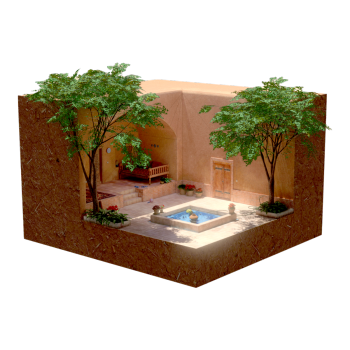
The Persian Garden in Iran, designated as a World Cultural Heritage site in 2011, consists of nine gardens located in nine provinces. These nine gardens were constructed at different times, with the earliest dating back to the 6th century BC. The main design concept of Persian gardens highlights the symbolic imagery of the four elements of Eden and Zoroastrianism - sky, water, earth, and plants. All gardens are divided into four parts, and water plays an important role in irrigation and decoration. Pavilions, pavilions, walls, and precise water flow irrigation systems are important features of gardens.
India's Gateway Mumbai India Gate

India's Gateway Mumbai India Gate

Chinese octagonal pavilion, ancient architecture, garden pavilion

Chinese octagonal pavilion, ancient architecture, garden pavilion

Chinese octagonal pavilion, ancient architecture, garden pavilion

Chinese octagonal pavilion, ancient architecture, garden pavilion

European medieval style countryside windmill house cottage

European medieval style countryside windmill house cottage

Tomb of Tu Duc, Vietnam

Tomb of Tu Duc, Vietnam

This is a magnificent tomb, built in the 19th century and one of the most important royal tombs in Vietnamese history. You can learn about the ancient royal culture and history of Vietnam here.
Chinese ancient architecture, ancient town architecture, two-story tile house

Chinese ancient architecture, ancient town architecture, two-story tile house

Fictional Catholic Cathedral

Fictional Catholic Cathedral

Chinese style ancient town architecture, ancient style tile houses

Chinese style ancient town architecture, ancient style tile houses

Triumphal Arch
Triumphal Arch

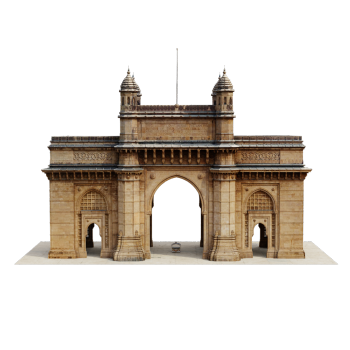
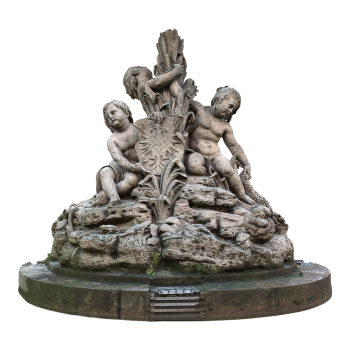
The Arc de Triomphe (French: L'Arc de Triomphe) is located on the Champs - É lys é es in the central area of Paris, the capital of the French Republic. It is situated in the center of Place Charles de Gaulle and was built under the leadership of Emperor Napoleon Bonaparte to celebrate the victory in the Battle of Austerlitz. It is one of the national symbols of France, one of the four representative buildings of France, and a landmark monument in the city of Paris.
The fountain "Three Little Angels" in Noluzanetskyi Park, Brj, Czech Republic

The fountain "Three Little Angels" in Noluzanetskyi Park, Brj, Czech Republic

This marble fountain named 'Three Little Angels' is located in Luzhanetskyi Park in Brno, Czech Republic. There are sculptures of three little angels on this fountain. This is a popular decorative element from the Baroque, Rococo, and 19th century historical periods, originating from the Renaissance's analogy of ancient love gods and medieval angels, symbolizing children wearing horns of abundance. This fountain is created by F Melnik was made in 1860 and rebuilt in 2000.
Neolithic Temple Site Stonehenge in Amesbury, Wiltshire

Neolithic Temple Site Stonehenge in Amesbury, Wiltshire

Stonehenge is located in Amesbury, Wiltshire, England, and is visited by 1 million people from all over the world every year. Stonehenge is also called a circular stone forest. There are dozens of huge stones in a large circle, some of which are six meters high. It is estimated that the circular stone forest has been standing on this plain of Ma Pingchuan for thousands of years. In 1986, "Stonehenge, Avebury and Related Sites" was listed as a World Heritage Site. Stonehenge, also known as Salisbury Stone Ring, Sun Temple, Stone Hengzhi Stone Column, Stocken Stone Circle and other names, is a famous European Neolithic prehistoric cultural temple site.
French famous building Arc de Triomphe in Paris

French famous building Arc de Triomphe in Paris

The Arc de Triomphe in Paris, or the Lion Arc de Triomphe (French: l'Arc de triomphe de l'Étoile), is located in the center of Charles de Gaulle Square in Paris, France, at the western end of the Champs Elysees. The Arc de Triomphe is 49.54 meters high, 44.82 meters wide and 22.21 meters thick. The central arch is 36.6 meters high and 14.6 meters wide. On the walls of the piers on both sides of the Arc de Triomphe, there are four groups of large reliefs with the theme of war: "expedition", "victory", "peace" and "resistance"; some of the sculptures are as high as five or six meters.
ancient chinese palace

ancient chinese palace

Chinese palaces are large architectural groups inhabited by ancient Chinese emperors and are the most important architectural type in ancient China. In China's long-term feudal society, the centralized system centered on imperial power has been fully developed. The palace is the most concentrated embodiment of feudal ideology and represents the highest level of traditional architectural art in many aspects.
Roseville Pier on the banks of the Thames

Roseville Pier on the banks of the Thames

A historic pier on the south bank of the River Thames, at the junction of Lansdown Square and the coast in Gravesend, Kent. The pier was built in 1837 and has a World War II-era minesweeping post on the pier (1940 s).
The British Rose Theatre

The British Rose Theatre

As Shakespeare's budding stage, the Rose Theatre in London carries the deepest theatrical soul of Queen Elizabeth I. The English Heritage Lottery's "Uncover the Rose" (The Rose Revealed Project) restoration project will cost huge sums of money to make the Rose Theater shine again. Imagine watching a famous Shakespeare play in an archaeological theater and feeling the echoes of history. According to the official records of the Rose Theater, when Shakespeare first came to London, he worked in the Rose Theater, worked as an actor, wrote plays and launched plays.
Scotland Pink Castle (Craigievar Castle)

Scotland Pink Castle (Craigievar Castle)

Located five miles south of Alford and 50 minutes from Aberdeen, Craigievar Castle was the inspiration for Disney's animated Cinderella Castle. Built in 1626, the pale pink castle was bought by the Forbes family and lived there for 350 years until 1963, when Craigwa Castle was taken over by the National Trust for Scotland as a gift. This is a typical Scottish baronial structure of the castle, a total of 7 floors, initially with many defensive facilities, including four round towers, one has been preserved.
Pyramid Ice House

Pyramid Ice House

The refrigerated igloo, built in 1791-1792, is a pyramid in sight to the north of the Marble Palace to preserve perishable food. In winter, the ice is removed from the nearby Hailig Lake and stored in the lowest layer of the cellar about 5 meters underground.