The bell tower of a Japanese temple

The bell tower of a Japanese temple
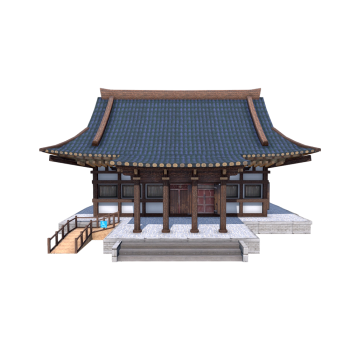
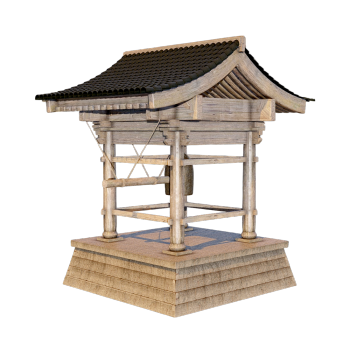
This building is the bell tower of a Japanese temple. This kind of building is mainly used to house large temple bronze bells and is used to call the time, gather monks for religious ceremonies and ring on special occasions such as the New Year. This modern common bell tower is usually open on four sides, without walls, so that the bell can travel far away. It is in a traditional East Asian architectural style, with a sloping tile roof and a wooden frame structure. In ancient times, bells were sometimes used as fire alarms or military communication signals in addition to religious uses.
Japanese traditional architecture

Japanese traditional architecture

A traditional Japanese style building with typical deep eaves, dark tile roof and simple white wall wood structure. The roof is typically built into the mother house (corresponding to the top of the mountain in China), but its slope is relatively gentle and the eaves are far-reaching, which is a common practice of traditional Japanese wooden buildings to prevent rain and shade. The roof is covered with dark (perhaps dark blue or navy blue) tiles, and the overall tone is darker than the gray of the previous picture. The building sits on a high stone bench with a wide stone step in front. There appears to be a wooden corridor or slope on the left, possibly to connect to other buildings or as a barrier-free access.
3D model of traditional Chinese architecture (support mobile AR, Vision Pro view)

3D model of traditional Chinese architecture (support mobile AR, Vision Pro view)

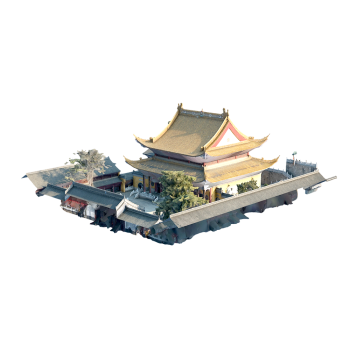
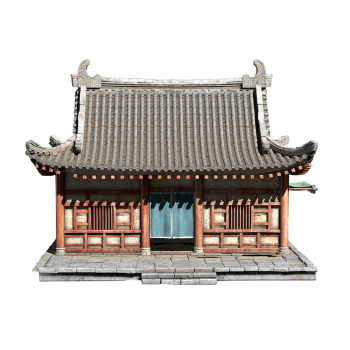
A wooden structure with a strong ancient Chinese style single-eaves Hop-top building. The roof style is a typical Hop-top (or Nine Ridges Hall). It has four positive ridges and four vertical ridges, and four slopes (two-faced slopes and two triangular slopes). The roof is covered with dark gray tube shingles and plate shingles with a distinct arc. The building sits on a stone bench base with several stone steps in front. The structure is visible as a timber skeleton structure with red timber columns and beams. Walls may be filled with adobe or masonry. In the center is a double-open door (blocked by a blue curtain), flanked by a straight latticed window or sill window with a wooden lattice (lattice).
Brown Rock Villa and Its Garden

Brown Rock Villa and Its Garden

The Villa des Roches Brunes is a historic late 19th century beachfront villa located in the Normandy region of France (specifically on the top of a cliff near the town of Eritrea/Étretat), which, together with its tiered gardens, constitutes a model of "architecture and nature symbiosis. As a French national historical building, it is not only a material witness to the leisure life of the elite at the end of the 19th century, but also reflects the poetic integration of the natural form and the seaside landscape in the early stage of the "Art Nouveau" (Art Nouveau).
Church of Saint Eulalia

Church of Saint Eulalia

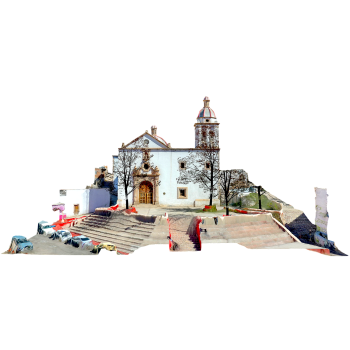
Templo de Santa Eulalia is located near the town of Santa Eulalia, Chihuahua (Chihuahua), Mexico-a "ghost town" (Pueblo Fantasma) that emerged from the mining boom of the 18th century, and is now part of the Chihuahua metropolitan area. As one of the oldest religious buildings in Chihuahua, it is not only a material witness to the symbiotic relationship between mining and religion in the colonial period, but also bears the vicissitudes of the town of St. Oralia from a "mining center" to a "historical site.
The old church of Santa Ana de la Joya
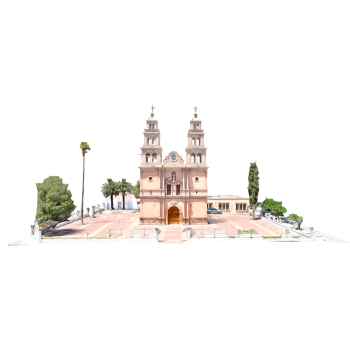
The old church of Santa Ana de la Joya

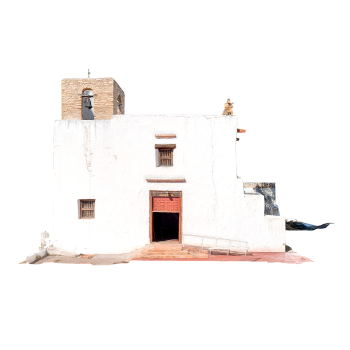
The Church of Santa Ana de la Joya (Templo de Santa Ana de la Joya), located in the city of Satevó (Chihuahua (Chihuahua)) in Mexico, is an important material relic of the history of the "missionary frontier" in the northern part of the state. As a key node of the Franciscan missionary network during the colonial period, it not only carries the mission of spreading Spanish colonial religion, but also integrates the adaptive design of local aboriginal culture and desert environment. it has become a "minority but deeply representative" cultural heritage of Chihuahua.
Church of St. Heronimo in the town of Aldama, Chihuahua, Mexico
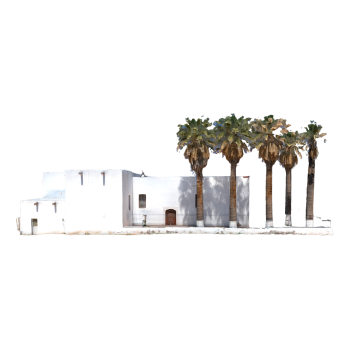
Church of St. Heronimo in the town of Aldama, Chihuahua, Mexico

The Templo de San Jerónimo, located in the town of Aldama in the Mexican state of Chihuahua (Chihuahua), is one of the jewels of colonial religious heritage in northern Mexico. As the core witness of the history of the "missionary frontier" in the region, it not only carries the mission of religious communication in the Spanish colonial period, but also integrates local culture and European architectural skills, and becomes the "living history museum" of Chihuahua ".
San Diego de Alcala Church

San Diego de Alcala Church

The church of San Diego de Alcala, located in the town of Aldama, Chihuahua, Mexico, is one of the core representatives of the colonial religious heritage of northern Mexico. It is not only the spiritual center of the local Catholic faith, but also carries the historical memory of the "missionary frontier" during the Spanish colonial period, and witnessed the transformation of the Chihuahua region from an aboriginal settlement to a colonial settlement. The construction of the church was directly related to the "Northern Frontier Mission Program" of the Spanish colonial government in the 18th century. At the time, the Franciscan monks had a dual task: to spread Catholicism to the local indigenous population while consolidating Spanish control over the northern territory of Chihuahua.
Former Carolina Manor in Chihuahua, Mexico

Former Carolina Manor in Chihuahua, Mexico

The former Carolina Manor is a colonial revival style manor in Chihuahua (Chihuahua), Mexico, which carries the memory of elite families at the end of the 19th century. Its history and architectural features are deeply bound to the land aristocratic culture of northern Mexico, European aesthetic influence, and modern cultural heritage activation practice. The design of the former Carolina estate is based on a 19th-century European country house, combining materials and traditional craftsmanship from northern Mexico. It is a material relic of the "Caudro politics" of Chihuahua-Louis Terrazas, as the actual ruler of Chihuahua at the end of the 19th century, accumulated wealth through land and power.
Ciudad Juarez Cathedral

Ciudad Juarez Cathedral

The Cathedral of Ciudad Juárez is a central religious and cultural landmark in the northern Mexican border city of Ciudad Juárez, whose history and architecture reflect the city's colonial heritage and modern development. The construction of the cathedral dates back to the Spanish colonial period and was originally a wooden church to serve the religious needs of the local aborigines and colonists. At the end of the 17th century, as Ciudad Juárez (formerly El Paso del Norte) became an important stronghold on the northern Spanish frontier, the church was gradually expanded into a stone building. The existing main structure was completed in 1905 in the neoclassical style.
Chihuahua Metropolitan Cathedral

Chihuahua Metropolitan Cathedral

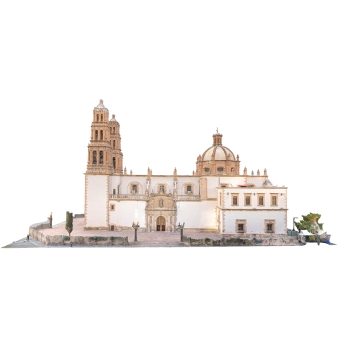
The Metropolitan Cathedral of Chihuahua (full name "Our Lady de Chihuahua Metropolitan Cathedral", Catedral the Basiílica Menor de Nuestra Señora de la Asunción de Chihuahua) is the religious and cultural core of the city of Chihuahua, the capital of the northern Mexican state of Chihuahua, and a typical representative of the integration of Latin American colonial period and neoclassical architecture. The church was founded in 1725 by Spanish Franciscan missionaries to consolidate the spread of religion during the colonial period.
Chinese Wooden Pagoda

Chinese Wooden Pagoda

Wuhan shadowless tower

Wuhan shadowless tower

The shadowless tower, also known as Xingfu temple tower, is located in Hongshan Park, 509 Wuluo Road, Wuchang District, Wuhan City, Hubei Province. It was built in the sixth year of Xianchun in the Southern Song Dynasty (1270) and moved to Hongshan Park in 1962.
Ayoka Temple Pagoda

Ayoka Temple Pagoda

A (ā) Yuwang Temple (Ayuwang [Ashoka] Temple) is located under the peak of Taibai Mountain at the foot of Baozong, Wuxiang Town, Yinzhou District, Ningbo City, Zhejiang Province. It was founded in the third year of Taikang, Emperor Wu of the Western Jin Dynasty (AD 282) and has a history of more than 1700 years. In the second year of Yuan Jia (425) and the twelfth year of Yuan Jia (435) of the Southern Dynasty, the temple was built twice, thus laying the foundation for the scale of the temple. Liang ordinary three years (522 years) to Ashoka temple, temple name established.
Ashoka Temple Stone Pagoda

Ashoka Temple Stone Pagoda

A (ā) Yuwang Temple (Ayuwang [Ashoka] Temple) is located under the peak of Taibai Mountain at the foot of Baozong, Wuxiang Town, Yinzhou District, Ningbo City, Zhejiang Province. It was founded in the third year of Taikang, Emperor Wu of the Western Jin Dynasty (AD 282) and has a history of more than 1700 years. In the second year of Yuan Jia (425) and the twelfth year of Yuan Jia (435) of the Southern Dynasty, the temple was built twice, thus laying the foundation for the scale of the temple. Liang ordinary three years (522 years) to Ashoka temple, temple name established.
Hanging Temple of Datong City

Hanging Temple of Datong City

Hanging Temple (Xuankong Temple ), originally called "Xuankong Pavilion", is located on the west side of Cuiping Peak, 4 kilometers southeast of Hunyuan County, Datong City, Shanxi Province. It is a Confucian, Buddhist and Taoist temple complex. The hanging temple is about 60 meters high from the ground, with a cultural relic building area of 472 square meters, a platform area of 726 square meters in front of the temple, covering an area of about 921 square meters, and a total area of about 8.83 hectares.
The Ming Great Wall of the 14th Century

The Ming Great Wall of the 14th Century

The Great Wall is a general term for the massive military projects built in ancient China at different times to resist the invasion of the northern nomadic tribal alliance. The Great Wall stretches for tens of thousands of miles from east to west, so it is also called the Great Wall. The existing Great Wall relics are mainly the Ming Great Wall, which was built in the 14th century, starting from Jiayuguan in the west and reaching Hushan in Liaodong in the east, with a total length of 8851.8 kilometers, an average height of 6 to 7 meters and a width of 4 to 5 meters.
Zhaoqing Guanyin Hall Aunt House

Zhaoqing Guanyin Hall Aunt House

The aunt's house was a unique folk term in Guangdong during the Ming and Qing dynasties, which specifically referred to the place where the group of self-combing women who did not marry for life lived together. Members form an alliance through the ceremony of "combing up" and swear not to marry, forming a female life community independent of traditional marriage.
Zhaoqing forever hall aunt's house

Zhaoqing forever hall aunt's house

The aunt's house was a unique folk term in Guangdong during the Ming and Qing dynasties, which specifically referred to the place where the group of self-combing women who did not marry for life lived together. Members form an alliance through the ceremony of "combing up" and swear not to marry, forming a female life community independent of traditional marriage.
Xu Village Ancient Building Group

Xu Village Ancient Building Group

Xu Village ancient buildings are located 20 kilometers northwest of Shexian County, Anhui Province, where Xu Village is located-Xu Village. At the end of the Tang Dynasty, the Xu family moved to a large family and then changed its name to Xu Village. During the Ming and Qing Dynasties, Huizhou merchants flourished. Since then, village construction has developed rapidly. In Gaoyang Village, Dongsheng Village and Huanquan Village, Xu Village, Xu Village, Xu Village, Shexian County, there are a large number of more than 100 ancient buildings from the Ming, Qing and Republic of China periods. Xu Village is "two dragons play with pearls" and "pour water gourd" in the form of feng shui. Fang and Xi Erxi meet under the Gaoyang Bridge and flow into the Lianjiang River. The village in the Ming Dynasty has a large number of buildings and complete categories, preserving more architectural practices of the Song and Yuan dynasties.
Wumafang, Wenzhou City

Wumafang, Wenzhou City

Wumafang, now known as Wuma Street, is a landmark shopping pedestrian street in Wenzhou City. It was first named in the Eastern Jin Dynasty. It was named after the allusion that Wang Xizhi was too punctual for Yongjia and "the five horses in the court. The block is located in the core area of Lucheng District, Wenzhou City. The total length of the main street is 424 meters. The building combines the amorous feelings of the Republic of China and the combination of Chinese and Western styles. Since the Qing Dynasty, shops such as Wuweihe (1882) and Jin Sanyi (1859) have gathered for 100 years, with more than 180 merchants. In 2021, it was selected as the first batch of "high quality Pedestrian Street in Zhejiang Province", with an annual passenger flow of 20.8 million.
Xingsheng Temple Tower

Xingsheng Temple Tower

Xingsheng Temple Pagoda is located in Fangta Garden, No. 235 Zhongshan East Road, Zhongshan Street, Songjiang District, Shanghai. It is also commonly known as "Fangta" because of its square body. The tower was built during the years of Xining and Yuanyou in the Northern Song Dynasty (1068-1094), with a total of 9 floors and a height of 42.65 meters. The Xingsheng Temple Pagoda is a brick-and-wood pagoda with a brick body and a square plane. The underground palace under the tower unearthed a large number of artifacts including relics and ancient coins. On November 20, 1996, Xingsheng Temple Pagoda was announced by the the People's Republic of China State Council as the fourth batch of national key cultural relics protection units.
Tangjiasan Temple, Tangjiawan Town

Tangjiasan Temple, Tangjiawan Town

Tangjia San Temple is located in the northwest of Datong Road, Tangjia Village, Tangjiawan Town. It is composed of Shengtang Temple, Wenwu Emperor Hall and Jinhua Temple, so it is called "Tangjia San Temple". It is the largest and oldest temple building in Zhuhai. It has profound historical and cultural connotations and high architectural artistic value. It is a precious material for the study of Zhuhai's local history and folk history. It is also a symbol of the feelings and thoughts of the villagers at home and abroad in Tangjiawan area. In May 2010, it was selected as the sixth batch of cultural relics protection list in Guangdong Province.
Shouchang Bridge, Deqing County

Shouchang Bridge, Deqing County

Shouchang Bridge, located in Erdu Village, Xiazhuhu Street, Deqing County, Huzhou City, Zhejiang Province, is a traffic bridge from Wukang to Hangzhou Ancient Post Road across Shangzhu River. It was built in the Southern Song Dynasty. Shouchang Bridge runs from north to south and is a single-hole solid abdominal arc stone arch bridge. The current bridge is about 50 meters long (the original bridge is 32.85 meters long), 9.45 meters high, 17.4 meters clear span, 7.16 meters tall, 4.25 meters wide foundation and 2.74 meters wide top of the bridge. It is divided layer by layer from bottom to top. It is the largest and most well-preserved single-hole stone arch bridge of the Song Dynasty found in Zhejiang and even the Yangtze River Delta.
Nanshan Temple Tower, Linhai City

Nanshan Temple Tower, Linhai City

Located in Linhai City, Zhejiang Province, Nanshan Temple Tower is a building of the Ming and Qing Dynasties. In October 2019, the list of the eighth batch of national key cultural relics protection units of the Nanshan Temple Tower was incorporated into the seventh batch of national key cultural relics protection units, the Thousand Buddha Pagoda, and was renamed the Towers Group.
Shanghai Zhenru Temple Hall

Shanghai Zhenru Temple Hall

Zhenru Temple, commonly known as Great Temple and Great Temple, is located at 399 Lanxi Road, Zhenru Town Street, Putuo District, Shanghai. During the Jiading years of the Southern Song Dynasty, after the reconstruction of the officialdom, the monk Yongan was named Zhenru Yuan. In the seventh year of Yuan Yanyou, the monk's wonderful heart moved from the former site of Baoshan Dachang to the current site. The area is 158 square meters. The main hall of Zhenru Temple is basically square in plan, with 3 rooms wide from east to west, 13.4 meters wide, 6.1 meters wide from Ming to Ming, and 3 rooms deep from north to south, totaling 13 meters. Ten of the 16 pillars in the temple are cypress pillars of the Yuan Dynasty, and six of the stone pillars are old objects of the Yuan Dynasty. ZhenRu Temple is a well-preserved ancient wooden structure of the Yuan Dynasty with a history of more than 700 years.
Guifang Bridge, Hangzhou

Guifang Bridge, Hangzhou

Guifang Bridge (Guifang Bridge), commonly known as "Dongmao Bridge", also known as "Dongmao Bridge", is a river crossing channel in Linping District, Hangzhou City, Zhejiang Province, China. It crosses the Shangtang River waterway, a tributary of the Beijing-Hangzhou Grand Canal, from north to south. The earliest construction of Guifang Bridge is unknown. According to records, it can be traced back to the Southern Song Dynasty. After several repairs and reconstruction in the Yuan, Ming and Qing dynasties, the bridge was rebuilt in the 28th year of Qing Daoguang (1848). In 1983, Guifang Bridge was announced as a cultural relic protection unit in Yuhang County by the People's Government of Yuhang County; on April 20, 2009, Guifang Bridge was announced as a municipal cultural relic protection unit in Hangzhou by the People's Government.
Grand View Pavilion, Xu Village, Shexian County

Grand View Pavilion, Xu Village, Shexian County

Daguan Pavilion is located on the north side of Gaoyang Langqiao, Xu Village, Shexian County, Anhui Province. It was built in the 30th year of Jiajing of the Ming Dynasty (1557) and is a three-story brick-wood structure pavilion-style building. The ground floor of the building is octagonal, covering an area of 64.6 square meters. It is built across the street to form a north-south passage, which has both traffic and rest functions. The existing main structure integrates Ming and Qing construction techniques, and the project of reducing dryness and improving fire fighting capacity will be implemented in 2022, which will remain intact after heavy rain in 2024. It is now a provincial-level key cultural relic protection unit in Anhui Province, and has been included in the national key cultural relic protection unit system as the core component of the Xucun ancient building complex.
Grand View Pavilion and Shuangshou City Square

Grand View Pavilion and Shuangshou City Square

Daguan Pavilion is located on the north side of Gaoyang Langqiao, Xu Village, Shexian County, Anhui Province. It was built in the 30th year of Jiajing of the Ming Dynasty (1557) and is a three-story brick-wood structure pavilion-style building. The ground floor of the building is octagonal, covering an area of 64.6 square meters. It is built across the street to form a north-south passage, which has both traffic and rest functions. The existing main structure integrates Ming and Qing construction techniques, and the project of reducing dryness and improving fire fighting capacity will be implemented in 2022, which will remain intact after heavy rain in 2024. It is now a provincial-level key cultural relic protection unit in Anhui Province, and has been included in the national key cultural relic protection unit system as the core component of the Xucun ancient building complex.
Changqing Temple Pagoda, Shexian County

Changqing Temple Pagoda, Shexian County

Changqing Temple Pagoda, located at the foot of Xigan Pi Yunfeng on the south bank of Lianjiang River in Huicheng Town, Shexian County, Huangshan City, Anhui Province, was built in the second year of the Song Dynasty (1119) and has been repaired many times since the first year of the Yuan Dynasty (1328). Changqing temple tower is square pavilion style, brick and wood structure, solid seven layers. The tower is 23.1 meters high and the ground floor plane is 5.28 meters on each side. The sumeru has five floors and a waist height of 66cm. It has columns and corner columns. The tower body is made of brick, with the first floor being higher and decreasing from bottom to top. There is a wooden corridor on the ground floor, with a width of 4.33 meters between the stone eaves and pillars. There are coupon doors on all sides, and the door has a built-in stone lotus petal Buddha seat.
Chongqing Bodhi Vajra Pagoda

Chongqing Bodhi Vajra Pagoda

Bodhi Vajra Pagoda is located in Qixinggang, Chongqing. Built during the Republic of China. The tower body is built on a square tower foundation. It is a stone structure with a height of 26.73 meters and a base height of 2.3 meters. The tower body is divided into three layers, of which the first and second floors are square and the third floor is circular. The first floor of the tower is 7.5 meters long on the side. It is engraved on all sides with Han and Tibetan characters "Buddha Says Amitabha Sutra" and "Past Life Mantra". A thick and round Ionic column is set up at the four corners, all of which are engraved with seal script. The characters are arranged and read, namely "Zunsheng solemn", "Da Qing Jing Building", "Achievement Bodi" and "just like King Kong".
Astino Valley Astino Church

Astino Valley Astino Church

"Astino Valley Astino Church" (Monastero di Astino) is a medieval monastery in the Astino Valley (Valle d'Astino) in Bergamo Province, Lombardy, Italy. Its origin can be traced back to the 12th century. It is located in the hilly area in the southern foothills of the Alps, adjacent to the ruins of "Astino Castle. It is an important witness to the history of the trinity of "religion-lord-agriculture" in the Lombardy region, and it is also a typical sample for studying the interaction between Italian medieval monastic culture and local society.
Central Church of the Round Square of San Tomé

Central Church of the Round Square of San Tomé

The "Rotonda San Tomè" (San Tomè) is a historical circular square in the center of Parma (Parma), Parma Province, Emilia-Romagna Region (Emilia-Romagna), Italy. It is located in the core area of the old city (Città Vecchia), adjacent to Parma Cathedral and "Duchess of Parma". It is an important relic of Parma's medieval urban planning and a typical sample of the study of the Italian Renaissance "circular square" architecture and local religious culture.
Farini Town, Romagna, Emilia, Italy

Farini Town, Romagna, Emilia, Italy

The town of Farini is located in the transition zone between the Po River Plain (Pianura Padana) and the Apennine Mountains (Appennini), and is the key node of the "Strada della Montagna" that connects Milan, Bologna and Venice. In the 13th century, the local lords "Famiglia Farini" (Farini) built castles and fortifications to control the trade road, making Farini "the gateway to the southern foothills of the Alps".
Kranezogu Old River Tax Bridge

Kranezogu Old River Tax Bridge

"Ponte Antica Dogana Bridge" (Ponte Antica Dogana Fluviale) is a medieval ancient bridge in the territory of Clanezzo Town (), Treviso Province, Veneto Region in the north of Italy. It crosses the tributary of the Brenta River and is named after it was once the core facility of "River Tax Pass" in history. It is an important witness to the "river trade and tax culture" in the Veneto region, and it is also a typical sample for studying the interaction between the traffic history, economic history and local society in the Middle Ages in Italy.
1 2 3 4 5 6 7 8 9 ... 12 Next