Carla Church

Carla Church

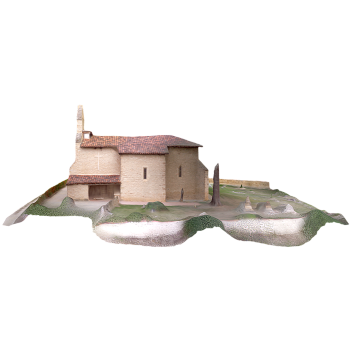
The Eglise du Carla church is located in the village of Carla in southern France, near the city of Tours. This church is a Roman Catholic building with a history dating back to the 15th century. The architectural style of this church is Romanesque, and it was built on an ancient Gallo Roman site.
Mauran Church

Mauran Church

The Mauran Church (Eglise de Mauran) is located in the village of Mauran in southern France, south of the city of Tours. This church is a Roman Catholic building with a history dating back to the 13th century. The architectural style of this church is Romanesque, and it was built on an ancient Gallo Roman site.
Tours Cathedral

Tours Cathedral

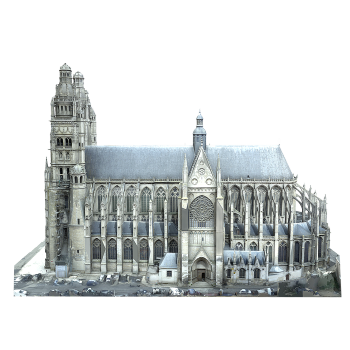
The Cath é drale Saint Gatien de Tours is a Roman Catholic church located in the city of Tours, France, built in memory of Saint Gatien. This church is the location of the Archbishop of Tours and the cathedral of the Diocese of Tours. Its construction began in 1170 and was completed in 1547.
Uppsala Cathedral supports Vision Pro visual experience

Uppsala Cathedral supports Vision Pro visual experience

Uppsala Cathedral is located in the city center of Uppsala in southeastern Sweden, between the main building of Uppsala University and the Firis River. This church is part of the Swedish State Church, a traditional Lutheran church, and also the location of the Archbishop of Sweden. In addition, this church is also the burial site of the Swedish national guardian saint and King Eric IX, who reigned from 1120 to 1160. The current Archbishop is Martin Modus, and the current Bishop is Karin Johanneson.
Roman Baths

Roman Baths

The ancient Roman baths were a common facility in Roman Empire cities designed for bathing and leisure. The bathhouse includes rooms of various temperatures, as well as swimming pools and places for reading, relaxation, and socializing. The Roman baths, with their large coverage space, play an important driving role in architectural innovation, especially in the use of domes.
University of Paris I Panth é on Sorbonne
University of Paris I Panth é on Sorbonne

The University of Paris I, also known as Universit é Paris I Panth é on Sorbonne in French, stands for "Universit é Paris I - Panth é on Sorbonne", abbreviated as "La Sorbonne" or "Sorbonne University", and also known as "Paris I" or "University of Paris I". This university is located in the capital of France, Paris. Its predecessor was the Paris Sorbonne Theological Seminary, which was founded in the 13th century and has a history of 800 years, making it the oldest university in Europe and even the world.
Residential ruins from the Yayoi period in Japan

Residential ruins from the Yayoi period in Japan

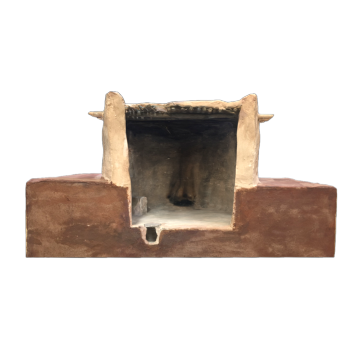
Pit Dwelling is an ancient form of residence where people dig a one meter deep hole underground and cover it with a roof, forming a dwelling called Pit Dwelling. This type of residence was used throughout Japan before the Yayoi period during the Wa period. Due to their semi underground structure, they are less affected by external temperatures, making them a very comfortable place to live: cool in summer and warm in winter.
masada national park

masada national park

Masada National Park is located in Israel and is a UNESCO World Heritage Site. The park is located on a desert plateau, providing a narrative of the final resistance of ancient Jews against the Roman legions.
Boromir Palace

Boromir Palace

Palazzo Borromeo "is a 13th century building in Milan, Italy, located on the city square of the same name, Borromeo Square. This palace was built by the Borromeo family in the 13th century. At that time, the Borromeo family (originally from Florence) quickly consolidated their influence in Milan and northern Italy, partly due to their good relationship with Duke Francesco I Sforza. This palace eventually became the center of what is known as the "Borromeo Castle" in the city. The Borromeo family celebrates and holds events here, such as knightly races.
Opera National de Paris

Opera National de Paris

The Op é ra National de Paris is a representative opera and ballet troupe in France. The Paris National Opera was established in 1669 and is a public institution under the jurisdiction of the French Ministry of Culture. The performances at the Paris National Opera include works by masters such as Verdi, Bizet, Rossini, Mozart, Cavalli, Saint Sa ë ns, Offenbach, Enesco, Berlioz, and others.
Old St Paul's Cathedral model

Old St Paul's Cathedral model

Old St Paul's Cathedral was built from 1087 to 1314 and dedicated to St. Paul. This building may be the fourth church on Ludgate Hill, dating back to the 7th century. The construction of the church began after a fire in 1087, which destroyed the previous church. The work took over 200 years, during which the architectural style of the church changed from Norman Romanesque to early English Gothic.
Le Mont Saint Michel

Le Mont Saint Michel

Le Mont Saint Michel is a small island in the Normandy region of France and an important tourist attraction. This small island is famous for its magnificent monastery, built on a rocky hill surrounded by vast swamps and rapidly rising seawater. The history can be traced back to the 8th century AD, when it is said that Bishop Aubert built a small church here under the guidance of Archangel Michael.
Oyster Island Castle

Oyster Island Castle

Oyster Island Castle, also known as Oyster Island, is a historic castle located in the Czech Republic. It was built during the period when semi wooden aristocratic castles were replaced by more sturdy Gothic castles.
Rome during the reign of Constantine I

Rome during the reign of Constantine I

A fine plaster model depicting the Roman Empire during the reign of Constantine I in the 4th century AD. This model is now located in the Museum of Roman Civilization, which opened in the 1930s to showcase the history of ancient Rome.
The 19th century Jerusalem City Church supports Vision Pro visual experience
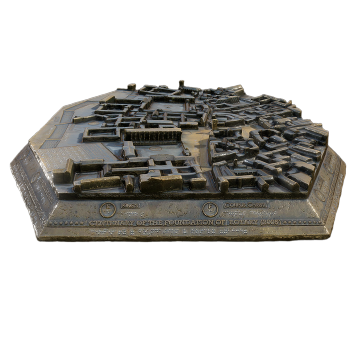
The 19th century Jerusalem City Church supports Vision Pro visual experience

In the 19th century, Conrad Schick praised the city of Jerusalem, and this cathedral is an important religious building in Jerusalem.
14th century map of Cambridge, UK

14th century map of Cambridge, UK

The historical center of Cambridge is an area surrounded by 14th century city walls. This region reached its greatest glory in the following two centuries. The historical center of Cambridge collects the most important cultural heritage of Cambridge. This area is the most concentrated place of known art works in the world. The historical center of Cambridge was recognized as a World Heritage Site by UNESCO in 1982.
St. Peter's Church in Prades, France supports Vision Pro visual experience

St. Peter's Church in Prades, France supports Vision Pro visual experience

St. Peter's Church is an important building from the 17th century, built on the foundation of a Roman church, and today still retains the Lombard style bell tower from the 12th century. There are 14 small churches next to the nave of the church. The altar painting of the main altar, created by Catalan sculptor Joseph Sunyer in the late 17th century, is the largest Baroque altar painting in France.
Hadrian Villa supports Vision Pro visual experience

Hadrian Villa supports Vision Pro visual experience

This is Hadrian's Villa located in Tivoli, Italy. Hadrian's Villa is a massive villa complex built by Roman Emperor Hadrian between 118-138 AD.
Fort Pat é in France supports Vision Pro visual experience

Fort Pat é in France supports Vision Pro visual experience

Fort Pat é is a compact fortress located on a small island in the Gironde River. Along with Blaye's castle and M é doc's fortress, Fort Pat é can cut off water passages through crossfire. It was built between 1689 and 1693.
Munich City 3D Map

Munich City 3D Map

Jakob Sandtner is a carpenter from Straubing, representing Duke Albrecht V of Bavaria to create famous city models in Bavaria, including Straubing, Munich, Landshut, Ingolstadt, and Burghausen. These carefully crafted map models are currently stored at the Bavarian State Museum in Munich.
The Historical Center of Florence

The Historical Center of Florence

The historical center of Florence is the historical center of Florence, Italy. The historical center of Florence is an area surrounded by 14th century city walls. In the following two centuries, this region reached its greatest glory. The historical center of Florence collects the most important cultural heritage of Florence. This area is the most concentrated place of known art works in the world. The historical center of Florence was recognized as a World Heritage Site by UNESCO in 1982.
Notre Dame Cathedral supports Vision Pro visual experience

Notre Dame Cathedral supports Vision Pro visual experience

Cath é drale Notre Dame - Laon, France is the Notre Dame Cathedral located in Laon, France. The Notre Dame Cathedral is located in Laon, Aisne, Hauts de France, France. This church was built in the 12th and 13th centuries and is an early Gothic architecture.
The Oyster Island Hradu Castle in Czech Republic supports Vision Pro visual experience

The Oyster Island Hradu Castle in Czech Republic supports Vision Pro visual experience

Oyster áč ansk é ho Hradu, also known as Oyster áč ansk ý hrad, is a historic castle located in the Czech Republic. The construction of Oyster Island began in 1260-1270.
The Catholic Church of Canada

The Catholic Church of Canada

The Catholic Church in New Brunswick, Canada has a long history and rich religious culture. The Cathedral of Our Lady of Santa Maria, located in St. John's, is one of the oldest churches in New Brunswick, founded in 1855 and consecrated on July 16, 1885. It is not only a Latin rite church of the Roman Catholic Church, but also listed as one of Canada's historic churches and on the pilgrimage list for the Year of Mercy. The architectural style blends Roman and Gothic elements. On February 20, 2001, the church was named a provincial-level historical site.
Hampton Court Palace Scene in the UK

Hampton Court Palace Scene in the UK

It is a historic palace in England, built in 1514 by Thomas Wolsey, the First Minister of Henry VIII. After losing favor, Wolsey presented the palace to Henry VIII in 1529 for forgiveness. Henry VIII was very fond of this palace and quickly arranged for its expansion to accommodate his large number of courtiers. In the early 1790s, William III carried out large-scale reconstruction and expansion work with the aim of rivaling the Palace of Versailles in France. However, this project was halted in 1694, resulting in the palace presenting two completely different architectural styles: Tudor and Baroque.
Scenes from the Palace of Versailles in France

Scenes from the Palace of Versailles in France

It is a former royal palace in France, located in the city of Versailles, about 19 kilometers west of Paris. This palace was ordered to be built by King Louis XIV and is now owned by the French Republic. Since 1995, the Palace of Versailles has been managed by public institutions under the French Ministry of Culture. Attracting approximately 15 million tourists annually, it is one of the most popular tourist attractions in the world. The palace is renowned for its magnificent architecture, exquisite decorations, and vast gardens, and is a symbol of French history and culture.
Windsor Castle Scene in England

Windsor Castle Scene in England

It is a royal residence located in Windsor, Berkshire, England. Closely connected to the British royal family, it has almost carried a thousand years of architectural history. Founded in the 11th century, it was built by William the Conqueror after the invasion of England in Normandy. Since the reign of Henry I (1100-1135), it has been used by reigning monarchs and is the longest occupied palace in Europe. Inside the castle walls, there is also the 15th century St. George's Church, which historian John Martin Robinson considers to be "one of the outstanding achievements of British vertical Gothic design".
Historic Tower in Romania

Historic Tower in Romania

It is a historic tower located in the center of T â rgovi ș te, Romania, belonging to the Curtea Domneasc ă architectural complex. Founded in the 15th century, it was built by Vlad Dracul and his son Vlad Ț epe ș (the legendary vampire Count Dracula). Originally used as a bell tower, it later evolved into a defensive and alert function. In the 17th century, the tower was transformed into an astronomical tower. In the mid-19th century, Prince Gheorghe Bibescu initiated a reconstruction, restoring and transforming it into a fire alarm tower.. The tower is now one of the historical monuments in Romania.
Tower of London, UK

Tower of London, UK

It is a historic building in London, England, built in the 11th century and ordered by William I. It is not only a royal palace, but also a prison, fortress, arsenal, mint, royal zoo, and national monument.. The most famous building of the Tower of London is the White Tower, which is an outstanding representative of medieval military architecture and the core of the entire Tower of London complex. Witnessing the historical changes of Britain, it was once a symbol of royal power and a venue for political struggles. Nowadays, the Tower of London is a popular tourist attraction with a collection of gems from the British Crown, attracting thousands of visitors every year.
Louvre Museum in France

Louvre Museum in France

Also known as the Louvre Museum, it is a national art museum located in Paris, France. Located in the first district on the right bank of the Seine River, it houses many classic works of Western art, including the Mona Lisa and the Venus de Milo. Originally the Louvre Castle, it was built in the late 12th to early 13th century by Philip II. The remains of the medieval Louvre Castle can be seen in the basement of the museum. As the city expanded, the castle gradually lost its defensive function. In 1546, Francis I transformed it into the main residence of the French king.
St. Albans Cathedral in England

St. Albans Cathedral in England

The official name is St. Alban Cathedral and Abbey Church, but locals commonly refer to it as a "monastery". It is an English church cathedral located in St. Alban, England. Built in the 8th century, the existing buildings are Norman or Romanesque from the 11th century, and also include Gothic and 19th century additions. Most of the buildings in the church can be traced back to the Norman period. After its dissolution in the 16th century, it ceased to be a monastery and became a cathedral in 1877. The church is 85 meters long and is the longest nave among all cathedrals in England.
Ruins of Prussian Military Camp in Germany

Ruins of Prussian Military Camp in Germany

The 19th century military camps are historical relics of the German Prussian army, witnessing the baptism of the Industrial Revolution and war in the early 20th century. These buildings are typically made of sturdy concrete, with surfaces that may have cracked, and windows adorned with exquisite artistic details. As time passed, these once glorious military camps gradually became abandoned and turned into ruins. It is not only a witness to military history, but also a representative of industrial architectural art. Although there may only be ruins left now, these buildings still attract history enthusiasts and photography enthusiasts to explore and document.
The mural on the top of Notre Dame Cathedral in Norte da Luz

The mural on the top of Notre Dame Cathedral in Norte da Luz

The Notre Dame Cathedral is a building built in the late 16th century, located next to the ancient Sun Gate Square, originally intended to house the Sisters of the Light. In the mid-18th century, a third nun of the Franciscan Order hoped to establish a monastery next to the church and requested to use the church as a place of worship for the monastery. Since 1882, this building has been used as the Saint Andr é Civilian Hospital. There is a small rectangular room next to it, characterized by two arched ribbed domes, and the dome and upper wall are decorated with murals. The original purpose of this room is not yet clear, but it is likely that it was originally the sacristy of a church.
Peres Castle, Romania

Peres Castle, Romania

It is a palace located in the Carpathian Mountains of Romania and is a Neo Renaissance style palace. It consists of three buildings: Peles Castle, Peleso Castle, and Foisso Hunting Lodge. This palace was built for King Carol I of Romania from 1873 until its completion in 1914. When Carol I first visited the area in 1866, he was attracted by the magnificent mountain scenery and decided to build a palace here. Castles are not only symbols of the Romanian royal family, but also important cultural and historical heritage of the country.
Old railway stations in Germany from the 19th to the 20th century

Old railway stations in Germany from the 19th to the 20th century

They are representatives of historical architecture in Germany from the 19th to the 20th century, witnessing the rise and development of railway transportation. Usually using classic brick and stone structures, its facade is decorated with exquisite brick carvings and concrete details. Over time, some stations have been abandoned and become dilapidated due to various reasons. The stations in these ruins, despite cracked walls and peeling concrete, still retain a unique beauty and historical value. Not only is it a witness to history, but it has also become a hot spot for photography enthusiasts and urban explorers to explore, allowing people to feel the passage of time and the weight of history in these forgotten corners.