Nordhoff Lighthouse, Netherlands

Nordhoff Lighthouse, Netherlands

On the embankment located approximately one kilometer north of the village of Sikapel at the mouth of the Siskeld River in the Netherlands. This small lighthouse is made of cast iron and was built in 1875 by Quirinus Harder, who designed multiple Dutch lighthouses. The lighthouse is manufactured by the NeringB ö gel iron factory in Devonte. The lighthouse, along with the lights of the Great Lighthouse, guides ships through the Oostgat Channel in Siskeld. The main body of the lighthouse is red with a white stripe. The light from the lighthouse comes in three colors: red, white, and green. These colors are separated by shading boards.
Kirk Madeline Church in Scotland

Kirk Madeline Church in Scotland

Located in the Rhins region of Scotland. This location was once the site of an early church, and three early Christian stone tablets dating back to the 6th century have been discovered here. These stones include Latin inscriptions and Greek Christian crosses, commemorating clergy and standing in the cemetery around the church until the 1840s. These stones confirm the early existence of a Christian church, which was very important in history. The Christian worship in this location can even be traced back to the 400s before the construction of the church, when there was a monastery here. The existing church was built in the late 19th century.
Czech Saint Catherine's Dome Church

Czech Saint Catherine's Dome Church

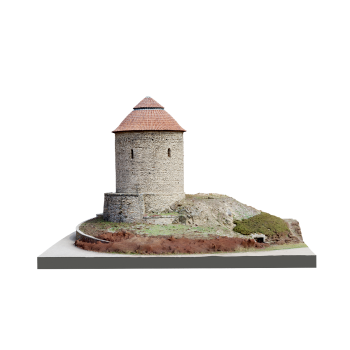
It is an early medieval dome building located in Znojmo, Czech Republic. This dome shaped church consists of an elliptical nave and a semi-circular apse facing east. Its masonry is not made of traditional Romanesque stones, but carefully stacked with irregular dark quarry stones. The first mention of this building dates back to 1100, when Bohemian Duke Bo ř ivoy II held his wedding here. The function of the dome shaped church is not fully understood, but it is speculated that it may serve as a religious place of worship for the castle owner and his followers, as well as the surrounding area. The building was rebuilt in 1888.
Jvari Monastery in Georgia

Jvari Monastery in Georgia

It is a 7th century monastery located near Mtskheta, Georgia, near Tbilisi. It is a rare early medieval Georgian church that has been preserved almost unchanged to this day. The monastery is built on the top of Jvari Mountain and is a model of medieval Georgian architecture harmoniously connected to the natural environment. Built between 586 and 605. The importance of the Jvari architectural complex has increased over time and has attracted many pilgrims. In 996, Jvari was listed as a UNESCO World Heritage Site along with other monuments in Mtskheta.
Durham Cathedral, England

Durham Cathedral, England

The Durham Cathedral, officially named Christ, Mary and St. Cuthbert, is a cathedral of the Church of England located in Durham, England. It is the seat of the Bishop of Durham and also the mother church of the Durham Diocese. The cathedral houses the holy niches of the Anglo Saxon saints Cuthbert and Bede. There are daily worship activities of the Church of England here, and in 2019, 727367 visitors were received. Durham Cathedral is a Grade I protected building and is part of the Durham Castle and Cathedral World Heritage Site.
Torrequiara Castle, Italy

Torrequiara Castle, Italy

It is a 15th century castle located near Langilano in the province of Parma in northern Italy. It is located on the terraced hills south of Parma city, strategically overlooking the Parma River Valley below. This castle was commissioned by Pierre Maria II de Rossi, Count of San Secundo IV, and was built from 1448 to 1460. The castle showcases the influence of the Sforza family castle, particularly the style of Visconti Sforza castle.
Beuzin Castle, Poland

Beuzin Castle, Poland

Located in the southern part of Poland, Beuzin is a castle with a long history. This stone castle was first built in the 14th century, and its predecessor was a wooden defense structure established in the 11th century. As an important military fortress of the Kingdom of Poland and later the Polish Lithuanian Commonwealth, B é uzin Castle played a crucial role in history. It not only provides security for Poland's borders, but also serves as an important witness to the cultural and military history of the region. The architectural style and historical background of the castle have attracted numerous tourists and history enthusiasts.
Castle of Veves

Castle of Veves

Ch â teau de V ê ves is located in Celles, one of the most beautiful villages in the Walloon district. The appearance of this castle resembles a castle in a fairy tale, and it is also considered one of the most beautiful medieval castles in Belgium and a special heritage of the Walloon region. The castle was destroyed in 1200, rebuilt in 1230, burned down again in the early 15th century, and rebuilt after a fire. Until the end of the Middle Ages, this castle remained a military fortress. It consists of five towers and an extraordinary half timbered structure dating back to the 16th century.
German Bell Farmhouse

German Bell Farmhouse

Built around 1820, it showcases the typical architectural style of the Hunsluck region in Germany. This two-story farmhouse adopts a two bedroom deep wooden frame structure, and the entire living area is covered with natural stone slabs. On the left side of the farmhouse is the expansion of the stone stable built in 1848, which has now been equipped with modern toilet facilities in the museum. Not only is it a representative of traditional architecture in the Hunsluck region, but it also witnesses the changes in local agricultural history. The use of wooden frame structures and natural stone slabs not only showcases the architectural techniques and material choices of the time, but also reflects the harmonious integration of the local natural environment and architectural style.
Corvin Castle, Romania

Corvin Castle, Romania

Also known as Hunyadi Castle or Hunedoara Castle, it is a Gothic Renaissance style castle located in Hunedoara, Romania. Considered one of the largest castles in Europe and listed as one of the Seven Wonders of Romania. Built in the 14th century, ordered by King Matthias Hunyadi of Hungary. The design incorporates elements of Gothic and Renaissance architecture, showcasing a unique architectural style. Not only is it an important cultural heritage of Romania, but it is also an outstanding representative of European historical architecture. Nowadays, it has become one of the famous tourist attractions in Romania.
Monasise Castle Pavilion Architecture in Trier

Monasise Castle Pavilion Architecture in Trier

It is an outstanding representative of classical architecture, designed by French architect Fran ç ois Ignatz Mangan and built between 1779 and 1783. This building is renowned for its elegant circular structure and colonnade, and is one of the oldest buildings of its kind in Germany. The Muse Temple, once a castle resident, symbolizes a holy land of wisdom and art. It was a manifestation of delicacy and elegance in garden design at that time. It is an important material for studying 18th century European architectural art and a valuable place to understand and appreciate classical architectural aesthetics. Becoming an outstanding representative of classical architecture in Germany and even Europe.
Marterta, Alderburg, UK

Marterta, Alderburg, UK

The Alderburg Martell Tower is a historic defense tower located on the Alderburg coastline in Suffolk, England, built during the Napoleonic Wars from 1808 to 1812. This tower is famous for its unique design, with four gun emplacements on the roof, which was extremely rare in the Martel Tower at that time. Its existence is to strengthen coastal defense, covering both the river behind and the sea ahead to deal with potential invasion threats. Not only a symbol of military defense, but also a part of British history, witnessing the military strategy and architectural technology of that era.
The Pillar of Our Lady of Trier

The Pillar of Our Lady of Trier

It is a historic commemorative building that was first built in 1854 and completed in 1866. This tower shaped structure is about 40 meters high and is carefully stacked from sturdy sandstone blocks. The foundation and base are made of heavy stones left over from the Roman period, which have been reused to add a sense of historical weight to this Neo Gothic style building. It reflects the architectural spirit of the Romantic period in the 19th century, and its design and decorative details embody the artistic style of this period. Not only is it a religious symbol, but it is also an important part of the urban landscape of Trier.
Laarne Castle, Belgium

Laarne Castle, Belgium

Located in Laarne, Belgium, it is a castle with a long history. Built around 1200 years ago, it was originally a wooden structure. Subsequently, the foundation was raised and a more sturdy building was constructed. Around 1300, castles began to be built using stone, forming the current watchtower. In less than a century and a half, the castle area developed into a complete castle with a moat. Witnessing hundreds of years of historical changes in Belgium, it is an important cultural heritage of Belgium. It has extremely high historical value and is also an important example for studying medieval castle architecture. The architectural style and structural layout reflect the political, economic, and cultural characteristics of the society at that time.
Flaningham Castle, UK

Flaningham Castle, UK

Located in Suffolk, England, it is a castle with a long history. There used to be an old workhouse or workshop inside the castle, which has now been transformed into a caf é, shop, and museum. Tourists can enjoy delicious coffee and snacks here, while also purchasing some souvenirs. The museum showcases the history of castles and workhouses, allowing visitors to gain a deeper understanding of the region's history and culture. This castle is not only a witness to history, but also a perfect combination of modern life and ancient traditions.
Gemepe Castle, Belgium

Gemepe Castle, Belgium

Also known as Hagimont Castle, it is located in the town of Hagimont in the province of Luxembourg in the Walloon region of Belgium, and is now part of the city of Marsh En Famenne. Built in the 13th century, it was originally a 23 meter high square main building used for residential and defensive purposes, and was the residence of the Jiemei Pei family. In the 17th century, the Ans family expanded the castle by adding three wings, forming the quadrilateral building that is now visible. Once abandoned in the 20th century, it was later purchased and fully renovated, and now it is a modern conference center. Surrounded by typical hills and beautiful scenery of the Ardennes region in Belgium.
Milwalt Castle, Belgium

Milwalt Castle, Belgium

It is a historic castle located in the town of Milwalt in Saint Hubert, Luxembourg Province, Belgium. It is located on rocks above the Lom Valley, enjoying spectacular natural scenery. The origin of the castle can be traced back to the 11th century, when it was part of the Duchy of Lorraine and used as a military fortress. Witnessing the turbulent history of the Middle Ages, the lords of Milwalt had multiple intense conflicts with surrounding feudal lords such as the lords of Buon and Osimont during that era. These conflicts are often over the struggle for territory and power, reflecting the complex power structure and territorial disputes of feudal society at that time.
Chateau Bretchet in France

Chateau Bretchet in France

It is a medieval building located in the city of Misirac in the Loire department of the Atlantic in France. It was first built in the 14th century and underwent reconstruction in the 19th century. It has been listed as a historical monument since January 7, 1926, and its surrounding environment has also been listed as a protected area since May 17, 1943. Attracting tourists with its romantic and charming architectural style, although the interior is not open to the public, its outer courtyard is available for visitors to visit and appreciate the environment listed as a historical monument. Currently, it is a luxury hotel and restaurant surrounded by an 18 hole golf course, providing visitors with a place that combines historical value with modern comfort.
Frukur Castle, Belgium

Frukur Castle, Belgium

Located in the southern part of the province of Liege in the Walloon region of Belgium, between the villages of Stumont and Lagerlaise, overlooking the Anblaf River Valley. Built in 1912, it was completed by Charles Albert de Haren in 1919, who was the mayor of Stormont. The castle has distinct medieval features, including castle towers and watchtowers. The history can be traced back to the Middle Ages, when there was another castle here to guard the valley. Around 1600, it was replaced by another castle called Salm Castle and became a symbol of the glory of Stormont. However, the origin of the glory of Frukur, named after its original inhabitants, remains a mystery
St. Peter and Paul's Church

St. Peter and Paul's Church

It is a church with a long history, built around 1120 and adopting the Romanesque style. Not only religious buildings, but also the first part of the three defense works. In 1320, the church underwent an early Gothic expansion. In the 15th century, in order to strengthen defense, a defensive wall was built around the cemetery surrounding the church. In 1987, murals dating back to around 1320 were discovered and restored, depicting Saint Christopher. This church witnesses the evolution of architectural styles and historical changes in medieval Europe, and is an important heritage for studying medieval architecture and art.
St. Jacob's Church in Austria

St. Jacob's Church in Austria

It is a Roman Catholic church located in the southern part of the village of Regensburg in the municipality of Staldof, Austria. This church is named after Saint James and is a Baroque style building that was converted from a granary in the late 17th century. The tower is one of its prominent features, decorated with an onion shaped dome at the top, adding an oriental touch to the church and making it stand out among the surrounding buildings. In 1770, the church established a diocese, and in 1783, it officially became an independent diocese, marking a further recognition and elevation of the importance of the church in religious and social life.
Maria Magdalena Chapel

Maria Magdalena Chapel

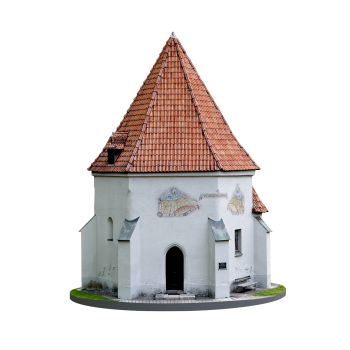
It is a hexagonal central building built in the first half of the 13th century. It has a tent style roof and a circular rear hall. This building was once used as a bone storage hall and is now used as a funeral home. Known for its unique hexagonal design and tent roof, these features make it particularly distinctive in medieval architecture. The circular rear hall adds beauty to the building and makes it more harmonious structurally. As a place for storing remains, it has witnessed the end of many lives and commemorations. Now transformed into a funeral home, continuing to provide a space for people to mourn and bid farewell.
St. Michael's Fortified Church Gothic Crematorium

St. Michael's Fortified Church Gothic Crematorium

Located within the reinforced church of St. Michael's, the attached crematorium is a place for storing the remains of the deceased, in order to address the limited space of St. Michael's cemetery. This crematorium was built after 1395. It is a tall and narrow building with five spires on the east side, sturdy stepped buttresses, double layered pointed arch windows adorned with clover flowers, and pointed arch windows adorned with clover flowers. The crematorium is located between the rear hall of the reinforced church and the reinforced tower in the southeast corner. The interior is a single span structure with a ribbed dome at the top, supported on a Holy Grail shaped pedestal.
Poland's historic wooden church

Poland's historic wooden church

Located in the Carpathian region of Poland, there is a historic wooden church. Built in 1759, it was originally a courtyard chapel of the Kuchkovsky family, named after the Gospel of St. John. In 1778, it became a branch church, and from 1788 onwards, it became the parish church of the newly established Diocese of Saint Anne. Until 2004, this building was used as a parish church until a new church was built and put into use. On April 7, 2004, it was included in the memorial registry.
Lalne Castle, Belgium

Lalne Castle, Belgium

It is a castle with a moat located in Larne, East Flanders, Belgium, near its capital city of Ghent. The Lalne Castle is located at an altitude of 3 meters and was built in the 11th or 12th century to guard the sea passage leading to Ghent. A comprehensive renovation was carried out in the 17th century. This castle not only witnesses the history of Belgium, but also has become an important tourist attraction and cultural heritage site in the area with its unique architectural style and rich cultural heritage.
Carnarvon Castle in Wales

Carnarvon Castle in Wales

It is a medieval fortress located in Gwyneth County, northwest Wales. The first defensive structure on this site was a mound and fenced castle built in the late 11th century, which was replaced by the current stone structure by King Edward I of England in 1283. The castles and towns established by Edward I became the administrative center of North Wales, so the defensive works were built on a grand scale. The design of the castle is intentionally linked to the Roman history of Caernarfon - nearby is the Roman fortress of Segantin, and the walls of the castle evoke the city walls of Constantinople.
Redby Castle, England

Redby Castle, England

It is a medieval castle located near Staindrup in County Durham, England, covering an area of 200 acres (approximately 810000 square meters) in a deer park. Built by John Neville, the third Baron Neville, around 1367 to 1390. Cecily Neville, the mother of Edward IV and Richard III, was born here. In Charles Neville, the sixth Earl of Westmoreland, the castle was taken over by the royal family after the Northern Revolt led by him in support of Queen Mary of Scotland failed in 1569.
Pembroke Castle, Wales

Pembroke Castle, Wales

It is a medieval castle located in the center of Pembrokeshire, Wales, and also the former family residence of Pembrokeshire. Since 1951, it has been listed as a first-class protected building and underwent extensive restoration in the early 20th century. In 1093, Arnolf de Montgomery built his first castle on the cape next to the Pembroke River during the Normandy invasion of Wales. A century later, Richard I gifted the castle to William Marshall, who became one of the most powerful figures in 12th century England. Marshall rebuilt Pembroke Castle with stones, forming most of the existing structures today.
Villeneuve Castle, Belgium

Villeneuve Castle, Belgium

Located in the Walloon region outside the village of Seles in the province of Namur, Belgium, it sits on a rocky platform. This castle is classified as a major heritage site in the Walloon region. Originating from 670 to 714 AD, military leader Pepin Hestar ruled the region at that time. Not only is it an important representative of 15th century military architecture, but it is also known for its magnificent towers and exquisite wood carvings. Owned and maintained by the same family for over 800 years, it is considered an outstanding heritage of the Walloon region. Not only is it a historical relic, but it is also a historical heritage site that the public can visit. Its interior decoration and furniture have been carefully restored, restoring its former glory
Part of the Nine Dragon Wall in Beijing, China

Part of the Nine Dragon Wall in Beijing, China

The Chinese Loong is one of the symbols of China in Beijing, and the Nine Dragon Wall is an outstanding representative of this symbol. Built in the 21st year of the Qianlong reign (1756), it is a colored glazed brick screen wall. Renowned for its exquisite craftsmanship and unique design, it is carved with nine lifelike dragons, each with a unique shape and vivid imagery, showcasing the majesty and mystery of dragons in traditional Chinese culture. Not only is it a treasure of Chinese architectural art, but it is also an important symbol of Beijing's historical and cultural heritage. Located within Beihai Park in Beijing, it is a part of the royal garden and has witnessed the prosperity and glory of the Qing Dynasty. It is a symbol of traditional Chinese culture.
Densu ş Stone Church in Hunedoara, Romania

Densu ş Stone Church in Hunedoara, Romania

The Densu ş Stone Church, located in Densu ş Village, Hunedoara County, Romania, is a historic religious building and is considered one of the oldest stone churches in Romania. The history of the church can be traced back to the 14th century, and some historians even believe that it may be even older. The walls of the church are constructed from limestone blocks taken from nearby ancient Roman cities. Not only is it a religious building, but it is also a symbol of Romanian culture and history. Witnessed the rich history from the Dacian era until today. Due to its unique historical value and architectural features, it has attracted numerous domestic and foreign tourists to visit and pilgrimage.
San Carapet Church in Amini

San Carapet Church in Amini

A medieval monastery complex located in Armenia, also known as Camille Monastery or Zolakiu Monastery, has significant architectural and historical value. The St. Karapette Church is a highlight of the architectural complex, built in 1205 and belonging to the vaulted church type. On the east side of the church, there is a semi-circular main altar, and on both sides are arched vestibules with a right angle perspective. The church has two entrances, located on the west and north sides respectively. All facades are decorated with 'Armenian Hymn'. The dome of the church was destroyed in the 1939 earthquake and was repaired in 1980.
Railway Workers' Cabin

Railway Workers' Cabin

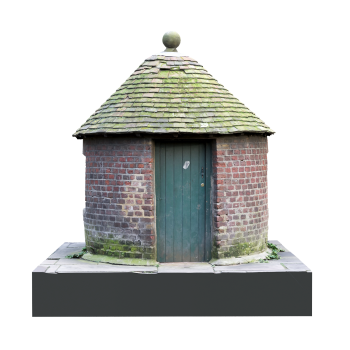
The railway worker's hut ruins in Rosedale East area are named after their exterior walls coated with creosote, a coating used for moisture and corrosion prevention. Recently, these small houses have been reinforced and re jointed, and there have been some instances of lime seepage. However, over time, this seepage will gradually subside. These small houses are not only witnesses to history, but also reflect a side of the life of railway workers in the past. Their existence provides valuable physical materials for studying local history.
Kensal Green Non-Anglican Chapel, London

Kensal Green Non-Anglican Chapel, London

A historic chapel within Kensal Green Cemetery in London, built in 1834 and designed by John Griffith in the Greek Revival style. This chapel especially served non-Anglicans and was of great significance in the religious environment of Britain at the time. Not only was it one of the first permanent structures within Kensal Green Cemetery, but its design had a profound influence on the later cemetery architecture and monument style. Major restoration work was completed in 1997. At the same time, the chapel and its basement are also open to the public, becoming an important place to learn about the design of the 19th century cemetery and the history of religion.
Paldov St. Rox Chapel

Paldov St. Rox Chapel

The St. Rox Chapel located in Pardov is a Baroque style chapel built in the first half of the 18th century. The establishment of this chapel is related to the last large-scale plague outbreak in Europe at that time, hence the name 'Plague Chapel'. The facade is decorated with niches, in which statues of saints are placed, reflecting people's fear of epidemics and their desire for divine protection at that time. Not only is it a religious site, but it is also a symbol of the culture and history of the Pardov region. It witnessed a difficult period in human history and is also evidence of the spread and development of Baroque art in Central Europe.