Nature/Plants
bamboo
Bamboo is a perennial herbaceous plant belonging to the Poaceae family and the Bamboo genus. Its stems are mostly woody with some grassy material, slightly hollow in the middle, and have many dense nodes. It is usually 5-10 meters tall, and some can even reach over 40 meters; Bamboo leaves are narrow lanceolate in shape, with a dark green leaf surface; Bamboo flowers resemble rice ears, with the main color being yellow; The flowering period is usually in May, and the fruiting period is in October. The name "bamboo" comes from its ancient Chinese characters, which represent drooping bamboo leaves and later evolved into the current Chinese character "bamboo".
banana tree
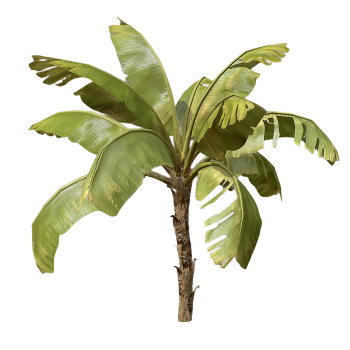
Banana (Musa nana Lour.), a perennial herbaceous plant in the genus Musa of the family Musa, grows in clusters and has creeping stems; False stems are thick green with black spots; The leaves are oblong in shape, with a dark green color on top and no white powder, and a light green color on the bottom; The flowers are milky white or light purple in color; The fruit is curved and arched, with edges. The skin is greenish green and turns yellow when ripe; The flesh is soft, yellow white, sweet and fragrant, and seedless.
Rocks of the Matanuska Glacier in Alaska
Matanuska Glacier is a valley glacier located in Alaska, United States. 27 miles (43 kilometers) long and 4 miles (6.4 kilometers) wide, it is the largest glacier that can be reached by car in the United States. Its glacier terminus is the source of the Matanuska River. It is located near Glenn Highway, about 100 miles (160 kilometers) northeast of Anchorage. The Matanuska Glacier has a daily flow of approximately 1 foot (30 centimeters). Due to the melting of glaciers in lower areas, as of 2007, there has been little change in the position of glacier tips over the past 30 years.
Rocks of the Matanuska Glacier in Alaska
Matanuska Glacier is a valley glacier located in Alaska, United States. 27 miles (43 kilometers) long and 4 miles (6.4 kilometers) wide, it is the largest glacier that can be reached by car in the United States. Its glacier terminus is the source of the Matanuska River. It is located near Glenn Highway, about 100 miles (160 kilometers) northeast of Anchorage. The Matanuska Glacier has a daily flow of approximately 1 foot (30 centimeters). Due to the melting of glaciers in lower areas, as of 2007, there has been little change in the position of glacier tips over the past 30 years.
an acacia
Acacia farnesiana (L.) Wight&Arn Fabaceae is a shrub of the genus Acacia, whose stem surface is rough and appears black brown; The supporting leaves are thorny and sharp, the compound leaves are feather shaped, and the small leaves are linear and rectangular in shape; Its flowers are numerous and dense, mostly spherical in shape, with a yellow color and fragrant taste; The fruit is cylindrical in shape, while the seeds are oval in shape, mostly brown. Its flowering period is in spring, and its fruiting period is in summer and autumn. Due to its golden appearance when in full bloom, it is named Acacia.
Cat's eye grass
Chrysosplenium grayanum, a traditional Chinese medicine name. The whole plant of Euphorbia escula L. [Euphorbia lunulata Bunge], a plant belonging to the family Euphorbia and genus Euphorbia. The plant cat eye grass is distributed in Northeast China, Inner Mongolia, Hebei, Shaanxi, Shandong, Jiangsu and other places. It has the effects of relieving cough, eliminating phlegm, dispersing nodules, dispelling water, removing toxins, and killing insects. Indications include phlegm retention, cough and wheezing, edema, scrofula, scabies, and unnamed swelling and toxin.
Willow
Willow trees are trees of the willow genus in the willow family. Branches are cylindrical in shape, with a nearly circular pith; No apical buds, lateral buds usually adhere closely to the branch, and bud scales are single; Leaves alternate, sparsely opposite, usually narrow and long, often lanceolate, feather veins, serrated or entire, petiole short, with supporting leaves, often serrated; The inflorescence of the hibiscus is upright or obliquely spread, with the bracts covering the entire edge, and the pistil composed of two carpels; The capsule is split into two petals; The seeds are small and often dark brown in color. The flowering period is from February to March, and the fruiting period is from March to April. The name of willow tree comes from its head wood working method. The result of the head tree homework is to preserve the trunk for continuous use of the branches, and the pronunciation of the word "willow" is the same as that of "liu", hence the name "willow tree".
Yunzhi
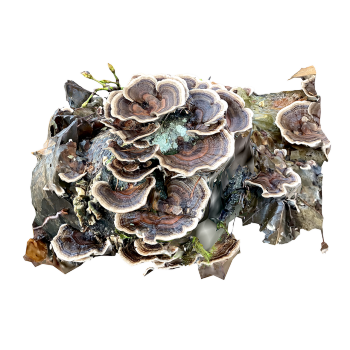
Yunzhi is one of the most medicinal fungi, with functions such as clearing heat, detoxifying, anti-inflammatory, anti-cancer, and hepatoprotective. Yunzhi, also known as "turkey tail", has very recognizable features. It may be a forest fungus named after a bird, named after local features rather than the whole. The fruiting body of the colored velvet cap fungus is one year old. Leafy to semi fibrous, lateral without stems, often covered in tile like folds, often connected to the left and right, the fruiting bodies that grow on the cross-section of the stump or fallen wood often enclose in a lotus seat shape.
Turtle backed bamboo
Monstera deliciosa Liebm. is a climbing vine like shrub in the Araceae family. The stem is thick and green, with pale crescent shaped leaves and fleshy aerial roots; The leaves are arranged in two rows, with a long stem and a heart-shaped oval shape. The leaves are thick and leathery, and the edges are feather shaped and split; The inflorescence stem is rough, the spatula is thick and leathery, the flesh inflorescence is nearly cylindrical, the flowers are unisexual, light yellow, and the flowering period is from August to September; The berry is light yellow in color and the fruit is edible. Due to its bamboo like branches, huge green leaves, and unique appearance resembling patterns on a turtle shell, it is named "Turtle backed Bamboo".
Spruce
Spruce is a perennial green tree that inhabits mountainous areas and river valleys at elevations of 2000 meters (6600 feet) to 3800 meters (12500 feet). The Hardiness Zones are classified as level 6 to 7, requiring sufficient sunlight, a moist environment, good drainage, and neutral to acidic soil. It can grow in poor or strong acidic soil, but cannot adapt to air pollution environments and grows slowly. In natural environments, it often accumulates into vast pure forests, resembling white clouds from afar, hence the name Spruce.
Monkey Joyful Fruit
Monkey Joy (Sloanea sinensis (Hance) Hemsl.) It is a tree of the genus Monkey Joy in the family Du Ying, with a height of up to 20 meters; The leaves are thin and leathery, with varying shapes and sizes, usually oblong or narrow ovate, with a short and acute apex, and the petiole is hairless. Multiple flowers clustered in the axils of branches and leaves; The flower stem is covered with gray fur; Sepals are broadly ovate in shape, petals are white with slight hairs on the outer side, stamens are of equal length to petals, ovary is ovate in shape, styles are fused, capsules vary in size, fruit petals are of different lengths, seeds are black and shiny, false seed coat is long, millimeter, yellow. It blooms from September to November and matures in June to July of the following year.
Pine
Pinaceae (scientific name: Pinaceae) is a family of pine trees in the order Pinaceae, commonly known as pine or pine trees. Although many species are called "fir" in Chinese, their general characteristic is that their leaves are shaped like needles to prevent large amounts of water from evaporating. And in some places with less hot climates, around 40 to 60 degrees north latitude (such as Europe), this type of plant is also common. There are 11 genera and approximately 220-250 species in the pine family, mainly distributed in the northern hemisphere.
A withered tree covered in mushrooms and moss
Pleurotus ostreatus, scientific name, is a fungus of the genus Pleurotus in the family Pleurotus. It is an edible fungus that is rich in nutrients. The fruiting bodies are clustered or stacked, and the cap is covered in tile like clusters, fan-shaped, shell shaped, and irregular funnel-shaped. The flesh of the mushroom cap is thick and soft. The surface color of the bacterial cap changes under the influence of light, with darker light intensity and lighter light intensity. The gills are white in color, with varying lengths. The longer ones extend from the edge of the cap to the stem, while the shorter ones only have a small section at the edge of the cap, forming a fan-shaped structure. Fungi stem lateral or lateral, white, medium solid; The mycelium is white, thick and powerful, and the flesh is white, slightly thick, and soft.
Concave leaf red bean pods
Ormosia emarginata (Hook.&Arn.) Benth, It is a small evergreen tree of the dicotyledonous plant class, legume family, and red bean genus, with flattened pods and a flowering period from May to June. Born in mixed forests on hillsides and valleys. The concave leaf red bean wood is of excellent quality and can be sliced and veneered with veneer. It is a precious material of three types in Hainan. The pod is flat, black brown or black, diamond shaped or oblong, measuring 3-5.5 cm in length and 1.7-2.4 cm in width, with pointed ends. The neck of the fruit is 2-3 mm long, and the petals are woody with septa on the inner surface. There are 1-4 seeds.
Poison fly umbrella variant guessowii
A variant of the Poison Fly Umbrella, Guessowii, has a yellow to green surface and an orange or even dark orange center.
Poison fly umbrella
Amanita muscaria, also known as fly agaric or fly amanita, is a neurotoxic fungus in the Basidiomycota phylum, classified as a species of the Amanita genus in the Amanita family. The growth environment of the poisonous fly umbrella covers temperate and polar regions in the northern hemisphere, and has unintentionally expanded to the southern hemisphere, coexisting with pine trees and other plants in pine forests. It has now become a global species. The poisonous fly umbrella forms mycorrhizae with deciduous plants and fruit bearing plants.
Dead wood covered in moss and mushrooms
Dead trees in the forests of the Pacific Northwest region in autumn
Tea plum specimen
Camellia is a small tree in the Camellia genus of the Theaceae family. Branches sparse, tender branches hairy; Leaves leathery, elliptical in shape, dark green and shiny when dried on top, brownish green below, hairless; The flowers vary in size, with soft hairs on the flower buds and sepals, and wide, inverted petals that are red in color; Capsule spherical, seed brown, hairless; The flowering period is from November to March of the following year. Because its flower shape combines the characteristics of plum blossom and camellia, it is named Camellia. Camellia prefers warmth and moisture, prefers light but is slightly tolerant to shade, and avoids strong light. It is a semi negative plant and is suitable for growing in well drained, humus rich, and moist slightly acidic soil. The main propagation method of Camellia sinensis is through cutting propagation.
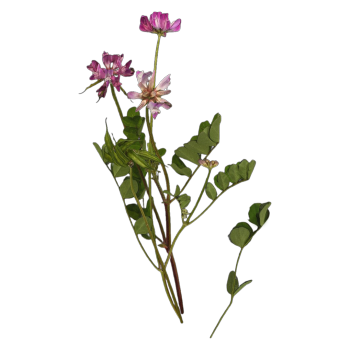
Purple Cloud English Specimen
Ziyun Ying is an annual or over annual herb of the Astragalus genus in the legume family; Enlarged roots and well-developed fibrous roots; The stem is light green or light purple red, soft and hollow; The leaves are odd feathered compound leaves, green or light green; The flowers are umbels with colors ranging from light purple red to purple red, occasionally white; The pods are slender and have a triangular cross-section; The seeds are kidney shaped, shiny, and yellow green in color; Flowering period from February to April; The fruiting period is from March to May.
Wild chrysanthemum specimen
Wild chrysanthemum is a perennial herbaceous plant belonging to the Asteraceae family, with underground creeping stems and sparsely hairy stems and branches; The central stem and leaves are ovate, elongated ovate, or elliptical ovate in shape, with light green on both sides; The flowers are arranged in dispersed umbrella shaped or umbrella shaped inflorescences, with white brown edges and yellow tongue shaped flowers. The flowering period is from June to November.
Iron holly fruit specimen
Iron holly is an evergreen tree or shrub of the holly family and genus, with gray branches, angular branches, and reddish brown color; Leaves alternate, oval to elliptical in shape, with a glossy surface on top; Flowers are unisexual, dioecious, with umbels, oval shaped, small female flowers, and thick stems; The drupe is spherical to elliptical in shape and turns red when ripe; The flowering period is from May to June, and the fruiting period is from September to October. Due to its deep green leaves, purple tender branches, and bright red fruits, it is called "Wan Zi Qian Hong" in garden applications. Iron holly is distributed in North Korea, Japan, Vietnam, and China. Most regions in China, such as Jiangsu, Anhui, and Jiangxi, have cultivation.
Random Model
UETPA light bulldozer
150 View
Blue Outdoor Camping Tent
122 View
Realistic Axe
118 View
giant flat stick insect
161 View