Rhododendron

Rhododendron

Rhododendron simsii Planch. is a deciduous shrub of the Rhododendron genus in the Ericaceae family, standing 2-5 meters tall with numerous and slender branches. The leaves are leathery and often gather at the ends of branches, forming an oval, elliptical, or inverted shape. The front end is short and gradually becomes pointed, and the edges of the leaves are slightly curled and have fine teeth. The upper part is dark green, and the lower part is light white; The corolla is broad funnel-shaped and inverted, usually 2-6 clusters growing at the top of the branch, with rose, bright red or dark red colors. The flowering period is from April to May, and the fruiting period is from June to August.
Wild carrot flower

Wild carrot flower

Daucus carota L. is a biennial herbaceous plant belonging to the family Apiaceae and the genus Carrot, with a height of up to 120 centimeters. The stem is solitary and has white coarse hairs throughout. The basal leaves are thin and membranous, with oblong leaves and two to three fully lobed lobes. The final lobes are linear or lanceolate, with sharp tips and small pointed tips. The stem leaves are nearly sessile, with leaf sheaths, and the final lobes are small or slender. Compound umbel inflorescence, with rough and hard hairs on the inflorescence stem; The bracts are mostly leaf shaped, with feather like division and linear lobes. The flowers are usually white and sometimes light red in color; The flower stalks are not of equal length, and the fruit is round and oval in shape. It blooms from May to July.
Phlox

Phlox

Phlox drumondii Hook. is a plant species in the family Fabaceae, also known as Little Sky Blue Hydrangea, Wild Goose Red, and Golden Mountain Begonia. Annual herb, with upright stems and a height of 15-45 centimeters. Sexual preference for warmth, slightly cold resistant, avoid extreme heat. Native to Mexico, it is cultivated in gardens throughout China. Fluke has a rich variety of colors and can be used as plant material for flower beds, flower borders, and rock gardens. It can also be used as a potted plant for indoor decoration. Varieties with higher plant height can be used as cut flowers.
Red Tulip Blossoms

Red Tulip Blossoms

Tulipa gesneriana L. is a herbaceous plant in the Liliaceae family, belonging to the tulip genus. Tulip bulb ovate; The bark of the bulb is paper, with sparse hairs on the top and base of the inner surface; Leaves are lanceolate or ovate lanceolate in shape; The flower is single and grows at the top, large and beautiful; The flower petals are red or mixed with white and yellow, the filaments are hairless, there is no style, and the stigma is cockscomb; The flowering period is from April to May. Tulip is named "Ocean Lotus" because its flowers (especially petals) resemble lotus flowers and it is native to the Mediterranean coast.
oak

oak

Oak tree (also known as oak or oak tree) is a general term for plants in the Fagaceae family, including species of oak, green oak, and oak, usually referring to oak plants, not a specific tree species. There are 615 species in the oak genus, of which 450 are from the oak subgenus and 188 are from the green oak subgenus. Their fruit is called acorns, and their wood is generally referred to as oak. Oak trees mostly grow in the northern hemisphere. About 200-250 species of oak trees are distributed in the Americas, and more than 300 species of oak trees grow in Asia, Europe, and northern Africa. Although China has abundant resources of more than 50 species of oak trees, most of them are distributed in hilly and mountainous areas, and there are few species of autumn leaf trees, which affects their application in landscaping. The sentence is:.
Du Song

Du Song

Juniperus rigida Siebold&Zucc. is an evergreen shrub or small tree in the family Cupressaceae, belonging to the genus Juniperus. It can grow up to 10 meters tall and has a cylindrical crown with a round head when old. Large branches stand upright, small branches droop. Its leaves are spike shaped, hard, and pointed, with deep grooves on top and a narrow white powder band inside the groove. There are obvious longitudinal ridges on the back. The cone, when ripe, appears light brownish yellow or blue black and is coated with white powder. The seed is nearly oval in shape, with a pointed tip and four inconspicuous ridges.
Scale wax hole fungus on tree stumps

Scale wax hole fungus on tree stumps

Polyporus squamosus, belonging to the family Polyporus, is a medium-sized saprophytic mushroom that inhabits wood and is edible. It is widely distributed and found in North America, Australia, Asia, and Europe, living in hardwood forests. This mushroom is widely distributed and has been found in the eastern Rocky Mountains of the United States, most parts of Europe, Australia, and Asia. It usually grows in spring, occasionally in autumn, and rarely in other seasons. It often grows in patches, with an area of up to 50 centimeters. It plays an important role in forest ecosystems by decomposing wood, usually elm trees, and rarely parasitizes living trees.
Consolida ajacis

Consolida ajacis

In addition to being the name of the species Consolida ajacis (Linn.) Schur, the Flying Swallow Grass is also a nickname for other species in the Ranunculaceae family, such as the Crested Swallow Grass and the Short footed Crested Bird Flower. It is also a nickname for the Pingwu Purple Violet. The flowering period of Swiftgrass is from July to August, and the flowering time varies depending on the planting time. It blooms from July to August when planted in spring, and in May of the following year when planted in autumn.
coconut tree

coconut tree

Coconut (Cocos nucifera L.) is a fruit produced by plants in the palm family of the genus Cocos. This plant is a tall and sturdy tree like plant with thick stems; The leaves are fully lobed, with most of the petals being linear lanceolate, and the petioles being thick and robust; Petals are oval or nearly spherical in shape; The outer skin is thin, the middle skin is thick and fibrous, and the inner skin is woody; When seeds germinate, they emerge through holes, and the fruit cavity is rich in endosperm and juice. The skin is thin, and the seeds germinate excessively; The flowering and fruiting period mainly occurs in autumn. The origin center of coconut trees is in the Melanesian Islands and New Zealand in the Pacific Ocean, where archaeologists have discovered coconut fossils dating back one million years in the alluvial deposits.
Chicken oil fungus

Chicken oil fungus

Chicken oil fungus is a fungus belonging to the Chicken oil fungus genus in the Chicken oil fungus family, also known as egg yolk fungus, yellow fungus, apricot fungus, etc. Chicken oil mushroom fruiting body is fleshy, trumpet shaped, apricot yellow to egg yellow. The cap is 3-10 centimeters wide and 7-12 centimeters high, initially flat, gradually concave, with an extended edge, wavy or petal shaped, and rolled inward. The mushroom meat is slightly thick and egg yellow. The gills are angular, narrow, and extend downwards to the stem, branching or interwoven with transverse veins to form a network. They are the same color as or slightly lighter than the cap. The stem is 2-8 centimeters long and 5-8 millimeters thick, cylindrical in shape, sometimes slightly thinner or larger at the base, and is the same color or slightly lighter than the cap. Spores are elliptical or oval in shape, colorless; Spore print is yellow white.
mushrooms

mushrooms

Mushrooms belong to the order Basidiomycota, order Agaricales, family Tricholomatacete, and genus Lentinus. The scientific name Lentinus edodes originated in China and is the world's second-largest mushroom. It is also a precious edible mushroom that has long been renowned in China. The earliest cultivation of shiitake mushrooms in China has a history of over 800 years. Mushrooms are also famous medicinal mushrooms in China. Chinese pharmacologists throughout history have written about the medicinal properties and functions of shiitake mushrooms. Mushrooms have thick and tender meat, delicious taste, unique aroma, and rich nutrition. They are a food with both food and medicine, and have high nutritional, medicinal, and health value.
boletus impolitus

boletus impolitus

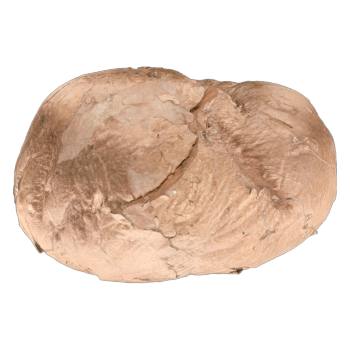
Boletus impolitus, also known as yellow brown boletus, is a fungus belonging to the genus Boletus. There are small germination holes on the mushroom umbrella. They are edible mushrooms, but they are rarely consumed. They will grow on the oak genus. The umbrella of the yellow brown boletus mushroom first takes on a hemispherical shape, gradually becoming flattened or even inverted. The mushroom umbrella initially appears gray white, but later becomes light brown or yellow brown, often with the appearance of being hammered. The diameter of the mushroom umbrella is 5-15 centimeters wide and can reach up to 20 centimeters.
Blue cap mushroom

Blue cap mushroom

Blue cap mushroom, commonly known as blue round head mushroom, is a type of mushroom forming fungus in the family Agaricus. It is a relatively common species found in Europe and North America, where it grows as a saprophytic plant in grasslands, roadsides, hedgerows, gardens, and sawdust coverings. S. Caerulea was officially described by the scientific community in 1979, despite being a unique species for approximately two centuries prior to that. The scientific name "Stropharia cyanea" defined by Tuomikoski in 1953 is synonymous with S. caerulea and was later used by several authors.
Oyster mushroom

Oyster mushroom

Pleurotus ostreatus is a fungus belonging to the genus Pleurotus in the family Pleurotus. The fruiting bodies are clustered or stacked, and the cap is covered in tile like clusters, fan-shaped, shell shaped, and irregular funnel-shaped. The flesh of the mushroom cap is thick and soft. The surface color of the bacterial cap changes under the influence of light, with darker light intensity and lighter light intensity. The gills are white in color, with varying lengths. The longer ones extend from the edge of the cap to the stem, while the shorter ones only have a small section at the edge of the cap, forming a fan-shaped structure. Fungi stem lateral or lateral, white, medium solid; The mycelium is white, thick and powerful, and the flesh is white, slightly thick, and soft.
Blue Lily Flower

Blue Lily Flower

Hyacinth flowers (scientific name: Hyacinth non scripta (L.) Chouard) are bulbous plants of the Asparagaceae family and the genus Hyacinth. The stem is up to 50 centimeters tall, with 3-6 linear leaves, measuring up to 50 centimeters in length and 2.5 centimeters in width. Each stem hangs down and bends towards the tip, with 4-16 flowers blooming along one side. The drooping and fragrant flowers are purple blue in color, rarely pink or white. Petals and sepals are tubular bell shaped, measuring 14-20 millimeters in length, with lobes curled at the tips. The anthers are creamy in color. The fruit pod is membranous, nearly spherical, and 3-lobed. Seeds 3-30, black.
Bluebell flower seedlings

Bluebell flower seedlings

Hyacinth flowers (scientific name: Hyacinth non scripta (L.) Chouard) are bulbous plants of the Asparagaceae family and the genus Hyacinth. The stem is up to 50 centimeters tall, with 3-6 linear leaves, measuring up to 50 centimeters in length and 2.5 centimeters in width. Each stem hangs down and bends towards the tip, with 4-16 flowers blooming along one side. The drooping and fragrant flowers are purple blue in color, rarely pink or white. Petals and sepals are tubular bell shaped, measuring 14-20 millimeters in length, with lobes curled at the tips. The anthers are creamy in color. The fruit pod is membranous, nearly spherical, and 3-lobed. Seeds 3-30, black.
Laetiporus sulphureus

Laetiporus sulphureus

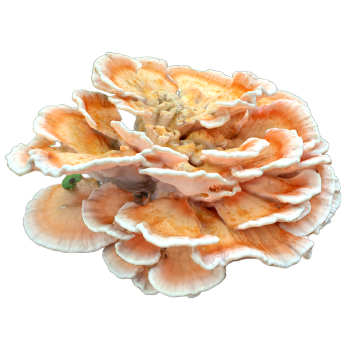
Sulfur bacteria, also known as sulfur porous bacteria or sulfur colored porous bacteria, are a type of fungus. In the early stage, it is tumor like, resembling a brain marrow, with a tile shaped arrangement of fungal caps, and the meat is tender and crispy after sweating. The cap is 8-30cm wide and 1-2cm thick, with a sulfur colored to bright orange surface, fine or no fluff, wrinkles, no ring, thin and sharp edges, wavy to lobed. Mushroom meat is white or light yellow in color, with sulfur colored pores that fade after drying. The pores are polygonal, with an average of 3-4 pores per millimeter. Spores are oval shaped, nearly spherical, smooth, colorless, 4.5-7 × 4-5 μ m. The important feature of this bacterium is the tile shaped arrangement of fruiting bodies, which are sulfur colored. Eating it during childhood has a better taste.
Aloe Vera Flower

Aloe Vera Flower

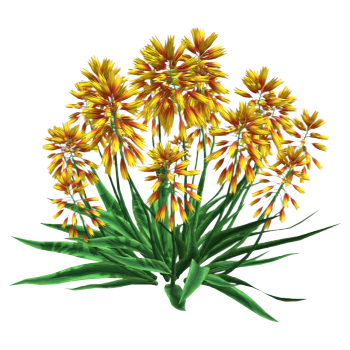
Aloe vera (L.) Burm f. It is a herbaceous plant of the family Aphrodiaceae in the order Liliales. Perennial, evergreen, with short above ground stems; The leaves are thick and juicy, with a narrow lanceolate shape, a wide pink green base, and thorny small teeth on the edges; Flowers have yellow or red spots; The fruit is triangular in shape; The flowering period is at the end of winter. The character "lu" in aloe vera means black, while the character "hui" means gathering. Aloe vera is named "aloe vera" because the liquid that drips down from the cut of its leaves will change from coffee color to black and gradually coalesce.
Joshua Tree

Joshua Tree

The Joshua tree, scientific name Yucca brevifolia, is a monocotyledonous plant of the Liliaceae family. The Joshua tree can develop from seeds and underground stems. They grow slowly, reaching 10-20cm in the first few years and then increasing by 10cm annually. The stem of the Joshua tree is composed of a large amount of small fibers and has no annual rings. Due to its small root system and relatively heavy canopy, it is not very stable, but it can survive for 200 years in harsh desert environments. The highest can reach about 15 meters. The leaves are dark green in color and have thorny edges in a linear pattern.
Joshua saplings

Joshua saplings

The Joshua tree, scientific name Yucca brevifolia, is a monocotyledonous plant of the Liliaceae family. The Joshua tree can develop from seeds and underground stems. They grow slowly, reaching 10-20cm in the first few years and then increasing by 10cm annually. The stem of the Joshua tree is composed of a large amount of small fibers and has no annual rings. Due to its small root system and relatively heavy canopy, it is not very stable, but it can survive for 200 years in harsh desert environments. The highest can reach about 15 meters. The leaves are dark green in color and have thorny edges in a linear pattern.
Withered Populus euphratica

Withered Populus euphratica

Populus Euphratica Oliv. is a plant species belonging to the phylum Angiosperma, order Magnoliaceae, family Salicaceae, and genus Populus. It is a medium-sized natural deciduous tree with a diameter of up to 1.5 meters and wide, fragrant leaves. Drought and flood resistance, tenacious life, it is one of the rare tree species in nature. Poplar trees are 15-30 meters tall and generally 100-300 years old. The Populus euphratica in China is distributed in the desert and Gobi areas of the northwest region.
ginger

ginger

Zingiber officinale Roscoe is a perennial herbaceous plant of the ginger genus in the ginger family. A rhizome with yellow green flowers and a stimulating fragrance. Plant height 0.5-1 meter; The rhizome is thick, branched, and has a fragrant and spicy taste. Leaves lanceolate or linear lanceolate, hairless, sessile; Tongue membrane texture. The total stem length is 25 centimeters; Spike shaped inflorescence with cones; Bracts ovate, light green or pale yellow at the edges, with a small pointed tip at the top. Calyx tube is about 1 centimeter long; Corolla yellow green, lobes lanceolate; The central lobe of the lip is oblong ovate.
Fragrant Fir

Fragrant Fir

Xiangzhi fir is an evergreen tree in the pine family, also known as Canadian fir, North American fir, and Balsan desert fir. Plants can grow up to 8-20 meters in height; The bark of the old tree is thick and dark reddish brown, with scaly lobes. The young trees are relatively smooth, gray, and the young branches are light yellow green with gray short hairs; Winter buds are small, nearly spherical or broadly ovoid, with resin; The leaves on a tree undergo significant changes, with two rows of flat, dark green leaves arranged on either side.
Banyan tree fruit

Banyan tree fruit

Ficus microcarpa L. f. is a plant in the family Moraceae and genus Ficus. Large trees can reach heights of 15-25 meters, with a diameter at breast height of 50 centimeters and a wide crown width; Old trees often have rusty brown air roots. The bark is dark gray. The leaves are thin and leathery, narrowly elliptical in shape, with a dark green surface and glossy edges. Ficus microcarpa grows in pairs axillary or on leaf axils of fallen leaves, yellow or slightly red when mature, flattened spherical, with 3 basal bracts, broadly ovate, persistent; Male flowers, female flowers, and galls grow together in the same fig fruit, with a few short hairs between the flowers; Periphyllum 3, broadly ovate, style proximal, stigma short, rod-shaped. The achene is oval in shape. The flowering period is from May to June.
Taiwanese fern

Taiwanese fern

Hypolepis Bernh is a genus in the family Hypolepidae, consisting of approximately 50 species of plants. It is a pan tropical plant, with a greater presence in the tropical regions of the New World, extending southward to South Africa and northward to Japan. The Flora of China records that there are currently 8 species in China, mainly found in tropical and subtropical regions.
Date

Date

Phoenix dactylifera L. is a tree species in the palm family, belonging to the genus Ziziphus. It has a long, large, and thick spatula, with short stalked male flowers that are white in color and nearly spherical female flowers that are short stalked; The fruit is oblong or elongated in shape, with a deep yellow color when ripe and thick flesh; Leaves and feathers are needle shaped, gray green in color, with raised keels, slender and flat petioles; The flowering period is from March to April, and the fruiting period is from September to October.
Daisy

Daisy

Daisy (Bellis perennis L.) is a perennial or annual herbaceous plant in the Asteraceae family, characterized by a stalk like appearance. Its height is about 10 centimeters, and its leaves are spoon shaped. The top is round, and the upper part has sparse dull or wavy teeth; The total flower bud is hemispherical or broadly bell shaped, with a layer of tongue shaped flowers and more tubular flowers; The achene is oblong, flat, with veins but no crest. The flowering period is from March to June. The name daisy is related to its morphology, as its flower shape is smaller than that of ordinary chrysanthemums, resembling an immature chrysanthemum, hence the name daisy.
Chuju Cong

Chuju Cong

Daisy (Bellis perennis L.) is a perennial or annual herbaceous plant in the Asteraceae family, characterized by a stalk like appearance. Its height is about 10 centimeters, and its leaves are spoon shaped. The top is round, and the upper part has sparse dull or wavy teeth; The total flower bud is hemispherical or broadly bell shaped, with a layer of tongue shaped flowers and more tubular flowers; The achene is oblong, flat, with veins but no crest. The flowering period is from March to June. The name daisy is related to its morphology, as its flower shape is smaller than that of ordinary chrysanthemums, resembling an immature chrysanthemum, hence the name daisy.
Wealthy Palm

Wealthy Palm

Howea belmoreana (C. Moore et F. Muell.) Becc It is a clustered shrub plant belonging to the palm family and the genus Coconut. The plant height can reach 1-2 meters; The stem is short and thick, with dense nodes; The leaves are fully lobed and can grow up to 50-80 centimeters in length. The tip is curved and flattened, and the leaves are dark green in color with a glossy surface. The ventral surface of the petiole is shallow grooved; The fleshy inflorescence is extracted from the rhizome; When ripe, the fruit is reddish brown and nearly round in shape; The fruiting period is from October to December.
Thick shelled cinnamon fruit

Thick shelled cinnamon fruit

Thick shelled cinnamon is a tree in the Lauraceae family, belonging to the genus Thick shelled cinnamon. It can reach a height of up to 20 meters and has rough bark. The old branches are thick, angular, light brown, with cylindrical branches. The leaves are alternate or opposite, leathery, elongated and elliptical, with a long or short pointed tip. The base is broad and wedge-shaped, with a shiny upper part and a pale white lower part. The petiole is concave and convex on the back. The inflorescence is axillary and terminal, covered with yellow small hairs. The flowers are light yellow in color, with extremely short flower stems and yellow small hairs on both sides of the perianth. The perianth tube is spiral shaped, and the perianth lobes are nearly inverted. The filaments are soft haired, and the ovary is rod-shaped. The style is linear, and the fruit is spherical or flattened. It is purple black when ripe, blooms from April to May, and bears fruit from August to December.
oil-tea camellia

oil-tea camellia

Camellia seed, also known as camellia seed, is the fruit of Camellia oleifera trees. Camellia oleifera is the main woody oil tree in China. Camellia oleifera Abel is a small tree or shrub of the Camellia genus in the Theaceae family. Oil tea young branches are covered in coarse hairs; Leaves leathery, elliptical or ovate in shape, apex blunt and pointed, base wedge-shaped, midrib covered with long hairs below, finely toothed, petiole covered with coarse hairs; Top of flower, leathery, broadly ovate, petals white, ovate, stamen filaments nearly free; Shuo fruit is spherical in shape; The flowering period is from October to February of the following year, and the fruiting period is from September to October of the following year; Because its seeds can extract oil (tea oil) for consumption, it is called "oil tea".
Tea seeds

Tea seeds

Tea seeds are mature seeds of Camellia sinensis (L.) O, Kuntze, a plant in the Camellia family. They are divided into oil tea tree seeds and tea tree seeds according to their growth conditions, namely oil tea seeds and tea leaves seeds, both of which can extract oil for consumption. Tea seed oil has antioxidant capacity, which can lower blood pressure, blood lipids, and inhibit arteriosclerosis. The nutritional value of tea seed oil can be comparable to olive oil, or even higher, making it a premium edible oil. Due to being a unique species in China, it is also known as "Eastern olive oil".
cactus bonsai

cactus bonsai

Echinops tubiflora is a perennial succulent herbaceous plant belonging to the cactus family and the genus Echinops; The stem is spherical or elliptical in shape, green in color, fleshy, with clustered needles on the edges, yellow or yellow brown in color, varying in length, and radiating; The leaves are small and grow within the thorn bushes; The flowers grow light red or pink on the sides, with a long trumpet shaped appearance. The trumpet is covered with scales on the outside, and the scales have long hairs at the armpits; Berries are spherical or oval in shape, without thorns; The seeds are small and numerous; The flowering period is from May to June. Due to its spherical shape and being a succulent plant in the cactus family, it is named Xianrenqiu.
Red eggplant

Red eggplant

tree; The bark is brown with longitudinal fissures; The pillar root hangs down into the ground. Leaves are broadly elliptical to rectangular in shape, measuring 10-16 cm in length and 5-10 cm in width. The tips are blunt or short pointed, and the base is wedge-shaped. The midrib and petiole are both green; The petiole is thick and robust, measuring 2.5-5 centimeters in length; The length of the leaves is 5.5-8.5 centimeters. Red eggplant is the bark or root of Rhizophora mucronata Poir, a plant in the mangrove family. Distributed in Taiwan. It has the effects of detoxification, clearing heat and dampness, cooling blood and stopping bleeding. Commonly used for sore throat, diarrhea, dysentery, hematuria, and traumatic bleeding.
Beech tree

Beech tree

Beech is a member of the dry shelled family, genus Beech, and its English name is BEECH. Beech is widely distributed in the northern hemisphere and is produced in both Europe and the United States. In southern China, especially in western Hubei and eastern Sichuan, there is a pure forest belt, and domestically produced Chinese beech trees are also known as water green hills.