White Thousand Bird Flower Potted Plant

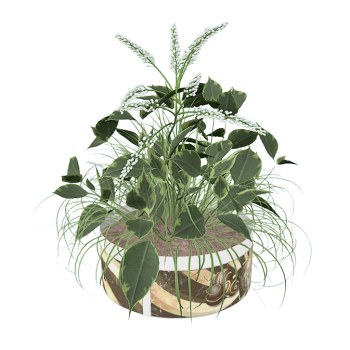
White Thousand Bird Flower Potted Plant

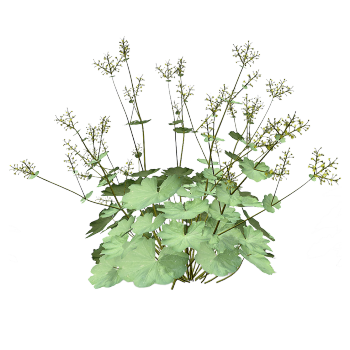
The Thousand Bird Flower, also known as White Peach Blossom, White Butterfly Flower, and Mountain Peach Grass, is a perennial thick and robust herbaceous plant in the Oleaceae family. The height of the Thousand Bird Flower plant is 60-100 centimeters; Leaves without stems, elliptical lanceolate or lanceolate, apex acute, base wedge-shaped; The inflorescence is spike shaped, with stems and branches at the top, and bracts are narrowly elliptical, lanceolate, or linear; Nut shaped capsule, narrow spindle shaped; The seeds are egg shaped and light brown in color; The flowers bloom near dawn, with hairs on the upper part of the inner surface. The petals are white and later turn pink, inverted or elliptical in shape, and the anthers are red. The flowering period is from May to August, and the fruiting period is from August to September. It is native to North America, Hong Kong, Beijing, Shandong, Nanjing, and Zhejiang in China.
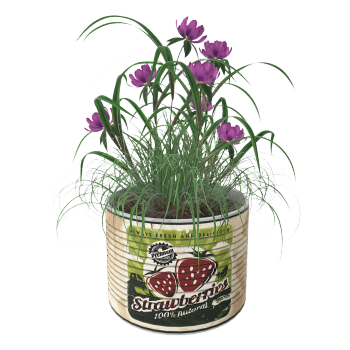
California Acorus calamus potted plant
California Acorus calamus potted plant

California Acorus calamus, also known as Yellow Eyed Grass, Golden Eyed Grass, or Golden Blue Eyed Grass. It is a perennial evergreen herb belonging to the Iris family and the Acorus genus. Long flowering period, open in spring and summer. The fruiting period is from June to August. The external leaves wither and turn black in autumn.
Silver vein noble bed potted plant

Silver vein noble bed potted plant

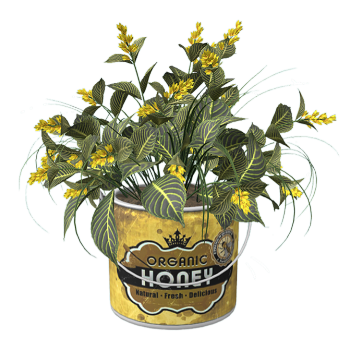
Silver veined goblet, also known as zebra flower or zebra goblet, is a plant of the family Goblet in the genus of monotherapy flowers. The stem is upright, square, the plant is thick and robust, with a slight fleshy texture. Leaves are opposite in shape, oval or elliptical in shape, with a length of about 15cm to 20cm and a width of about 10cm; The leaf tips are pointed, the leaves are dark green and glossy, and the leaf surface has obvious white striped veins, with undulating veins and leaf edges. The spike shaped inflorescence grows at the top or axillary, with a pyramid shaped flower cluster and golden yellow bracts. The alternating rows wrap around the flower stem, overlapping layer by layer like roof tiles. Double lip shaped flowers, light yellow, with 5 sepals. The flowering period is in summer and autumn, but it can open all year round under suitable conditions.
Grass embroidered ball potted plant

Grass embroidered ball potted plant

Cardiandra moellendorfii (Hance) Migo is a sub shrub of the genus Cardiandra in the family Hydrangeaceae. The stem is light brown after drying; Leaves alternate on the stem, elliptical or inverted ovate in shape; Umbrella shaped inflorescence grows at the top, broadly ovate or nearly circular, with a cup-shaped calyx and broadly elliptical or nearly circular petals, pale red or white; Capsule is nearly spherical or ovoid in shape; The seeds are brown in color, oblong or phallus in shape, with darker wings at both ends that are the same color as the seeds; The flowering period is from July to August; The fruiting period is from September to October.
Persian red grass potted plant

Persian red grass potted plant
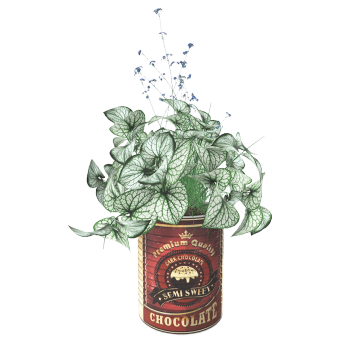
Persian red grass, plant height 10-20cm, leaves opposite each other, elliptical lanceolate, with fine serrations on the leaf edges. The leaf veins are obvious, and the stems and leaves are covered with fine hairs, with purple spots scattered. The back of the leaves is purple red, quite elegant.
Heart Leaf Agave Potted Plant

Heart Leaf Agave Potted Plant

Heart leaf agave, also known as Don't Forget Me, is a flowering plant in the agave family, native to the Caucasus region. It is a cold resistant, rhizomatous, perennial herbaceous plant that can reach a height of 30 to 45 centimeters, with a slender stem and simple linear leaves at the base. The small blue flowers, similar to the ones seen in the related 'Forget Me Not' section, bloom for eight to ten weeks starting from mid spring.
Saffron potted plant

Saffron potted plant

Crocus sativus L. is a perennial herbaceous plant of the genus Crocus in the family Iridaceae. Rich in Guilin, Guangxi, saffron is the highest yielding variety of saffron, cultivated by Guilin Tianci Agricultural Technology Co., Ltd. The bulb is flattened and round, with a diameter of about 3 centimeters, and is surrounded by a yellow brown membrane; The leaves are linear, gray green, with curled edges; Flowers come in light blue, reddish purple, or white colors, with a fragrant aroma. The style is orange red, and the stigma is slightly flattened; The capsule is elliptical in shape, about 3 centimeters long.
And self potted plants

And self potted plants

Chloranthus serratus is a perennial herbaceous plant in the genus Chloranthus of the family Cymbiaceae, also known as Four Leaf Golden or Four Block Tile. Plant height of 50 centimeters; The rhizome is thick and short; Stems solitary or clustered, with nodes; Leaves opposite, elliptical, inverted or ovate lanceolate, apex gradually elongated and pointed, base wedge-shaped, with dense sharp teeth, tips glandular, both surfaces hairless; Triangular scales, membranous, small leaflets; Spike inflorescence terminal, sparsely axillary, single or branched; The bracts are triangular or nearly semi-circular in shape, with a serrated tip; Flower white; The drupe is nearly spherical or pear shaped; The flowering period is from April to May, and the fruiting period is from June to August.
Red backed ear leaf horse blue potted plant
Red backed ear leaf horse blue potted plant

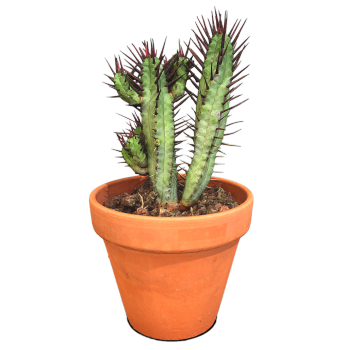
Strobilanthes auriculata var. dyeriana (Mast.) J.R.I. Wood is a perennial herb or upright shrub in the family Menispermaceae, with many branches and a 4-lobed stem. It is clearly grooved, green in color, and sparsely covered with hard hairs. Leaves sessile, ovate, ovate lanceolate. Spike inflorescence axillary, 2-3 cm long, dense flowers, bracts 4-8 mm long. The anthers of two short stamens are aborted (or empty). The filaments are smooth and hairless, while the ovary is nearly hairless.
Red Colorful Kirin Potted Plant

Red Colorful Kirin Potted Plant

The Red Colored Qilin is a densely branched dioecious thorny circular shrub of the Euphorbia genus, growing to about 30-100 centimeters in length and branching extensively from the base, covered with thick and prominent cute long red spines. Branches are thick and finger sized, with a columnar curvature and a diameter of 20-30 cm x 3 cm. They mainly grow from the ground and are close to the base.
Flowering Epimedium

Flowering Epimedium

Epimedium brevicornu Maxim. is a perennial herbaceous plant in the Berberidaceae family, typically ranging in height from 20 to 60 centimeters; The rhizomes are thick and short, dark brown in color; The complete leaves are compound leaves with three branches and long stalks; Small leaf paper or thick paper, with serrated edges; Flowers white or light yellow; The flowering period is from May to June, and the fruiting period is from June to August. In the book "Annotations to the Classic of Materia Medica", Tao Hongjing mentioned: "In the northern part of Xichuan, there are lustful sheep that gather a hundred times a day and cover themselves with this herb, hence the name Epimedium
Epimedium herb

Epimedium herb

Epimedium brevicornu Maxim. is a perennial herbaceous plant in the Berberidaceae family, typically ranging in height from 20 to 60 centimeters; The rhizomes are thick and short, dark brown in color; The complete leaves are compound leaves with three branches and long stalks; Small leaf paper or thick paper, with serrated edges; Flowers white or light yellow; The flowering period is from May to June, and the fruiting period is from June to August. In the book "Annotations to the Classic of Materia Medica", Tao Hongjing mentioned: "In the northern part of Xichuan, there are lustful sheep that gather a hundred times a day and cover themselves with this herb, hence the name Epimedium
Mohave Rock Paintings

Mohave Rock Paintings

Rock paintings captured by drones in the Mojave Desert of California.
Cup sepal honeysuckle vine

Cup sepal honeysuckle vine

Cup sepal honeysuckle (scientific name: Lonicera inconspicua) is a plant of the Lonicera genus in the family Lonicera, and is a unique plant species in China. It is produced in southern Gansu, southwest and northwest of Sichuan, northwest of Yunnan, east and southeast of Xizang. It grows in the thickets on the hillsides and flowing stony beaches, under and on the edge of spruce, fir, larch or alpine oak forests, as well as in the miscellaneous forest in wet valleys, with an altitude of 1700-3500 (-4000) meters, and 2710-3800 meters in Xizang.
Brunnera macrophylla

Brunnera macrophylla

Heart leaf agave, also known as Don't Forget Me, is a flowering plant in the agave family, native to the Caucasus region. It is a cold resistant, rhizomatous, perennial herbaceous plant that can reach a height of 30 to 45 centimeters, with a slender stem and simple linear leaves at the base. The small blue flowers, similar to the ones seen in the related 'Forget Me Not' section, bloom for eight to ten weeks starting from mid spring.
Flowering Heart Leaf Tequila

Flowering Heart Leaf Tequila

Heart leaf agave, also known as Don't Forget Me, is a flowering plant in the agave family, native to the Caucasus region. It is a cold resistant, rhizomatous, perennial herbaceous plant that can reach a height of 30 to 45 centimeters, with a slender stem and simple linear leaves at the base. The small blue flowers, similar to the ones seen in the related 'Forget Me Not' section, bloom for eight to ten weeks starting from mid spring.
Luan Feng Yu

Luan Feng Yu

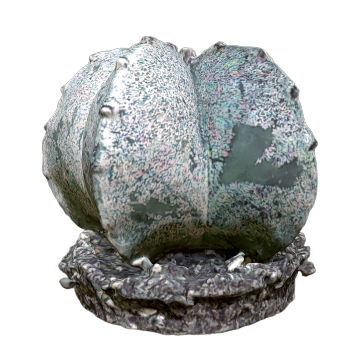
Luanfengyu (scientific name: Astrophysicum myriostigma Lem.) is a perennial fleshy herbaceous plant belonging to the Cactaceae family. The plant is solitary and ranges from spherical to elongated spherical in shape, with a surface covered in small white hairs in a star like pattern. The body has 3-8 thick fleshy edges, straight edges, triangular ridges, and a dense white tuft of curly hair on the epidermis. The thorn is located on the edge of the edge, with short brown hairs on it and no thorns. Flowers bloom in spring and summer, with peanuts at the top of the stem. The color is orange yellow and funnel-shaped, resembling chrysanthemums.
Rock cabbage

Rock cabbage

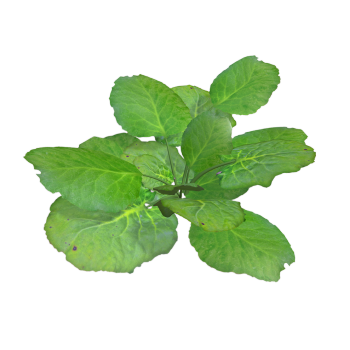
Bergenia purpurascens (Hook. f.&Thomson) Engl It belongs to the family of tiger ear grass and is a perennial herbaceous plant in the genus of rock cabbage. It is also known as Dian rock cabbage or Lan Hua Yan Tuo. It can reach a height of 52 centimeters. The rhizomes are thick and robust, and the leaves are basal; The leaves are leathery, with a blunt rounded tip and wavy teeth on the edges to almost the entire margin. The base is wedge-shaped, with small glandular pits on both sides. The edges of the leaf sheaths are hairless. The inflorescence is conical in shape, with sparse glandular hairs on the stem. Sepals leathery, narrowly ovate, petals purple red, broadly ovate, ovary ovoid, flowering and fruiting from May to October.
Flowering rock cabbage

Flowering rock cabbage

Bergenia purpurascens (Hook. f.&Thomson) Engl It belongs to the family of tiger ear grass and is a perennial herbaceous plant in the genus of rock cabbage. It is also known as Dian rock cabbage or Lan Hua Yan Tuo. It can reach a height of 52 centimeters. The rhizomes are thick and robust, and the leaves are basal; The leaves are leathery, with a blunt rounded tip and wavy teeth on the edges to almost the entire margin. The base is wedge-shaped, with small glandular pits on both sides. The edges of the leaf sheaths are hairless. The inflorescence is conical in shape, with sparse glandular hairs on the stem. Sepals leathery, narrowly ovate, petals purple red, broadly ovate, ovary ovoid, flowering and fruiting from May to October.
Silk Orchid

Silk Orchid

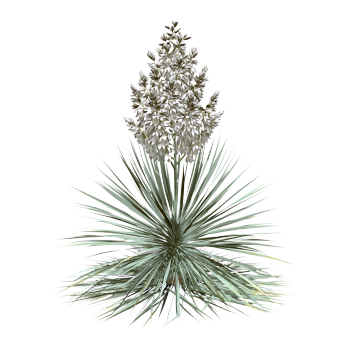
Silk orchid is a plant of the genus Silk orchid in the family Asparagaceae. Short stem or no stem; Cone shaped candlestick, cup-shaped flowers, drooping, white; The base of the leaves is sword shaped and radiating, covered in white powder and leathery texture; The flowering period is from August to October. Silk orchid is native to North America and is cultivated in the Yangtze River Basin and North China region of China. It is also distributed in areas south of the Yangtze River. Silk orchid is a sun loving species that prefers sunny and warm climates, is relatively cold resistant, and prefers well drained and fertile sandy soil. The propagation methods of silk orchids are divided into sowing, splitting, or cutting.
Olive tree potted plant

Olive tree potted plant

The olive tree (Canarium spp.) is a common name for approximately 75 species of plants in the olive family and genus Olivaceae. There are over 500 cultivated varieties of olive trees worldwide. The flowering period is from April to May, and the fruit ripening period is from October to December. Light loving tree species with certain cold resistance; Originating from the Mediterranean coastal region in southern Europe. Widely introduced in China, it is planted in 15 provinces and regions south of the Yangtze River Basin, including Guangdong and Guangxi, with the highest number in Hubei, Sichuan, Yunnan, Guizhou, and Shaanxi provinces. The fruit can be pressed for oil, consumed, or used to make candied fruits.
Bengali Banyan

Bengali Banyan

Ficus bengalensis, also known as Indian Banyan in English. The transliteration of Chinese Buddhist scriptures is: Nikhulu Tree, Nikhulu Tree, Nikhulu Tree, Nikhulu Tree, etc. Bengali fig is a member of the mulberry family and genus Ficus, native to the Indian Peninsula in South Asia.
Spider Aloe Vera

Spider Aloe Vera

Spider aloe vera is a beautiful low rise succulent plant. Born and raised in South Africa, it thrives in warm regions and can withstand cold conditions. Aloe vera requires lightweight and well drained soil. Extreme humidity can cause most aloe vera roots to rot.
Yarrow

Yarrow

Achillea millefolium L. is a perennial herbaceous plant in the Asteraceae family, with slender creeping rhizomes. The stem is upright, reaching up to 100 centimeters in height, with fine stripes, leaves without stems, leaves with two to three fully lobed feather like structures, numerous head shaped inflorescences, bracts rectangular or nearly ovate, sparsely covered with soft hairs; The bracts are arranged in a tile like pattern, the bracts are rectangular and elliptical in shape, membranous, the tongue is nearly circular, white, pink or light purple red, the flowers are bisexual, tubular, yellow, and the achene is rectangular in shape. They bloom and bear fruit from July to September.
Walnut

Walnut

Walnut, also known as walnut, is a tree of the walnut genus in the walnut family. The walnut tree has a broad crown, and the bark is gray green when young and gray white with shallow longitudinal cracks when old; Branchlets are hairless, glossy, covered with shield like glands, gray green, later brownish; The small leaves are elliptical ovate to elongated elliptical in shape, with blunt rounded or acute pointed tips, short gradually pointed tips, and sparse fine serrations along the entire margin or on young trees. The upper part is dark green, hairless, and the lower part is light green; The bracts, bracteoles, and carpels of male flowers are all covered with glandular hairs, and the anthers are yellow and hairless. The bracts of female flowers are covered with extremely short glandular hairs, and the stigma is light green; The fruit has a short fruiting period, with a drooping and almost spherical shape. It is hairless and has a flowering period of May and a fruiting period of October.
Amanita muscaria

Amanita muscaria

It is called toad fungus, fly trap fungus, poisonous fly fungus, and poisonous fly umbrella. The sub entity is relatively large. The cap width is 6-20cm. The edges have obvious short ridges, the surface is bright red or orange red, and there are white or slightly yellowish granular scales. The gills are pure white, dense, free, and of unequal length. The mushroom meat is white and red near the epidermis.
maple

maple

Maple, a deciduous tree species belonging to the Acer genus in the Acer family. Its plants can grow up to 17 meters tall; Leaves opposite each other, with no hairs on the leaf axis; Small leaf paper, oblong elliptical or oblong ovate in shape, with a long and gradually pointed tip, serrated, and dark green on top; The seeds have a glossy appearance, ranging from olive green to yellow; The flowering period is in May every year, and the fruiting period is in August every year. Maple trees are named after the wind shaking their leaves, and when the wind blows, the leaves make a rustling sound, hence the name maple tree.
An'er Ke fruit

An'er Ke fruit

Lithocarpus Haipinii Chun, also known as An'er Ke, is a plant species in the family Fabaceae, with a height of up to 30 meters. The bark is not cracked, dark gray brown, the inner layer is light reddish brown, the leaves are thick, hard and brittle, wide elliptical, oval, inverted or inverted oval, and the leaf edges are rolled back. Male inflorescence with multiple spikes arranged in a conical shape; The female inflorescence is relatively short. The young shell of the nut is fully wrapped, with short bracts and mature shell shaped discs or pots; Nuts are nearly spherical and slightly flattened, with a flat bottom and chestnut brown color. When fully ripe, they have longitudinal cracks and a concave navel,. The flowering period is from July to August, and the fruit matures at the same time the following year. The fruit contains 58% starch.
Rocks of the Matanuska Glacier in Alaska

Rocks of the Matanuska Glacier in Alaska

Matanuska Glacier is a valley glacier located in Alaska, United States. 27 miles (43 kilometers) long and 4 miles (6.4 kilometers) wide, it is the largest glacier that can be reached by car in the United States. Its glacier terminus is the source of the Matanuska River. It is located near Glenn Highway, about 100 miles (160 kilometers) northeast of Anchorage. The Matanuska Glacier has a daily flow of approximately 1 foot (30 centimeters). Due to the melting of glaciers in lower areas, as of 2007, there has been little change in the position of glacier tips over the past 30 years.
White clover flower

White clover flower

White clover, as a ground cover plant. This is a leguminous plant that not only has the characteristic of covering the ground surface as a ground cover plant, but also has the ability to fix nitrogen and increase soil nitrogen levels. White clover, with a creeping stem, prefers warm, cool, and humid climates, reproduces quickly, has strong invasion, and quickly forms a flat. It is resistant to trampling, grows well in general soil, and is also tolerant to certain salinity and extensive management. Therefore, it is known as a ground cover plant that can kill two birds with one stone.
White clover

White clover

White clover, as a ground cover plant. This is a leguminous plant that not only has the characteristic of covering the ground surface as a ground cover plant, but also has the ability to fix nitrogen and increase soil nitrogen levels. White clover, with a creeping stem, prefers warm, cool, and humid climates, reproduces quickly, has strong invasion, and quickly forms a flat. It is resistant to trampling, grows well in general soil, and is also tolerant to certain salinity and extensive management. Therefore, it is known as a ground cover plant that can kill two birds with one stone.
Calanthe

Calanthe

Calanthe discolor Lindl. is a plant of the genus Calanthe in the Orchidaceae family. The rhizomes are not very obvious, and the pseudobulbs are thick and short, nearly conical in shape; The leaves are not fully unfolded during the flowering period, and are inverted oval or elliptical in shape; The flower stem rises above the leaves and is densely covered with short hairs; Flowers bloom, sepals and petals are brownish purple in color, petals are oblong or lanceolate in shape, lips are white and fan-shaped, flowering period is from April to May. Shrimp spine orchid is mainly distributed in southwestern Jiangsu, Zhejiang, Fujian, northern Guangdong, Hunan, Hubei, and Guizhou in China. Shrimp spine orchid is relatively cold resistant, tolerant to semi shade but not drought, and prefers warmth and humidity.
Russula virescens

Russula virescens

Russula virescens (Schaeff.) Fr. is a fungus belonging to the family Russula and genus Russula. The fruiting body grows on the ground and can reach a height of up to 10 centimeters. The flesh is crisp, perishable, and the cap is initially spherical, later it is slightly concave in the middle, and slightly rolled down around. The cap surface is light green or grayish green, with irregular copper green spots, white pleats, white and smooth than the dense handle cylinder, white when the spores are spherical, and there are small warts on the outer wall, distributed in Liaoning, Jilin, Heilongjiang, Jiangsu, Zhejiang, Fujian, Henan, Taiwan, Guangdong, Guangxi, Guizhou, Yunnan, Xizang and other places in China.
Polyporus squamosus

Polyporus squamosus

Polyporus squamosus, belonging to the family Polyporus, is a medium-sized saprophytic mushroom that inhabits wood and is edible. It is widely distributed and found in North America, Australia, Asia, and Europe, living in hardwood forests. This species was first described by British biologists in 1778 and was named Boletus squamosus at the time. The current name was proposed by Swedish biologist Elias Magnus Fries in 1821 in Systema Mycologicum.
lawyer's wig

lawyer's wig

Chicken leg mushroom, also known as chicken leg mushroom, is commonly known as Mao Tou Ghost Umbrella in northern China. In the old classification, it belonged to the Ghost Umbrella genus along with other varieties of Ghost Umbrella mushrooms, but in the new classification, it was classified under the Coprinus genus. Chicken leg mushroom is a wild edible mushroom found in Europe, Asia, and North America. Depending on the regional climate, it may emerge after rain in late spring, summer, or autumn. Chicken leg mushrooms belong to the mid high temperature type of mushrooms and are grass rot soil growing fungi. After the chicken leg mushroom matures, it will turn into ink, and after harvesting, it will also turn into ink within a few hours. Some mushrooms in the same family as chicken leg mushrooms can be poisoned when consumed together with alcoholic beverages.