Da Si Kui

Da Si Kui

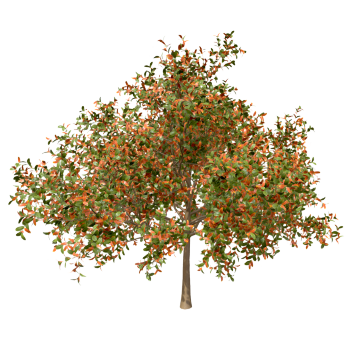
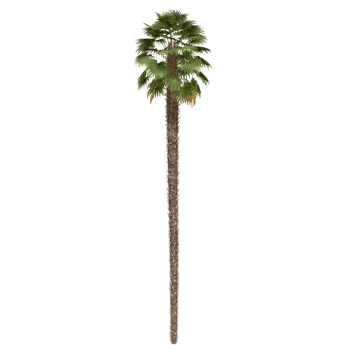
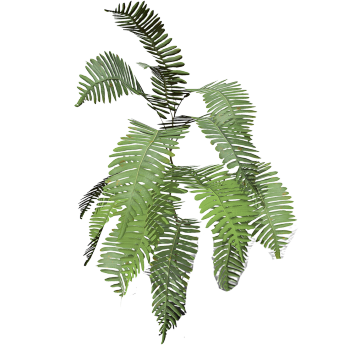
Da Si Kui is a tree like species in the palm family, belonging to the genus Si Kui; The base of the tree trunk swells and is covered with dead leaves, appearing light brown with circular leaf scars and indistinct longitudinal cracks; The leaves are bright green, and the edges of young leaf lobes have filamentous fibers that disappear with age. The petioles are thick and light reddish brown; The inflorescence is longer than the leaves, drooping, the flowers are solitary, the sepals are bell shaped, the corollas are longer than the sepals, the stamens are equal in length to the petals, and the anthers are linear and arrow shaped; The fruit is small, wide elliptical, ovoid or spherical in shape, with thin inner skin and shell texture; Seeds elliptical or ovoid, slightly flattened; The flowering period is from May to June, and the fruiting period is in September. Originating from the northwest of Mexico. In southern China, there is introduced cultivation, often grown together with silk sunflower.
Palm clusters

Palm clusters

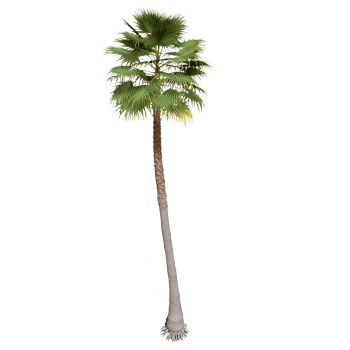
Trachycarpus fortunei is an evergreen tree in the palm family, with a cylindrical trunk; Leaves nearly circular, petioles with fine rounded teeth; Flowers small yellow green, ovoid, forming branched or unbranched inflorescences, with large and multi branched inflorescences; The fruit is broad kidney shaped, with a navel and white powder, and changes from yellow to light blue when ripe; Seed endosperm keratin; The flowering period is in April and the fruiting period is in December. The name "palm" first appeared in the Chinese pre Qin literature "Shan Hai Jing", which states that "the mountains of stone and green are mostly made of brown wood". Li Shizhen named the palm, also known as the bamboo palm, in the Compendium of Materia Medica. It is named after the hair strands in its skin that resemble the mane of a horse.
High altitude European fern

High altitude European fern

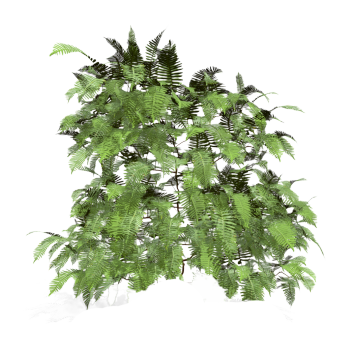
Dryopteris filix mas (L.) Schott is a plant species belonging to the family Dryopteridaceae and the genus Dryopteris. The plant is about 50-120 centimeters tall. Produced in the northwest and north of Xinjiang, distributed in Europe, North America, Central Asia, and the northern temperate zone. Growing in coniferous forests or by small rivers at an altitude of 1500-1900 meters, it is distributed in groups. The medicinal use of ferns has a long history in China, such as Guanzhong, which had been used as a medicinal plant for over 2000 years and had insecticidal effects; After liberation, with the continuous development of medical research in our country, a large number of valuable medical discoveries have been made.
European scale fern

European scale fern

Dryopteris filix mas (L.) Schott is a plant species belonging to the family Dryopteridaceae and the genus Dryopteris. The plant is about 50-120 centimeters tall. Produced in the northwest and north of Xinjiang, distributed in Europe, North America, Central Asia, and the northern temperate zone. Growing in coniferous forests or by small rivers at an altitude of 1500-1900 meters, it is distributed in groups. The medicinal use of ferns has a long history in China, such as Guanzhong, which had been used as a medicinal plant for over 2000 years and had insecticidal effects; After liberation, with the continuous development of medical research in our country, a large number of valuable medical discoveries have been made.
butia capitata

butia capitata

Butia capitata Becc. is an evergreen ornamental tree species in the palm family, belonging to the genus Butia. It is a single stem type and can reach a height of up to 8 meters. The remaining old leaf base wraps around the trunk, making it thick and hard. Feather shaped leaves, curved like an arch, with feather pairs, thick leathery texture, sharp leaf tips, long grayish green leaflets, and thorny petioles; Monoecious plant; The inflorescence is axillary, with purple red stems and petals. The fruit is ovoid and orange red when mature; The seeds are round or nearly round, and there are seeds inside the drupe. Boudi coconut is native to Brazil and Uruguay in South America, and has been introduced and cultivated in the Huang Huai River Basin and Beijing Tianjin region of China.
Cycas

Cycas

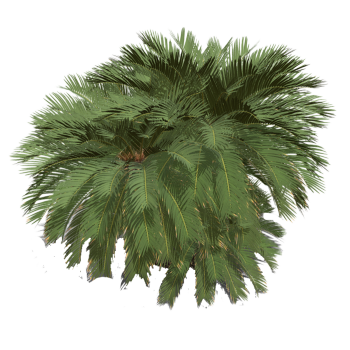
Cycas revoluta Thunb., an evergreen plant in the Cycas family, is palm shaped with a cylindrical trunk; The scales and leaves are triangular ovate in shape, with spines on the petiole. When young, they are densely covered with yellow brown felt; Nutritious leaves are ovate and narrowly lanceolate in shape; The male bulbous flower is cylindrical in shape. The seeds are oval in shape, red in color, with a smooth middle seed coat and an orange red outer seed coat when mature. The spore and leaf ball stage is from May to July, and the seeds mature from September to October According to legend, the development of Cycas requires the supply of iron. When it weakens, if iron powder is given, it will not be difficult to recover; It is called "Su Tie" because it has the same effect when nailed with iron nails into the stem.
Flowering Red Flower Sheep Hoof Armor

Flowering Red Flower Sheep Hoof Armor

Red flowered sheep hoof beetle is a tree plant belonging to the legume family and the sheep hoof beetle genus. Thick and robust branches; Leaves leathery, oblong, glossy; The petiole is slender and hairless; The bracts of the umbrella inflorescence are lanceolate and pouch shaped; Flowers are slightly larger and denser; Elliptical flower bud; The receptacle is cylindrical with slightly enlarged base; Petals with long stalks; The ovary is densely covered with red silky soft hairs, and the fruit is not visible; The flowering period is from February to April. Native to China, it is cultivated in the Yellow River Basin in Sichuan, Yunnan, Guangdong, Guangxi and other places. Red flowered sheep hooves prefer warm, humid, rainy climates and sunny environments, as well as deep, fertile, and well drained acidic sandy loam soils.
Dwarf Ivy

Dwarf Ivy

Dwarf ivy, also known as upright ivy, is a non climbing evergreen shrub. This is a very slow growing evergreen dwarf shrub that can grow up to 1 meter high and have a width of about 1 meter.
Forsythia

Forsythia

False Forsythia is a plant belonging to the family Verbenaceae and the genus False Forsythia. Shrubs, about 1.5-3 meters high; Branches have thorns, and young branches have soft fur. Leaves opposite, rarely whorled, leaves ovate elliptical or ovate lanceolate, papery, apex short pointed or blunt, base wedge-shaped, with soft hairs. The inflorescence is terminal or axillary, often arranged in a conical shape; Calyx tubular, hairy, approximately 5 millimeters long, 5-lobed, with 5 edges; The corolla is usually blue purple, about 8 millimeters long, slightly irregular, 5-lobed, with flattened lobes and slight hairs on the inside and outside. The drupe is spherical, hairless, glossy, with a diameter of about 5 millimeters. It is reddish yellow when ripe and surrounded by enlarged persistent sepals. Native to tropical America.
Flowering red chestnut trees

Flowering red chestnut trees

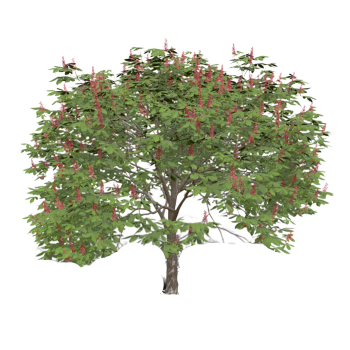
Known as the red seven leaved tree or firecracker tree (formerly known as Pavia rubra), it is a deciduous flowering plant. This small tree or shrub is native to the southern and eastern parts of the United States, and has been found from Illinois to Virginia in the north, and from Texas to Florida in the south. It is very cold resistant in the northern part of its native mountain range and has been successfully cultivated in the polar regions of the Arboretum Mustila botanical garden in Finland.
Sea jujube clusters

Sea jujube clusters

Phoenix dactylifera L. is a tree species in the palm family, belonging to the genus Ziziphus. It has a long, large, and thick spatula, with short stalked male flowers that are white in color and nearly spherical female flowers that are short stalked; The fruit is oblong or elongated in shape, with a deep yellow color when ripe and thick flesh; Leaves and feathers are needle shaped, gray green in color, with raised keels, slender and flat petioles; The flowering period is from March to April, and the fruiting period is from September to October.
Polypod fern cluster

Polypod fern cluster
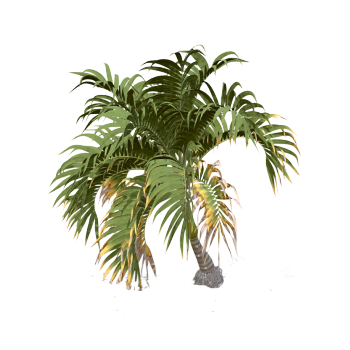
Polypodia vulgaris L. and Polypodia virginianum L. are the rhizomes of water dragon orthopedic plants. The multi legged fern is distributed in the northeastern part of Xinjiang, China. The Northeast multi legged fern is distributed in Northeast China, North China, and other areas. It has the effect of clearing heat, removing dampness, and detoxifying. Commonly used for damp heat gonorrhea, rheumatoid arthritis, boils, abscesses, rubella itching, and traumatic injuries.
Polypod fern cluster

Polypod fern cluster

Polypodia vulgaris L. and Polypodia virginianum L. are the rhizomes of water dragon orthopedic plants. The multi legged fern is distributed in the northeastern part of Xinjiang, China. The Northeast multi legged fern is distributed in Northeast China, North China, and other areas. It has the effect of clearing heat, removing dampness, and detoxifying. Commonly used for damp heat gonorrhea, rheumatoid arthritis, boils, abscesses, rubella itching, and traumatic injuries.
Manila Palm

Manila Palm

Manila palm tree (Adonidia merrillii) is a palm tree species native to the Philippines (Palawan Island and Danzigan Island). This palm tree was planted in East Asia for centuries and then became a staple food in the West. According to reports, it has been naturalized in the West Indies and Florida. It is commonly referred to as the 'Christmas palm' because its fruit turns into a bright crimson color, which is often the color in winter. This type of palm is usually quite small and slender, typically reaching a height of 8 meters, but in some cases it can reach over 40 feet.
Redrlowered Loropetalum

Redrlowered Loropetalum

Loropetalum Chinense (Latin name: Loropetalum Chinense), also known as Loropetalum Chinense, Loropetalum Chinense, Loropetalum Chinense, Loropetalum Chinense, Loropetalum Chinense, Loropetalum Chinense, Loropetalum Chinense, Loropetalum Chinense, Loropetalum Chinense, Loropetalum Chinense, Loropetalum Chinense, Loropetalum Chinense, Loropetalum Chinense, Loropetalum Chinense, Loropetalum Chinense, Loropetal. The bark is dark gray or light gray brown, with many branches. The tender branches are reddish brown and densely covered with star shaped hairs. Leaves are leathery and alternate in texture, oval or elliptical in shape, measuring 2-5cm in length with a short pointed tip. The base is round and asymmetrical, with star shaped hairs on both sides. The entire margin is dark red on the leaf surface and gray on the back. There are 4 petals, with a purple red linear length of 1-2cm, and 3-8 flowers clustered at the ends of small branches. The capsule is brown in color and nearly oval in shape.
Phoenix canariensis

Phoenix canariensis

Phoenix canariensis is a plant species in the palm family, named after its production in the Canary Islands of Africa. Stand upright on a single stem, with a natural height of up to 18 meters and a stem diameter of 50-90 centimeters. When young, it is covered with dead leaves, while in old trees, the base of the petiole remains. Having wavy leaf scars, feather like compound leaves, and a terminal tuft. The plant is dioecious, with fleshy inflorescences emerging from between the leaves, and can grow up to 2 meters in length. Berry, fruit ovate spherical to oblong in shape, apex slightly protruding. The seed is elliptical in shape, with a deep groove in the center and a grayish brown color. The inflorescence blooms from March to April every year, blooms in early May with small flowers, and the fruit matures between September and October.
Mountain laurel

Mountain laurel

Mountain laurel, belonging to the Rhododendron family, is an evergreen shrub or small tree. 3 meters high; Leaves alternate, sometimes opposite or with three impellers, elliptical, about 12 centimeters long, all edges leathery. The flowers are umbrella shaped inflorescences with glandular hairs at the top, rose red or white in color, flowering in late spring, with 5 capsules of fruit and many seeds. Mountain laurel is native to North America and was introduced to Japan from the United States. At that time, it was called American azalea, and there is no distribution of mountain laurel in China. Shan Yue Gui prefers acidic soil, so it is necessary to control the use of lime and plant ash. It is difficult to cut and press the mountain laurel. Therefore, it is possible to use the seedling method for sowing and reproduction. The seeds harvested in autumn can be harvested in March of the following spring
maple

maple

Maple, a deciduous tree species belonging to the Acer genus in the Acer family. Its plants can grow up to 17 meters tall; Leaves opposite each other, with no hairs on the leaf axis; Small leaf paper, oblong elliptical or oblong ovate in shape, with a long and gradually pointed tip, serrated, and dark green on top; The seeds have a glossy appearance, ranging from olive green to yellow; The flowering period is in May every year, and the fruiting period is in August every year. Maple trees are named after the wind shaking their leaves, and when the wind blows, the leaves make a rustling sound, hence the name maple tree.
Thick Calyx Lingxiao

Thick Calyx Lingxiao

Campsis Radians (L.) Seed It is a plant belonging to the Wisteriaceae family and the Lingxiao genus. It is a vine with aerial roots and can grow up to 10 meters in length. There are 9-11 small leaves, ranging from elliptical to ovate in shape, with a pointed tail at the top and a wedge-shaped base. The edges are toothed and covered with short hairs at least along the midrib. Calyx bell shaped, about 2 centimeters long, slightly curled outward, without raised longitudinal ribs. The corolla tube is slender, funnel-shaped, and ranges from orange red to bright red. The capsule is cylindrical in shape, 8-12 centimeters long, about 2 millimeters thick, peduncle, hard shelled.
Blooming Newlyweds

Blooming Newlyweds

Astilbe chinensis (Maxim.) Franch& Sav.: The whole grass is wrinkled. The stem is cylindrical, with a diameter of 1-4 millimeters and a brownish yellow surface; The base has brown membranous scaly hairs or long soft hairs. The basal leaves have two to three lobes and three compound leaves, often fragmented. The intact leaflets are lanceolate, ovate, or broadly elliptical in shape, with a pointed tip and a wedge-shaped base. The edges have teeth, and both sides have sparse and stiff hairs along the veins; The stems and leaves are small and brownish red in color. The inflorescence is densely covered with brown curly long soft hairs, with dense flowers and few stems, and the sepals are deeply lobed; Petals 5, narrow strip-shaped. Sometimes withered yellow fruits can be seen.
Chinese astilbe

Chinese astilbe

Astilbe chinensis (Maxim.) Franch& Sav.: The whole grass is wrinkled. The stem is cylindrical, with a diameter of 1-4 millimeters and a brownish yellow surface; The base has brown membranous scaly hairs or long soft hairs. The basal leaves have two to three lobes and three compound leaves, often fragmented. The intact leaflets are lanceolate, ovate, or broadly elliptical in shape, with a pointed tip and a wedge-shaped base. The edges have teeth, and both sides have sparse and stiff hairs along the veins; The stems and leaves are small and brownish red in color. The inflorescence is densely covered with brown curly long soft hairs, with dense flowers and few stems, and the sepals are deeply lobed; Petals 5, narrow strip-shaped. Sometimes withered yellow fruits can be seen.
Flowering Feather Grass

Flowering Feather Grass

Alchemilla japonica Nakai is a perennial herbaceous plant in the Rosaceae family, commonly known as Cape Grass. The plant is up to 13 centimeters tall and has thick and fertile wood; Stems solitary or clustered, upright or obliquely spread, densely covered with white long soft hairs; The leaf is heart-shaped and circular, with a deep heart-shaped base and fine serrations on the edges. Both sides are sparsely covered with soft hairs; The umbrella shaped inflorescence is relatively dense; The inflorescence stem and peduncle are hairless or nearly hairless; The fruit is oval in shape, hairless, and enclosed within the membranous calyx tube; The flowering period is from July to August.
Feather Grass

Feather Grass

Alchemilla japonica Nakai is a perennial herbaceous plant in the Rosaceae family, commonly known as Cape Grass. The plant is up to 13 centimeters tall and has thick and fertile wood; Stems solitary or clustered, upright or obliquely spread, densely covered with white long soft hairs; The leaf is heart-shaped and circular, with a deep heart-shaped base and fine serrations on the edges. Both sides are sparsely covered with soft hairs; The umbrella shaped inflorescence is relatively dense; The inflorescence stem and peduncle are hairless or nearly hairless; The fruit is oval in shape, hairless, and enclosed within the membranous calyx tube; The flowering period is from July to August.
Coastal maple fruit

Coastal maple fruit

Evergreen trees, about 5-7 meters tall. The bark is rough, light gray brown or dark gray. Small branches thin and hairless; At that time, the branches were purple or light purple green; Perennial branches light purple brown or light purple, with oval or circular pores. Winter buds are light brown, oval in shape, with the edges of the scales slightly covered by eyelashes.
Bamboo Palm

Bamboo Palm

Bamboo palm is an ornamental plant native to Madagascar. It is a perennial tropical plant that can grow up to 6-12 meters high and have a width of 3-5 meters. Growing in humid forest areas in Madagascar's pristine ecological environment. It grows best in nutrient rich, moist, well drained soil and prefers bright, partially shaded areas. It can tolerate full sunlight, but prolonged direct sunlight may burn the leaves.
Red Thousand Layers

Red Thousand Layers

Callistimon rigidus, scientific name of the Red Thousand Layer, is an evergreen shrub that can grow up to 4 meters high. Its leaves are sharp and shaped like a spear, and it can grow up to 8 centimeters in length. In summer, it will produce red bottle brush shaped flowers that grow 15 centimeters long, with yellow tips on the stamens. This plant is native to Australia.
Red Thousand Layer Tree Seedlings

Red Thousand Layer Tree Seedlings

Callistimon rigidus, scientific name of the Red Thousand Layer, is an evergreen shrub that can grow up to 4 meters high. Its leaves are sharp and shaped like a spear, and it can grow up to 8 centimeters in length. In summer, it will produce red bottle brush shaped flowers that grow 15 centimeters long, with yellow tips on the stamens. This plant is native to Australia.
Bottle Coconut Tree Seedlings

Bottle Coconut Tree Seedlings

Bottle coconut is a plant of the palm family and the coconut genus. Dry height 1-3 meters, diameter 35-70 centimeters; The lower part of the stem is enlarged, resembling a wine bottle, with obvious links; Feathered compound leaves, arched growth, slightly rotating; Small leaves lanceolate, with a slightly red leaf surface; The inflorescence grows from the base of the crown stem and has drooping branches; The fruit is elliptical in shape and purple black in color; The flowering period is in August; The fruiting period is from March to April of the following year.
Black spruce

Black spruce

Black spruce (Picea Mariana Britton, Sterns&Poggenb.) is a plant of the pine family and the spruce genus. The crown of the tree ranges from conical to pointed. The bark is gray brown in color. Branches are short and drooping, often stratified; The small branches do not droop and are yellow brown in color. Bud gray brown, with a sharp tip. The leaves are hard, light blue-green, with white frost, and all surfaces have pores. The tips are mostly blunt and pointed. Scales fan-shaped, widest near the tip, rigid, with irregular teeth on the edge of the tip. Round fruit spindle shaped, dull, deep purple, mature purple brown.
Blue Long Sequence Tequila

Blue Long Sequence Tequila

Perennial shrub like or small tree like plants, with a height of several meters. The overall tree trunk is 4.5 meters high, with a canopy at the top. The leaves are nearly lotus shaped, clustered at the top of the stem, and the lower leaves are dry and often do not fall off. The leaves are narrow lanceolate, thin and hard, with a maximum length of 60 centimeters, but the leaf width rarely exceeds 15 millimeters. The tips gradually become thinner, and the leaf color is mostly gray green. The inflorescence is a spike shaped large flower that can reach up to 1 meter in height and is white in color.
Fake betel nut saplings

Fake betel nut saplings

The fake betel nut (scientific name: Archontophoenix Alexander), also known as the Alexander coconut, is a species of the genus Archontophoenix in the palm family. The scientific name of fake betel nut is named after Princess Alexandra of Denmark, and is not related to the world name Alexander the Great. Therefore, using Alexandra coconut as the Chinese name seems to have more cultural significance. The native habitat of fake betel nut is Australia, with a cylindrical trunk that stands tall and upright, and leaves clustered at the top of the trunk. Its slender and unique appearance has become a popular landscape tree or roadside tree.
Fake Betel Nut

Fake Betel Nut

The fake betel nut (scientific name: Archontophoenix Alexander), also known as the Alexander coconut, is a species of the genus Archontophoenix in the palm family. The scientific name of fake betel nut is named after Princess Alexandra of Denmark, and is not related to the world name Alexander the Great. Therefore, using Alexandra coconut as the Chinese name seems to have more cultural significance. The native habitat of fake betel nut is Australia, with a cylindrical trunk that stands tall and upright, and leaves clustered at the top of the trunk. Its slender and unique appearance has become a popular landscape tree or roadside tree.
baobab tree

baobab tree

The baobab tree, belonging to the Kapok family, is a deciduous tree with a thick trunk, no more than 20 meters high, a diameter at breast height of over 15 meters, and a crown diameter of over 50 meters. Its wood is very loose and conducive to water storage; The flower is solitary at the tip of the stem, and the corolla has 5 thin fleshy white petals; The leaves are palmately compound leaves composed of 37 leaflets; The fruit is oblong in shape; The flowering period is from May to August. After the dried fruit of the baobab tree matures, its flesh is very similar to bread. When its fruit matures, monkeys come in groups, climb up the tree to pick the fruit and eat it, hence the name "baobab tree".
Monkey bread sapling

Monkey bread sapling

The baobab tree, belonging to the Kapok family, is a deciduous tree with a thick trunk, no more than 20 meters high, a diameter at breast height of over 15 meters, and a crown diameter of over 50 meters. Its wood is very loose and conducive to water storage; The flower is solitary at the tip of the stem, and the corolla has 5 thin fleshy white petals; The leaves are palmately compound leaves composed of 37 leaflets; The fruit is oblong in shape; The flowering period is from May to August. After the dried fruit of the baobab tree matures, its flesh is very similar to bread. When its fruit matures, monkeys come in groups, climb up the tree to pick the fruit and eat it, hence the name "baobab tree".
Flower leaf green ivy potted plant

Flower leaf green ivy potted plant

Epiremnum aureum (Linden et Andre) Bunting is a vine plant in the Araceae family, belonging to the Kirin leaf genus. Tall vine with multiple branches and hanging branches; Stem climbing, with longitudinal grooves between internodes; The petiole on mature branches is thick and robust, and the leaves are leathery emerald green in color, usually with many irregular pure yellow patches. They are ovate or ovate oblong on different sides, with a short and gradually pointed tip and a deep center at the base. Flowering period in spring, rarely flowering, mainly observing leaves. Because this plant is evergreen all year round, it is named after it.