Tianren Chrysanthemum

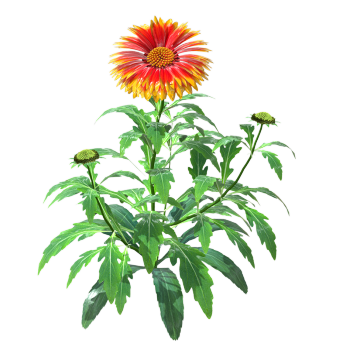
Tianren Chrysanthemum
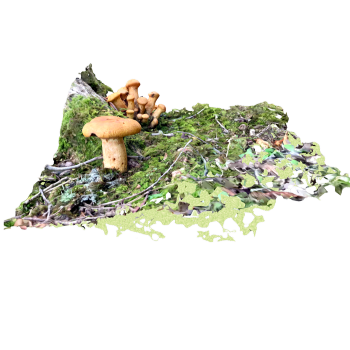
Gaillardia pulchella Foug. is an annual herbaceous plant in the Asteraceae family, with a plant height of 20-60 centimeters; Multiple branches, covered in soft hairs throughout the plant; Leaves alternate, rectangular in shape, lanceolate to spatulate in shape, with the entire margin or base of the leaves lobed; Head shaped inflorescence with a long peduncle at the top; Tongue shaped flower yellow, base brownish purple, apex 2-3 toothed fissure; The flowering and fruiting period is from July to October.
Tianren Chrysanthemum

Tianren Chrysanthemum

Gaillardia pulchella Foug. is an annual herbaceous plant in the Asteraceae family, with a plant height of 20-60 centimeters; Multiple branches, covered in soft hairs throughout the plant; Leaves alternate, rectangular in shape, lanceolate to spatulate in shape, with the entire margin or base of the leaves lobed; Head shaped inflorescence with a long peduncle at the top; Tongue shaped flower yellow, base brownish purple, apex 2-3 toothed fissure; The flowering and fruiting period is from July to October.
Orange naked umbrella

Orange naked umbrella

Gymnopilus junonius is a fungus in the family Ascomycota. The diameter of the cap is 8-30 centimeters, protruding to flat. Younger specimens appear bright yellow orange, while older specimens appear orange brown or reddish brown, with a dry scaly surface. The flesh is yellow in color, with a mild odor and a bitter taste.
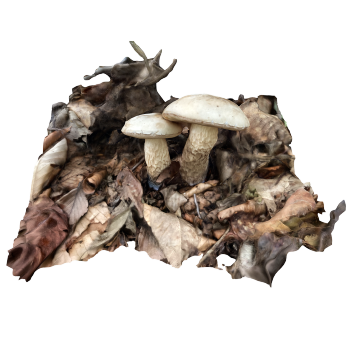
Proposed Southern Boletus edulis

Proposed Southern Boletus edulis

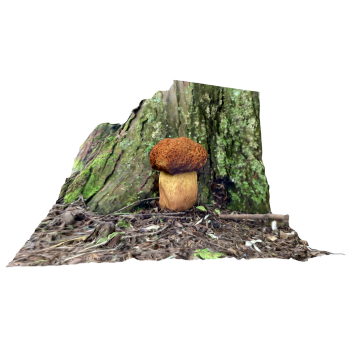
Pseudoautroboletus valens is a fungus in the family Boletaceae.
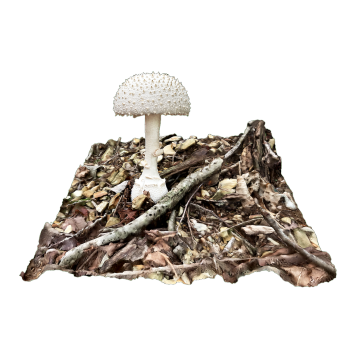
Cone scale white goose paste fungus

Cone scale white goose paste fungus

Amanita virgineoides Bas, scientific name Amanita virgineoides Bas, is a member of the Amanita family and the Umbrella order. One of the common poisonous mushrooms in Guangdong. Conical scale white Amanita is one of the common poisonous mushrooms in Guangdong. Conical scale white Amanita contains trace amounts of Amanita peptide toxins and grows on the ground in coniferous forests or mixed coniferous and broad-leaved forests in summer and autumn. It may form ectomycorrhiza with Pinus and Fagaceae plants. The cap diameter is 7-15 (20) cm, white, nearly hemispherical when young, with slightly curled edges, flattened to flattened in later stages, and sometimes with upturned edges. There are records that it may be edible, but caution is advised.
russula cyanoxantha

russula cyanoxantha
Blue, yellow, and red mushrooms are edible fungi distributed in Northeast China. The sub entity is medium to slightly larger. The cap has a diameter of 5-12cm, is flattened and semi spherical, concave when extended, and has a variety of colors, dark purple gray, purple brown, or purple gray with a hint of green. As it ages, it often appears light green brown or green gray, with mixed colors, sticky, thin epidermis, easy to peel off from the edges, and sometimes cracked. The edges are smooth or have indistinct stripes. Mushroom flesh is white, with a light red or purple color beneath the epidermis. No odor, good taste.
russula cyanoxantha

russula cyanoxantha

Blue, yellow, and red mushrooms are edible fungi distributed in Northeast China. The sub entity is medium to slightly larger. The cap has a diameter of 5-12cm, is flattened and semi spherical, concave when extended, and has a variety of colors, dark purple gray, purple brown, or purple gray with a hint of green. As it ages, it often appears light green brown or green gray, with mixed colors, sticky, thin epidermis, easy to peel off from the edges, and sometimes cracked. The edges are smooth or have indistinct stripes. Mushroom flesh is white, with a light red or purple color beneath the epidermis. No odor, good taste.
Boletus edulis

Boletus edulis

Rugiboletus extremophilis is a species of Boletus family, discovered by Chinese mycologists Wu Gang and Zhu Yang in Yunnan, China in 2015. The cap is 4-6 cm wide, convex in the middle, semi-circular in shape, slightly flattened at the back, with short hairs on the cap surface, clustered into clusters, and often falls off later on. The surface is wrinkled and raised, with irregular depressions, rust brown, dark deer skin brown, black rust color, dry.
Chongmai Ghost Pen

Chongmai Ghost Pen

The fruiting body is generally small, with a height of 8-10cm. When young, it is wrapped in a white oval bag, and when it cracks, the stem elongates. The cap is bell shaped, with irregular raised mesh patterns, yellow to bright yellow, or orange yellow with dark green mucus (spore body), and has a fishy odor. The handle is nearly cylindrical, white yellow or light yellow, hollow and sponge like. The bacterial tray is white, bract shaped, thick, and about 3cm high. Regarded as edible mushrooms in Japan.
mushroom

mushroom

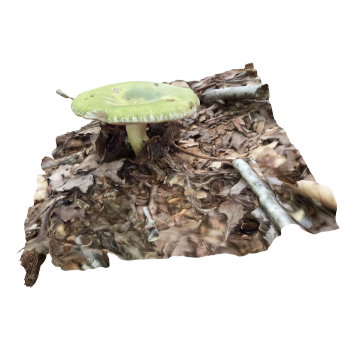
Qingtou fungus grows in pine or coniferous forests, broad-leaved forests, or mixed forests, with a growing season in summer and autumn each year, and a high yield after rain. They all appear in pairs, and if one is found in the deep forest, another one must be found within a range of no more than one meter, with a medium to slightly larger fruiting body. The cap is initially spherical and has a protective color similar to that of green grass, making it difficult to detect. Quickly flattened into a semi spherical shape and gradually extended, with a slightly concave center that is not sticky, ranging from light green to grayish green. The skin often cracks in spots, and there are stripes on the edges when old. Mushroom meat is white. The gills are white, dense, of equal length, and have transverse veins. The mushroom stem is long, solid, or soft inside, edible, and has a delicious taste.
Red wheelbase grass

Red wheelbase grass

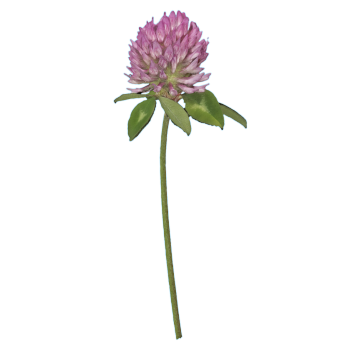
Trifolium pratense L. is a perennial herbaceous plant in the legume family, also known as red clover, red clover, and clover. Native to Europe and West Asia, it is now widely distributed around the world and is a temperate plant cultivated in both northern and southern China. Red clover contains flavonoids, proteins, amino acids, sugars, vitamins, and other components. Isoflavones have attracted particular attention due to their phytoestrogenic effects and the anticancer properties of flavonoids. There are also various values such as feeding and ornamental.
Japanese wisteria

Japanese wisteria

Duohua Wisteria is a deciduous woody vine of the legume family Wisteria, with alternating leaves, odd feather compound leaves, opposite growth, long elliptical or lanceolate, round base, pointed tip; Racemes, terminal or axillary, corolla butterfly shaped, purple or blue purple flowers, cultivated in pink, white, and double petaled varieties; The flowering period is in spring. Purple wisteria, originally from Japan, is cultivated in various parts of North China and south of the Yangtze River. It prefers warm and sunny environments, but has slightly poor cold and heat resistance; The suitable temperature for growth is 16-26 ℃, and it prefers loose loam soil with good drainage. The multi flowered wisteria is propagated through sowing, cutting, and grafting, with spring being the suitable season.
Henbit

Henbit

Baogaicao is an annual or biennial plant of the family Lamiaceae and the genus Fabaceae. Stem height 10-30 centimeters, with multiple branches at the base. The lower leaves of the stem have long stalks, which are equal to or exceed the length of the leaves. The upper leaves have no stalks, and the leaves are all round or kidney shaped. Hibiscus inflorescence with 6-10 flowers, often including flowers that are fertilized by closed flowers; The bracts are needle shaped and diamond shaped. The calyx is tubular and bell shaped, with white elongated soft hairs densely covering the outer surface. The inner surface is hairless except for the white elongated soft hairs on the calyx. The calyx has 5 teeth and is conical in shape. The corolla is purple red or pink, with the outer lip covered in dense purple red short hairs and the rest covered in soft hairs.
Spring Flying Pong

Spring Flying Pong

Chunfeipeng is a plant in the Asteraceae family, belonging to the Feipeng genus. Adult height is 30-90 centimeters. Single leaf mutualism; The basal leaves are lotus shaped. Several head shaped inflorescences arranged in umbrella or cone-shaped inflorescences; Hemispherical bracts; The bracts are 3-layer, lanceolate in shape, light green in color, with semi transparent edges, brown midrib, and hairy on the back; Linghua tongue shaped, tongue shaped, white with a hint of pink; Tubular flower bisexual, yellow. Small achene lanceolate, covered with sparse soft hairs; Female flowers have a thin fruit with one layer of coronal hair; The male and female flower achenes have two layers of coronal hair. Native to North America, naturalized in various parts of China. Commonly found along roadsides, in open fields, on mountain slopes, in orchards, at forest edges, and under sparse forests.
Golden peach blossom

Golden peach blossom

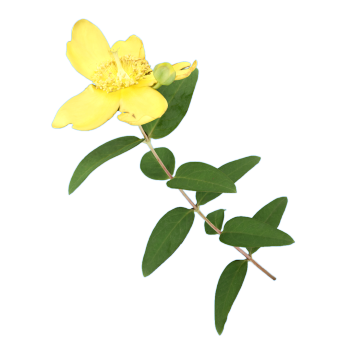
Hypericum monognum L., also known as Gouhu Flower (Huoshan, Anhui), Golden Thread Butterfly (Nanchuan, Chongqing, Yueqing, Zhejiang), Passing Yellow (Fengjie, Chongqing), Golden Thread Begonia (Laoshan, Shandong), Golden Thread Lotus (Shiquan, Shaanxi), and Earthly Forsythia, is a semi evergreen small tree or shrub in the Primulaceae family. It withers at the end of each growing season above ground and is perennial underground. The small branches are slender and multi branched, the leaves are papery, sessile, opposite, long elliptical, and the flowering period is from June to July.
Large flowered motherwort potted plant
Large flowered motherwort potted plant

Leonurus macranthus Maxim. is a perennial herbaceous plant in the family Lamiaceae, with a height of 60-120 cm. The rhizome is woody and runs diagonally, with fine fibrous roots densely growing on top; There are often deep incisions on the heart-shaped circular lobes of the stem and leaves at the bottom; The inflorescence is axillary without stems, the corolla is light red, the crown tube gradually increases upwards, and the ovary is brown and hairless; Small nuts are oblong triangular black brown in color; The flowering period is from July to September, and the fruiting period is in September. Da Hua Yi Mu Cao was first recorded in the "Shen Nong Ben Cao Jing". It is named after its large flowers that are beneficial to women.
Flowering small vine Changchun flower

Flowering small vine Changchun flower

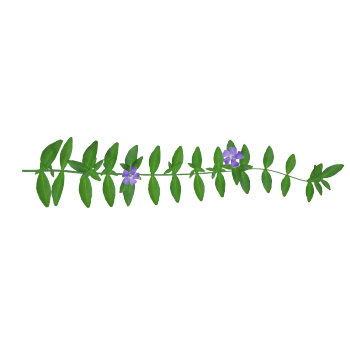
Vinca minor L. is a creeping perennial herb in the Apocynaceae family, belonging to the genus Vinca. It has an upright stem and is hairless throughout the plant. Leaves oblong to ovate in shape; The corolla is funnel-shaped, violet or white in color; The corolla tube is longer than the sepal, and the corolla lobes are obliquely inverted; Flower shaped tongue; The end of the style is swollen, the stigma is hairy, and there is a thickened circular disc at the base. Two follicles, upright. The flowering period is in May.
Xiaoman Changchun Flower

Xiaoman Changchun Flower

Vinca minor L. is a creeping perennial herb in the Apocynaceae family, belonging to the genus Vinca. It has an upright stem and is hairless throughout the plant. Leaves oblong to ovate in shape; The corolla is funnel-shaped, violet or white in color; The corolla tube is longer than the sepal, and the corolla lobes are obliquely inverted; Flower shaped tongue; The end of the style is swollen, the stigma is hairy, and there is a thickened circular disc at the base. Two follicles, upright. The flowering period is in May.
Black cherry saplings

Black cherry saplings

Black cherries are plants of the Rosaceae family and the Prunus genus. The bark is dark gray and rough; Branches dark gray; Bud ovate, hairy; Leaves are rhombohedral, elliptical, or elliptical in shape, with a pointed tip and a wide cherry shaped or circular base. The edges are heavily serrated, with sparse hairs on the top and soft hairs along the veins below; Leaves covered in needle like strips, fall early; raceme; The tube is bell shaped, the blade is triangular, and the edge has fine teeth; Round, white; Bracts ovate, with teeth; Stamens are numerous and of varying lengths; Carpel, sparse hairs at the base of the style, equal or slightly longer than the stamens; The fruit is small, oval in shape, with soft hairs, first purple red and then black; The fruit core is nearly round with wrinkles.
Flowering black cherries

Flowering black cherries

Black cherries are plants of the Rosaceae family and the Prunus genus. The bark is dark gray and rough; Branches dark gray; Bud ovate, hairy; Leaves are rhombohedral, elliptical, or elliptical in shape, with a pointed tip and a wide cherry shaped or circular base. The edges are heavily serrated, with sparse hairs on the top and soft hairs along the veins below; Leaves covered in needle like strips, fall early; raceme; The tube is bell shaped, the blade is triangular, and the edge has fine teeth; Round, white; Bracts ovate, with teeth; Stamens are numerous and of varying lengths; Carpel, sparse hairs at the base of the style, equal or slightly longer than the stamens; The fruit is small, oval in shape, with soft hairs, first purple red and then black; The fruit core is nearly round with wrinkles.
Black Cherry

Black Cherry

Black cherries are plants of the Rosaceae family and the Prunus genus. The bark is dark gray and rough; Branches dark gray; Bud ovate, hairy; Leaves are rhombohedral, elliptical, or elliptical in shape, with a pointed tip and a wide cherry shaped or circular base. The edges are heavily serrated, with sparse hairs on the top and soft hairs along the veins below; Leaves covered in needle like strips, fall early; raceme; The tube is bell shaped, the blade is triangular, and the edge has fine teeth; Round, white; Bracts ovate, with teeth; Stamens are numerous and of varying lengths; Carpel, sparse hairs at the base of the style, equal or slightly longer than the stamens; The fruit is small, oval in shape, with soft hairs, first purple red and then black; The fruit core is nearly round with wrinkles.
Jade Palace

Jade Palace

The Jade Palace (Aloe squarrosa) is a perennial succulent plant in the family Liliaceae, belonging to the genus Aloe. Origin: South Africa. Leaves alternate and spiral at the top of the stem, with triangular shapes ranging from light green to yellow green. The edges of the leaves have white teeth and bloom in summer.
Proposed Orange covered Goose Paste

Proposed Orange covered Goose Paste

Amanita caesarea (Scop.) Pers. is a fungus belonging to the Amanita family and the Amanita genus. The fruiting body is large, with a fungal curtain when the bacterial cells are young, gradually spreading out, slightly protruding in the middle, bright orange yellow to orange red, and with obvious stripes on the edges. Mushroom meat is white. The gills are yellow, thick, and the stem is cylindrical in shape, light yellow. The upper part of the stem is surrounded by bacteria, light yellow, membranous, and drooping, with fine stripes on top. The bacterial tray is large, white, and the spore print is white. Spores are colorless, smooth, broadly elliptical to ovoid in shape.
Tassel cup

Tassel cup

Tassel cup is a compact perennial herbaceous plant that forms a cluster of neatly lobed, round, toothed, soft furry leaves. Width of 10 centimeters, sometimes tinged with purple. Leaves are evergreen in warm winter regions. From mid spring to midsummer, slender and graceful urn shaped small flower sticks are adorned with tassel petals, far above the lush green hills. Unusual petals may initially be white or creamy in color, but as they age, they typically turn deep pink. Sometimes fragrant, flowers attract hummingbirds.
Jade Palace

Jade Palace

The Jade Palace (Aloe squarrosa) is a perennial succulent plant in the family Liliaceae, belonging to the genus Aloe. Origin: South Africa. Leaves alternate and spiral at the top of the stem, with triangular shapes ranging from light green to yellow green. The edges of the leaves have white teeth and bloom in summer.
Radiant leaved goosefoot wood fruit

Radiant leaved goosefoot wood fruit

Radiant leaved goosefoot wood is a tree in the family Araliaceae and genus Euphorbia, with a height of 5-10 meters. Leaves have small leaves 6-7; The petiole is 10-30 centimeters long and hairless; Leafy leaflets are leathery, with a central oval or elongated oval shape, and usually oval or elongated on both sides. The tips are gradually pointed, and the base is broadly wedge-shaped to nearly circular. The upper part is green, shiny, hairless, and the lower part is gray green; The inflorescence grows at the top, with branches spreading or slanting, measuring 1.5-8 centimeters in length; Flowers without stems or near stems, dozens of flowers gather to form a head shaped inflorescence; The fruit is spherical or nearly spherical, with 5 edges and a diameter of 5-6 millimeters.
Orange cone flower

Orange cone flower

Orange cone is a perennial herbaceous plant that can grow up to 120 centimeters (47 inches) tall and has a bright yellow daisy like compound flower head. Spread through creeping stems and seeds. The seeds are produced in a fruit called cypselae, which is 2.2 to 4 millimeters long and has a short coronal pappi, measuring 0.2 millimeters in length. Mature seeds are the favorite food of sparrows in winter.
Rocks in the Fountain Zone of Colorado

Rocks in the Fountain Zone of Colorado

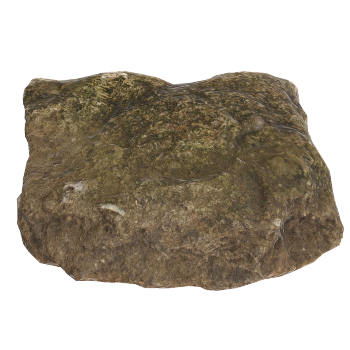
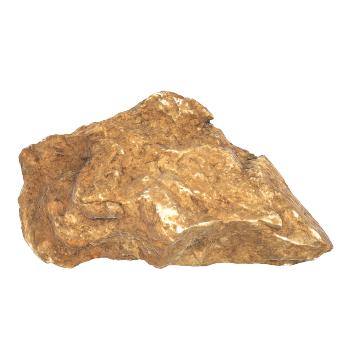
This is part of the Fountain Zone in Colorado and is an iconic rock.
Kniphofia

Kniphofia

The torch flower (scientific name: Kniphofia uvaria (L.) Oken) is a perennial herbaceous plant of the Aphrodiaceae family and the Lotus genus. The plant can reach a height of 120 centimeters and the stem is upright. Leaves clustered, grassy, sword shaped. The middle or upper part of the leaf begins to bend downward and droop, rarely standing upright; The inflorescence has hundreds of tubular small flowers in the shape of a torch, with orange red corollas and brown black seeds, forming an irregular triangle. Flowers bloom from June to October. Results for September.
lupin

lupin

Lupinus micranthus Guss. is an annual herb that can grow up to 70 centimeters in height. The stem is partially branched, with palmately compound leaves and small leaves ranging from needle shaped to inverted needle shaped. The leaves are thick, and the inflorescence grows at the top. The inflorescence axis is slender, and the flower stem is very short. The calyx has two lips and is covered with hard hairs. The corolla is blue, and the flag and keel petals have white markings. The pod is oblong linear, the seed is oval shaped, flat, spotted, and smooth. Flowers bloom from March to May and bear fruit from April to July.
Palm saplings

Palm saplings

Trachycarpus fortunei is an evergreen tree in the palm family, with a cylindrical trunk; Leaves nearly circular, petioles with fine rounded teeth; Flowers small yellow green, ovoid, forming branched or unbranched inflorescences, with large and multi branched inflorescences; The fruit is broad kidney shaped, with a navel and white powder, and changes from yellow to light blue when ripe; Seed endosperm keratin; The flowering period is in April and the fruiting period is in December. The name "palm" first appeared in the Chinese pre Qin literature "Shan Hai Jing", which states that "the mountains of stone and green are mostly made of brown wood". Li Shizhen named the palm, also known as the bamboo palm, in the Compendium of Materia Medica. It is named after the hair strands in its skin that resemble the mane of a horse.
Palm tree

Palm tree

Trachycarpus fortunei is an evergreen tree in the palm family, with a cylindrical trunk; Leaves nearly circular, petioles with fine rounded teeth; Flowers small yellow green, ovoid, forming branched or unbranched inflorescences, with large and multi branched inflorescences; The fruit is broad kidney shaped, with a navel and white powder, and changes from yellow to light blue when ripe; Seed endosperm keratin; The flowering period is in April and the fruiting period is in December. The name "palm" first appeared in the Chinese pre Qin literature "Shan Hai Jing", which states that "the mountains of stone and green are mostly made of brown wood". Li Shizhen named the palm, also known as the bamboo palm, in the Compendium of Materia Medica. It is named after the hair strands in its skin that resemble the mane of a horse.
Red Seven Trees

Red Seven Trees

Known as the red seven leaved tree or firecracker tree (formerly known as Pavia rubra), it is a deciduous flowering plant. This small tree or shrub is native to the southern and eastern parts of the United States, and has been found from Illinois to Virginia in the north, and from Texas to Florida in the south. It is very cold resistant in the northern part of its native mountain range and has been successfully cultivated in the polar regions of the Arboretum Mustila botanical garden in Finland.
Red Seven Leaf Tree Seedlings

Red Seven Leaf Tree Seedlings

Known as the red seven leaved tree or firecracker tree (formerly known as Pavia rubra), it is a deciduous flowering plant. This small tree or shrub is native to the southern and eastern parts of the United States, and has been found from Illinois to Virginia in the north, and from Texas to Florida in the south. It is very cold resistant in the northern part of its native mountain range and has been successfully cultivated in the polar regions of the Arboretum Mustila botanical garden in Finland.
European spruce stump

European spruce stump

European spruce (scientific name: Picea abies (L.) H. Karst.) It is a tree of the spruce genus in the pine family. The plant can reach a height of 60 meters and a breast height diameter of 4-6 meters; Young trees have thin bark, while old trees have thick bark that splits into small thin pieces; Branches often droop, young branches are light reddish brown or orange red, hairless or sparsely hairy, persistent bud scales at the base are significantly rolled back, and winter buds are conical in shape; Leaves are square shaped with four edges, straight or curved, pointed at the tip, oblique in cross-section, and have pink white stomatal lines on all four sides; The cone is cylindrical in shape, with seeds about 4 millimeters long and wings about 16 millimeters long.