Fuyuye Luan

Fuyuye Luan

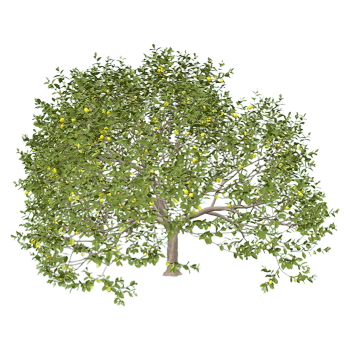
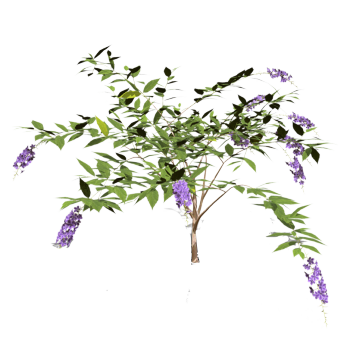
Fuyuye Luan is a plant of the Sapindaceae family and the Luan genus. Trees can reach a height of over 20 meters. Leaves spread flat, bipinnate compound leaves, 9-17 leaflets, alternate. The inflorescence is large, with petals that are oblong lanceolate in shape. The filaments are white and the anthers have short sparse hairs; The capsule is light purple red in color, with nearly spherical seeds. It blooms from July to September and bears fruit from August to October. Distributed in provinces and regions such as Yunnan, Guizhou, Sichuan, Hubei, Hunan, Guangxi, and Guangdong in China. Born in sparse forests at an altitude of 400-2500 meters in mountainous areas.
Melia azedarach wood

Melia azedarach wood

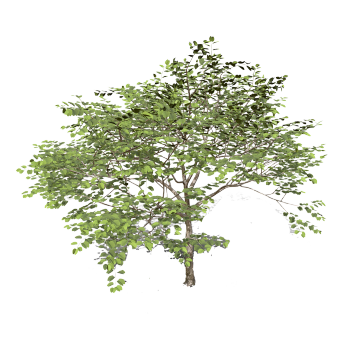
Melia azedarach (Latin name: Melia azedarach.), also known as China Berry in English. Deciduous trees, reaching up to 10-20m in height. Its bark is longitudinally split, dark brown, purple old branches, and has a large number of small pores. As a positive tree species, it prefers warm and humid climates, prefers light, is not tolerant to shade, and has strong cold resistance. The soil requirements are not strict, and it can grow in acidic, neutral, calcareous soil and saline alkali soil (with a salt content of less than 0.3%), but it does not grow as fast as on fertile and moist loam or sandy loam soil; Poor growth on dry, waterlogged, and poor soil conditions.
Hua Zhu Qilin

Hua Zhu Qilin

Huazhu Qilin is native to Somalia and South Africa, and is a woody succulent plant. Euphorbia plants in the Euphorbiaceae family. The plant height is 10-20 meters and the plant width is 2-3 meters. Stem columnar, branched, 4-5 angled, succulent, medium green to dark green, and forming a broad water chestnut crown, 15 cm long, resembling a candlestick or pagoda. The edge has a deep serrated ridge, bearing a pair of spines and small leaves. Small flowers, purple red in color. The flowering period is in spring. Watering: Drought resistant, water less when first planted, water once a week during the growth period, and once a month in winter. Lighting: Full day illumination. Fertilization: I prefer to fertilize and fertilize once a month during the growth period.
Cordyline australis

Cordyline australis

Jianye Zhujiao is an evergreen shrub with a height of up to 3 meters. It has an upright stem with few branches, dense leaf scars on the stem, and leaves clustered at the top. It is purple red or green with red stripes, leathery and broad lanceolate, with hard and obvious ribs in the middle. The petiole is 10-15 cm long, and the leaf cap is 30-40 cm long. The flowers are conical inflorescences, attached to the top leaf axils, light red, and the fruit is a berry.
Red Thousand Layer Tree Seedlings

Red Thousand Layer Tree Seedlings

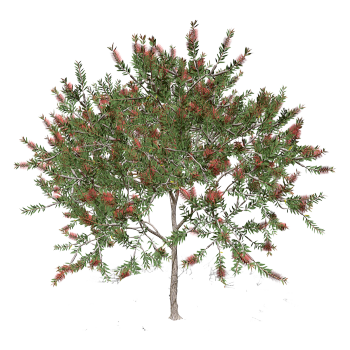
Callistemon rigidus R. Br. is an evergreen small tree species in the family Myrtle, belonging to the genus Callistemon rigidus. The bark of the red bark is hard, gray brown, and the tender branches have edges. At first, there are long hairs, but soon it becomes hairless; Leaves are hard and leathery, linear; The spike shaped inflorescence grows at the top of the branch, with green, oval shaped petals, bright red stamens, dark purple anthers, and elliptical shapes; Half spherical capsule; Seed strip; The flowering period is from June to August.
Red Thousand Layers

Red Thousand Layers

Callistemon rigidus R. Br. is an evergreen small tree species in the family Myrtle, belonging to the genus Callistemon rigidus. The bark of the red bark is hard, gray brown, and the tender branches have edges. At first, there are long hairs, but soon it becomes hairless; Leaves are hard and leathery, linear; The spike shaped inflorescence grows at the top of the branch, with green, oval shaped petals, bright red stamens, dark purple anthers, and elliptical shapes; Half spherical capsule; Seed strip; The flowering period is from June to August.
Jacaranda mimosifolia

Jacaranda mimosifolia

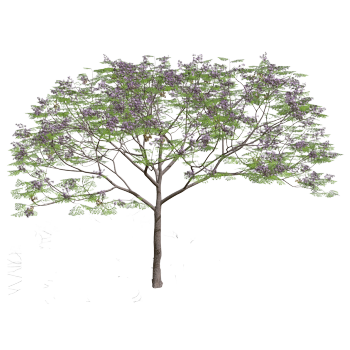
Jacaranda mimosifolia D. Don is a deciduous tree belonging to the Jacaranda family and the Jacaranda genus. Its leaves are opposite, with small leaves ranging from elliptical lanceolate to elliptical rhombic in shape, with a sharp apex and a wedge-shaped base; Blue flowers, calyx tube shaped, corolla tube slender, blue, lobes circular; Shuo fruit is woody and flattened oval in shape; The flowering period is from May to June. Native to Brazil in South America, it is cultivated in regions such as Guangxi, Yunnan, Fujian, and Taiwan in China. Jacaranda prefers sunny and warm, humid climates, with well-developed roots. It grows well on loose soil with deep soil layers, good drainage, and abundant humus.
Black Poplar in Autumn

Black Poplar in Autumn

Black poplar is a deciduous tree with a height of 30 meters; The tree crown is wide oval shaped. The bark is dark gray and cracks when old. Branches round, light yellow, hairless. The bud is ovate in shape, rich in mucilage, reddish brown in color, and the tip of the flower bud is curved outward. The flowering period is from April to May, and the fruiting period is in June. Black poplar naturally grows on riverbanks and river bays, and is rarely found on coastal sand dunes. Often formed into strips or patches of forest. Cold resistant, light loving, not tolerant to salt and alkali, not tolerant to drought, grows well on alluvial sandy soil. Produced in Xinjiang, China, it is distributed in northern China and northern Asia. The black poplar has a cylindrical crown, with a tall and upright tree shape and a graceful posture; Can be planted in clusters or rows on lawns, squares, schools, hospitals, and other places.
Black Poplar in Winter

Black Poplar in Winter

Black poplar is a deciduous tree with a height of 30 meters; The tree crown is wide oval shaped. The bark is dark gray and cracks when old. Branches round, light yellow, hairless. The bud is ovate in shape, rich in mucilage, reddish brown in color, and the tip of the flower bud is curved outward. The flowering period is from April to May, and the fruiting period is in June. Black poplar naturally grows on riverbanks and river bays, and is rarely found on coastal sand dunes. Often formed into strips or patches of forest. Cold resistant, light loving, not tolerant to salt and alkali, not tolerant to drought, grows well on alluvial sandy soil. Produced in Xinjiang, China, it is distributed in northern China and northern Asia. The black poplar has a cylindrical crown, with a tall and upright tree shape and a graceful posture; Can be planted in clusters or rows on lawns, squares, schools, hospitals, and other places.
opuntia ficus-indica

opuntia ficus-indica

Pear Cactus Indica (L.) Mill It is a fleshy shrub or small tree of the Cactus genus in the Cactaceae family, commonly known as "Xiantao" in western Sichuan. The plant is 1.5-5 meters tall. The branches and leaves are light green or gray green in color, with a wide oval shape, inverted oval shape to oblong shape, flat surface, and many small nests; When it blooms, the flowers are bright orange red, and when the fruit matures, it looks like a pear, so it is called a pear cactus; The flowering period is from May to June.
Pear fruit cactus seedlings

Pear fruit cactus seedlings

Pear Cactus Indica (L.) Mill It is a fleshy shrub or small tree of the Cactus genus in the Cactaceae family, commonly known as "Xiantao" in western Sichuan. The plant is 1.5-5 meters tall. The branches and leaves are light green or gray green in color, with a wide oval shape, inverted oval shape to oblong shape, flat surface, and many small nests; When it blooms, the flowers are bright orange red, and when the fruit matures, it looks like a pear, so it is called a pear cactus; The flowering period is from May to June.
Amanita rubescens

Amanita rubescens

Amanita rubescens (Fries 1821) is a fungus belonging to the Amanita genus in the Amanita family. The gills are white to nearly white, gradually reddish brown, free, slightly dense, and unequal in length. In summer and autumn, it grows alone or sporadically on the ground in the forest. This type is generally edible, but there are also reports of containing hemolytic substances that can be destroyed by heating, so it cannot be eaten raw. The sub entity is of medium size. The cap diameter is 3.5-8cm, flattened to flattened, light soil yellow or light reddish brown, with blocky and nearly warty scales, and indistinct stripes on the edges.
Puffball

Puffball

Ma Bo, also known as Grey Bun or Horse Manure Bun, is a type of fungus belonging to the Basidiomycota phylum and the Ma Bo order. It is widely distributed and can be found in almost all parts of China. After rainfall in summer and autumn, it mostly grows in open grasslands or on decaying wood in wetlands. Ma Bo Duo belongs to the family Lycoperdaceae in the Ma Bo family. Bulbasaur fruit is spherical, pear shaped, gyro shaped, and oblate in shape; The outer covering often has small warts or spines and other patterns, which fall off when mature, and is made of paper or film; Irregular opening or closure at the top; The false root is obvious or absent, fixed in the attachment or detached from the ground when mature; When mature, spores spread with the wind to the outside world; Spores without septa; The spore surface has indistinct ornamentation.
Autumn Boletus edulis

Autumn Boletus edulis

Autumn Boletus, also known as Udazkeneko onddozuri, is a mushroom belonging to the Boletaceae family. The scientific name is Boletus edulis. Udazkeneko onddozuri's hat is dark brown with a mesh texture and a white bottom. Its meat is solid and delicious. It forms mycorrhizae with oak and pine trees and usually grows in forests. It can be found in many regions of the Northern Hemisphere. It is a beloved edible mushroom and is considered one of the most delicious mushrooms in certain regions of Europe. It is suitable for making various dishes.
Tearfold Felt Hair Crispy Mushroom

Tearfold Felt Hair Crispy Mushroom

The scientific name of Lacrymaria lacrymabunda, commonly known as the Weeping Widow Mushroom, is a fungal species belonging to the family Mycelidae. It is distributed in North America, Central America, Europe, North Asia, and New Zealand, growing on disturbed ground such as forests, gardens, and parks. This mushroom has dark black spores with rich patterns, and its texture is fragile and fragile. Although sometimes listed as an edible species, some people report experiencing stomach discomfort after consuming it.
White wax sapling

White wax sapling

Fraxinus chinensis Roxb. is a deciduous tree in the Oleaceae family. Its underground rhizomes are relatively developed and have deep rootedness; The bark is gray brown with longitudinal cracks on the surface; Twigs are yellow brown, rough, hairless or sparsely covered with long soft hairs and grooves; Leafy ovate, ovate oblong to lanceolate; The flowers are dioecious, with dense, bell shaped male flowers and distant, barrel shaped female flowers; The fruit is a winged fruit, shaped like the wings of a dragonfly, and the nut is cylindrical. The flowering period is from April to May, and the fruiting period is from July to September.
Ash trees

Ash trees

Fraxinus chinensis Roxb. is a deciduous tree in the Oleaceae family. Its underground rhizomes are relatively developed and have deep rootedness; The bark is gray brown with longitudinal cracks on the surface; Twigs are yellow brown, rough, hairless or sparsely covered with long soft hairs and grooves; Leafy ovate, ovate oblong to lanceolate; The flowers are dioecious, with dense, bell shaped male flowers and distant, barrel shaped female flowers; The fruit is a winged fruit, shaped like the wings of a dragonfly, and the nut is cylindrical. The flowering period is from April to May, and the fruiting period is from July to September.
Poison fly umbrella at different growth stages

Poison fly umbrella at different growth stages

Amanita muscaria, also known as fly agaric or fly amanita, is a neurotoxic fungus in the Basidiomycota phylum, classified as a species of the Amanita genus in the Amanita family. The growth environment of the poisonous fly umbrella covers temperate and polar regions in the northern hemisphere, and has unintentionally expanded to the southern hemisphere, coexisting with pine trees and other plants in pine forests. It has now become a global species. The poisonous fly umbrella forms mycorrhizae with deciduous plants and fruit bearing plants.
Grey Populus euphratica

Grey Populus euphratica

Populus pruinosa Schrenk is a small tree in the family Salicaceae, belonging to the genus Populus, with a height of up to 20 meters. Crown development; The bark is light grayish yellow; Cute branches densely covered with gray short hairs; The small branches have gray short hairs. Cute branches and leaves elliptical in shape, covered in gray hairs on both sides; Short branches and leaves kidney shaped, with sparse teeth on the entire edge or tip, gray blue on both sides, densely covered with short hairs; The petiole is slightly flattened on the side. The fruit stalk, stem, and capsule are all densely covered with short hairs. The capsule is oval in shape, blooms in May, and bears fruit from July to August.
ganoderma lipsiense

ganoderma lipsiense

Ganoderma lucidum, commonly known as old cow liver, is a globally distributed scaffold fungus. The spore body of this fungus can reach up to 30-40 centimeters (12-16 inches), with a hard texture and woody texture. At the beginning of growth, it appears white, but soon turns deep reddish brown. It grows in the form of mycelium in both live and dead trees. Ganoderma lucidum can grow individually, sporadically, or in groups. Its fruiting body has a diameter of up to 3-30 centimeters, a length of 5-50 centimeters, a thickness of 1-10 centimeters, a hard texture like leather, and a woody texture. The upper surface of the fruiting body is covered with reddish brown conidia.
Water powder cup umbrella

Water powder cup umbrella

Shufen Cup Umbrella, distributed in Taiwan, Japan, China, Europe, North Africa, and North America, is a species of mushroom in the family Tricholomaceae and is also one of the occasional terrestrial saprophytic wild mushrooms. This plant is similar to a cup umbrella, but its color resembles smoke. This fungus grows in mid to high altitude forest areas during summer. It has a slightly crispy flesh and a cap 10cm-15cm wide. Although it is generally considered edible, there are also literature records of discomfort after consumption.
Cladonia chlorophaea

Cladonia chlorophaea

Cladonia chloropaea is a fungus in the family Caryophyllaceae. The primary lichens persist or disappear, ranging from small to medium-sized, with no powdery sprouts or a few powdery sprouts visible on the ventral surface. The stem of the seed vessel is 1-3 cm high, and the tip gradually enlarges into a trumpet shaped cup. It forms a smaller cup either singly or by sprouting from the edge of the cup. The cup without a seed sac is the entire rim; The lower part of the stem has a continuous cortex, which may be wart like or granular. As it reaches the upper part, the cortex becomes more and more detached, exposing the marrow layer. There are many granular powder buds on the cup side or inside the cup.
Agaricus bisporus in deciduous forests

Agaricus bisporus in deciduous forests

Agaricus bisporus is a fungus belonging to the mushroom family and genus, also known as mushroom, foreign mushroom, etc. The fruiting body of Agaricus bisporus is medium-sized, with a cap width of 5-12 centimeters. It is initially semi spherical, later flattened, smooth, slightly dry with a gradual yellow color, and the edges are initially curled inward. Mushroom flesh is brown, thick, slightly reddish after injury, with a unique mushroom aroma. The gills are initially pink, then brown to black brown, dense, narrow, free, unequal in length, with a stem length of 4.5-9 cm and a thickness of 1.5-3.5 cm. They are brown, smooth, silky, nearly cylindrical, soft or medium solid inside, with a single-layer, white, membranous ring in the middle of the stem, and easy to fall off.
Apple saplings

Apple saplings

Apples (Malus pumila Mill.) are deciduous trees in the Rosaceae family, with tall stems and short, thick, cylindrical branches; The leaves are elliptical in shape, with a smooth surface and serrated edges. The petiole is thick and robust; The flowers are small and umbrella shaped, light pink in color, with a fuzzy surface; The fruit is large, flattened in shape, and the stem is short and thick; The flowering period is in May; The fruiting period is from July to October. The name of an apple was first mentioned in Wang Shimao's "Xuepu Yushu" during the Ming Dynasty, which stated that "the apple fruit of the northern soil is a variation of the flower red variety.
apple

apple

Apples (Malus pumila Mill.) are deciduous trees in the Rosaceae family, with tall stems and short, thick, cylindrical branches; The leaves are elliptical in shape, with a smooth surface and serrated edges. The petiole is thick and robust; The flowers are small and umbrella shaped, light pink in color, with a fuzzy surface; The fruit is large, flattened in shape, and the stem is short and thick; The flowering period is in May; The fruiting period is from July to October. The name of an apple was first mentioned in Wang Shimao's "Xuepu Yushu" during the Ming Dynasty, which stated that "the apple fruit of the northern soil is a variation of the flower red variety.
Poison fly umbrella

Poison fly umbrella

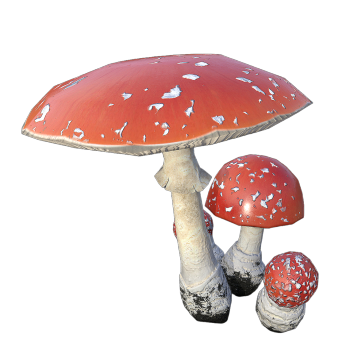
Amanita muscaria, also known as fly agaric or fly Amanita, is a fungus of the Basidiomycota phylum and one of the Amanita genera that contains neurotoxic effects. The fruiting body of the fungus is relatively large. The cap width is 6-20cm. The edges have obvious short ridges, the surface is bright red or orange red, and there are white or slightly yellowish granular scales. The gills are pure white, dense, free, and of unequal length. The mushroom meat is white and red near the epidermis.
Poison fly umbrella

Poison fly umbrella

Amanita muscaria, also known as fly agaric or fly Amanita, is a fungus of the Basidiomycota phylum and one of the Amanita genera that contains neurotoxic effects. The fruiting body of the fungus is relatively large. The cap width is 6-20cm. The edges have obvious short ridges, the surface is bright red or orange red, and there are white or slightly yellowish granular scales. The gills are pure white, dense, free, and of unequal length. The mushroom meat is white and red near the epidermis.
Geastrum hygrometricum

Geastrum hygrometricum

Hard skinned Earth Star, also known as Earth Star, is a fungus of the Basidiomycota order in the Hard skinned Earth Star family, mainly distributed in some provinces and regions of Northeast, North, South, and Southwest China. Its spores can be used as medicine and have hemostatic effects. This fungus has a hygroscopic effect and is considered a "forest hygrometer" for observation. Basidiomycota fungi of the order Basidiomycota, belonging to the family Asclepiadaceae. When the sub entity cracks, it appears spherical and exposes the ground after cracking. The outer layer is thick, and when mature, it cracks into 6-18 petals. When wet, it turns outward, and when dry, it rolls inward. The outer surface is gray to gray brown, and the inner side is brown. The inner packaging is made of thin film, flattened spherical, with a diameter of 2-2.8 cm, gray to brown.
narcissus

narcissus

Narcissus tazetta subsp. chinensis, also known as Chinese narcissus, is a variant of the multi flowered narcissus. It is a perennial herbaceous plant in the Alliaceae family. The leaves of narcissus are extracted from the green white cylindrical sheath at the top of the bulb, and the stem is then extracted from the leaves. Generally, each bulb can have 1-2 flowering stems, and in some cases, up to 8-11 stems, forming an umbrella shaped inflorescence. The petals are mostly 6 pieces, and the end of the petals is goose yellow. There is a bowl like protective cover outside the stamen. The bulb is ovate to broadly ovate spherical in shape, covered with a brownish membrane. The leaves are narrow and strip-shaped, and the back of the capsule is cracked. The flowering period is in spring.
Rotten wood and small moss

Rotten wood and small moss

Rotten wood moss is slender or thick, yellow green or dark green, slightly brownish green in color, and glossy. The stem crawls and branches densely. The leaves are curved, almost sickle shaped, with a long oval base, concave inward, and long pointed; The leaf edge is slightly curled, with fine teeth on the upper part; Middle ribs are often missing. The leaf cells are diamond shaped or elongated diamond shaped, with a yellow base, and the horn cells are relatively swollen and golden yellow. There are a few short cells above them, which are often transparent. Dioecious plants, rare dioecious plants with the same bract, or leaf bearing male bract plants with different bracts. The inner female bracts have longitudinal folds, long haired tips, and fine teeth on the upper edges.
Big bald horse

Big bald horse

Da Tu Ma Bo, also known as Tu Ma Bo, scientific name Calvatia gigantea (Batch: Fr.) Lloyd, belongs to the subphylum Basidiomycota, order Bacteroidetes, family Fabaceae, and genus Tu Ma Bo. Usually rot on soil, decaying wood, or tree stumps. Some types of sub entities are extremely large, with the largest exceeding 1m. Basidiocarps are spherical, pear shaped, conical or human shaped, and can be consumed when young.
silver birch

silver birch

Deciduous tree, up to 25 meters tall, with straight trunk ends. The white paper like bark will peel off layer by layer in any season; Slender branches; Triangular ovate leaves with irregular heavy serrations on the edges, 5-8 pairs of lateral veins, and a small amount of hairy or hairless; First leaf flowering, single sex, monoecious, inflorescence of catnip; The cylindrical fruit sequence is solitary and drooping; Nuts are small and flat, with wide wings on both sides, and mature in autumn.
Marigold

Marigold

Tagetes erecta (scientific name: Tagetes erecta), also known as stinky hibiscus, is a plant of the genus Tagetes in the Asteraceae family. Originating from Mexico, it is cultivated for ornamental purposes in various parts of China. It can grow in areas with an altitude of 1150 to 1480 meters and is mostly found in roadside meadows. Marigolds are often sown in spring and are often used as flower bed scenery due to their large flowers and long flowering period.
Chlorophyllum molybdites

Chlorophyllum molybdites

This species is a large mushroom widely distributed in southern China, commonly found in fields, grasslands, flower pots, or other areas. Its prominent feature is the green color of its mature gills and spore prints. The main feature is a large body size, white cap, and brown flake scales; The surface of the stem is smooth and often has developed fungal rings. The flesh at the base of the stem turns reddish brown after injury; Fungal folds are detached, white in childhood and lead green in old age. This toxic substance has caused widespread poisoning cases in southern China. It appears harmless to humans and animals, with a morphology similar to that of an edible species. It is widely distributed, likes to grow in large groups, and has a good taste, among other factors, making it one of the most commonly ingested poisonous mushrooms.
Lavandula angustifolia

Lavandula angustifolia

Narrow leaved lavender is a perennial herb or small shrub in the family Lamiaceae, with a height of up to 40 centimeters. Cluster with multiple branches, fragrant throughout the plant; Spike inflorescence grows at the top, with small blue purple flowers; Leaves alternate, narrow and shallow feather like, gray green in color, with a delicate texture; The flowering period is from June to August. Narrow leaved lavender is native to the Mediterranean region and is cultivated in China, mainly in Xinjiang. It prefers light, heat and cold resistance, drought and poverty resistance, and is resistant to waterlogging and humidity. It prefers well drained soil. The general propagation methods are sowing, splitting, or cutting propagation.