


Freecreat category
Nature/Plants
Browse models in this category, preview details, then continue to download when ready.
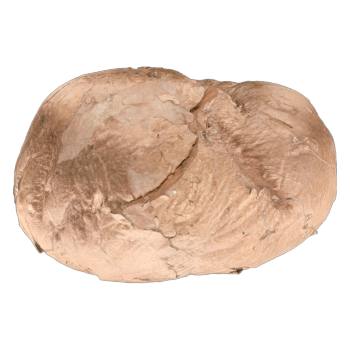
Big bald horse
Da Tu Ma Bo, also known as Tu Ma Bo, scientific name Calvatia gigantea (Batch: Fr.) Lloyd, belongs to the subphylum Basidiomycota, order Bacteroidetes, family Fabaceae, and genus Tu Ma Bo. Usually rot on soil, decaying wood, or tree stumps. Some types of sub entities are extremely large, with the largest exceeding 1m. Basidiocarps are spherical, pear shaped, conical or human shaped, and can be consumed when young.

Chlorophyllum molybdites
This species is a large mushroom widely distributed in southern China, commonly found in fields, grasslands, flower pots, or other areas. Its prominent feature is the green color of its mature gills and spore prints. The main feature is a large body size, white cap, and brown flake scales; The surface of the stem is smooth and often has developed fungal rings. The flesh at the base of the stem turns reddish brown after injury; Fungal folds are detached, white in childhood and lead green in old age. This toxic substance has caused widespread poisoning cases in southern China. It appears harmless to humans and animals, with a morphology similar to that of an edible species. It is widely distributed, likes to grow in large groups, and has a good taste, among other factors, making it one of the most commonly ingested poisonous mushrooms.

Scale wax hole fungus on tree stumps
Polyporus squamosus, belonging to the family Polyporus, is a medium-sized saprophytic mushroom that inhabits wood and is edible. It is widely distributed and found in North America, Australia, Asia, and Europe, living in hardwood forests. This mushroom is widely distributed and has been found in the eastern Rocky Mountains of the United States, most parts of Europe, Australia, and Asia. It usually grows in spring, occasionally in autumn, and rarely in other seasons. It often grows in patches, with an area of up to 50 centimeters. It plays an important role in forest ecosystems by decomposing wood, usually elm trees, and rarely parasitizes living trees.

Chicken oil fungus
Chicken oil fungus is a fungus belonging to the Chicken oil fungus genus in the Chicken oil fungus family, also known as egg yolk fungus, yellow fungus, apricot fungus, etc. Chicken oil mushroom fruiting body is fleshy, trumpet shaped, apricot yellow to egg yellow. The cap is 3-10 centimeters wide and 7-12 centimeters high, initially flat, gradually concave, with an extended edge, wavy or petal shaped, and rolled inward. The mushroom meat is slightly thick and egg yellow. The gills are angular, narrow, and extend downwards to the stem, branching or interwoven with transverse veins to form a network. They are the same color as or slightly lighter than the cap. The stem is 2-8 centimeters long and 5-8 millimeters thick, cylindrical in shape, sometimes slightly thinner or larger at the base, and is the same color or slightly lighter than the cap. Spores are elliptical or oval in shape, colorless; Spore print is yellow white.

mushrooms
Mushrooms belong to the order Basidiomycota, order Agaricales, family Tricholomatacete, and genus Lentinus. The scientific name Lentinus edodes originated in China and is the world's second-largest mushroom. It is also a precious edible mushroom that has long been renowned in China. The earliest cultivation of shiitake mushrooms in China has a history of over 800 years. Mushrooms are also famous medicinal mushrooms in China. Chinese pharmacologists throughout history have written about the medicinal properties and functions of shiitake mushrooms. Mushrooms have thick and tender meat, delicious taste, unique aroma, and rich nutrition. They are a food with both food and medicine, and have high nutritional, medicinal, and health value.

boletus impolitus
Boletus impolitus, also known as yellow brown boletus, is a fungus belonging to the genus Boletus. There are small germination holes on the mushroom umbrella. They are edible mushrooms, but they are rarely consumed. They will grow on the oak genus. The umbrella of the yellow brown boletus mushroom first takes on a hemispherical shape, gradually becoming flattened or even inverted. The mushroom umbrella initially appears gray white, but later becomes light brown or yellow brown, often with the appearance of being hammered. The diameter of the mushroom umbrella is 5-15 centimeters wide and can reach up to 20 centimeters.

Blue cap mushroom
Blue cap mushroom, commonly known as blue round head mushroom, is a type of mushroom forming fungus in the family Agaricus. It is a relatively common species found in Europe and North America, where it grows as a saprophytic plant in grasslands, roadsides, hedgerows, gardens, and sawdust coverings. S. Caerulea was officially described by the scientific community in 1979, despite being a unique species for approximately two centuries prior to that. The scientific name "Stropharia cyanea" defined by Tuomikoski in 1953 is synonymous with S. caerulea and was later used by several authors.

Oyster mushroom
Pleurotus ostreatus is a fungus belonging to the genus Pleurotus in the family Pleurotus. The fruiting bodies are clustered or stacked, and the cap is covered in tile like clusters, fan-shaped, shell shaped, and irregular funnel-shaped. The flesh of the mushroom cap is thick and soft. The surface color of the bacterial cap changes under the influence of light, with darker light intensity and lighter light intensity. The gills are white in color, with varying lengths. The longer ones extend from the edge of the cap to the stem, while the shorter ones only have a small section at the edge of the cap, forming a fan-shaped structure. Fungi stem lateral or lateral, white, medium solid; The mycelium is white, thick and powerful, and the flesh is white, slightly thick, and soft.
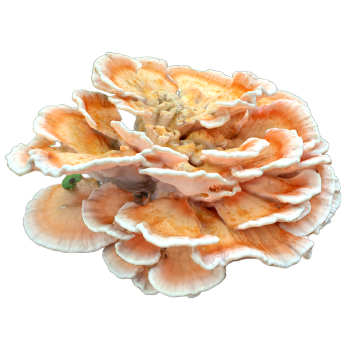
Laetiporus sulphureus
Sulfur bacteria, also known as sulfur porous bacteria or sulfur colored porous bacteria, are a type of fungus. In the early stage, it is tumor like, resembling a brain marrow, with a tile shaped arrangement of fungal caps, and the meat is tender and crispy after sweating. The cap is 8-30cm wide and 1-2cm thick, with a sulfur colored to bright orange surface, fine or no fluff, wrinkles, no ring, thin and sharp edges, wavy to lobed. Mushroom meat is white or light yellow in color, with sulfur colored pores that fade after drying. The pores are polygonal, with an average of 3-4 pores per millimeter. Spores are oval shaped, nearly spherical, smooth, colorless, 4.5-7 × 4-5 μ m. The important feature of this bacterium is the tile shaped arrangement of fruiting bodies, which are sulfur colored. Eating it during childhood has a better taste.
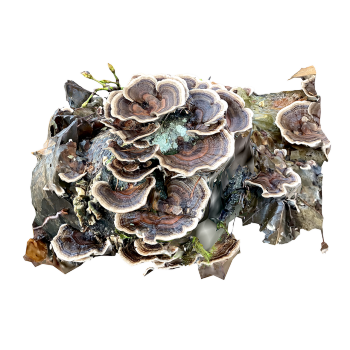
Yunzhi
Yunzhi is one of the most medicinal fungi, with functions such as clearing heat, detoxifying, anti-inflammatory, anti-cancer, and hepatoprotective. Yunzhi, also known as "turkey tail", has very recognizable features. It may be a forest fungus named after a bird, named after local features rather than the whole. The fruiting body of the colored velvet cap fungus is one year old. Leafy to semi fibrous, lateral without stems, often covered in tile like folds, often connected to the left and right, the fruiting bodies that grow on the cross-section of the stump or fallen wood often enclose in a lotus seat shape.

A withered tree covered in mushrooms and moss
Pleurotus ostreatus, scientific name, is a fungus of the genus Pleurotus in the family Pleurotus. It is an edible fungus that is rich in nutrients. The fruiting bodies are clustered or stacked, and the cap is covered in tile like clusters, fan-shaped, shell shaped, and irregular funnel-shaped. The flesh of the mushroom cap is thick and soft. The surface color of the bacterial cap changes under the influence of light, with darker light intensity and lighter light intensity. The gills are white in color, with varying lengths. The longer ones extend from the edge of the cap to the stem, while the shorter ones only have a small section at the edge of the cap, forming a fan-shaped structure. Fungi stem lateral or lateral, white, medium solid; The mycelium is white, thick and powerful, and the flesh is white, slightly thick, and soft.

Poison fly umbrella variant guessowii
A variant of the Poison Fly Umbrella, Guessowii, has a yellow to green surface and an orange or even dark orange center.

Poison fly umbrella
Amanita muscaria, also known as fly agaric or fly amanita, is a neurotoxic fungus in the Basidiomycota phylum, classified as a species of the Amanita genus in the Amanita family. The growth environment of the poisonous fly umbrella covers temperate and polar regions in the northern hemisphere, and has unintentionally expanded to the southern hemisphere, coexisting with pine trees and other plants in pine forests. It has now become a global species. The poisonous fly umbrella forms mycorrhizae with deciduous plants and fruit bearing plants.

Dead wood covered in moss and mushrooms
Dead trees in the forests of the Pacific Northwest region in autumn

3D Scanning Mushrooms

Random Model


The Viking flagship warship set sail
1120 View


F/A-18 Combat Attack
1037 View

Japan's nine-headed light cruiser
803 View

Lockheed CL-945 Loading Rotorcraft
3310 View


Green iguana skull
1388 View


Egyptian female statue
871 View