Argentina's Avacagua Mountain

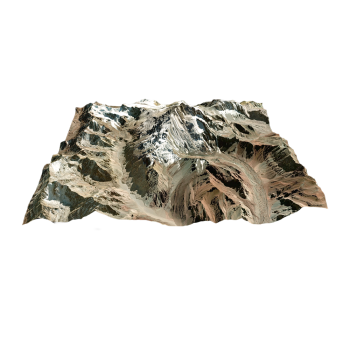
Argentina's Avacagua Mountain

Mount Aconagua (6960 meters above sea level) is located in the province of Mendoça, Argentina. It is the highest peak on Earth outside the Himalayas, and therefore the highest peak in the Americas.
Mount Fuji

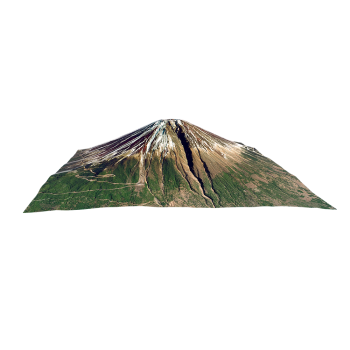
Mount Fuji

Japan's Mount Fuji is an active volcano located about 100 kilometers southwest of Tokyo. It is commonly known as "Mount Fuji" and is the highest mountain in Japan at 3776 meters above sea level. It has been a place of pilgrimage for centuries and is considered one of the three sacred mountains in Japan, and the summit remains a popular activity today. Its iconic mountain shapes are the subject of numerous works of art, especially the Edo period prints by Katsushika Hokusai and Kogawa Hiroshi.
The internal structure of the Earth with animation

The internal structure of the Earth with animation

calcite

calcite

Calcite chemical formula for CaCO, is the most widely distributed carbonate minerals in nature, belongs to the trigonal system (rhombohedral system), because the crystal is often a rhombohedral (rhombohedral) morphology and named. Its English name "Calcite" is derived from the Latin "calx" (meaning lime), which is the main component of limestone and marble.
pentagonal dodecahedral pyrite crystal

pentagonal dodecahedral pyrite crystal

Pyrite chemical formula for FeS, is the most common representative of sulfide minerals, because the surface is often metallic luster and easy to oxidize "fool's gold" (Fool's Gold) misnomer. Pyrite is one of the most representative crystal forms, which belongs to the icosahedron family of cubic crystal system. It is composed of 12 pentagonal faces (each face is a regular pentagon), and the vertices connect 5 faces. The overall structure of the dodecahedron (similar to the simplified version of the "truncated icosahedron" of football).
Earth 1:35 million Geological Map

Earth 1:35 million Geological Map

Crystal Systems and Bravig

Crystal Systems and Bravig

The crystal system is divided into seven basic categories according to the macroscopic symmetry of the crystal (such as rotation axis, mirror, inversion center, etc.), which is used to describe the symmetry characteristics of the crystal structure. Bravig is a mathematical model describing the translational symmetry of crystals, proposed by French scientist Auguste Bravie, a total of 14 possible lattice types, divided into seven subclasses under the crystal system. The classification of crystal systems is based on the macroscopic symmetry operation of crystals.
Limonite-encapsulated plate-like barite crystals

Limonite-encapsulated plate-like barite crystals

The limonite-coated plate-like barite is a typical mineral assemblage under the action of epithermal or hydrothermal fluid, which combines the industrial value of barite with the oxidation characteristics of limonite.
Lavolite with color effect

Lavolite with color effect

Lazarite is a kind of mineral in the family of plagioclase (Plagioclase Feldspar). It is a series of similar substances with chemical composition of NaAlSiΑ O₂-CaAl₂ Si₂ O₂, mainly rich in sodium. Its name is derived from the Canadian Labrador region (Labrador), is a common mineral in igneous rocks (such as basalt, granite) and metamorphic rocks. Usually gray, black, green or brown, transparent to translucent. Glass luster, cleavage surface is pearl luster. The crystal system belongs to triclinic system with Mohs hardness of 6-6.5.
Geological Map of Romania

Geological Map of Romania

Romania is located in the northeastern part of the Balkan Peninsula in southeastern Europe, and its geological structure is deeply influenced by the Alpine orogeny, forming a variety of tectonic units and geomorphological types. Main geological regional features: Carpathian Mountains, Transylvania Basin, Lower Danube Plain, Banat Basin. The geological structure of Romania is complex and diverse, combining Precambrian basement, Alpine orogenic belt and young sedimentary basin. Its rich mineral resources, active seismic zones and unique landforms.
Round Bright Cut Diamond (with rotating animation)

Round Bright Cut Diamond (with rotating animation)

Diamond refers to the diamond after pondering, diamond is a natural mineral, is the original stone of diamond. Simply speaking, diamond is a kind of elemental crystal composed of carbon formed under the condition of high pressure and high temperature in the deep part of the earth. Diamonds are the hardest natural substance known in the world. Diamond production is rare, usually colorless crystals, with a high degree of refractive properties, can reflect a colorful luster. Diamonds can be used not only as jewelry, but also as advanced cutting and grinding materials in industry.
3D diagram of crystal morphology classification

3D diagram of crystal morphology classification

Crystal Morphology and Structure of Quartz

Crystal Morphology and Structure of Quartz

Quartz (Quartz) is a silicon dioxide (SiO₂) stable homogeneous polymorphic variants, belonging to the three-party crystal system (Trigonal System), the crystal form to hexagonal columnar, often accompanied by conical, rhombohedral or double cone symmetry elements.
Crystal structure of graphite

Crystal structure of graphite

Graphite is another allotrope of the element carbon (C) with a typical layered hexagonal structure. Its structure is composed of carbon atoms through sp² hybridization to form a hexagonal honeycomb planar layer, and the layers are combined by weak van der Waals forces. Hexagonal crystal system, space group: P6/mmc, unit cell parameter a ≈ 2.46 Å (bottom side length) c ≈ 6.70 Å (layer spacing), and the number of atoms in each unit cell is 4 carbon atoms. Natural graphite is used as a moderator for batteries, electric arc furnaces, and nuclear reactors because of its low neutron absorption cross section.
brown pyroclastic with porphyrite

brown pyroclastic with porphyrite

Pyroclastic is a porous, light pyroclastic rock formed by rapid cooling after the eruption of basaltic magma. Black, dark gray or brown (depending on the degree of oxidation). Rich in pores (bubbles), loose texture, low density. Basalt, containing pyroxene, plagioclase and other dark minerals.
nineteenth century instrument mapping surveying compass

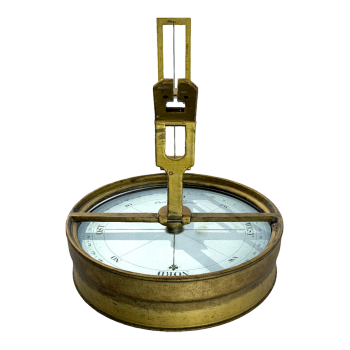
nineteenth century instrument mapping surveying compass

The measuring compass was made around 1820. This is an instrument used to measure and map terrain. The measuring compass combines the functions of a compass and a measuring instrument and can measure angles and orientations for mapping and location determination. At the beginning of the 19th century, this instrument was widely used in geological exploration and engineering survey. This instrument was designed to make precise measurements in the field environment and was an important tool for geologists, engineers and surveyors at the time.
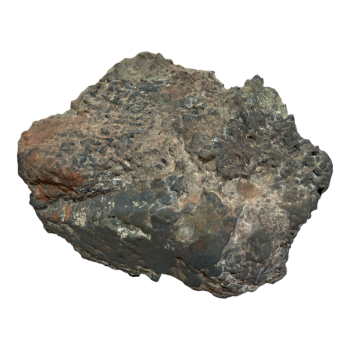
Pyrolusite with limonite inclusions

Pyrolusite with limonite inclusions

Pyrolusite (pyrolusite), the composition of manganese dioxide, is a common manganese mineral. Pyrolusite containing 63.19% manganese is an important manganese ore. Pyrolusite is very soft, its color is light gray to black, with a metallic luster. Pyrolusite is generally massive or kidney-like or earthy, sometimes with a radioactive fibrous morphology. Interestingly, some pyrolusite also exhibits a dendritic attachment to the rock surface, known as pseudoliths. Pyrolusite is other manganese ore into, in the swamps, lakes and other sediments can also form pyrolusite.
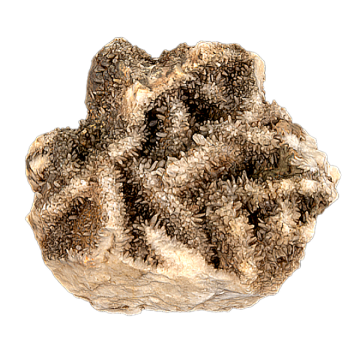
High Purity Peruvian Pyrite

High Purity Peruvian Pyrite

This pyrite is known for its brass-colored luster and distinctive striated surface. Pyrite derives its name from the Greek word pyr, which means fire, because it produces sparks when it collides with other minerals or metals. This pyrite is usually in the shape of a cube, with a highly glossy surface, giving a mirror-like visual effect. Not only are they of great value in mineralogical research, they are also favored by collectors and mineral lovers for their beautiful appearance.
Mica

Mica

Mica (mica) is a rock mineral, is made of potassium, aluminum, magnesium, iron, lithium and other layered structure of aluminum silicate. Its English name mica comes from the Latin micare, which means "shiny. In ancient China, mica was called "Tianpi" and "Dijin", and Tianpi Mountain, the origin of mica in Inner Mongolia, was named after it. Polytypic mica is prevalent, of which monoclinic is common, followed by trigonal, and the rest are rare. Mica is usually false hexagonal or rhombohedral plate, flake, columnar crystal form. The color varies with the change of chemical composition, mainly with the increase of Fe content. The characteristics are insulation and high temperature resistance.
Gabon red soil samples

Gabon red soil samples

Gabonese laterite is an important mineral resource, mainly distributed in the Gabonese region of Africa. Llaterite is a type of soil rich in iron and aluminum that is commonly formed in tropical and subtropical regions. Gabonese laterite is mainly composed of iron oxides and aluminum oxides and is rich in minerals such as hematite and bauxite. Due to the large amount of iron oxides, Gabonese laterites are usually red or brownish red. The laterite is formed by long-term weathering and leaching under tropical climatic conditions. The parent rock on the surface gradually decomposes in an alternating wet and dry environment, forming a soil layer rich in iron and aluminum.
Types of Garnet Minerals

Types of Garnet Minerals

This model summarizes the types of garnet group minerals, in which the aluminum garnet is usually red, and the calcium member is usually green. General formula: X, Y (SiO) X² = Mg², Ca², Fe², Mn², etc. Y³ = Al³, Fe³, Cr³, V³, etc. PyrAlSpites: aluminum garnet (Pyrope, Almandine, Spessartine) aluminum at the Y³. UGrAndites: Calcium at the X² locus of calcium garnet.
diorite

diorite

Diorite is a representative rock of neutral deep crystal rock, and it is also one of the main rock types in granite stone. It is mainly composed of plagioclase (medium-more feldspar) and one or several dark minerals, of which the total amount of dark minerals is generally about 20-35%. No or only a small amount of potassium feldspar, generally not more than 10% of the total feldspar. Does not contain or contains very little quartz, the amount of which does not exceed 5% of the total amount of light-colored minerals. Dark minerals are mainly amphibole, sometimes pyroxene and biotite. The accessory minerals are mainly apatite, magnetite, ilmenite and titanite.
synenite

synenite

It is a kind of magmatic rock, which belongs to neutral deep intrusive rock. light gray, with grainy, porphyritic structure. The content of silica (about 60%) and the diorite is quite, but the alkali (sodium oxide, potassium oxide) is slightly higher than the diorite. It is mainly composed of feldspar, hornblende and biotite, with no or very little quartz. Alkaline feldspar (usually orthoclase, microcline, striated feldspar) accounts for more than 70% of the feldspar. It is often a small rock strain, which forms a complex with basic rocks and alkaline rocks.
The orthostone of the alkaline massif
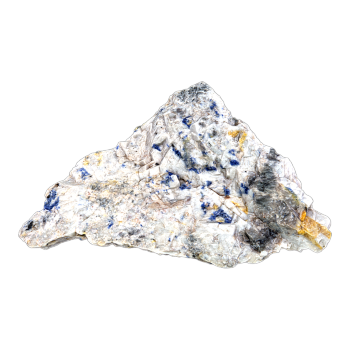
The orthostone of the alkaline massif

Syenite is a kind of magmatic rock, which belongs to neutral deep intrusive rock. light gray, with grainy, porphyritic structure. The content of silica (about 60%) and the diorite is quite, but the alkali (sodium oxide, potassium oxide) is slightly higher than the diorite. It is mainly composed of feldspar, hornblende and biotite, with no or very little quartz. Alkaline feldspar (usually orthoclase, microcline, striated feldspar) accounts for more than 70% of the feldspar. It is often a small rock strain, which forms a complex with basic rocks and alkaline rocks.
Syenite in alkaline rock mass

Syenite in alkaline rock mass

Syenite is a kind of magmatic rock, which belongs to neutral deep intrusive rock. light gray, with grainy, porphyritic structure. The content of silica (about 60%) and the diorite is quite, but the alkali (sodium oxide, potassium oxide) is slightly higher than the diorite. It is mainly composed of feldspar, hornblende and biotite, with no or very little quartz. Alkaline feldspar (usually orthoclase, microcline, striated feldspar) accounts for more than 70% of the feldspar. It is often a small rock strain, which forms a complex with basic rocks and alkaline rocks.
Crystal structure defects (3D schematic diagram of microscopic particles)
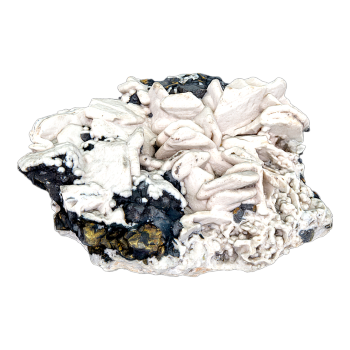
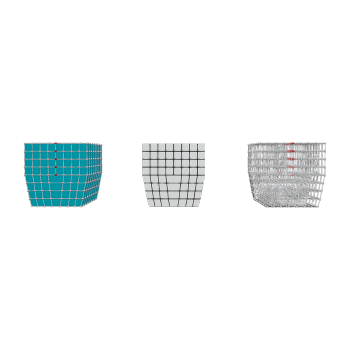
Crystal structure defects (3D schematic diagram of microscopic particles)

In nature, crystals are never perfect and contain various types of defects (defects). In this 3D model, a screw dislocation defect is shown. Edge dislocations occur due to the introduction or elimination of additional atomic rows/planes in the crystal.
Ore-bearing fibrous calcite

Ore-bearing fibrous calcite

Calcite is a calcium carbonate mineral, the most common natural calcium carbonate is it. Therefore, calcite is a widely distributed mineral. Calcite is a stable form of calcium carbonate under normal temperature and pressure, soft, white or gray or transparent, calcite crystal shape is varied, their aggregates can be a cluster of crystals, can also be granular, massive, fibrous, milky, earthy and so on. Knocking calcite can get a lot of square pieces, hence the name calcite.
banded aralite containing silicon carbide
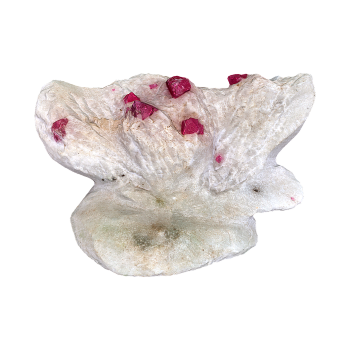
banded aralite containing silicon carbide

Acid salt minerals. The composition is CaCO3. Also known as aragonite, and calcite into a homogeneous multi-like. The orthorhombic crystal system, the crystal is columnar or spear-shaped, common false hexagonal symmetry of the three-linked crystal. The aggregate is mostly shell-like, oolitic, bean-like, spherical, etc. Usually white, yellow-white. Glass luster, the fracture is grease luster. with incomplete plate cleavage. Shell-shaped fracture. Mohs hardness 3.5~4.5. Specific gravity 2.9~3.0. In the nature of the unstable arangite, often transformed into calcite. Silicon carbide is a semiconductor that occurs in nature in the form of the extremely rare mineral moissanite.
spinel crystal

spinel crystal

Spinel (Spinel) is a beautiful and durable gem mineral, which usually occurs together with the marble parent rock (Marble matrix), forming a unique ore combination. The chemical composition of spinel is magnesium aluminum oxide (MgAl₂ Ogo), which has a variety of colors, from red, blue, green to colorless. Spinel crystals have a high degree of transparency and a bright color, usually in the shape of octahedra or rhombohedra.
silverite

silverite

Pyroxene ore is an ore containing metallic silver. The symbol of silver in the periodic table of chemical elements is Ag, and the atomic number is 47. It is a soft, white, shiny precious metal that occurs primarily in mineral form in nature, such as silver ore.
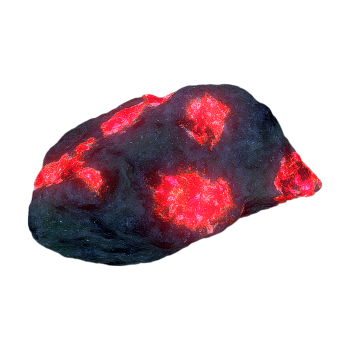
UV-irradiated ruby

UV-irradiated ruby

Ruby (Ruby) is a gem-grade corundum mineral variant, the chemical composition of alumina (Al₂ O), its unique red is due to the crystal structure contains trace amounts of chromium. Ruby is a very hard and durable gemstone, with a hardness of on the Mohs scale, second only to diamonds. The color of ruby ranges from pink to deep red, and the intensity of the color depends on the amount of chromium in the crystal structure. Ruby usually exhibits a hexagonal crystal structure, and the crystal is usually prismatic with a flat base end face. Due to its beautiful color and high hardness, rubies are widely used in jewelry, such as rings, necklaces and bracelets.
Quartz crystals of hydrothermal deposits
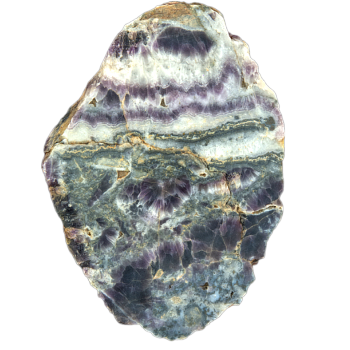
Quartz crystals of hydrothermal deposits

Quartz crystals from hydrothermal deposits are very important mineral specimens in geology. Quartz is a common mineral with the chemical composition of silicon dioxide (SiO₂), which is widely found in the earth's crust. In hydrothermal deposits, quartz crystals are usually precipitated from silicon-rich hydrothermal solutions under high temperature and high pressure conditions. These crystals can exhibit complex growth textures, such as oscillatory banded textures, mosaic textures, and concentric ring-banded textures. Quartz crystals often contain fluid inclusions, which can provide important information about the formation conditions of the deposit, such as temperature, pressure and fluid composition.
Polished Amethyst

Polished Amethyst

Polished amethyst is a popular gemstone specimen. Amethyst is a purple variety of quartz that ranges in color from light purple to dark purple and is determined primarily by the presence of iron and other trace elements. Quartz is a common mineral with the chemical composition of silicon dioxide (SiO₂), which is widely found in the earth's crust. Polished amethyst and quartz are often used in jewelry and ornaments because their luster and beautiful color make them very attractive.
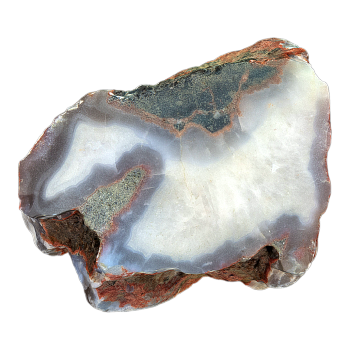
Gurasada agate

Gurasada agate

Gurasada agate is a beautiful mineral specimen from the Gurasada region of Romania. Agate is a ribbon-shaped chalcedony (a subspecies of quartz), the strips of which can be parallel or concentric. This agate is usually embedded in diabase, a fine to medium-grained intrusive igneous rock that is usually dark gray to black in color. This polished agate specimen measures 9 x 8.5 x 8cm and has a chemical composition of silicon dioxide (SiO₂).
Peruvian cubic pyrite

Peruvian cubic pyrite

Peruvian pyrite is mainly produced in Peru's famous Huanzala mine. This pyrite is known for its brass-colored luster and distinctive striated surface. Pyrite derives its name from the Greek word pyr, which means fire, because it produces sparks when it collides with other minerals or metals. This pyrite is usually in the shape of a cube, with a highly glossy surface, giving a mirror-like visual effect. Not only are they of great value in mineralogical research, they are also favored by collectors and mineral lovers for their beautiful appearance.
1 2 3 4 Next