calcite

calcite

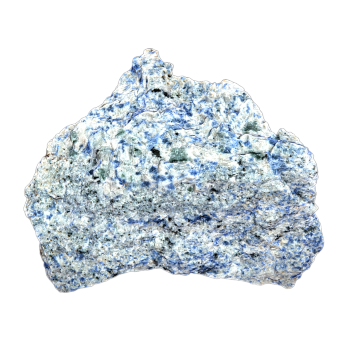
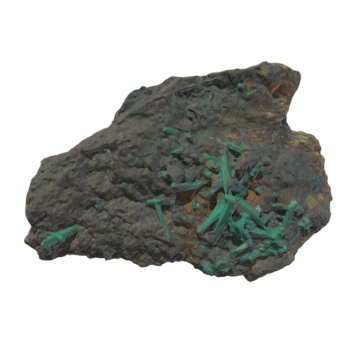
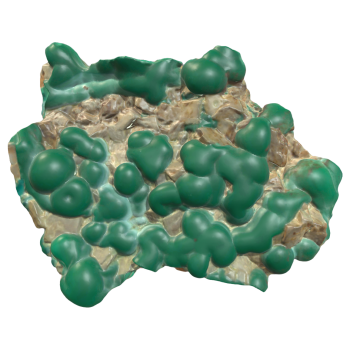
Calcite (Calcite) is a common calcium carbonate mineral with a chemical formula of CaCO. It is widely found in sedimentary rocks, metamorphic rocks and igneous rocks. Calcite has unique optical properties such as birefringence and birefringence. Veins usually form when calcite is intergrown with ore minerals. In these veins, calcite may be the main component, but may also contain other valuable ore minerals, such as pyrite, sphalerite, barite, etc. These ore minerals are usually formed in low temperature hydrothermal veins.
Basalt of the Canary Islands, Spain

Basalt of the Canary Islands, Spain

Basalt is a volcanic magmatic rock with relatively low silicon content. The rock is usually dark black. This basalt has no visible crystals. Therefore, it is made of volcanic glass and microlith (crystals that cannot be distinguished by the naked eye).
fault breccia

fault breccia

Fault breccia is formed in the fault zone. They consist of angular rock fragments from rocks on either side of the fault. These angular detritus elements are usually surrounded by cements, usually calcite or siliceous, which are deposited in pores created by fragmentation caused by fault replay.
clinopyroxene

clinopyroxene

Pyroxene (pyroxene,augite) is a common single-chain silicate rock-forming mineral, which widely exists in igneous rocks and metamorphic rocks. The main framework is composed of silicon-oxygen molecular chains. The crystal structure is monoclinic or orthorhombic, and the main component is XY(Si,Al)2O6, where X represents calcium, sodium, magnesium and divalent iron, there are also some kinds of ions such as zinc, manganese and lithium. Y represents smaller ions such as chlorine, aluminum, trivalent iron, vanadium, scandium, etc.
The volcanic bomb on Tenerife Island

The volcanic bomb on Tenerife Island

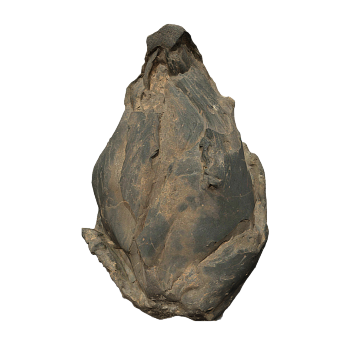
The volcanic bomb from Tenerife is a type of igneous rock formed during volcanic eruptions. These volcanic bombs are formed by the cooling and solidification of molten magma in the air, usually with unique shapes and textures. During a volcanic eruption, molten magma ejected from the volcano is formed by flying and cooling in the air. These rock blocks undergo rapid cooling and solidification in the air before finally falling to the ground. Volcanic bombs come in various shapes and sizes, usually presenting streamlined, spindle shaped, or irregular shapes.
Uranium bearing igneous rock

Uranium bearing igneous rock

Sphalerite
Sphalerite

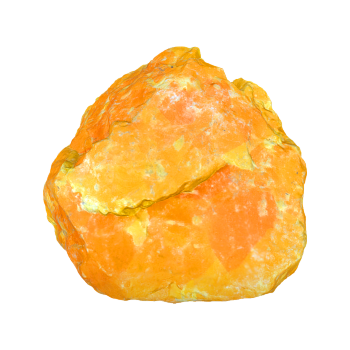
There are various colors of sphalerite, including white, gray, yellow (yellow patterned stone), blue, green, pink, and brown, while the stripes are white. The zinc in the composition is sometimes replaced by iron or manganese, and occasionally by small amounts of magnesium, calcium, cadmium, copper, cobalt, or lead. Similar to most carbonate minerals, it dissolves in hydrochloric acid and produces bubbles. In the calcite group, sphalerite belongs to a type with high hardness and specific gravity. In nature, zinc containing minerals are mostly sphalerite, and the production of sphalerite is relatively much lower. In addition to extracting zinc, it can also be used as semi transparent green or green blue gemstone jewelry.
C ă limani sulfur

C ă limani sulfur

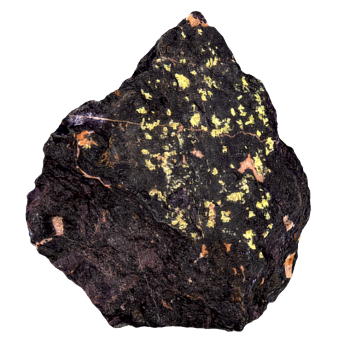
The large chunks of sulfur from the C ă limani open-pit mine in Romania are a mineral found in the C ă limani volcanic mountain range. This open-pit mine is located in Suceava County, Romania. It was once a large sulfur mine that began in 1969 and was closed from 1992 to 1995. The chemical formula of sulfur is S, and pure sulfur appears bright yellow. Pure sulfur is usually bright yellow, but its color may change due to impurities such as clay and selenium impurities, which can cause it to appear red, green, brown, or gray. The C ă limani open-pit mine is a volcanic sulfur deposit.
Celestite containing shiny pyrite

Celestite containing shiny pyrite

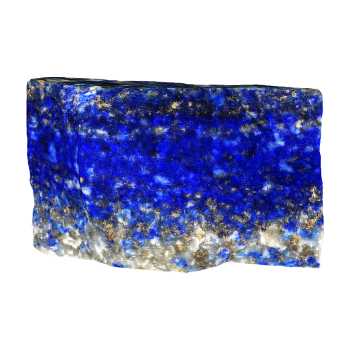
Lapis Lazuli with sparkling pyrite is a beautiful mineral combination mainly composed of lapis lazuli and pyrite. The chemical formula of lapis lazuli is (Na, Ca) ₈ (AlSiO ₄) ₆ (S, SO ₄, Cl) ₂, usually appearing dark blue, while pyrite is distributed in lapis lazuli with its golden yellow spots. lapis lazuli belongs to the equiaxed crystal system and usually exists in block form.
Blue crystal mineral under ultraviolet irradiation

Blue crystal mineral under ultraviolet irradiation
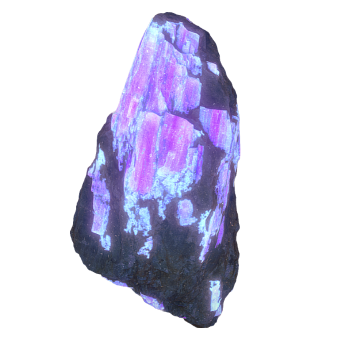
Kyanite crystals on matrix are a common mineral combination commonly found in metamorphic rocks. Blue sapphire is an aluminosilicate mineral with unique blue or blue-green crystals, commonly used in gemstones and industrial applications. The chemical formula of kyanite is Al ₂ SiO ₅, with a color range from light blue to dark blue, sometimes appearing green or gray. The crystal is usually in the shape of long columns or blades, with obvious cleavage planes. Blue spar is usually formed in high-pressure and low-temperature metamorphic environments, commonly found in gneiss and schist.
Blue crystal

Blue crystal

Kyanite crystals on matrix are a common mineral combination commonly found in metamorphic rocks. Blue sapphire is an aluminosilicate mineral with unique blue or blue-green crystals, commonly used in gemstones and industrial applications. The chemical formula of kyanite is Al ₂ SiO ₅, with a color range from light blue to dark blue, sometimes appearing green or gray. The crystal is usually in the shape of long columns or blades, with obvious cleavage planes. Blue spar is usually formed in high-pressure and low-temperature metamorphic environments, commonly found in gneiss and schist.
Techereu Jade

Techereu Jade

Jasper from Techereu is a mineral discovered in the Bal ș a area of Hunedoara County, Romania. Jade is an opaque rock that can appear in almost any color, depending on the mineral composition of the original sediment or volcanic ash. In the Techereu region, jadeite mainly exists in the conglomerates of the Cretaceous period, forming multicolored jadeite.
Syenite in alkaline rock masses

Syenite in alkaline rock masses

It is a type of magmatic rock that belongs to neutral deep-seated intrusive rocks. Light gray, with equigranular and spotted structures. Its silica content (about 60%) is comparable to diorite, but its alkaline content (sodium oxide, potassium oxide) is slightly higher than diorite. It is mainly composed of feldspar, amphibole, and biotite, with little or no quartz. Alkaline feldspar (usually orthoclase, plagioclase, and plagioclase) accounts for over 70% of feldspar. Often appearing as small rock masses, it forms a complex with basic and alkaline rocks.
Cerussite

Cerussite

The composition of white lead ore is lead carbonate, which is sometimes partially replaced by silver or chromium. It belongs to the carbonate, aragonite group, and orthorhombic crystal system, and reacts with dilute acid to produce carbon dioxide bubbles, containing 77.6% Pb. The crystal is in the form of a plate-like or pseudo hexagonal bipyramidal shape, and it is common to run through twin crystals. Generally, it is a dense block like aggregate, bell like emulsion, or soil like structure. White or light yellow, brown, and other colors. Diamond luster. Hardness of 3-3.5, density of 6.4-6.6. Bubbling when encountering hydrochloric acid. It is a secondary mineral of galena that has been oxidized on the surface. Usually used together with galena to extract lead or prepare various lead compounds
Wurtzite

Wurtzite

Wurtzite, also known as wurtzite, is a zinc and iron sulfide mineral with the chemical formula (Zn, Fe) S. It is a rare polymorphic form of sphalerite structure. The iron content changes by up to 8%. It is a homomorphic isomer of sphalerite. It appears in hydrothermal deposits associated with sphalerite, pyrite, chalcopyrite, barite, and pyrite, as well as in clay iron nodules at low temperatures.
Weinsberg granite

Weinsberg granite

Weinsberg granite is a type of granite named after the Weinsberg region in Germany. Usually appears gray or light pink with small black spots. Widely used in architecture and decoration, such as flooring, countertops, and monuments. It has a long history of use in architecture and sculpture, and is favored for its beauty and durability.
serpentine

serpentine

Serpentine is a general term for a type of magnesium rich silicate mineral that contains water, such as serpentine, serpentine, and fibrous serpentine. Their color is usually green, but there are also shades of green, light gray, white, or yellow. Serpentine stones are named because they are often green and green in color, resembling snake skin. Serpentine rocks are often distributed at the top of larger ultrabasic rocks in a cap like or edge like manner, and sometimes in a vein like or irregular shape. Smaller rock masses often completely erode into serpentinite. The minerals related to serpentinite include chromium, nickel, cobalt, platinum, asbestos, talc, magnesite, etc. Serpentine rock is also a good fertilizer ingredient.
Red ochre

Red ochre

Ochre is a collection of oolitic, bean shaped, and kidney shaped aggregates, often in irregular flat blocks. Ochre is an oxide mineral belonging to the corundum group hematite, mainly containing iron oxide (Fe2O3). It is a collection of oolitic, bean shaped, and kidney shaped aggregates, often in irregular flat blocks. Dark brownish red or gray black, with cherry red or reddish brown stripes, some with metallic luster. There are many circular protrusions on one side, commonly known as "nail heads"; There are dimples of the same size on the other side corresponding to the protrusion. Weight, hard texture, and a layered cross-section after crushing. The air is faint and the taste is light.
Phosphate chloride lead ore

Phosphate chloride lead ore

Phosphorus chloride lead is produced in the oxidation zone of lead deposits and is a product of the interaction between phosphoric acid and lead minerals in surface water. Phosphate chloride lead ore has good ornamental value due to its bright color and dense hexagonal columnar crystals. The quantity of this type of mineral is also small, making it precious.
Black tungsten ore

Black tungsten ore

The chemical composition is (Fe, Mn) WO4, which is an important tungsten ore and the main mineral raw material for extracting tungsten. Named after the presence of different proportions of iron tungstate and manganese tungstate, it is called tungsten iron ore when the iron content is high and tungsten manganese ore when the manganese content is high. Usually brown or black in color, with metallic or semi metallic luster, often found together with tin ore in granite and quartz mines. Hardness is 4-5.5, specific gravity is 7.1-7.5, brittle, and has weak magnetism. It is generally produced in high-temperature hydrothermal quartz veins and their surrounding rocks of quartzite. The regions of southern Jiangxi, eastern Hunan, and northern Guangdong in China are world-renowned areas for black tungsten mineral deposits.
Primitive bird fossils

Primitive bird fossils

Megalite rock

Megalite rock

Weijing rock is a coarse-grained to coarse-grained vein like or blocky rock mass that is closely related to various deep-seated rocks in terms of genesis. It is generally flesh red, gray white, and has a coarse-grained or coarse-grained structure, ranging from acidic to alkaline veins. Often in the form of veins and produced in groups. The mineral crystals are very coarse, ranging from several centimeters to several meters, with banded structures.
Opal stone

Opal stone

Opal, as a gemstone, is a hydrate of silicon dioxide with a chemical composition of SiO2 · nH2O. It has an amorphous structure and therefore does not have a specific shape. Its fracture surface is shell like, mainly formed by the colloidal precipitation of silicon dioxide. In mineralogy, it belongs to the opal class and contains two types of gemstones: variable color and invariant color. It is a hydrated amorphous silica.
marble

marble

Marble originally refers to white limestone with black patterns produced in Dali, Yunnan Province. Its cross-section can form a natural ink landscape painting. In ancient times, marble with formed patterns was often selected to make painting screens or inlaid paintings. Later on, the name marble gradually evolved to refer to limestone with various colors and patterns used as building decoration materials. White marble is generally called White Marble, but it is also called marble for the white marble used to make statues in the West. There is a saying about the name of marble - in the past, Dali in China had the best quality marble. Named after it.
manganese nodule

manganese nodule

Manganese nodules, also known as polymetallic nodules, are solidified products of seabed rocks, produced by the solidification of iron or manganese hydroxides in a core. Its core may be extremely small and may completely transform into manganese minerals due to crystallization. When manganese nodules are visible to the naked eye, they may be small microfossils (Radiolaria or Foraminifera organisms) shells, phosphorylated shark teeth, basalt remains, or fragments of early solidified material.
Tellurium ore

Tellurium ore

The chemical symbol Te, atomic number 52, is a silver white shiny quasi metallic element. Belonging to Group 16 (oxygen group) in the periodic table, it usually exists in a hexagonal crystal form and has a metallic luster. The melting point is 449.8 ℃, the boiling point is 989.9 ℃, and the density is between 6.1 and 6.27 grams per cubic centimeter. The chemical properties are similar to antimony, but more stable and not easily oxidized by air. It mainly exists in the form of sulfide minerals in nature, such as chalcopyrite and tellurides. It is usually extracted as a by-product in the copper ore smelting process. The main uses include as semiconductor materials.
Malachite

Malachite

Malachite is a carbonate mineral mainly composed of Cu2 (OH) 2CO3, with a color ranging from dark green to bright green, silky or glassy luster, semi transparent to opaque, and a Mohs hardness of 3.5-4.5. Malachite is produced on the surface of copper mines, near the surface oxidation zone, and coexists with chalcopyrite, azurite, chalcopyrite, and siliceous malachite. It is an important mineral for prospecting primary copper mines and also a type of jade material.
Laita Limestone

Laita Limestone

Leta limestone is a geological formation mainly distributed in Austria, Czech Republic, Hungary, and Poland. This type of limestone was formed during the Middle Miocene to Late Miocene period (approximately 16 to 7.2 million years ago). The name Laita Limestone comes from the Laita Mountains in Austria. This limestone is known for its rich fossil content, including sharks, rays, manatees, and whales.
lapis lazuli

lapis lazuli

Lazurite is a framework silicate mineral containing sulfate ions, sulfur ions, and chloride ions. Its chemical formula is (Na, Ca) 8 [(S, Cl, SO4, OH) 2 | (Al6Si6O24)]. Belonging to the feldspar like mineral group of sodalite minerals, the crystal system is equiaxed, and intact crystal forms are extremely rare, mostly in the form of blocks. Most of them exist in Qingjin Rock in nature. The English word 'Lazrite' comes from the Persian word 'lazward', which means blue.
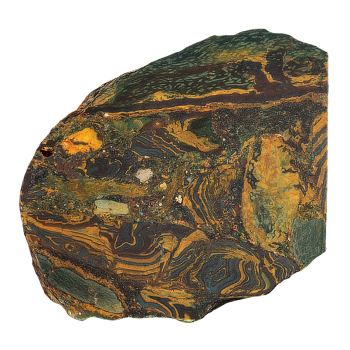
Green curtain stone amphibolite

Green curtain stone amphibolite

Green mud amphibolite schist is a metamorphic rock formed by regional metamorphism, including basalt, tuff, gabbro, diabase, and other rocks. It represents a metamorphic environment of about 500-600 degrees Celsius and a pressure of less than ten kilobars. Its main minerals are chlorite and amphibole, with amphibole content greater than 40%. It may also contain small amounts of minerals such as plagioclase, epidote, biotite, pyrite, etc. Green mudstone, dark green in color, carved into small pieces with a small knife to appear light green, extremely fine and scaly. Hornstone schist is a common rock in orogenic belts and ancient metamorphic terrains, and is a characteristic feature of regional metamorphic amphibolite facies.
Chromite ore

Chromite ore

Chromite is a mineral formed by magmatic processes, often occurring in ultrabasic rocks and coexisting with olivine; Also found in sand mines. It looks very similar to magnetite in appearance, usually in the form of block or granular aggregates. In the metallurgical industry, chromite is mainly used to produce ferrochrome alloys and metallic chromium. Chromium iron alloy is used as an additive to produce various high-strength, corrosion-resistant, wear-resistant, high-temperature resistant, and oxidation resistant special steels. Chromium metal is mainly used for smelting special alloys with elements such as cobalt, nickel, and tungsten. Chromite is a scarce mineral with limited reserves and low production. In industry, similar minerals such as chromite, chromite spinel, rich chromite spinel, and hard chromite spinel are often collectively referred to as chromite.
Chloride silver ore

Chloride silver ore

Chlorargyrite, with a chemical composition of AgCl and a molecular weight of 143.32. The production environment is in a partially oxidized silver deposit, with colors of purple gray, green, white, and colorless. Chlorite can be used as a mineral raw material for extracting silver.
Arsenic ore

Arsenic ore

A non-metallic mineral primarily composed of arsenic sulfide. Arsenic has three allotropes: yellow, gray, and black brown. Its gray crystals are metallic, brittle, and hard. The main minerals are realgar, orpiment, and arsenopyrite; Arsenic is the main component, with a cut-off grade of 5% for the former and 3-5% for the latter; The industrial grade is 10% for the former and 5% to 6% for the latter. There are also arsenic nickel ore, arsenic antimony ore, arsenic pyroxene, orthorhombic arsenic iron ore, etc. Generally, underground mining method is used for mining, and flotation method is used for beneficiation.
Silver sulfide ore

Silver sulfide ore

The chemical composition is Ag2S, containing 87.1% Ag. Isometric. The crystal is cubic or octahedral, usually in the form of dense blocks. The color and stripes are both lead gray. The fresh fracture surface has a metallic luster. Mohs hardness is 2-2.5. Density 7.2-7.4. Has weak extensibility. It is a mineral of hydrothermal origin, formed above 173 ℃. Below this temperature, it transforms into spiral shaped sulfide silver with the same composition. It is a mineral raw material for silver smelting, but the main source of silver is obtained as a by-product from copper lead zinc ores.
Wenshi mineral

Wenshi mineral

Wenshi is a carbonate mineral. The component is CaCO3. Also known as aragonite, it is homogeneous and resembles calcite and other minerals. The rhombohedral system is characterized by columnar or lance shaped crystals, commonly exhibiting pseudo hexagonal symmetry in three connected crystals. Collectives are often in the form of shells, concretions, beans, spherical particles, etc. Usually white or yellow white in color. Glass gloss, with a grease gloss on the fracture surface. Incomplete cleavage of the board surface. Shell shaped fracture. Mohs hardness is 3.5-4.5. The specific gravity is between 2.9 and 3.0. In nature, aragonite is unstable and often transforms into calcite. Mainly formed under exogenous conditions, occurring in modern seabed sediments or clay; In limestone caves.