Types of Swamp Landforms

Types of Swamp Landforms

Formation process of metamorphic rocks (3D topographic profile)

Formation process of metamorphic rocks (3D topographic profile)

The formation process of igneous rocks (3D topographic profile)

The formation process of igneous rocks (3D topographic profile)

Divergent (constructive) crustal boundaries (3D demonstration animation)

Divergent (constructive) crustal boundaries (3D demonstration animation)

This boundary refers to the area where crustal plates move away from each other, usually forming new crustal materials such as oceanic ridges.
Quartz crystal coated with chalcedony

Quartz crystal coated with chalcedony

Usually refers to the phenomenon where the surface or interior of a quartz crystal contains a layer of chalcedony. It is a microcrystalline quartz, a variant of quartz, characterized by a waxy luster and a semi transparent appearance. Highly popular in gemology and mineralogy due to its unique appearance and aesthetic appeal. It usually has a sharp hexagonal columnar shape, while the jadeite layer may appear in different colors such as blue, green, red, or yellow, which are usually determined by trace impurity elements. Not only does it have scientific research value, but it is also favored among collectors and jewelry designers due to its unique aesthetic features. Can be cut and polished, used as decorations or artworks
Orthoclase ore

Orthoclase ore

It is a common potassium aluminum silicate mineral with the chemical formula KAlSi3O8. Belonging to the framework silicate mineral, it is a member of the feldspar family. It usually appears as pink, yellow, green, or white, but the most typical color is light yellow or orange red, which comes from trace amounts of iron and manganese impurities. The crystal structure is monoclinic, with various crystal shapes, commonly including short columnar or plate-like structures. It has two sets of complete cleavage, which allows it to easily crack along a specific direction. Widely distributed in nature, commonly found in granite, syenite, gneiss, and some metamorphic rocks. It is also an important mineral formed during many metamorphic processes.
Silver ore

Silver ore

The chemical symbol is Ag, with an atomic number of 47, and it is a white, glossy transition metal. The content in the crust is relatively low, mainly existing in the form of sulfide ores, and often coexisting with other metal ores. Known for its excellent conductivity, thermal conductivity, and reflectivity, it is a material second only to copper in electrical and thermal conductivity applications. These characteristics make it very important in the electronics industry, especially in high-precision instruments and high reliability circuits. Another important use is as a metal for investment and currency. Silver bars and silver coins are common forms for investors to preserve their value and invest in precious metals. In addition, silver is widely used in jewelry manufacturing.
Copper ore

Copper ore

The chemical symbol is Cu, with an atomic number of 29, and it is a red metallic element with high conductivity and thermal conductivity. It is relatively abundant in the Earth's crust and is one of the earliest metals used by humans, with a long history. Its physical properties make it widely used in various industrial fields. It is an indispensable material in electrical engineering, used for manufacturing wires, cables, and motors. The conductivity is second only to silver, but it is more common in practical applications due to its lower cost and ease of processing. In addition to electrical applications, copper is also used to manufacture pipes, roofing materials, coins, and various decorations. Equally important in both industrial and artistic fields
Antimony ore

Antimony ore

The chemical symbol is Sb, with an atomic number of 51, and it is a silver gray metallic element. The content in the Earth's crust is relatively low, mainly existing in sulfide minerals such as antimonite and antimonite. The physical properties are relatively unique, brittle at room temperature, but become soft and easy to process after heating. Low melting point, low conductivity and thermal expansion make it suitable for specific industrial applications. The main applications include manufacturing alloys, such as antimony lead alloys, to enhance the hardness and corrosion resistance of metals. Antimony as an additive can improve the performance of batteries, especially lead-acid batteries. In addition, it is also used in the production of flame retardants.
Volcanic Lake Geomorphic Structure

Volcanic Lake Geomorphic Structure

Honeycomb quartz

Honeycomb quartz

Also known as honeycomb quartz or honeycomb crystal, it is a quartz mineral with a unique honeycomb like texture. This texture is due to the formation of hexagonal honeycomb like voids or cracks inside quartz crystals during the formation process, which are usually filled with other minerals such as iron oxides or other minerals. The surface usually presents a smooth glass texture, while the honeycomb structure inside gives a unique beauty. The formation is usually related to hydrothermal activity in geological processes, where hydrothermal fluid flows in the cracks of rocks and gradually deposits to form quartz crystals with changes in temperature and pressure. Under suitable geological conditions, it can grow into large crystal clusters.
Different types of coasts

Different types of coasts

The coastal type and topography of the coastal zone are material responses to the interaction between land and sea. According to their causes, coasts can be divided into three types: erosive coasts, accumulative coasts, and balanced coasts. According to land landforms, coasts can be divided into plain coasts, mountainous hilly coasts, and biotic coasts.
Cadmium sulfide ore

Cadmium sulfide ore

The chemical formula is CdS, which is a sulfide mineral mainly composed of cadmium and sulfur. It usually appears in the form of yellow to orange crystals or powders, with a metallic luster, and is an important source for extracting cadmium. It is not common in nature and usually coexists with zinc minerals, lead minerals, and other sulfide minerals. Mainly formed in mid to low temperature hydrothermal veins or sedimentary rocks, especially in sulfate layers in sedimentary rocks. Due to the low content of cadmium in the Earth's crust, the reserves of cadmium sulfide minerals are relatively small. The industrial application of cadmium sulfide ore mainly focuses on the production of cadmium compounds. In addition, cadmium compounds are also used for control rods in batteries, electroplating, and nuclear reactors.
Graphite ore

Graphite ore

It is a naturally occurring allotrope of carbon, known as "black lead" or "pencil lead" in its high-purity form. The chemical formula is C and the atomic number is 6. It has a layered structure, in which carbon atoms form a hexagonal planar network structure with sp ² hybridized orbitals, and are stacked on top of each other through weak van der Waals forces. Due to its low hardness, it can leave marks on paper and is therefore used as a lead material for pencils. Graphite has good electrical and thermal conductivity, which makes it widely used in fields such as battery electrodes, electric brushes, and lubricants. Lubrication also makes it an ideal material for manufacturing mechanical parts and seals.
Siberian Gold

Siberian Gold

As an important mineral resource in the Russian Far East, it has always been a significant component of the global precious metal market. Siberia has a long history of gold mining, and its abundant gold resources have played a key role in the development of the local economy. Gold, as a precious metal, not only holds significant economic value, but also holds an important position in culture and history. Chemical stability and resistance to oxidation make it widely used in various fields such as jewelry production, industrial applications, and financial reserves. Ductility and malleability make it an ideal material for making various jewelry and crafts.
Beryllium ore

Beryllium ore

The chemical symbol is Be, with an atomic number of 4, and it is a lightweight, steel gray alkaline earth metal. The content in the crust is relatively low, about the 97th most abundant element in the crust. It usually exists in the form of compounds in minerals, such as beryl and siliceous beryllium. Low density, high hardness, and good thermal stability and electrical conductivity. Beryllium is very important in many high-tech applications, especially as a neutron reflector and neutron absorber in nuclear reactors. It is also used as a structural material for manufacturing aircraft and spacecraft, as it provides a combination of high strength and lightweight.
Manganese ore

Manganese ore

The chemical symbol is Mn, with an atomic number of 25, and it is a gray white, hard, and brittle transition metal. It is relatively abundant in the Earth's crust and is the twelfth most abundant element. In nature, it usually exists in the form of compounds, such as manganese ore, mainly including manganese carbonate, manganese oxide, and manganese silicate. It has a wide range of applications in industry, especially in steel production, which can improve the strength and hardness of steel while enhancing its processing performance. Adding can prevent corrosion and wear of steel, thus playing an important role in the manufacturing of wear-resistant steel, stainless steel, and alloy steel. It is also used to manufacture products such as dry batteries, dyes, glass, and ceramics.
Lepidolite ore

Lepidolite ore

It is a lithium containing mica mineral with a chemical composition of K (Li, Al) 2-3 (Si3Al) O10 (F, OH) 2, belonging to the mica group of minerals. Usually presented in shades of purple, pink, gray, or green, with a pearl luster and a layered structure that can be peeled off into thin sheets. Mainly produced in granite, pegmatite, and certain metamorphic rocks, it is one of the important mineral resources for extracting lithium and is not commonly found in nature. Due to the wide applications of lithium in modern industry, such as battery manufacturing, ceramics, glass, and lubricants, the mining and utilization of lithium mica have important economic value.
Cobalt ore

Cobalt ore

It is a chemical element with the chemical symbol Co and an atomic number of 27. Similar to nickel, it mainly exists in the form of compounds in the Earth's crust, except for a small amount of cobalt found in natural meteorite iron alloys. Pure cobalt obtained through reduction smelting is a hard, shiny, slightly brittle gray metal. Cobalt based blue pigments (such as cobalt blue) have been used in jewelry and painting since ancient times, as well as giving glass its unique blue hue. It is widely used in art and industry due to its stability and vibrant blue color. Cobalt compounds are also very important in ceramic and glass manufacturing, as they can produce various shades ranging from deep blue to light blue.
Distribution of surface soil structure

Distribution of surface soil structure

Earth's Atmosphere (3D Schematic of Structure)

Earth's Atmosphere (3D Schematic of Structure)

Realistic desert topography

Realistic desert topography

Passive continental margin (3D model of geomorphic structure)

Passive continental margin (3D model of geomorphic structure)

From a geological perspective, the shallow sea area at the edge of the ocean is a continent submerged by seawater, known as the continental margin. The continental margin accounts for 15.3% of the total ocean area, with the main body being the continental shelf, followed by the continental slope and continental base. Passive continental margin, also known as Atlantic type continental margin. The so-called stable continental margin refers to a continental margin that has been in a relatively stable state for a long time in terms of structure. Its crust is a transition zone from oceanic crust to continental crust, with continents and oceans located within the same rigid lithospheric plate. It does not have a trench subduction zone, and its early splitting stage is located within the plate, followed by passive movement with the splitting plate, so there are no strong earthquakes.
The process of sedimentation on the continental margin

The process of sedimentation on the continental margin

Geomorphic structure of Niujiaohu Lake

Geomorphic structure of Niujiaohu Lake

The Cowbow Lake is called the Cowbow Lake because its shape resembles that of a cow's yoke. They are mostly distributed in the the Middle and Lower Yangtze Valley Plain and the Northeast Plain. Generally, it is a freshwater lake with a crescent shaped shape, an open water surface, a developed economy around the lake, abundant cultural and historical relics, and high tourism value. Many large oxbow lakes in China are formed by natural levees blocking tributaries due to river fluctuations, such as Dongting Lake, Poyang Lake, Baiyangdian Lake, Hongze Lake, etc.
Earth Plate Structure Layer

Earth Plate Structure Layer

Tsunami generated by earthquake (3D demonstration animation)

Tsunami generated by earthquake (3D demonstration animation)

Structural distribution of surface strata

Structural distribution of surface strata

Glacier Lake Geomorphic Structure

Glacier Lake Geomorphic Structure

Internal structure of the Earth
Internal structure of the Earth

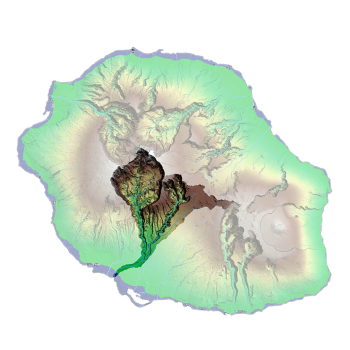
Hydrological map of Reunion Island

Hydrological map of Reunion Island

Crustal Plate Collision (3D Animation Demonstration)

Crustal Plate Collision (3D Animation Demonstration)

The European continent during the Ice Age
The European continent during the Ice Age

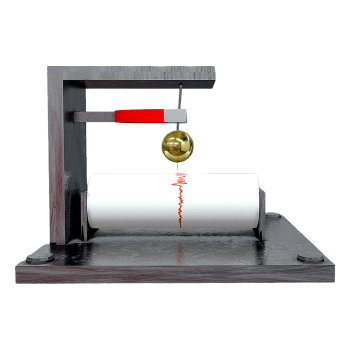
Simple seismic recorder (3D demonstration animation)
Simple seismic recorder (3D demonstration animation)

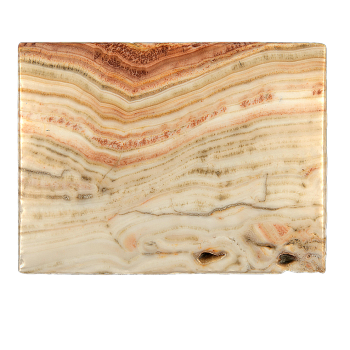
Limestone limestone

Limestone limestone

Limestone, also known as calcareous limestone, is a sedimentary rock formed by the deposition of calcium carbonate. It is usually formed in hot springs, rivers, or lakes and is known for its porous and lightweight properties. The formation process of limestone involves mineral rich water flowing over the surface, and as the water evaporates, calcium carbonate gradually deposits, forming a layered rock structure. It is currently housed in the UAIC Museum of Minerals and Petrography.