Bust of Josef Poniatowski

Bust of Josef Poniatowski

The sculpture was created by Polish sculptor Jakub Tartarkiewicz and is on display at the Krakow National Museum. The sculpture depicts a portrait of renowned Polish military leader Josef Poniatowski. Poniatowski was an important figure in Polish history who fought for Poland's independence and freedom during the Napoleonic Wars.
Nineteenth Century Collection Roger and Calais Fragrant Box

Nineteenth Century Collection Roger and Calais Fragrant Box

This perfume box is made by the famous French perfume brand Roger & Gallet and belongs to the collection of the Sosenko Family Foundation. The perfume box is decorated with exquisite cardboard and gilt, showing the elegant style of the late 19th and early 20th centuries. The unique charm of Roger & Gallet brand in perfume packaging design is the combination of art and craftsmanship, reflecting the fashion and taste of the time.
Protection of the Virgin Mary

Protection of the Virgin Mary

"The Protection of the Virgin Mary" is a religious painting, which was created in 1703 and is displayed in the Museum of Novi Sunch. The artwork shows superb craftsmanship and profound religious and cultural background, and is one of the precious collections in the museum collection. The depiction of the Virgin Mary protecting her followers is an important theme in Christian art. In paintings, the Virgin Mary is often depicted as a symbol of love and protection, surrounded by a halo.
Nineteenth Century Collection Celadon Powder Slant Porcelain Perfume Bottle

Nineteenth Century Collection Celadon Powder Slant Porcelain Perfume Bottle

This porcelain perfume bottle is one of the collections of the Sosenko Family Foundation. It has a unique celadon and pink beveled design and is a treasure in the history of cosmetics. The design of the perfume bottle is very delicate, with celadon and pink bevels set off against each other, adding a touch of elegance and softness to the bottle. This design was very popular in the 19th century, especially among the European aristocracy and upper class.
Eighteenth-century collection gold-plated perfume bottle with floral miniatures

Eighteenth-century collection gold-plated perfume bottle with floral miniatures

The perfume bottle, with its exquisite floral miniatures and gilded decoration, is one of the collections of the Sosenko Family Foundation. This piece shows superb craftsmanship and unique design, and belongs to the treasures in the history of cosmetics. This design was very popular in the 18th century, especially among the European aristocracy and upper class. It is not only a cosmetic container, but also a fine art and collectible. Perfume bottles are usually made of porcelain or other precious materials, and the surface is decorated with exquisite paintings and gilded decorations, which reflects people's pursuit of luxury life at that time.
Nineteenth century collection chain perfume bottle

Nineteenth century collection chain perfume bottle

The perfume bottle is a unique piece of art that belongs to the collection of the Sosenko Family Foundation. This piece shows exquisite craftsmanship and unique design, and is a precious part of the history of cosmetics. The design is very easy to carry and can be hung on a chain and worn as an ornament. At that time, people's pursuit of luxury life. This design was often very popular in Europe in the late 19th and early 20th centuries.
19th century Imperial Russian Emblem

19th century Imperial Russian Emblem

This national emblem of the Russian Empire comes from a pharmacy in Kvobuk and is now in the Museum of Pharmacy (The Museum of Pharmacy at the Jagiellonian University Medical College in Kraków) of the Medical College of Jagiellón University in Krakow. This national emblem is made of cast iron in the 19th century and displays the double-headed eagle emblem of the Russian Empire. The double-headed eagle symbolizes authority and rule, and the two ends of the eagle face east and west respectively, symbolizing the vast territory and influence of the Russian Empire.
Sarcophagus of King Casimir IV of Poland

Sarcophagus of King Casimir IV of Poland

Casimir IV's sarcophagus comes from the Chapel of the Holy Cross in Wawel Cathedral and is an important exhibit in the Wawel Royal Castle Museum. Casimir IV (November 30, 1427-June 7, 1492) was an important monarch in Polish history and the youngest son of King Władysław II of Poland. He was made Grand Duke of Lithuania by the Lithuanian nobility at the age of 13, and became King of Poland after his brother, King Władysław III, died in 1444. During his reign, Casimir IV successfully defeated the Teutonic Knights, recaptured Pomerania, and incorporated Prussia into Poland.
Chinese Lion-Shaped Ink Disc

Chinese Lion-Shaped Ink Disc

This Chinese lion-shaped ink plate is a work of art in the Krakow National Museum. The shape of the ink plate is a traditional Chinese lion image, beautifully carved, and there is a little lion next to it, implying protection and prosperity. The image of the lion symbolizes authority, guardianship and auspiciousness in Chinese culture.
Esther's Scroll and Its Envelope

Esther's Scroll and Its Envelope

This Esther scroll and its envelope is an important exhibit in the Historical Museum of the City of Kraków. The Esther Scroll is one of the important artifacts of Judaism. The Book of Esther is written on the scroll, which is a scroll in the Hebrew Bible. The envelope of the scroll is made of gilded silver wire and coral, and is richly decorated, showing the religious art and culture of Judaism. The scrolls are from Jewish communities during the Ottoman period, and the Esther scrolls are usually read in synagogues during the Jewish festival of Purim.
Early 20th Century Collection Cherry Toothpaste Box

Early 20th Century Collection Cherry Toothpaste Box

This cherry toothpaste box is an exhibit in the collection of the Sosenko Family Foundation. It shows an interesting object from everyday life in the past. The design of cherry toothpaste packaging is unique and colorful, reflecting the packaging art and design style of the time. The Sosenko Family Foundation has a collection of many similar objects of daily life. Through these exhibits, the audience can learn about the past life style and cultural background.
Sarcophagus of Queen Jadwiga of Poland

Sarcophagus of Queen Jadwiga of Poland

This model of the sarcophagus of the Queen of Jadwiga is an important exhibit in the Wawel Royal Castle - State Art Collection. Queen Jadwiga is a famous queen in Polish history, and her sarcophagus model shows her historical status and cultural influence. The sarcophagus model is made of marble and silver plating and is beautifully detailed, showing the image and decoration of the queen. With this exhibit, the Royal Castle Museum of Wawel shows visitors the rich heritage of Polish history and culture.
Bronze statue of "Wild Boar"

Bronze statue of "Wild Boar"

This "wild boar" statue is a plaster model of an ancient statue in the collection of the Museum of the Academy of Fine Arts in Krakow. It is a replica of an ancient statue in the Uffizi Gallery in Florence. This marble boar statue is from the Roman period and is a copy of a lost Hellenistic original, probably by artists from around the famous sculptor Lisipos (Lysippos). This Roman boar statue was presented by Pope Pius IV to Cosimo I de Medici, Duke of Tuscany.
"On the Road" Plaster Statue

"On the Road" Plaster Statue

The statue is a famous piece of art in the National Museum in Krakow. The statue, made of stained plaster, depicts a scene of a horse pulling a carriage, showing life in the 19th century. The details of the statue are very delicate, and the form of horses and carriages is lifelike, as if on the march. This artwork not only shows the transportation of the time, but also reflects the social life and cultural background of that time. Through this statue, the Krakow National Museum shows the audience the daily life and artistic style of the 19th century, so that people can better understand the history and culture of that era.
Cypress Tree Screen

Cypress Tree Screen

The "Cypress Screen" is a traditional Japanese artwork, painted from the late 16th to early 17th centuries. The screen was created by the famous Japanese painter Kano Yongde. Kano Yongde was a famous painter in the Warring States Period in Japan and was famous for his unique painting style and superb skills. There are several tall cypress trees painted on the screen. The trunks and branches and leaves are all made of delicate brush strokes and thick and light ink colors, vividly showing the upright and vigorous cypress trees. The screen background is dominated by gold, creating a solemn and elegant atmosphere. Cypress is a symbol of longevity and tenacity in Japanese culture.
Haiqing Lotus Pottery

Haiqing Lotus Pottery

Haiqing is a brightly colored, cyan-glazed pottery, often used to make fine pottery and porcelain. This pottery is much loved for its unique color and glaze, and has high artistic and collectible value.
18th Century Indian Elephant Statue

18th Century Indian Elephant Statue

Smokie Statue

Smokie Statue

Tanuki is a legendary animal in Japanese culture, often depicted as a creature that resembles both a raccoon and a dog, with magical shape-shifting abilities and a playful personality. They occupy an important place in Japanese folklore and culture and art, and are often seen as symbols of good luck and abundance.
Andrzej Tadesh Bonaventura Kostchusko Monument in Washington

Andrzej Tadesh Bonaventura Kostchusko Monument in Washington

Andrzej Tadus Bonaventura Koschuszko; February 4, 1746-October 15, 1817), a translation of Kochuszko, the leader of the Polish army, Poland, Lithuania, The national hero of Belarus and the United States, served as the supreme commander of the national armed forces and led the Kochuszko uprising against the Russian Empire and the Kingdom of Prussia. He fought in the American Revolutionary War as a colonel in the Continental Army before leading the 1794 uprising. In 1783, the Continental Congress promoted him to brigadier general in gratitude for his devotion to the Continental Army, and Koschusko became an American citizen.
17th-century Polish restored clockwork table clock

17th-century Polish restored clockwork table clock

The clockwork table clock (17th-18th century) was made by George Merkel, and this horizontal tile-shaped table clock is called "kaflak" in Polish ". Its movement is incomplete, and it was rebuilt in the 19th century. The movement has two clockwork drums (one of which is not original and belongs to the 19th century), a reduction screw with a chain, a vintage movement gear, a crown wheel escapement protected by a decorative bow (the bow is missing). The chiming mechanism is incomplete. The clock originally marked the hour and half hour. It has a ring dial and single needle mechanism (secondary needle for the 21st century). It is now in the Museum of the University of Jaguaronia.
Seventeenth-Century Polish Bishop's Red Sacrifice

Seventeenth-Century Polish Bishop's Red Sacrifice

The red sacrificial gown is a traditional dress used in religious ceremonies, usually worn by clergy during major religious celebrations and ceremonies. This red memorial is a work from the 16th to 17th centuries and was made in France and Turkey around 1770. It is currently housed in the Miekhov Land Museum in Miyekhov, Poland.
Friedrich Jagueronzik's episcopal scepter

Friedrich Jagueronzik's episcopal scepter

This scepter is a work of art with a long history and great significance. This scepter was presented by Polish Cardinal Friedrich Jagalonzik and was produced by artist Marchin Marchinnets between 1493 and 1495. The scepter is now in the collection of the Jagueronia University Museum (Collegium Maius) in Krakow, Poland. It reflects the craftsmanship and artistic style of the late 15th century. The scepter is usually made of precious metal and decorated with elaborate carvings and precious stones, demonstrating the level of craftsmanship and aesthetic value of the time.
The Holy Grail of the 17th century Benedictine monastery

The Holy Grail of the 17th century Benedictine monastery

This chalice is in the collection of the Benedictine monastery in Tyniec and was founded in 1691 by Benedictine Mierkowski Rupert Milkowski. The vessel may not have been originally designed for the Tyniec Abbey Church. The founder of the Eucharist Vessel was also the parish priest of Tyniec, who presented it to the parish church of Tyniec. After the church was demolished in 1825, the item was transferred to the monastery. It is one of the few gold vessels left after the Dissolution of the Tyniec Monastery.
19th century Austrian Imperial coat of arms

19th century Austrian Imperial coat of arms

The central element of the Austrian Emblem is the double-headed eagle. This eagle is usually black and flies on its wings, symbolizing the power and domination of the Empire. The two heads of the double-headed eagle represent the two main parts of Austria and Hungary, symbolizing unity and power. A crown is usually worn on the head, symbolizing the authority of the royal family and the monarchy of the empire. The double-headed eagle usually bears a coat of arms on its chest, with multiple small shields inside the coat of arms representing various regions and provinces within the empire. It was not only used in official documents, buildings and military equipment in the 19th century, but also in public events and ceremonies.
The Bishop's Crown of Poland in the 18th Century

The Bishop's Crown of Poland in the 18th Century

In the collection of the Miekhov Land Museum, there is an 18th-century Polish bishop's crown (Miter). This bishop's crown is made of steel and cloth, decorated with gold thread, precious stones and other precious materials. Its exquisite decoration and unique design not only show the superb skills of religious art at that time, but also symbolize the religious authority and noble status of the wearer. This bishop's crown is not only a religious article, but also an important cultural and historical heritage.
Jade of the Zhou Dynasty, 1100-771 BC

Jade of the Zhou Dynasty, 1100-771 BC

Jade is a kind of ancient Chinese jade, usually round, with a round hole in the middle. The history of the jade can be traced back to the Neolithic period, especially the Liangzhu culture (3400-2250 BC). In the later Shang, Zhou and Han dynasties, the craftsmanship and decoration of jade became more complex and exquisite.
Antique ivory hair comb

Antique ivory hair comb

Eighteenth-century Polish sculpture of a winged cavalry on horseback

Eighteenth-century Polish sculpture of a winged cavalry on horseback

The winged cavalry on horseback was an elite cavalry unit during the Polish and Lithuanian Commonwealth, and these cavalry were known for their unique fighting style and equipment. Winged cavalrymen usually ride on top of their warhorses in armor decorated with metal pieces and feathers.
Polish Wing Cavalry Helmet

Polish Wing Cavalry Helmet

The Winged Cavalry Helmet is the characteristic helmet used by the Polish Winged Cavalry (Hussars) and has a very distinctive exterior design. The Polish Wing Cavalry was a very famous and elite cavalry unit in the Polish and Lithuanian Commonwealth (1569-1795), they were known for their fighting skills and unique equipment.
Holy Sepulchre Cathedral Jesus crucifixion statue in Miecheów

Holy Sepulchre Cathedral Jesus crucifixion statue in Miecheów

The Cathedral of the Holy Sepulchre was built in the early 14th century and is a fine example of the Gothic architectural style. Its design was inspired by the Church of the Holy Sepulchre in Jerusalem, one of the most important places of pilgrimage in the Christian world. This cathedral of Miecheów also became an important pilgrimage site in Poland. The cathedral contains many precious works of art and artifacts, including exquisite Gothic crosses, sculptures and frescoes. These works of art not only demonstrate the power of religious belief, but also reflect the artistic style and craftsmanship of the Middle Ages.
Mummy Osiris in a Silver Mask

Mummy Osiris in a Silver Mask

"Maize mummy Osiris with silver mask" is a unique sacrificial object in ancient Egypt. These mummies are usually made using corn cobs or corn kernels, symbolizing harvest and rebirth. During the production process, the ancient Egyptians decorated the corn cobs in a mummy-like shape, wrapped them in linen, and then put a silver mask on the head to represent Osiris (Osiris), the god of the underworld in Egyptian mythology. Osiris played an important role in ancient Egyptian religion, where he was considered the patron saint of the dead and a symbol of resurrection. By making such corn mummies, the ancient Egyptians hoped to pray for a good harvest and the continuation of life.
Carved jar with lid

Carved jar with lid

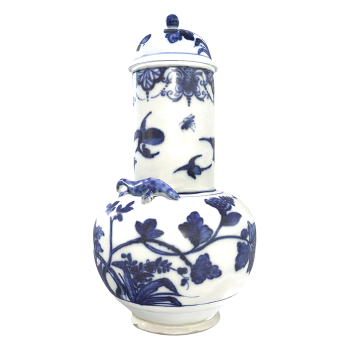
Souvenir Carved Jar with Lid from Guangzhou Antique Market, Guangdong
Kirin Statue in Qing Dynasty

Kirin Statue in Qing Dynasty

Cypress Screen (Wild Yongde)

Cypress Screen (Wild Yongde)

Cypress Screen is a screen painting created by the famous painter Kano Yongde (1543-1590) in the Antu Taoshan period in Japan. Screen painting was originally one of a pair of large screens in Antu City, a landscape painting composed of cypress trees (I. e. cypress trees).
Liuqiao Waterwheel Figure Screen

Liuqiao Waterwheel Figure Screen

"Liuqiao Waterwheel Picture Screen" is a six-fan screen depicting the scenery of the Musashino area in Japan. This screen displays elements such as golden bridges, willows, waterwheel and snake cage, forming a beautiful natural landscape. This screen was very popular during the Taoshan period and the early Edo period.