The currency issued by Paraguay in 1869 was the 2 Real silver coin

The currency issued by Paraguay in 1869 was the 2 Real silver coin

1897 Mexican currency 1 peso (Eagle Ocean)

1897 Mexican currency 1 peso (Eagle Ocean)

Eagle Ocean can be roughly divided into two types: the lace Eagle Ocean before 1897 and the straight edged Eagle Ocean after 1898. The lace eagle ocean has a face value of 8 riels, while the straight edged eagle ocean has a face value of 1 peso. On the front of the silver dollar is an eagle with outstretched wings, holding a long snake in its mouth (the lace eagle snake tail is connected to the eagle wing, while the straight edge eagle snake tail is not connected to the eagle wing), standing on a cactus (the national flower) with one leg, and the Spanish word "REPUBLIKAMEXIKANA" written above the edge. In the center of the back is a free soft hat. The pattern symbolizes strength, loyalty, peace, and freedom.
Nepal's ancient stone carving eagle

Nepal's ancient stone carving eagle

This sculpture was built by King Maratha in the Kathmandu Valley, however, this Garuda is the largest one in Kathmandu, built in the 17th century near the Maju Deval Narayan temple, and was constructed as part of the palace's surroundings to beautify it.
British 8th century architecture Bath Cathedral Street building wooden windows

British 8th century architecture Bath Cathedral Street building wooden windows

Each piece is handmade and made of British oak, with two unique custom designs on each end of the bench. These designs reflect some influence on Sir Gilbert Scott, including some taken from the interior of the monastery, based on its stone carvings, monuments, and stained glass windows.
Statue of Muse Talia

Statue of Muse Talia

The currency issued by England in 1793 was 1 penny for George III

The currency issued by England in 1793 was 1 penny for George III

On the front, there is a half body portrait of King George III with the inscription "GEORGIVS III · D · G · REX" facing to the right. Reverse printed with sailboat, land on the right horizon, Bermuda on top, engraved with: BERMUDA1793. Made of copper nickel alloy.
3D scanning of Maya solid wood masks

3D scanning of Maya solid wood masks

The Victory Goddess gold coin issued by Mexico in 1917

The Victory Goddess gold coin issued by Mexico in 1917

This 50 peso gold coin, also known as the "Centennial Coin," was minted by the "Mexican Mint" (Casa de Moneda) in 1921 to commemorate the 100th anniversary of Mexico's independence from Spain on August 24, 1821. Coins are not minted as currency; The face value of 50 pesos is for legal purposes only and does not reflect the true value of the gold content. It weighs about 41.7 grams, has a diameter of 37 millimeters, and contains 37.5 grams of pure gold. On the front of the coin, we can see the independent angel representing the Greek goddess of victory, Nike.
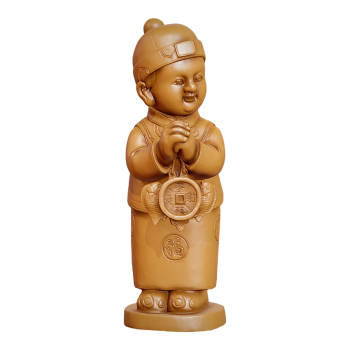
Smart Heart Gathering Indian Boy Decoration Living Room Entrance TV Cabinet Decoration Doll Decoration

Smart Heart Gathering Indian Boy Decoration Living Room Entrance TV Cabinet Decoration Doll Decoration

1907 Saint Gaudens $20 gold coin

1907 Saint Gaudens $20 gold coin

The Saint Gaudens $20 coin was produced by the United States Mint from 1907 to 1933. This gold coin is named after Augustus Saint Gaudens, who designed it. This coin is undoubtedly one of the most popular and beautiful coins in the United States. The $20 gold coin is a coin that is highly valued by investors and numismatists, and is almost loved by anyone who manages to obtain gold coins. For collectors, finding a well preserved 1907 Saint Gaudens $20 gold coin has always been a goal, but it is not an easy one to achieve.
British 8th century architecture Bath Cathedral Street building wooden doors

British 8th century architecture Bath Cathedral Street building wooden doors

The Holy Trinity Church is one of the many examples of the powerful church heritage in Bath. The Bath Holy Trinity Church is located in the heart of Church Street, near Queen's Square to the west of the city center, and can be seen as part of a short walking tour of the city's best churches. The Holy Trinity Church was founded in 822 and has been the cornerstone of the local community for nearly two centuries. Unfortunately, the church was forced to close in March 2011 as it was unable to sustain the operating costs of such a large building.
In 1941, the Soviet currency was 3 kopecies

In 1941, the Soviet currency was 3 kopecies

Ruble, also known as Russian ruble, symbol: ₽. Currency code: RUB. Usage areas: Russia and self declared independent Abkhazia and South Ossetia. Inflation rate: 7%. The Russian ruble is the base currency unit of Russia. The subsidiary currency is Gobi. 1 ruble equals 100 kobi. The denominations of banknotes include 5, 10, 50, 100, 200, 500, 1000, 2000, 5000 rubles, as well as 50, 10, 5, 3, and 1 kobi coins. Face value: 3. Release year: 1941. Material: Copper.
During the 1925 period, the Soviet currency was 10 kopecies

During the 1925 period, the Soviet currency was 10 kopecies

Ruble, also known as Russian ruble, symbol: ₽. Currency code: RUB. Usage areas: Russia and self declared independent Abkhazia and South Ossetia. Inflation rate: 7%. The Russian ruble is the base currency unit of Russia. The subsidiary currency is Gobi. 1 ruble equals 100 kobi. The denominations of banknotes are 5, 10, 50, 100, 200, 500, 1000, 2000, 5000 rubles, and there are also 50, 10, 5, and 1 kobi coins. Face value: 10. Release year: 19295. Material: Silver 500/1000.
Gold coin of King Bactria Eucratis I in ancient Greece

Gold coin of King Bactria Eucratis I in ancient Greece

The coin of the Bactrian king, Eucratis I (c. 171-145 BC) - The Greek Bactrian king who overthrew the House of Eusidmedes and conquered all their property, including Indian property. He misappropriated the title of King of Kings, possibly because not only the rulers of various regions of the Greco Bactrian country obeyed him, but also the local kings of India and other regions of the country obeyed him.
During the period of 1929, the Soviet currency was 15 kopecies

During the period of 1929, the Soviet currency was 15 kopecies

Ruble, also known as Russian ruble, symbol: ₽. Currency code: RUB. Usage areas: Russia and self declared independent Abkhazia and South Ossetia. Inflation rate: 7%. The Russian ruble is the base currency unit of Russia. The subsidiary currency is Gobi. 1 ruble equals 100 kobi. The denominations of banknotes are 5, 10, 50, 100, 200, 500, 1000, 2000, 5000 rubles, and there are also 50, 10, 5, and 1 kobi coins. Face value: 15. Year of Issue: 1929. Material: Silver 500/1000.
In 1921, the Soviet currency was 15 kopecies

In 1921, the Soviet currency was 15 kopecies

Ruble, also known as Russian ruble, symbol: ₽. Currency code: RUB. Usage areas: Russia and self declared independent Abkhazia and South Ossetia. Inflation rate: 7%. The Russian ruble is the base currency unit of Russia. The subsidiary currency is Gobi. 1 ruble equals 100 kobi. The denominations of banknotes are 5, 10, 50, 100, 200, 500, 1000, 2000, 5000 rubles, and there are also 50, 10, 5, and 1 kobi coins. Face value: 15. Year of Issue: 1921. Material: Silver 500/1000.
The currency of the Romanov dynasty in Russia, the Emperor Nicholas II silver coin

The currency of the Romanov dynasty in Russia, the Emperor Nicholas II silver coin

Ruble, also known as Russian ruble, symbol: ₽. Currency code: RUB. Usage areas: Russia and self declared independent Abkhazia and South Ossetia. Inflation rate: 7%. The Russian ruble is the base currency unit of Russia. The subsidiary currency is kobi, 1 ruble equals 100 kobi. The currency unit is the ruble. The denomination is 1 ruble, issued in 1897, made of silver material, with a diameter of 33.65 millimeters. A total of 26000000 items were issued.
In 1833, Bolivia issued a 10 cent coin

In 1833, Bolivia issued a 10 cent coin

Boliviano is the circulating currency of Bolivia. The unit of subsidiary currency is cents, 1 Boliviano=100 cents. Boliviano was also the name of the currency in circulation in Bolivia from 1833 to 1963. The year of issuance is 1883. The material is copper nickel alloy. The front bears a flag and weapon crossed behind a bald eagle, with an oval shaped arm at the top and stars at the bottom. The reverse side features a treasure trove and fascia on both sides of a star shape. The text on the front: REPUBLICA BOLIVIANA. The text on the back is: LA UNION ES LA FURZA.
1 kobi of Soviet currency during the 1924 period

1 kobi of Soviet currency during the 1924 period

Ruble, also known as Russian ruble, symbol: ₽. Currency code: RUB. Usage areas: Russia and self declared independent Abkhazia and South Ossetia. Inflation rate: 7%. The Russian ruble is the base currency unit of Russia. The subsidiary currency is Gobi. 1 ruble equals 100 kobi. The denominations of banknotes are 5, 10, 50, 100, 200, 500, 1000, 2000, 5000 rubles, and there are also 50, 10, 5, and 1 kobi coins.
The Bamboo Root Carving Arhat, a Lucky Lion, was created by Liang Fengzhu

The Bamboo Root Carving Arhat, a Lucky Lion, was created by Liang Fengzhu

Ruishi Luohan Bamboo Root Carving, a 1999 work by Liang Fengzhu, a master of Chinese arts and crafts. It is currently collected in the Liangfengzhu Arts and Crafts Museum in Nanyue, Hengyang, China, with a height of 21 cm and a width of 23.2 cm
Nezha's Chaos in the Sea "created by Liang Fengzhu

Nezha's Chaos in the Sea "created by Liang Fengzhu

The gloomy wood carving, made by Chinese master of arts and crafts Liang Fengzhu in 2001, is now collected at the Liang Fengzhu Arts and Crafts Museum in Nanyue, Hengyang, China. Nezha is a protector deity in Chinese folk religion. His official Taoist name is' Marshal of the Middle Altar '. After he became a deity, he was bestowed with the title of "Third Lotus Prince".
The statue of Vesta, the female hearth god in Roman mythology

The statue of Vesta, the female hearth god in Roman mythology

Vesta was the virgin goddess in Roman religion who was in charge of the hearth, home, and household. She is rarely depicted in human form and is often personified by the fire of her temple in the Roman Forum. Only her priestess Vesta was allowed to enter her temple, and they guarded the sacred flame by the fireplace in her temple.
Ancient Egyptian burial statues

Ancient Egyptian burial statues

A small sculpture used in Egypt for funerals, resembling the image of Osiris (whose body is a mummy), usually with the name of the deceased written on it. Many important tombs contain a large number of small sculptures of this kind, with the purpose of allowing them to complete various tasks that the Earth God may require the deceased to accomplish.
The statue of Thutmose III in the Karnak Temple in Egypt

The statue of Thutmose III in the Karnak Temple in Egypt

The statue of Thutmose III in Cairo, Egypt. Thutmose III was the 18th pharaoh of Egypt during the New Kingdom period. Thutmose III was one of the longest reigning kings of Egypt and passed away at the age of 54. He is often referred to as the Napoleon of Egypt, possessing a powerful military force.
Ancient Egyptian jackal and wolf statue

Ancient Egyptian jackal and wolf statue

This statue represents the god Anubis or Wepwawet, the guardian of jackals and wolves in the cemetery. The statue is made of solid copper alloy casting, with details of the fur cut. This statue may have originally been decorated on top of the shrine.
Simon O'Rourke's' Our Lady of Perrine '

Simon O'Rourke's' Our Lady of Perrine '

Photogrammetry of the statue of the Virgin Mary

Photogrammetry of the statue of the Virgin Mary

Ancient Greek vase painting pottery with double ears, long neck, high vase

Ancient Greek vase painting pottery with double ears, long neck, high vase

The statue of the goddess of heaven in Roman mythology, Juno

The statue of the goddess of heaven in Roman mythology, Juno

The statue of Hebe, the goddess of youth in ancient Greek mythology

The statue of Hebe, the goddess of youth in ancient Greek mythology

Hebe (Greek: Ἥβ η; English: Hebe) was the goddess of youth in ancient Greek mythology, the daughter of Zeus and Hera. She was known as Juventas in Rome. She is also the sommelier for the gods of Mount Olympus. At every banquet, she pours wine for the gods, and these drinks make them feel happy, energetic, and never tired. Later, she married Hercules, the god of power who ascended to the heavens. And as the sommelier, Zeus brought in the young and handsome Trojan prince Ganymedes from the mortal world to replace her.
Photogrammetric sculpture of Gandhi Monument in the old city of Goa

Photogrammetric sculpture of Gandhi Monument in the old city of Goa

Ancient Egyptian figures, ancient sculptures, Pharaoh Anubis, werewolves, fiberglass

Ancient Egyptian figures, ancient sculptures, Pharaoh Anubis, werewolves, fiberglass

Eagle ornaments, flying eagle, big Peng spreading its wings, eagle ornaments, grand exhibition, and wooden carving of the great picture

Eagle ornaments, flying eagle, big Peng spreading its wings, eagle ornaments, grand exhibition, and wooden carving of the great picture

Photogrammetry of ancient artillery, turrets, and cannons

Photogrammetry of ancient artillery, turrets, and cannons

Glazed ceramic basin with black and brown rabbit pattern bloodletting bowl

Glazed ceramic basin with black and brown rabbit pattern bloodletting bowl

The item is a medical device used before the Civil War to collect blood during bloodletting. This artwork is from Dr. Leo J. McCarthy's personal collection and was rented to the Ruth Lilly Medical Library at Indiana University during scanning.