Stone lion

Stone lion

In East Asian cultures, the stone lion was an ancient symbol of conservation, longevity and prosperity. They are often placed in pairs in front of palaces, temples or government offices as symbols of power and status. The lion's paw was on a hydrangea. In traditional paired stone lions, the male usually steps on the hydrangeas (a symbol of power) and the female is a cub (a symbol of prosperity). Such stonework is usually made of granite or marble. Historically, heavy stonework has also been used as ballast stone for ships to increase stability.
Frog on the Rock statue

Frog on the Rock statue

The statue depicts a frog squatting on an irregularly shaped stone, presenting a realistic and age-eroded gray appearance, possibly with mossy green or yellow markings.
Wood Carved Rabbit Box

Wood Carved Rabbit Box

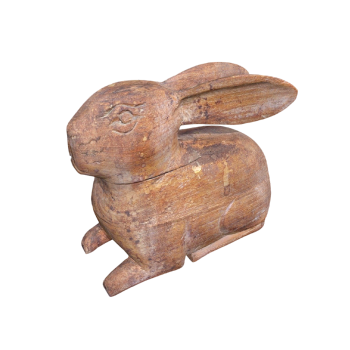
This is a decorative box or jewelry box with a lid that can be used to store small items or jewelry. The upper part of the box can be removed, revealing a hidden storage space. Hand-carved from solid wood, it retains the natural wood grain and copper luster, with a rustic folk art style.
Wood carving "Lion Rock"

Wood carving "Lion Rock"

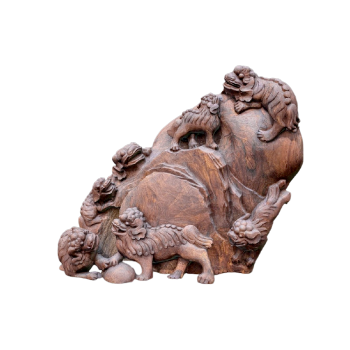
Chinese arts and crafts master Liang Fengzhu was produced in 2014 and is now collected in Liang Fengzhu Arts and Crafts Art Museum in Hengyang, China. The work is carved from natural wood, retaining the natural texture of the wood. The carving is fine, depicting the scene of many lions (which may mean "nine lions" or "too many lions and few lions") playing among the rocks, which is vivid and powerful. In traditional Chinese culture, the lion is a common object to ward off evil spirits and an auspicious symbol.
One of the stone reliefs of six horses in Zhaoling "Sa Lu Zi"
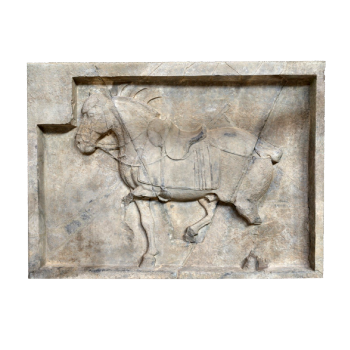
One of the stone reliefs of six horses in Zhaoling "Sa Lu Zi"

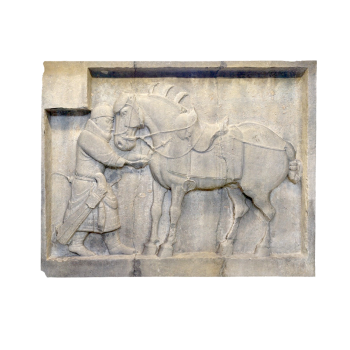
"Six Horses of Zhaoling" is a stone relief sculpture made by Emperor Taizong Li Shimin (reigned 626-649) to commemorate the six war horses he rode during the process of establishing the Tang Dynasty and unifying the whole country. This relief depicts the scene of Li Shimin's mount "Sa Lu Zi" (its name means "Qiu Lu" in Turkic language) after being injured by an arrow in battle, and the general Qiu Xinggong drew an arrow for it. In 1914, "Sa Lu Zi" and another war horse "Boxing Mao" were stolen and sold out of the country and are now in the Museum of Archaeology and Anthropology at the University of Pennsylvania.
Liujun Stone Carving Relief in Zhaoling
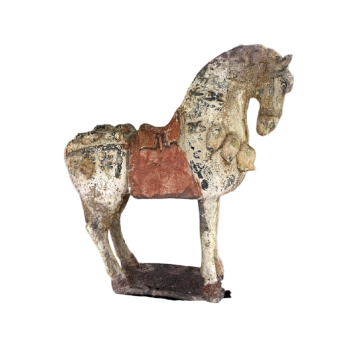
Liujun Stone Carving Relief in Zhaoling

This is one of the stone reliefs of "Six Horses of Zhaoling. The six horses in Zhaoling are stone reliefs carved by Emperor Taizong Li Shimin (reigned from 626 to 649) to commemorate the six war horses he rode during his war. The horse in the image is called "Punch Hair", which is named after its curly hair. In the battle with Liu Hei-yi, Li Shimin rode this horse. The "Zhaoling Liujun" was originally located on both sides of the northern altar of the Tang Taizong Zhaoling in Liquan County, Shaanxi Province. Among them, "Boxing Mao" and "Lu Sa Zi" were stolen and sold to the United States in 1914 and are now in the Museum of the University of Pennsylvania. The remaining four Jun are now in Xi'an Forest of Steles Museum
Ancient Chinese Painted Pottery Horse
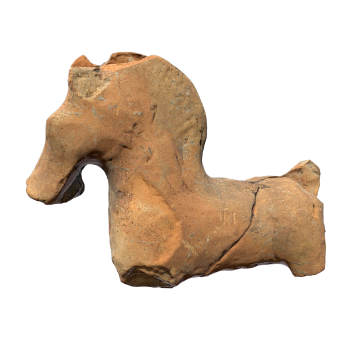
Ancient Chinese Painted Pottery Horse

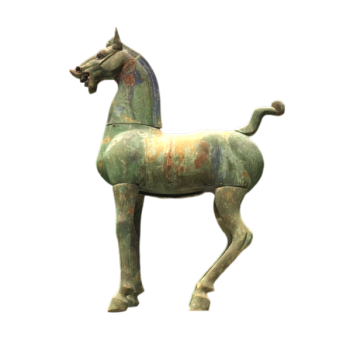
This is an ancient Chinese painted pottery horse, probably belonging to the period from the Northern Dynasty to the Tang Dynasty. It is a pottery figurine made of clay. The surface was originally decorated with painted decorations (such as red and white pigments), but most of them have fallen off due to age, revealing the plain tires at the bottom and some residual paintings. This craft was very common in ancient Chinese burial art. This realistic and vigorous image of horses prevailed in ancient China from the Northern Dynasties (such as the Northern Wei Dynasty and the Northern Qi Dynasty) to the Tang Dynasty (618-907). The depiction of horses in this period reached an artistic peak, reflecting the strong national strength and the emphasis on horses of the times.
Ancient clay horse statue

Ancient clay horse statue

The style and material of this horse statue indicate that it is likely to be from the archaic period of ancient Greece, about 600 BC to 480 BC. Pottery horse figurines were very popular at the time and were found in a large number of tombs and temple sites in areas such as Bolivia. In ancient Greek culture, the horse was a symbol of wealth and status. These small statues of pottery horses are often used as sacrificial offerings or funerary objects and placed in tombs to symbolize the social status of the deceased. The statue is made by hand-kneading and molding technology, and its shape is abstract and simple, highlighting the basic characteristics of the horse, revealing a naive and simple aesthetic feeling.
Ancient Egyptian hippo statue

Ancient Egyptian hippo statue

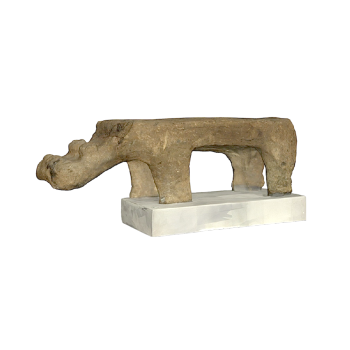
This is an ancient Egyptian hippo statue dating back to the Middle Kingdom period (c. 1961-1878 BC). This statue is the unofficial mascot of the Metropolitan Museum of Art and has a famous nickname "William". It is made of Egyptian glazed pottery (faience), a ceramic material made of quartz powder with a unique blue glaze. The statue was found in a shaft in the burial chamber of a steward named Senbi in the Mayr region of Egypt.
Inuit carpets of reindeer bones

Inuit carpets of reindeer bones

This is a bone carving reindeer artwork made by the Inuit (Inuit). This type of sculpture is typical of Inuit art in the Canadian Arctic. Inuit artists are known for their superb animal sculpting skills, often depicting the wildlife and everyday life scenes around them. The sculpture may have been carved from materials such as local reindeer horn and whale bone. Reindeer are an important source of food and material for the Inuit and are therefore a common subject of depiction in their artwork.
Pottery statue of horse and rider in ancient Cyprus
Pottery statue of horse and rider in ancient Cyprus

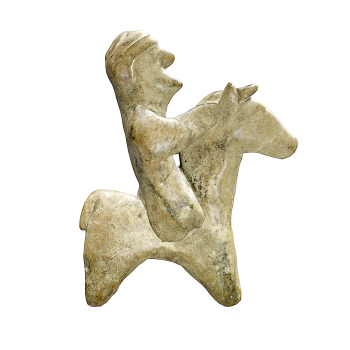
This is an ancient Cypriot pottery statue of a horse and rider. This kind of sculpture is usually made in the archaic period of Cyprus, between 700 BC and 450 BC. The statue is handcrafted from terracotta, usually unglazed, and presents a natural light brown or off-white color. These small figurines and animal sculptures were widely used in ancient Cyprus as tomb offerings or temple offerings. At the time, horses were a symbol of status and wealth. The use of statues of horses and riders as funerary objects may symbolize the prominent social status of the deceased or their devotion to the gods.
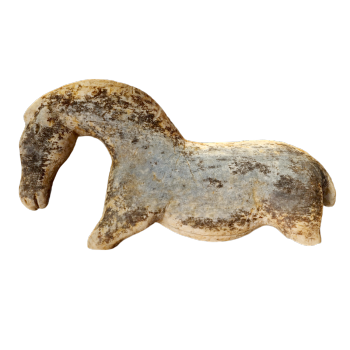
Paleolithic mammoth ivory horse statue
Paleolithic mammoth ivory horse statue

This is the Vogelhurd Cave Horse statue, the oldest known horse art sculpture, carefully carved from mammoth ivory. The statue was made in the Orina culture period of the late Paleolithic age. It has a history of about 35,000 to 40,000 years. It is one of the earliest figurative works of art created by early modern humans. The Vogelhurd Cave, known for unearthing a large number of Ice Age artworks, is now listed as a UNESCO World Heritage Site. This remarkable artifact is now in the collection of the Chateau Museum of Hohentubingen, Tubingen, Germany.
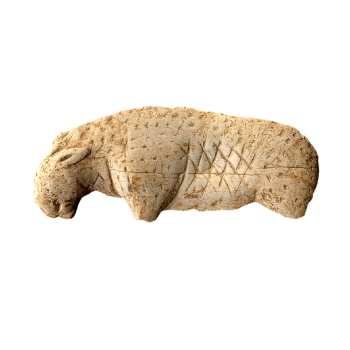
Ice Age mammoth ivory lion statue

Ice Age mammoth ivory lion statue
This is the mammoth ivory lion statue found in Vogelhurd cave, one of the oldest known figurative works of art in the world. The sculpture belongs to the Late Paleolithic Oreina culture and is between 35,000 and 40,000 years old. The statue is carved from mammoth ivory. It is very small and easy to carry (about 8.7cm long). The surface of the statue is engraved with a fine grid or cross-hatched pattern. Archaeologists believe that these ice age animal carvings may be related to hunting rituals, prehistoric beliefs or shamanic practices.
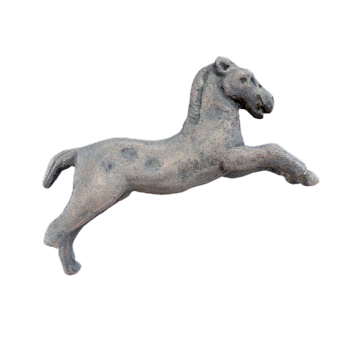
Ancient Roman bronze horse sculpture

Ancient Roman bronze horse sculpture
This is an ancient Roman bronze horse sculpture in the collection of the Evora Museum. This work can be traced back to the ancient Roman Empire, about the 1st to 3rd centuries AD. The statue was found at a Roman site in Évora, Portugal, and is currently in the collection of the local Évora Museum. The sculpture captures the dynamic moment of the horse's leap, with its front legs off the ground and its hind legs bent and firmly supported on the ground, demonstrating the Roman artist's superb realistic skills and in-depth understanding of animal anatomy.
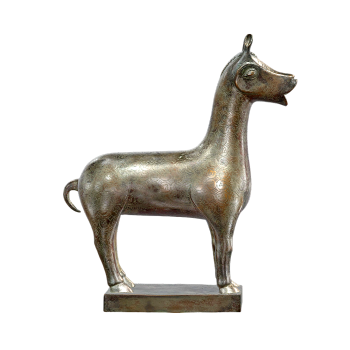
Doe Sculpture (Doha Museum of Islamic Art)

Doe Sculpture (Doha Museum of Islamic Art)

This is Doha Doe, a famous bronze fountain head sculpture of Islamic art. Made in the Spanish Umayyad Caliphate (Umayyad al-Andalus) in the middle of the 10th century, it was originally the outlet of a fountain, which was placed beside the pool or fountain in the palace courtyard, and water would spray out through the pipe at the base. The sculpture is made of copper alloy (gunmetal), with fine engraving patterns on the surface. The pattern is a half palm leaf pattern in a circle, giving the impression of being covered by gorgeous fabric. The original is now in the collection of the Museum of Islamic Art in Doha, Qatar.
Copper Boar Sculpture

Copper Boar Sculpture

This is a bronze sculpture of a wild boar. The ornaments are made of bronze or similar metal alloys, with obvious patina (green-brown) rust spots, giving people an antique or vintage feeling. The sculpture depicts a wild boar (boar) with a three-dimensional and realistic shape. The boar stands on a rectangular base, which itself is similar to metal and patina.
cock pottery figurines

cock pottery figurines

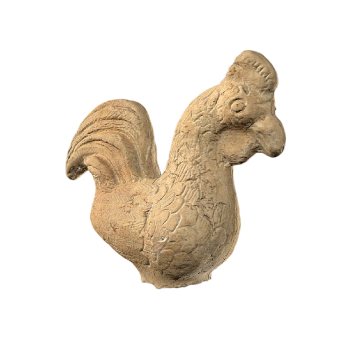
This item is a cock sculpture or figurine made of terra cotta. This type of pottery and chicken figurine was a common burial object in ancient China, especially in the Han Dynasty (206 BC -220 AD), and is usually found in burial pits in tombs. In ancient times, sculptures of animals such as chickens were placed in tombs, which may have auspicious meanings or reflect the living customs of the time. The chicken is often regarded as a symbol of "virtue bird" and auspiciousness because of its habit of keeping promises and reporting. The sculpture depicts the cock's head and tail, and the texture of the feathers is clearly visible, with a strong flavor of life and a simple artistic style.
Ancient Egyptian Ibis (mummy)

Ancient Egyptian Ibis (mummy)

This is an ancient Egyptian crested ibis, and such artifacts were very common in ancient Egypt, especially in the late ancient Egypt (c. 664-332 BC) and the Ptolemaic period. The ibis is the symbol of the ancient Egyptian god of wisdom, writing and the moon, Toth. The body (torso) is usually made of wood, and the head, neck and legs are usually cast in bronze and then inserted into the wooden torso. The torso section is often hollow and may contain embalmed ibis mummies.
Polar bears carved from ivory by the Inuit

Polar bears carved from ivory by the Inuit

This is an Inuit work of polar bear carving, which is usually made of ivory, bone, antlers or stone. Ivory and bone are the main materials traditionally used by the Inuit for carving. This style of miniature animal carving is a common art form in the Inuit culture and is found in archaeological sites in the Arctic and Greenland. The polar bear is a very important animal in the Inuit culture, closely related to hunting, spiritual beliefs and myths and legends.
Chinese traditional mythical beast "Xuanwu" root carving
Chinese traditional mythical beast "Xuanwu" root carving

This is a sculpture of the traditional Chinese mythical beast "Xuanwu", a handicraft with the theme of "snake wrapped around turtle. In the picture, a turtle is entangled by a long snake with its head above the back of the turtle. This is a typical image of "Xuanwu", one of the four mythical beasts in ancient Chinese mythology. Xuanwu symbolizes the north, winter and longevity and stability.
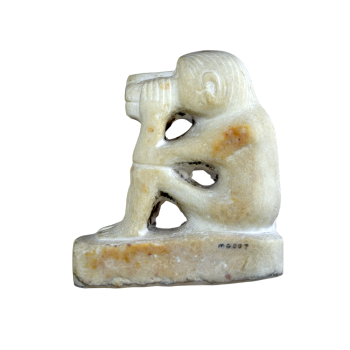
Ancient Egyptian Baboon Stone Carvings

Ancient Egyptian Baboon Stone Carvings

This is a small stone statue of a baboon in a typical ancient Egyptian-style squatting posture. In ancient Egyptian mythology, baboons were one of the incarnations of the god of wisdom, Thoth, and were often represented by this squatting posture with hands on knees and a solemn expression. It is worth noting that there is a clear manual ink book number "M6007" on the side of the base ". This shows that the model is generated by high-definition scanning based on real museum collections or archaeological unearthed cultural relics, and has extremely high scientific research and historical archive value.
Stone Seahorse (granite)

Stone Seahorse (granite)

This is a granite stone carving seahorse. In traditional Chinese architecture (especially ancient houses or gardens in southern Fujian and Lingnan regions), this stone carving is usually used as a decorative component of the building, a garden sketch or a kissing beast on the roof. Combines horse head, fish body (with fins) and curly tail. This kind of "seahorse" image is often regarded as an auspicious mythical beast capable of opening fire and water in traditional oriental culture, and often appears in ancient buildings near water systems or coastal areas. The lines are simple and powerful, especially the spiral treatment of the tail and the fins on the back, which show the exquisite round carving craftsmanship of the stonemason.
Contemplative ape statue

Contemplative ape statue

A "contemplative ape" statue carved in dark stone, this work presents a high degree of realism and artistic expression. The ape sits curled up, with one hand on his cheek and deep eyes, showing a state of contemplation similar to that of a human "thinker.
Statue of African Buffalo

Statue of African Buffalo

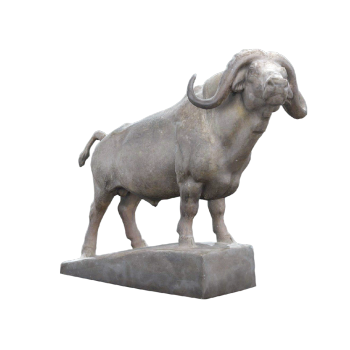
This is a statue of an African buffalo, usually a large ornament for outdoor gardens or landscape decoration. The statue vividly captures the strong, muscular image of the African buffalo (also known as the Cape of Good Hope buffalo), especially its iconic large, inward-curved horns. The buffalo symbolizes strength, resilience and wild beauty in many cultures.
Gail-Anderson Cat

Gail-Anderson Cat

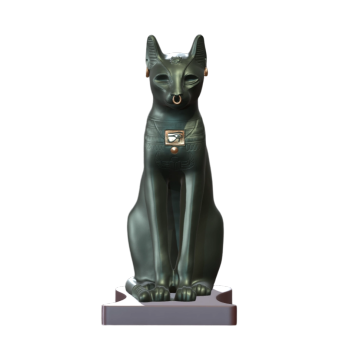
Gail-Anderson Cat is a bronze statue depicting the image of the goddess Buster. The goddess is usually portrayed as a female figure of the head of the cat, or directly in the form of a cat. The main center of worship of the goddess Bast is located in Bubatis, in the Nile Delta. As a maternal goddess, Buster is gentle and kind, in contrast to the more aggressive lioness god, Sehmet. The statue dates back to the late dynasty of ancient Egypt, around 600 BC. Major Robert Grenville Gail-Anderson donated the statue to the British Museum in 1939 and named it in his honor.
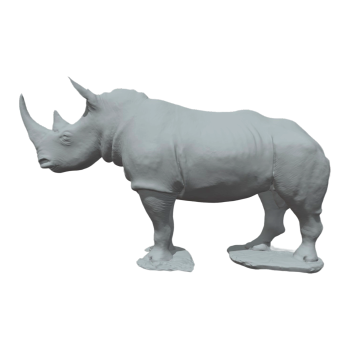
White rhino sculpture ornaments (support 3D printing)
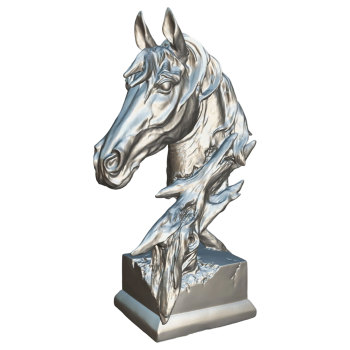
White rhino sculpture ornaments (support 3D printing)

Horse head statue (support 3D printing)
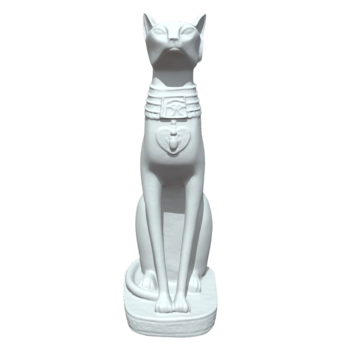
Horse head statue (support 3D printing)

Egyptian cat statue ornaments (support 3D printing)
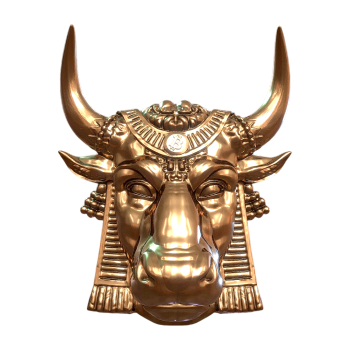
Egyptian cat statue ornaments (support 3D printing)

Bull head bronze statue (support 3D printing)
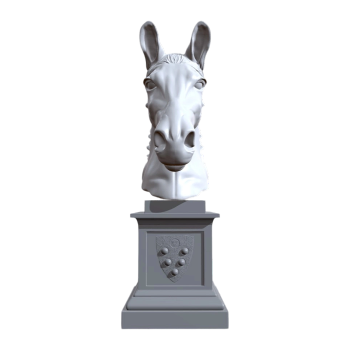
Bull head bronze statue (support 3D printing)

Horse head statue (support 3D printing)
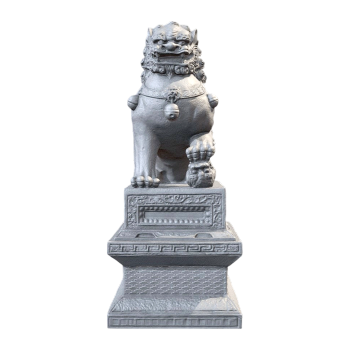
Horse head statue (support 3D printing)

Chinese stone lion (support 3D printing)

Chinese stone lion (support 3D printing)

Stranraer Museum-Boar Skull

Stranraer Museum-Boar Skull

golden cuttlefish specimen
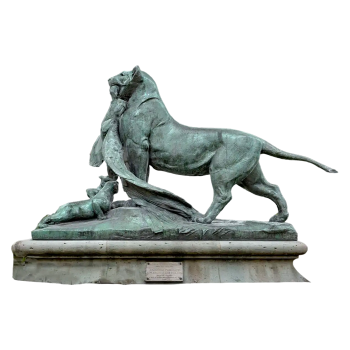
golden cuttlefish specimen

The golden squid is a kind of cephalopod mollusk named because of its golden or orange body color. The scientific name is Sepia esculenta, which belongs to one of the species of economic value in the squid family. Its internal calcareous inner shell, developed water jet propulsion system and unique color change ability. The golden squid is a warm-temperature offshore benthic cephalopod that depends on the complex environment of the shallow sea to complete its life cycle. To be distributed in the Yellow Sea, Bohai Sea, East China Sea (such as Shandong, Liaoning, Fujian coast), as well as Japan's Honda, Kyushu sea. Preference for sandy or muddy seabed with water depth of 20-100 meters (sediment content above 70%).
French Cultural Heritage Tigers and Cubs

French Cultural Heritage Tigers and Cubs

The Tiger and the Cub was created by August Nicholas Kane (Auguste Nicolas Cain), a representative of the 19th century French animal sculpture school. The statue was originally located in the Tuileri Garden in Paris. Due to lawn protection regulations (no trampling on the grass), one side of the statue was moved from 30 meters outside the park boundary.
France Paris Tuileri Garden statue rhino attacked by tiger

France Paris Tuileri Garden statue rhino attacked by tiger

This is a famous sculpture created by French sculptor Auguste Cain (Auguste Cain). The work was created in 1884 and has been displayed in the Tuileri Garden in Paris. Auguste Cagin (Auguste) is a famous French sculptor of the Animaliers school who created many portraits of wild and domesticated animals in the 19th century.
1 2 3 4 5 6 Next