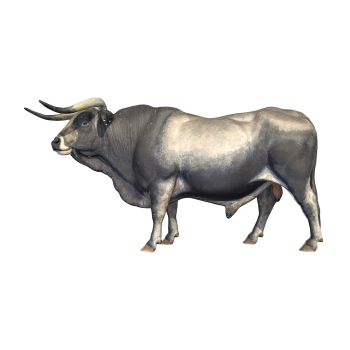
1889 Cast Iron Sculpture of a Male Buffalo
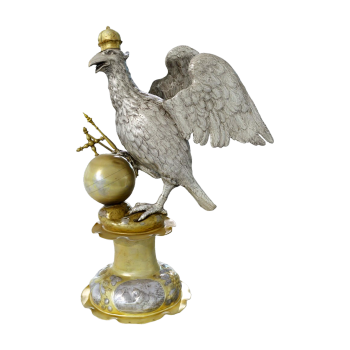
1889 Cast Iron Sculpture of a Male Buffalo

Polish Eagle Ware

Polish Eagle Ware

This vessel is displayed in the National Art Collection at Wawel Royal Castle. Designed in the shape of a Polish eagle, it showcases Poland's national symbol and artistic style. Wawel Royal Castle is one of the most important historical and cultural sites in Poland, with a large collection of precious works of art and historical artifacts.
Bronze statue of "Wild Boar"

Bronze statue of "Wild Boar"

This "wild boar" statue is a plaster model of an ancient statue in the collection of the Museum of the Academy of Fine Arts in Krakow. It is a replica of an ancient statue in the Uffizi Gallery in Florence. This marble boar statue is from the Roman period and is a copy of a lost Hellenistic original, probably by artists from around the famous sculptor Lisipos (Lysippos). This Roman boar statue was presented by Pope Pius IV to Cosimo I de Medici, Duke of Tuscany.
"On the Road" Plaster Statue

"On the Road" Plaster Statue

The statue is a famous piece of art in the National Museum in Krakow. The statue, made of stained plaster, depicts a scene of a horse pulling a carriage, showing life in the 19th century. The details of the statue are very delicate, and the form of horses and carriages is lifelike, as if on the march. This artwork not only shows the transportation of the time, but also reflects the social life and cultural background of that time. Through this statue, the Krakow National Museum shows the audience the daily life and artistic style of the 19th century, so that people can better understand the history and culture of that era.
18th Century Indian Elephant Statue

18th Century Indian Elephant Statue
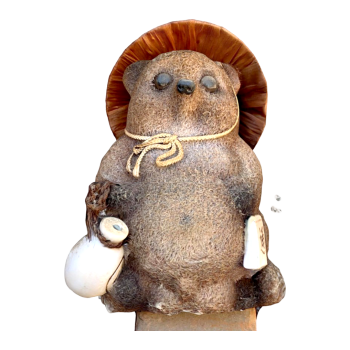
Smokie Statue

Smokie Statue

Tanuki is a legendary animal in Japanese culture, often depicted as a creature that resembles both a raccoon and a dog, with magical shape-shifting abilities and a playful personality. They occupy an important place in Japanese folklore and culture and art, and are often seen as symbols of good luck and abundance.
Crane relief in the forest

Crane relief in the forest

Stone Lion Statue

Stone Lion Statue

Lion border stone carving-MichalOl

Lion border stone carving-MichalOl

It is a concrete sculpture created by sculptor MichalOl in 2009 and officially unveiled on November 6, 2009. The sculpture symbolizes the border of Bohemia and Moravia, although it does not lie on the actual border in history. The sculpture is located in Žíárnad Sázavou, Czech Republic, near the Pilze Reservoir, and has become an important local landmark. It is not only a work of art, but also a profound reflection on Czech history and culture, reflecting the historical connection and cultural integration of the two regions.
Ram statue-Antonín Nový

Ram statue-Antonín Nový

It was created by the Czech artist Antonín Nový and is located on Kulska Street in the district of Starý Lískovec in the city of Brno. Is a multi-talented sculptor, specializing in metal and glass sculpture creation. The works are not only widely praised in the Czech Republic, but also have a certain influence in the world. They have been exhibited in Italy, Poland, the Netherlands and Germany. Completed in 1983, this sculpture is a striking and iconic work of art in the region. His works are famous for their exquisite craftsmanship and profound artistic expression. His works cover many fields such as sculpture, practical art and garden architecture.
Rhino-JaroslavRóna

Rhino-JaroslavRóna

JaroslavRóna is a multi-talented Czech artist whose identities include sculptor, painter, actor, educator and writer. It is known for its sculptural works, which cover a wide range from public art to private collections. The artistic style is deeply influenced by primitive art and expressionism, and has created many striking sculptures and paintings. His works are famous for their strong visual impact and profound emotional expression. His sculptures often take the characters as the theme, and convey strong emotions and profound social comments through exaggeration and deformation.
Wood carving Asian elephant

Wood carving Asian elephant

Starling specimen

Starling specimen

Also known as black starling, a bird of the genus starling family. The body is large, 23-28cm long, black throughout, with a long and vertical feather cluster on the forehead, resembling a crown. The tail feathers and the overlying feathers under the tail have white end spots. The mouth is milky yellow and the feet are yellow. Sounds like starling, trained to imitate human language, is a famous cage bird. It feeds on insects such as locusts and flies, and also eats plant foods such as grains, plant fruits and seeds. It is a social bird that likes to move with its peers. It will form a group of dozens to hundreds of birds, forage and inhabit together, and maintain the relationship between the groups through complex communication methods.
Red Horse Ceramics

Red Horse Ceramics

Zhou Qingding's sculpture "Elephant"

Zhou Qingding's sculpture "Elephant"

Zhou Qingding (1896.4.1-1984.11.12), born in Anren County, Hunan Province, was a modern sculptor and the founder of animal porcelain carving in China. After the establishment of the People's Republic of China, he served as the head of the Sculpture Department at Zhejiang Academy of Fine Arts (later renamed as the head of the Folk Art Department), dedicated to the research, creation, and teaching of animal sculpture, and achieved remarkable achievements. He inherits the tradition of realistic sculpture in France, attaches great importance to imitating nature, emphasizes the expression of animal vitality, strives to have both form and spirit, does not attach too much importance to ornamentation, uses concise and vivid language, is full of interest, and is full of poetic and picturesque charm.
Collie Shepherd (Clay)

Collie Shepherd (Clay)

The pottery Collie, made around 100-300 AD, is currently housed at the Minneapolis Academy of Arts. Scottish Shepherd, also known as Collie Shepherd. The coat is long and shiny, with a considerable amount of hair covering the entire body except for the head and limbs; The upper hair is coarse and dense setae, while the lower hair is soft and dense, with characteristic long whiskers.
Bronze statue of the twelve zodiac animal heads in Yuanmingyuan - pig head

Bronze statue of the twelve zodiac animal heads in Yuanmingyuan - pig head

Originally part of the fountain outside the Haiyan Hall of the Yuanmingyuan. The pig head bronze statue represents the hour of Hai (21:00 to 23:00) and is one of the twelve zodiac bronze statues. It was designed by European missionary, Italian Lang Shining, supervised by French Jiang Youren, and produced by Qing court craftsmen. The pig head bronze statue symbolizes wealth and auspiciousness, and is an important symbol in traditional Chinese culture. In 1860, the Anglo French coalition invaded China and set fire to the Old Summer Palace, causing the loss of pig head bronze statues overseas. In 2003, Macau entrepreneur Dr. Stanley Ho purchased a pig head bronze statue and donated it to the Poly Art Museum, allowing the pig head bronze statue to return to China.
Bronze Statue of the Twelve Zodiac Beasts in Yuanmingyuan - Dog Head

Bronze Statue of the Twelve Zodiac Beasts in Yuanmingyuan - Dog Head

Originally part of the fountain outside the Haiyan Hall of the Yuanmingyuan. The bronze statue of the dog's head represents the hour of Xu (19:00 to 21:00) and is one of the twelve zodiac bronze statues. It was designed by European missionary, Italian Lang Shining, supervised by French Jiang Youren, and produced by Qing court craftsmen. The bronze statue of a dog's head is renowned for its exquisite casting techniques and the fusion of Eastern and Western art. In 1860, the Anglo French coalition invaded China and set fire to the Old Summer Palace, causing the loss of the bronze dog head statue overseas. Until now, its whereabouts are still unknown. Like several other animal heads, its fate has become a symbol of the loss of cultural relics overseas from the Yuanmingyuan and a witness to the loss of Chinese cultural heritage.
Bronze statue of the twelve zodiac animal heads in Yuanmingyuan - chicken head

Bronze statue of the twelve zodiac animal heads in Yuanmingyuan - chicken head

Originally part of the fountain outside the Haiyan Hall of the Yuanmingyuan. The bronze statue of the rooster's head represents the hour of You (17:00-19:00) and is one of the twelve zodiac bronze statues. It was designed by European missionary, Italian Lang Shining, supervised by French Jiang Youren, and produced by Qing court craftsmen. The chicken head bronze statue symbolizes punctuality and diligence, and is an important symbol in traditional Chinese culture. In 1860, the British and French coalition invaded China and set fire to the Yuanmingyuan, causing the chicken head bronze statue to begin to be lost overseas. Until now, its whereabouts are still unknown. Like several other animal heads, its fate has become a symbol of the loss of cultural relics overseas from the Yuanmingyuan and a witness to the loss of Chinese cultural heritage.
Bronze statue of the twelve zodiac animal heads in Yuanmingyuan - Monkey Head

Bronze statue of the twelve zodiac animal heads in Yuanmingyuan - Monkey Head

Originally part of the fountain outside the Haiyan Hall of the Yuanmingyuan. The bronze statue of the monkey's head represents the hour of Shen (15:00 to 17:00) and is one of the twelve zodiac bronze statues. It was designed by European missionary, Italian Lang Shining, supervised by French Jiang Youren, and produced by Qing court craftsmen. The monkey head bronze statue is renowned for its exquisite casting techniques and the fusion of Eastern and Western art. In 1860, the Anglo French coalition invaded China and set fire to the Yuanmingyuan, causing the monkey head bronze statue to begin to be lost overseas. In the 1980s, it was purchased by China Poly Group for HKD 8.185 million at Christie's auction house and is now housed in the Poly Art Museum.
Bronze statue of the twelve zodiac animal heads in Yuanmingyuan - Sheep Head

Bronze statue of the twelve zodiac animal heads in Yuanmingyuan - Sheep Head

Originally part of the fountain outside the Haiyan Hall of the Yuanmingyuan. The bronze statue of the sheep's head represents the hour of Wei (13:00 to 15:00) and is one of the twelve zodiac bronze statues. It was designed by European missionary, Italian Lang Shining, supervised by French Jiang Youren, and produced by Qing court craftsmen. The bronze statue of a sheep's head is renowned for its exquisite casting techniques and the fusion of Eastern and Western art. In 1860, the Anglo French coalition invaded China and set fire to the Yuanmingyuan, causing the loss of the sheep head bronze statue overseas. Until now, its whereabouts are still unknown. Like several other animal heads, its fate has become a symbol of the loss of cultural relics overseas from the Yuanmingyuan and a witness to the loss of Chinese cultural heritage.
Bronze statue of the twelve zodiac animal heads in Yuanmingyuan - horse head

Bronze statue of the twelve zodiac animal heads in Yuanmingyuan - horse head

Originally part of the fountain outside the Haiyan Hall of the Yuanmingyuan. It represents noon (11:00 to 13:00) and is one of the twelve bronze statues of the Chinese zodiac. It was designed by European missionary, Italian Lang Shining, supervised by French Jiang Youren, and produced by Qing court craftsmen. Known for its exquisite casting techniques and fusion of Eastern and Western art. In 1860, the Anglo French coalition invaded China and burned down the Old Summer Palace, leading to its loss overseas. In 2007, he was successfully recovered by patriotic Stanley Ho in Hong Kong with HK $69.1 million and donated to the country. On November 13, 2019, it was officially donated to the National Cutural Heritage Administration and allocated to the Beijing Yuanmingyuan Management Office for collection
Bronze statue of the twelve zodiac animal heads in Yuanmingyuan - Snake Head

Bronze statue of the twelve zodiac animal heads in Yuanmingyuan - Snake Head

Originally part of the fountain outside the Haiyan Hall of the Yuanmingyuan. The snake head bronze statue represents the time of the Si (9am to 11pm) and is one of the twelve zodiac bronze statues. It was designed by European missionary, Italian Lang Shining, supervised by French Jiang Youren, and produced by Qing court craftsmen. The bronze statue of a snake's head symbolizes wisdom and prudence, and is an important symbol in Chinese culture. In 1860, the Anglo French coalition invaded China and set fire to the Yuanmingyuan, causing the snake headed bronze statue to begin to be lost overseas. Until now, the whereabouts of the snake head bronze statue are still unknown. Like several other animal heads, its fate has become a symbol of the loss of cultural relics overseas from the Yuanmingyuan and a witness to the loss of Chinese cultural heritage.
The bronze statue of the twelve zodiac animal heads in Yuanmingyuan - Dragon Head

The bronze statue of the twelve zodiac animal heads in Yuanmingyuan - Dragon Head

Originally part of the fountain outside the Haiyan Hall of the Yuanmingyuan. The bronze statue of the dragon head represents the hour of Chen (7am to 9pm) and is one of the twelve zodiac bronze statues. It was designed by European missionary, Italian Lang Shining, supervised by French Jiang Youren, and produced by Qing court craftsmen. The bronze statue of the dragon's head symbolizes power and nobility, and is an important symbol in traditional Chinese culture. In 1860, the Anglo French coalition invaded China and burned down the Old Summer Palace, causing the bronze dragon head statue to begin to be lost overseas. It is now collected in Taiwan, China, China, but the specific situation is still unclear. On December 17, 2018, the dragon head, suspected to be one of the twelve animal heads of the Yuanmingyuan zodiac, appeared at a small auction in Paris, France.
Bronze Statue of the Twelve Zodiac Beasts in Yuanmingyuan - Rabbit Head

Bronze Statue of the Twelve Zodiac Beasts in Yuanmingyuan - Rabbit Head

Originally part of the fountain outside the Haiyan Hall of the Yuanmingyuan. The bronze statue of the rabbit's head represents the hour of Mao (from 5:00 to 7:00) and is one of the twelve zodiac bronze statues. It was designed by European missionary, Italian Lang Shining, supervised by French Jiang Youren, and produced by Qing court craftsmen. The copper statue with a rabbit head symbolizes agility and speed, symbolizing hope and joy. In 1860, the Anglo French coalition invaded China and set fire to the Yuanmingyuan, causing the loss of the rabbit head bronze statue overseas. On April 26, 2013, the French Pinault family announced that they would donate a rabbit head to the Chinese government without compensation. On June 28 of the same year, they officially donated a bronze statue of the rabbit head to China, which is currently housed in the National Museum of China.
Bronze statue of the twelve zodiac animal heads in Yuanmingyuan - Tiger Head

Bronze statue of the twelve zodiac animal heads in Yuanmingyuan - Tiger Head

Originally part of the fountain outside the Haiyan Hall of the Yuanmingyuan. The bronze statue of the tiger head represents the Yin period (3 to 5 o'clock) and is one of the twelve zodiac bronze statues. It was designed by European missionary, Italian Lang Shining, supervised by French Jiang Youren, and produced by Qing court craftsmen. The bronze statue with a tiger's head symbolizes bravery and authority, and is regarded as the embodiment of a king. In 1860, the Anglo French coalition invaded China and burned down the Old Summer Palace, causing the tiger headed bronze statue to begin to be lost overseas. After wandering overseas for many years, he was finally purchased by Dr. Ho Hung shen, a patriot, in 2000 and donated to Poly Art Museum for collection, so that he could return to the motherland.
Bronze Statue of the Twelve Zodiac Beasts in Yuanmingyuan - Ox Head

Bronze Statue of the Twelve Zodiac Beasts in Yuanmingyuan - Ox Head

Originally part of the fountain outside the Haiyan Hall of the Yuanmingyuan. The bronze statue of the ox head represents the hour of ugliness (1 to 3 o'clock) and is one of the twelve zodiac bronze statues. It was designed by European missionary, Italian Lang Shining, supervised by French Jiang Youren, and produced by Qing court craftsmen. Each animal capital has its unique symbolic meaning, with the cow's head representing diligence and resilience. In 1860, the Anglo French coalition invaded China and set fire to the Yuanmingyuan, causing the loss of bronze statues of the twelve zodiac animals, including the ox head, overseas. After wandering overseas for many years, he was finally purchased by Dr. Ho Hung shen, a patriot, in 2000 and donated to Poly Art Museum for collection, so that he could return to the motherland.
Bronze Statue of the Twelve Zodiac Beasts' Heads in Yuanmingyuan - Rat Head

Bronze Statue of the Twelve Zodiac Beasts' Heads in Yuanmingyuan - Rat Head

Originally part of the fountain outside the Haiyan Hall of the Yuanmingyuan in Beijing, it was designed by Italian missionary Lang Shining and made by craftsmen in the Qing court. Each animal capital has its unique symbolic significance. In 1860, when the British and French coalition burned down the Yuanmingyuan, it was stolen and lost overseas. The bronze statue of the rat's head represents the hour of Zi (23:00 to 1:00 the next day) and is one of the twelve zodiac bronze statues. It was auctioned at Christie's in France in 2009, but ultimately failed to sell. On April 26, 2013, the French Pinault family announced that they would donate rat and rabbit heads to China without compensation, and held a donation ceremony at the National Museum of China on June 28 of the same year.
Chinese Zodiac - Pig Statue

Chinese Zodiac - Pig Statue

The pig in the Chinese zodiac symbolizes wealth, good luck, and honesty. In traditional Chinese zodiac culture, the twelve earthly branches corresponding to the pig are "Hai", hence also known as "Hai Pig". With its gentle personality and rich image, it is regarded as a symbol of abundance and harvest. In the legends of the twelve zodiac animals, it appears with its simple, cute, and carefree image. Legend has it that in the process of selecting zodiac animals, although pigs move slowly, they ultimately succeed in obtaining their zodiac position through their honesty and kindness. In Chinese culture, the Year of the Pig is often considered a year full of opportunities and prosperity, suitable for accumulating wealth and enjoying life.
Chinese Zodiac - Dog Statue

Chinese Zodiac - Dog Statue

Symbolizing loyalty, courage, and integrity. In traditional Chinese zodiac culture, the twelve earthly branches corresponding to dogs are called "xu", hence also known as "xu dog". He is regarded as the most loyal friend of humanity due to his loyalty to humanity and natural instinct to protect his homeland. In the legends of the twelve zodiac animals, it appears in the form of loyalty and bravery. It is said that in the process of selecting zodiac animals, with his firm will and unremitting efforts, he successfully obtained the position of zodiac animal. In Chinese culture, the Year of the Dog is often considered a year full of loyalty and protection, suitable for establishing solid interpersonal relationships and maintaining family harmony. It is also associated with the word 'wang'.
Twelve Zodiac Animals - Chicken Statue

Twelve Zodiac Animals - Chicken Statue

Symbolizing diligence, punctuality, and honesty. In traditional Chinese zodiac culture, the twelve earthly branches corresponding to the rooster are "You", hence also known as "You Ji". With its characteristic of waking up early and singing, it is regarded as a symbol of the beginning of a new day, representing brightness and hope. In the legends of the twelve zodiac animals, it appears in the image of diligence and punctuality. It is said that in the process of selecting zodiac animals, with his unremitting efforts and persistence, he successfully obtained the position of zodiac animal. In Chinese culture, the Year of the Rooster is often considered a year full of opportunities and challenges, suitable for diligent work and proactive progress. It is also associated with "auspiciousness" because "chicken" sounds similar to "auspiciousness".
Chinese Zodiac - Monkey Statue

Chinese Zodiac - Monkey Statue

Symbolizing wit, flexibility, and liveliness. In traditional Chinese zodiac culture, the twelve earthly branches corresponding to the monkey are "Shen", hence also known as "Shen Monkey". Due to its intelligence, wit, and playful nature, it is regarded as a symbol of wisdom and skill. In the legends of the twelve zodiac animals, it appears in the form of wit and agility. According to legend, in the process of selecting zodiac animals, with his flexible skills and clever mind, he cleverly utilized the help of other animals and ultimately won the position of zodiac animal. In Chinese culture, the Year of the Monkey is often considered a year full of vitality and creativity, suitable for pursuing new ideas and challenges. Often appearing in art and folklore
Chinese Zodiac - Sheep Statue

Chinese Zodiac - Sheep Statue

Represents gentleness, kindness, and auspiciousness. In traditional Chinese zodiac culture, the twelve Earthly Branches corresponding to the sheep are called 'Wei', hence also known as' Wei sheep '. In Chinese culture, it is usually associated with peace, prosperity, and harvest. In the legends of the twelve zodiac animals, they are loved by people for their gentle nature and social characteristics. According to legend, in the process of selecting zodiac animals, he successfully obtained the position of zodiac with his kind personality and benefits to humanity. In Chinese culture, the Year of the Sheep is often considered a harmonious and peaceful year, suitable for socializing, building relationships, and pursuing inner peace. It is also an important sacrifice in sacrificial activities.
Chinese Zodiac - Horse Statue

Chinese Zodiac - Horse Statue

Symbolizing vitality, resilience, and success. In traditional Chinese zodiac culture, the twelve Earthly Branches corresponding to the horse are called "Wu" and are therefore also known as "Wu Ma". With its elegant posture, fast pace, and loyal nature, it is regarded as a symbol of strength and freedom. In the legends of the twelve zodiac animals, it appears in the image of loyalty and diligence. According to legend, in the process of selecting zodiac animals, he won people's respect and admiration with his indomitable spirit and outstanding endurance, thus occupying an important position in the zodiac. In Chinese culture, it is often associated with heroes and warriors, symbolizing courage and fighting spirit. It is a year full of vitality and motivation
Chinese Zodiac - Snake Statue

Chinese Zodiac - Snake Statue

The snake in the Chinese zodiac symbolizes wisdom, prudence, and mystery. In traditional Chinese zodiac culture, the twelve earthly branches corresponding to snakes are "Si", hence also known as "Si Snake". In Chinese culture, there are complex and ever-changing symbols of both negative cunning and toxicity, as well as positive wisdom and healing power. In the legends of the twelve zodiac animals, snakes appear in their clever and agile form. According to legend, in the competition for selecting zodiac animals, snakes successfully obtained their position in the zodiac through their wisdom and strategy. In Chinese culture, the Year of the Snake is often considered a year that requires caution, but it is also seen as a period full of changes and opportunities.