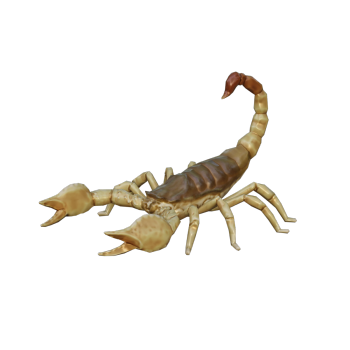
scorpion

scorpion

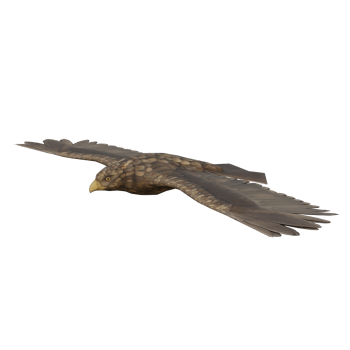
Golden Eagle

Golden Eagle

crocodile

crocodile

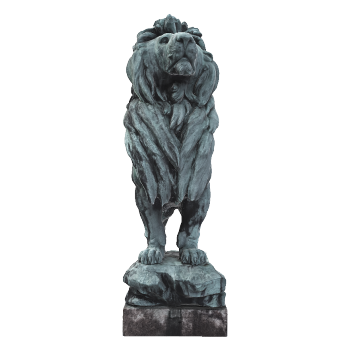
The Stone Carving Lion at Bao'an Temple in Dalongdong, Taipei

The Stone Carving Lion at Bao'an Temple in Dalongdong, Taipei

Bao'an Temple, commonly known as Dalongdong Dadao Gong Temple, is located on Hami Street in Datong District, Taipei City (at the junction of the Danshui River and Keelung River). It mainly worships the Taoist Baosheng Emperor and is the local center of faith in Dalongdong. It is also one of the important temples in northern Taiwan. As the founder of the temple was from Tong'an, Fujian, the name Bao'an has the meaning of "blessing Tong'an" for more than 200 years; The temple covers a vast area of 3000 square meters and is a rare sight to see.
Dog skull

Dog skull

Dogs are carnivorous mammals in the family Canidae, also known as dogs, and are referred to as the "six livestock" along with horses, cows, sheep, pigs, and chickens. The size and fur color of dogs vary depending on their breed, and their physique is well proportioned; The nose and snout are relatively long; The eyes are oval in shape; Two ears, either vertical or vertical; Limbs agile, with 5 toes in the forelimbs and 4 toes in the hindlimbs, with claws that cannot stretch or retract; The tail is circular or sickle shaped. According to Li Shizhen's "Compendium of Materia Medica", "Dog" means to knock. Dogs bark rhythmically, like knocking on objects, and some people say it is called a dog because of its roughness.
Warring States bronze cross gold hoofed horse (3D printable)

Warring States bronze cross gold hoofed horse (3D printable)

Bronze horse, Warring States period, 29cm high. The horse's head is intricately and vividly shaped, with its body undulating to showcase its fat and robust physique, and a knot tied around the ponytail. This horse should be a burial artifact. In ancient times, death was regarded as life. In the tombs of Shang and Zhou nobles, there are often imperial officials and physical objects of chariots and horses unearthed. At this time, the animal images found in the tombs often appeared in the form of handicrafts, either as containers or as vessel seats; In the Warring States period, various types of Ming ware such as metal, pottery, and wood appeared. Although their shapes appeared antique, they marked the emergence of a new funeral system and laid the foundation for the growth and development of pottery shaped Ming ware in later generations.
3D Scanning Models of Iron Sculpture Elephants and Elephants

3D Scanning Models of Iron Sculpture Elephants and Elephants

The peso sculpture camel for the 285th anniversary celebration of Chelyabinsk city

The peso sculpture camel for the 285th anniversary celebration of Chelyabinsk city

Clone sheep Dolly

Clone sheep Dolly

Dolly was the world's first successfully cloned sheep. This research not only has significant implications for embryology, developmental genetics, and medicine, but also has enormous economic potential. Dolly was born on July 5, 1996 and passed away on February 14, 2003. Duoli made its first public appearance in 1997, shaking the whole world. The American magazine Science named the birth of Duoli as the first of the top ten technological advances in the world that year. Dolly's specimen is currently housed in the National Museum of Scotland.
Golden lion statues from the 11th and 12th centuries

Golden lion statues from the 11th and 12th centuries

This rare and mysterious lion golden sculpture is a symbol of power and authority, carefully decorated with circular filaments and fine grains, consistent with the Islamic goldsmith tradition of later Muslim kingdoms in the Iberian Peninsula (now Spain and Portugal). Islam was introduced to Europe in 711 AD, bringing new traditions to decorative arts. Although the handle, spout, and open mouth of this lion statue conform to the form of a sea lizard, its small size may imply more symbolism than functionality. The artwork that is closest in size, style, and craftsmanship to this lion is a winged ram discovered in northwest Spain.
Lion sculpture in Kitt Lake (Burgenland) Castle Park

Lion sculpture in Kitt Lake (Burgenland) Castle Park

The lion sculpture in the Castle Park of Lake Kitt (Burgenland) is a scenic spot located near Lake Kitt in Austria. This sculpture is a pair of lifelike lions, exquisitely crafted and lifelike. They are placed at the entrance of the castle park, showcasing the power and majesty of male lions to visitors. It is a part of the region's long-standing architectural heritage, symbolizing power and protection. They carry the traditions and stories of the past, providing visitors with an immersive cultural experience. Not only does it showcase the power and majesty of the male lion, but it also provides a beautiful park environment for visitors to relax and fully appreciate the beauty of nature.
Minneapolis Institute of the Arts Clay Ceramic Tianma

Minneapolis Institute of the Arts Clay Ceramic Tianma

In the Eastern Han Dynasty from the 1st to the 3rd century AD, Chinese ceramic art reached a high level, and one representative work is the ceramic heavenly horse. It is an exquisite ceramic artifact that vividly depicts a galloping horse. It is usually made of fine clay and crafted through meticulous sculpture and painting techniques. The shape of Tianma is lifelike, sculpted according to the actual form and movement of the horse, expressing elegance, freedom, and a sense of power. Its smooth lines, graceful posture, and lifelike details showcase the ceramic artist's superb skills and observation of horses.
Polar Bear Sculpture Outdoor Garden Courtyard Lawn Animal Sculpture

Polar Bear Sculpture Outdoor Garden Courtyard Lawn Animal Sculpture

Bronze sculpture of lion in 'King at Rest'

Bronze sculpture of lion in 'King at Rest'

The Resting King is a public artwork by American artist Lorenzo Gillette (1931-2020). It is located near the northwest entrance of the Indiana Convention Center in downtown Indianapolis, Indiana, and is owned by the Indiana Convention Center and Lucas Oil Stadium. This real lion bronze sculpture was purchased by the center in 2001
Nepal's ancient stone carving eagle

Nepal's ancient stone carving eagle

This sculpture was built by King Maratha in the Kathmandu Valley, however, this Garuda is the largest one in Kathmandu, built in the 17th century near the Maju Deval Narayan temple, and was constructed as part of the palace's surroundings to beautify it.
Ancient Egyptian jackal and wolf statue

Ancient Egyptian jackal and wolf statue

This statue represents the god Anubis or Wepwawet, the guardian of jackals and wolves in the cemetery. The statue is made of solid copper alloy casting, with details of the fur cut. This statue may have originally been decorated on top of the shrine.
Eagle ornaments, flying eagle, big Peng spreading its wings, eagle ornaments, grand exhibition, and wooden carving of the great picture

Eagle ornaments, flying eagle, big Peng spreading its wings, eagle ornaments, grand exhibition, and wooden carving of the great picture

Pure copper lion ornament, all copper sculpture, brass stone lion

Pure copper lion ornament, all copper sculpture, brass stone lion

Marble stone lion in front of the town house

Marble stone lion in front of the town house

Bronze pterosaur from the Warring States period

Bronze pterosaur from the Warring States period

The vivid sculpture is reflected in its bronze posture, arrogant head posture, and apparent agility of the body. The strong comma shaped tails and their lively clusters, as well as the double rope pattern on the beard, are typical elements of art during the Warring States period. This statue is one of a pair, measuring 17.78 x 20.8 centimeters. This artifact is currently housed in the Minneapolis Museum of Art.
Chinese style bronze lion statue for warding off evil spirits in front of a house

Chinese style bronze lion statue for warding off evil spirits in front of a house

Front of the house, guarding against evil spirits, stone lion carving - male lion

Front of the house, guarding against evil spirits, stone lion carving - male lion

Front of the house, guarding against evil spirits, stone lion carving - female lion

Front of the house, guarding against evil spirits, stone lion carving - female lion

Exquisite carving of tiger head sculpture on redwood

Exquisite carving of tiger head sculpture on redwood

Chinese Taipei Dalongdong Stone Carving "Bao'an Palace Mother Stone Lion"

Chinese Taipei Dalongdong Stone Carving "Bao'an Palace Mother Stone Lion"

Since ancient times, China has been skilled in using bamboo strips to enrich and express depth and vitality through the interaction of "facial" bamboo strips. In traditional Chinese Han stone carving, this characteristic is most vividly reflected in the mid Qing Dynasty. Taking the stone lion with the inscription "Respected to Emperor Du Youzhang of the Qing Dynasty in the 14th year of the Jiaqing reign" as an example, its cheeks, nose wings, arms, shoulders, and limb trunks can all be seen with "tassels" dividing them, creating a turning point in the moving surface. The ribbon at the foot is also cut at the contour tassel, forming a bright and vigorous face, and conveying the layered and thick body feeling of the ribbon flipping. This pair of stone lions were punished for violating regulations by carving the female lion into an opening due to the craftsman's carelessness, resulting in no salary.
Painted Porcelain Water Buffalo by Jacobs Adrien Halder

Painted Porcelain Water Buffalo by Jacobs Adrien Halder

Bronze Pegasus Collected by Minneapolis Institute of the Arts

Bronze Pegasus Collected by Minneapolis Institute of the Arts

When the envoy sent to Central Asia returned to the court, he was amazed by this unique "heavenly horse". This robust animal has a strong back and shoulders, and works very hard, sweating profusely. Emperor Wu of China (141-87 BC) was fascinated by these stories and sent diplomats and later an army to obtain these horses. His interest in these extraordinary horses, as well as the increasingly important role of horses in military operations, largely indicates the popularity of horses in art since the Han Dynasty, especially during the rule of the Wu Kingdom. Bronze horses like this are placed in exquisitely decorated noble tombs.
Stone lion

Stone lion

Common anti evil items in traditional Chinese culture. A sculpture of a lion made of stone as raw material, which has artistic and ornamental value. There is usually a pair of stone lions or bronze lions outside the gate, which are usually used to match with buildings for exorcism or decoration. The earliest surviving stone lion is the one in front of Gao Yi's tomb during the Eastern Han Dynasty.
Bronze ware from the Six Dynasties period, 'Six Dynasties Bronze Chicken shaped Incense Burner'

Bronze ware from the Six Dynasties period, 'Six Dynasties Bronze Chicken shaped Incense Burner'

This cultural relic is a bronze vessel called "Censer, bird shaped", which was created during the Six Dynasties period in China (220-589 AD). This incense burner is currently housed in the British Museum. The shape of this incense burner is a rooster with a chick. It is made of bronze and the size of this incense burner is 6 inches in height.
Marble lion statue

Marble lion statue

Since the Han Dynasty (206 BC to 220 AD), lion statues have traditionally stood in front of Chinese imperial palaces, royal tombs, government offices, temples, as well as the residences of government officials and wealthy people, and are considered to have a strong mythological protective effect. They are also used in other art fields, such as door knockers and pottery. Paired lion statues are still a common decorative and symbolic element at the entrances of buildings such as banks, government agencies, and police stations.
Bronze artifact from the Qin Dynasty, 'Qin Yangling Tiger Talisman'

Bronze artifact from the Qin Dynasty, 'Qin Yangling Tiger Talisman'

The Qin Yangling Tiger Talisman, a bronze artifact of the Qin Dynasty, was a military talisman issued by Emperor Qin Shi Huang to the guards of Yangling. It is said to have been unearthed in Lincheng, Zaozhuang City, Shandong Province and is now housed in the National Museum of China. The Qin Yangling Tiger Talisman is 8.9 centimeters long, 2.1 centimeters wide, and 3.4 centimeters high, in the shape of a lying tiger, which can be divided into two parts. The left and right neck backs of the tiger each have the same 12 character engraved gold seal script: "The talisman of the armored soldiers is on the right side of the emperor and on the left side of Yangling." Due to its age, the mating area has rusted to death and cannot be separated.
Bronze ware from the Shang Dynasty, titled 'Fuhao Haozun'

Bronze ware from the Shang Dynasty, titled 'Fuhao Haozun'

This cultural relic is a bronze vessel called "Fuhao Haozun", which is one of the two owl shaped statues from the Shang Dynasty. This owl shaped statue was discovered in 1976 at the Fuhao Tomb in Anyang City, Henan Province, China. The owl shaped statue is divided into two parts: the detachable owl head and the hollow body of the bird. Animal shaped vessels are almost the only known bronze sculptures from the Shang Dynasty. This owl is one of the oldest and most naturalistic surviving owl shaped statues. Its form showcases the influence of Anyang, the capital of the Shang Dynasty, in the north, but the style and casting techniques of the vessels indicate that it is related to the bronze tradition of the Yangtze River region in southern and central China. The cultural relics are currently collected in the National Museum of China.
Qing Dynasty handmade sculpture of peacock stone horse

Qing Dynasty handmade sculpture of peacock stone horse

This cultural relic is a Chinese horse carved from peacock stone, dating back to the 19th century, and is currently housed in the British Museum.
Terra Cotta Warriors and Horses in the the Mausoleum of the First Qin Emperor in Xi'an - Terracotta Horses

Terra Cotta Warriors and Horses in the the Mausoleum of the First Qin Emperor in Xi'an - Terracotta Horses

The Mausoleum of the First Qin Emperor Terra Cotta Warriors is the tomb of Ying Zheng, the first feudal emperor in Chinese history (259-210 BC), located at the north foot of Lishan Mountain, 3.5 kilometers east of Lintong District, Xi'an, Shaanxi Province. The horse figurine is the same size as a real horse, with straight ears and wide open eyes, and full of energy. According to the archaeological survey, the Terra Cotta Warriors were arranged into an array, simulating the military establishment and fighting patterns during the period when Qin Shihuang unified the six countries. This array of Terra Cotta Warriors includes thousands of terracotta warriors, cavalry, generals and horses.
Ceramic rooster, produced in ancient Chinese Tongguan kiln

Ceramic rooster, produced in ancient Chinese Tongguan kiln

Tongguan Kiln is one of the five famous kilns in ancient China, located in Tongguan Street, Wangcheng District, Changsha, Hunan Province. Due to its unique porcelain painting skills, it opened up a new era in the history of ceramics and became an important pivot on the "Maritime Ceramic Road" of the Tang Dynasty. During its peak, its products were exported to 29 countries and regions. This ceramic is currently collected at the Changsha Tongguan Kiln Ceramic Research Institute.