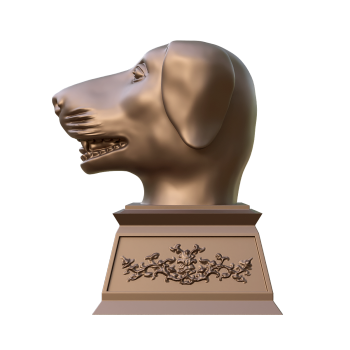
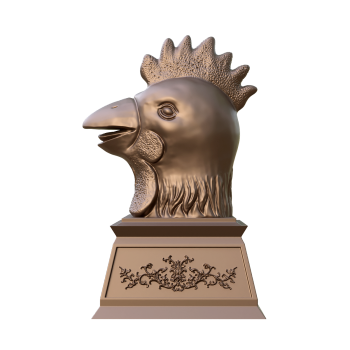
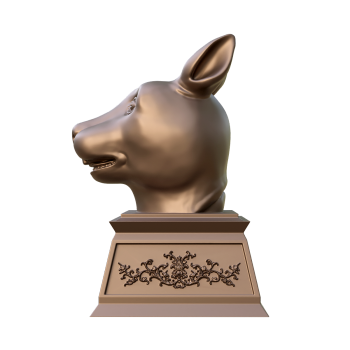
Chinese Zodiac - Dragon Statue

Chinese Zodiac - Dragon Statue

It is a symbol of great mystery and high status in Chinese culture, representing power, nobility, and good luck. In the Twelve Earthly Branches, the dragon corresponds to "Chen" and is therefore also known as "Chenlong". In traditional Chinese culture, it is a symbol of auspiciousness and also a symbol of emperors, representing supreme status and authority. In the legends of the twelve zodiac animals, the dragon is known for its extraordinary power and magical ability to change, and is regarded as a divine beast that can summon wind and rain and control the weather. Legend has it that in the process of selecting zodiac animals, dragons, with their extraordinary abilities and divinity, have won people's respect and worship, thus occupying a prestigious position in the zodiac.
Twelve Zodiac Animals - Rabbit Statue

Twelve Zodiac Animals - Rabbit Statue

Symbolizing gentleness, caution, and wit. In traditional Chinese zodiac culture, the twelve earthly branches corresponding to the rabbit are "mao", hence also known as "mao tu". With its gentle nature and agile movements, it is regarded as a symbol of harmony and beauty. In the legend of the twelve zodiac animals, rabbits have won people's love for their wit and kindness. Legend has it that in the competition for selecting zodiac animals, the rabbit, with its wit and agility, successfully overcame obstacles and obtained a position in the zodiac. In Chinese culture, it is often associated with the moon because there is a story in ancient Chinese mythology about the jade rabbit pounding medicine, which is considered an auspicious and beautiful year.
Chinese Zodiac - Tiger Statue

Chinese Zodiac - Tiger Statue

Representing courage, strength, and majesty, it is one of the highly symbolic animals in Chinese culture. In the Twelve Earthly Branches, the tiger corresponds to "Yin" and is therefore also known as "Yin Hu". In Chinese culture, bravery and nobility are often associated as symbols of power and honor. In the legends of the twelve zodiac animals, the tiger appears in the image of bravery and courage, and is regarded as the king of the mountains and forests. According to legend, in the process of selecting zodiac animals, tigers have won people's respect and worship with their fearless spirit and powerful strength, thus occupying an important position in the zodiac. In Chinese culture, it is not only a symbol of strength, but also a symbol of protection and security.
Chinese Zodiac - Ox Statue

Chinese Zodiac - Ox Statue

It is an important symbol in Chinese culture, representing the qualities of diligence, resilience, and stability. In the Twelve Earthly Branches, the cow corresponds to "Chou", and is therefore also known as "Chou Niu". Plays a crucial role in agricultural society and is a symbol of cultivation and productivity. In the legends of the twelve zodiac animals, cows are known for their diligence and endurance, and are loyal companions of farmers. According to legend, in the selection competition for zodiac animals, cows have gained people's respect for their hard work and thus occupy a place in the zodiac. In Chinese culture, it symbolizes diligence and loyalty, representing strength and endurance. Considered an auspicious year, it heralds a bountiful harvest and prosperity
Chinese Zodiac - Rat Statue

Chinese Zodiac - Rat Statue

It is an important component of traditional Chinese culture and represents one of the twelve zodiac animals. In the ancient Chinese calendar system of heavenly stems and earthly branches, each zodiac sign corresponds to a earthly branch, and the earthly branch corresponding to the rat is "zi", hence also known as "zi shu". In the legends of the twelve zodiac animals, the rat is known for its wit and agility. According to legend, when the Jade Emperor selected the zodiac animals, the rat, with its intelligence and wit, was the first to arrive at the Heavenly Palace and became the head of the zodiac. It embodies the agility and agility traits of mice. It is considered a symbol of wisdom and wealth because mice are good at accumulating food, symbolizing abundance and harvest. But sometimes it is also often associated with negative images.
A monkey standing and walking

A monkey standing and walking

Clay horse (3D printable)

Clay horse (3D printable)

Horse Head Marble Carving

Horse Head Marble Carving

A sculpture of a tomb monument or shrine discovered in Taranto, Italy, now located at the British Museum in London, was made around 350-300 BC.
Clay Statue: A Dog Biting a Bone

Clay Statue: A Dog Biting a Bone

Terra Cotta Warriors

Terra Cotta Warriors

The Terra Cotta Warriors, namely the Terra Cotta Warriors in the the Mausoleum of the First Qin Emperor, also referred to as the Terra Cotta Warriors or the Terracotta Warriors, are the first batch of national key cultural relics protection units and the first batch of Chinese world heritage sites. They are located in the Terra Cotta Warriors pit 1.5 kilometers east of the the Mausoleum of the First Qin Emperor in Lintong District, Xi'an, Shaanxi Province. More than 200 foreign heads of state and government have visited and toured, becoming a golden business card of China's ancient glorious civilization and also known as one of the world's top ten rare ancient tombs.
Japanese pit viper skeleton

Japanese pit viper skeleton

The Japanese pit viper (Gloydius blomhofii) is a venomous snake species belonging to the subfamily Viperinae of the family Viperidae, found in Japan. Unique species of Japan. In Japan, it is commonly referred to as "pit viper".
Former Royal Infantry Regiment Monument

Former Royal Infantry Regiment Monument

On a war memorial in Sopron, there is a lion statue standing on a pedestal with a coat of arms. This monument was built to commemorate the 8625 fallen soldiers of the former Royal Infantry Regiment. Sopron is a city in western Hungary, located near the Austrian border, and was historically a military strategic location. This monument is not only a commemoration of the soldiers who lost their lives in war, but also a witness to historical events and a reflection on peace.
The male lion gazing out

The male lion gazing out

The statue is located on the Schmel Bridge, spanning the Danube Canal. The construction period of the bridge was from 1894 to 1899. Bridge designer Otto Wagner. Rudolf Weyr designed two lions on the bridge. The Schmel Bridge also serves as a dam, as part of the Nussdorf dam and lock system, regulating the flow of Danube water into the Danube Canal. Schmel Bridge is an important landmark in Vienna, renowned not only for its architectural aesthetics and functionality.
Lion Carving "

Lion Carving "

This lion carving is a lion statue collected by the Austrian Museum of Folk Life. The lion statue opened its mouth, with a young lion tightly grasping its mane. The source is Val Gardena, located in South Tyrol. This lion statue, as part of its collection, not only showcases the woodcarving techniques of the South Tyrol region, but also reflects the value and significance of folk art in contemporary culture.
The eagle shaped statue in the central cemetery of Vienna

The eagle shaped statue in the central cemetery of Vienna

The eagle shaped statue of the Vienna Central Cemetery is located in the central cemetery of Vienna. The eagle shaped stone carving sits on a stone and is a decorative sculpture in the cemetery.
Bull shaped pottery - Goetz von Howald Collection of the Americas

Bull shaped pottery - Goetz von Howald Collection of the Americas

It is an exquisite artwork made of clay and adorned with colorful paintings. From Pucara, an ancient civilization site located in South America, renowned for its unique pottery. This pottery belongs to Goetz von Howald's collection of America, and the Pucara culture is known for its exquisite pottery skills and vivid representation of animal images. This ox shaped pottery is a representative work among them. Not only does it showcase the superb skills of ancient craftsmen, but it also reflects the worship and cultural value of animals in society at that time. As a collectible, it has significant historical and artistic value for studying the pottery techniques and cultural traditions of ancient American civilizations.
Tongguan Kiln Ceramic Research Institute Ceramic Panda

Tongguan Kiln Ceramic Research Institute Ceramic Panda

It is a ceramic artwork carefully crafted by the Tongguan Kiln Ceramic Research Institute. Tongguan Kiln, as one of the famous ceramic kiln series in China, has a long history and profound cultural heritage. The research institute relies on the traditional craftsmanship and innovative technology of Tongguan kiln to create ceramic works that are both traditional and modern. As a national treasure of China, pandas have a charming and lovable image, and are one of the important symbols of Chinese culture. Crafted with exquisite craftsmanship, every detail is meticulously crafted by the artist, showcasing the superb craftsmanship of Tongguan kiln ceramic art.
The right half of the damaged lion statue

The right half of the damaged lion statue

The Broken Lion Statue is a collection located in the City Museum in Lisbon, Portugal, and is housed in the Pal á cio Pimenta Palace within the museum. Pimenta Palace is an 18th century estate that is now part of the Lisbon City Museum. The long-term exhibitions of this museum reveal the development of Lisbon from prehistoric times to the late 20th century. The collection of this museum includes works of various art forms such as archaeology, painting, drawing, sculpture, and stone carving, depicting the city of Lisbon from prehistoric times to the present day.
Left half of the damaged lion statue

Left half of the damaged lion statue

The Broken Lion Statue is a collection located in the City Museum in Lisbon, Portugal, and is housed in the Pal á cio Pimenta Palace within the museum. Pimenta Palace is an 18th century estate that is now part of the Lisbon City Museum. The long-term exhibitions of this museum reveal the development of Lisbon from prehistoric times to the late 20th century. The collection of this museum includes works of various art forms such as archaeology, painting, drawing, sculpture, and stone carving, depicting the city of Lisbon from prehistoric times to the present day.
The Seal

The Seal

Foca is a commemorative sculpture located at Aqu á rio Vasco da Gama Aquarium in Arges, Lisbon, Portugal. This aquarium is one of the oldest aquariums in the world, built in 1898 to commemorate the 400th anniversary of Vasco da Gama's discovery of the sea route to India. The construction of this aquarium began in December 1897 and ended in July 1898, led by two French master architects, Charles Viald and Fernand Tusette, who were then residing in Lisbon.
The owl statue at the National Library of Greece

The owl statue at the National Library of Greece

The National Library of Greece (Greek: Εθ νικήΒιβ λιοθ ήκη) was established in the first half of the 19th century and is located near the center of Athens. It was designed by Danish architect Theofel Hansen and is one of his neoclassical architectural trilogy (the other two being the Academy of Athens and the University of Athens). The National Library of Greece houses 4500 Greek manuscripts, making it one of the places with the most preserved Greek manuscripts. The museum also houses many documents and archives related to the Greek Revolution.
Curly Mouse

Curly Mouse

The Curly Mouse is an artwork from the second half of the 19th century, currently housed in the Minneapolis Museum of Art in the United States. This artwork is a redwood sculpture shaped like a curled mouse. This piece is the work of Japanese woodcarver Masao Suzuki (1815-1890), known for his intricate details and vivid expressiveness.
New Ireland Malagan Totem Bird

New Ireland Malagan Totem Bird

The Malagan totem from late 19th century New Ireland is decorated with various pigments, including lime, in the form of carved wood. Adopting a wooden board form, the bird is facing forward. Malagan is a collective term in Northern New Ireland, primarily used for ceremonies commemorating the deceased, as well as for masks and carvings associated with them. This Malagan totem is now housed in the Metropolitan Museum of Art.
New Ireland Malagan Totem Rhinoceros Bird

New Ireland Malagan Totem Rhinoceros Bird

The Malagan totem from late 19th century New Ireland is decorated with various pigments, including lime, in the form of carved wood. The eyes are made of tiger snail shells and are carved wooden hornbill heads colored with various pigments. Malagan is a collective term in Northern New Ireland, primarily used for ceremonies commemorating the deceased, as well as for masks and carvings associated with them. This Malagan totem is now housed in the Metropolitan Museum of Art.
Bronze Lion Incense Burner in Qing Dynasty Temples

Bronze Lion Incense Burner in Qing Dynasty Temples

The "Bronze Lion Incense Burner in Qing Dynasty Temple" is a pair of 17th century Chinese cultural relics, currently collected at the Minneapolis Museum of Art in the United States. This lion shaped incense burner is a guard lion, and each of these auspicious beasts (Lin) has a unicorn. They are mythical animals endowed with the ability to distinguish between good and evil. These legendary animals appear in pairs and are used to stand on both sides of the imperial throne in the Forbidden City, representing the dignity, virtues, and wisdom of the royal family.
Guishan City Tian Shou Xiao Wa

Guishan City Tian Shou Xiao Wa

The Kameyama Castle Tensho Showa is a tiger tile placed on the roof of the Kameyama Castle Tensho in Tanba from the late Edo period to the early Meiji period in 1852. The author and era can be seen from the belly of the beast head tile. It is said that the dragon gave birth to nine sons, and one of them was called Chi Kiss, also called the tail of the owl and the mouth of the owl, which moistened his throat and was thick and easy to swallow, so he became a swallow roof figures at both ends of the temple ridge and took it to fight the fire. After being introduced to Japan, it was called "chuo", which is roughly a whale like sea beast that seems fierce and capable of eating people.
Juniper Foal Dog Right

Juniper Foal Dog Right

The pair of foals are artifacts from the Kamakura period (1185-1333) in Japan. They are made of Japanese cypress wood with lacquer, gold leaf and color. The height of this foal is 45.7cm. Colts are usually placed at the entrance to the shrine to ward off evil. The colt on the right has an open mouth, while the colt on the left has a closed mouth. These characteristics are related to the opening and closing of the two door gods who protect Buddhist temples. Collected at the Cleveland Museum of Art.
Juniper Foal Dog Left

Juniper Foal Dog Left

The pair of foals are artifacts from the Kamakura period (1185-1333) in Japan. They are made of Japanese cypress wood with lacquer, gold leaf and color. The height of this foal is 42.5cm. Colts are usually placed at the entrance to the shrine to ward off evil. The colt on the right has an open mouth, while the colt on the left has a closed mouth. These characteristics are related to the opening and closing of the two door gods who protect Buddhist temples. Collected at the Cleveland Museum of Art.
Chinese style bronze lion sculpture

Chinese style bronze lion sculpture

Ashoka Lion Head Pillar

Ashoka Lion Head Pillar

It is an important symbol of the Peacock Dynasty in ancient India, built by King Ashoka in the 3rd century BC. The top of this pillar is decorated with four lions sitting back-to-back, symbolizing strength, courage, and dominance. These lions are placed on a huge cylindrical pedestal with carved wheels, which is an important symbol of Buddhism representing the teachings of the Buddha. Not only is it an outstanding representative of peacock dynasty art, but it is also one of the national symbols of India. This reflects King Ashoka's support and promotion of Buddhism, as well as his pursuit of peace and justice. The replica of this pillar is now used as the national emblem of India.
Charles Francois Jacques' work "Crocodile and Snake Fight - Belgium"

Charles Francois Jacques' work "Crocodile and Snake Fight - Belgium"

It is a famous artwork, also known as the 'Belgian Struggle', created by Belgian artist Charles Fran ç ois Jean Baptiste Rave in 1848 as a sculpture. It depicts a fierce battle between a huge crocodile and a snake in the water. Their bodies intertwine to form a dynamic and dramatic picture. The crocodile opened its huge mouth, trying to bite the snake, while the snake tangled around the crocodile, trying to survive. It is also a part of Belgian cultural heritage.
giraffe

giraffe

wild boar

wild boar

cattle

cattle

Brown bear

Brown bear