Monument to the French World War I Veretz

Monument to the French World War I Veretz

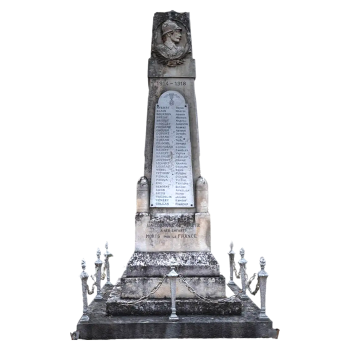
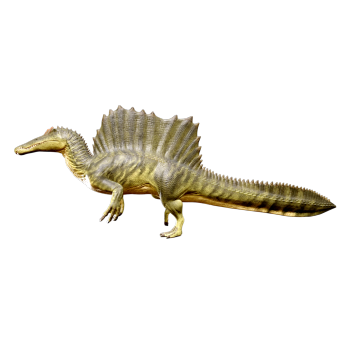
A monument erected on October 30, 1921, to commemorate the French soldiers who died in the World War. The monument is made of limestone and is an obelisk on a pedestal decorated with military medals and other typical monumental symbols. The monument is called the Veretz Memorial to the Dead ".
Late Mughal Empire Mughal Art Mughal Wind Flower Decorative Relief
Late Mughal Empire Mughal Art Mughal Wind Flower Decorative Relief

This relief is an outstanding representative of the late Mughal art, unique style, no longer the pursuit of symmetry in the early design. The work depicts the irises in banana leaves swaying in the wind, and the design is full of imagination. The pattern of banana leaves grows from three layers of spiny thistle leaf ornaments (acanthus leaves), and the composition is vivid and dynamic. The relief is made of mottled red sandstone, typical of the Mathura, Sikri and Chunar regions of northern India. Another part of the artwork (the associated panel) is now in the Louvre in Paris.
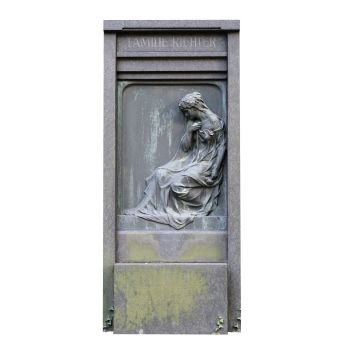
Richter Family Tombstone

Richter Family Tombstone

Triple Pagoda of Faji Temple in Japan

Triple Pagoda of Faji Temple in Japan

The signboard of Faji Temple is the Triple Pagoda, which is the oldest triple pagoda in Japan, built during the Asuka period in 706 AD. At that time, China was in the Tang Dynasty, and Wu Zetian had just passed away the previous year. Emperor Zhongzong of Tang, Li Xian, succeeded to the throne. The Asuka Era in Japan began in 592 AD, when the first female emperor in Japanese history, Emperor Tsuchigu, ascended to the throne. In this year, the Chinese Mainland was in the 593 year of Emperor Wen of the Sui Dynasty's "Kaihuang Zhizhi", when the ancient emperor appointed the prince of the stables, the son of tomorrow's emperor, as the crown prince and regent. This was the famous "Prince Noble" in Japanese history and Japanese Buddhist history.
Martres Tolosane City Establishment Monument

Martres Tolosane City Establishment Monument

Martres Tolosane is a municipality in the Upper Garonne department of the Occitanie region in France. This medieval village has a characteristic that its shape is circular, known as the 'circle'. The most famous historical buildings in the village are the 13th century castle and cathedral. The historical and cultural heritage of the village includes a 13th century castle and cathedral. In addition, there are some other historical buildings, such as the Roman villa Chiragan, which is one of the most important villas in Europe, and the discovered statues can be seen at the Saint Raymond Museum in Toulouse.
Residential ruins from the Yayoi period in Japan

Residential ruins from the Yayoi period in Japan

Pit Dwelling is an ancient form of residence where people dig a one meter deep hole underground and cover it with a roof, forming a dwelling called Pit Dwelling. This type of residence was used throughout Japan before the Yayoi period during the Wa period. Due to their semi underground structure, they are less affected by external temperatures, making them a very comfortable place to live: cool in summer and warm in winter.
Mycenaean Archaeological Site

Mycenaean Archaeological Site

Mycenae was the main center of Greek civilization, a military fortress that ruled over most of southern Greece, Crete, the Cyclades Islands, and southwestern Anatolia. The Greek history from 1600 BC to 1100 BC is called Mycenaean, named after Mycenae.
Munich Copper City Model

Munich Copper City Model

Dundee Port Relief Map

Dundee Port Relief Map

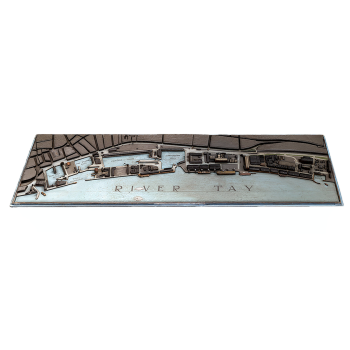
This relief depicts the layout of Dundee Port after World War II, including some iconic buildings in the city's history such as the Royal Arch and Earl Grey Dock.
Dresden New Town Market Map Relief

Dresden New Town Market Map Relief

This is a relief resembling a map, made of concrete, showcasing the expansion of Dresden city. This relief is located at the exit of a pedestrian tunnel in Neust ä dter Markt, Dresden, Germany, showcasing the city's layout around 1700. This relief was made around 1979.
Traditional Carving of Chinese City Walls (Part 2)

Traditional Carving of Chinese City Walls (Part 2)

Traditional Carving of Chinese City Walls (Part 1)

Traditional Carving of Chinese City Walls (Part 1)

Hangzhou Great Wall Relief

Hangzhou Great Wall Relief

Great Wall relief is an art form that uses copper as the material and condenses the magnificent scenery and historical culture of the Great Wall into exquisite relief works through forging, carving, and other techniques. In Hangzhou, such works of art not only showcase the historical and cultural value of the Great Wall, but also reflect the outstanding achievements of ancient Chinese military wisdom and architectural technology. These relief works embody the wisdom and courage of the Chinese nation, becoming a symbol of national spirit and a treasure of ancient Chinese civilization. As a form of artistic expression, it allows people to appreciate art while gaining a deeper understanding and appreciation of the history and culture of the Great Wall.
Exquisite Stone Carvings on Temple Walls in Taiwan (Part 2)

Exquisite Stone Carvings on Temple Walls in Taiwan (Part 2)

The stone carving art on the walls of Taiwanese temples is a traditional craft with a long history, integrating religious beliefs, cultural arts, and local characteristics. Carving usually uses locally unique stones from Taiwan, such as marble from Hualien and black stone from Taichung, which are carefully selected and processed. The content is rich and colorful, including Buddhist stories, myths and legends, historical figures, classic poems, and various auspicious patterns. The carving craftsmanship is exquisite, and the craftsmen use traditional manual skills. Each stone carving embodies the wisdom and sweat of the craftsmen, demonstrating their persistent pursuit of art and respect for traditional culture.
Exquisite stone carvings on temple walls in Taiwan

Exquisite stone carvings on temple walls in Taiwan

The stone carving art on the walls of Taiwanese temples is a traditional craft with a long history, integrating religious beliefs, cultural arts, and local characteristics. Carving usually uses locally unique stones from Taiwan, such as marble from Hualien and black stone from Taichung, which are carefully selected and processed. The content is rich and colorful, including Buddhist stories, myths and legends, historical figures, classic poems, and various auspicious patterns. The carving craftsmanship is exquisite, and the craftsmen use traditional manual skills. Each stone carving embodies the wisdom and sweat of the craftsmen, demonstrating their persistent pursuit of art and respect for traditional culture.
Cloisonn é enamel three legged incense burner

Cloisonn é enamel three legged incense burner

Cloisonn é enamel is a traditional metal craft originating from China, which combines metal craftsmanship and enamel painting technology. This technique was introduced to China around the Yuan Dynasty and further developed during the Ming Dynasty. The production process involves using copper wire to create various patterns on the copper body, then filling the compartments enclosed by these copper wires with enamel paint. After multiple firing and polishing processes, the final product is colorful and exquisitely patterned. The three legged incense burner is a common form of incense burner in ancient China, characterized by three supporting legs. The production of cloisonn é enamel three legged incense burners reached a peak during the Qianlong period of the Qing Dynasty.
Minton Fountain

Minton Fountain

It is a famous "Henry II" style pottery piece collected by the Victoria and Albert Museum. Produced by Charles Toft in Stoke on Trent in 1877, it is the largest pottery of this style produced by the Minton factory and a symbol of technological challenges and the revival of traditional craftsmanship in the 19th century. It was reassembled in 2005, and its component parts were obtained from multiple sources. Handmade from beige clay, the surface is decorated with complex patterns, including colorful embedded patterns and painted designs. The design inspiration comes from ceramics in the style of Saint Paul's or "Henry II" in 16th century France.
Father Gonzalo de Sousa's Tomb

Father Gonzalo de Sousa's Tomb

An important historical site located in Brazil, commemorating Portuguese missionary and explorer Gonzalo de Sousa. He had a significant impact on Brazil's early colonial and missionary activities and was one of the key figures in Portugal's spread of Catholicism in South America. As a commemorative building, it not only marks his personal life and achievements, but also reflects Portugal's religious and cultural influence in Brazilian history. The design and architectural style of tombs may have integrated the artistic characteristics of that time, becoming tangible materials for studying the architecture and sculpture art of that era.
German Goslar Hunter Memorial

German Goslar Hunter Memorial

A commemorative building located in Goslar, Germany, close to the defense works of the old city. To commemorate the members of the Goslar Hunter Corps who sacrificed their lives in two world wars, while also reminding the living of the importance of history and peace. It is not only a tribute to the lost lives, but also a warning to the living, prompting people to reflect on the painful consequences of war. It is an important cultural and historical landmark in the city, where commemorative events are held every year to honor the brave warriors who sacrificed their lives for the country and educate the new generation about the cost of war and the value of peace.
Joanna Baillie Memorial in South Lanarkshire, Scotland

Joanna Baillie Memorial in South Lanarkshire, Scotland

A monument located southeast of Bothwell Parish Church in South Lanarkshire, Scotland. It was established in memory of Scottish poet and playwright Joanna Baillie (1762-1851). She was an innovative writer during the Romantic period, with works including poetry, drama, historical and religious writing, as well as autobiography and other forms. This monument was built around 1899 and features an Italian style design with a square plan and arcade, built on a polished granite pedestal. It is not only a tribute to an outstanding female writer, but also a celebration of the local cultural history.
The Seahorse and Eagle Statue in Baltimore, USA
The Seahorse and Eagle Statue in Baltimore, USA

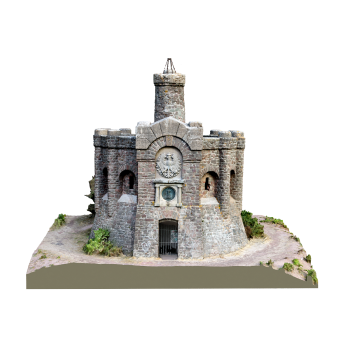
The sculpture located in Baltimore, Maryland, USA, was designed by Edmond Romulus Amateis and built in 1927. This artwork is not only appreciated for its exquisite design and historical value, but also symbolizes strength and elegance. Seahorses represent the mystery and diversity of the ocean, while eagles symbolize strength and freedom. The combination of two animals creates a unique visual effect in art, showcasing the harmonious coexistence between different organisms in nature. This sculpture is not only a representation of animal forms, but also a profound reflection on the relationship between humans and nature.
Prussian Tower Monument

Prussian Tower Monument

The Avilsbach wine region, located near Trier, Germany, is a tower shaped structure situated in a prominent position above the vineyards, built in 1910. The charm of the surrounding scenery is not only an observation deck, but also a monument commemorating Prussia's contribution to promoting the Moselle Valley wine industry and its then field director. Not only is it a popular destination for wine enthusiasts and tourists, but it is also a symbol of local natural beauty and cultural heritage. Tourists can enjoy the magnificent scenery of vineyards and surrounding countryside here, and experience the rich history and cultural atmosphere of the region.
Small shrines in Japan

Small shrines in Japan

Valentin Cameron Princip's Mausoleum Stone Coffin

Valentin Cameron Princip's Mausoleum Stone Coffin

The sarcophagus of Valentine Cameron Prinsep's tomb is a historic and significant memorial building dedicated to this famous British artist. He was an outstanding artist of the Victorian era in 19th century England, known for his paintings and illustrations. The work covers various themes, including history, literature, and portraits. His artistic style is unique, expressive, and appreciated by many artists at the time. His tomb sarcophagus is a part of British cultural heritage, bearing witness to his significant position and influence in the art world.
Tu Di Temple

Tu Di Temple

Tudi Temple is a traditional Chinese temple dedicated to the God of Land, also known as Tudi Gong Temple or Tudi Ye Temple. It is an important place for believing in land gods and ancestors, widely present in cities, villages, and farmland across China. Originating from the worship and gratitude towards the land god. Land is regarded as the protector of agriculture, and people believe that the land god can bless the harvest of crops, the peace of families, and the prosperity of communities. It has also become a gathering place for many farmers and residents, where people come to worship the land god on specific festivals and important occasions. Usually built in the central area of villages or cities, the architectural style varies depending on the region and cultural background
Kopan Maya Site Altar

Kopan Maya Site Altar

The ancient city of Copan is an important site of the Maya civilization, located in western Honduras. There is an altar in the ruins called AltarCopan. Built in the 6th century AD, it is one of the important cultural relics of the ancient city of Copan. The shape is a rectangular platform with exquisitely carved reliefs on top. The reliefs depict scenes from Maya mythology and history, including deities, rulers, and other characters from Maya mythology. These reliefs are presented with intricate carvings and details, reflecting the artistic style and religious beliefs of Maya culture. The exquisite reliefs depict scenes of Maya mythology and history, which are of great significance for studying Maya civilization and its religious beliefs.
Altar created by Gian Battista Piranesi

Altar created by Gian Battista Piranesi

An altar created by Italian architect and artist Gian Battista Piranesi, located in the Santa Maria del Priorato church in Rome. He was a renowned architect, artist, and printmaker of the 18th century, known for his research on ancient Roman architecture and culture. The altar he created at the Church of Santa Maria del Priorato is one of his masterpieces. This is a Baroque style altar, adorned with magnificent decorations and intricate carvings.
Ancient Maya Civilization Stone Tablet

Ancient Maya Civilization Stone Tablet

A stone monument located in Copan, Honduras, is one of the relics of the ancient Maya civilization. Copan is an ancient Mayan city ruins located in the Copan Valley in western Honduras. An important stone monument was discovered in this site. It is a huge pillar, usually carved from a single boulder, often used to commemorate important events or rulers. Carving symbolic patterns, pictograms, and decorations of ancient Maya civilization, showcasing the artistic and religious features of Maya culture. It may have been built to commemorate a ruler or important event. The Kopan Site is an important archaeological site.
Lancaster Cross Stele

Lancaster Cross Stele

The Lancaster Cross is an ancient stone cross stele, with one of its arms missing. The cross tablet is inscribed with the following rune: 'Pray for Cyniballth and Cuthbert'. The height of this cross shaped monument is 920 millimeters, the width is 400 millimeters, and the depth is 145 millimeters. Discovered near Lancaster, it was taken to St. Wilfried's Church in Halton to protect it. This cross shaped stele can be traced back to the 10th century and is an Anglo Norse cross shaped stele column, with the top part missing. It is currently housed in the British Museum.
Photogrammetry of Stone Conch Sculptures in Urban Fountain Components

Photogrammetry of Stone Conch Sculptures in Urban Fountain Components

British 8th century architecture Bath Cathedral Street building wooden windows
British 8th century architecture Bath Cathedral Street building wooden windows

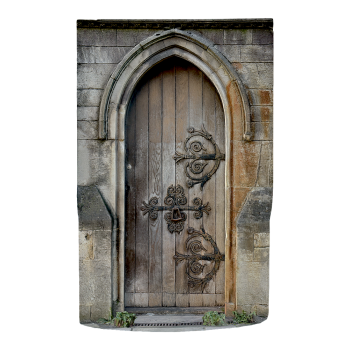
Each piece is handmade and made of British oak, with two unique custom designs on each end of the bench. These designs reflect some influence on Sir Gilbert Scott, including some taken from the interior of the monastery, based on its stone carvings, monuments, and stained glass windows.
British 8th century architecture Bath Cathedral Street building wooden doors

British 8th century architecture Bath Cathedral Street building wooden doors

The Holy Trinity Church is one of the many examples of the powerful church heritage in Bath. The Bath Holy Trinity Church is located in the heart of Church Street, near Queen's Square to the west of the city center, and can be seen as part of a short walking tour of the city's best churches. The Holy Trinity Church was founded in 822 and has been the cornerstone of the local community for nearly two centuries. Unfortunately, the church was forced to close in March 2011 as it was unable to sustain the operating costs of such a large building.
Atlas stone carving

Atlas stone carving

Atlas is located in front of the new castle on Lake Kitt. There are eight powerful Atlas supporting the balcony like porch, which was built by the Earl Joseph Batty á ny at the beginning of the 20th century. Atlas is a kind of prop that replaces a pillar with a muscular male image. Its name comes from Atlas, the sky lifter in Greek mythology.
The carved stone pillar of Notre Dame Cathedral in Paris depicts the marble statue of Jesus

The carved stone pillar of Notre Dame Cathedral in Paris depicts the marble statue of Jesus

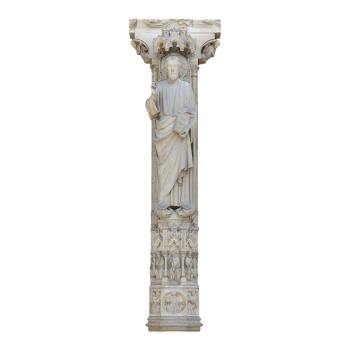
The Saint Etienne Gate of Notre Dame Cathedral in Paris is located south of the Seine River. The door depicts the life of the first Christian martyr, Jesus, through colorful paintings. It uses a butt joint arc to support the top of the cathedral walls, enhancing stability and solving the problem of no runoff rainwater discharge.
The Pyramid of Chichen Itza, a Maya architecture from the classical period

The Pyramid of Chichen Itza, a Maya architecture from the classical period

Chichen Itza, from Yucatan Maya: Chi'ch 'è en ǐ itsha' ("Itza Well") is a large pre Columbian city built by the Maya during the classical period. The archaeological site is located in Tinum, Yucatan, Mexico. Chichen Itza was the main focus of the North Maya lowlands, from the late classical period (around 600-900 AD) to the terminal classical period (around 800-900 AD) and the early post classical period (around 900-1200 AD).