
Velociraptor skull fossil

Velociraptor skull fossil

Velociraptor, also known as Velociraptor, is a dinosaur belonging to the family Velociraptor in the order Saurischia, also known as Velociraptor. Covered in feathers all over the body; Not big in size, similar in size to a turkey. China and Mongolia lived in Asia during the late Cretaceous period. Enjoy living in groups. Carnivorous animals mainly hunt small dinosaurs, dinosaur eggs, dinosaur juveniles, and small mammals. Due to their agile actions, they are known as the 'fast robbers'. It is the first discovered theropod dinosaur in Asia. In 1971, the fossil specimen "Dinosaur in a Battle" was discovered by a Polish exploration team, and as a result, this fossil specimen is considered a national treasure by Mongolia.
Green tree python skull

Green tree python skull

The green tree python is a chordate animal belonging to the family Anaconda in the order Perciformes. Green tree python, with a robust body and distinct head and neck; The scales on the head are small and granular, and the heat sensitive sockets are mainly located in front of the scales on the snout, upper lip, and lower lip; The body color changes significantly, with juveniles appearing yellow and orange red; The back and sides of the adult body are bright green, while the ventral surface is mainly yellow; The juvenile has white spots with black ring patterns on the edges of its body, and fine lines passing through the eye sockets. The habitat range of the green tree python ranges from vast plains to high mountains at an altitude of 2000 meters, so it can withstand temperatures below 10 degrees Celsius. It is a beautiful ornamental snake. Has a petite physique and a vibrant appearance.
Wolverine skull

Wolverine skull

Wolves are mammals of the family Wolveridae in the order Mustelales. More than 1 meter in length; Shoulder height is about 60 centimeters; Wide mouth fissure with canine teeth; The parenting bag opens backwards; Tail length, gradually becoming thinner, straight without bending; The whole body is covered with short hair, dense and thick. The most important difference from wolves is that they belong to the marsupial group, where females have a very shallow, backward opening pouch on their abdomen with two pairs of nipples inside. Due to its tiger like markings, it is also known as the Tasmanian tiger. It was once widely distributed on the Australian continent, inhabiting open forests, grasslands, and gravel. They mostly live in gravel during the day and go out to hunt at night, often hunting alone or as a family.
Skull fossil of swollen dragon

Skull fossil of swollen dragon

The swollen headed dragon is a member of the thick headed dragon family in the order Ornithischia of the class Sauropods. The swollen headed dragon, also known as the thick headed dragon, has a thick bone plate on its head, which can reach a thickness of over 20 centimeters, and is raised high like a tumor. The body length is 4-6 meters and the weight is 0.5-4 tons. The area around the head and nose tip are also covered with small bone tumors, and some have large and sharp spines behind the head. Living in the late Cretaceous period, mainly distributed in North America, inhabiting plains, deserts, and other environments. Sexually inclined to live in groups, males fight in the form of "heads", with the winner being the leader of the entire group and occupying the female dinosaur. A herbivorous dinosaur that feeds on fruits, leaves, and other food.
Spinosaurus skull fossil

Spinosaurus skull fossil

Spinosaurus is a large theropod dinosaur with a body length comparable to that of Tyrannosaurus Rex and Southern Megalosaurus. There is currently only one valid species in the genus Spinosaurus, namely the Egyptian Spinosaurus, named by German paleontologist Stromer in 1915. Due to its unique appearance and massive size, Spinosaurus has received no less attention than Tyrannosaurus rex. Unfortunately, the holotype specimen of Spinosaurus was destroyed during World War II. For a long time, paleontologists' understanding of Spinosaurus has only been limited to photos of holotype specimens and a few fossil fragments. With the gradual increase of fossil evidence in recent years, the true image of Spinosaurus has emerged. It is a type of dinosaur with good water properties.
Sea Lion Skull

Sea Lion Skull

Sea lions are a collective term for carnivorous mammals in the sea lion family; There are a total of 5 genera and 14 species. Round head, fin shaped limbs as flexible as wings, and hind limbs that can turn backwards. Most sea lions have thick short fur on their bodies, with a thin layer of fluff underneath. However, the fur color of various sea lions is not consistent, mainly yellow brown and brown. Has a distinct tail, but is relatively short. Some species have long hair on their necks, similar to the mane of a lion, hence the name sea lion. He is known as the 'Lion King of the Sea'. Can dive to a depth of over 300 meters. At the same time, sea lions are also very intelligent sea beasts.
Puffin skull

Puffin skull

There are three species in the genus Parrotfish, with a body length of approximately 30 centimeters. They are Arctic puffins, horned puffins, and tufted puffins. There is a large mouth, triangular in shape, with a deep groove. The feathers on its back are black, its belly is white, its feet are orange red, and its face is brightly colored. It is beautiful and cute like a parrot, so people call it a puffin. It usually inhabits the ocean and only returns to the island or land near the shore during the breeding season. When landing, it is roughly upright and resembles a penguin, which is the result of convergent evolution. Skilled in swimming and diving, generally able to dive more than 10 meters underwater. They feed on fish, crustaceans, and other marine invertebrates. Likes to live in groups
Fossil skull of parrot billed dinosaur

Fossil skull of parrot billed dinosaur

Parrotbeak Dragon, also known as Parrotbeak Dragon, meaning "parrot lizard" in Greek, is a genus of Parrotbeak Dragon family in the suborder Ceratopsia. It lived in Asia during the Early Cretaceous period, approximately 123.2 to 110 million years ago. Parrotbeak dinosaur, as well as Protoceratops, Triceratops, and other dinosaurs, all had a parrot like hooked beak. Scientists infer from its body shape and age that Parrotbeak dinosaur may be the ancestor of most ceratopsian dinosaurs. It is a small herbivorous dinosaur named after its parrot like beak. They are very early ceratopsian dinosaurs that independently developed many features.
Polar bear skull

Polar bear skull

The polar bear is a species of bear in the family Ursidae, and is the world's largest terrestrial carnivore, also known as the white bear. The body is large and robust, with a shoulder height of up to 1.6 meters. Adult males weigh between 300-800 kilograms and can grow up to 2.5 meters in length. Females are relatively small, weighing 150-300 kilograms and measuring 1.8-2 meters in length. Similar to brown bears, but without shoulder humps. Living in waters covered by ice in the Arctic Circle. The depth of winter caves can reach the permafrost layer. The preferred habitat is the floating ice in the Arctic Ocean. The fractured and refrozen ice edges and pressure ridges provide the best hunting grounds. Usually acting alone.
Horse skull

Horse skull

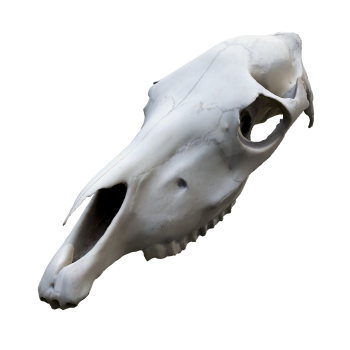
Horses are herbivorous animals belonging to the genus Malcoma in the order Quetziformes, and currently exist as two subspecies: domesticated horses and wild horses. Wild horses have upright and non drooping mane on their necks, extremely short forehead hair, long tail hair, and no distance hair on their limbs. In summer, the upper body is light brown, red brown, and reddish brown, while in winter, the back of the skin is light brown; Family horses are divided into heavy, small, and miniature horses according to their breeds; Jiama has long limbs, solid bones, well-developed tendons and ligaments, hard hooves, diverse fur colors, mostly chestnut, green, and black, well-developed sweat glands, and strong chewing power. With a developed system, it has a keen sense of hearing and smell, strong sensitivity to light, and can also see surrounding objects at night.
Fossil skull of woolly mammoth

Fossil skull of woolly mammoth

The woolly mammoth, also known as the true mammoth, is a species of animal belonging to the mammoth family in the order Longsnout of mammals. It is covered in long hair and has a tall body. It existed during the Ice Age and is the most famous extinct elephant. Its body size is similar to that of the Asian elephant, but its hind legs are short and its entire body tilts backwards. As early as one or two thousand years ago, they were distributed in the northern parts of Eurasia and North America. The body shape is similar to that of modern African elephants, but it has long hair all over its body, a high head and forehead, curled and coiled incisors, and a large and dense number of molars. It is a herbivorous animal. It is an animal that was distributed around the world during the Stone Age and is now extinct.
Lynx skull

Lynx skull

Lynx is a carnivorous mammal belonging to the feline family and the lynx genus. Weighing 18-32 kilograms, with a body length of 90-130 centimeters and a tail length of only 11-24 centimeters. The limbs are long and agile, the ear base is wide, the tips of the ears have black raised clusters of hair, the tail is short and blunt, and the cheeks have long and drooping sideburns. Cold loving animals, with extremely diverse habitats, live in forest and shrub areas, and are more common in dense forests and mountain rocks. Likes to live alone, skilled in climbing and swimming, strong hunger tolerance, can lie down in one place for a few days, not afraid of severe cold, feeds on rodents, wild rabbits, and also preys on small wild boars and deer. Widely distributed in Europe and northern Asia. It is the national beast of Romania.
Macaw skull

Macaw skull

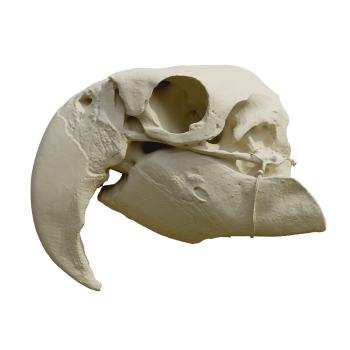
Macaws are birds of the parrot family in the order Parrotiformes. The beak is sickle shaped and very sharp; Each foot has 4 toes, 2 front and 2 back; The face has no feathers, and the exposed skin is light yellow or pink, with some even having stripes. The body color is brilliant. Named after its strong beak. The lifespan is 60-80 years. Distributed in rainforest wetland areas of Central and South America. I enjoy group activities, mostly foraging in the morning and evening, and resting in the forest during the hot noon. Excitedly, they often make a loud "quack quack" sound. Eating fruits such as palm, it can easily peck open nuts. It is one of the most beautiful and largest parrots in terms of color, as well as possessing the ability to withstand a hundred poisons.
Seal skull

Seal skull

Seals are a collective term for the family of seals in the order Cypriniformes. The body is obese and round, with a spindle shaped body and limbs that have become fin shaped; Head nearly circular; Big and round eyes; No external ear canal; Kiss short and wide; The upper lip tendrils are long, thick, and hard, resembling beads. Female seals can live up to 30 years, while male seals have a lifespan of less than 20 years. Almost all over the world, mainly distributed in the Arctic Ocean, Atlantic Ocean, and Pacific Ocean. Distributed in coastal areas of China. Has a habit of living in groups and will lie on rocks or beaches by the sea to rest. The food range is very wide, including various fish and crustaceans, as well as penguins.
Vulture skull

Vulture skull

Vulture is a large raptor belonging to the family Aquilidae in the order Aquiformes. The head and neck of adult birds are partially exposed, with brown down feathers from the forehead to the occipital region; There are sparse black hair like down feathers around the head, eyes, and ears, and exposed eyebrows and neck; Blue gray skin with needle like clusters of feathers at the base of the neck; The body feathers are dark brown, and the flying feathers are black brown; Iris dark brown, beak strong; The young bird resembles an adult but has a darker body color and a more exposed head. Because its head is covered in feathers and there is a partially bare bald area behind its neck, it is called a vulture. In Xizang, China, there is a kind of funeral called "celestial burial", which means that human bodies are placed in the wild and eaten by vultures, which is closely related to the local culture.
Half skull immediately

Half skull immediately

Horses are herbivorous animals belonging to the genus Malcoma in the order Quetziformes, and currently exist as two subspecies: domesticated horses and wild horses. Wild horses have upright and non drooping mane on their necks, extremely short forehead hair, long tail hair, and no distance hair on their limbs. In summer, the upper body is light brown, red brown, and reddish brown, while in winter, the back of the skin is light brown; Family horses are divided into heavy, small, and miniature horses according to their breeds; Jiama has long limbs, solid bones, well-developed tendons and ligaments, hard hooves, diverse fur colors, mostly chestnut, green, and black, well-developed sweat glands, and strong chewing power. With a developed system, it has a keen sense of hearing and smell, strong sensitivity to light, and can also see surrounding objects at night.
Gorilla skull

Gorilla skull

Gorilla is a general term for primates, hominids, and the genus Gorilla. There are two species: the East African gorilla and the West African gorilla. It is the largest among all extant primates, with a shoulder height of about 0.85 meters when quadruped and a height of 1.6-1.8 meters when standing. An upright gorilla can reach a height of 1.75 meters, but its actual length is even longer than this height because its knees cannot be fully extended. Vegetative, herbivorous, mainly feeds on fruits, leaves, and branches. The nearest relatives are two other primitive human genera, chimpanzees and humans, both of whom diverged from a common ancestor about 7 million years ago
Edmonton Dragon Head Bone Fossil

Edmonton Dragon Head Bone Fossil

Edmontosaurus, also known as Edmontosaurus or Edmontosaurus, is named after the fossil discovery site in Edmonton, Alberta, Canada. Edmontosaurus is a huge dinosaur. They have a triangular shape on the side of their head, without a crest. The front and back of their head are wider, while the middle is narrower. Their mouth and nose resemble a duck's beak. Like other hadrosaurs, Edmontosaurus had a flat and wide front end of its head, a duck like snout, a lack of a crest, and a long and narrow tail. The forelimbs are shorter than the hind limbs, but the forelimbs are still of sufficient length and suitable for walking.
Coyote skull

Coyote skull

The coyote is a mammalian species belonging to the family Hyena in the order Carnivorous. The body length is about 80 centimeters, with high shoulders and low hips; The midline of the back from head to hips has long mane; The tail length is 30 centimeters, the tail hair is long and fluffy, and there is a sac like gland under the tail root. The whole body is brown, with brown stripes on all sides and limbs. Distributed along the west coast and southern regions of Africa. Living in wastelands and grasslands. Weak personality, never attacking people. Only active at night, preferring to live alone or form small groups, occupying the same territory, with individuals spaced about 100 meters apart. When threatening enemies, keep your mouth closed and don't show your teeth. Raise your fur to increase your body size.
Upper half skull of coyote

Upper half skull of coyote

The coyote is a mammalian species belonging to the family Hyena in the order Carnivorous. The body length is about 80 centimeters, with high shoulders and low hips; The midline of the back from head to hips has long mane; The tail length is 30 centimeters, the tail hair is long and fluffy, and there is a sac like gland under the tail root. The whole body is brown, with brown stripes on all sides and limbs. Distributed along the west coast and southern regions of Africa. Living in wastelands and grasslands. Weak personality, never attacking people. Only active at night, preferring to live alone or form small groups, occupying the same territory, with individuals spaced about 100 meters apart. When threatening enemies, keep your mouth closed and don't show your teeth. Raise your fur to increase your body size.
Chimpanzee skull

Chimpanzee skull

Chimpanzees are primates in the family Homo, belonging to the genus Chimpanzees. The body is bloated, with long arms, short legs, and no tail. The surface of the body is mostly covered with black long hair, but the face, ears, fingers, and toes are exposed and hairless, mainly distributed in central and western Africa. They inhabit tropical rainforests and moist savannas, living in clusters of more than 2-20 individuals per group, led by one adult male. They have a large appetite and enjoy eating fruits, leaves, roots, flowers, seeds, and bark, while some individuals often eat smaller animals. It is rare to live beyond 40 years old in the wild, but in captivity, one can live to over 60 years old.
Cat skull

Cat skull

Cats are chordates of the Carnivorous Order, Felidae genus. Cats are small in size, with a body length of 0.3-0.5 meters. Not fond of living in groups, with a sense of territory, will launch attacks once invaded, and has extremely high climbing skills. As carnivorous animals, they make a living in the wild by preying on small animals such as mice, birds, and fish. They enjoy eating meat and fish, and have a preference for certain foods. As a family pet, it can alleviate people's psychological pressure and meet their emotional needs. Can catch mice. Cat culture emerged at the beginning of human domestication of domestic cats, which were revered as "sacred beasts" and had dual identities as sun and moon gods in early Egyptian art.
Shark toothed dinosaur skull fossil

Shark toothed dinosaur skull fossil

The genus Sharktooth currently includes two species, namely Sahara Sharktooth and Igidi Sharktooth. Shark toothed dinosaurs lived in North Africa during the late Cretaceous Cenomanian period. Shark toothed dragon has a very close genetic relationship with other members of the Allosaurus class, such as Kuizhoulong, Mapulong, and Southern Megalosaurus. The body size of the Shark toothed Dragon is extremely large, similar to that of the Tyrannosaurus Rex, and may even be larger. Shark toothed dinosaurs lived in an era of rampant giant beasts, including 15 meter long spiny dragons, 9-meter long wrinkled dragons, and over 30 meter long sauropod tidal dragons. There were also 12 meter long emperor crocodiles lurking in the water. Shark toothed dinosaurs are likely to have fed on giant sauropods of their time.
Cougar skull

Cougar skull

The cougar is a carnivorous mammal of the feline family, also known as the mountain lion, Mexican lion, silver tiger, or Florida leopard. It is most widely distributed on the American continent, from the Yukon River basin in Canada to the southernmost tip of South America. The habitat environment is diverse. The action is mysterious, often hiding in dark places, and never walking along roads or riverbeds when going out to avoid being discovered by brown bears, black bears, or wolf packs. The types of food vary in distribution. Because he often attacked Native Americans, he was called the 'Indian devil' by them. The Florida mountain lion is a special species of mountain lion that currently only lives in the swamps of Florida, USA.
Eurasian wild boar skull

Eurasian wild boar skull

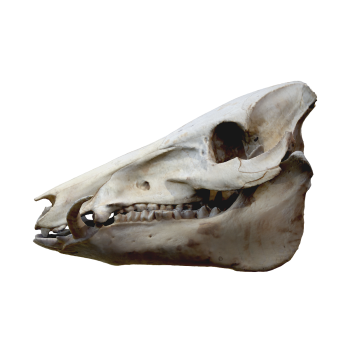
The Eurasian wild boar is a medium-sized mammal belonging to the family Pig in the order Artiodactyla of the mammalian class. There are a total of 20 subspecies, weighing 90-200 kilograms; The body length is 1.5-2 meters, the tail length is 21-38 centimeters, and the ear length is 24-26 centimeters; Shoulder height is about 90 centimeters. The sizes produced in different regions also vary. Extremely adaptable to the environment. Their habitats span across temperate and tropical regions, ranging from semi-arid climates to tropical rainforests, temperate forests, semi deserts, and grasslands. But they tend to prefer deciduous broad-leaved forests, where vegetation is very dense. Eating all kinds of food with omnivorous properties. Most cluster activities involve 6-20 individuals per ethnic group
Black caiman skull

Black caiman skull

Black caiman crocodile, also known as black crocodile, is a reptile belonging to the family Alligatoridae in the order Crocodiles. The black caiman is the largest caiman in terms of body size, with a body length of up to four to five meters. Its head is long and wide, and there is a raised spine along its back. Its color gradually darkens as it grows. Due to the protruding spine in the middle of the eyes of the black caiman, which resembles a eyeglass frame, it is named the spectacled crocodile. Mainly distributed in northern South America, inhabiting various wetlands.. Black caimans have a wide diet, mainly consisting of fish, snakes, dolphins, iguanas, and large mammals. They sometimes hunt other crocodiles, but rarely attack humans.
Black bear skull

Black bear skull

Black bears are carnivores and members of the bear family. There are a total of 7 subspecies. Female body length is 110-150 centimeters, male body length is 120-189 centimeters; Tail length less than 12 centimeters; Shoulder height is 70-100 centimeters. Females weigh 40-140 kilograms, while males weigh 60-200 kilograms. Residing in mountain forests, usually active at night, sleeping in tree holes or caves during the day, good at climbing trees and swimming; Can walk upright. Poor vision, sensitive smell and hearing; Their diet is diverse, feeding on plants, fruits, and seeds, and sometimes also insects, bird eggs, and small mammals. Has a habit of hibernating, hibernating in the cave throughout the winter, unable to eat or move, and half asleep
Bat skull

Bat skull

Bats, a collective term for mammals in the order Pterodactyla, are mammals with the ability to fly. The forelimbs of bats are extremely slender except for the first finger, with thin and hairless wing membranes between the fingers and between the forelimbs and hind limbs, and usually also between the hind limbs; Bats are divided into two categories, big bats and small bats. The name Pterodactyls is derived from the characteristic of their forelimbs or hands degenerating into wings. Beneficial to humans due to the large predation of insects, it plays an important role in agricultural and forestry ecosystems, and the feces in caves are excellent phosphate fertilizers. Some bats are also carriers or hosts of pathogens, which can pose a threat to fruit trees.
Upper skull of baboon

Upper skull of baboon

Baboons are a genus of primates in the family Muridae, commonly known as baboons, with six species. The species has a relatively large body size, second only to the chimpanzee genus in primates, with a body length of 50.8-114.2 centimeters, a tail length of 38.2-71.1 centimeters, and a weight of up to 60 kilograms. Mainly engaged in ground activities, also climbing trees to sleep or forage. Good at swimming. Can make loud noises. Active during the day, inhabiting large tree branches or caves at night. Food includes various small animals and plants. Group living, with tens to hundreds of individuals per group. The main natural enemy is leopards. There is no fixed breeding season, with one litter per litter. The wild lifespan is about 20 years.
Fossil skull of Allosaurus

Fossil skull of Allosaurus

Allosaurus is one of the most famous large carnivorous dinosaurs, occupying the top of the food chain in late Jurassic terrestrial ecosystems. Its model species, the fragile Allosaurus, was created by the great American paleontologist Osnil in the 20th century Marsh described the naming in 1877. They are also the most abundant and widely distributed predators discovered in the Late Jurassic period. Adult Allosaurus can grow up to 9 meters in length, with a few individuals believed to reach up to 12 meters. Although not as robust as the Tyrannosaurus rex, the body proportions of the Allosaurus are more symmetrical, with more developed forelimbs, making it appear more agile. The number of specimens is also much larger than that of Tyrannosaurus rex.
Juvenile crocodile skull

Juvenile crocodile skull

Crocodiles are reptiles of the Crocodylidae and Alligatoridae families, belonging to 8 genera and 23 species. Crocodiles have a longer torso; Muscular development; Flat head, skin tightly attached to the skull, strong skull connection, unable to move; The teeth are cone-shaped and grow in the alveolar cavity, with more than 25 teeth on each side; The tongue is short and flat, unable to extend outward; Small and slightly protruding eyes; The tail is thick and slightly flattened; Short and thick limbs; The external nostril is located on the back of the snout and has a valve on top; There are scales like armor. As one of the oldest species on Earth to date, it retains many features of early dinosaur reptiles and is also known as "living fossils".
Cat's Eye Snail Shell

Cat's Eye Snail Shell

Most species in the family Ranunculidae are spherical or pear shaped. The height and width of the shell are not significantly different. The surface of shells is either smooth or decorated with intricate details, and some also have ribs, spines, grooves, or protrusions. The inner surface of the shell has a pearl luster. Most species of snail are distributed in tropical, subtropical, and temperate oceans, with tropical waters being the most abundant. They have been found from intertidal zones to depths of 3400 meters, and they prefer to inhabit shallow waters near rocks and coral reefs where algae grow. Common types of snails include cat eyed snails, silver mouthed snails, golden mouthed snails, and night glow snails. Snail meat is edible, and shells can be carved into art pieces.
Walrus skull

Walrus skull

Walrus is a carnivorous mammal in the family Walrus, which has only one species and no subspecies. The body is cylindrical, thick and obese. It can crawl on land and sway left and right while swimming. They are mostly distributed in the Arctic Ocean, and sometimes can also be seen in the Atlantic and northern Pacific Ocean. They usually live in areas with a water depth of less than 80 meters and prefer habitats with gravel bottoms. The recipe is very broad. I have a big appetite and can eat up to 50 kilograms of food at once. There are also many survival skills, such as taking turns guarding, changing body color, basking in the sun in winter, and constantly using the nose to scoop wet sand on the body to absorb water and cool down in summer.
Fossil of hard shell sea urchin

Fossil of hard shell sea urchin

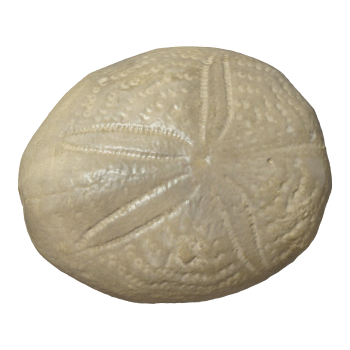
The hard shelled sea urchin, when viewed from the side, has a huge conical shell with a flat base. The petals are short and wide, very conspicuous, and are specifically used for respiration. When alive, the petals also have tubular feet, and the bony plates in the step zone are short and wide. The mouth is located at the center of the lower surface and has 5 distinct protrusions, hence it is star shaped. The anus is located behind the upper surface and originally had many short, slender shell needles on the surface. The cone shape of juvenile specimens is not obvious. It is common on the surface of sandy limestone in the eastern United States.
Heavenly King Red Spiral Shell

Heavenly King Red Spiral Shell

The Heavenly King Red Snail, also known as the Florida MacConck Snail, is a highly predatory sea snail found in subtropical and tropical regions. They are the largest gastropod class in American waters. The shell length of the Tianwang red spiral snail is 60 centimeters. The shell is shuttle shaped and has a long siphon tube with up to 10 spirals. The shell of the juvenile is bright orange and turns gray white to salmon orange as it grows, with a light yellow brown or dark brown stratum corneum. The Tianwang red spiral snail is preyed upon by other large marine predators, including the left-handed fragrant snail, queen phoenix snail, and bone snail genus. They also have same-sex cannibalism. In the aquarium, they also eat small hermit crabs.