Hippopotamus skull

Hippopotamus skull

Hippopotamus is a semi aquatic mammal belonging to the family Hippopotamus in the order Artiodactyla. Hippopotamus is the largest omnivorous mammal in freshwater, with a huge body size and short limbs; Thick and sturdy head; The mouth is large and can be opened at a 90 degree angle. The word hippopotamus means' horse in the river ', which is the Greek term for this powerful beast. They often live in groups, move around at night, soak in water most of the time, and have a gentle temperament. Hippos have a huge appetite, mainly feeding on aquatic plants such as reeds, and sometimes also on land crops such as green grass on the shore. It is a creature that has existed on Earth for a long time. They walked on Earth 55 million years ago.
High cap bell shell

High cap bell shell

Zhongluo family, also known as horseshoe snail family, has shells that are mostly conical or snail shaped, and some are ear shaped. The shell surface is often carved with particles, nodules, or spines. The bottom of the shell is flat and has many concentric ribs. The shell is square circular or horseshoe shaped, with a large and deep navel or no navel. The pearl layer inside the shell is thick, with papules and keratin, and is round and multi-faceted. There are many types, all of which are seafood. They mostly inhabit shallow rocky and sandy seabeds in the intertidal zone. The high capped bell snail, a member of the bell snail family, has granular or mesh shaped carvings on its shell surface. The shell edge does not protrude sharply, and there are grooves growing along the snail axis inside the shell mouth. The shell shape is conical. The inner surface of the shell has a strong pearl luster. The mouth cap is a multi-faceted keratin.
Brown Bear Skull

Brown Bear Skull

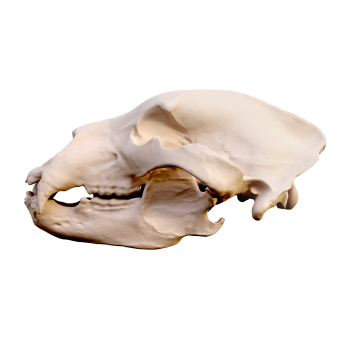
The brown bear is a mammal belonging to the genus Ursa in the family Ursidae. He has a strong physique, with raised shoulders and a short tail behind him. The fur color is mostly brown or brownish yellow; Elderly individuals appear silver gray in color; Childhood is brownish black. The lifespan under wild conditions is 20-30 years. The earliest ancestors of bears were all canids. After evolving into bears, they relied more on fruits for food and were prone to food shortages during winter. To survive, hibernation was undoubtedly the best way. The only mammal that can go six months or even longer without eating, drinking, urinating, or defecating. The energy needed to maintain necessary bodily activity during winter comes from stored fat in the body.
Musk Bull Skull

Musk Bull Skull

Musk ox is a mammal of the genus Musk ox in the family Auchenipteridae of the order Artiodactyla. Musk oxen have a large body size, but are short and sturdy, with a large head, wide snout, and small eyes; Both males and females have horns, short and thick limbs, and wide hooves; Thick fur coat, extremely cold resistant, short tail. Male musk oxen emit a musk like odor during estrus, also known as musk oxen. Large polar animals living in northern Canada, Greenland, and Alaska, USA. Grass and shrub branches, and moss in winter. Relying on collective strength to cope with adverse weather conditions, musk oxen crowded together in groups, with young musk oxen placed in the middle and adult oxen facing away from the wind, keeping each other warm until the storm passed.
Exquisite bone snail shell

Exquisite bone snail shell

The exquisite bone snail is a member of the bone snail family, living on sandy and muddy seabeds tens of meters deep. The snail layer is about 8 layers, with shallow sutures, and is a common type of bottom trawl. Each snail layer has three longitudinal swollen ribs. There is one spike in the middle of each longitudinal rib in the spiral section; There are three main spines on the longitudinal swollen ribs of the snail layer, some of which also have one short spine. There are 5-7 thin and weak swollen ribs between the longitudinal swollen ribs of the snail layer. The spiral ribs on the shell are thin and high. The anterior sulcus is very long, almost in the shape of a closed tube, and its spikes usually do not exceed half of the length of the anterior sulcus. Glacial keratin. Mainly distributed in warm seas, living in sandy and muddy seabeds tens of meters deep, and distributed along the southern coast of Zhejiang, China.
Rhinoceros skull

Rhinoceros skull

Rhinoceros is a large mammal in the family Rhinocerotidae of the order Rhinoceros. Fat and clumsy, with thick and rough skin arranged in folds; The fur is sparse and hard; The ears are oval in shape; Big and long head; Short and thick neck; No canine teeth; The tail is thin and short, and the body is yellow brown, brown, black or gray; Solid single or double horns on the head and nose; Both males and females have double horns, with females having longer horns than males. Rhinos are distributed in Asia, such as India in South Asia; It inhabits sparse grasslands and dense forests in tropical and subtropical regions. They often come out to forage in the early morning, evening, or night, with poor vision and sensitive sense of smell and hearing; Living alone often with little contact between individuals.
Mandala pod specimen

Mandala pod specimen

Mandala, belonging to the Solanaceae family and the genus Mandala, is an annual tropical herbaceous plant with broad hairy leaves and irregular wavy shallow toothed edges; Flowers grow solitary between branches or leaf axils, upright, with short stems; The sepals are cylindrical lobes triangular in shape, with a color of white or light purple; The fruit is capsule shaped and egg shaped, with a light yellow color; Mandala blooms from June to October. The name Mandala comes from the transliteration of the Sanskrit word mandala, so it can also be called "Manchala" or "Mannara". Mandala is toxic throughout the plant and contains scopolamine, which has functions such as antispasmodic, sedative, analgesic, and anesthetic. Mandala extract is used for the treatment of heart failure, ventricular arrhythmia, and angina pectoris.
Skull of Nanluji dolphin

Skull of Nanluji dolphin

The Nanluji dolphin is the only dolphin in the southern hemisphere without a dorsal fin. Distributed around Antarctica. Mainly found in temperate waters, with most records occurring in the northern part of the Antarctic Circle. Often following the Humboldt cold ocean currents to subtropical latitudes, possibly as far as the northern coast of Chile at 19 degrees south latitude. Prey various fish and squid, especially lanternfish, which is the most common. Enjoy group tours, with hundreds or even thousands of people forming groups. Southern ridge dolphins may be mistaken for penguins when they are far away from the sea or traveling rapidly; And when it slowly marches, it will be mistaken for a sea dog or sea lion. The southern humpback dolphin is named after the larger, wingless southern right whale.
Grey eyed snow crab claws

Grey eyed snow crab claws

Gray eyed snow crab is a type of snow crab found in the northern Pacific and northwestern Atlantic. It is very similar to the red eye snow crab and is commonly referred to as "snow crab" when sold. In Canada, it is also known as "queen crab", and in Japan, it is also known as "pine leaf crab" or "North Sea pine leaf crab". The most precious one is the "Echizen crab" produced in Fukui Prefecture, which is a tribute to the Japanese royal family. Its price is much higher than other snow crabs, and only the snow crab produced in Fukui Prefecture can be called Echizen crab. The above name only refers to male crabs in Japan, while female crabs are called "fragrant box crabs" because it is a popular ingredient in Japan and there are many local names in various places.
Wolf skull

Wolf skull

Wolves are carnivorous animals in the family Canidae. There are a total of 11 subspecies. Medium and symmetrical body shape, slender limbs, toe mobility, conducive to fast running. The head and palate are pointed, the face is long, the nose protrudes, the ears are pointed and upright, the sense of smell is sensitive, and the hearing is developed. Canine teeth and split teeth are well-developed. The fur is thick and long. The forefoot has 4-5 toes, while the hind foot usually has 4 toes; Claws are thick and dull, unable to stretch or slightly able to stretch. Hairy tail, more developed. It is a nocturnal animal that is good at running quickly and over long distances. It prefers to live in groups and often curls up alone or in pairs in caves during the day. However, it also comes out for activities during the day in sparsely populated areas. Come out at night to search for food.
Agate conch shell

Agate conch shell

Agate conch is a mollusk of the Gastropoda family. The shell is oval in shape and the snail layer is rolled inward. The shell is narrow and elongated, with fine teeth on the outer and inner lips, and a tongue shaped tongue. The outer membrane is thin, with a two leaf shape, and the living body is almost completely covered by the shell. The spiral part almost disappears when it reaches adulthood, and there is no opening in adulthood. Living in tropical and subtropical warm sea areas, it can be found from intertidal zones to deeper rocks, coral reefs, or sandy seabeds. Mainly feeds on algae or coral animals. Due to its beautiful appearance, it is highly favored by shellfish collectors and has high ornamental and collectible value.
Bulldog skull

Bulldog skull

Bulldogs are carnivorous mammals in the family Canidae, also known as tiger dogs or bulldogs, with a relatively short body size; Short neck and strong shoulders; The skin from the head to the chest is loose and wrinkled; The mouth protrudes forward; Flattened nose; The ear position is elevated; Large, dark colored eyes; Short tail, vertical or spiral shaped; The bones of the limbs are thick and short; Wide spacing between forelimbs, strong and powerful hind limbs; The fur is short and the surface is smooth. Named after its origin as a fighting dog. The lifespan is about 10 years. Originating from the United Kingdom. Disgusting and kind, gentle and coquettish, bold and quick witted, good at learning, easy to train, extremely possessive of food.
Sea otter skull

Sea otter skull

The sea otter is a mammal belonging to the Carnivorous Order, Weasel Family, and Sea Otter genus. Unlike other marine mammals, sea otters do not have a subcutaneous fat layer for warmth. The sea otter is a famous fur beast, and its fur serves to isolate and keep warm. The common name for sea otter fur is sea dragon fur, which is the most valuable type of fur, especially the fur in the center of the back, which is four times denser than mink fur, known as the "king of fur". Sea otters are the smallest marine mammals. The body is cylindrical, with a length of 1.40-1.48 meters and a weight of 32.5-45 kilograms. The flat tail accounts for about a quarter of the body length. The head is short and wide.
Coarse bare ribbed coral

Coarse bare ribbed coral

Coarse bare ribbed coral is a species of animal in the bare ribbed coral genus of the bare ribbed coral family. The coral shell is branched, with short and wide branches that can merge with each other, and the top is a bifurcated fan-shaped structure. The valleys between the ridges on the surface of the non coral cup are discontinuous and shallow. There are flat pillars or protrusions on the pillars at the bottom of the valley. The spacer is slightly protruding, with primary and secondary spacers arranged alternately. The edges of the spacer have teeth, and there are particles on both sides. 6-9 spacers are connected to the shaft column, and they are pink yellow or rouge red in daily life. Distributed domestically in Hainan Island, China.
Brain coral specimen

Brain coral specimen

Brain coral is circular in shape with deep grooves on its surface, resembling a human brain. This type of coral is composed of rows of coral polyps whose tentacles are neatly arranged on both sides of the coral polyps, with their mouths long at the bottom and shaped like grooves. The circular structure of corals helps them withstand the impact of waves. Lingshui Xincun Port, Xinying Linchang, Weizhou Island, Huaguang Reef, Panshi Island, Xian'e Reef, Xinyi Reef. Features: Coral skeletons are pleated and leaf shaped, with edge leaves or groups forming a semi tree like shape, and small leaves of varying sizes twisted into ear shaped protrusions in the center. On the surface of the non coral cup, the septum forms a continuous ridge, with a thick center and thin edges. Crack irregularly at the end of the blade.
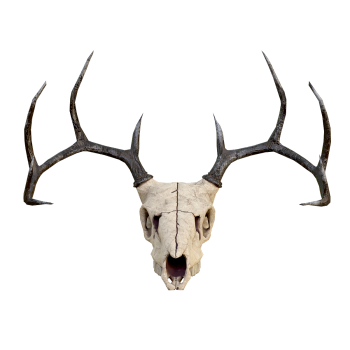
Deer skull

Deer skull

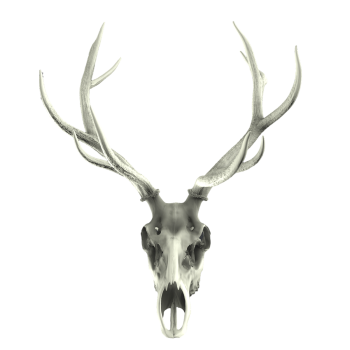
The red deer is a mammal belonging to the deer family and the deer genus. It is a large deer species second only to the moose, with a total of 8 subspecies. It is named after its body shape resembling a galloping horse. Body length is about 180 centimeters, shoulder height is 110-130 centimeters, adult male weighs about 200 kilograms, and female weighs about 150 kilograms. Due to different origins, there are also some differences in the morphology of deer. The body is dark brown with some white spots on the back and sides. Males have horns, usually divided into 6 forks, with a maximum of 8 forks, and the second fork of the furry horn is closely adjacent to the eyebrow fork. Summer fur is relatively short, without fuzz, generally reddish brown in color, with a darker back and a lighter belly, hence it is called "red deer".
Spider snail shell

Spider snail shell

Spider snails belong to the family Molluscaceae in the order Gastropoda. The shell of the spider snail is solid and solid, like a spider. The shell is 155 mm high, 80 mm wide, and there are about 9 layers of spiral shells. The shell surface is densely covered with thin spiral ribs. Above the sutures, the shell surface suddenly expands to form shoulder angles, on which there are undeveloped nodules. Above the spiral shell layer, there are two more developed nodule rows. Below the suture line of the lower spiral shell layer, there is a wide and flat annular protrusion. The shell is yellow white, mixed with brown spots and patterns. It is distributed in Taiwan, Hainan Island and the Xisha Islands in China, and widely distributed in the Indo West Pacific tropical sea area abroad.
Indian bison skull

Indian bison skull

The Indian bison is a mammal belonging to the family Taurus in the order Artiodactyla. Large in size. Both males and females have thick and smooth horns, with a rough and flat base and pointed tips that curve diagonally backwards; Wide ears and nose, high shoulder peaks, and strong and powerful muscles throughout the body; Strong limbs; The body hair is relatively short. Whole body brown, white forehead; The area below the elbows and knees is white. Habitat in tropical and subtropical primitive evergreen broad-leaved forests, mixed coniferous and broad-leaved forests, or sparse tree grass slopes below an altitude of 2000 meters. Group living. During the day, activities are more frequent in the morning and evening, and there are certain areas and routes for activities and foraging. Has a habit of licking salt. Eat herbaceous plants as food, and also consume fresh and tender branches and leaves of some woody plants
Dugong skull

Dugong skull

Dugong is a mammal of the genus Dugong in the family Dugongaceae of the order Manatees. Dugongs are whale like in shape, spindle shaped, and have a plump and round body; No obvious neck, small eyes, no dorsal fin, fin limbs thoracic fin like; The body is composed entirely of thick flesh and skin; Back dark gray; The whole body has sparse and soft short hair. Male incisors are slightly exposed. Dugongs are also known as "mermaids" because they use their forelimbs to embrace their young while breastfeeding, with their head and chest exposed to the water, resembling humans swimming in the water. Group activity, slow movement, gentle temperament, poor vision, sensitive hearing, usually in a drowsy state, sensitive to cold, prone to pneumonia and death. Dugongs feed on juicy aquatic plants such as seaweed and aquatic plants.
Oyster shell

Oyster shell

The oyster, also known as the bear claw clam or the five clawed clam, is a bivalve species of the oyster genus in the family of clams. The shell length of oysters is generally 153 millimeters, with a height of 117 millimeters and a width of 113 millimeters. Some larger oysters can reach a length of 385 millimeters, a height of 250 millimeters, and weigh up to 10 kilograms. The inner surface of the shell is white and glossy, and the outer shell is curved into an arch shape with radioactive patterns on the surface and small red flat spots. Oysters inhabit shallow waters in coral reefs and near reef environments, which are often exposed to strong currents and waves. Oysters feed on particulate matter such as phytoplankton, zooplankton, and other nutrients in the water.
American alligator skull

American alligator skull

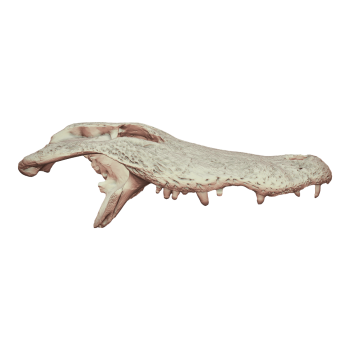
The American alligator, also known as the Mississippi River crocodile or the Mississippi River crocodile, is a large species of crocodile in the Western Hemisphere and the ninth largest member of the crocodile family. Male crocodiles can reach a body length of over 4 meters, while females are less than 3 meters. Juvenile crocodiles are black in color, with irregular yellow horizontal stripes on their bodies. As adults, these yellow stripes will gradually be obscured by melanin and algae. The mouth and nose of American alligators are round and wide, with 17-22 teeth on each side of the upper jaw and the same number of teeth on the lower jaw. There are a total of 18 horizontal rows of keratinized scales on the back of the body, of which 8 rows are larger; There are incomplete fins between the toes. The American alligator is mainly distributed in the southeastern United States and inhabits freshwater wetlands.
Indian fish eating crocodile skull

Indian fish eating crocodile skull

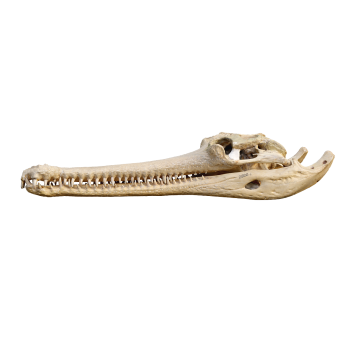
The fish eating crocodile, also known as the Indian crocodile, is a large reptile similar to crocodiles. Indian crocodiles are commonly found along rivers in Pakistan, India, Nepal, and Bangladesh. Male Indian crocodiles can reach a length of 5.5 meters, while female Indian crocodiles can reach a length of 4 meters. During mating season, male crocodiles use the raised part of their nose to make a peculiar sound, attracting female crocodiles to their side. After mating, female crocodiles will lay 30 to 40 crocodile eggs in the bottle shaped hole. The appearance is very similar to that of a regular crocodile. But unlike other crocodiles, the fish eating crocodile is the longest snout crocodile.
Roseshore Coral

Roseshore Coral

The cup-shaped coral genus has a total of 18 species. It is a single or group animal of the Hydra type, with a body that is six fold symmetrical with two radiations. The oral wall invaginates to form an oral passage, and the endoderm of the gastric cavity wall extends centripetal to form a diaphragm. Muscles are well-developed, with cells present in the mesosphere. Reproductive cells originate from the endoderm and can form bones. Seafood, group, with bones, can be used to build reefs, and the presence of mouth channels makes its body exhibit two radiating symmetries. Having a diaphragm, the diaphragm can support increasing the digestive area. Diaphragm filaments have stinging cells, and both the inner and outer germ layers have stinging cells. Genital glands originate from the endoderm. The color is usually brown, pink, or yellow. Distributed from the Indian Ocean to the Pacific Ocean.
Raccoon skull

Raccoon skull

Raccoons, carnivorous animals, are a type of mammal with an adult body length of 40-65 centimeters and a tail length of 20-40 centimeters. They weigh 4-10 kilograms and are slightly larger in males than females.. Small in size. There are black eye spots on the face, with a comical appearance and the nickname "Masked Thief". The tactile cells on the paws are quite abundant, and after coming into contact with water, they can rely on their paws to measure the weight, size, material, and temperature of food. They have strong adaptability and can be found in various habitats, making it easy to live near humans. They need to fetch water at any time. They like to live in damp forests. Nocturnal animals are rarely active during the day.
Xizang Sheep Skull

Xizang Sheep Skull

Xizang sheep is an animal belonging to the sheep genus (Argali) of Bovidae, Sheep subfamily and Ovine subfamily. Grassland type Xizang sheep have strong physique. The head is rough and triangular in shape, with a raised nose bridge. Both male and female sheep have horns, with the horns of male sheep being thick and often extending in a spiral shape to both sides, while the horns of female sheep are flat and smaller, twisting and extending outward. Open chest, straight back and waist, well developed bones. Strong limbs and solid hooves. The body of Xizang sheep of Sanjiang type is rectangular. There are two types of ram horns, one is a large curve that bends backwards and forwards, and the other is twisted outwards. Most ewes have horns. The tail is conical, and the average length of a ram's tail is 12 centimeters. Most applications have black or brown patches on the head, neck, and tail.
Fossil skull of a strange hunting dragon
Fossil skull of a strange hunting dragon

Monster Hunter Dragon is a medium to large tyrannosaur species discovered in North America, with its fossils found in Utah, USA, dating back to the Campanian period of the Late Cretaceous. At present, there is only one effective species under this genus, which is the Coelurosaurus rex. The holotype specimen of the strange hunting dragon is a subadult with a body length of about 6 meters, and fully adult individuals may be larger, reaching around 8 meters. Currently, multiple specimens have been classified as the type species of Allosaurus. Recent studies have shown that strange hunting dragons may engage in group activities and exhibit certain social behaviors.
Canadian elk skull

Canadian elk skull

The Canadian red deer is a designated subspecies of the large animal red deer in the ungulates and artiodactyls order. The male deer has large antlers that begin to grow in spring and shed each winter. Their fur varies in color depending on the season and the type of habitat. In winter, the fur color is generally gray or other lighter colors, while in summer, the color is reddish and darker. Residing in forests and forest edges. During estrus, male deer will perform various actions to compete for mating rights, including posing, antler wrestling, and vocalizing. The male deer will continuously make sharp calls to ensure its dominant position and attract the female deer.
Goat skull

Goat skull

Goat is a mammal belonging to the subfamily Goat in the order Artiodactyla, family Auchenipteridae. Also known as Xia sheep or Black sheep. There are over 150 goat breeds in the world, including dairy goats, wool goats, etc; There are over 40 goat breeds in China, including Yimeng Black Goat, Cangshan Black Goat, and others. Goat is one of the earliest domesticated livestock by humans. China has a long history of goat breeding, recorded as early as the Xia and Shang dynasties. As a major agricultural and livestock country, it is the country with the richest goat breed resources in the world. Goats have some natural susceptibility to diseases, making them suitable animal models for studying human related diseases and achieving significant achievements.
African elephant skull

African elephant skull

Africanelephant: a genus of elephants in the family Elephantidae, order Longnose. Adult African male elephants are taller than 3.5 meters and can reach a maximum of 4.1 meters, weighing approximately 2.7 to 6 tons. Females are smaller than males, with a maximum recorded weight of 13.5 tons. African elephants are the largest mammals on land, with males and females exhibiting a binary sex (both sexes differ in body shape or physical characteristics). Both species of elephants in this genus are native to Africa and can live in various natural environments ranging from sea level to an altitude of 5000 meters, including forests, open grasslands, grasslands, thorn bushes, and semi-arid jungles.
Leopard skull

Leopard skull

Leopard is a large carnivorous animal belonging to the mammalian, feline, and leopard genera, with a body length of 100-150 centimeters and a weight of 50-100 kilograms. Similar in shape to a tiger, but noticeably smaller; The body is uniform, the limbs are medium long, and the toes are oriented. Sight, hearing, and smell are all well-developed. Small head and long tail, short and healthy limbs, 5 toes in the front foot and 4 toes in the back foot, gray white claws, able to stretch and retract. The fur is yellow and covered with black circular spots; The spots on the head are small and dense, while the spots on the back are dense and large. The spots are in a circular or elliptical plum blossom pattern, similar to ancient copper coins, hence they are also known as "money leopards".
Pig skull

Pig skull

Pig is a vertebrate, mammal, domestic animal, and also an ancient omnivorous mammal, mainly divided into domestic pigs and wild boars. Currently, people believe that pigs are the abbreviation for animals in the pig family, and pigs have different physical characteristics depending on their breed; Usually characterized by large ears, long head, short limbs, straight nose, fat body, and narrow waist and back. The hair is coarse and hard, and the fur colors are usually white, pink, black, brown, and floral. Domestic pigs are a subspecies of wild boars that have been domesticated by humans. They have shorter tusks than wild boars and are one of the domesticated livestock. Generally speaking, domestic pigs refer to pig breeds that humans raise for food.
Lion skull

Lion skull

Lions are large ferocious beasts of the Carnivorous Order, Felidae family, and Panther genus. Its body is flexible, strong, and has a thick chest; Having a short and hard skull and jaw, making it easy to hunt prey; Lions have many hard, inward curved protrusions on their tongues, which are beneficial for feeding and grooming their fur; Adult male lions weigh more than their female counterparts, are larger in appearance, and have long mane. Mainly distributed in the African savannah and India. It has a large body shape and cooperates in hunting, making it the only social type among felines. Lions have clear division of labor, with the female lion's task being to reproduce offspring and search for food, while the male lion is responsible for protecting the entire lion pack.
Fossil skull of a loving mother dragon

Fossil skull of a loving mother dragon

Maiasaura, due to its habit of living in groups and building nests in groups, dinosaur experts have been able to discover many fossils of adult and juvenile Maiasaura and their eggs from its nests, which has given people an understanding of Maiasaura's living habits, the process of nurturing and growing its children, and other aspects. The face of the loving mother dragon looks like the face of a duck. It doesn't have teeth in its beak, but there are teeth on both sides of its mouth. The Little Mother Dragon is 30 centimeters long. The front legs of the loving mother dragon are shorter than the back legs. They have a long tail. The loving mother dragon walks on four legs and runs on two legs, and they run very fast.
Fossil skull of the ancient crocodile genus

Fossil skull of the ancient crocodile genus

Proterosuchus, an extinct archosaurid reptile, is a genus of the family Proterosidae that lived in early Triassic China and South Africa. The ancient crocodile is one of the famous early archosaurs, resembling modern crocodiles in appearance, and may be the distant ancestor of modern crocodiles. Ancient crocodiles may attack prey near the water by ambush. Their maxillary anterior end is curved downwards, and the palatine bone has teeth, which is a primitive feature that was lost by later archosaurs. In the early Triassic period, ancient crocodiles were one of the largest land reptiles, with a body size similar to modern Komodo dragons.
Fossil skull of fan crowned swan dragon

Fossil skull of fan crowned swan dragon

The Fanguan Swan Dragon is a member of the subfamily Lycosaurinae in the duck billed dinosaur family. Fossils were discovered in the Chagayan Formation near Kundur, Amur Oblast, Russian Far East, dating back to the middle or late Maastrichtian stage of the Late Cretaceous period. Like other hadrosaurids, the fancrown swan dragon is a herbivorous dinosaur that can walk on two or four legs, has a complex skull, can perform chewing like grinding actions, and has hundreds of constantly growing and replacing teeth. The tall, wide, hollow crown decoration of the fancrown swan dragon, which includes a nasal tube inside, may be used as a visual recognition object or auditory speaker.