

East China Yin Di fern specimen

East China Yin Di fern specimen

The East China Dryopteris is a plant of the genus Dryopteris in the family Cyperaceae, with short and upright rhizomes and thicker fleshy roots; The total petiole is short, the leaf blade is slightly pentagonal, gradually pointed, and three lobed; Feathers are opposite or nearly opposite, slanting out, closely attached to each other, with handles, and each pair on top has no handles. The base has the largest pair, slightly forming an equilateral wide triangle; The leaves are made of grass and turn green after drying. The veins are distinct and extend straight to the serrations. The East China Dryopteris is distributed in Anhui, Jiangsu, Jiangxi, Guizhou, Fujian and other places in China. Habitat: grows under forests, beside shrubs, and in damp and shady areas along roadsides.
Warm ground moss specimen

Warm ground moss specimen

Warm ground moss is an important medicinal moss plant with good therapeutic effects on cardiovascular diseases. Plants of the genus Bryum in the family Bryaceae. Short and large in size, bright green, slightly glossy, scattered in patches. The stem is full of vigor, creeping and extending. The lower leaves of the upright stem are small and scale like, covered with tiles and sticking to the stem. The top leaves are clustered in a large flower bud shape, long in an inverted or long tongue shape, sharp and pointed; Leaf edge differentiation, upper part toothed, lower part slightly rolled back; The middle rib is single and extends up to the tip of the leaf; The leaf cells are thin-walled, hexagonal, and the base cells are rectangular. Dioecious plant. Capsule stalk grows at the top of a straight stem, clustered in single or multiple clusters. The sporangia are cylindrical, arranged horizontally or heavily inclined.
Apricot Plum Swallow Specimen

Apricot Plum Swallow Specimen

Apricot plum swallow is a woody plant of the Rosaceae family and the Prunus genus, consisting of deciduous small trees. The tree crown is oval shaped. Dry purple brown, with irregular longitudinal stripes, small and dense pores; Large branches straight up and slanting out, thick, light green brown to brown, with strong growth potential; Short internodes. The flowers are extremely dense, with 1-3 flowers growing on medium, short, and bundled branches, and a few on long branches. In the Beijing area, flowers usually bloom in early to mid April, with a shorter flowering period. Flower diameter 1.6-2.2cm; The flower bud is inverted, with no hole in the center, and is water red in color; Floral form, ranging from shallow bowl shaped to butterfly shaped; The color is extremely pale yellow white on both sides, with a slight sprinkling and a light flesh red hue when first opened; Petals, each with 5 petals, transparent.
Jiangmei specimen

Jiangmei specimen

Jiang Mei (Prunus mume 'Jiang Mei') is a wild plum blossom, also known as wild plum. In ancient times, it was all wild plum and often grew in desolate and cold places by mountain streams and rivers. Later, it was cultivated in transplant gardens. The flowering period of Jiangmei varies from early to late, but there are relatively more early flowering varieties. Some varieties of Jiangmei have smaller petals and longer filaments, which can form a beautiful long haired flower shape. Due to the fact that Jiangmei is derived from the differentiation of fruit plum, many varieties of Jiangmei still retain the habit of fruiting, becoming a plum with both ornamental and edible value.
Jiangnan cinnabar plum specimen

Jiangnan cinnabar plum specimen

Jiangnan cinnabar plum is a woody plant of the Rosaceae family and the Prunus genus. Dense, 1-3 flowers grow on various branches, with short internodes; Flowering period: early to late February, flower diameter: 2.8 (2.5-3.2) cm; Flower bud: oval shaped, round at the top, without a hole in the center, deep rose purple red; Floral form: disc-shaped, flat, with about 4 petals, layered sparse butterfly, or slightly tilted backwards when flowering; The color is light purple on the front and dark purple on the back,; Petals: fragmented petals; Sepals: 5-6,5, slightly to strongly recurve; Pedicle: short; Stamens: shorter than or equal to petals, radiating outwards; Pistil: 1-4, sometimes developed, often degenerated.
Zhanjiang oyster specimen

Zhanjiang oyster specimen

Zhanjiang oysters are known as "cat ear oysters" by fishermen, with a relatively small body size and a maximum individual length of about 3 centimeters. Zhanjiang, known as the "Seafood Capital of China", "Top 10 Green Cities in China", and "Top 10 Low Carbon Ecological Cities in China", has as many as 101 harbors throughout the city. Marine resources are exceptionally abundant, and aquatic products have ranked first in Guangdong Province for many consecutive years. Among them, Zhanjiang oysters are one of the most distinctive seafood in Zhanjiang.
Rice specimens

Rice specimens

Rice, commonly known as rice, is an annual aquatic herb in the Poaceae family (there are already perennial rice varieties). The stem is upright, 0.5-1.5 meters high, and varies depending on the variety. Leaf sheaths are hairless and loose; Leaf tongue lanceolate; Leaves linear lanceolate, about 1 cm wide, hairless, rough. Large and sparse inflorescence with rough edges; The spikelet contains one mature flower; Yingmin is extremely small, leaving only a crescent shaped mark at the tip of the spikelet stalk, cone-shaped; On both sides of the fertile flower, the lemma is thick in texture, with 5 veins and ridges on the midrib. The surface has small milky protrusions in a grid shape, thick in paper, and densely covered with fine hairs; The palea and lemma are homogeneous, with three veins and a pointed tip without a beak; The stamens and anthers are 2-3 millimeters long.
Ginkgo fruit specimen

Ginkgo fruit specimen

The initial growth of ginkgo trees is relatively long and has stronger sprouting ability. Ginkgo trees are divided into male and female plants. The male plant does not bear fruit, while the female plant generally begins to bear fruit after 20 years of growth. Ginkgo trees generally begin to sprout and spread their leaves from March to April, bloom from April to May, and mature their seeds from September to October. After October, they begin to shed their leaves. Common grafting methods used in cultivation areas include solid seedlings, transplanted seedlings, or rooted seedlings, which can bloom and bear fruit 8-10 years in advance. Ginkgo trees cultivated in various regions have old trees that are hundreds or thousands of years old.
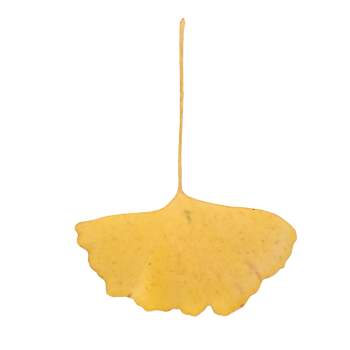
Ginkgo leaf specimen

Ginkgo leaf specimen

Ginkgo is a plant of the Ginkgo family and genus. Trees, up to 40 meters tall, with a breast height diameter of up to 4 meters; The bark of young trees is shallow and longitudinally cracked, while the bark of large trees is gray brown, deeply longitudinally cracked, and rough; The crown of the tree is conical in childhood and adulthood, and broadly oval in old age. Leaves fan-shaped, with long stalks, light green, hairless, with many forked parallel fine veins, 5-8 cm wide at the top, often with wavy notches on short branches, often 2-lobed on long branches, and wide wedge-shaped at the base. Ball flowers are dioecious, monoecious, and grow in clusters in the axils of scaly leaves at the top of short branches; The male bulbous flower has a drooping inflorescence like shape. The seeds have long stalks, drooping, and are often elliptical, oblong, ovoid, or nearly spherical in shape.
Citrus Butterfly Specimen

Citrus Butterfly Specimen

Citrus Phoenix Butterfly, also known as Orange Yellow Phoenix Butterfly, Phoenix Butterfly, Sichuan Pepper Phoenix Butterfly, Yan Phoenix Butterfly, Phoenix Butterfly, Orange Phoenix Butterfly. The scientific name Papilio xuthus Linnaeus belongs to the order Lepidoptera, family Papilionidae, and genus Papiliopsis. Its hosts include citrus and kumquat. The life history consists of four stages: adult, egg, larva, and pupae. There are three generations per year, and the pupae overwinter. East Asian endemic species are distributed throughout China; Japan, South Korea, Myanmar. Similar to the Yellow Butterfly, there are three subspecies in China.
Qingfeng Butterfly Specimen

Qingfeng Butterfly Specimen

The Green Butterfly, scientific name Graphium sarpedon, is a species of butterfly in the family Papilionidae, also known as the Camphor Green Butterfly, Green Banded Camphor Butterfly, Blue Banded Green Butterfly, or Blue Banded Yellow Butterfly. It can be classified into spring and summer types, with the spring type being slightly smaller and the wing surface having slightly wider blue-green stripes. More than one year and overlapping generations, overwintering as pupae. Adults appear from March to October and are visible throughout the year in tropical regions. The green swallowtail butterfly has strong flying ability and likes to visit flowers and suck honey. It often moves in damp and open areas at low altitudes, and is also common in gardens, streets, and forest spaces. Mainly distributed in Asia and Oceania. The hosts are mostly plants of the Lauraceae family.
Plum blossom specimen

Plum blossom specimen

Mei is a woody plant belonging to the Rosaceae family and the Prunus genus. Small trees, sparse shrubs, 4-10 meters high; The bark is light gray or greenish, smooth; Twigs green, smooth and hairless. The leaves are oval or elliptical in shape, often with small sharp serrations on the edges, and gray green in color. The flowers are solitary or sometimes two flowers grow together in one bud, with a diameter of 2-2.5 centimeters, and have a strong fragrance that blooms before the leaves; The sepals are usually reddish brown, but some varieties have green or green purple sepals; Petals are inverted, white to pink in color. The fruit is nearly spherical, with a diameter of 2-3 centimeters, yellow or green white, covered in soft hairs and has a sour taste; Paste of fruit pulp and core; The nuclear ellipse is slightly flattened on both sides. The flowering period is in winter and spring, and the fruiting period is from May to June.
Blue embroidered ball specimen

Blue embroidered ball specimen

Hydrangea is a woody plant of the Hydrangea genus in the Hydrangeaceae family. The tree crown is spherical; Small branches thick and hairless; Leaves are oblong or broadly elliptical in shape, with thick and hairless petioles; The inflorescence is spherical or head shaped, with thick branches and attached soft hairs. The flowers are dense and pink, light blue, or white in color; The fruit is in the shape of a spinning top. The flowering period is from June to August. The original name of the hydrangea was "Eight Immortal Flowers". People saw that this flower looked like a hydrangea, so it was also called "hydrangea flower". Hydrangeas are native to China and are distributed in Fujian, Jiangxi, Guangdong, Hong Kong, and Yunnan Guizhou provinces. They are also found in Japan and North Korea. It prefers fertility and good drainage. The pH of the soil has a great impact on flower color, with blue flowers blooming on acidic soil and red flowers blooming on alkaline soil.
Oshima cherry blossom specimen

Oshima cherry blossom specimen

Oshima Sakura is a deciduous tree belonging to the Rosaceae family and the Sakura genus. Leaves are often ovate in shape, with pointed tips and heavily serrated edges. The petiole has glands at the tip, and the bracts are linear with small glandular teeth at the edges; Flowers and leaves are in the same period, inflorescence is umbrella shaped, with large green shield shaped bracts at the base, white single petal flowers, and concave tips; Drupe black spherical; The flowering period is in late March. Oshima Sakura is native to the Izu Peninsula in Japan and is distributed in eastern and northern China. Sexual preference for sunlight, suitable for a wide range of planting, able to withstand low temperature environments of -15 ℃. The propagation method is grafting, and in some cases, it is propagated by pressing strips or cutting, but the survival rate is low. Grafting is mainly done by bud grafting and branch grafting.
White violet specimen

White violet specimen

Violet is a biennial or perennial herbaceous plant in the family Brassicaceae and genus Violet. Its plant is 60 centimeters tall and covered with gray white branching soft hairs; The stem is upright and has multiple branches; The leaves are oblong to lanceolate or spoon shaped; The inflorescence is terminal and axillary, with many large flowers. The inflorescence axis is elongated during the fruiting stage, and the petals are similar to oval shaped purple red, light red, or white. The flowers are fragrant, bright, and have rich colors; The seeds are dark brown, flat, and nearly circular in shape, with a diameter of about 2 millimeters; The flowering period is from April to May.
Starry Sky Flower Specimen

Starry Sky Flower Specimen

Xingchen Flower is a perennial herbaceous plant in the family Verbenaceae, belonging to the genus Forget Not Grass, with a height of up to 50 centimeters. The stem is single or several upright and often branched; Basal leaves narrow lanceolate or linear lanceolate; The flower stem is equal to or slightly longer than the calyx, the calyx splits to near the base, the lobes are diamond-like lanceolate, and the anthers are oblong; The flowering and fruiting period is from June to August. The colorful star shaped flower is Zunpian, and the white small flower in the center is the real flower, like the scattered stars in the night sky, hence its name. Xingchen Flower is distributed in Yunnan, Sichuan, Jiangsu, North China and other regions of China, as well as in Europe, Iran, Russia, Pakistan, India and Kashmir.
Chamomile specimen

Chamomile specimen

Chamomile is a perennial herbaceous plant in the Asteraceae family. The stem is densely covered with soft hairs, and the lower part of the hairs gradually become sparse to hairless; The leaves are large and thin in texture, with no or almost no hair on both sides; The basal and middle stem leaves are diamond shaped, fan-shaped, or nearly kidney shaped, with green or light green on both sides, and are divided into two palmar or palmar feather shapes; The bracts are shallow disc-shaped, with four layers of brown or black brown broad membranous edges on the bracts, and the outer layer is linear, elongated elliptical or ovate; The achene is about 2 millimeters long; The flowering and fruiting period is from June to August.
Nickelosaurus skull fossil

Nickelosaurus skull fossil

Nicrosaurus is a genus of sauropods in the order Ceratopsiformes. Their appearance and lifestyle may resemble crocodiles, but they are not closely related to crocodiles and are the result of parallel evolution. The main difference between Nicosaurus and crocodiles lies in the position of their nostrils. Nicosaurus' nostrils are located on the forehead, while crocodiles' nostrils are located at the end of their mouth and nose. It is a herbivorous dinosaur.
Mane lion lizard skull

Mane lion lizard skull

Pogonavitticeps is a reptile of the genus Pogonavitticeps in the order Scorpaeniformes. The body of the maned lion lizard is thick and flat, covered with spiny scales on its back and neck, and the spines on its sides are arranged in a regular pattern in front of its forelimbs. When threatened, they will show off by opening their mouth and inflating their prickly throat to appear stronger and scare their opponents, hence the name. It is a semi terrestrial species that can move on flat ground or stay on rocks or tree branches. I have a preference for meat and occasionally consume plant flowers and leaves. Living in a high-temperature and dry environment. Mane lion lizards have a strong sense of class.
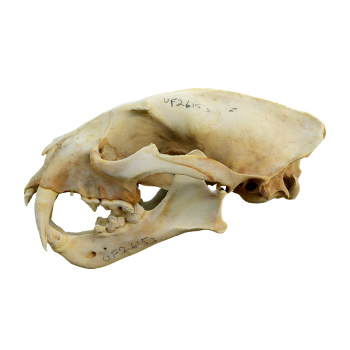
Cloud leopard skull

Cloud leopard skull

Neofelisnebu is a carnivorous mammal belonging to the feline family Neofelisnebu. There are unique cloud like flower spots on the back and sides of the body; The primary color of the fur is uniform light blue to gray, with large cloud like patches on the sides of the body; Two intermittent black stripes extend from the spine to the base of the tail; There are 6 longitudinal lines on the neck, starting behind the ears; There are large black oval plaques on the limbs and ventral side; There are plaques on the crown of the head, white on the nose and snout, and dark stripes extending from the eyes and corners of the mouth to the side of the head. It inhabits primitive evergreen tropical rainforests, but is also found in secondary forests and logging forests. Prey small mammals and birds, and attack chicken coops. Night walking, living alone.
Black pine cone specimen

Black pine cone specimen

Black pine is an evergreen tree species belonging to the pine family and the pine genus. The bark of young black pine trees is dark gray, while it becomes gray black when old, and the crown is hairless; Needle needles are dark green, shiny, and rough; Male bulbous flowers are light reddish brown, cylindrical in shape, while female bulbous flowers are upright with stems, oval in shape, light purple red or light brownish red; The cone fruit is green before maturity, brown when ripe, conical oval or ovoid in shape; Seeds are inverted oval shaped; The flowering period is from April to May. Black pine is named after its color, hence the name 'Black Pine'. Black pine is native to the coastal areas of Japan and southern Korea, while its origin in China lies in the coastal regions of Northeast and East China, as well as the introduction and cultivation areas of East and Central China.
Large shield backed stink bug specimen

Large shield backed stink bug specimen

The body length is 22-26mm. The color of the back of the body is off white, off yellow, or orange yellow; There is a black longitudinal band in the center of the head and a black transverse band at the back edge; The small bamboo board has a black horizontal band at the front edge and three black stripes in the center. Individuals with developed black spots have a large black spot in the center of the pronotum and 5 black spots on the small sternum. Adults appear in spring and summer, mainly living in low altitude mountainous areas.
Double crowned Cormorant Skull

Double crowned Cormorant Skull

The double crowned cormorant (Phalaclocoraxauritus) is a bird species in the family Scomorantidae of the order Characiformes. Its beak is strong and long, with grooves on both sides of the upper beak and a hook at the tip, making it suitable for pecking at fish; There is a laryngeal sac at the base of the lower mouth; Small nostrils, completely concealed in adult birds; Expose your eyes first; Slender neck; Two wings of moderate length, lacking a fifth secondary feather; The tail is round and hard straight, with 12-14 tail feathers; The feet are located at the back of the body; Short tarsus without feathers; Flat toes, long hind toes, connected by webbing. After diving, the feathers are soaked and need to spread their wings to dry in the sun before they can fly. Residing on islands, coastlines, and swampy areas. They mainly eat fish and crustaceans.
Dome shaped dinosaur skull fossil

Dome shaped dinosaur skull fossil

Camarasaurus is an extinct sauropod dinosaur. It is the most common large sauropod dinosaur in North America, with an adult body size of about 20 meters long and a weight of 15-50 tons. Compared to other long necked dinosaurs, its neck is much shorter and its tail is also shorter, making its physique appear more robust and sturdy. It is one of the most famous dinosaurs in North America. The Latin meaning of its name is a dome shaped reptile. They belong to vegetarian dinosaurs and lived in the late Jurassic period, dating back 155 to 145 million years ago. Compared to other tall relatives in the sauropod family, the dome dragon appears relatively short.
Asahi dragonfly specimen

Asahi dragonfly specimen

Japanese specialty species, Niigata, Gunma, Saitama, Tokyo, Chiba, and Honshu, Shikoku, and Kyushu located in the southwest of Ibaraki Prefecture. Transparent airfoils are mainly distributed in Kobe City, and only in some places are orange airfoils with the same color as light orange airfoils. The turbid white winged individuals distributed in Chiba Prefecture are not distributed in Hyogo Prefecture. Only one individual with pale white and cloudy wings was found in Kobe City.
Fossil skull of Protoceratops

Fossil skull of Protoceratops

Protoceratops, a ceratopsian dinosaur, lived in the late Cretaceous period (approximately 100-65 million years ago). It is a short legged quadruped animal with a body length of 2 meters and a weight of nearly 400 kilograms. The teeth are long and sharp. There are bony folds in the neck and large jaw muscles. May rely on palm leaves as a staple food. A quadrupedal dinosaur with a large head shield behind its head and no horns. Living in groups. They gave birth to small dinosaurs in their own nests. The heads of Protoceratops are of medium size, so they are relatively intelligent. It has a very similar appearance to the famous Triceratops, but is smaller in size and does not have long horns on its head.
Smoke winged green spider specimen

Smoke winged green spider specimen

A small species of the family Characidae in the order Characidae, with an adult belly length of about 40mm and hind wings length of about 32mm. Most of the male worms have a bronze colored thorax, with a slightly triangular green stripe behind the third lateral suture. The yellow area below is relatively narrow, and the wing mole is short, reddish brown. The orange winged male worms have white powder on the front of the thorax and abdomen, from the 8th to 10th nodes.
Cherry blossom specimen

Cherry blossom specimen

Cherry blossoms, belonging to the Rosaceae family and the Sakura genus. Cherry blossoms are 4 to 16 meters tall and have gray bark. Small branches light purple brown, tender branches green. Winter buds are oval in shape. The leaves are elliptical ovate or inverted, the inflorescence is umbel shaped and racemose, the total stem is extremely short, there are 3 to 4 flowers, and the leaves open first. The bracts are brown in color and oval in shape. Petals white or pink, oval shaped. The drupe is nearly spherical, black in color, and has a slightly ribbed surface. The flowering period is in April and the fruiting period is in May. Sexual preference for sunshine, warm and humid climate environment, not strict requirements for soil, grows best on deep and fertile sandy loam soil, with shallow roots, and is cultivated in cities such as Beijing, Xi'an, Qingdao, Nanjing, and Nanchang.
Mountain cherry blossom specimen

Mountain cherry blossom specimen

Mountain cherry blossoms are deciduous tall trees of the Rosaceae family, native to Japan, Taiwan, and Korea. Growing wildly in the wilderness of Honshu, Shikoku, and Kyushu. The bark and tender leaves are red. It is an early blooming cherry blossom tree with many single white flowers, which bloom earlier in spring than Rani Yoshino and other horticultural varieties. Other varieties only grow leaves after flowering, but this species also grows leaves at the same time as flowering. It is also known as the 'Leaf Cherry Blossom'.
Tiger ear grass specimen

Tiger ear grass specimen

Tiger ear grass belongs to the family of tiger ear grass and is a perennial herbaceous plant with long glandular hairs on its stem; The basal leaves have long petioles, and the leaves have heart-shaped, kidney shaped, and oblate shapes; The stem and leaves are lanceolate in shape, with cone-shaped inflorescence, and the flowering and fruiting period is from April to November. Named after its large leaves resembling tiger ears, it was first recorded in a local herbal book during the Southern Song Dynasty called "Lu Yan Ben Cao". Tiger ear grass is distributed in provinces such as Anhui, Fujian, Guangdong, Guangxi, Guizhou, and southeastern Gansu in China, as well as in North Korea and Japan; It mainly grows under forests, shrubs, meadows, and damp rock crevices at an altitude of 400-4500 meters.
Chameleon skull

Chameleon skull

Chameleon is a general term for reptiles in the order Lizards, family Auchenipteridae, with the scientific name Auchenipteridae. The skin is covered with granular scales, and there are various pigment cells in the dermis that can stretch and change body color at any time; There are blunt triangular protrusions on the head; Both eyes are independent and can freely turn to different perspectives; There are ridges on the back; The limbs are relatively long, with 5 fingers and toes on both the front and back limbs, divided into 2 groups. The inner 3 fingers of the front limb are healed, and the outer 2 fingers are healed together and can be held together; The hind limbs are opposite, with the inner 2 toes and outer 3 toes healed and held relative to each other. Mainly distributed on the African continent and Madagascar Island, inhabiting trees, with a few species inhabiting the ground. Mainly feeding on insects.
Rongguan Rhododendron Specimen

Rongguan Rhododendron Specimen

Rongguan Rhododendron is a plant of the Rhododendron family and genus, native to Hunan province. The crown of the Rongguan Rhododendron is wide oval or umbrella shaped; The tree trunk is bent; Branching angle; The color is peach red; Single petal; Blooming in mid May; Small flower shape; The leaves are dark green in color; Smaller. Generally, flowering occurs after 3 years of sowing; Sexual maturity period of 3 years; The flowering and fruiting period is from 10 to 20 years old; Flowering from March to April; The fruit ripens in August.
Three flowered Rhododendron specimen

Three flowered Rhododendron specimen

Sanhua Rhododendron evergreen shrub sparse small tree, 1-4 meters high; The leaves are usually leathery, with no hair on both sides. The inflorescence grows axillary at the top or at the same time, and the short raceme grows near the umbrella shape. The flowers are few to many, usually three; Calyx undeveloped, circular or with short lobes; The ovary is 5-chambered, densely covered with scales, usually hairless, rarely soft haired, and the capsule is usually oblong. Seeds without wings. The flowering period is from May to June, and the fruiting period is from July to August. Under mountain shrubs, oak forests, alpine pine forests or spruce and fir forests, at an altitude of 2500-3700 meters. Distributed in China, Myanmar, India, Bhutan, Sikkim, and Nepal. This species is cultivated and has high horticultural value.
Camellia flower specimen

Camellia flower specimen

Camellia, belonging to the Camellia family, is an evergreen shrub or small tree plant. The leaves are thick and leathery, elliptical in shape, with a slightly pointed tip and a wide wedge-shaped base, with fine serrations on the edges; The petals are bowl shaped; The fruit is round in shape. Camellia has no obvious dormancy period throughout the year, with a long flowering period from October to May of the following year, and the peak flowering period is from January to March. Camellia, because its leaves resemble tea, is named Camellia. Li Shizhen of the Ming Dynasty also said, "Its leaves are like tea and can be used as a tea drink, hence the name of tea. Camellia is native to China. It prefers warm, humid, and semi shaded environments. It is afraid of high temperatures and strong sunlight. The suitable temperature for camellia growth is 18-25 ℃, and from March to September it is 13-18 ℃.
Fossil skull of terror jaw pig

Fossil skull of terror jaw pig

The terror pig, also known as the terror pig, has a slightly larger body size than the giant pig and the complete toothed pig, and is an extremely large species in the giant pig family. Between 5 and 23 million years ago, the terror pig was the largest member of the Auchenipteridae family in history. It had huge tusks and jawbones, was an omnivorous species, and had a body size similar to that of a rhinoceros. It was more ferocious than modern wild boars and was named after its previous name, Dinohyus, which means "terror pig" in Greek. Their living habits are similar to those of ancient giant pigs and porcupines. The staple food of the terror pig is plants, but it also often eats decay or attacks small animals, as well as snatching food from small carnivores.