European Blood Activating Pill Sample

European Blood Activating Pill Sample

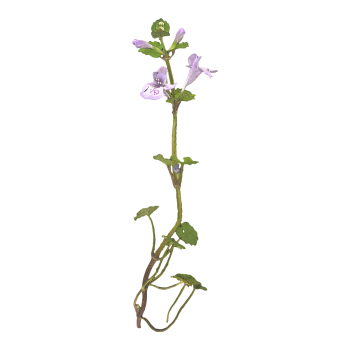
Ouhuoxue Dan is a creeping herbaceous plant belonging to the family Lamiaceae and the genus Huoxue Dan. The stem is four diamond shaped, with a light purple red base; Leaf grass texture, nearly circular; The leaves are kidney shaped or kidney shaped circular, with a heart-shaped base; Umbrella inflorescence, forming a whorl shaped structure, calyx tube shaped, corolla purple, disk cup-shaped, style slender; Mature small nuts are not seen. The flowering period is in May. Ouhuoxue Dan is native to various countries in Northern and Western Europe, and is also distributed in Xinjiang, China. Ouhuoxue Dan is resistant to yin and prefers moisture. It grows best under semi shaded conditions in the forest, but slightly weaker under full day sunlight. It prefers fertile, loose, and well drained soil. The propagation method of Ouhuoxue Dan is through cutting or division propagation.
Double Forked Rhinoceros Turtle Specimen

Double Forked Rhinoceros Turtle Specimen

The Double Forked Rhinoceros Beetle, also known as the Unicorn Fairy, is an animal of the family Scaridae in the genus Scarabacus. The adult double forked rhinoceros beetle has a body length of 30-50mm and a body width of 20-30mm. Its body is elliptical in shape, with smooth or slightly furry surfaces on the back, and more furry surfaces on the abdomen; The head is small, the compound eyes are deep reddish brown, and the antennae have 10 segments, of which the gill section consists of 3 segments. The upper lip is flat and shovel shaped with an upward curl. Distributed in eastern and northeastern China, Japan, Thailand and other places, living in forests, with strong phototaxis. Adults feed on humus formed from decaying leaves or wood under the forest, and prefer to lick the sap or ripe fruits flowing from tree wounds.
Lily Lily Sample

Lily Lily Sample

Juandan lily is a perennial bulbous plant of the lily genus in the lily family. The bulb is wide ovate and flattened, and the scale leaves are wide ovate; The stem often has purple stripes and white hairs; The leaves are oblong lanceolate or lanceolate in shape, with nearly hairless on both sides. The leaf edges have papillary protrusions, and the upper leaf axils have bulbous buds; The bracts are leaf shaped, ovate lanceolate, with rolled petals that are orange red in color and have purple black spots. The ovary is cylindrical in shape; The capsule is narrow and oval shaped; The flowering period is from July to August. Due to its fiery red color and curled petals, it is called "Juandan".
Double horned hornbill skull

Double horned hornbill skull

The double horned hornbill is a bird species belonging to the family Rhinocerotidae in the order Nymphalidae, also known as the Great Rhinoceros, the Great billed Sparrow, the Robby, and the Vajra. It is distributed in India, Bangladesh, Indochina Peninsula, western Indonesia and other places. In China, it is mainly distributed in the west and southwest of Yunnan and southeast of Xizang. Residing in evergreen broad-leaved forests in low mountains and foothills below an altitude of 1500 meters. Mainly feeds on fruits and seeds of various tropical plants, as well as animal food such as large insects, reptiles, and rodents. During the season when the fruits are ripe, hornbill flocks mostly stay in one place to feed until they run out of food before switching to a new feeding location.
Long live big eyed crab specimen

Long live big eyed crab specimen

Macrophthalmus banzai (scientific name: Macrophthalmus banzai) is an animal belonging to the genus Macrophthalmus in the family Macrophthalmidae of the sand crab superfamily. The eye sockets are long, the eye stalks are slender, the palms are long, and the two directions are bent downwards. The fingertips are spoon shaped, and the whole body is earthy brown, but the color of the sting is relatively light. When hidden in water, the slender eyes stand upright and protrude from the water surface, and male big eyed crabs have the habit of swinging their double stings, so they are also known as "long live big eyed crabs". Distributed in Japan, Taiwan, China, Hong Kong and Shandong
Edmonton Dragon Head Bone Fossil

Edmonton Dragon Head Bone Fossil

Edmontosaurus is also translated as Edmontosaurus or Edmontosaurus, named after the fossil discovery area of Edmonton, Alberta, Canada. Edmontosaurus is a huge dinosaur. They have a triangular shape on the side of their head, without a crest. The front and back of their head are wider, while the middle is narrower. Their mouth and nose resemble a duck's beak. Living in the late Cretaceous period. Group living is a way for Edmontosaurs to improve their survival ability, as their individuals do not have particularly effective ways to resist enemies, while group living can effectively avoid predators' sneak attacks. The neck is relatively short and mainly feeds on ground plants.
Warehouse owl skull

Warehouse owl skull

The barn owl is a bird species belonging to the family Scophthalonidae in the order Scombriformes. Its head is large and round, with a white, sometimes brownish face, brown eyes, and light brown around the eyes; There is a brown or orange yellow collar ring around the face, with light brown yellow spots on the neck and shoulders, and slight black brown and white spots; The rest of the upper body is light gray, with brownish yellow feather edges. Each feather is covered with light brown insect spots, and there are white spots with black edges near the end; Tail feathers are white; The leg feathers are light brown and reddish brown, with sparse gray black spots. Residing in the dark areas of residential buildings, mountain caves, tree holes, or hidden places with dense leaves, sleeping during the day and active foraging at night, catching mice and large insects.
Cang'er specimen

Cang'er specimen

Sorghum is an annual herbaceous plant of the genus Sorghum in the Asteraceae family. The stem of Cang'er is covered with gray white rough hairs; Leaves triangular ovate or heart-shaped, with irregular coarse serrations on the edges, and pale white below; The male inflorescence is spherical, with many male flowers and a bell shaped corolla. The female inflorescence is elliptical with a sac like inner layer, green, light yellow green, or reddish brown in color; Mature bracts with achenes ovate or elliptical in shape; Skinny fruit, inverted oval shape; The flowering period is from July to August; The fruiting period is from September to October. [9] Because its son is like ear nitrate, it is named "ear". After ripening, it has a green black color, that is, pale color, hence the name Cang'er.
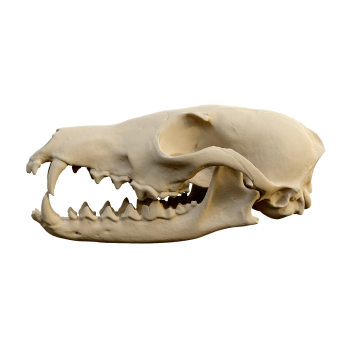
Fox Skull - Closed Mouth

Fox Skull - Closed Mouth

Vulpes: a genus of mammals in the order Carnivora and family Canidae. The body length is 45-90 centimeters, the tail length is 25-60 centimeters, the weight is 2-10 kilograms, and the largest one exceeds 15 kilograms. The female animal is slightly smaller in size than the male animal. Medium and symmetrical body shape, slender limbs, toe mobility, conducive to fast running. There are 12 species in the world and 3 species in China, namely the red fox, sand fox, and Tibetan fox. They mostly inhabit the banks of forests, grasslands, hills, wastelands, valleys, lakes, and caves in semi desert areas. Foxes usually move alone and mainly live in pairs or families. I like a dry and clean environment.
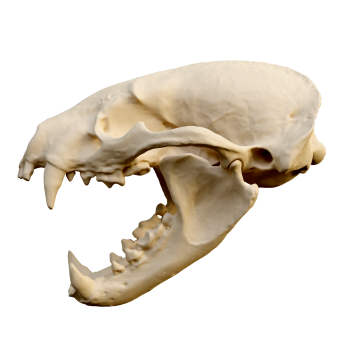
Badger skull

Badger skull

Badgers are mammals of the genus Badgers in the order Carnivorous, family Italidae. Its body is enlarged, with a pointed nose, short ears, and small eyes; The neck is thick and short, the limbs are thick and robust, and the toes of both the front and back feet have strong brown black claws. The claws of the front foot are longer than those of the back foot. It is distributed in all parts of China except Taiwan and Hainan. Usually, caves are built on earth mounds or under big trees, and the tunnel is very long. Having a keen sense of smell, adept at digging and burrowing, most species live alone during the day and lie down at night. Badgers have a diverse diet, preferring to eat plant roots, corn, peanuts, vegetables, melons, beans, as well as insects, earthworms, frogs, rodents, and other small mammals and reptiles. Strong adaptability.
Fossil skull of the Death God Dragon

Fossil skull of the Death God Dragon

Erlikosaurus (scientific name: Erlikosaurus) was discovered by Clark et al. in 1994. The Death God Dragon is a type of sickle dragon, weighing 500 kilograms, smaller than most sickle dragon species. For example, the slow dragon that lived in the same place as the Death God Dragon weighed 2.5 tons, but its claws were sharper and more developed. Living in the late Cretaceous period, distributed in Mongolia. For herbivorous dinosaurs. The name of the Death God Dragon comes from the Mongolian mythological legend of the God of Death. It is a herbivorous dinosaur evolved from a carnivorous dinosaur, but evolved from a carnivorous beast. Like other sickle dragons, it is bulky and cumbersome. When in danger, they will use their claws to defend themselves.
Red Pine Flower Ball Specimen

Red Pine Flower Ball Specimen

Red pine is a tree belonging to the pine family and the pine genus. Branches form umbrella shaped tree crowns; Annual branches pale yellow or reddish yellow, slightly covered in white powder and hairless, with fine serrations on the edges; Male bulbous flowers are light reddish yellow, cylindrical in shape, clustered at the lower part of new branches in a short spike shape, while female bulbous flowers are light reddish purple; The cone is dark yellow brown or light brown yellow, oval or oval conical in shape; Seeds are inverted oval or oval shaped; The flowering period is in April; The fruiting period is from late September to October of the second year. It is named after its reddish brown bark.
Fossil of the skull of the Pterosaurus rex

Fossil of the skull of the Pterosaurus rex

The Pterosaur is a member of the Hadrosauridae family in the order Ornithischia, also known as the Pterosaur. The most obvious feature is the crown extending from the head, which is rod-shaped and longer than other crowned dinosaurs. There is a thin tube in the crown of the head that makes a sound when air passes by, and the secondary comb dragon uses it for "conversation". The forelimbs of the Pterodactylus can support its body, swim, and wade through water. Living in the late Cretaceous period, this organism was discovered in North America and lived along inland waterways. Eating plants, the habitat is home to many evergreen trees, ferns, and a small number of flowering plants. Collective living, with a keen sense of hearing and smell, will use a headband to sound an alarm signal when danger is detected.
White legged noisy hornbill skull

White legged noisy hornbill skull

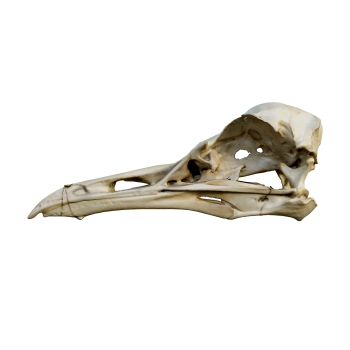
The white legged noisy hornbill, belonging to the hornbill family, hornbill subfamily, and hornbill genus, is distributed in central and southern Africa. The hornbill is a precious and beautiful large bird species, with a beak that accounts for one-third to half of its body length. It has a copper helmet shaped protrusion on its head called the helmet protrusion, which resembles a rhinoceros horn, hence the name hornbill. The body length of hornbills is about 75 centimeters; The back feathers are pure black with a green metallic luster; The wing edge and feather tip are white.
Chicken skull

Chicken skull

Chicken is a domestic poultry belonging to the pheasant family in the order Galliformes. There are about 100 species and over 300 varieties of chickens in the world; Domestic chickens originated from wild chickens, with short, sharp, and slightly curved beaks; Having a crown and a fleshy beard;; Long neck and flexible rotation; Wings underdeveloped, feet strong; The forelimbs have degenerated into short wings, but they can hardly fly. It is a social animal with a gentle personality. It likes to explore and move around in grass and sand, and does not fly very high. Therefore, it is suitable for raising in a courtyard. Omnivorous animals not only peck at insects in the wild, but also consume small feed prepared by farmers. The early purpose of raising chickens was also for entertainment and viewing purposes, such as "cockfighting".
Weasel taro snail shell

Weasel taro snail shell

The shell of the Weasel Conus is thick, the snail tower is low and flat, and it has a shell and a water pipe trench. The nervous system is concentrated, and the esophageal nerve ring is located behind the salivary gland and is not penetrated by the salivary gland delivery tube; The gastrointestinal ganglia are located near the central nervous system of the brain. The mouth is well-developed, and the esophagus has unpaired esophageal glands. A part of the outer film is wrapped to form a water pipe. Androgynous, males have copulators. The olfactory detector is feather shaped with narrow teeth and tongue. Residing in intertidal zones to depths below 20 meters on rocky seabeds. Carnivorous, feeding on worms, fish, or other mollusks. There are venom glands in the body that can shoot prey and harm predators, distributed from the Indian Ocean to the Western Pacific.
Fox Skull - Open Mouth

Fox Skull - Open Mouth

Vulpes: a genus of mammals in the order Carnivora and family Canidae. The body length is 45-90 centimeters, the tail length is 25-60 centimeters, the weight is 2-10 kilograms, and the largest one exceeds 15 kilograms. The female animal is slightly smaller in size than the male animal. Medium and symmetrical body shape, slender limbs, toe mobility, conducive to fast running. There are 12 species in the world and 3 species in China, namely the red fox, sand fox, and Tibetan fox. They mostly inhabit the banks of forests, grasslands, hills, wastelands, valleys, lakes, and caves in semi desert areas. Foxes usually move alone and mainly live in pairs or families. I like a dry and clean environment.
Horse manure sea urchin fossil

Horse manure sea urchin fossil

The horse dung sea urchin shell is sturdy, hemispherical, with a diameter of 30-40 millimeters and a maximum of 60 millimeters. The mouth surface is low, slightly raised, and flat. The width of the step zone is equal to that of the intermediate step zone, but the bulging degree of the intermediate step zone is slightly higher than that of the step zone, so the shell shape appears as a smooth pentagon close to a circle when viewed from the mouth. The activity of sea urchins relies on the movement of their legs and spines to crawl on the seabed, so their movement speed is relatively slow. Sometimes, they are attracted to rocks by the suction cups of their legs. The horse dung sea urchin is usually considered a herbivorous animal, feeding on brown algae, red algae, and green algae. It mainly lives on shallow sea reefs, gravel, sand, and other seabed areas.
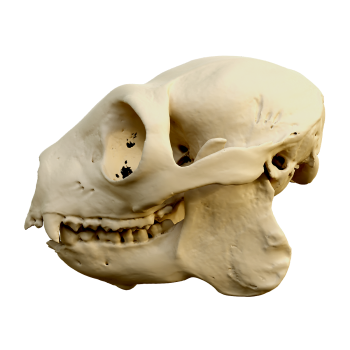
Fox monkey skull

Fox monkey skull

Lemuridae, a family of primates in the suborder Primae, commonly known as lemurs, are animals that can naturally sleep. 5 genera and 21 species have been discovered. There is a significant difference in body shape, with a body length of 13-60 centimeters and a weight of 60-3000 grams. They inhabit tropical rainforests or dry forests or shrubs, and some also live in bamboo forests, reed areas, or forested mountains. Active during the day or night, eating insects, fruits, reeds, leaves, and occasionally birds. Group individually or in a family setting. There is a phenomenon of hibernation, some for only 3 days, and some for several weeks. It is the most primitive monkey. It is a gentle 'ghost' in the rainforests of Madagascar.
Turtle shell

Turtle shell

Sea turtles are a collective term for marine turtles in the order Turtles, family Turtles, and family Turtles. Body length 0.75-2 meters, weight 45-1000 kilograms. Distributed in the South Pacific and Indian Ocean. In China, it is distributed from Shandong coast in the north to Guangdong coastal provinces, Taiwan, Hainan and other provinces in the south, especially the South China Sea Islands. Most of them live in shallow coastal waters, bays, coral reefs, and estuaries that flow into the sea. Feed on macroalgae, cephalopods, crustaceans, and fish and shrimp. They are one of the oldest animals in the world, appearing on Earth more than 200 million years ago, so archaeologists consider them as "living fossils".
Martin's long nosed snail shell

Martin's long nosed snail shell

Martin Long nosed Snail, commonly known as Zhen Long nosed Snail in Chinese. Family and genus classification: Molluscs, Mollusca, Gastropoda, Mesogastropoda, Phoenix Snails. The habitat environment is in deep-sea mud and sand bottoms and subtidal zones. It is distributed in the Philippines and Taiwan, China Province of China. The South China Sea includes southern Taiwan, Borneo, the Philippines, Hainan, and Indonesia. Shell is thin and light, with a luster like silk. The snail tower is tall, with a top shell and a round body layer; The spine shaped front water pipe groove is slightly curved. The suture line is shallow, with a clear spiral groove below it. The outer lip edge is thickened and has 6-7 short spines. The shell surface is milky brown, the outer lip edge and lower part of the snail layer are white, and the middle snail layer is dark brown.
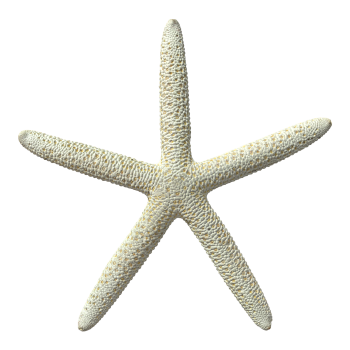
Sea Plate Car Sea Star Specimen

Sea Plate Car Sea Star Specimen

The Sea Plate Car Sea Star, also known as the Sunflower Sea Star, is the largest known sea star in the world. In the Yellow Sea and Bohai Sea of our country, there is a type of starfish called the sea disk car. Its body is flat and shaped like a five pointed star, with a long wrist and suction cups on its legs. When this starfish moves, it is like a pole vaulter, first using suction cups to suck the ground, then supporting its body to flip and move forward one step, and then continuing to repeat this action, moving forward little by little. The diameter of the Sea Plate Car starfish is 80cm, making it the largest starfish in the world. It lives in the Pacific Ocean and has a huge stomach in the middle. Unlike other starfish, it has 24 antennae.
Baiyan Bao snail shell

Baiyan Bao snail shell

The hundred eyed conch is a mollusk of the Gastropoda family. Shells have a distinct cylindrical shape and are coiled within the snail layer. The shell is narrow and elongated, with fine teeth on the outer and inner lips, and a tongue shaped tongue. The outer membrane is thin, with a two leaf shape, and the living body is almost completely covered by the shell. The spiral part almost disappears when it reaches adulthood, and there is no opening in adulthood. The shell surface is smooth and glossy, with a light yellow brown color and many brown rings of varying sizes on it. There are also two yellow white horizontal bands on the shell surface. Living in tropical and subtropical warm sea areas, it can be found from intertidal zones to deeper rocks, coral reefs, or sandy seabeds. Mainly feeds on algae or coral animals.
Snake tailed starfish specimen

Snake tailed starfish specimen

The snake tail starfish, also known as the snake hair monster starfish, striped snake tail, striped brittle snake tail, or tiger striped starfish, is a species of starfish in the true snake tail family. There are five brown antennae on the disc, with stripes ranging in color from brown to red. The stripes on the disc are changing. It is a newly discovered species by scientists, living at depths of up to 800 meters in the Atlantic Ocean. Nocturnal animals do not come out to hunt during the wild daytime.
Red sea turtle skull

Red sea turtle skull

Caretta is a marine animal belonging to the order Turtles and family Turtles. The body length is 100-200 centimeters and the weight is about 100 kilograms. The head is relatively large, about 15 centimeters wide; Both the upper and lower jaws have extremely strong hooked beaks. One more claw than a green sea turtle, suitable for swimming. The tail is relatively short. I enjoy foraging in coral reefs, continental shelves, or shallow waters covered in brown algae. Mainly preys on benthic or floating crustaceans, mollusks, cephalopods, jellyfish, and other invertebrates. Distributed in warm waters of the Atlantic, Pacific, and Indian Oceans, as well as in the South China Sea and East China Sea.
Two toed sloth skull

Two toed sloth skull

The two toed sloth is a mammal of the genus Two toed sloth in the family Malodontidae, also known as the sloth. Body length is about 70 centimeters, tail degeneration, weight is about 9 kilograms; There are two claws on the forelimbs and three claws on the hind limbs, with well-developed claws; The body hair is long and thick, green due to the growth of lichens and algae, the skull is short and tall, the nose and snout are relatively short, and it has a zygomatic arch. Distributed in South and Central America. Residing in damp forests. Lost the ability to move on the ground, hung upside down on a tree with four limbs, moved slowly, slept upside down after eating, and could even sleep in this position for a long time, swimming. Highly sensitive to low temperatures, feeding on leaves, tender shoots, and fruits.
Scorpion shell

Scorpion shell

Scorpion snails are 95-220 millimeters long and are dioecious. The shell is spindle shaped. The height of the spiral tower is moderate, and its layers are weakly keel shaped. The sliding layer of the shell axis is well-developed, and there are usually finger like protrusions on the outer lip. The most distinctive feature is the well-developed eyes, with long and pointed tentacles on the eye stalks that can be freely extended and retracted. The surface of the shell is decorated with rich and colorful carvings. The shell mouth is often narrow and long, with front and rear water pipe grooves, wide and thick outer lips, and a siphon channel at the front end. The serrated edge near the front end of the shell is called the "Phoenix Snail Scar", which is a channel through which the right eye of this snail extends to observe changes in the external environment. Small keratinous pores with serrated edges.
Catfish jaw

Catfish jaw

Catfish is a species of bony fish in the family Siluridae of the order Siluriformes, also known as pond lice or catfish. Its body is flattened on the side, its abdomen is flat and soft, it can expand or contract, its body height is greater than its head height, and the external contour of the whole body is chiseled. Living in a reservoir with abundant water, grass, and muddy bottom layer. During the day, it often hides in deep water and is active in foraging at night or dawn. After autumn, they live in deep water or mud to overwinter, and their feeding intensity decreases. When feeding, do not gather in groups and hide in the crevices of the underwater rocks to observe. Carnivorous, feeding on small benthic fish as well as small nearshore fish. Catfish have strong adaptability and fast growth, and have been listed as one of the three major freshwater fish species in natural water bodies in China.
Upper skull of pronghorn

Upper skull of pronghorn

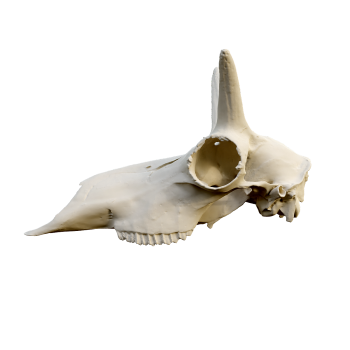
The pronghorn is a mammal belonging to the pronghorn family and the pronghorn genus. The body length is about 1.5 meters and the shoulder height is about 1 meter. Males weigh around 50 kilograms, while females weigh around 40 kilograms. Medium in size, well proportioned and agile. It inhabits semi-arid open grasslands at elevations of 900-1800 meters from northern Mexico to southern Canada. Mixed male and female clusters in winter, grouping in early spring, with young males and females separated, and adult males moving alone. The food consists of various grasses and shrubs, and even rough or poisonous plants that livestock do not eat. Vigilant personality, sharp vision, good at running, with a maximum speed of nearly 100 kilometers per hour.
Purple sea urchin fossil

Purple sea urchin fossil

Purple sea urchin is mainly distributed along the coasts of Zhejiang, Fujian, Guangdong, Guangxi, and Hainan in China. It is an important fishing species in the southeast coast of China and has high nutritional and medicinal value. Distinguish it from "Dalian Purple Sea Urchin". Due to the purple color of the sea urchin in Dalian, it is known as the 'Dalian Purple Sea Urchin', but in reality, they are not the same species. Living in rocky reef areas with a water depth of 3-07 meters and thriving growth of large seaweed species, they prefer to inhabit the backlit areas or crevices of rocks, often drilling holes in their habitats and hiding within them. By utilizing the movement of the legs and spines, one can navigate underwater Dian, move a few centimeters every 5 minutes.
Male antelope skull

Male antelope skull

Inu antelope is a small antelope that mainly lives in the shrublands of South Africa and East Africa. The shoulder height of the Inu genus is about 30-40 centimeters and its weight is 3-5 kilograms. They have a long nose and a layer of soft fur. The hair on the forehead is erect, while the male's forehead hair sometimes partially covers the short and circular horns. The antelope genus is generally a semi nocturnal animal that mainly feeds before dawn and after dusk. It will be hunted by giant lizards, eagles, pythons, wildcats, lions, cheetahs, stray dogs, jackals, and humans. Herbivorous, mainly fed on leaves, stems, fruits, and berries. They only consume the water in their bodies as water compounds to reduce the frequency of drinking water.
Comb shaped scallop shell

Comb shaped scallop shell

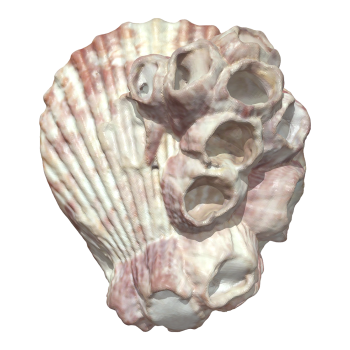
The scallop, also known as the scallop, belongs to the family of scallop in the order of pearl oysters. The shell is fan-shaped, with two shells that are low and flat, and the shell height is slightly greater than the shell length; Straight dorsal margin and round ventral margin; At the top of the shell, there are shell ears on the front and back of the top, with the front ear being larger; There is a pedis hole under the right anterior ear; The two shells are nearly equal in size, but the right shell is flatter and the left shell is more convex; There are spiny protrusions on the ribs, and the shell color changes, usually light brown; The color of the inner surface of the shell is light, mostly pink, with the same rib pattern as the shell surface; The hinge is straight, toothless, and the inner ligament is located in the groove of the three fish ligament. Due to its bright, thin, and hard shell, with multiple radiating ribs, it resembles a sunflower fan in appearance, and there is a depression on the ventral surface of the right shell in front of the ear.
Binbird skull

Binbird skull

Binniao is a genus of birds belonging to the sandpiper family. Coastal birds mainly inhabit aquatic environments such as wetlands, coasts, and river edges. Their body size is medium-sized, with a length of about 30-40 centimeters. The appearance features include a long and slender mouth and legs, a slender neck, and gray brown feathers. Their body size is adapted to the need for foraging in environments such as wetlands and mudflats. It is a migratory bird that migrates relatively far. They breed in warm seasons and generally choose open wetland areas for nesting and spawning. Food mainly includes insects, worms, small arthropods, seeds of aquatic plants, and plankton.
Big Horn Sheep Skull

Big Horn Sheep Skull

Bighorn sheep, with huge horns and a robust body, are native to North America and have seven different subspecies, five of which live in desert areas. And in mountainous areas, bighorn sheep live in remote and barren mountains and ridges. Mountain bighorn sheep are the largest and most numerous among these 7 species. Mountain bighorn sheep are more agile than goats, and rams are also better at fighting than other types of rams. During the mating season, the sound of them colliding head-on always echoes in the mountains. Males have spiral shaped large horns, while females have missing or short horns. The main food source is the tender branches and leaves of grass and shrubs. Visual acuity, able to detect the approaching danger in the distance and issue warnings to the group.
Fan shell

Fan shell

Scallops are mollusks belonging to the family of sea clams in the order of pearl oysters. The shell is relatively large and nearly circular; Straight back edge; Top of the shell near the middle of the dorsal edge; Having ears on both sides, most species have unequal ears on both sides; Generally, there is a pedis foramen below the anterior ear of the right shell, and its ventral edge has several small comb teeth; Shell surfaces often have radiating ribs of various shapes, with scales or small spines on the ribs; The growth pattern is fine and regular. The shell colors are diverse; The complexion inside the shell is light and slightly glossy, often with internal ribs corresponding to the shell surface, and obvious muscle scars; The inner ligament is brown and located in the triangular ligament groove. The coat has a thick edge, developed coat eyes and tentacles, and no water pipes.