Armadillo specimen

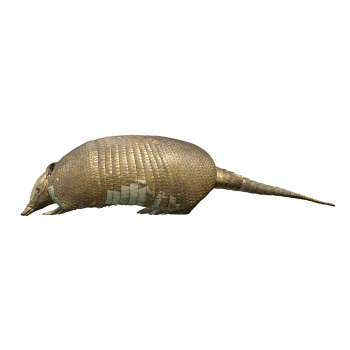
Armadillo specimen

Armadillo is a mammal of the family Armadillidae in the order Heterodontoides. The bone armor covers the head, body, tail, and outer legs. The bone armor in the head, front half, and back half is separated, and the bone armor in the body forms a band shape, allowing for flexible movement; Having sparse hair in areas of the body without bone armor; There are strong claws on the front foot. The armadillo is named after the nine layered ribbon on its body. A armadillo can eat 100 kilograms of poisonous spiders, scorpions, ants, beetles and other insects in a year, which plays a positive role in pest control to a certain extent.
Late Cretaceous Triceratops Bones

Late Cretaceous Triceratops Bones

Triceratops is a herbivorous dinosaur belonging to the family Triceratops in the order Ornithischia. Triceratops is a dinosaur resembling a rhinoceros, with a bulky appearance, thick legs, a head with three horns, a large bone plate extending backwards at the back of the skull to form a neck shield, a short horn above the beak, and two long horns above the eye sockets. Triceratops' horns are defensive weapons. Triceratops are mostly distributed in North America and lived in the late Cretaceous period, approximately 68 to 65 million years ago.
The specimen of Tyrannosaurus rex fossil at the Vienna Museum of Natural History

The specimen of Tyrannosaurus rex fossil at the Vienna Museum of Natural History

Tyrannosaurus belongs to the Tyrannosaurus genus of the Tyrannosauridae superfamily and is the only species in this genus. It was named in 1905 by American paleontologist and member of the American Academy of Arts and Sciences, Henry Osborne. If we refer to the translation format of other dinosaur species, it would be more appropriate to translate its species name as' King Tyrannosaurus'. Adult Tyrannosaurus rex is about 12 meters long and weighs around 7 tons, making it one of the largest land predators in Earth's history. This specimen fossil is currently preserved at the Vienna Museum of Natural History.
The specimen plate dinosaur fossil specimen at the Vienna Museum of Natural History

The specimen plate dinosaur fossil specimen at the Vienna Museum of Natural History

Banlong is an ancient dinosaur from the Triassic period, which lived between 222 million and 200 million years ago. It was the first giant dinosaur to appear on Earth. Before the appearance of the Banosaurus, the largest herbivore had a body size as big as a pig, while the Banosaurus was much larger, with a body the size of a bus. Banlong, meaning "flat reptile," is an ancient dinosaur that lived 210 million years ago during the Late Triassic period. It has a body length of 6-8 meters, a height of 3.6 meters, and a weight of about 5 tons. According to archaeological research, it was the first giant dinosaur that lived on Earth and ate plants. The specimen is currently preserved at the Vienna Museum of Natural History.
Tyrannosaurus rex skeleton fossil, American Museum of Natural History
Tyrannosaurus rex skeleton fossil, American Museum of Natural History

Tyrannosaurus belongs to the Tyrannosaurus genus of the Tyrannosauridae superfamily and is the only species in this genus. It was named in 1905 by American paleontologist and member of the American Academy of Arts and Sciences, Henry Osborne. If we refer to the translation format of other dinosaur species, it would be more appropriate to translate its species name as' King Tyrannosaurus'. Adult Tyrannosaurus rex is about 12 meters long and weighs around 7 tons, making it one of the largest land predators in Earth's history.
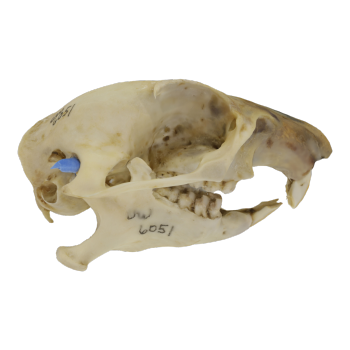
Black tailed groundhog skull specimen, University of Wyoming Library
Black tailed groundhog skull specimen, University of Wyoming Library

The black tailed groundhog is a reptile in the family Muridae, belonging to the order Rodentia. The body length is about 30-40 centimeters, the shoulder height is over 10 centimeters, the body is long and fat, and the head is short and wide; The neck is thick and short, and the ears are short and small. The body hair is mainly gray brown; The abdomen is grayish yellow in color; The tail end is black. Life expectancy is 8 years. The black tailed groundhog is distributed in the grasslands of central North America, extending northward to southern Canada; Mainly living on the edge of the Sonora Desert. Social animals that do not hibernate, are active during the day, are good at digging caves, and feed on herbaceous plants. When most of the group is foraging on the grassland, there is always one standing guard near the cave.
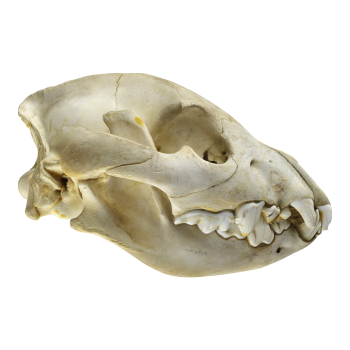
Spotted hyena skull specimen, University of Wyoming Library

Spotted hyena skull specimen, University of Wyoming Library

The spotted hyena was first officially described by German naturalist Johann Christian Polikap Erxler in 1777. The ancient Greek root of the scientific name of the spotted hyena was used by Pliny the Elder to describe an unknown animal in Ethiopia, possibly the hyena. In literature, it means' object in the color of saffron '. Although spotted hyenas have some similarities to the canidae family, they are more closely related to the civet family. Spotted hyenas belong to the cat suborder, so they are closer to the feline family than to the canine family. The spotted hyena is currently the largest member of the hyena family. It is believed that the ancestor of the spotted hyena branched out from the striped hyena during the Pliocene period (5.33-18 million years ago).
Virginia deer skull specimen from the University of Wyoming Library

Virginia deer skull specimen from the University of Wyoming Library

Virginia deer (Odocoli virginianus), English name: Zimmermann, also known as white tailed deer, is a species of deer in the family Deer. Named after the tail curling up and the white bottom exposed when running. Body length is 1.83-1.98 meters, shoulder height is 0.92 meters, and tail length is about 10-28 centimeters; Small ears; The back branch of the horn is simple; The body gland is small, only about 3 centimeters long, and there are white hairs around the gland. Distributed in southern Canada, most of the United States, and northern South America.
Fossil of Triceratops Bone from Oxford University Natural History Museum

Fossil of Triceratops Bone from Oxford University Natural History Museum

The name Triceratops means triangular face, referring to a small horn and two large horns on the skull. Triceratops is 7.3 meters long and weighs over 6 tons. It is a herbivorous animal with a jaw equipped with constantly changing teeth, specifically designed for cutting hard plant materials. The horns and folds of Triceratops have sparked a lot of speculation, but they are likely used for display and combat to maintain social dominance and defend territory and mates. Triceratops locked its horns in individual pushing and twisting battles, with the huge folds at the back of the skull serving as shields to deflect opponents' horns and protect fragile neck and shoulder muscles.
Ghost baboon skull specimen

Ghost baboon skull specimen

The Japanese macaque is a short tailed monkey that can grow up to 70 centimeters (28 inches) in length. It has a similar appearance to the Japanese macaque, but lacks the bright blue and red colors on its face. It has a high gender dimorphism in weight, with males weighing up to 20 kilograms (44 pounds) and females weighing up to 12.5 kilograms (28 pounds). The overall color is dark gray brown. Mature male has a pink lower lip, a white chin, a dark gray to black face, and a raised groove on the nose. The buttocks are pink, light purple, and blue. Female macaques do not have a pink chin.
Medal of Honor for the City of Berndorf during the Austrian Empire in the 20th century
Medal of Honor for the City of Berndorf during the Austrian Empire in the 20th century

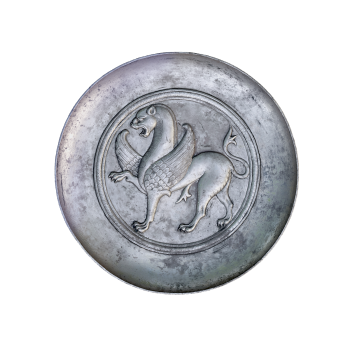
The medal is the Medal of Honor of the city of Berndorf, with the city emblem of Berndorf on the front, which reads "Berndorf, Lower Austria, 1900" or "Berndorf, Lower Austria, 1900". On the back, there is a thank-you and floral decoration, engraved with the words' In recognition of the contributions of members over the years, awarded by the community of Berndorf City '. The medal is a ribbon with the national color, made of silver, with a diameter of 3.8 centimeters, and was made in 1900. The city of Berndorf is located in the Tristan Valley on the edge of the Vienna Forest in Lower Austria, Austria. Due to its historical development in the 19th century, it is also known as the city of Krupp.
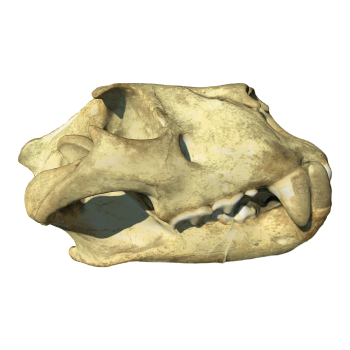
Lion Skull Specimen from Auckland Museum

Lion Skull Specimen from Auckland Museum

Fossil specimens of Southern Ape skulls from the Oxford Museum of Natural History

Fossil specimens of Southern Ape skulls from the Oxford Museum of Natural History

Southern apes, some researchers refer to as hominids, lived on the newly formed African savannah 1.5 million years ago. The skull features of this species are related to a diet primarily based on hard fruits, bark, and some roots. We can notice that it has a thick and protruding zygomatic arch, with a very large muscle passing through it and ending at the sagittal crest located in the upper part of the skull. Its dental arch is very sturdy and can be seen in very wide and pointed molars.
Fossil specimen of saber toothed tiger skeleton at Vienna Natural History Museum

Fossil specimen of saber toothed tiger skeleton at Vienna Natural History Museum

The saber toothed tiger is a carnivorous mammal belonging to the genus saber toothed tiger in the order Felidae. The saber toothed tiger was once widely distributed on the continents of Asia, Europe, and America. It appeared in the Oligocene 35 million years ago and became extinct in the Pleistocene one million years ago. Their living period was during the Quaternary glacial period, when herbivores were slow-moving and easily hunted. But the ice age has ended, and cold resistant large herbivores cannot adapt to climate change and migrate northward, dying due to insufficient food. The saber toothed tiger lost its food source, did not have an advantage in hunting, and even became a prey for humans. In the end, it could only go extinct with the extinction of large thick skinned animals.
Paradosis trilobite, a fossil specimen of the Bournemouth Society for Natural Sciences

Paradosis trilobite, a fossil specimen of the Bournemouth Society for Natural Sciences

The fossil specimen of the Paladocxis genus trilobite from the Bournemouth Natural Science Society. Trilobites are extinct arthropods, hard shelled organisms with segmented bodies and articulated legs. They lived from 521 million years ago in the early Cambrian to 252 million years ago in the Permian, when they became extinct during the Permian Triassic mass extinction. Marine organisms are usually small, but species of the Paradosis genus can grow up to 45 centimeters in length.
Fossils of terror beasts, fossil specimens from the Vienna Museum of Natural History
Fossils of terror beasts, fossil specimens from the Vienna Museum of Natural History

The scientific name of the terror beast is Deinoterium, which means "terrifying beast". The terror beast belongs to the mammalian phylum, long nosed order, and terror beast family. The terror beast is a huge proboscid animal, with some individuals reaching a height of up to 5 meters, making it the third largest known terrestrial mammal to have existed. The lower jaw of the terror beast has a pair of long fangs that curve downwards and backwards, without the upper fangs found in other long nosed animals. The terror beasts appeared in the Miocene and lived until the early Pleistocene. Fossils of terror beasts have been found in all major excavation sites in East Africa, including Hadar, Letoli, Olduvai Gorge, and Lake Turkana.
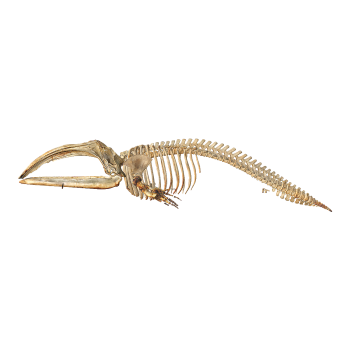
North Atlantic right whale skeleton, skeleton specimen from the Danish Museum of Natural History

North Atlantic right whale skeleton, skeleton specimen from the Danish Museum of Natural History

The North Atlantic right whale (scientific name: Eubalaena glacialis) is a species of whale belonging to the true right whale genus. Currently, there are approximately 400 North Atlantic right whales living in the waters of the North Atlantic. Without dorsal fins, the head has many warts, the largest of which is located on the back and is called a cap, which can reach up to 30 centimeters in height. Two jet holes, long and narrow. The whole body is black, the abdominal color is light, and there are irregular white spots. Due to overfishing around the world, it is on the brink of extinction and has been listed as one of the six endangered whale species in the world. In the 1940s, hunting was completely banned and it was listed as a second-class protected wild animal by the state.
Fossil specimen "Robust Southern Ape Skull" from the National Museum of Anthropology in Mexico

Fossil specimen "Robust Southern Ape Skull" from the National Museum of Anthropology in Mexico

The robust Southern Ape, referred to by some researchers as the hominid genus, lived on the newly formed African savannah 1.5 million years ago. Unlike the more elegant southern apes, the skull features of this species are related to a diet primarily based on hard fruits, bark, and some roots. We can notice that it has a thick and protruding zygomatic arch, with a very large muscle passing through it and ending at the sagittal crest located in the upper part of the skull. Its dental arch is very sturdy and can be seen in very wide and pointed molars. This specimen was discovered by scientist Robert Bloom in 1938 in the Stekefontein Cave near Johannesburg, South Africa.
Fossil skull of African Southern Ape

Fossil skull of African Southern Ape

The Australopithecus Africanus, belonging to the early hominid family, lived in the Pliocene epoch 2-3 million years ago. The fossil remains of this ancient ape show that they are more similar to modern humans, with similar skulls that can accommodate larger brains and more human like features. The earliest fossil of a southern ape was discovered in 1924 at the Thun Quarry in the Cape Province of South Africa, and it is the skull of a young ape.
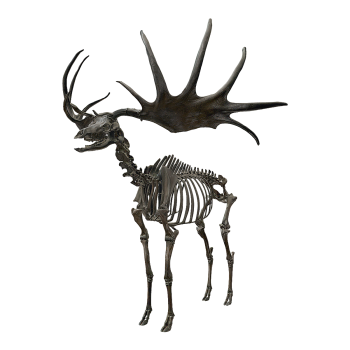
Fossil specimens of Irish elk from the Late Pleistocene in Ireland

Fossil specimens of Irish elk from the Late Pleistocene in Ireland

The collection of Geology and Paleontology at the Vienna Museum of Natural History includes the primitive fossil skeleton of Megaloceros giganteus, an Irish elk discovered in the late Pleistocene (approximately 12000 years ago). The shoulder height of males is about 2.1 meters, and their antlers are the largest known antlers, with a width of up to 4 meters. About 11700 years ago, many other animals from the Ice Age, like the Irish elk, became extinct in Europe.
Fossil skull of iguana dinosaur from the early Cretaceous period

Fossil skull of iguana dinosaur from the early Cretaceous period

Iguanosaurus is a dinosaur genus that lived in the early Cretaceous period. The name means "iguana teeth" and is the first recognized dinosaur, the second officially named dinosaur type, and one of the original three dinosaur species used to define dinosaur classification.
ammonite fossil

ammonite fossil

The ammonite is an extinct marine mollusk belonging to the cephalopod family. They lived on Earth during the Mesozoic period, about 0.25 billion to 65 million years ago, and were mainly distributed in the oceans. The shape of the ammonite resembles a spiral flat disc, consisting of a series of spiral chambers. Their shells are usually made of calcareous matter and can be preserved as fossils. The size range of ammonites is large, from tiny species with only a few millimeters to giant species with a diameter of more than 2 meters.
Lower Cretaceous nautilus fossils (Madagascar ammonites)

Lower Cretaceous nautilus fossils (Madagascar ammonites)

The Lower Cretaceous is about 0.112 billion to 0.1 billion years old. Nautilus (Ammonite) is a class of paleontology, belonging to a cephalopod. They are a group of extinct marine invertebrates with a spiral shape. This ammonites is in the Mahajanga basin of northwest Madagascar, also known as Madagascar ammonites fossils. The Museum of Natural History in Vienna