
Creative Ornaments: Four No Little Monks Don't Say Little Shami Statue Ornaments
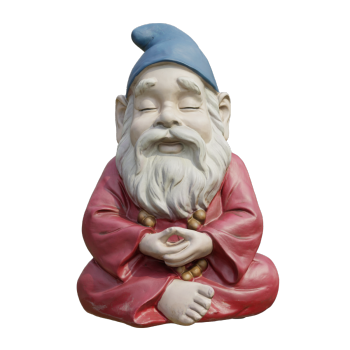
Creative Ornaments: Four No Little Monks Don't Say Little Shami Statue Ornaments

Naughty house garden goblin statue resin goblin statue outdoor decoration

Naughty house garden goblin statue resin goblin statue outdoor decoration

Nanhai Guanyin Bodhisattva Buddha Statue Standing Statue Guanyin Bodhisattva Dehua White Porcelain

Nanhai Guanyin Bodhisattva Buddha Statue Standing Statue Guanyin Bodhisattva Dehua White Porcelain

Cupid statue at the Amsterdam National Museum

Cupid statue at the Amsterdam National Museum

Maitreya Buddha Pure Copper Buddha Statue Ornament Gold Bag Laughing Face Buddha Bag Monk

Maitreya Buddha Pure Copper Buddha Statue Ornament Gold Bag Laughing Face Buddha Bag Monk

Baltimore City Monument Statue 'Mrs. Baltimore'

Baltimore City Monument Statue 'Mrs. Baltimore'

Lady Baltimore is located on the Battle Monument in the city center. Italian sculptor Antonio Capellano created the marble statue 'Mrs. Baltimore' in 1815. In the same year, this monument was adopted as the emblem of Baltimore, which also helped to give rise to the city's nickname "Memorial City". Interesting fact: Mrs. Baltimore's figure can be seen on the trash cans throughout the city.
The Bronze Statue of Zhou Dynasty's Respectful Posture

The Bronze Statue of Zhou Dynasty's Respectful Posture

This small and delicate figure stood with outstretched arms in a respectful posture. His curled fingers formed a socket that could grip the handle of the oil lamp. The character is wearing a long waistcoat with a regular waistband fixed by a belt hook around their waist. Throughout the entire Shang and Western Zhou dynasties (1600-771 BC), bronze figures were rare, but now several bronze figures have been unearthed from tombs of the Warring States period in the late Zhou dynasty as lamp posts. The strong sculptural quality of this character foreshadows the naturalism encountered in the subsequent Qin (221-206 BC) and Western Han (206-25 BC) eras.
Buddha statue, Shakyamuni Buddha, marble offering, household sitting, Buddha statue

Buddha statue, Shakyamuni Buddha, marble offering, household sitting, Buddha statue

Double Child Guanyin Statue Ornament Old Style Desktop Fortune Attraction Colorful Gilded Buddha Statue

Double Child Guanyin Statue Ornament Old Style Desktop Fortune Attraction Colorful Gilded Buddha Statue

Pure copper statue of Atlas in ancient Greek mythology

Pure copper statue of Atlas in ancient Greek mythology

One of the Titans in Greek mythology. Son of Iapetus. Due to the failure to resist Zeus, he was punished to hold his head and hands against the sky at the westernmost point of the world. Europeans usually decorate the map cover with his portrait, so the atlas is called Atlas.
Sanxingdui Bronze Mask

Sanxingdui Bronze Mask

The Sanxingdui Site is an ancient Shu culture site dating back approximately 5000 to 3000 years, during the late Neolithic period. In January 1998, it was announced by the State Council as a "National Key Cultural Relics Protection Unit" and has now been included in the list of World Cultural Heritage Key Protection Units. At the Sanxingdui site, many bronze human masks were unearthed, totaling more than 20 earth human masks, divided into three types: large, medium, and small. These bronze mask groups, represented by the vertical eye masks, are one of the most distinctive and spiritually cultural relics in Sanxingdui. They are the earliest and largest mask groups unearthed in China.
The kneeling statue of Egyptian Queen Hatshepsut

The kneeling statue of Egyptian Queen Hatshepsut

Hatshepsut (reigned from 1503 BC to 1482 BC). The queen of the 18th Dynasty of Egypt, who reigned for 21 years, passed away, and after her death, Syria and Palestine declared independence (later conquered by Thutmose III). After Thutmose III began to govern alone, he did not immediately begin to eliminate the traces of the governance of Hatshepsut. The related retaliatory actions were only launched in the late period of his reign, when the pharaoh ordered the destruction of many carvings engraved with her name and image.
Gandara relief sculpture

Gandara relief sculpture

This is a Gandhara relief depicting a person riding between the two humps of a camel, holding a sacred object in both hands, with a solemn and sorrowful expression. The person in front turned around to look at the artifact, with the same serious expression on their face. This relief is from the Swat region in the third century AD and is made of gneiss. Gandara art is a Buddhist art form from the Gandara region in the northwest of the Indian subcontinent (now eastern Pakistan and Afghanistan), which reached its peak around the 1st century BC to the 5th century AD.
Marble statue from the Roman Empire period, 'The Injured Amazon'

Marble statue from the Roman Empire period, 'The Injured Amazon'

In Greek art, the Amazon is a mythical race of female warriors from Asia Minor, often depicted fighting against heroes such as Hercules, Achilles, and Theseus. This statue represents a refugee who escaped from battle, losing her weapon and bleeding from the wound beneath her right breast. Her shawl was untied on her shoulders, a waistband was tied around her waist, and a temporary reins were tied around her horse's back. Despite her predicament, there were no signs of pain or fatigue on her face. She gently leaned against a pillar on the left, with her right arm elegantly resting on her head, a gesture usually used to indicate sleep or death.
The Sykes Standing Statue, a diorite statue from the 18th Dynasty of ancient Egypt

The Sykes Standing Statue, a diorite statue from the 18th Dynasty of ancient Egypt

This cultural relic is a granite diorite statue of the 18th Dynasty standing in the position of Saikemaite. This is a statue depicting the goddess Sykes, who appears in the form of a lion headed female body but wears a sacred female wig. Her left foot is forward, her left hand holds a papyrus staff, and her right hand holds the Ankh of Life. Most of the right arm of this statue has been lost. The height of this statue is 120 centimeters, the width is 49 centimeters, and the depth is 47 centimeters. It is currently housed in the British Museum.
Maria Sobanska bust created by Konstantin Lashka

Maria Sobanska bust created by Konstantin Lashka

The name of the statue is "Maria Soba ń ska's bust", created by artist Konstanty Laszczka in 1918. This artwork is carved from Carrara marble and is a life sized sculpture. The details of this work are handled perfectly. Maria Sobanska was born into a powerful aristocratic family in Skarzky and lived from 1887 to 1948. It is currently housed in the Gorice Regional Museum.
Saiko and the Jar "created by Bertel Thorvaldsen

Saiko and the Jar "created by Bertel Thorvaldsen

The name of this cultural relic is "Saike and Jar", created by artist Bertel Thorvaldsen in 1806. This work is made of gypsum and is 1.32 meters high. It is currently housed in the Thorvaldsen Museum in Copenhagen, Denmark.
Mus é e d'Orsay in Paris and the Metropolitan Museum of Art in New York, "Ugolino and His Descendants"

Mus é e d'Orsay in Paris and the Metropolitan Museum of Art in New York, "Ugolino and His Descendants"

Ugolino and His Sons "is an academic creation by Calpo during his study abroad in Italy. According to the composition principles set by the academy, a sculpture is only allowed to have one to two characters. However, Karbo violated this rule by creating four characters first, and later dividing them into five characters to restore the authenticity of history, forming an inseparable group that is tightly intertwined. The reason why this theme fascinates Karl Bo is that he can fully express the psychological conflict between human and animalistic nature through male nudity, better showcasing his romantic passion and realistic expression techniques.
Wooden Statue of Queen Mother of the Southern Song Dynasty

Wooden Statue of Queen Mother of the Southern Song Dynasty

The Queen Mother of the West is the supreme goddess of Taoism. After the establishment of Taoism, Queen Mother of the West was incorporated into the pantheon and became the supreme goddess of Taoism. Commonly known as the 'Queen Mother of the West' among the people. The title of "Queen Mother of the West" first appeared in the "Classic of Mountains and Seas". It is called "Queen Mother of the West" because her residence on Kunlun Hill in Hanzhong was originally from the west. The birthday of Queen Mother of the West falls on the third day of the third lunar month.
The Painting of Emperor and Empress Worshiping Buddha in Longmen Grottoes

The Painting of Emperor and Empress Worshiping Buddha in Longmen Grottoes

The "Emperor and Empress Dowager Worship to Buddha" sculpture depicts the procession of offerings from Emperor Xiaowen and Empress Wenzhao of Northern Wei. The "Emperor and Empress Worship to Buddha" is a relief on the east wall of the Binyang Middle Cave in Longmen Grottoes. It was created during the Northern Wei Dynasty and is an important work of ancient Chinese relief sculpture, which was later stolen and sold abroad. The "Northern Wei Emperor Xiaowen's Worship to Buddha" painting is currently housed in the Museum of Art in New York City, USA, while the "Empress Wen Zhao's Worship to Buddha" painting is housed in the Nelson Museum of Art in Kansas City, USA.
"Terra Cotta Warriors and Horses and Troops"

"Terra Cotta Warriors and Horses and Troops"

The Terra Cotta Warriors, namely the Terra Cotta Warriors in the the Mausoleum of the First Qin Emperor, also referred to as the Terra Cotta Warriors or the Terracotta Warriors, are among the first batch of national key cultural relics protection units and the first batch of Chinese world heritage sites. A charioteer refers to a soldier on a chariot, excluding the rider and driver. There are usually two soldiers on a chariot, namely the left chariot figurine and the right chariot figurine. The figurine on the left side of the carriage is dressed in a long robe, covered in armor, with leg guards on the shin and a crossbeam on the head. It holds weapons such as spears, spears, and halberds in its left hand, and presses the carriage in its right hand. The attire of the figurine on the right side of the car is the same as that of the figurine on the left side, but the posture is opposite. They are both the main force of tank warfare, but according to literature records, they have certain differences in weapon configuration and combat responsibilities.
Terracotta Warriors and Horses of the Qin Dynasty

Terracotta Warriors and Horses of the Qin Dynasty

In terms of identity, it is lower than the general figurine and can be classified as intermediate or lower level. The number of Qin terracotta warriors in the pit is extremely small, with less than ten unearthed, divided into two categories: the warrior robe general terracotta warriors and the armored general terracotta warriors. The armored general figurine appears to have a double or single crown on its head, and there are several different forms of armor worn. The terracotta warriors in battle robes are dressed in plain attire, but have floral knots on their chests. The front, back, and shoulders of the armored terracotta warriors are adorned with eight colorful floral knots, which are gorgeous, colorful, and elegant, highlighting their rank, identity, and majesty in the military.
Marble Lotus Terrace Buddha statue

Marble Lotus Terrace Buddha statue

Lotus Terrace Thousand Hand Guanyin Stone Carving Sculpture

Lotus Terrace Thousand Hand Guanyin Stone Carving Sculpture

Ornament Crafts Xi'an Tourist Souvenirs Qin Terracotta Warriors Qin Shi Huang Clay Figurines Clay Sculptures Single Terracotta Warriors

Ornament Crafts Xi'an Tourist Souvenirs Qin Terracotta Warriors Qin Shi Huang Clay Figurines Clay Sculptures Single Terracotta Warriors

Xi'an Cultural and Creative Tourism Souvenir Terra Cotta Warriors, Terracotta Warriors and Horses, General Terracotta Warriors, Kneeling Shooting, Mercenary Sand and Stone Table Decoration

Xi'an Cultural and Creative Tourism Souvenir Terra Cotta Warriors, Terracotta Warriors and Horses, General Terracotta Warriors, Kneeling Shooting, Mercenary Sand and Stone Table Decoration

Shakyamuni Lotus Base Ornament, Great Sun Buddha, Golden Body Buddha Statue

Shakyamuni Lotus Base Ornament, Great Sun Buddha, Golden Body Buddha Statue

The Mausoleum of the First Qin Emperor Vertical Shooting Figurine

The Mausoleum of the First Qin Emperor Vertical Shooting Figurine

The standing shooting terracotta warriors are a relatively special type of soldier among the Qin terracotta warriors, unearthed in the eastern part of Pit 2. They carry crossbows and bow weapons, and together with kneeling shooting terracotta warriors, form a crossbow army formation. The standing shooting figurine is located on the formation table, dressed in light military robes, tied up in a bun, with a leather belt tied around the waist, and square toed pointed shoes on the feet. The attire is light and flexible.
Terracotta Warriors of the Mausoleum of the First Qin Emperor General

Terracotta Warriors of the Mausoleum of the First Qin Emperor General

The Terracotta Warriors of the General, also known as the Terracotta Warriors of the Army and Officials, are pottery terracotta warriors, which were unearthed in Pit 1 and Pit 2 of the Terra Cotta Warriors and Horses in Lintong District, Xi'an, Shaanxi Province.
Tang Dynasty female figurines

Tang Dynasty female figurines

The custom of burying with terracotta figures has a long history and was popular in the Tang Dynasty for its lavish burial. The craftsmanship of making terracotta warriors has also become more mature, with lifelike depictions of terracotta warriors, gorgeous clothing, and the emergence of Tang Dynasty tri colored pottery craftsmanship, which resulted in a large number of pottery artifacts being buried in noble tombs at that time. Among them, the terracotta warriors of noble women were one of the essential accompanying burial terracotta warriors.
Bodhidharma statue

Bodhidharma statue

Bodhidharma was a Buddhist monk who lived in the 5th or 6th century. Traditionally, he is considered the successor of Zen Buddhism to China and is regarded as the first patriarch of China. According to Chinese legend, he also began physical training for Shaolin monks, leading to the birth of Shaolin Kung Fu. In Japan, he is called Damo. Regarding the artistic depiction of Bodhidharma, he is depicted in Buddhist art as a non Chinese with a hot temper, thick beard, and wide eyes. He is referred to as' blue eyed Hu 'in Zen texts.
The Louvre Museum in Paris, France, 1686 "Four Captive Sculptures"

The Louvre Museum in Paris, France, 1686 "Four Captive Sculptures"

These prisoners were taken from the pedestal of the Victory Square statue, representing the country defeated by the Treaty of Nijmegen (1679). Everyone expressed different reactions to imprisonment: resistance, hope, resignation, or sadness. They were created by Martin Desjardins, a renowned Dutch sculptor who was active during the reign of Louis XIV. Four defeated countries: symbolizing the four countries that were defeated at the time of the signing of the Treaty of Nijmegen. Each represents a different era of humanity and a different attitude towards imprisonment.
Terracotta Warriors and Horses of the Qin Dynasty

Terracotta Warriors and Horses of the Qin Dynasty

The Terra Cotta Warriors, namely the Terra Cotta Warriors in the the Mausoleum of the First Qin Emperor, also referred to as the Terra Cotta Warriors or the Terracotta Warriors, are among the first batch of national key cultural relics protection units and the first batch of Chinese world heritage sites. A charioteer refers to a soldier on a chariot, excluding the rider and driver. There are usually two soldiers on a chariot, namely the left chariot figurine and the right chariot figurine. The figurine on the left side of the carriage is dressed in a long robe, covered in armor, with leg guards on the shin and a crossbeam on the head. It holds weapons such as spears, spears, and halberds in its left hand, and presses the carriage in its right hand. The attire of the figurine on the right side of the car is the same as that of the figurine on the left side, but the posture is opposite. They are both the main force of tank warfare, but according to literature records, they have certain differences in weapon configuration and combat responsibilities.
Knight Henry IV, created by Alfred Emilian de Newell

Knight Henry IV, created by Alfred Emilian de Newell

A sculpture created by Alfred Emilian de Newell, named Knight Henry IV, created in 1843. This artwork is made of bronze with a brown luster. Its dimensions are: height 56 centimeters, width 56 centimeters, height 27 centimeters. Alfred Emilian de Newerck was a French sculptor known for his love of ancient art and academia. This artwork is currently housed in the National Museum of Beaufort in Paris, France.
World's top art sculpture, broken arm Venus plaster statue

World's top art sculpture, broken arm Venus plaster statue

The Venus de Milos, also known as the "Broken Arm Venus", was discovered on Milos Island in 1820 and immediately caused a sensation throughout Europe. It was contested by several countries and the arms of the sculpture were unfortunately destroyed during the chaos. After many twists and turns, it was finally purchased by France as a birthday gift to King Louis XVIII of France, who then gave it to the Louvre. Venus also became a broken arm goddess from then on. However, the lost arms instead interpret a flawed beauty.