
Wood Bust of St. Peter

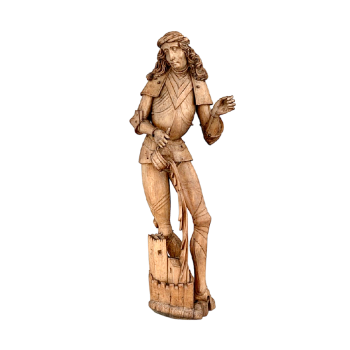
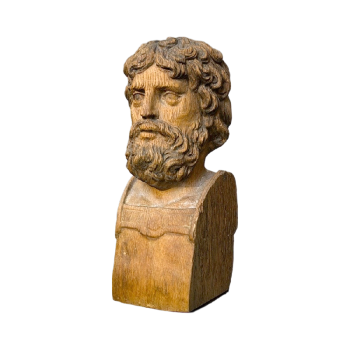
Wood Bust of St. Peter

St. Peter (also translated as St. Peter) was one of the most important leaders of early Christianity and the head of the twelve apostles of Jesus Christ. His original name was Simon, and Jesus named him "Peter" (which means "rock" in Greek) and said he would build his church on this rock. He was one of the first followers of Jesus. The Roman Catholic Church reveres St. Peter as the first Bishop of Rome, the first pope, and the famous Vatican Basilica of St. Peter (St. Peter's Basilica) is built above his burial ground.
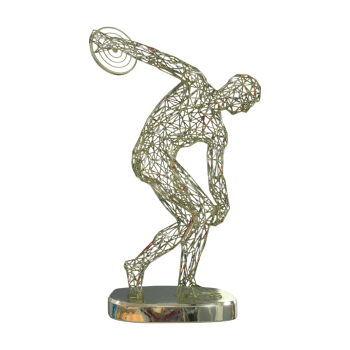
Geometric Abstract Discus Player Like

Geometric Abstract Discus Player Like

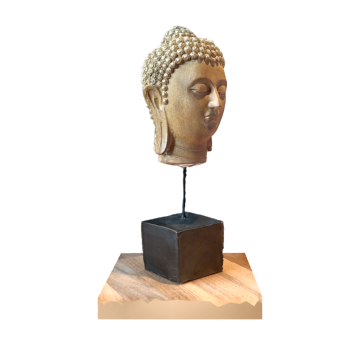
12th Century Stone Guanyin Head

12th Century Stone Guanyin Head

It is clear that the theme of the model is the head of Guanyin carved by stone in the 12th century, "Avalokiteshvara" is Guanyin Bodhisattva (the god symbolizing compassion in Buddhism), "12th C CE" points to its historical period (the 12th century AD, corresponding to the heyday of Buddhist art in Song Dynasty of China or Southeast Asia at the same time), "Stone" emphasizes that the material is stone (presumably sandstone, marble or limestone), and the model restores the religious symbolic significance and artistic style, passing on the solemn and compassionate atmosphere of Buddhist statues.
Ancient Egypt 19th Dynasty Pharaoh Head

Ancient Egypt 19th Dynasty Pharaoh Head

The theme of the model is clearly the head statue of the pharaoh of the 19th dynasty of ancient Egypt (about 1292 BC -1189 BC, the heyday of the New Kingdom), focusing on its solemn image as a symbol of royal power-typical pharaoh's face features, iconic headdresses (such as Niemes headscarf, crown) and royal power symbols (such as beard), restore the artistic norms of the ancient Egyptian sculpture "positive law" and the visual expression of the pharaoh's "unity of divinity and kingship" to convey the historical weight and religious solemnity of the ancient Egyptian civilization.
Roman Emperor Nero statue (3D printable)

Roman Emperor Nero statue (3D printable)

Nero Claudius Drusus Germanicus (Latin: Nero Claudius Drusus Germanicus, December 15, A.D. 37-June 9, A.D. 68), full name Nero Claudius Caesar Augustus Germanicus, formerly Lucius Domitius Akhenobus, the fifth emperor of the Roman Empire and the last emperor of the Julia Claudius dynasty (reigned from 54 AD to 9 June 68 AD).
Darth Vader bust (supports 3D printing)

Darth Vader bust (supports 3D printing)

Anakin Skywalker (Anakin Skywalker, old translation Anakin Skywalker, Anakin Skyvok, Anakin, Anakin, Anakin, Anakin) is the male lead in the series of Star Wars prequel trilogy, which runs through the six Star Wars films and Star Wars Story: Rogue One, and is also the most contradictory and tragic character in the Star Wars series. Originally a member of the Jedi Order, he was later compelled by the Sith Lord Darth Sidious to become the Sith Lord Darth Vader.
Tutankhamun sarcophagus (supports 3D printing)

Tutankhamun sarcophagus (supports 3D printing)

Tutankhamun was one of the most famous pharaohs of ancient Egypt. Many people know this young pharaoh because of its exquisite golden face. Among his many burial objects, the inner gold coffin is also dazzling, and it is also a world-famous art treasure. It is 187cm long and weighs 111kg. There are hieroglyphics in the center and edge.
Upper Ratsiska Monument

Upper Ratsiska Monument

"Laziška Gornja" () is a traditional village in the Gorizia region (Goriška Brda) in southwestern Slovenia, located in the hilly terrain of the southern foothills of the Alps, adjacent to the tributary of the "Isonzo" (Soča), is a typical example of the "karst countryside" of Slovenia.
Nefertari Temple Statue Ramses II

Nefertari Temple Statue Ramses II

"Statua Ramses II and Nefertari Temple Statue" (Statua Ramses II Tempio Nefertari) is a giant rock carving group in the New Kingdom period of ancient Egypt (about the 13th century BC), located in Aswan Province in southern Egypt Inside the temple, it is a monumental building built by the ancient Egyptian pharaoh Ramses II for his favorite queen Nefertari. With its grand scale, exquisite craftsmanship and profound religious and political connotation, this group of statues has become one of the most representative artistic treasures of ancient Egyptian civilization.
Sisters of the Poor Memorial Statue

Sisters of the Poor Memorial Statue

The "Sisters of the Poor" is a religious group in the history of Italian Catholicism with the core of "serving the poor". It was mainly active in northern Italy (especially the Lombardy region) from the 19th century to the early 20th century. The "poverelle" (plural) in its name means "poor women", which reflects the original mission of the Order-to help poor women and families through religious care and practical actions. It is the concrete practice of the Catholic "benevolence spirit" in the local society.
Lost Old Man with Wood Carving in the Church of Guadalajara Harare Nella, Spain

Lost Old Man with Wood Carving in the Church of Guadalajara Harare Nella, Spain

"Spanish Guadalajara Harare Nera Church Wood Carving" is a group of classic wood carvings in Guadalajara (Guadalajara) Iglesia de Renera Church in central Spain. It is famous for its exquisite carving technology and profound religious connotation. As an important carrier of religious art in Guadalajara, this group of wood carvings is not only the core of church architectural decoration, but also the "living witness" of Spanish traditional wood carving skills and Christian culture ".
Spanish Guadalajara Harare Nella church wood carving to look at the distant king

Spanish Guadalajara Harare Nella church wood carving to look at the distant king

"Spanish Guadalajara Harare Nera Church Wood Carving" is a group of classic wood carvings in Guadalajara (Guadalajara) Iglesia de Renera Church in central Spain. It is famous for its exquisite carving technology and profound religious connotation. As an important carrier of religious art in Guadalajara, this group of wood carvings is not only the core of church architectural decoration, but also the "living witness" of Spanish traditional wood carving skills and Christian culture ".
Spain Guadalajara Harare Nella church wood carving broken wing angel

Spain Guadalajara Harare Nella church wood carving broken wing angel

"Spanish Guadalajara Harare Nera Church Wood Carving" is a group of classic wood carvings in Guadalajara (Guadalajara) Iglesia de Renera Church in central Spain. It is famous for its exquisite carving technology and profound religious connotation. As an important carrier of religious art in Guadalajara, this group of wood carvings is not only the core of church architectural decoration, but also the "living witness" of Spanish traditional wood carving skills and Christian culture ".
Man looking at wood carvings in Guadalajara Harare Nella Church, Spain

Man looking at wood carvings in Guadalajara Harare Nella Church, Spain

"Spanish Guadalajara Harare Nera Church Wood Carving" is a group of classic wood carvings in Guadalajara (Guadalajara) Iglesia de Renera Church in central Spain. It is famous for its exquisite carving technology and profound religious connotation. As an important carrier of religious art in Guadalajara, this group of wood carvings is not only the core of church architectural decoration, but also the "living witness" of Spanish traditional wood carving skills and Christian culture ".
Woman supported by wood carving in the church of Guadalajara Harare, Spain

Woman supported by wood carving in the church of Guadalajara Harare, Spain

"Spanish Guadalajara Harare Nera Church Wood Carving" is a group of classic wood carvings in Guadalajara (Guadalajara) Iglesia de Renera Church in central Spain. It is famous for its exquisite carving technology and profound religious connotation. As an important carrier of religious art in Guadalajara, this group of wood carvings is not only the core of church architectural decoration, but also the "living witness" of Spanish traditional wood carving skills and Christian culture ".
Vlad III Bust

Vlad III Bust

Vlad III (Vlad-pepeși) was the ruler of the Principality of Wallachia (now southern Romania) in the 15th century (reigned from 1456 to 1476). He was famous for his "iron-fisted monarch against the Ottoman Empire" and "symbol of cruel punishment. His reign was a key stage in the transformation of Wallachia from Ottoman vassals to "independent nation-state", and his name became a classic symbol in Western culture because of its association with "vampire legends.
Bust of Vasili Lupe

Bust of Vasili Lupe

Vasile Lupu was a 17th-century ruler of the Principality of Moldova (now northeastern Romania) (reigned 1634-1653) and an important monarch belonging to the series of "Grand Dukes" (Domnitor) of Moldova. His reign was a key stage in Moldova's transformation from a vassal of the Ottoman Empire to a "semi-independent regime". He was famous for strengthening centralization, promoting cultural prosperity and resisting foreign invasion. He was regarded as one of the "most reformed monarchs" in Moldova's history.
The Tomb of Anna Belasquez and Pedro de Galvez

The Tomb of Anna Belasquez and Pedro de Galvez

The "Tomb of Anna Berasquez and Pedro de Galvez" is an important relic of Spanish colonial American history, located in the Catedral Metropolitana de la Asunción de México in present-day Mexico City, Mexico. The tomb is owned by 16th century Spanish colonial aristocrats Ana Velázquez (Ana Velázquez) and Pedro de Gálvez (Pedro de Gálvez), both of whom are famous for their participation in the Spanish conquest and colonial rule of Mexico.
Medieval alabaster relief in Siguenza, Spain

Medieval alabaster relief in Siguenza, Spain

"Medieval alabaster relief in Sigüenza, Spain" is a representative work of medieval art remains in Sigüenza, Castilla-La Mancha, northeast of Spain. It is made of alabaster (Alabaster, a kind of translucent soft carbonate rock) and carved through shallow relief (Relief). This type of relief was widely decorated in medieval churches, monasteries and aristocratic mansions. It was not only the visual carrier of religious belief, but also the pinnacle of medieval Spanish art and technology.
Bust of Matai Basallab

Bust of Matai Basallab

Matei Basarab was a 17th-century monarch of Wallachia (Wallachia, present-day southern Romania), reigning from 1632 to 1654. He is one of the most influential rulers in Wallachian history. He is famous for consolidating national sovereignty, promoting cultural prosperity and resisting Ottoman intervention. He is regarded as the promoter of "Wallachian cultural and artistic revival. Wallachia was an important duchy in medieval and modern Eastern Europe, located between the Carpathians and the Danube, and long under the control of the Ottoman Empire (which became its vassal since the 15th century).
Coal mine stone statue coal mine worker portrait

Coal mine stone statue coal mine worker portrait

Bogdan I Bronze Bust

Bogdan I Bronze Bust

Bogdan I () was an early ruler of the Duchy of Moldavia (Principality Moldavia) in the 14th century, and his reign (c. 1363-1367) was seen as a key stage in Moldavia's transition from scattered feudal fiefdoms to a unified duchy. By integrating territories and resisting external threats, he laid the foundation for the independence and sovereignty of Moldavia, and was an important monarch in Moldavia's history.
Prince of Orange frigate bow image

Prince of Orange frigate bow image

The "Prince of Orange"-class frigate, built in 1785, belonged to the Dutch Navy and was active during the Napoleonic Wars.
Della Robbia Family Tin Glazed Pottery Relief

Della Robbia Family Tin Glazed Pottery Relief

This relief is in the Poole Museum. Della Robbia is a famous Italian Renaissance art family, famous for its tin glazed pottery relief (Terracotta Relief).
Nepalese goddess of wealth Lakshmi temple with dog woman

Nepalese goddess of wealth Lakshmi temple with dog woman

The dog-carrying woman was built under the auspices of Jagat Prakash Malla (reigned from 1660 to 1670), and is the core of the guardian sculpture group of the steps of "Lakshmi Temple, Goddess of Wealth"(Siddhi Lakshmi Temple) in Bhaktapur Durba Square.
Bali Heroes Monument Bali Welcome Statue

Bali Heroes Monument Bali Welcome Statue

The Monument to Balinese Heroes (Tugu Pahlawan) is a unique "welcoming statue" in Bali, usually standing at important entrances. The statue, located at the entrance square of the Tugu Pahlawan National Heroes Monument in Amlapa (Amlapura), Bali, was created in the 1980 s and was completely renovated and restored in the early 1990 s.
Statue of Simón Bolívar in Curla Reina, Paris, France

Statue of Simón Bolívar in Curla Reina, Paris, France

Simón Bolívar (1783-1830), known as the "Liberator", was a prominent Venezuelan military and political leader. He fought for the freedom of South America from the Spanish Empire. Although the struggle took many years and was not completely successful, he is still remembered as a great military leader with major victories in Venezuela, Colombia, Peru and other places. His efforts led directly to the formation of the countries of today's Venezuela, Bolivia, Colombia, Ecuador, Peru and Panama.
Statue of Nepalese Revolutionary Martyr Shukla Raj Shastrii

Statue of Nepalese Revolutionary Martyr Shukla Raj Shastrii

Shukla Raj Shastrii (Shukraraj Shastri) is an important revolutionary martyr, intellectual and social reformer in the history of Nepal. He was known for his opposition to the tyranny of the Rana regime and contributed greatly to the social progress and linguistic development of Nepal. Sterry was arrested for his social reform work and political struggle and hanged in 1941. He was one of the four martyrs who overthrew Rana's rule. Not only did he have an important influence in the political field, he also excelled in linguistics, writing books on Nepali grammar and children's literature.
Statue of French Cultural Heritage Carrousel Garden

Statue of French Cultural Heritage Carrousel Garden

"La France Victorieuse" () is a towering statue located in the Carrousel Garden in Paris. The statue was created by artist Antoine-François Gérard (1760-1843).
French King Statue King Louis XIV STL Model

French King Statue King Louis XIV STL Model

This statue of Louis XIV, located in the Place de la Victoire in Paris, was created by François Joseph Bosio and unveiled in 1822.
French Heritage Statue of San Pedro

French Heritage Statue of San Pedro

San Pedro (died between 64 and 68 AD) was one of the Twelve Apostles of Jesus Christ and one of the first leaders of the early church. According to Christian tradition, Peter was crucified under the Roman Emperor Nero. He is traditionally considered the first bishop or pope of Rome, and also the first patriarch of Antioch by Eastern Christian tradition.
France Paris Luxembourg Garden Statue Queen Mathilde

France Paris Luxembourg Garden Statue Queen Mathilde

Queen Mathilde, consort of the Conqueror of Guillaume Le, French and British historical figure. In one hand she held a scepter with a lily, the symbol of royal power, and in the other a sword. Statue by French sculptor Jean-Jacques Elchschocht (Jean-Jacques Elshoecht) (1797-1856), located in the Luxembourg Garden, Paris.
Japanese Cultural Heritage Zunde Ninomiya Statue

Japanese Cultural Heritage Zunde Ninomiya Statue

Zunde Ninomiya was a 19th century Japanese agricultural leader, great economist and moralist. His life was inspiring and was used as a model or moral guide in pre-World War II Japan. He was born on a farm where his parents died when he was a teenager in the aftermath of the flood of 1791. He worked hard on his uncle's farm and studied at night in his free time. That's why he behaves as a child, reading with a bundle of wood on his back. As an adult, he developed several improvements in about 700 towns that made their farming more efficient. He also managed to develop an impressive
French Paris Cultural Heritage Russian Expeditionary Force Monument

French Paris Cultural Heritage Russian Expeditionary Force Monument

Produced by Russian artist Vladimir Surovtsev. The monument was inaugurated in 2011 to honor the memory of the Russian Expeditionary Force in France during World War I. In 1916, due to the critical situation in France, the Allies asked Russia for help. Two brigades were sent from Russia. They will find themselves involved in areas where the British, French, Italian and (Macedonian) Albanians, Greeks and Portuguese work together. Of the 20,000 soldiers, more than 5000 died, most of them in the Second Battle of Aisne.
Philippine Cultural Heritage Miguel Marval Carpio Monument

Philippine Cultural Heritage Miguel Marval Carpio Monument

Miguel Malvar y Carpio (September 27, 1865-October 13, 1911) was a Filipino commander who fought in the Philippine Revolution and later in the Philippine-American War. After the Americans surrendered to Resistance leader Emilio Aguinaldo in 1901, he was given command of the Philippine Revolutionary Forces. The statue is located in St. Thomas, Batangas, Philippines.
1 2 3 4 5 6 7 8 9 ... 16 Next