August III expedition statue

August III expedition statue

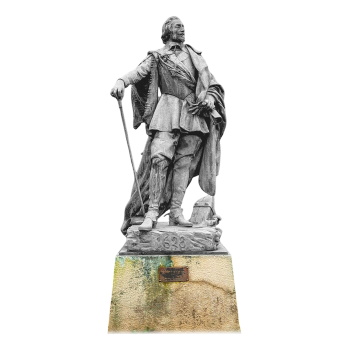
The statue is located in the Neustadt district of Dresden, Germany, near the Auguste Bridge, where Elector of Saxony and King Frederick August II of Poland, also known as Auguste III, rides on a leaping horse. The statue sits on a building pedestal decorated with scrolls and kartushes (scrolls). The statue shows the knight sitting deep on the horse. The king wore the uniform of the Roman leader and had his hairstyle in the fashion of the 18th century.
18th century statue of Auguste III Wetin

18th century statue of Auguste III Wetin
The statue is displayed in the National Art Collection at Wawel Royal Castle. Auguste III Weiting was the king of Poland and Lithuania who had an important influence on Polish history during his 18th century reign. The statue was carved in the Classicist style using porcelain. Wawel Royal Castle is one of the most important historical and cultural sites in Poland, with a large collection of precious works of art and historical artifacts. This statue is one of the important collections, showing important figures and artistic styles in Polish history.
Bust of Josef Poniatowski

Bust of Josef Poniatowski

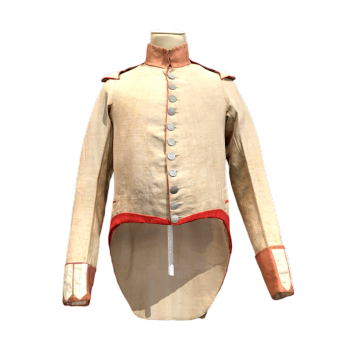
The sculpture was created by Polish sculptor Jakub Tartarkiewicz and is on display at the Krakow National Museum. The sculpture depicts a portrait of renowned Polish military leader Josef Poniatowski. Poniatowski was an important figure in Polish history who fought for Poland's independence and freedom during the Napoleonic Wars.
Sarcophagus of King Casimir IV of Poland

Sarcophagus of King Casimir IV of Poland

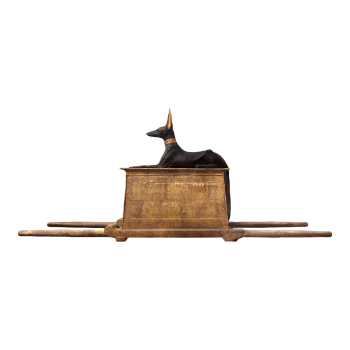
Casimir IV's sarcophagus comes from the Chapel of the Holy Cross in Wawel Cathedral and is an important exhibit in the Wawel Royal Castle Museum. Casimir IV (November 30, 1427-June 7, 1492) was an important monarch in Polish history and the youngest son of King Władysław II of Poland. He was made Grand Duke of Lithuania by the Lithuanian nobility at the age of 13, and became King of Poland after his brother, King Władysław III, died in 1444. During his reign, Casimir IV successfully defeated the Teutonic Knights, recaptured Pomerania, and incorporated Prussia into Poland.
Sarcophagus of Queen Jadwiga of Poland

Sarcophagus of Queen Jadwiga of Poland

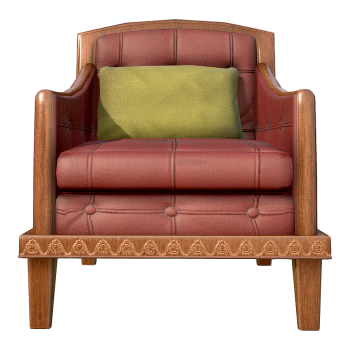
This model of the sarcophagus of the Queen of Jadwiga is an important exhibit in the Wawel Royal Castle - State Art Collection. Queen Jadwiga is a famous queen in Polish history, and her sarcophagus model shows her historical status and cultural influence. The sarcophagus model is made of marble and silver plating and is beautifully detailed, showing the image and decoration of the queen. With this exhibit, the Royal Castle Museum of Wawel shows visitors the rich heritage of Polish history and culture.
Andrzej Tadesh Bonaventura Kostchusko Monument in Washington

Andrzej Tadesh Bonaventura Kostchusko Monument in Washington

Andrzej Tadus Bonaventura Koschuszko; February 4, 1746-October 15, 1817), a translation of Kochuszko, the leader of the Polish army, Poland, Lithuania, The national hero of Belarus and the United States, served as the supreme commander of the national armed forces and led the Kochuszko uprising against the Russian Empire and the Kingdom of Prussia. He fought in the American Revolutionary War as a colonel in the Continental Army before leading the 1794 uprising. In 1783, the Continental Congress promoted him to brigadier general in gratitude for his devotion to the Continental Army, and Koschusko became an American citizen.
Eighteenth-century Polish sculpture of a winged cavalry on horseback

Eighteenth-century Polish sculpture of a winged cavalry on horseback

The winged cavalry on horseback was an elite cavalry unit during the Polish and Lithuanian Commonwealth, and these cavalry were known for their unique fighting style and equipment. Winged cavalrymen usually ride on top of their warhorses in armor decorated with metal pieces and feathers.
Pottery Figurines of Horse Riding in Tang Dynasty

Pottery Figurines of Horse Riding in Tang Dynasty

Commonly known as the Tang Sancai, it is a treasure of ancient Chinese ceramic firing technology. With its rich colors and vivid modeling, it reflects the prosperity of the Tang Dynasty society and the importance of horses. The production process is complex. It provides people with valuable material materials to understand the historical value of Chinese Tang culture, and also makes batch after batch of Chinese and foreign collectors fall in love with its artistic charm. It is one of the most common themes in the culture and art of the Tang Dynasty. The discovery of the terracotta warriors of the Tang Dynasty has enriched our understanding of the culture and art of the Tang Dynasty, and also demonstrated the outstanding achievements of the Tang Dynasty in ceramic craftsmanship.
Stone Statues of Buddha Sitting on All Sides of the Northern Wei Dynasty

Stone Statues of Buddha Sitting on All Sides of the Northern Wei Dynasty

In 1957, the stone statues of Buddha sitting in the four niches of the Northern Wei Dynasty unearthed in Nanniwan, Qin County, were collected by the Nanniwan Stone Carving Museum in Qin County. There are 4 niches and 4 statues of Buddha.
Buddha

Buddha

The image of Buddha. Generalized including Bodhisattva, Rohan, Ming Wang, and so on. Although there are two kinds of statues, sculptures and portraits (pictorial), only sculptures are called Buddha statues, while portraits are called images. In ancient India, it was believed that carving Buddha statues was a blasphemy, so ancient carvings such as Shanqi (Sanskrit ^ nchi ^) only symbolized Buddha with the marks of Buddhism, Bodhi tree, Buddha's footprints, etc. Later, with the rise of Mahayana Buddhism, the sculpture of Buddha began to prevail, so there are many records about the cause of the statue and its merits in the Mahayana classics.
EarthSong statue-Miloš Axman

EarthSong statue-Miloš Axman

Created in 1986 by Czech artist Miloš Axman, this sculpture uses sandstone as the material. Located in the Kohoutovice district of Brno, Czech Republic, this sculpture is not only one of the masterpieces of his artistic career, but also an important cultural landmark of the region. Known for his outstanding contributions to the art of sculpture, his work covers a wide range of areas from small interior works to large monumental sculptures. With its unique artistic style and profound cultural connotation, it has become an indispensable part of Brno's urban landscape.
Ancient Gandhara Buddha

Ancient Gandhara Buddha

Gandhara State, a country in the South Asian subcontinent that already existed in the 6th century BC, was one of the sixteen major countries in the era of nations. It is not only one of the birthplaces of Indian continental civilization, but also plays an important role in the history of world civilization development because it is located at the connection point of Eurasia. The ancient Gandhara (Gandhara) Buddhist statue art is a model. Since the origin of Buddha statue art, ancient Gandhara (Gandhara) Buddhist sculptures have the realism and elegance of ancient Greece and Rome, and the compassion and sacredness of ancient India.
Stone carving of the girl after bathing-

Stone carving of the girl after bathing-

It is a sandstone sculpture created in 1960 by the Czech sculptor. Known for its naturalistic style and delicate capture of female form, it shows the relaxed and pure state of women after bathing. The girls in the sculpture have different postures, revealing a quiet and introspective atmosphere, in harmony with the surrounding natural environment. Located in the park on the 28th of October square in the Černépole of Brno, this sculpture has become a striking symbol of the region, a Brno cultural landscape that attracts the attention of tourists and local residents.
Golden Reclining Buddha

Golden Reclining Buddha

A reclining Buddha looted from a Burmese temple by the British Duke of Cornwall's Light Infantry. It is not clear from which temple the statue was taken. This Buddha statue is displayed in a British museum and is remarkable for its huge size and golden color.
Rhythm statue-Jiří Sobotka

Rhythm statue-Jiří Sobotka

It is a limestone sculpture by Czech artist Jiří Sobotka in Stamicova Street, a residential area of Brno Kohoutovice, created in 1986 and displayed to the public. With its simple and powerful lines and dynamic form, it captures the essence of rhythm and movement, and embodies the author's deep understanding of the rhythm and vitality of sculpture. His work often explores the relationship between form and space, and this statue is an outstanding representative of this exploration. It is part of Brno's cityscape and a symbol of local cultural and artistic identity.
Lužánky Park Tolerance Statue in Brno

Lužánky Park Tolerance Statue in Brno

is an important work of art located in the Lužánky Park in Brno, Czech Republic. Originally in 1892 as part of the Joseph II Sculpture Group, located in Moravian Square. In 1918, the sculptures were removed, and the trade and tolerance statues were relocated to Denis's warehouse until 2005, when they were relocated in Lužánky Park.. Lužánky Park is not only the largest park in Brno, but also the oldest municipal park in the Czech Republic, with numerous sculptures, statues and fountains, an important place for citizens' leisure and cultural activities. The statue of tolerance has also become a symbol of Brno's cultural heritage.
Sitting stranger stone carving

Sitting stranger stone carving

Joseph Melhout Memorial Statue

Joseph Melhout Memorial Statue

He was an important writer, journalist and theater critic in Czech history. It is considered the founder of the Brno novel and the Brno short story. The main creation focuses on stories and novels, which naturally depict Brno's national and social problems from the end of the 19th century to the beginning of the 20th century, reflecting his childhood experience in poverty. The JosefMerhaut bust, located in the Lužánky Park in Brno, was set up in honor of this illustrious litterateur. This park is the first urban park on the land of the Czech Crown and is rich in historical and cultural values.
Beauty and the Beast wood carving-Jiří Nekola

Beauty and the Beast wood carving-Jiří Nekola

It was created by Czech artist Jiří Nekola, which was exhibited in Frymburk in the exhibition "Wecutwoodforchildren2016. He mainly focuses on the creation of human figures, but also on sculptures with animal and fairy-tale themes. Not only does he organize exhibitions every year, such as the Art Space Gallery in Prague 1 and the Šeberák restaurant in Prague Kunratice, but his works can also be seen in several public places, including zoos and parks. The statue reflects his deep understanding of wood and his skill in wood carving.
Wooden girl statue-Jiří Nekola

Wooden girl statue-Jiří Nekola

It is one of the wood carvings by Czech artist Jiří Nekola, which was exhibited in Frymburk in the exhibition "Wecutwoodforchildren2014. He mainly focuses on character creation, but also deals with animals and fairy tale themes. Not only create wood carvings, but also make ice sculptures and Christmas manger. His work can be seen in various exhibitions, including the Art Space Gallery in Prague 1 and the Šeberák restaurant in Prague Kunratice. Not only on display in public spaces, but also in private collections and even in films.
Bust of Joseph Sumerick

Bust of Joseph Sumerick

He is a world-class Czech electrician, one of the founders of the Electrical Engineering School of Brno Technical University, and served as a professor and president of the school from 1912 to 1913. His field of research was not limited to electrotechnics, but also to acoustics and music, especially the tuning of keyboard instruments. He consulted with the famous composer Leios Janáczek on tuning issues and contributed to the "Dictionary of Music. His academic achievements have been widely recognized, including an honorary doctorate from the Czech Technical University in Prague. He has made a great contribution to the development of electrical technology in the Czech Republic and has published about 68 professional papers in the field of electrical engineering.
Mermaid wood carving-Jiří Nekola

Mermaid wood carving-Jiří Nekola

It is one of the wood carvings of Czech artist Jiří Nekola, which shows his exquisite skill in the creation of human figures. His works mainly focus on characters, but also on animals and fairy tale themes. The wood carvings were exhibited on several occasions, including the Art Space Gallery in Prague 1 and the Šeberák restaurant in Prague Kunratice. This wooden mermaid statue not only demonstrates his deep understanding of wood and superb carving skills, but also embodies his love for fairy tales and mythological themes, bringing visual and emotional enjoyment to the audience.
Blonde girl wood carving-Jan Švadlenka

Blonde girl wood carving-Jan Švadlenka

It was created by Czech artist Jan vadlenka. Born in the Bulovka district of Prague, he is not only an active young footballer, but also a sculptor, poet and lyricist. He mainly devoted himself to the creation of large-scale sculptures. His work not only received attention in the Czech Republic, but also appeared in the films "PostCoitum" and "Bathory. His artistic creation covers characters, animals and fairy tale themes, and his wood carvings are recognized for their unique style and exquisite craftsmanship. The wood statue of the blonde girl is part of his many outstanding works.
Wooden Rumcajs Statue

Wooden Rumcajs Statue

It is the masterpiece of Czech artist Jiří Nekola, who focuses on character creation, but also specializes in animal and fairy tale themes. The statue demonstrates his mastery of the art of wood carving and his deep understanding of detail. Held in Frymburk as part of the "Wecutwoodforchildren2014" (CZ: ežemdětem2014) exhibition, Rumcajs statues embody the artist's modern interpretation of traditional wood carving craftsmanship. His work is an integral part of Czech culture.
Memorial statue of President Thomas Garrig Masaryk in Brno

Memorial statue of President Thomas Garrig Masaryk in Brno

It was founded in honor of the first president of Czechoslovakia. The history can be traced back to August 29, 1937, when it was unveiled in the Pohuni section of the 1st of May Square. The bronze bust was created by Czech technical lawyer Vaclav Heinec Maher, while the base is made of Silesian granite and designed by A.Hladík. Masaryk's signature is engraved on the cylinder of the statue, and the surrounding garden is edited by the City Garden Authority. The statue is a tribute to President Masaryk and a symbol of Czech national renewal and democratic values. His contributions have an important place in Czech history and culture.
Female statue of Pražák Palace in Brno

Female statue of Pražák Palace in Brno

Reclining Buddha Sakyamuni (wood carving)

Reclining Buddha Sakyamuni (wood carving)

Buddha

Buddha

Bust of Miroslav Thiels

Bust of Miroslav Thiels

He was a famous Czech philosopher, art historian, and the founder of the Slok movement. Born into a German family, but later identified firmly with Czech identity and changed his name from Friedrich Emanuel Tiles to the Czechoslovakized Miroslav Tiles. Deeply influenced by the Czech Enlightenment and the Revolution of 1848, Thiels worked for the Czech National Revival. He advocated the concept of "a sound mind resides in a sound body", and emphasized the cultivation of character, discipline and cooperative spirit through gymnastics exercises to achieve self-governance.
Statues of St. John in Nepomuk

Statues of St. John in Nepomuk

A very well-known figure in Czech history, he served as Deputy Bishop of Prague during the reign of Vaclav IV. He was the first in the Catholic Church to become a martyr for sticking to the secrecy of his confession. Under Catholic Church rules, priests have a sacred duty of secrecy over the contents of the confession, and St. John was killed for refusing to reveal the contents of the queen's confession to the king. He was thrown into the river from the Charles Bridge. Legend has it that five stars appeared on his head when he was dying. From then on, the stars and the number five were regarded as symbols of Saint John. St. John is revered for his adherence to faith and moral principles, and is a saint against defamation and against the flood.
Bust of Zdenek Chalabala

Bust of Zdenek Chalabala

He is a versatile musician in Czechoslovakia, not only a pianist and violinist, but also a music educator, music critic and opera conductor. He made important contributions to the promotion of Czech, Slovak and Russian opera and founded the Slovak Philharmonic Orchestra in 1924. He was awarded the titles of "Honored Artist" (1953) and "National Artist" (1958), and in 1958 he won the first prize of the National Theater Festival of the USSR. He worked as a professor at the National Conservatory of Music in Brno and as an opera conductor at the National Theatre in several cities.
Bust of John Amos Comenius

Bust of John Amos Comenius

He is a famous Czech educator and is known as the founder of modern western educational theory. He put forward the "universal wisdom theory", which advocated that all people should obtain extensive knowledge through education and promote the all-round development of wisdom. It emphasizes that education should adapt to nature and advocates the teaching principles of intuition and gradual progress, which still have a profound impact on educational practice. His educational ideas include the democratic proposition of universal education, which holds that all children, rich or poor, should receive education. The class teaching system was also invented, which greatly improved the teaching efficiency and had a significant impact on later education.
Sitting Girl Stone Carving

Sitting Girl Stone Carving

Bohuslav Martinu Bronze Head

Bohuslav Martinu Bronze Head

He was one of the most prolific Czech composers of the 20th century. His work incorporates French and Czech influences and is known for his unique style and technique. He began to study violin at the age of 7 and studied at the Prague Conservatory of Music. Later, he was expelled and began to study on his own. During the First World War, he lived in the countryside and began to compose music. In 1923, he went to Paris for further studies, where he lived until the 1940 invasion of France by Nazi Germany, after which he went into exile in the United States. In the United States, Martinu became a star composer and taught at Princeton University and many other universities. His music is known for its energy, charm and originality.
Konopiště Castle Hunter Statue

Konopiště Castle Hunter Statue

Is a manifestation of the hunting passion of Archduke Franz Ferdinand. He is the last owner of the castle, an avid hunter whose hunting diary records more than 250,000 hunted kills, while the castle displays about 100,000 animal trophies. The hunter statue is not only a display of the archduke's personal hobbies, but also a reflection of the noble hunting culture of that era. The interior of the castle was decorated with a large number of weapons and intricate armor, further emphasizing Archduke Franz Ferdinand's love of hunting and military. It became an important part of the history and culture of Konopiště Castle.