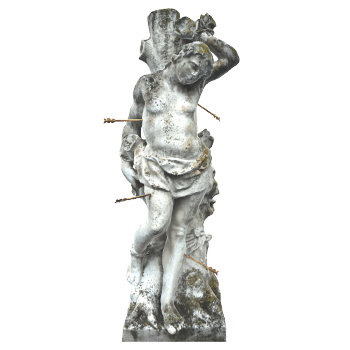
Statue of Saint Robustus

Statue of Saint Robustus

St. Paul of Thebes, located on the bitter road of the Heiligenkreis Monastery. Statue making began in 1731. Saint Robustus is a saint in Christianity. According to legend, he was the first hermit of Egypt and the father of the desert, hence he is also known as the hermit of Saint Robutus I.
Moche Culture Human Image Sculpture

Moche Culture Human Image Sculpture

Human image sculptures with Moche cultural characteristics, which existed between 200 BC and 600 AD. The Moche culture is an ancient civilization in the coastal region of northern Peru in South America, known for its exquisite metalworking, pottery, and sculpture. This sculpture is an important work of art in the Moche culture, showcasing the society's portrayal of character images and aesthetic concepts at that time. In 2021, this sculpture was returned from Canada. The return of the sculpture represents respect and protection for cultural heritage, and also reflects the international community's emphasis on illegal cultural relic trade and cultural heritage protection.
Human sculpture artwork

Human sculpture artwork

It is a type of humanoid sculpture artwork created between approximately 1000 and 1470. It usually has unique cultural characteristics and artistic styles, reflecting the social beliefs, religious rituals, and aesthetic concepts of the time. During this period, many civilizations made significant achievements in artistic creation, with sculpture art particularly developed. It was not only more mature in technology, but also more rich and delicate in artistic expression. Successfully recovered from the Netherlands in 2022. This is not only a protection of cultural heritage, but also a respect for history and culture.
Xenophon Statue

Xenophon Statue

Xenophon (approximately 430 BC-354 BC) was a renowned historian, philosopher, and military leader of ancient Greece. He is known for his work Anabasis, which details his experiences during military expeditions in the Persian Empire. Xenophon also wrote works about Socrates, which had a profound impact on later philosophical thought. The statue is located on the slope of the first district council building in Vienna
Vienna Monument to the Liberation of Soviet Soldiers

Vienna Monument to the Liberation of Soviet Soldiers

The statue of a Soviet soldier at the entrance of the Vienna Monument to the Liberation of Soviet Soldiers. The statue is located at the entrance of the Vienna Soviet Soldiers' Liberation Monument, where these soldiers sacrificed their lives during the liberation of Vienna. A Rotamist, a lower rank soldier in the Soviet Red Army, is depicted holding a lowered flag and weapon. Sculptor Ivan Perschudtschew designed this statue. The cemetery complex covers an area of 3600 square meters and is the final resting place for nearly 2500 Red Army soldiers.
Slavin War Memorial

Slavin War Memorial

The Slavin War Memorial is an important landmark in Bratislava, which not only commemorates the Soviet soldiers who sacrificed their lives in the war, but also witnesses to historical events. The design and architecture of this memorial site reflect the respect for war heroes and the desire for peace at that time. The statues of two soldiers and children as part of the memorial site symbolize the sacrifices of soldiers, the brutality of war, and hope for future peace. Such statues are common in war memorials, aimed at conveying condolences for lost lives and educational significance for future generations.
Baroque style slave statue

Baroque style slave statue

The Baroque style slave statue on the tomb wall in front of the Heiligenkreis Monastery. The creation time was around 1731. Giovanni Giuliani, a sculptor working for the Heiligenkreis Monastery at the time. The depiction of slaves may be related to the second Türkiye siege in 1683, which was not too long ago at that time. Celebrate the victory over aggressors by depicting scenes of suffering and conquered slaves.
Friedrich Schiller Memorial

Friedrich Schiller Memorial

This bronze statue is the Friedrich Schiller Memorial on Schiller Square in Vienna's First District. There are four seated figures at the four corners of the pedestal, derived from Schiller's poem "The Song of the Bell", representing children (sitting on their mother's lap), the elderly, young travelers, and cast iron workers. Franz P ö nninger and Josef R ö lich created this monument at the K.K. Art Foundry.
Moses sculpture in the fountain of Vienna's first district

Moses sculpture in the fountain of Vienna's first district

The statue of Moses on the fountain named after him in the first district of Vienna was created by sculptor John Martin Fischer. Johann Martin Fischer was an 18th century Austrian sculptor known for his neoclassical style and significant contributions to urban sculpture in Vienna. The Moses Fountain is a historical landmark in Vienna, whose design and decoration reflect the artistic style and cultural values of the time.
Statue of Black Boy Actor

Statue of Black Boy Actor

A standing black boy statue created by Giovanni Giuliani, with the boy holding a performance prop bowl in his left hand. This is not only used for decoration. Fruits or candies are placed on display bowls or used as support for multi armed candlesticks. This statue can be found at the Heiligenkreis Monastery Museum.
Saint Paulino

Saint Paulino

St. Paul of Thebes, located on the bitter road of the Heiligenkreis Monastery. Statue making began in 1731. Saint Paulino is a saint in Christianity. According to legend, he was the first hermit of Egypt and the father of the desert, hence also known as the hermit of Saint Paulino I. The story of Saint Paulino holds an important position in the Christian tradition, as he is considered a model of reclusive life, symbolizing extreme devotion to religious beliefs and a life of seclusion and practice. On the arduous path of the Heiligenkreis Monastery, the statue of Saint Paulino stands alongside other statues.
Saint Neopomuk

Saint Neopomuk

This is the statue of Saint Nepomuk in Weitesfeld. The statue of Saint Neopomuk stands on a pedestal decorated with a small angel's head, holding a cross and an angel. The construction of the statue can be traced back to 1710. Saint Neopomuk is a saint in the Catholic Church, known for his role as the patron saint of Bohemia and the guardian of bridges. He is usually depicted standing or crossing a bridge, holding a cross and palm branches. The creation period of the statue of Saint Neopomuk coincided with the rise of Baroque art, and works of art during this period often emphasized emotional expression and dynamic forms.
Statue of Judah

Statue of Judah

The statue of Judas located in front of the Church of Our Lady in Kleinschwanstein Bart. The statue was made in the first half of the 18th century. The Apostle Judas is one of the twelve apostles of Jesus Christ, often mentioned together with Saint Simon as the "Passionate Judas". In Christian tradition, he is known for his steadfast faith and preaching of the gospel. The image of Judas apostles in Christianity is often associated with loyalty and a spirit of sacrifice. In some works of art, he is often depicted as holding a letter, as he is rumored to be the author of the Book of Judas in the New Testament, which emphasizes the adherence to the Christian faith and the fight against heresy.
Geza Giaoni

Geza Giaoni

Geza Giaoni was a Hungarian poet who wrote for the literary magazine Nyugat in Budapest and began a long-term literary competition with the leading Hungarian poet at the time, Ndele Adi. In his second poetry collection "Sad Eyes" published in 1909, he criticized Adi. In November 1907, Gioni was conscripted into the Austro Hungarian army, and in 1912, he was called up to actively serve in the Balkan Wars. As a response to the war, Giovanni wrote the pacifist poem "Caesar, I Don't Leave" and died in a Russian prisoner of war camp during World War I.
Anton Menger

Anton Menger

Anton Menger's tomb, as well as the Vienna Central Cemetery. Anton Menger (1841-1906) was a jurist and social theorist. Menger's paper was proposed in the context of the constantly changing social order since the mid-19th century, marked by the economic crisis and social issues of 1873, seeking answers to liberal policies and striving for more social justice. Richard Coffin designed this tombstone. The tomb of Anton Menger is not only a commemoration of this jurist and philosopher, but also a symbol of social change and political thought development in the late 19th century.
The statue of Saint Elizabeth in St. Margaret's Church

The statue of Saint Elizabeth in St. Margaret's Church

This is a statue of St. Elizabeth erected in front of the St. Margaret Parish Church in Marchegg in 1953. She was the daughter of King Andrew II of Hungary and spent her childhood in Bratislava Castle. Her husband was Louis of Thuringia, and after his death, Elizabeth swore to live in poverty. She devoted her life to God, the sick, and the poor. Elizabeth was officially canonized as a saint in 1235.
St. John the Baptist

St. John the Baptist

Information about the statue of St. John located in Heiligenkreuz on the Baroque style Fourteen Hardroads. The statue of St. John holds a book and a lamb. Production began in 1731. John the Baptist was a Jewish repentance preacher who appeared around 28 AD in Galilee and Judea. He works in Palestinian Judaism and also has followers in Jewish Diaspora.
Saint Joachim

Saint Joachim

The statue of St. Joachim is located in the Baroque style of the Fourteen Hardroads in Heiligenkreuz. The statue is located on fourteen winding roads in Heiligenkreis. Production began in 1731. According to several pseudo canonical Gospels from the 2nd to 6th centuries, Joachim was Mary's father and therefore the grandfather of Jesus Christ. Joachim is revered as a saint in Catholicism, Eastern Orthodoxy, and the Church of England. The Heiligenkreis Monastery is an important religious and cultural landmark in Austria, renowned for its rich history and religious art works.
Saint Florian

Saint Florian

Saint Florian is the patron saint of firefighters, construction workers, and people affected by fires. He is often depicted wearing Roman or medieval military attire, holding a bucket of water to pour into burning buildings, symbolizing the legend of him extinguishing the entire town's fire with a bucket of water. The statue of Saint Florian was common in fire stations in Austria and Bavaria in the 18th century, and was often depicted as the guardian deity of firefighters.
Saint Elizabeth

Saint Elizabeth

This is the statue of Saint Elizabeth in Bratislava Castle. Elizabeth was a saint from Hungary, born in 1207 and died in 1231. She was the daughter of King Andrew II of Hungary and spent her childhood in Bratislava Castle. Her husband was Louis of Thuringia, and after his death, Elizabeth swore to live in poverty. She devoted her life to God, the sick, and the poor. Elizabeth was officially canonized as a saint in 1235.
Hans Christian Andersen

Hans Christian Andersen

This is the Hans Christian Andersen Memorial in Bratislava. The creator was created by sculptor Tibor Batfay. In 2006, it was unveiled to commemorate the 200th anniversary of Hans Christian Andersen's birth. This monument showcases the poet Hans Christian Andersen and some of his fairy tale characters. Hans Christian Andersen is the most famous poet and writer in Denmark. Through his fairy tales such as "The Emperor's New Clothes," "The Little Mermaid," "The Steadfast Tin Soldier," or "The Pea Princess," he became a world-renowned fairy tale writer. His works are not only popular and admired in Denmark, but also globally.
Statue of Count Nicolas Salem

Statue of Count Nicolas Salem

The statue of Count Nicholas Salm is located on the City Hall Square in the first district of Vienna. The Count was wearing armor with a helmet placed at his feet. Created in 1867. The creator is Matthias Purkathofer. Count Nicolas Salm (1459-1530) was a general during the Renaissance period. The most important achievement was that in 1529, he successfully commanded the defensive war of Vienna against the siege of Türkiye. He was one of the commanders in the early stages of the First Ottoman Habsburg War. During the first siege of Vienna by Türkiye in 1529, he was named Earl of the Neuburg Empire in the same year.
Anton Menger

Anton Menger

Anton Menger's tomb, as well as the Vienna Central Cemetery. Anton Menger (1841-1906) was a jurist and social theorist. Menger's paper was proposed in the context of the constantly changing social order since the mid-19th century, marked by the economic crisis and social issues of 1873, seeking answers to liberal policies and striving for more social justice. Richard Coffin designed this tombstone. The tomb of Anton Menger is not only a commemoration of this jurist and philosopher, but also a symbol of social change and political thought development in the late 19th century.
Ferdinand Raimonde

Ferdinand Raimonde

Ferdinand Raimonde was born in 1790 and passed away in 1836. He was an Austrian actor and playwright. Along with Johann Nestorius, he is a major representative figure of the Old Vienna Folk Theatre. The monument was designed by Franz Vogel. The unveiling date was June 1st, 1898. Raymond sat in a corner of the bench, with his right arm resting on the backrest. I hold a theater brochure in my left hand. His gaze looked into the distance, as if inspired by the winged Muse on the rocks behind him. Originally located in front of the German People's Theatre. Moved to its current location in 1938. It was repaired after the war damage in 1947.
Bust of Baron William I Rogdorf

Bust of Baron William I Rogdorf

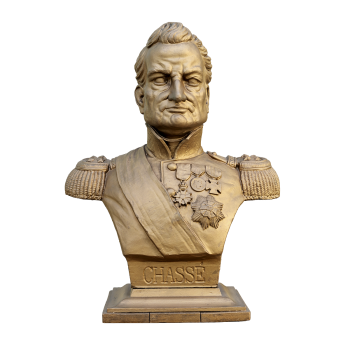
Baron Wilhelm I Rogdorf (1481-1541), as the chief battlefield commander, suffered fatal injuries during the siege of Ofen (now part of Budapest) in 1571. Created by artist John Baptiste Fisler, they used zinc casting techniques to create these monuments. This material was chosen at the time for durability considerations. As a historical figure, Baron William I Rogdorf's contributions and sacrifices in military affairs have been permanently recorded through the hands of these artists, becoming an object of understanding and commemoration for future generations.
Adam Smith

Adam Smith

The statue of Adam Smith located at the entrance of the Vienna Business School in the first district of Vienna was erected to commemorate this Scottish moral philosopher and philosopher of the Enlightenment era. Adam Smith was born in 1723 and passed away in 1790. The main work is' The Wealth of Nations', first published in 1776, which achieved great success and was quickly translated into multiple languages. Adam Smith is considered the father of modern economics, and his ideas have had a profound impact on later economists and economic policies. He emphasized the importance of market mechanisms and free competition, believing that these are key factors in improving production efficiency and economic growth.
Martin Kuchin

Martin Kuchin

Martin Kuku čí n, whose real name is Matej Benc ú r, is a Slovak writer, playwright, journalist, and doctor. Martin Kuchin's life and work experience reflects the life trajectory of many Central European intellectuals and professionals from the late 19th century to the early 20th century, who left their hometowns for various reasons and sought better life and work opportunities in other countries and continents.
The Virgin Mary

The Virgin Mary

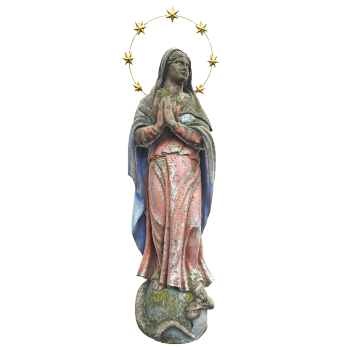
The Virgin Mary is depicted on a sphere embedded in intricately carved scrolls. The main body of the statue is made of lime wood, while the sphere and base are made of walnut wood. The size is 40.5 centimeters high and was created around 1750. This statue showcases the characteristics of 18th century European woodcarving art, in which basswood is often used to create intricate sculptures due to its ease of carving. Walnut wood was chosen to make the sphere and base of the statue due to its hard texture and beautiful texture, increasing the texture and durability of the work.
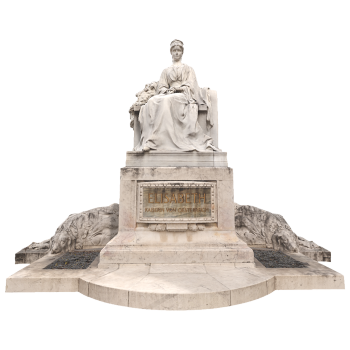
Statue of Queen Elizabeth of Hungary

Statue of Queen Elizabeth of Hungary

The statue is located at Vienna West Station. The creator is Hans Gassel. Created in 1860. In 1945, this statue was severely damaged. The statue was successfully restored in 1984. On December 15, 1858, with the opening of the "Royal Queen Elizabeth Railway" from Vienna West Station to Linz, the station was officially put into use. The new station hall opened in 1951. Queen Elizabeth, also known as Princess Sissy, was the queen of Austria and Hungary, and the daughter of Duke Maximilian Joseph of Bavaria and Princess Ludovica. She is renowned for her beauty, tragic life, and place in Austrian history.
Portrait of Joseph II on horseback

Portrait of Joseph II on horseback

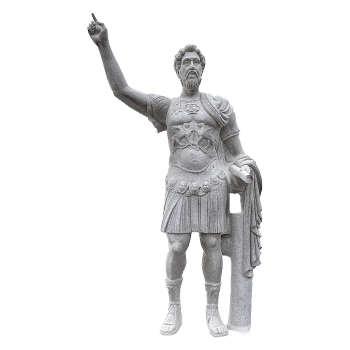
The statue is located at the Emperor Joseph Memorial in the first district of Vienna. Based on the equestrian portrait of Marcus Aurelius. The creator is Franz Anton Zauner, who was elevated to nobility for creating this monument. Joseph II was an Austrian emperor in the 18th century, known for his enlightened rule and numerous reforms. This equestrian statue, as part of the Emperor Joseph Memorial, not only showcases the majestic image of Joseph II, but also symbolizes his governing philosophy and contributions to the country.
Hugo Bretner Monument

Hugo Bretner Monument

The monument is located in the 14th district of Vienna. The creator is Siegfried Charoux, created in 1954. Hugo Bretner, formerly served as a city finance councilor and city councilor. Hugo Bretner resigned from his positions as a city councilor and city councilor in 1932 and 1933 due to health reasons. On February 12, 1934, he was arrested by the Austrian fascist regime and detained for several weeks. Due to his Jewish heritage, Breitner was forced to flee to the United States with his family after the Nazis came to power. He passed away in California in 1946.
Saint Anne

Saint Anne

Saint Anne sat on a pedestal shaped like a pedestal, wearing a red dress, a silver plated veil, and a gilded cloak. Saint Mary stood beside her. The mother supported her daughter's left shoulder with her right hand. This work is from the collection of Heiligenkreuz Abbey. The size is 51 centimeters high, dating back to the first half of the 18th century. Saint Anne is the grandmother of Jesus, also known as the mother of the Virgin Mary, and her image is often depicted in Christian art. This set of statues showcases the intimate relationship between Saint Anne and Saint Mary, as well as the traditional image of Saint Anne in religious art.
Half body portrait of Friedrich von Amelin

Half body portrait of Friedrich von Amelin

The statue is located in the City Park of Vienna's first district. The statue was made by Johannes Benk. Created in 1902. The statue character is Friedrich Ritter von Amerling, who lived from 1803 to 1887 and was one of the most respected portrait painters in 19th century Austria, alongside Ferdinand Georg Waldm ü ller.
Statue commemorating the 100th anniversary of the establishment of Sopron Brewery

Statue commemorating the 100th anniversary of the establishment of Sopron Brewery

This statue was built to commemorate the 100th anniversary of the establishment of Sopron Brewery. The statue is located in Ogabona Square in Sopron and was designed by Joseph Kampfel. It has been decorating this square since 1995. Sopron Brewery was founded in 1895 by town merchants and owners of Brno Brewery, relying on Czech brewing traditions. This statue is to commemorate this important historical moment. Now, Sopron Brewery is a Hungarian subsidiary of the international Heineken Group, Heineken Hungary Brewery.
Alves Magic Fountain

Alves Magic Fountain

The statue is called the Arcus Magic Fountain, designed by sculptor Karl Philipp and unveiled on June 5, 1932. It is located on Eltrein Square, just above the arched riverbed of Als Creek. The statue of the quartet was melted down during World War II, recast using a plaster model in 1981, and unveiled again by city councilors in 1982. A central pedestal rises from the fountain with a circular stone basin, on which a little angel stands. Surrounding the pedestal are four bronze seated figures of musicians: John Schrammer, Paul Fibrich, Alfred Randolph, and Willie Strommel.