Marble statue of Armand-Jean-di Plessy de Richelieu in the city of Ambwaz, France

Marble statue of Armand-Jean-di Plessy de Richelieu in the city of Ambwaz, France

The statue was created by Henry Alua (1844-1929) and was completed in 1895. The statue is 3.5 meters high and depicts Richelieu standing on a base with four reliefs holding a book. His full name was Armand-Jean-di Plessy de Richelieu, also known simply as Richelieu, or Cardinal, because he was a cardinal and wore a red robe. He was the first Duke Richelieu of Bourbon and Prime Minister of Louis XIII. He had a great influence on the centralization and foreign policy of France.
Mohandas Karamchand Gandhi, Parliament Square, London

Mohandas Karamchand Gandhi, Parliament Square, London

The statue is funded by public donations and sponsors, supported by the Gandhi Statue Memorial Trust and a special advisory group set up by the government. The statue is 9 feet (about 2.7 meters) high and is made of bronze. Based on a 1931 photograph of Gandhi standing outside the office of Prime Minister Ramsay MacDonald. The base of the statue is lower than that of other statues in Parliament Square, a deliberate choice by the Gandhi Statue Memorial Trust to embody Gandhi's spirit of humility and equality. The statue, designed by Ian Walters, was unveiled in 2014 to mark the 150 anniversary of Gandhi's birth.
Terracotta Warriors-Archers

Terracotta Warriors-Archers

The Terracotta Warriors and Horses, namely the Terracotta Warriors and Horses of Qin Shihuang Mausoleum, also referred to as the Qin Terracotta Warriors and Horses or the Qin Terracotta Warriors and Horses, is the first batch of national key cultural relics protection units and the first batch of Chinese World Heritage. It is located 1.5 kilometers east of the Qin Shihuang Mausoleum in Lintong District, Xi'an City, Shaanxi Province. Inside. Terracotta warriors are a category of ancient tomb sculpture. In ancient times, human martyrdom was carried out. Slaves were the appendages of slave owners before their death. Slaves were buried with slave owners as sacrificial objects after their death. Terracotta warriors and horses are made into the shape of warriors and horses (chariots, horses, soldiers).
Statue of the Roman Emperor Tulazhen

Statue of the Roman Emperor Tulazhen

Trajan (Traianus, Marcus Ulpius Nerva, September 18, 53-August 9, 117), the second emperor of the ancient Roman Antony dynasty and one of the five Roman emperors, reigned from 98 to 117. During his reign, he consolidated the economic and social system internally, launched wars with foreign countries, made outstanding military achievements, expanded the territory of the Roman Empire to the largest extent in history, and established the "Thuragin column" to record his achievements.
Moai on Easter Island

Moai on Easter Island

Moai (Moai), is located in Easter Island (Easter Island) a group of giant people, all over the island, is Chile's tourist scenery and one of the world heritage. More than 1000 huge stone bust-faced statues were found throughout the island, 600 of which are neatly arranged on the seaside stone island. The stone statues vary in size, 6-23 meters high, and weigh about 30-90 tons. They have a peculiar image, a serious expression, and their backs to the sea seem to be thoughtful.
The Sphinx of Hatshepsut in the Temple of Hatshepsut
The Sphinx of Hatshepsut in the Temple of Hatshepsut

This huge Sphinx depicts a female pharaoh Hatshepsut with the body of a lion and the head of a human with a turban and a false beard. Hatshepsut, (reigned 1503 BC -1482 BC). The Queen of the 18th Dynasty of Egypt died after 21 years on the throne, and after her death, Syria and Palestine declared their independence. After Thutmose III began to govern alone, he did not immediately proceed to destroy the traces of Hatshepsut's rule, and the related retaliation began late in his reign, when Pharaoh ordered the destruction of many carvings engraved with her name and image.
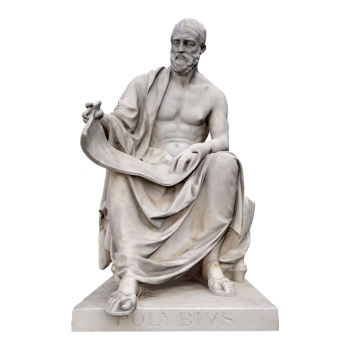
Marble statue of the Austrian Parliament building Polybios

Marble statue of the Austrian Parliament building Polybios

Polybius (Polybios) It was created in 1899 by the Austrian sculptor Alois Düll, carved from marble. It is in honor of the ancient Greek historian Polybios, best known for his major work "History", which originally had 40 volumes and described the universal history of Rome from the beginning of the First Punic War to the destruction of Carthage and Corinth.
A plaster image of The Thinker at the Rodin Gallery in Paris

A plaster image of The Thinker at the Rodin Gallery in Paris

The Thinker is a sculpture created by French sculptor Auguste Rodin. The plaster model was made in 1880 with a height of 68.5cm. Now in the collection of the Rodin Gallery in Paris., It depicts a naked male sitting on a rock, showing concern and sympathy for the fate of mankind in a thoughtful gesture. This work was originally designed for the central part of Rodin's other giant sculpture, The Gates of Hell, which was later enlarged by Rodin and became a famous work on its own. The Thinker is considered one of Rodin's masterpieces and one of the most influential sculptures in the history of Western art.
Late Medieval Adam Sculpture in the Cluny Museum

Late Medieval Adam Sculpture in the Cluny Museum

This is a statue of Adam found in Notre Dame Cathedral in the 13th century, about 1260. The statue is 2 meters high and is now in the Cluny Museum (also known as the National Medieval Museum) in Paris, France. The Adam sculpture is one of the precious collections of the Cluny Museum. It shows the artistic skills of the Baroque period and the unique expression of the human body. This sculpture is part of the many medieval and Renaissance artworks in the Cluny Museum, reflecting the important position of the museum in the field of medieval art.
Roman marble statue "The Girl Who Throwed the Bone"

Roman marble statue "The Girl Who Throwed the Bone"

The Bone Throwing Girl is a statue depicting a young girl playing a game of bone craps. This ancient Roman marble statue dates back to about 1500 AD and was restored in the 18th century by Italian sculptor Giuseppi Angelini(1735-1811). The statue was originally a collection of Charles Townley, which he described as a figure of Diana lying down in a tight dress with her left hand supporting her body and her right hand extending forward.
The Birth of Venus Marble Sculpture

The Birth of Venus Marble Sculpture

Carved according to the painting "The Birth of Venus", "The Birth of Venus" is one of the most famous works of the Italian Renaissance painter Sandro Portecelli. This painting depicts the birth of the goddess Venus from the sea in Roman mythology: she is naked on top of a huge shell, the goddess of spring on the right is putting on a beautiful dress for her, and the wind god on the left sends warm gusts of wind, blowing her hair.
Cast Iron Statue of Liberty Replica Paris Museum of Arts and Crafts Collection

Cast Iron Statue of Liberty Replica Paris Museum of Arts and Crafts Collection

The Musée des Arts et Métiers (Musée des Arts et Métiers) is a museum displaying the history of technological and industrial development, located in the third arrondissement of Paris. This one is made of cast iron, about 2.8 meters high and weighs about 450 kilograms. It is the 1/16 size of the Statue of Liberty. It was made in 1881 with the help of Gustave Eiffel and is now located in the museum's front yard. It was based on the original model of the Statue of Liberty given to the United States by France.
Bust of Sir Robert Bruce Cotton

Bust of Sir Robert Bruce Cotton

Sir Robert Bruce Cotton (Sir Robert Bruce Cotton,1571-1631) was a British politician, ancient book collector and scholar. He founded the Cotton Library (Cottonian Library) and collected a large number of precious manuscripts and Documents have an important influence on British history and culture.
Cross Hill Crucifixion Group

Cross Hill Crucifixion Group

This sculpture is part of a hill of the cross (Calvary) located in the city of Reitz, Lower Austria, and is a group of sculptures depicting the crucifixion of Jesus. The Hill of Crosses was built in 1727 by the citizens of the city of Reitz as an expression of gratitude to commemorate the Black Death pandemic of 1713. The sculpture was created by an unknown artist, but his style was influenced by the Baroque period, especially the work of the Austrian sculptor Johann Dominic Dorner.
Ramses II Granite Head British Museum Collection

Ramses II Granite Head British Museum Collection

This statue depicts the 19th Dynasty Pharaoh Ramses II wearing a holy serpent crown and a Nimes turban. The statue was damaged by the time it was found, with the limbs and lower half missing. It is one of a pair of statues of Ramses originally located on the flank of the gate of the Temple of Lamesim, and the head of the other statue is still at the gate of the Temple of Lamesim. The statue was transported from Egypt to England in 1816 by the Italian explorer Giovanni Berzoni and acquired by the British Museum in 1821. It is now one of the representative artifacts of the British Museum, displayed in Hall 4.
Satyr and Nymph Statue at the British Museum in London

Satyr and Nymph Statue at the British Museum in London

This is a Roman sculpture found in Divoli, Italy, depicting a forest god holding a fairy, now in the British Museum in London.
The bust of Ramses II in the British Museum
The bust of Ramses II in the British Museum

The famous bust of Ramses II, found in the Temple of Ramses in Thebes, Egypt, 1813, is now in the Egyptian Gallery of the British Museum. The texture is granite, 2.6 meters high and weighs 7.2 tons. Ramses II was the greatest pharaoh of ancient Egypt. He reigned for 67 years (1279 BC -1213 BC). The round hole in the right arm is said to have been chiseled by the French during the Napoleonic period in an attempt to steal it.
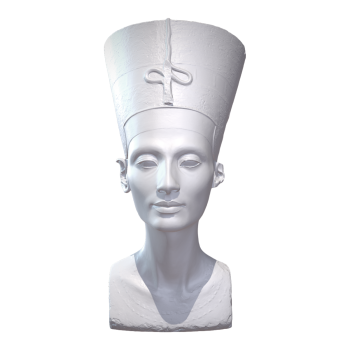
Plaster statue of Nefertiti (Queen of Pharaoh Akhenaten of Egypt)

Plaster statue of Nefertiti (Queen of Pharaoh Akhenaten of Egypt)

Bronze statue of LaOCon and his sons
Bronze statue of LaOCon and his sons

This is an ancient Greek sculpture depicting the tragic scene of Troy temple priest Laocon and his two sons in the midst of being entangled by poisonous snakes.
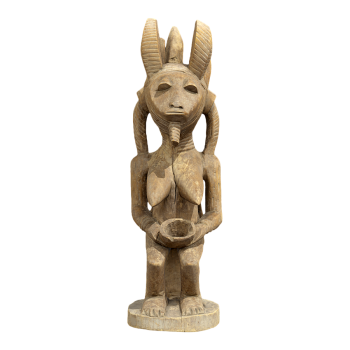
African wood carving "A woman carrying a child"

African wood carving "A woman carrying a child"

This wood carving from the Progrup art collection is an African sculpture of a woman carrying a child.
Head sculpture of Heinrich Franz Brandt

Head sculpture of Heinrich Franz Brandt

Heinrich Franz Brandt (17 March 1789-9 May 1845) was a Swiss-born medal designer who worked in Berlin.
Statue by Rodin The Thinker

Statue by Rodin The Thinker

The Thinker is a sculpture by French sculptor Auguste Rodin, now in the Rodin Gallery in Paris. The Thinker creates the posture of a powerful working man immersed in extreme pain. This work combines the profound spiritual connotation with the complete characterization, which embodies the basic characteristics of Rodin's sculpture art. "The Thinker" is a model of Rodin's overall work system, and it is also a manifestation and reflection of his magical artistic practice; it is also a witness to the construction and integration of human artistic thought-Rodin's artistic thought system.
[3D Scanning] Green Mother Sculpture

[3D Scanning] Green Mother Sculpture

Green Tara (Bodhisattva Tara) is a religious figure, also known as the mother of saving speed and courage and the mother of saving eight difficulties. Green Tara is the incarnation of Avalokitesvara. Tara, the Vatican name Tara, is the full name of the holy salvation Buddha mother. In ancient China, it was called Doro Bodhisattva and Doro Guanyin. Tara has many different incarnations, including 21 Tara and 500 Tara. They are all incarnations of Guanyin Bodhisattva. Green Tara is the main statue of all Tara mothers and always photographed all the merits of the remaining 20 incarnations.
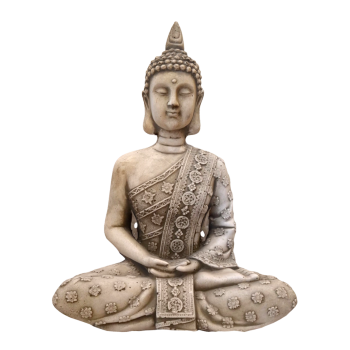
Zen Sitting Buddha Tathagata Buddha Ornaments Ancient Copper Buddha Crafts

Zen Sitting Buddha Tathagata Buddha Ornaments Ancient Copper Buddha Crafts

[Cultural Relics of Tang Dynasty] Painted Female Figurines of Tang Pottery
[Cultural Relics of Tang Dynasty] Painted Female Figurines of Tang Pottery

Tang pottery painted female figurines are painted female figurines of the Tang Dynasty. The female figurines are dressed in a bun, their faces are painted with red powder, their silkworm eyebrows are detailed, and their facial features are relatively concentrated in the center of their faces. They are slightly compact. They are dressed in long skirts, their hands are caged in front of their chests, and they are paunchy. They seem to be walking slowly. After the middle of the Tang Dynasty, especially during the Kaiyuan and Tianbao years, the fashion of taking obesity as beauty gradually formed in the society. Concubine Yang was favored by Li Longji and pushed this fashion to the extreme. This female figurine is a typical reflection of the aesthetic tendency in the prosperous Tang Dynasty.
Religious Statue of Butuo, Thailand

Religious Statue of Butuo, Thailand

Bust of Napoleon Bonaparte

Bust of Napoleon Bonaparte

A bust of Napoleon Bonaparte, housed in the National Museum in Krakow, Poland. Napoleon Bonaparte (French: Napoléon Bonaparte, August 15, 1769-May 5, 1821), Napoleon I (Napoléon I), was born on the island of Corsica, a great French military strategist and politician in the 19th century, and the founder of the First French Empire. He was the first ruler of the First Republic of France (1799-1804) and the First Emperor of France (1804-1815).
The Romance of the Three Kingdoms Brass Statue of Wusheng Guan Yunchang Guan Yu

The Romance of the Three Kingdoms Brass Statue of Wusheng Guan Yunchang Guan Yu

Guan Yu (?-220), the word cloud long, the word Changsheng, Hedong County (now Shanxi Yuncheng City, Yanhu District, Jiezhou Town) people. The end of the Eastern Han Dynasty famous. Guan Yu was kind to soldiers and despised scholar-officials, and was known for his loyalty to future generations. After his death, the people revered him as "Guan Gong", and many of the previous dynasties had praised him. During the Yongzheng period of the Qing Dynasty, he was revered as a "martial saint", which was equivalent to the status of Confucius as a "Wen Sheng. In the novel "Romance of the Three Kingdoms", it ranks first among the "Five Tiger Generals" and uses the dragon crescent moon sword.
Bronze statue of Napoleon the Great

Bronze statue of Napoleon the Great

Napoleon Bonaparte (August 15, 1769-May 5, 1821), that is, Napoleon I, was born in Corsica, a great French military strategist and politician in the 19th century, and the founder of the first French Empire. He was the first ruler of the First Republic of France (1799-1804) and the First Emperor of France (1804-1815).
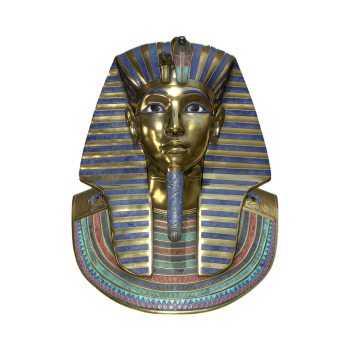
Tutankhamun gold mask 3D model

Tutankhamun gold mask 3D model

The gold mask of Tutankhamun was worn after the death of Egyptian pharaoh Tutkhamun in the 14th century BC. It was unearthed in 1922. It is located in the deepest part of the Egyptian National Museum in Cairo. There are quietly placed Egyptian national treasures: Tutankhamun's gold mask and gold coffin. Their owners died young more than 3300 years ago. Fortunately, his tomb was not looted and destroyed like other pharaohs, this makes the 10-year-old enthrone, 19-year-old mysterious death of the pharaoh is today one of the most famous.
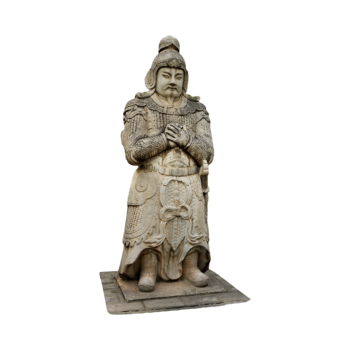
Stone Statue of Shinto in Ming Xiaoling Mausoleum

Stone Statue of Shinto in Ming Xiaoling Mausoleum

Shinto is the way to the dead. Shinto is also called the way of heaven and Sima way, and it is said in the Book of changes that "the grand view is on the top, the smooth view is on the top, the positive view is on the world. The view is on the back, but not recommended, there is a water on the bottom, and the lower view is transformed. The Shinto of the sky is observed, but the sage is taught by Shinto, and the world is subjued". Since the Han Dynasty, Shinto has also referred to "opening the way in front of the tomb and building stone pillars as a mark".
Hercules Bust Sculpture 3D Model

Hercules Bust Sculpture 3D Model

Egyptian Pharaoh Coffin 3D Model

Egyptian Pharaoh Coffin 3D Model

Statue of Adam

Statue of Adam

The statue comes from the tomb of Martin Fernandez, Lord of Bozancos, priest of Siganza Cathedral. UNDATED: 16th century. Where: Siegenza Parish Museum of Ancient Art.
Eve Sculpture 3D Model

Eve Sculpture 3D Model

The statue is from the tomb of Martin Fernandez, Lord Bozancos, the priest of Siganza Cathedral, and is made of alabaster.