Pericles marble bust

Pericles marble bust

The statue is a Roman period marble statue from Tivoli, Italy, in the 2nd century AD, modeled on a bronze statue of the Greek sculptor Kresilas. Pericles of this statue, which wears a helmet that pushes to the top of his head, is also a parody of an early Greek original. The height of the statue is 58.42cm and is now on display in the British Museum.
Statue of Sekemet (Sekhmet) in ancient Egypt

Statue of Sekemet (Sekhmet) in ancient Egypt

The statue of Sekemet (Sekhmet) is an isometric statue of one of the oldest known gods in ancient Egypt, about 6 feet (184cm) high. Her name is derived from the Egyptian word "sekhem" (meaning "power" or "might"), which is often translated as "the mighty". Sekemet is often depicted as a female with a lioness head, sometimes with the addition of a sun disc and uraos serpent. She was the goddess of war in ancient Egypt and was considered the protector of the Maat (balance or justice) and the Egyptian people. This statue of Sekemet is now on display in the Ancient Egypt Gallery at the Royal Ontario Museum.
Statue of the High Priest Roy of Amun in Ancient Egypt

Statue of the High Priest Roy of Amun in Ancient Egypt

The statue of Roy, the high priest of Amon, is a very important artifact. This statue is made of granodiorite and has a height of 113cm. It was made in 1220 BC. Roy was the high priest of Amun during the reign of Ramses II, Merumpta and Seti II during the 19th dynasty of ancient Egypt. He commissioned several statues of himself, four of which were found at Karnak. The statue is now in the collection of the British Museum.
Modern Imitation Granite Mayan Statue

Modern Imitation Granite Mayan Statue

Statues of the Acolytes in the Temple of Nabu

Statues of the Acolytes in the Temple of Nabu

This limestone statue is a statue of the chamberlain dedicated to Nabu by the Assyrian kings of the Neo-Assyrian period, Adadnilari III and Sammuramat. The statue was found in the temple of Nabu (located in Nimrud). The height of the statue is 182.88cm.. There is cuneiform writing around the skirt, and the translation of the inscription reads: "Future man, wait for Nabu. Don't trust other gods. The statue is now on display at the British Museum.
Bogaiese Gladiator Statue

Bogaiese Gladiator Statue

The statue was created by the ancient Greek sculptor Agacias, the son of Dosisius. The statue was created around 100 BC and was discovered in 1611 near Anzio, south of Rome. Since then, it has been included in the collection of Borghese, hence the name Borghese Gladiator. In 1807, Napoleon Bonaparte purchased the statue and brought it to the Louvre.
The Fall of Babylon, carved by a Belgian artist

The Fall of Babylon, carved by a Belgian artist

The Babylon Fall of Babylon, also known as La Chute de Babylone, was created in 1884 by Belgian artist Joseph Ducaju (1823-1891). This work is now in the collection of the Royal Gallery of Belgium.
Sanxingdui Bronze Human Head

Sanxingdui Bronze Human Head

Sanxingdui is an ancient site, about 4,800 to 3,800 years ago, and is considered to be one of the important centers of prehistoric culture. This bronze statue was unearthed in the Sanxingdui No. 2 Sacrifice Pit. It has a history of more than 3000 years. It is the oldest and tallest bronze figure discovered in China. It is now in the Sanxingdui Museum in Sichuan Province. The total height of this bronze statue is 115cm. The lower part is a bronze man kneeling down. His hands are held in front of him. His head is topped with a square plate. The square plate is connected with the bronze big mouth statue. The shoulder of the statue is decorated with exquisite dragon shape.
Plaster statue of sculptor Jill Lambert Goldshire "Andre Bust"

Plaster statue of sculptor Jill Lambert Goldshire "Andre Bust"

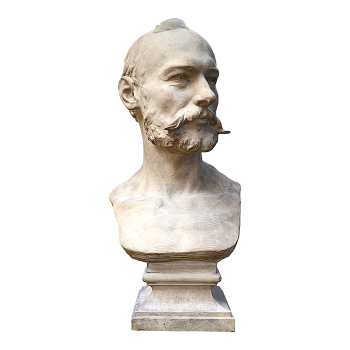
Andre Bust is a work of art created by Belgian sculptor Gil Lambert Goldshire, now in the Royal Gallery in Brussels, Belgium.
Riding statue of Louis XIV

Riding statue of Louis XIV

Louis XIV, whose full name is Louis de Bourbon, is known as the Sun King. He was the king of the French Bourbon dynasty and reigned from 1643 to 1715.. He was the longest-serving monarch in French history and one of the most powerful in European history. The statue is located in Piazza Belle Cure in the center of Lyon, France. The first statue, built in 1713, was destroyed during the French Revolution in 1793 to make cannons. In 1825, the statue was placed in the square.
Statue of Our Lady of Monte Graba

Statue of Our Lady of Monte Graba

The Statue of Our Lady of Monte Grappa is a statue on the top of the mountain (Monte Grappa) in northeastern Italy. It is a symbolic religious monument to the Italian soldiers who fought and died in the area during World War I. The statue is about 4.15 meters (13.6 feet) high and made of bronze, depicting the Virgin Mary. The statue was originally unveiled in 1925, but was later destroyed by German forces during World War II. After the war, however, it was rebuilt and re-unveiled in 1958.
Ancient Egyptian Statue of Goddess Mendes

Ancient Egyptian Statue of Goddess Mendes

The ancient Egyptian goddess Mendes is often depicted as a winged human-headed snake goddess, whose image combines elements of humans, snakes and birds, symbolizing different attributes and powers. The statue is now on display at the National Museum of Egyptian Civilization.
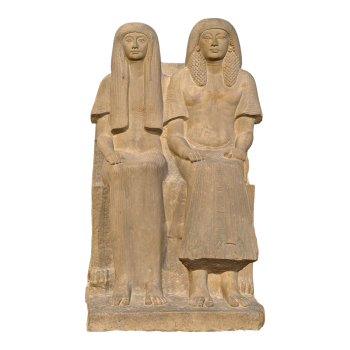
Sandstone statue of Hapi the Scribe of the Temple of Karnak

Sandstone statue of Hapi the Scribe of the Temple of Karnak

This sandstone statue is located in the courtyard of the Karnak temple and is commonly known as the "statue of Hapi" or "Hapi of Karnak", which served as the caretaker of the Karnak temple during the 19th dynasty. It is now on display at the National Museum of Egyptian Civilization (NMEC) in Cairo, Egypt.
Ancient Egyptian god Kunsu granite statue

Ancient Egyptian god Kunsu granite statue

The Egyptian god Kunsu is the god of the moon, the god of travel and the god of medicine. He is believed to be the son of the gods Amun and Mut, and the youngest of the three sons of their family. The Egyptian god Kunsu granite statue has the characteristics of the Pharaoh Tutankhamun of the 18th Dynasty of ancient Egypt. It is 2.52 meters high. It was originally discovered in the Kunsu Temple in Karnak. It is a building of the New Kingdom of Egypt and belongs to Ramses III. The statue during the reign of (Ramses III) has been exhibited in the Egyptian Museum in Cairo for many years.
Ancient Egyptian Queen Hitfirus II Sphinx

Ancient Egyptian Queen Hitfirus II Sphinx

Hitfirus II was a queen of the Fourth Dynasty of the Old Kingdom of Egypt, wife of Pharaoh Khufu and daughter of Pharaoh Sneferu. on display at the National Museum of Egyptian Civilization.
Ancient Egyptian Ramses III with Statue of Horus and Seth

Ancient Egyptian Ramses III with Statue of Horus and Seth

The statue of Messi III and Horus and Seth depicts the Egyptian pharaoh Ramses III with the two gods Horus and Seth, with Horus on his right and Seth on his left. The statue is now in the Egyptian Museum in Cairo. Ramesses III was a pharaoh of the 20th dynasty of ancient Egypt, reigning from 1186 BC to 1155 BC. He was a powerful pharaoh who worked to restore stability and prosperity to his country. His reign is considered one of the peaks of the New Kingdom period.
Ancient Egyptian pharaoh Ramses II megalithic statue

Ancient Egyptian pharaoh Ramses II megalithic statue

This stone sculpture is one of a pair of statues in front of the Ramses Museum. Ramses II (Ramses II), also known as Ramses the Great, was a pharaoh of the 19th dynasty of ancient Egypt and one of the most famous pharaohs of ancient Egypt. He ruled Egypt for about 66 years, from about 1279 BC to 1213 BC.
Colossus of Pharaoh Amenhotep III of Ancient Egypt

Colossus of Pharaoh Amenhotep III of Ancient Egypt

Amenhotep III (Amenhotep III) was a pharaoh of the 18th dynasty of ancient Egypt who ruled from about 1390 BC to 1352 BC. He was one of the richest and most powerful pharaohs of the dynasty and one of the oldest in Egyptian history. The reign of Amenhotep III is considered a golden age in Egyptian history. This stone statue is part of the Karnak temple. They were originally the statue of the patron saint of the entrance to the temple of Amenhotep III and, at a height of about 18 meters (60 feet), were one of the largest column statues in the ancient world.
Pharaoh Tutankhamun wood carving

Pharaoh Tutankhamun wood carving

Tutankhamun was a pharaoh during the 18th dynasty of ancient Egypt. He was located between 1332 BC and 1323 BC. The tomb of Pharaoh Tutankhamun was discovered in 1922 by British archaeologist Howard Carter, a discovery of great historical significance. This Tutankhamun wood carving was found in the antechamber of his grave, sitting behind a pile of gilded chariot parts, covered in plaster and paint. This wood carving is currently on display at the Egyptian Museum in Cairo, Egypt.
Wooden statue from Bali, Indonesia

Wooden statue from Bali, Indonesia

Bali is the largest Hindu island in Indonesia, and religious rituals and sacrifices are very important in the local community. Bali's sculptures include stone, wood and metal sculptures in many forms. These sculptures usually depict gods, legendary figures, animals and natural elements in religious and mythological stories, and are closely related to local religious beliefs and culture. Bali is the largest Hindu island in Indonesia, and religious rituals and sacrifices are very important in the local community.
Easter Island Moai Stones (Hoa Hakananai'a)

Easter Island Moai Stones (Hoa Hakananai'a)

The name Hoa Hakananai'a means "stolen friend" in Rapa Nui ". The stone statue is about 2.42 meters high and weighs 4.2 tons. It is made of basalt. It presents typical moai features, with a long nose, deep concave eyes and closed lips. There are carved patterns and symbols on the back of the stone statue. This huge stone statue was originally erected on the Oru Stone Altar in the village of Oru Mehta on Easter Island. However, during an expedition by British explorers in 1868, it was brought to England and eventually displayed in the British Museum.
Hidden in the Berlin Museum Pharaoh Sitting Colossus

Hidden in the Berlin Museum Pharaoh Sitting Colossus

This pharaoh sitting colossus is 10 feet high and weighs nearly 9 tons. It is 4000 years old. It was discovered in Tanis in the early 19th century and entered the Berlin Museum collection in 1837. The statue is thought to be likely Amenim Hat II. Amunim Hat II was the third king of the 12th dynasty, circa 2010 BC to 1640 BC, the heyday of ancient Egyptian art.
Moai Statue of Easter Island, Chile

Moai Statue of Easter Island, Chile

The Moai stone statue is a famous stone statue on Easter Island in Chile. It is a huge portrait sculpture made of volcanic rock. The height is usually between 10 and 20 feet, but the largest Moai stone statue is as high as 33 feet and weighs tens of tons. They usually depict a male figure with concise facial features, with a prominent forehead, long nose and closed lips. The body of the stone is usually not fully presented, showing only the head and part of the upper body. Moai is considered to be part of Easter Island's cultural and religious rituals, possibly representing a symbol of ancestors or gods, and becoming one of the symbols of Easter Island.
Ramses III Sitting Basalt Statue

Ramses III Sitting Basalt Statue

This basalt-carved statue is of Ramses III, a pharaoh of the 20th dynasty of ancient Egypt who ruled Egypt in the late New Kingdom period, circa 1186 to 1155 BC. Ramses III is considered one of the greatest pharaohs in Egyptian history. During his reign, he implemented many important political and military reforms and protected Egypt from foreign invasion. The statue is now in the Israel Museum.
Statue of Joan of Arc, French national hero

Statue of Joan of Arc, French national hero

This equestrian statue is located in Piazza Piramides in Paris and was made by French sculptor Emmanuel Flemmite (1824 -1910). The statue depicts a woman named Joan of Arc, alias French Joan of Arc (1412-1431). She played an important role in France during the 15th century and became a national hero and religious symbol of France. Her courage, faith and firmness have made her an important part of French history and have influenced many cultural works and artistic images. She is portrayed as a military leader on horseback and is also seen as a symbol of women's rights and strong will.
Moai Island Boulder Like Head

Moai Island Boulder Like Head

This huge head statue is now hidden in the Louvre Museum in France. It is a copy of the famous megalithic statue on Easter Island in Chile, also known as the giant statue of Moai. The original moai giants are carved from the island's volcanic rocks and can reach tens of feet in height. These statues are an icon of Easter Island culture and have important religious and social significance.
The Beauty of Palmyra (200-250 AD)

The Beauty of Palmyra (200-250 AD)

In 1929, Danish archaeologist Harald Ingholt obtained this statue of the Beauty of Palmyra during an excavation in Palmyra, Syria. The statue's sculpted jewels and clothing are startling in the richness of detail. The statue was used to enclose the tomb of a carved woman, and there are often inscriptions on the tomb stating who the deceased were, but the inscriptions on the tomb have been lost. As a result, it is still impossible to confirm the real name of the tomb owner.
Olaf Oak Statue of the Guardian of Norway

Olaf Oak Statue of the Guardian of Norway

This sculpture depicts King Saint Olaf of Norway (995-1030), also known as "the patron saint of Norway". The statue, dating from the early 14th century, is carved in oak and is located in Bunge Church on the Swedish island of Gotland. Religious sculpture in the Gothic style. In the deep folds of St. Olaf's sculpture, traces of red, green and blue paint and gilding can be seen. The statue of St. Olaf in Bunge Church may have been created to commemorate St. Olaf's exploits and his influence in the Swedish region. This statue is not only a work of art, but also a religious and cultural symbol, representing the connection between faith and history.
[Statue] Head of Amenhotep III of the 18th Dynasty of Ancient Egypt

[Statue] Head of Amenhotep III of the 18th Dynasty of Ancient Egypt

Amenhotep III (between 1403 BC and 1397 BC to 1353 BC) was the ninth pharaoh of the 18th dynasty of ancient Egypt. He reigned for 38 years. Amenhotep III ascended the throne between the ages of 6 and 12, and the XVIII dynasty reached its heyday during his reign. During the reign of Amenhotep III, all of Egypt was rich and stable. There is only one record of military activities. In the early days of his accession to the throne, the war against the Nubians was aimed at ensuring the safety of the Nubian region. The statue was donated by the Hanna Foundation in 1952 and is currently in the collection of the Cleveland Museum of Art.
Statue of the famous Slovak poet Janko Kráǐ in Bratislava

Statue of the famous Slovak poet Janko Kráǐ in Bratislava

Janko Klar (24 January 1822-23 May 1876) was a famous Slovak poet and writer, and one of the most important figures in the history of Slovak literature. He is known for his poetic works in the Romantic style and is considered one of the pioneers of the Slovak National Revival movement. His collections include a multi-volume collection of poems "Songs of Slovakia" and "Gardens of Slovakia". He is also a translator, translating works of world literature into Slovak. The statue is located in Bratislava, the capital of Slovakia.
The statue of Sakyamuni in the Minneapolis Art Institute

The statue of Sakyamuni in the Minneapolis Art Institute

This famous statue of Sakyamuni (also known as Buddha) is a work of art from China, made during the Tang Dynasty from 618 to 907 AD. It shows Shakyamuni Buddha sitting on a lotus seat, with his right hand making a "dauntless seal" (I. e. palm outward), his left hand on his lap, fingers downward. The face of the Buddha statue is solemn and solemn, wearing a crown and a cassock, showing the characteristics of Buddhist art in the Tang Dynasty. It is one of the important Buddhist artworks in the Minneapolis Art Institute collection, attracting the attention of many art lovers and cultural history researchers.
The statue of Milos, the goddess of victory, hidden in the Louvre, France.

The statue of Milos, the goddess of victory, hidden in the Louvre, France.

One of the most famous statues of the goddess of victory-Nike's Winged Victory of Samothrace. The statue was found in a shrine on a mountain on the Greek island of Samothras, hence its name. It is considered to be a masterpiece of Greek sculpture from the 2nd century BC and is present in the Louvre Museum in Paris, France. The statue depicts a goddess with open wings, standing on the bow of the ship, stepping forward, her clothes flying, and the overall appearance is dynamic and dramatic.
Replica of the discus thrower statue of the ancient Greek sculptor Milan Das

Replica of the discus thrower statue of the ancient Greek sculptor Milan Das

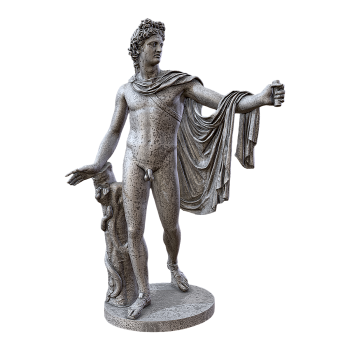
The statue of the discus thrower in Milandas is one of the most famous sculptures in ancient Greece, known as the Discobolus (discus thrower). This statue depicts the movements and postures of a discus thrower before throwing, and is considered one of the most dynamic and naturally flowing works of ancient sculpture. The original Discobolus statue was created by the ancient Greek sculptor Milandas (Myron) in the 5th century BC. However, the original statue has been lost, and what exists are later replicas or works inspired by it.
Thousand-Hand Guanyin Statues

Thousand-Hand Guanyin Statues

Thousand-handed Guanyin is an image of Guanyin Bodhisattva in Buddhism, depicted as Guanyin Bodhisattva with many hands. Each pair has the power of the eyes to control everything, symbolizing the wisdom and compassion of Guanyin Bodhisattva. Avalokiteshest is widely depicted in Buddhist art, especially in temples and works of art in China, Japan, and other East Asian countries. This image is widely worshipped and believed, and is regarded as a symbol of saving all living beings and eliminating the suffering of all living beings.
12th Century Water Moon Guanyin Collected by Minneapolis Art Institute

12th Century Water Moon Guanyin Collected by Minneapolis Art Institute

The 12th century Water Moon Guanyin is an image of Guanyin Bodhisattva widely depicted in Buddhist art. It has its roots in the art of painting and sculpture during the Song Dynasty (960-1279 AD) in China. Water Moon Guanyin got its name because of the integration of water and moon elements in its image. Water Moon Guanyin usually has a water bottle on its head, symbolizing the state of purity and nirvana. Behind Guanyin Bodhisattva, a moon is often depicted, representing the light of wisdom and compassion.