Injured Amazon Head Statue

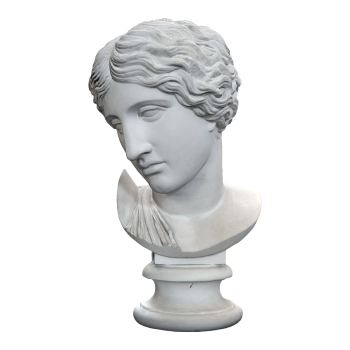
Injured Amazon Head Statue

This is a replica. The statue of the injured Amazon's head is derived from the marble statue of the original work "The Injured Amazon" by Greek sculptor Phidias in the 5th century BC. The original work is currently housed in the Capitoline Museum in Rome.
Statue of Duke de Richelieu of France
Statue of Duke de Richelieu of France

Duke de Richelieu was a French nobleman, soldier, and politician. He served as the Prime Minister of France from 1815 to 1818 and from 1820 to 1821, successfully causing the Allied occupation forces to withdraw from France. Prior to this, he served as the governor of Odessa and was renowned for his progressive administrative management. This monument was built in memory of him in 1828 after his death. This statue is one of the most famous statues in Odessa and ranks 10th among the 294 attractions in Odessa. This monument is currently located at the top of the Potemkin Steps in Odessa, Ukraine.
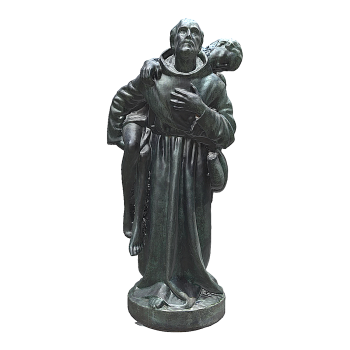
Cast iron statue of Jo ã o Cidade

Cast iron statue of Jo ã o Cidade

Jo ã o Sidade devoted all his energy to caring for the poor and sick as an adult. Jo ã o Sidade, contrary to all the customs of his time, established two hospitals where patients received humane treatment. According to today's nursing standards, these hospitals are considered modern hospitals, dedicated not only to nursing but also to treatment. They have doctors, pharmacists, nurses, and priests, and patients are divided by disease, with each person assigned a bed. Several of his companions joined his ranks, thus forming the founding core of the Hospital Knights, which was first approved in 1572.
The marble statue of the Byzantine Empire in ancient Rome, known as the "Marble Maiden Statue"

The marble statue of the Byzantine Empire in ancient Rome, known as the "Marble Maiden Statue"

This artifact is a small Eastern Roman marble statue depicting a young girl. Its production date is around 525 BC to 500 BC, and the statue is made of marble. The posture and attire of this young girl statue are the same as the famous Kore statue found in the Acropolis of Athens. Her left leg moved slightly forward, and her left hand grabbed her thin linen jacket, pulling it tightly over her leg; The right hand may have once held an offering. Her short cloak slanted over her right shoulder and then hung down from her left arm, forming vertical, stacked folds. The surface of the statue becomes vivid due to the variations in clothing layers and textures.
Bronze statue of a praying woman from the Hellenistic period in Etruria

Bronze statue of a praying woman from the Hellenistic period in Etruria

This statue was made in the 2nd century BC, named "Bronze Prayer of Young Women Statue", belonging to the Hellenistic period of Etruria in Italy. The statue is the image of a young woman, possibly a priestess, with a height of 95 centimeters. The surface decoration of the statue is rich, including fine carving details on hair, jewelry, sewn seams, decorative edges, and shawl folds. Her shoes have exquisite shoelaces and floral decorations, which are typical Etruscan style. The left foot of the statue is a modern restoration. The statue is currently on display at the British Museum in London.
The clay statue of the Virgin and Child from the Capetian dynasty in France

The clay statue of the Virgin and Child from the Capetian dynasty in France

The name of this statue is the Virgin and Child (Vierge à l'Enfant). It was made in the 14th century AD, between 1300 and 1400 AD. This cultural relic was made in France. The statue is made of clay painted with golden colors. Its dimensions are: 93 centimeters high, 27.8 centimeters wide, and 17.5 centimeters deep. This statue is currently housed in the Cluny Medieval National Museum in France.
The marble statue "Half body Statue of a Lady" created by Karl Schl ü tte

The marble statue "Half body Statue of a Lady" created by Karl Schl ü tte

Carl Schl ü ter (1846-1884) was a German sculptor of the 19th century. His works are mainly concrete, and he excels in portrait sculpture, especially on female themes. This is a classical bust depicting a young woman. The head of this statue tilts slightly to the right. The base of the bust is a contoured base. The back of the bust bears the author's signature and the year of creation of the work: "C. Schl ü ter. 1880". This statue is now on display at the Czernov Museum in Poland.
Half body portrait of Nikus

Half body portrait of Nikus

This statue is made of green basalt and is dressed in military uniform. The nose was destroyed, possibly by Christians carving a cross on their forehead during the late Christian period. There are other damaged areas around the chest and nose. This statue is 47 centimeters high, 30 centimeters wide, and 24 centimeters deep. It is carved of Nikus, who was the nephew of Roman Emperor Augustus and the fifth emperor of the Roman Empire. This statue may have been made around 19 AD and is now on display in the G70 exhibition hall of the British Museum.
The marble statue of Roman women from the ancient Roman Empire period, known as the "Roman Female Bust"

The marble statue of Roman women from the ancient Roman Empire period, known as the "Roman Female Bust"

This statue is currently housed in the National Archaeological Museum of Umbria, located in San Domenico, Italy.
Sir Hans Sloane clay bust

Sir Hans Sloane clay bust

This bust was made of clay by British sculptor Michael Risbrak, depicting the image of Sir Hans Sloane. His head is slightly turned to the right, with a mole on his left cheek, wearing a delicate wig, and a jacket with a lace collar. The size of this bust is 68.50 centimeters high and the maximum width is 60 centimeters. Sir Hans Sloan was a British doctor, naturalist, and collector born in Ireland, known for bequeathing his collection to the country, which laid the foundation for the establishment of British museums. This bust is now housed in the British Museum
The basalt statue "Olmec Giant Stone Head" from the heyday of the Olmec civilization

The basalt statue "Olmec Giant Stone Head" from the heyday of the Olmec civilization

This is a basalt human head sculpture from the Olmec civilization, carved from large basalt boulders and currently housed in the National Museum of Anthropology in Mexico. The height of these avatars ranges from 1.17 meters to 3.4 meters, dating back to at least 900 BC, and is a prominent feature of the ancient Mesoamerican Olmec civilization. These huge sculptures only depict the head, possibly because it is widely believed in Central American culture that the head contains an individual's emotions, experiences, and soul. Each avatar has unique facial features and may therefore be seen as a portrait of the actual ruler.
Syrian limestone relief from the 3rd century AD, depicting Tem é and his wife Hadila

Syrian limestone relief from the 3rd century AD, depicting Tem é and his wife Hadila

Taimei and his wife Hadila "is a cultural relic located in the Louvre, originating from ancient Palmyra. This cultural relic is a tombstone relief depicting Taimei and his wife Hadila. The discovery site of this artifact is Palmyra, an ancient prosperous city located in present-day Syria, at the intersection of several desert trade routes. This city reached its peak between the 2nd century BC and the 3rd century AD. The relief is the tombstone of Taimei and his wife Hadila, used to mourn their lives and deaths. The relief depicts their images and some scenes of their lives
Statue of Guan Yu

Statue of Guan Yu

Guan Yu (160-220 AD) was a famous general during the Han Dynasty (206 BC-220 AD) and one of the most famous historical figures in ancient Chinese history. Guan Yu is also revered as the "Martial Saint", commonly known as "Lord Guan", "Second Lord Guan" or "Guan Gong". Later generations deified him and respectfully referred to him as' Emperor Guan '.
The marble statue of the 18th century French castle of Marley, titled 'The Horse Trapped by the Horseman'

The marble statue of the 18th century French castle of Marley, titled 'The Horse Trapped by the Horseman'

The Horse Trapped by the Horseman, also known as the Malima, depicts a galloping horse and a horseman pulling the horse. These sculptures are made of Carrara marble and were created by sculptor Guillaume Cousteau between 1743 and 1745. The sculpture was originally ordered by King Louis XV to be made to decorate the entrance of the Mari Castle and replace the removed sculpture. Due to the damage caused by the armored vehicle parade on July 14th, they were replaced with reconstructed marble replicas made by Michel Bourbon in his studio in Bouyg. The original document is now preserved in an old building in the Louvre that has been transformed into a courtyard, known as the Marley Courtyard.
The marble statue "Resting Hunter" from the Baroque period in France

The marble statue "Resting Hunter" from the Baroque period in France

This work was originally commissioned by the King's Department of Architecture in 1707 to be created by Nicolas Kustu for the decoration of the front yard of the Mari Castle. This work was moved to the terrace of the Tuileries Palace in 1716 and was inventoried there in 1824. On September 28, 1870, this work was sent to the Louvre Museum. Another title of this work is' Rest after Adonis Hunting '. This very exquisite sculpture showcases Nicolas Kustu's superb sculptural skills.
Caesar portrait statue

Caesar portrait statue

This is a statue from the Roman period, dating back to around 50 AD. This statue is from the Athena Temple of Priene in modern Türkiye. The height of the statue is 39.5 centimeters. This statue is believed to be a portrait of Caesar. However, there has been controversy in the academic community regarding the true identity of this statue. This portrait is currently housed in the British Museum.
The limestone statues of Sakara and Melit from the New Kingdom period in ancient Egypt

The limestone statues of Sakara and Melit from the New Kingdom period in ancient Egypt

The statues of Maya and Melit are part of the collection of the National Museum of Antiquity in the Netherlands, which has owned three tomb statues of Maya and Melit since 1829. These statues come from the time of Pharaoh Tutankhamun and Hormukh, around 1325 BC. Sakara built a luxurious tomb for himself and his wife Melit, next to General Hormukhb's tomb, although General Hormukhb was never buried there. This statue is designed to receive food for ritual purposes and also serves as a dwelling for the souls of the deceased. This statue is made of limestone and dates back to the New Kingdom period, around 1295 BC.
The bronze statue of Apollo, the Sagittarius, from the ancient Roman period

The bronze statue of Apollo, the Sagittarius, from the ancient Roman period

This statue is part of the collection of Cardinal Giuliano della Rovere in the Roman palace. When he was elected as Pope Julius II (1503-1513), these statues were transferred to the Vatican and have been preserved there since at least 1508, now housed in the Vatican Museums. Apollo walked forward with great majesty, as if he had just released an arrow from the bow in his left hand. The date for this work has been determined to be mid February AD century and is believed to be a replica of the original bronze statue dating back to 330-320 BC.
Statues of Ancient Asia

Statues of Ancient Asia

Ancient Asia was the ruler of the city-state of Lagash, ruling from 2144 BC to 2124 BC. His statue shows a very exquisite level of craftsmanship at that time. These statues were commissioned by Ancient Asia, who was dedicated to rebuilding the large temple of Lagash and installing his own statue in it. This sculpture is currently housed in the British Museum.
Sebastian Slotz's "Annibal"

Sebastian Slotz's "Annibal"

The statue is "Annibal" created by Sebastian Slotz. This statue was made between 1687 and 1722. The height of the statue is 2.5 meters and the width is 1.068 meters. The inscription on the statue reads: 'Seb. Slodtz. Ficit. 1722'. This statue was placed in the Tuileries Garden in June 1722, opposite the statue of "Julius Caesar" by Nicolas Kustu. At this time, the statue was given a date. This statue entered the Louvre on June 5, 1872 and is still on display at the Louvre today.
Sculpture of 'Diane V'

Sculpture of 'Diane V'

Diane V ", also known as" Diana of Versailles "," Diana with a Doe "," Diana Huntress ", and" Diana of Ephesus ", depicts the Roman goddess Diana and a deer. The statue dates back to 1556 and is a partially restored Roman replica of a lost Greek bronze original. The sculpture is now housed in the Louvre.
The sculpture "Arria et P æ tus" hidden in the Louvre Museum

The sculpture "Arria et P æ tus" hidden in the Louvre Museum

Arria et P æ tus "is a sculpture created by Pierre Lepautre and Jean Baptiste Th é odon. This work depicts Arria, Aulus Caecina Paetus, dogs, domestic workers, children, and women. The size of this sculpture is 2.65 meters high and 1.73 meters wide. This sculpture was created between 1685 and 1695 in the 17th century and was housed in the Louvre in March 1989.
Sculpture of King Idrim

Sculpture of King Idrim

This statue depicts the 15th century BC Alalakh (Türkiye place name) King Idrimi. In 1939, the British explorer Sir Leonard Woolley found this statue in a temple. After the destruction of Alalakh in 1200 BC, the statue was buried in a pit. The statue is engraved with vivid descriptions of Idemi's life and achievements, including the events that led to his escape from Syria and the circumstances that led to his spectacular return. This inscription is considered one of the most important cuneiform inscriptions discovered so far. This sculpture is currently housed in the British Museum.
The sculpture 'La Seine' hidden in the Louvre Museum

The sculpture 'La Seine' hidden in the Louvre Museum

La Seine "is a set of marble sculptures created by Antoine Coysevox between 1703 and 1706. This piece was originally commissioned by Jules Hardouin Mansart in 1698 as part of a set of sculptures designed to decorate the river in Marly Park, which also includes" La Marne, "" Neptune, "and" Amphitrite
Statue of the priestess of Bacchante, the god of wine

Statue of the priestess of Bacchante, the god of wine

This work depicts a young woman who looks very happy and seems to be walking towards the audience with dance like steps. Her figure was captured in a vivid pose, with her body covered only by fabric casually wrapped around her hips. The girl is forcefully lifting a tall cup with her right hand. The inventory number of this artwork is MNK II-rz-276, located in the Sukiennice 19th Century Polish Art Gallery at the Krakow National Museum.
Half body portrait of Adam Mitchell

Half body portrait of Adam Mitchell

Adam Mickiewicz is a representative poet of Polish Romanticism. The sculpture was created by Pierre Jean David d'Angers, with the ID number MNK-XIIA-780, and is currently housed in the Krakow National Museum. This artwork has been digitized as part of the Malopolska Virtual Museum project
The Sphinx of Hatshepsut in ancient Egypt

The Sphinx of Hatshepsut in ancient Egypt

The Sphinx of Hatshepsut comes from Deir el Bahari. It is located in Exhibition Hall 6 on the first floor of the Egyptian Museum.
The granite statue of Amenemhat III from the 12th Dynasty of Egypt

The granite statue of Amenemhat III from the 12th Dynasty of Egypt

The statue is a huge granite head of Amenemhat III, from the Bast Temple in Bubastis, Egypt. The statue was made around 1800 BC, during the 12th Dynasty of Egypt. His lips are full, and the oblique muscle under his lower lip shows tension in his jaw. His expression appeared serious, even harsh. The height of the statue is 83 centimeters, weighing about 1000 kilograms, with a width of 82 centimeters and a depth of 69 centimeters. The statue is now housed in the British Museum.
Artist James Tissot Gypsum Bust

Artist James Tissot Gypsum Bust

James (Jacques Joseph) Tissot (October 15, 1836, Nantes - August 8, 1902, Abbey of Besan ç on, France) - French painter and illustrator. The bust is currently housed in the Copenhagen Museum in Denmark. This painter is famous for his illustrations "The Life of Christ and the Old Testament" and for depicting fashionable beauties in Paris and London. The pioneer of Belgian realism, an artist, had a significant impact on its technology.
Hans Christian Andersen Statue

Hans Christian Andersen Statue

Hans Christian Andersen (1805-1875) was a famous Danish fairy tale writer and poet, known in Denmark as H C. His works include classic fairy tales such as "The Ugly Duckling," "The Little Match Girl," and "The Daughter of the Sea. This statue was built in memory of Hans Christian Andersen, a Danish literary giant, and was created by Danish sculptor Henry Luckow Nielsen.
Queen Nefertiti of Ancient Egypt's 18th Dynasty Funeral Mask

Queen Nefertiti of Ancient Egypt's 18th Dynasty Funeral Mask

Philopoemen Statue

Philopoemen Statue

The Philopoman statue is a marble sculpture, measuring 2.29 meters in height, 0.91 meters in width, and 0.98 meters in depth. The statue was created by French sculptor David d'Angers and is currently housed in the Louvre Museum.
Marble statue of ancient Greek philosopher 'Half body of Gorgias'

Marble statue of ancient Greek philosopher 'Half body of Gorgias'

Ancient Greek philosopher and rhetorician of the 5th century BC, renowned for his wisdom. He was born in the city of Lyon, Sicily, around 490 BC or later. In his early years, he studied rhetoric, argumentation, natural philosophy, and medicine with Empedocles. His ideas were influenced by Zeno, but mainly originated from Protagoras. In 427 BC, he sent an envoy to Athens to request a united opposition against Syracuse, and in his later years lived in Larisa in Thessalya.
Buddha Head Statue

Buddha Head Statue

This Buddha head is a work from the 2nd to 3rd century AD, originating from the ancient Indian state of Dhara (now Pakistan), made of gray gneiss, with dimensions of 27.8 × 16.4 × 19.6 centimeters. It is currently preserved at the Art Institute of Chicago.
Night Queen Bernie Relief

Night Queen Bernie Relief

Bernie, also known as the 'Queen of the Night', is a Mesopotamian clay relief that may represent Ereshkigal or Ishtar. This relief was created during the Isin Larsa or Old Babylonian period, measuring 49.5 centimeters in height and 37 centimeters in width. It depicts a naked, winged goddess with bird claws and owls on both sides, standing on two lions. This relief is now on display at the British Museum in London, which dates its creation between 1800 BC and 1750 BC.