Hammerhead sharks

Hammerhead sharks

The hammerhead shark is a general term for the family of hammerhead sharks in the order Siluriformes of the phylum Chordata. The body of the hammerhead shark is elongated, the head is flat, and the front two sides are extended, forming a chain like protrusion; Tail side flattening; Kiss wide and short, with a curved front edge; Round eyes, located at the front of the head, giving it binocular vision and a 360 degree panoramic view, enabling it to accurately perceive the position and distance of the other person; The pelvic fins are slightly larger than the anal fins and are nearly square in shape; Large pectoral fins; The back and side of the body are gray brown, and the belly is light white. The hammerhead shark, also known as the hammerhead shark, is named after its T-shaped head shape.
Pseudogobio esocinus

Pseudogobio esocinus

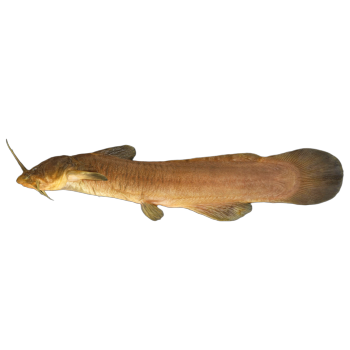
Long snout resembling a catfish, with 3, 7 dorsal fin strips; Pectoral fin strips 1, 14; Abdominal fin strips 1, 7; Hip fin strips 3, 6. Gill rakes 10-12. Two rows of swallowing teeth, 2.5 to 5.2. Side scale 42 [5/(3-V)] 43; Dorsal fin anterior scales 11-12; 12 scales around the caudal peduncle.
Japanese striped loach

Japanese striped loach

The scientific name of the Japanese striped loach is Cobitis biwae, which is a native fish species in Japan. Found in sandy and gravelly substrates in rivers. This species is a native species of this state. However, it was not found in Yamaguchi Prefecture. It is considered an invasive species in Lake Chuzenji and eastern Shizuoka Prefecture. Because they are small and easy to raise, they are also farmed as ornamental fish.
Green backed Mullet

Green backed Mullet

Green backed mullet is a fish species found in the Indo Pacific region. Fish schools form in shallow waters and enter lagoons, estuaries, and freshwater areas to forage. Juvenile fish may enter rice paddies and mangroves. It is mainly distributed in coastal areas with sandy and muddy bottoms, and is also commonly found in brackish water environments such as estuaries or mangroves. Feed on organic debris in the bottom soil or plankton in the water. The common length is about 25 centimeters, but it can reach up to 40 centimeters.
Spotted grouper

Spotted grouper

The spotted grouper is a bony fish species belonging to the family Serranidae in the order Perciformes. The body of the spotted grouper is elongated into an oval shape, flattened and tall on the side; Small head, slightly slanted and straight back edge; Kiss slightly pointed, with wide and round eye gaps; Small mouth, end position, unable to expand or contract; The upper and lower jaws are approximately equal in length, and the teeth of both jaws are fused with the jawbone; The gaps between each tooth are filled with limestone, forming a sturdy dental arch. The spotted grouper is mainly distributed in clear waters with deep seawater such as the Yellow Sea, East China Sea, and Taiwan in China.
Izu stingray

Izu stingray

Izu rays are a medium-sized benthic fish with a body disc width of up to 73 centimeters. It is a nearshore species mainly found on the continental shelf, with a known depth range of 10-25 meters, but may appear in deeper places; In the East China Sea, it has been reported at a depth of 180 meters. The pectoral fin plate of the Izu stingray is diamond shaped, slightly wider than long, with a smooth golden brown color, and a whip like tail with a low keel above and a fin fold below. The fin folds are white, which distinguishes the Izu ray from all other Pacific members of its family.
Armored Shark

Armored Shark

The armored shark, also known as the black shark, is a species of fish in the armored shark family of the order Squaliformes. The armored shark is distributed worldwide and inhabits the seabed at depths of 200-600 meters (660-1970 feet). The body of the armored shark is quite long, cylindrical in shape; The kiss is very short, and the length of the kiss in front of the eyes is about equal to the eye diameter; The eyes are oval in shape, with a diameter of 1/2 of the length of the kiss in front of the mouth. The upper teeth of the armored shark are pointed, while the lower teeth are leaf shaped. The fish has a dark brown body and a yellow brown belly. Two dorsal fins, relatively small, with a white border on the posterior edge of the fins. The tail fin is black at the end. The body length can reach 182 centimeters. Armored sharks are solitary predators that feed on bony fish, sharks and rays, cephalopods, and crustaceans.
Single toothed jade crab

Single toothed jade crab

The single toothed jade crab is an animal of the jade crab genus in the jade crab family. The head and chest armor of the single toothed jade crab is diamond shaped, smooth and shiny, with a prominent back and unclear zoning. The forehead margin is thin, with three inconspicuous small teeth, protruding from the central one. The front edge is wavy with indistinct bead like particles, the base is concave, and the rear edge also has the same particles. The rear edge protrudes in an arc shape. The upper limb is well-developed. The claws of the single toothed jade crab are thick and robust, with particles on both the front and rear edges of the long segment. There are two parallel columns of particles on the back, each with 7-8 particles, and a cluster of particles at the base. There are particles on the inner edge of the wrist joint. The palm joint is rectangular with particles on the inner edge. Both fingers have small teeth on their inner edges.
Big blue shark

Big blue shark

The Great Blue Shark is a species of fish belonging to the true shark family and the genus Great Blue Shark. The body length of the blue shark ranges from 3.50 to 3.8 meters, with the largest reaching over 7 meters. Body elongation, sub spindle shape; Wide and flat head; The tail is slender, slightly shorter than the head and torso; There is a depression on both the upper and lower sides of the caudal fin base. The blue shark is a warm water upper middle layer fish that swims agilely and has a fierce sex. It lives in tropical or temperate oceans, from the surface of the water to the upper layer of the sea at a depth of 350 meters. In general, its actions are relatively slow, but it can move forward at an extremely fast speed when necessary. Usually active on the surface of water, the pectoral fins are spread out, and the upper leaves of the dorsal and caudal fins are exposed above the water surface, swimming slowly.
Henggu Cave Shrimp

Henggu Cave Shrimp

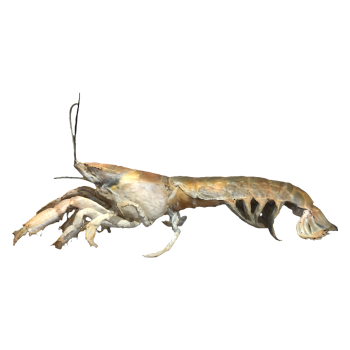
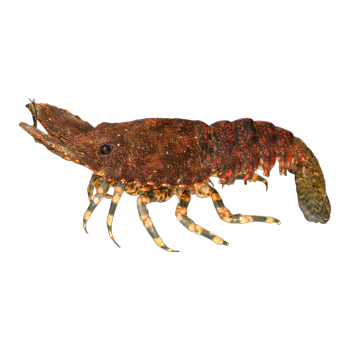
Henggu Cave Shrimp is an animal of the Cave Shrimp genus in the family Crayfidae.
Songjiang perch

Songjiang perch

The Songjiang perch is a fish species belonging to the family Scorpaenidae in the order Scorpaeniformes. The front part of the adult fish is flat and flattened, the middle part is nearly cylindrical, and gradually becomes thinner and flattened towards the back; Big head, wide and flat; Wide mouth, end position; The kiss is wide and round, with the maxilla extending below the posterior edge of the eye. China produces along the coasts of the East China Sea, Yellow Sea, and Bohai Sea. It lives in shallow sea, estuaries, fresh water Rivers and Lakes and other waters. Carnivorous fish, planktonic stage, prefer to feed on copepods, brine shrimp larvae, branchiopods, shrimp larvae, etc; The benthic period shifts to feeding on shrimp, oligochaetes, annelids, etc; During the juvenile and adult stages, they feed on shrimp and small fish, and stay up during the day and come out at night.
Big eyed crab

Big eyed crab

The big eyed crab is an animal of the genus big eyed crab in the family Crabaidae. It is distributed in the west coast of Korea, Singapore, Australia, Taiwan Island, as well as Hainan Island, Fujian, Zhejiang, Shandong, Bohai Bay, Liaodong Bay, Liaodong Peninsula and other places in Chinese Mainland. The living environment is seawater, and it is often found in the intertidal zone near the coast or on muddy beaches at river mouths. The living environment is seawater, and it is often found in the intertidal zone near the coast or on muddy beaches at river mouths. The width of the head and chest armor is about 1.5 times its length, with surface particles and soft fur, especially dense in males.
Qingchui

Qingchui

The medaka, also known as the rice medaka, is a species of fish in the family medaka and genus medaka. The body of the medaka is long, flattened, with a straight back and a round and narrow belly. The head is wide and flat. Small mouth, upper position, transverse fissure, longer lower jaw. Eyes are large, located on the upper side, and the distance between the eyes is wide and flat. The top of the head and gill cover are covered with scales. The dorsal fin is located at the back of the body. Qingchui is a small freshwater mid to upper level fish. It lives in ditches, paddy fields, ponds, and aquatic plants along rivers, lakes and reservoirs. Xi Qun swims in still and slow-moving water areas.
Striped Barrage Fish

Striped Barrage Fish

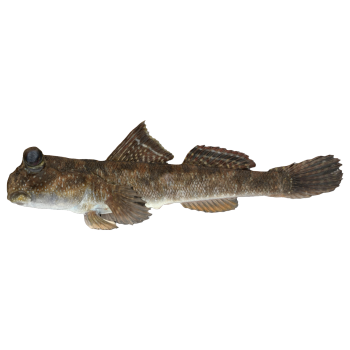
Striped sandfish, also known as silver line sandfish, is a type of sandfish. It originates from the African coast of the Indian Ocean to the Mariana Islands and Samoa in the western Pacific, as well as from the Ryukyu Islands southward to Australia in terms of seawater, freshwater, and brackish water. This species appears in mangroves and palm forests and can cross muddy surfaces when leaving the water surface. It can reach a total length of 19 centimeters.
Pine ball fish

Pine ball fish

Pine ball fish is a species of fish belonging to the pine ball fish family. It is distributed in the western Pacific Ocean of India, including the Red Sea, South Africa, South Japan, Taiwan, Australia, New Zealand and other sea areas. Distributed in Taiwan, including the southern part and the waters around Orchid Island and Green Island. The adult body length of the pine ball fish is about 13-17 centimeters, characterized by specialized scales in the form of shield armor and slightly hexagonal markings on the side of the body. It is the most beautiful ornamental fish in the order of cichlids. Living in tropical waters ranging from 10 to 200 meters, they inhabit rocky depressions or caves during the day and venture out to search for food at night.
Big headed cod

Big headed cod

The Chinese name for the big headed cod is a fish belonging to the cod family. It is distributed in the Yellow Sea and Bohai Sea of China; Overseas to North Korea and the Pacific Ocean north of Los Angeles. The bighead cod is a cold water bottom dwelling fish that typically inhabits sea areas at depths of 50-80m. The body length is generally 21-70cm. The fins of the bighead cod have no hard spines and are entirely composed of fin strips. Abdominal fin throat position. There is one whisker in the chin of the lower jaw, and both jaws and the plow bone have fuzzy teeth. The scales are very small. It produces and operates food from small and medium-sized fish and invertebrates.
Macrophthalmus japonicus

Macrophthalmus japonicus

The Japanese big eyed crab, also known as the Japanese big eyed crab in Chinese, is an animal belonging to the sand crab family and the big eyed crab genus. It is distributed in Japan, the west coast of Korea, Singapore, Australia, Taiwan Island, as well as Hainan Island, Fujian, Zhejiang, Shandong, Bohai Bay, Liaodong Bay, Liaodong Peninsula and other places in Chinese Mainland. Japanese big eyed crabs often nest on muddy beaches in the intertidal zone or river mouths near the coast. The width of the head and chest armor of the Japanese big eyed crab is about 1.5 times its length, with surface particles and soft fur, especially dense in males. The stomach area is slightly heart-shaped. The heart and intestinal regions are connected in a "T" shape, and there are two parallel transverse shallow grooves in the gill region. The forehead is very narrow, slightly curved downwards, and there is a longitudinal mark in the middle of the surface.
Gorgeous wine colored round fan crab

Gorgeous wine colored round fan crab

The wine colored round fan crab is a type of crab belonging to the fan crab family. It is composed of H Milne Edwards first described it in 1834. This species has been found in various regions including Japan, Solomon Islands, Ceylon, Andaman Islands, and Hainan Island in China. It is usually observed on mudflats near mangrove areas or river mouths. In the Philippines, it has been recorded in Puerto Galera, Mindoro Island, and is commonly found on the edge of swamps, under rocks. Crabs are occasionally caught in bamboo traps by local communities and consumed as food.
Japanese rock fan shrimp

Japanese rock fan shrimp

The Chinese name is Japanese rock fan shrimp, also known as Japanese cicada shrimp, which belongs to the family Cicadanidae in the order Decapoda of the phylum Arthropods in the animal kingdom. It is a marine organism. The Japanese rock fan shrimp is a species in the Cicadaceae family, known as the Japanese cicada shrimp or Japanese rock fan shrimp. The maximum length of Japanese rock fan shrimp is 16 centimeters, and the length range of its shell is 4 to 7.4 centimeters. Females are larger than males. Its shell and upper abdomen are brown, with a blue hue on the leading edge, and its lower body and legs are yellow brown. The protrusion or protuberance on the back is purple on the side, while the protrusion in the middle of the back is cherry red; All the small bumps on the back are white.
Grey eyed Snow Crab Male

Grey eyed Snow Crab Male

Gray eyed snow crab, also known as cobbler crab (USA), queen crab (Canada and Europe), is a species of snow crab belonging to the phylum Arthropoda, class Soft Armor, order Decapoda, family Characidae in the animal kingdom. It is a marine organism. Gray eyed snow crabs are distributed in the northern Pacific and northwestern Atlantic. It is very similar to the red eye snow crab and is commonly referred to as "snow crab" when sold. In Canada, it is also known as the queen crab, and in Japan, it is also known as "pine leaf crab". Gray eyed snow crabs are the largest crab resource in Alaska, with a high annual catch of over 100000 tons.
Grey eyed Snow Crab Male

Grey eyed Snow Crab Male

Gray eyed snow crab, also known as cobbler crab (USA), queen crab (Canada and Europe), is a species of snow crab belonging to the phylum Arthropoda, class Soft Armor, order Decapoda, family Characidae in the animal kingdom. It is a marine organism. Gray eyed snow crabs are distributed in the northern Pacific and northwestern Atlantic. It is very similar to the red eye snow crab and is commonly referred to as "snow crab" when sold. In Canada, it is also known as the queen crab, and in Japan, it is also known as "pine leaf crab". Gray eyed snow crabs are the largest crab resource in Alaska, with a high annual catch of over 100000 tons.
Ocypode stimpsoni

Ocypode stimpsoni

The Chinese name for the sand crab is Ocypode stimpsoni, also known as the Sze's sand crab. It belongs to the phylum arthropods, class Soft Armor, order Decapoda, family Characidae, and genus Characidae in the animal kingdom. It is a marine organism. Crab is distributed on the east coast of North Korea, Japan, Taiwan Island, and Guangdong, Fujian, Shandong, Bohai Bay and other places in Chinese Mainland. Its living environment is sea water, and most of its caves live on the beach at the high tide line.
Uca arcuata

Uca arcuata

The Chinese name for Ocypode stimpsoni is the curved edge fiddler crab, also known as the reticulated fiddler crab or the curved edge tube fiddler crab. It belongs to the phylum Arthropods, order Mollusca, family Crabaidae, and genus Crabapple. It is a marine organism. The edge fiddler crabs are distributed in the Korean Peninsula, Japan, Vietnam, Taiwan, and the eastern coast of Chinese Mainland. Their living environment is seawater, and they live in salt marshes or mangrove swamps in the upper intertidal zone.
hemigrapsus penicillatus

hemigrapsus penicillatus

The Chinese name is Eriocheir sinensis, which belongs to the genus Eriocheir in the order Decapoda of the phylum Arthropoda of the animal kingdom. It is a marine organism. Crabs are distributed in North Korea, Japan and Chinese Mainland in Guangdong, Fujian, Zhejiang, Jiangsu, Shandong, Bohai Bay, Liaodong Bay, Taiwan Island and other places. Their living environment is sea water, and they are commonly found under rocks or in rock crevices on the seashore, and sometimes on estuarine mudflats. The head and chest armor are square in shape, with the front half slightly wider than the back half, and the surface has fine concave points. There are particles in all areas of the front and back of the body, and the liver area is low concave. The front and side stomach areas are raised and separated by a longitudinal groove.
Pilumnus vespertilio

Pilumnus vespertilio

Pilumnus vespertilio, also known as bat hairy crab, is an animal belonging to the genus of hairy crabs in the family of hairy crabs. They mainly live in seawater, especially in the crevices of rocks along the coast or in shallow waters of coral reefs. It is distributed in Japan, Hawaii, Australia, Thailand, Singapore, the Indian Ocean, the Red Sea, the east and south coast of Africa, as well as the Xisha Islands and Hainan Island in Chinese Mainland. The back of the body is densely covered with soil brown bristles of varying lengths, with longer bristles distributed along the edges of the head and chest armor and the surface of the feet.
Female Eriocheir sinensis

Female Eriocheir sinensis

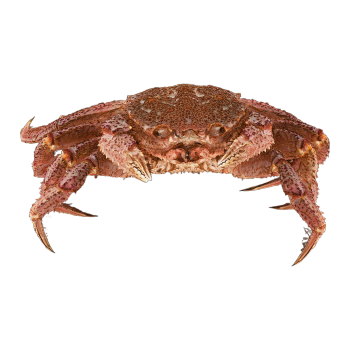
The Erimacrus isenbeckii, also known as the horseshoe crab or the chestnut crab, is an animal belonging to the genus Erimacrus in the family Ericaceae. They mainly live in seawater, especially in the Pacific Northwest and the marginal waters from the Pacific coast north of Ibaraki Prefecture in Japan to the coast of Alaska. They are important commercial resources, mainly captured in fishing cages. They are carnivorous animals that prey on benthic organisms such as polychaetes, shellfish, other shellfish, and small fish. The natural enemies are the Bering wolffish and the North Pacific giant octopus.
Male Eriocheir sinensis

Male Eriocheir sinensis

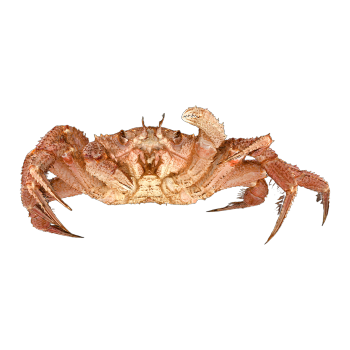
The Erimacrus isenbeckii, also known as the horseshoe crab or the chestnut crab, is an animal belonging to the genus Erimacrus in the family Ericaceae. They mainly live in seawater, especially in the Pacific Northwest and the marginal waters from the Pacific coast north of Ibaraki Prefecture in Japan to the coast of Alaska. They are important commercial resources, mainly captured in fishing cages. They are carnivorous animals that prey on benthic organisms such as polychaetes, shellfish, other shellfish, and small fish. The natural enemies are the Bering wolffish and the North Pacific giant octopus.
Gorgeous wine colored round fan crab

Gorgeous wine colored round fan crab

Baptozius vinosus, also known as the wine colored round fan crab, is an animal belonging to the genus of round fan crabs in the family of fan crabs. They mainly live in seawater, especially in the surface seabed of the Indo Western Pacific region. In many countries, it is widely used as a food crab. It is distributed in Japan, Solomon Islands, Celebes, Andaman and Hainan Island in Chinese Mainland.
Raft wood hidden crab

Raft wood hidden crab

The Chuanmu Hidden Crab is an animal belonging to the family of hand crabs and the genus of hand crabs. They mainly live in shallow seawater. The head and chest armor of the bamboo crab is square in shape, with a width of up to 3 centimeters. There are some deep grooves that divide it into several areas. The front half has intermittent horizontal ridges, mixed with rough particles. There is an inconspicuous tooth mark on the front edge except for the posterior teeth of the eyes. The side edges are straight and parallel, and the forehead is wide. The eyes are located near the corners of the front side, and the outer teeth of the eye socket are triangular, pointing forward.
Armed basket crab female

Armed basket crab female

Mursia armata, also known as armed basket crab, is an animal belonging to the genus Crab of Mantou crab family. They mainly live in seawater, especially on sandy bottoms at depths of 50-150 meters. It is distributed in Japan, Guangxi and Hainan Island in Chinese Mainland.
Armed basket crab male

Armed basket crab male

Mursia armata, also known as armed basket crab, is an animal belonging to the genus Crab of Mantou crab family. They mainly live in seawater, especially on sandy bottoms at depths of 50-150 meters. It is distributed in Japan, Guangxi and Hainan Island in Chinese Mainland.
Victory Liming Crab

Victory Liming Crab

The Matuta victor, also known as the tenacious dawn crab, sand crab, or sand follower, is an animal belonging to the dawn crab genus of the dawn crab family. They mainly live in the outskirts of China, where seawater is semi saline. The head and chest armor of the Victory Dawn Crab is nearly circular, with the forehead slightly wider than the eye sockets. The front edge protrudes in the middle and is divided into two teeth by a "V" - shaped notch. The lower inner eye socket teeth are smooth and blunt circular, with three small blunt teeth on the edge.
Chinese Guan Gong Crab

Chinese Guan Gong Crab

The Chinese Guan Gong crab is an animal belonging to the Guan Gong crab family and the Guan Gong crab genus. They mainly live in seawater, especially in mud and sandy bottoms at depths of 15-50 meters. Guangong Crab is distributed in Guangdong, Hainan and other places in Chinese Mainland.
Japanese river sand crab

Japanese river sand crab

The Japanese river sand crab is an animal belonging to the sand crab genus of the family Crabs. They mainly live in seawater, brackish water, and freshwater environments. The Japanese river sand crab is considered a near threatened species because its habitat conditions are changing.
Toothed stone fan crab

Toothed stone fan crab

Epixanthus dentatus, also known as the toothed stone crab, is an animal belonging to the genus Epixanthus in the family Cymbidae. They mainly live in seawater, especially in the mangrove forests of East Africa. It is a predatory crab that typically inhabits mangrove forests in East Africa. Their behavior is usually nocturnal and elusive, which often hinders analysis of their natural diet and prey selection. The orange spots on the shell of the toothed stone fan crab can easily identify this common crab. They are usually hidden under driftwood.