Medieval retreat of San Coroma, Albendigo, Spain

Medieval retreat of San Coroma, Albendigo, Spain

The St. Kolomar Temple dates back to the 10th-11th centuries. After the 4th century, Christianity was widely spread in Europe, and some believers chose to stay away from the city and express their piety to God by ascetic in remote mountainous areas. This "reclusive life" was particularly prevalent in the Iberian Peninsula in the 8th-10th centuries. Albendigo is located at the junction of Navarre and the Basque region, with dense forests and inconvenient transportation, making it an ideal choice for hermits. The retreat is located on the hillside of the "Koroma Hill" on the northwest side of the town of Albendigo, about 850 meters above sea level, surrounded by fir forests and terraces. The site selection takes into account both "concealment" and "sanctity".
Medieval Church of New Calatrava, Spain

Medieval Church of New Calatrava, Spain

The "Medieval Church of Calatrava la Nueva" () is a medieval religious building in the municipality of Real, in the autonomous region of Castilla-La Mancha, central Spain, located in the center of the town of "Calatrava la Nueva", adjacent to the site of the former "Castle of Calatrava. It is an important witness to the history of Spain's "recovery of lost land movement" and "Calatrava Knights", and it is also a typical sample of the study of medieval religious architecture and local culture in the Iberian Peninsula.
Church of Santa Maria Immaculate Grace

Church of Santa Maria Immaculate Grace

"The Immaculate Church of Santa Maria in Bergamo Province" (Chiesa Santa Maria Immacolata delle Grazie) is a medieval to Renaissance Catholic church in Bergamo Province (Provincia di Bergamo, referred to as "BG") in Lombardy Region of Italy. With the theme of "Immaculate Virgin", it is an important landmark of "religion-art-community" integration in Bergamo region. The Church of the Immaculate Grace of Santa Maria dates back to the 13th century.
Church of Santa Maria, Barengo Campania

Church of Santa Maria, Barengo Campania

The "Church of Santa Maria di Campagna" (Chiesa Santa Maria di) is a medieval to Renaissance Catholic church in the municipality of Ballego, Piedmont, Italy. It is located in the core area of the old town of Ballego (Città Vecchia), adjacent to the "Castello di Barengo" (Piazza San Rocco), it is an important landmark in the "history-religion-life" triangle of Ballengo.
Church of Santa Maria del Cerf, Monza

Church of Santa Maria del Cerf, Monza

"Monza Santa Maria Delle Selve Church" (Chiesa di Santa Maria delle Selve) is a medieval to Renaissance Catholic church in Monza, Lombardy, Italy. It is located in the core area of the old city of Monza, adjacent to "Monza Cathedral" and "Royal Villa". It is an important landmark of Monza's "history-religion-culture" triangle.
St. George's Church, San Salvatore, Almeno

St. George's Church, San Salvatore, Almeno

"Chiesa di San Giorgio" is the core religious building of the town of Provincia di Bergamo (Comune di Almenno San Salvatore) in the province of Bergamo (Almeno di Como) in Lombardy, Italy. It is located in the hilly area on the west bank of Lake Bergamo (Lago di Como), adjacent to the historical trade route of "Bergamo-Crema", and it is the core of "religious culture-life area of Almeno.
Church of San Bernardo, Ronkora

Church of San Bernardo, Ronkora

"The Church of Ronkola San Bernardo" (Chiesa di San Bernardo) is a Catholic church from the Middle Ages to the Renaissance in the town of Ronkola, Bergamo Province, Lombardy, Italy. It is located in the hills on the west bank of Lake Bergamo (Lago di Como), adjacent to the "Como-Bergamo" historical trade route. It is the core landmark of "religion-culture-life" in Ronkola region. It has witnessed the rise and fall of rural churches in northern Italy in the Middle Ages and the faith inheritance of local communities. It is also an important building for the study of folk religious art in Lombardy region.
Spanish ancient building Consuegra Castle

Spanish ancient building Consuegra Castle

The history of Consuegra Castle can be traced back to the 10th century, and the Moors regarded it as the key node of the "Southern Defense Line. It was mainly used to defend against the attacks of the Christian kingdoms of the north and to control rivers and trade routes. In 1085, after King Alfonso VI of Castile captured Toledo, the castle was included in the Christian sphere of influence and gradually transformed from a military fortress to a "frontier defense center". With the gradual weakening of the military function of the Spanish unified Consuegra Castle, it was transformed into an aristocratic residence and administrative center. The local nobility, the "Kongsuegra family", became the actual controller of the castle through marriage with the royal family.
Italian ancient architecture Groscio San Faustino Castle

Italian ancient architecture Groscio San Faustino Castle

The castle dates back to the 12th century and was built under the auspices of the Lords of Grosio, a branch of the local aristocracy, the Visconti family. Its core function was to control the main transportation routes of the Valtellina Gorge and guard against predators from northern Europe and feudal rivals from the south. In the 13th century, the castle was given to the "San Fastino Monastery" and became a "religious-military complex". After the 15th century, with the unification of Lombardy by the Principality of Milan, the castle gradually lost its military function and was transformed into a noble summer palace and administrative center. During the rule of the Austrian Empire in the 18th century, some buildings were demolished for the construction of roads but the core structure was preserved.
Alco Castle, an ancient Italian building

Alco Castle, an ancient Italian building

The history of Alco Castle can be traced back to the 12th century, when the town of Alco became a battleground for military strategists because it was located in the Trento Basin and Lake Garda. At the end of the 12th century, the local aristocracy, the "Alco family", began to build the castle in order to consolidate their control over the territory. After the 15th century Alco Castle was incorporated into Venice's "border defense system". The Venetians reinforced the walls and added batteries on the original basis. During the Napoleonic Wars in the 18th century, the castle was briefly occupied by the French army, and then annexed to the Austrian Empire with Trento (1815), gradually losing its military function.
Brembana Valley Cabins

Brembana Valley Cabins

Brembana Valley (Val Brembana) is located in the southern foothills of the Alps in northern Italy, bordering the Swiss border in the north and the Bergamo Plain in the south. It is one of the most famous "mountain resorts" in Lombardy. It is famous for the "Brembana Railway" (Ferrovia della Val Brembana), which opened in the 19th century. The railway winds up the valley and connects several traditional villages (such as Sant'Gerolamo and PorettA), and the "wooden houses" are the core buildings of these villages.
Old Calatrava of Real City

Old Calatrava of Real City

The Knights of Calatrava were founded in 1158 by King Alfonso VII of Castile (Alfonso VII) and the Knights Templar in order to resist Moorish domination of the Iberian Peninsula (I. e., the "Recapture Movement"). The name "Calatrava" comes from a castle near the city of Real (originally "Calatrava la Vieja"), which was the original headquarters of the Knights. Old Calatrava La Vieja served as the "mother fort" of the Knights at the time ".
Pagliari Borgo village in the small town of Carona

Pagliari Borgo village in the small town of Carona

"Borgo di Pagliari-Carona" () is a historical village in the municipality of Provincia di Como (Comune di Carona) in the Italian province of Lombardy, located in the hills on the west bank of Lake Como (Lago di Como). It is not only a core component of Carona's "Lake Mountain Town", but also a vivid witness to the "aristocratic manor culture" and "lakeside life" in Lombardy, combining natural beauty, historical heritage and local lifestyle.
Teso Borgo, Cornellode, City of Bégamo

Teso Borgo, Cornellode, City of Bégamo

"Borgo Cornello dei Tasso" is a historical block in the upper Bergamo of Bergamo (Città Alta) in Lombardy, Italy. It takes the manor and architectural heritage of the noble family "Tasso" from the 15th to 16th century as the core, and is an important carrier of the historical style of "Upper City" in Bergamo's "Double City Pattern. It not only retains the architectural essence from the Middle Ages to the Renaissance, but also witnesses the key history of Bergamo's transformation from a "free city-state" to a "noble territory.
A country cottage on a hillside in Italy

A country cottage on a hillside in Italy

Clagton Church in the Galloway region of Scotland

Clagton Church in the Galloway region of Scotland

Clagton Church is a historic country church in the Galloway area of south-west Scotland, located near the town of Clagton on the north shore of Clyde Bay. It is not only an important witness to the spread of Christianity in Galloway, but also a living carrier of "frontier culture" and rural history in Scotland. The Church of Clagton dates back to the 12th century and its origins are closely linked to the spread of "Celtic Christianity" in Scotland. The Galloway area was at the forefront of Scottish-Irish cultural exchange in the Middle Ages, where early missionaries were active, and Clagton Church may have originally been an improvised place of worship established by Celtic monks.
Romanian Attractions Limpedea Stone Pillars

Romanian Attractions Limpedea Stone Pillars

Limpedea Stone Pillar is a natural wonder in Bihor County in northern Romania. It is located in Apseni Natural Park. This attraction is famous for its unique Carst landform and vertical limestone pillar group. It is a geologist and A popular destination for tourists to explore the geological evolution of the Carpathians. It consists of hundreds of limestone pillars, ranging in height from a few meters to tens of meters, resembling a giant "stone forest". Its limestone pillars record hundreds of millions of years of sedimentary, tectonic and dissolution history. As a typical representative of karst landform.
Public telephone booth

Public telephone booth

It is a telephone facility set up in public places, mainly used to provide public communication services. It originated in the industrial countries in the early 20th century and was widely used in the middle of the 20th century. It usually consists of a closed or semi-closed kiosk and a built-in telephone, which is designed with ergonomics in mind to ensure that the user can talk comfortably while standing. The design not only focuses on functionality, but also takes into account the beauty and practicality. Modern telephone booths usually adopt a simple and generous design style in appearance to integrate into the urban environment. However, with the popularity of mobile communications, the frequency of use of telephone booths has declined.
Metal Jukebox

Metal Jukebox

A road speed bump

A road speed bump

Shipping container with graffiti

Shipping container with graffiti

Yellow and black concrete fence

Yellow and black concrete fence

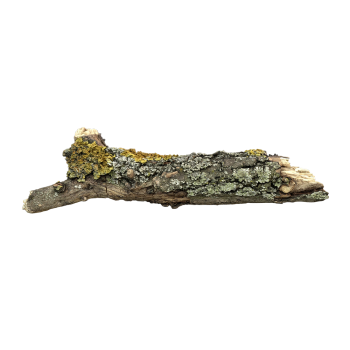
Cut a good branch

Cut a good branch

Removable double-window bin

Removable double-window bin

Concrete sewer cover

Concrete sewer cover

Sea Containers

Sea Containers

a section of train track

a section of train track

Park recreation facilities seesaw

Park recreation facilities seesaw

Road facilities deceleration strip

Road facilities deceleration strip

Domestic fire hydrant

Domestic fire hydrant

Red safety barrier rod

Red safety barrier rod

Bundled industrial steel coils

Bundled industrial steel coils

Old metal gas pipeline

Old metal gas pipeline

Concrete drainage pipe construction materials

Concrete drainage pipe construction materials

Courtyard vertical metal mailbox

Courtyard vertical metal mailbox