
Japanese hand water bowl

Japanese hand water bowl

It is a common stone basin in traditional Japanese gardens, used for visitors to wash their hands and rinse their mouth before entering shrines or temples to purify their body and mind. It is usually carved from natural stone and has various shapes, but the most common ones are round or square. Its design is simple and elegant, blending harmoniously with the surrounding environment. In Japanese culture, a water bowl is not only a practical facility, but also a spiritual symbol that reflects the Japanese people's respect for cleanliness, purity, and humility. When using a hand water bowl, visitors will follow certain etiquette: first use a spoon to scoop water to clean their left hand, then clean their right hand, then use their right hand to scoop water to rinse their mouth, and finally clean their left hand again and put the spoon back in place
Japanese torii

Japanese torii

It is an iconic annex building of Japanese shrines, mainly used to distinguish the divine realm from the secular realm where humans reside, symbolizing the entrance to the divine realm. It usually consists of two pillars and two crossbeams, and sometimes hangs a plaque with inscriptions on it. It is usually made of wood and painted with raw paint. The color is usually vermilion, which is believed to have the power to dispel demons, like a monk's barrier. In Japan, people believe that torii can fulfill their wishes, so the custom of worshipping torii has been popular since the Edo period. Torii is not only a part of the shrine, but also an important symbol of Japanese culture.
Part of the Nine Dragon Wall in Beijing, China

Part of the Nine Dragon Wall in Beijing, China

The Chinese Loong is one of the symbols of China in Beijing, and the Nine Dragon Wall is an outstanding representative of this symbol. Built in the 21st year of the Qianlong reign (1756), it is a colored glazed brick screen wall. Renowned for its exquisite craftsmanship and unique design, it is carved with nine lifelike dragons, each with a unique shape and vivid imagery, showcasing the majesty and mystery of dragons in traditional Chinese culture. Not only is it a treasure of Chinese architectural art, but it is also an important symbol of Beijing's historical and cultural heritage. Located within Beihai Park in Beijing, it is a part of the royal garden and has witnessed the prosperity and glory of the Qing Dynasty. It is a symbol of traditional Chinese culture.
Japanese style residence

Japanese style residence

Japanese style residences, also known as Japanese style residences, are a traditional form of living in Japan known for their simplicity, naturalness, and harmony. This residential style is deeply influenced by Japanese culture and Zen philosophy, emphasizing harmonious coexistence with nature, as well as the multifunctionality and flexibility of the space. Typical features include the use of natural materials such as wood, bamboo, and paper, as well as the adoption of traditional Japanese building techniques. Houses are usually made of wooden structures, with roofs covered in tiles or mats, and exterior walls painted in natural tones, blending seamlessly with the surrounding environment. This not only reflects traditional Japanese aesthetics, but also embodies a simple and environmentally friendly way of life.
Densu ş Stone Church in Hunedoara, Romania

Densu ş Stone Church in Hunedoara, Romania

The Densu ş Stone Church, located in Densu ş Village, Hunedoara County, Romania, is a historic religious building and is considered one of the oldest stone churches in Romania. The history of the church can be traced back to the 14th century, and some historians even believe that it may be even older. The walls of the church are constructed from limestone blocks taken from nearby ancient Roman cities. Not only is it a religious building, but it is also a symbol of Romanian culture and history. Witnessed the rich history from the Dacian era until today. Due to its unique historical value and architectural features, it has attracted numerous domestic and foreign tourists to visit and pilgrimage.
San Carapet Church in Amini

San Carapet Church in Amini

A medieval monastery complex located in Armenia, also known as Camille Monastery or Zolakiu Monastery, has significant architectural and historical value. The St. Karapette Church is a highlight of the architectural complex, built in 1205 and belonging to the vaulted church type. On the east side of the church, there is a semi-circular main altar, and on both sides are arched vestibules with a right angle perspective. The church has two entrances, located on the west and north sides respectively. All facades are decorated with 'Armenian Hymn'. The dome of the church was destroyed in the 1939 earthquake and was repaired in 1980.
Railway Workers' Cabin

Railway Workers' Cabin

The railway worker's hut ruins in Rosedale East area are named after their exterior walls coated with creosote, a coating used for moisture and corrosion prevention. Recently, these small houses have been reinforced and re jointed, and there have been some instances of lime seepage. However, over time, this seepage will gradually subside. These small houses are not only witnesses to history, but also reflect a side of the life of railway workers in the past. Their existence provides valuable physical materials for studying local history.
Kensal Green Non-Anglican Chapel, London

Kensal Green Non-Anglican Chapel, London

A historic chapel within Kensal Green Cemetery in London, built in 1834 and designed by John Griffith in the Greek Revival style. This chapel especially served non-Anglicans and was of great significance in the religious environment of Britain at the time. Not only was it one of the first permanent structures within Kensal Green Cemetery, but its design had a profound influence on the later cemetery architecture and monument style. Major restoration work was completed in 1997. At the same time, the chapel and its basement are also open to the public, becoming an important place to learn about the design of the 19th century cemetery and the history of religion.
Paldov St. Rox Chapel

Paldov St. Rox Chapel

The St. Rox Chapel located in Pardov is a Baroque style chapel built in the first half of the 18th century. The establishment of this chapel is related to the last large-scale plague outbreak in Europe at that time, hence the name 'Plague Chapel'. The facade is decorated with niches, in which statues of saints are placed, reflecting people's fear of epidemics and their desire for divine protection at that time. Not only is it a religious site, but it is also a symbol of the culture and history of the Pardov region. It witnessed a difficult period in human history and is also evidence of the spread and development of Baroque art in Central Europe.
Baltimore Royal Mountain Train Station, USA
Baltimore Royal Mountain Train Station, USA

Located in Baltimore, Maryland, USA, it is a historic railway station. Originally built in 1896, it served as a passenger train station for the Baltimore and Ohio Railroad Company. As an official historical landmark, it was listed in the National Register of Historic Places in 1976. Not only has it witnessed the development of railway transportation in the United States, but it is also an important part of Baltimore's urban history. The architectural style and engineering design reflect the architectural features of the late 19th and early 20th centuries, and their historical value and architectural aesthetics have been appreciated and protected by people.
Washington Coastal Battery, United States

Washington Coastal Battery, United States

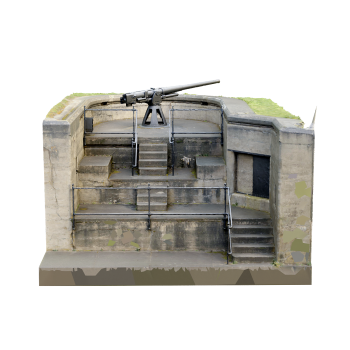
It is a historic coastal battery located in Fort Flagler State Historical Park in Jefferson County, Washington, USA. Built between 1903 and 1905, in memory of Thomas A. of the United States Second Infantry Division who died in the 1898 Battle of El Canes, Cuba Lieutenant Wansboro. It consists of two 3-inch M1903 guns and corresponding gun mounts, which use M1903 base type gun mounts to provide some protection for the gunner during loading. Now open to the public, showcasing the military defense facilities of that era.
Vologda Bell Tower, Russia

Vologda Bell Tower, Russia

It is an important historical landmark in the city of Vologda, Russia, located next to Sofia Cathedral. Standing 78.5 meters tall, it is one of the tallest buildings in the city. Built between 1568-1570, together with Sofia Cathedral, it forms the oldest architectural complex on the Vologda Kremlin Square and is a symbol of the city's history and culture. The design is simple and rustic, decorated with a golden circular onion top, reflecting the characteristics of traditional Russian architecture. The bell tower preserves a large copper bell from the 17th century, which is still in use today. Its chimes echo over the city, becoming a unique scenic spot in Vologda.
Skogaholm Estate, Sweden

Skogaholm Estate, Sweden

Part of the Skansen Open Air Museum located in Stockholm, Sweden. This 18th century estate was originally located in Nagel, southern Sweden, and was later relocated to the Scanson Museum to better protect and showcase its historical value. Not only is it a building, but it also represents the lifestyle and culture of that era. The garden of the estate is a major highlight of the museum, showcasing the garden art and horticultural techniques of the estate in the 18th century. This estate is an important part of the Skansen Museum and a valuable resource for understanding traditional Swedish architecture and lifestyle.
SpisskyHrhov Castle, Slovakia

SpisskyHrhov Castle, Slovakia

A historic castle located in the Levo č a region of Slovakia, situated near the village of SpisskyHrhov. Originally built during the Renaissance period in 1596, it was later renovated into Baroque style in the mid-18th century, and in the early 19th century, its facade was designed in Classical style. The castle is a two-story building with a rectangular plan and a three section block layout. In the center of the front, there is a three pointed gable consisting of a lower level pilaster and an upper level colonnade. It was once the property of the Mariassy family and underwent several restorations in the 20th century.
Makusovsky Castle, Slovakia

Makusovsky Castle, Slovakia

A historic castle located in the village of Markus š ovce in the Spi š sk á Nov á Ves region of Slovakia. Established in 1284, located on a highland in the Horn á dska Basin, near the local church. During the 15th and 16th centuries, it underwent significant renovations, forming a small but heavily fortified castle. Although it was captured and destroyed by Levo č a's army in 1527, it was repaired in the second half of the 16th century and underwent final repairs in 1789, mainly to repair the damage caused by the 1773 fire.
Watford Clock Tower, Ireland

Watford Clock Tower, Ireland

It is an iconic building in Watford, Ireland, built in 1861 and designed in Victorian Gothic style. Three years later, a clock device was added. Not only renowned for its unique architectural style, but also valued for its historical significance. Initially, the construction of the clock tower was to provide facilities for horses to drink water, hence it was also known as the "Fountain Clock Tower". Over time, it has become a part of Watford's historic center and an important landmark for visitors to learn about the city's history. The clock tower is located in the Watford waterfront area, and despite the busy traffic and tourists surrounding it, it still maintains a classical charm.
Coburg Family Castle in Slovakia

Coburg Family Castle in Slovakia

A historical building located in Jel š ava town, Slovakia. The history of this castle can be traced back to multiple centuries, witnessing the rich cultural heritage and changes of the region. In the late 18th and early 19th centuries, Andrej Koh á ry built this castle in a classical style on the site claimed to be an ancient Templar monastery. Not only is it a historical site, but it has also been selected as a project location for a cultural and creative center in recent years. The restoration and reuse project of the castle has received international support, including funding provided through the European Economic Area Grant Program.
Kitt Lake Hayden Tower

Kitt Lake Hayden Tower

Kitt Lake is located in the state of Bavaria, Germany, and is the largest lake in the state, sometimes referred to as the 'Bavarian Sea'. There used to be a village called Lebarn, where the Haydn Tower is the remains of a late medieval church. This tower is not only the only remaining building in the village, but also a part of the bell tower and clock, with significant historical and cultural value. It is a four story building with a side length of 4.5 meters, and the mountain wall in front of its east side is speculated to be the front nave of St. Michael's Church. Although other buildings in the village no longer exist, the Hayden Tower still stands, becoming the only relic of the former village.
Altp ö lla Cemetery Chapel

Altp ö lla Cemetery Chapel

Located in the cemetery of Altp ö lla, it may have been a former funeral hall. This small religious building may carry the history and culture of the local community, providing a space for residents to commemorate and pray. Such small chapels usually have a peaceful and solemn atmosphere, with simple interior decoration to accommodate their function as a venue for funerals and commemorative events. As a part of the cemetery, it reflects people's way of commemorating the deceased and also a respect for the dignity of life. The architectural style and materials may correspond to the local architectural traditions, reflecting a local characteristic and contemporary style.
Lohisari Estate, Finland

Lohisari Estate, Finland

Askainen town, located in southwestern Finland, is a historic aristocratic estate. The building was completed in the mid-17th century and is a rare representative of palace style architecture in Finland. Not only is it a showcase of aristocratic life from the 17th to 19th centuries, but it is also the birthplace of one of Finland's greatest military leaders and presidents, Marshall Mannheim, thus attracting many tourists interested in Finnish history. The interior decoration is magnificent, preserving the style of the 17th and 18th centuries and equipped with corresponding furniture. You can experience the lifestyle of aristocratic families and gain a deeper understanding of Finland's history and culture.
Abandoned and burned Soviet ruins

Abandoned and burned Soviet ruins

Ramadin El College, Lucknow, India

Ramadin El College, Lucknow, India

A famous private educational institution located in Lucknow, Uttar Pradesh, India, founded by French adventurer and British East India Company officer Major General Claude Martin in 1845. The architectural complex was converted from Martin's private residence, with the Constantia Building being its iconic building, praised by The Economist as "the best preserved colonial building in Lucknow". Renowned for its excellent academic tradition and rich historical heritage. During the Indian uprising in 1857, the faculty and students of the college participated in the defense of Lucknow, making it the only school in the world to receive the Royal War Merit Honor.
St. George's Martyrs' Church, Italy

St. George's Martyrs' Church, Italy

Located in the Molise region of Italy, it is a historic religious building dating back to the 12th century. Known for its Romanesque style, it was declared a "National Monument" in 1901. The main entrance and both sides have important decorative sculptures, and the interior is divided into three central halls enclosed by their respective rear halls, separated by two rows of asymmetrical columns. The column heads are decorated with patterns similar to the exterior, and the church also features a beautifully decorated hemispherical baptismal pool made of single stones, multiple altars, and an underground tomb dedicated to St. George. It is the local religious center and an important place for tourists to learn about the local history and culture.
Finnish Krevan Maiki Windmill

Finnish Krevan Maiki Windmill

The windmill located in the town of Haliko in southwestern Finland, in the Krevanmeki region, is a landmark historical building in the area. Built in the 19th century, it is one of the few well preserved windmills in Finland, reflecting the precious heritage of Finnish agricultural history and architectural traditions. Usually used for grinding, they are an indispensable part of agricultural society, and their existence not only showcases the technology of the time, but also reflects the lifestyle of the local people. Adopting the traditional Nordic windmill design, it has an elegant appearance and practical features, with its towering tower and huge sails becoming a unique scenic line.
Ruins of settler cottages on the east coast of Tasmania

Ruins of settler cottages on the east coast of Tasmania

The early free settlers' cottage located on the east coast of Tasmania was built around 1820. This historic cottage is a precious relic of early settlers' living scenes. The original settler cottages were likely built as temporary shelters, using wooden structures, with gable walls made of branches and plaster, and thatched roofs. Within a few years, the cottage was expanded at both ends. Despite the erosion of time, this cottage still showcases the lifestyle of Tasmanian settlers in the early 19th century and is a valuable resource for understanding the early history of the area.
Butron Castle, Spain

Butron Castle, Spain

A historic castle located near Bilbao in northern Spain, situated on the hills of Gatica and surrounded by a century old oak forest. Originally built as a defensive structure in the 13th century, Butron Castle underwent multiple renovations over time and eventually evolved into a magnificent palace that blends Gothic and Renaissance elements, with a fairy tale like romantic atmosphere. It is a witness to history and a paradise for nature enthusiasts. The environment around the castle is rich in flora and fauna, providing opportunities for bird watching and other natural exploration. The charming environment and architectural details attract people to come and capture beauty.
Tasmania East Coast Stratford Tony Lodge

Tasmania East Coast Stratford Tony Lodge

The historic settler cottage located on the east coast of Tasmania was built around 1888. Adopting the classic wooden exterior architectural style and equipped with a corrugated iron roof, it is a typical representative of early Australian pioneering architecture. The structure not only reflects the architectural technology of the time, but also adapts to the changing climate conditions in Tasmania. The corrugated iron roof provides additional durability and protection, and the selection of these materials reflects considerations of available resources and practicality at the time. As a historic residence, it provides research value for historians and architecture enthusiasts, and has also become a part of the local cultural heritage
Tasmanian Old Bakery and Post Office

Tasmanian Old Bakery and Post Office

Located in the picturesque state of Tasmania, it is a place that combines historical architecture and modern commerce. Once a bustling bakery serving fresh bread and pastries, it also served as the local community's post office, providing mail and parcel services to residents. As a historical building, the old bakery and post office not only carry the local history and culture, but have also been transformed and integrated into modern business models. Tourists can experience the fusion of tradition and modernity here, and experience the authentic Tasmanian style.
Tasmania Cradle Mountain Kitchen Cottage

Tasmania Cradle Mountain Kitchen Cottage

The Jungle Walker Kitchen Lodge in the Cradle Mountains region of Tasmania is a place for hiking enthusiasts to relax and dine, located within the famous Cradle Mountains - Lake St. Clair National Park. It is a rest stop for hikers on their adventure journey, as well as a social place to enjoy local cuisine and exchange hiking experiences. The catering services provided aim to replenish energy for tourists, allowing them to enjoy nutritionally balanced meals before continuing to explore this natural beauty listed as a World Heritage site. In such a natural beauty, the cabin provides not only food, but also an experience that allows visitors to enjoy comfortable services while getting close to nature
Holy Savior Church

Holy Savior Church

It is a religious building with a long history, founded in 1858 and completed in 1872. It was dedicated the following year. Its design inspiration comes from the Ani Cathedral, but on a larger scale. The church survived the 1926 earthquake due to its sturdy structure. A devastating earthquake in 1988 caused severe damage to the Church of the Holy Savior, but since 2002, the church has undergone a comprehensive renovation process. It is not only a symbol of faith, but also a witness to historical changes, reflecting the impact of social and political turmoil on cultural heritage. Now it is once again shining with its glory as a religious and cultural landmark.
San Pantaleon de Loza Chapel in Burgos, Spain

San Pantaleon de Loza Chapel in Burgos, Spain

A Romanesque chapel located in the province of Burgos, Spain, built in the 13th century. Renowned for its unique geographical location and architectural features, it sits on a rock known as the 'Red Peak', resembling the bow of a ship, overlooking the Jerea River Valley. Announced as a national monument, its artistic value, sculptural decoration, and symbolic significance are highly praised. Not only is it a religious pilgrimage site, but it is also a must visit destination for art and architecture enthusiasts. Its architecture blends elements of Romanesque and Gothic styles. In addition, the small church is associated with the legend of the Holy Grail, adding a touch of mystery.
Mrs. Jones' vacation cottage on Waikiki Island, New Zealand

Mrs. Jones' vacation cottage on Waikiki Island, New Zealand

A holiday cottage located on the island of Waikiki in New Zealand. It is a two bedroom Oneroa bungalow located within walking distance of the beach, shops, and ferry terminal. This unique vacation home combines retro style with modern amenities, providing visitors with a relaxing island resort base. The interior decoration is comfortable and equipped with all modern comfort facilities, allowing visitors to enjoy the warmth of traditional vacation homes while also experiencing the convenience of modern life. It is an ideal choice to explore the natural beauty and experience the local way of life on Huai Xi Ji Island.
Monte Corte Castle and Santa Anna Chapel in Catalonia, Spain

Monte Corte Castle and Santa Anna Chapel in Catalonia, Spain

The small town of Montorn è s de Segarra located in Catalonia, Spain. The castle was first recorded in the 11th century by knight Guillem Isarn de Trevics in his will. At the end of the 15th century, the original castle was rebuilt, forming the spectacular rectangular fortress we see today, with two twin towers, a large semi-circular Romanesque facade, Renaissance style windows, and an arcade. Not far in front of the castle is the St. Anne's Chapel, built in the 16th century, which together with the castle forms an important historical site in the area.
Guadalajara, Spain, Galverde Solbe Castle

Guadalajara, Spain, Galverde Solbe Castle

A historic castle located in the province of Guadalajara, Spain, specifically situated in the town of Gave de Solbe. This castle is a 15th century building and one of the outstanding representatives of medieval defensive architecture in the Guadalajara region. Its sturdy city walls and towers still stand today, showcasing its past glory and solidity to the world. Not only is it a historical site, but it has also become a popular tourist attraction in the area, attracting visitors interested in medieval architecture and history.
Church of Santa Clara in Soria, Spain

Church of Santa Clara in Soria, Spain

A church located in Carrasena, Soria Province, Castile and Le ó n Autonomous Community, Spain. This church is located near the villages of Atalaya and Karascozad Abaho. Renowned for its unique geographical location and architectural style, it is one of the important religious and cultural landmarks in the region. The church is classified as a Roman Catholic place of worship and has a Romanesque architectural style.