Latvian stone chimney building

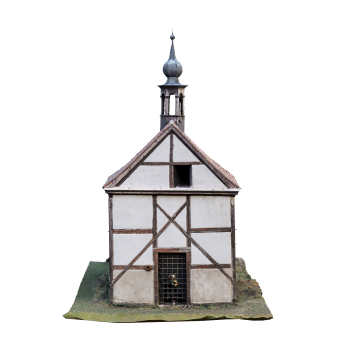
Latvian stone chimney building

A historic building component located in Latvia. Built in the 19th century. This structure typically refers to a decorative fireplace or chimney, whose design and construction often reflect the architectural traditions and cultural characteristics of a specific region. As a representative of traditional Latvian architecture, it not only holds significant importance in architecture, but also reflects the local history and culture. As a historical building, it witnesses an important stage of local industrial development. It represents the past era and architectural style, attracting those interested in history and culture. Both local residents and tourists can experience unique charm and historical memories.
Halle Water Tower, Germany

Halle Water Tower, Germany

Halle, located in Saxony Anhalt, Germany, is a historically significant water tower. Built between 1897 and 1899, it is approximately 54 meters tall and has a capacity of 1500 cubic meters. The bottom is composed of red granite, while the tower body is built with yellow bricks. Although it is now an unused water tower, it has become an iconic building and tourist attraction in the city of Halle. Witnessing the history of industrialization and urban development in the region, it is now an excellent place for local residents and tourists to enjoy the city scenery.
Wat Phra That Prayut, Bangkok, Thailand

Wat Phra That Prayut, Bangkok, Thailand

Also known as Marble Temple, it is a famous Buddhist temple located in Bangkok, Thailand. This temple is renowned for its exquisite architectural art and cultural significance, and is one of the best examples of Thai architecture. Built in 1899, it was ordered by King Rama V of Thailand to commemorate his father, King Rama IV. The construction of the temple took over ten years and was not completed until 1911. The building extensively utilized Carrara marble imported from Italy, a unique architectural feature that earned it the nickname "Marble Temple". Not only is it one of the most photogenic landmarks in Bangkok, but it is also an important representative of Thai Buddhist culture and architectural art.
Dilapidated wooden houses in rural areas
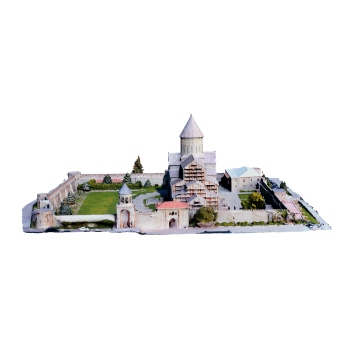
Dilapidated wooden houses in rural areas

Mtskheta, Georgia

Mtskheta, Georgia

Mtskheta, located in Georgia, is an Eastern Orthodox cathedral with extremely high religious and cultural value. Built in the 4th century AD, the existing structure was constructed in the 11th century by architect Arsakidze during the reign of King Bagrat III. As a masterpiece of the early Middle Ages, it has been recognized as a World Heritage Site by UNESCO. It is the second largest church building in Georgia and one of the most important religious landmarks in the country. The architecture is based on the cross dome style, which emerged in early medieval Georgia and became the main style after Bagrat III unified Georgia.
Yokosuka Naval Port Guard Pavilion, Japan

Yokosuka Naval Port Guard Pavilion, Japan

Located at the Naval Port in Yokosuka City, Japan, it is a historic building in the area. A part of the Yokosuka Naval Arsenal, the Guard Pavilion was built around 1930 and serves as an important base for the Japan Maritime Self Defense Force. They mark the location of the entrance to the naval station and naval factory waters. The design features modern architectural characteristics, with a copper dome roof with a small dome and sunshade, resembling a baseball cap in shape. Not only is it a symbol of the history of Yokosuka Naval Port, but it is also a part of the cultural heritage of the region. You can learn about the history and culture of Yokosuka as a naval port here.
Abandoned buildings in Riga, Latvia

Abandoned buildings in Riga, Latvia

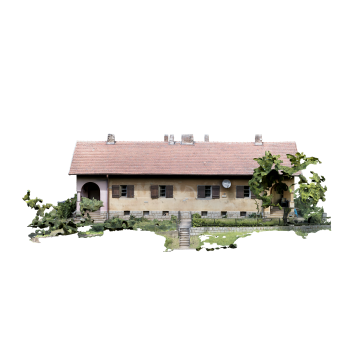
Serbia Belobrod Double Apartment

Serbia Belobrod Double Apartment

A house located in Belobrod, Serbia, with two independent apartments designed for engineers to live in. Beloborode was historically a gathering place for engineers and intellectuals. Built in the early 20th century, Serbia experienced rapid industrialization and modernization, leading to an increased demand for engineers and other technical professionals. Residential design not only meets residential needs, but also promotes communication and cooperation among professionals within the community. It is a part of Belgrade's historical and cultural heritage, witnessing the city's development and social changes in the 20th century.
Catholic Church of Auxerre, France

Catholic Church of Auxerre, France

A Catholic church located in the town of Auxerre in the Nouvelle Aquitaine region of France. Built in the 13th century and renovated in the 15th century, it falls under the jurisdiction of the Archbishop of Limoges. Composed of a single nave dating back to the 12th century, with a painted paneled ceiling at the top, the church ends with a flat end. Not only is it the local religious center, but it is also a part of the rich religious architectural heritage of the region. Along with the Romanesque art of Uz è che, the circular church of Saint Bonnet la Rivi è re, and the painted lintel of Shaiac on the banks of the Charante River, it constitutes an important artistic and architectural attraction in the area.
Small Church of Saint Roch, France

Small Church of Saint Roch, France

A historic church located in France. Dedicated to Saint Luke, a widely revered saint who was regarded as a protector and intercessor, especially in the face of epidemics. Built in the 17th century, it was later relocated and rebuilt in the 19th century. It is an important cultural and religious landmark in the local area. Although it is not as grand as the large Gothic cathedrals in northern France, its unique architectural style and historical value make it a place worth visiting. It is a historic building that reflects the local religious beliefs and cultural traditions.
Santa Maria de Cadet Church in Spain

Santa Maria de Cadet Church in Spain

A Romanesque church located in the Bois Valley of Catalonia, Spain, known for its high-density Romanesque architecture and listed as a UNESCO World Heritage Site. It is one of the nine Romanesque churches in the region, each with its own unique charm and highly valued for its well preserved state. Known for its spectacular rear hall and decorative details, the rear hall is decorated with Lombard style blind arches, serrated ribbons, and pilasters. It is the only church in Boye Valley that does not have a bell tower, but instead has a Baroque style bell shaped gable located above the main facade. The restoration work aims to maintain its state from the early 20th century
The church under construction in Crete, Greece
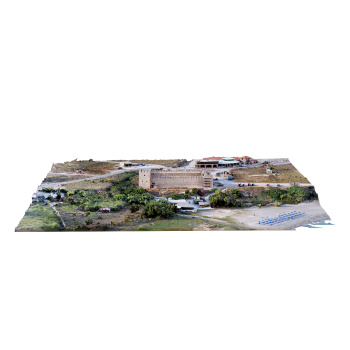
The church under construction in Crete, Greece

Fragokastelo Castle, Crete, Greece

Fragokastelo Castle, Crete, Greece

A historical site located on the southern coast of Crete, Greece. This castle was built between 1371 and 1374 by the Venetians and was initially named the Saint Nikitas Castle in honor of the nearby church. However, due to dissatisfaction with the Venetian rulers, the locals contemptuously referred to it as Fragokastelo, meaning "Frankish castle", and this name was eventually widely accepted, including by the Venetians themselves. Not only was it a military fortress built by the Venetians on the island of Crete, but it was also built to control the residents of the rebellious Sfabria region and resist pirate attacks.
Thibaudier Residence in Japan

Thibaudier Residence in Japan

A historic Western style building located in Yokosuka City, Japan, which is part of the Yokosuka Modern Heritage Museum. Built around 1869, it was the official residence of Jules C é sar Claude Thibaudier, the deputy director of the Yokosuka Naval Arsenal. As one of the oldest Western style buildings on Honshu Island, it witnessed an important historical moment in Japan's modernization process. Before its demolition in 2003, it was an important landmark in Yokosuka City. Now, the Yokosuka City Museum of Modern Heritage is showcasing the original preservation materials of the residence and showcasing the development of the Yokosuka Naval Arsenal.
Sokorta, Croatia

Sokorta, Croatia

It is a medieval defensive fortress located near Dubrovnik, Croatia, situated on a hill above the village of Dunave, near the Croatian Bosnian border. Originally built in the 14th century as a defensive fortress, it played an important role in protecting nearby villages. Having sturdy stone walls, towers, and other defense mechanisms to resist intruders. In 2013, after extensive restoration work, this castle was opened to tourists, and many historical relics were discovered during the restoration process, some of which can be traced back to the late Bronze Age and early Bronze Age.
Kaliningrad Soviet House

Kaliningrad Soviet House

The Soviet House located in Kaliningrad, also known as the Soviet Building, is a grand and symbolic building. The construction began in 1970, but it has not yet been completed and put into use. Located in the central square of Kaliningrad, at the intersection of Shevchenko Street and Lenin Street. Considered one of the tallest buildings in the city, it consists of two connected 21 story towers. At present, it is closed to tourists and does not provide any practical use, but it continues to attract the attention of tourists and citizens. There are active discussions about its future use or development projects, and some initiatives are proposed to transform it into a hotel or cultural center.
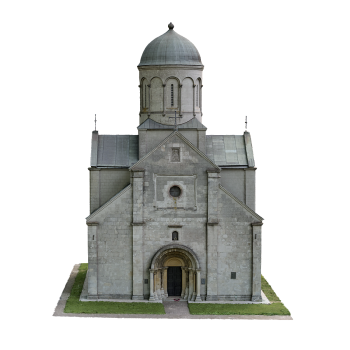
Ukrainian Archangel St. Michael's Church

Ukrainian Archangel St. Michael's Church

Located in StaraSil village, Ukraine, it is a historic religious building that embodies the architectural characteristics of the Eastern Orthodox Church at that time. This church is not only the center of local religious life, but also an important part of Ukraine's cultural heritage. Witnessed the inheritance of religious beliefs and the development of architectural art in the region. Built in the 17th century. The design incorporates traditional religious elements and local art styles, and the interior decoration may include murals, icons, mosaics, etc. These artworks showcase the religious stories of Eastern Orthodoxy and the lives of saints. As an important landmark in rural areas of Ukraine, it attracts numerous believers and tourists to visit.
Turku Ancient Cattle Shed, Finland

Turku Ancient Cattle Shed, Finland

The ancient cowshed in the Kulala area of Turku, Finland, is part of the region's historical and cultural heritage. Built between 1920 and 1930, it is part of the Kurala Village Historical Life Museum, which is dedicated to showcasing the lifestyle of rural Finland in the 19th century. Kurala Village is a living historical village with a history dating back to the Iron Age, spanning over a thousand years. This region has been inhabited by humans since the 7th century and has now become a showcase of the typical historical environment of Southwest Finland. Not only is it an agricultural heritage, but it is also an important place to learn about the history and culture of rural Finland.
St. Panteleimon Church in Ukraine

St. Panteleimon Church in Ukraine

It is a religious building with a long history, not only one of the oldest buildings in the region, but also an important cultural heritage of Ukraine. Built in the 12th century, it was founded by Prince Roman Mstislavich of Galicia Volyn in 1194 and is located in the northeast direction of the city. Despite experiencing multiple wars and turmoil, this church still stands tall and bears witness to the historical changes in the Ukrainian region. After the invasion of the Ottoman Empire in the 15th century, it was converted into a mosque and was not rebuilt until 2000. The design and architectural style reflect the characteristics of the medieval period and are valuable materials for studying religious architecture at that time.
Grosskamburg Monastery, Germany

Grosskamburg Monastery, Germany

A historic monastery located near Schwabenhal in the state of Baden-W ü rttemberg, Germany. Located on a highland above the Koch Valley, it is renowned for its unique geographical location and magnificent scenery. The history can be traced back to the 11th century, initially as the castles of the counts of Rotenburg and Komsburg, and later converted into monasteries at the end of the 11th century. Known for its Romanesque architecture and Baroque style churches, particularly its famous Romanesque chandeliers and gilded altar front walls. These precious cultural relics are the two major treasures of the monastery, attracting numerous tourists and history enthusiasts to visit.
Edgar Allan Poe's former residence

Edgar Allan Poe's former residence

It is the place where the famous American writer, poet, critic, and editor Edgar Allan Poe once lived. Known for its creation of mysterious and terrifying stories, it is considered the founder of modern detective fiction. Some of his famous works, such as "The Black Cat," "The Fall of the House of Usher," and poems like "The Raven" and "Annabelle Leigh," are still widely read and studied today. Baltimore, located in Maryland, USA, is a national historic landmark and also a literary landmark of the United Library. Now open to the public as a museum, it provides an opportunity to learn about the life and creations of this great writer.
Baltimore Ancient Warehouse Kuta, USA

Baltimore Ancient Warehouse Kuta, USA

Church of Saint Raphael, Greece
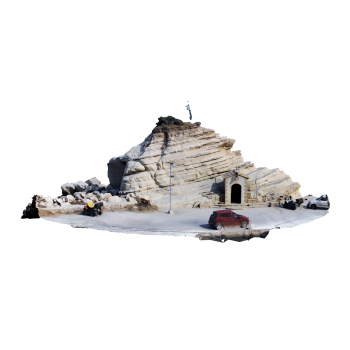
Church of Saint Raphael, Greece

The Church of Saint Raphael is located in Pratamon, Greece and is an impressive Eastern Orthodox church. This church is located near the town of Platamon, backed by the Attica Mountains and overlooking the Aegean Sea. The Church of San Rafael was built in the 19th century and is a building of historical and religious significance. The architectural style of the church blends Eastern Orthodox tradition and local cultural characteristics, with a simple and elegant appearance. The interior of the church is decorated with exquisite murals and decorative arts, showcasing the exquisite craftsmanship of Eastern Orthodox art. The Church of San Rafael attracts many believers and tourists to visit and experience the solemn atmosphere and beautiful scenery of religion.
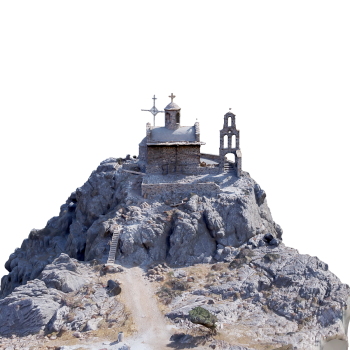
Greek Saint Sottis Chapel

Greek Saint Sottis Chapel

Located on the island of Zakynthos in Greece, the port of Agiosostis is a small and charming seaside chapel. Located in a picturesque location, next to a huge and striking jagged rock, with a tattered Greek flag flying from the top of the rock, the entire scene is very picturesque. According to a small stone tablet outside, the construction of the church can be traced back to 1633. It is an important tourist attraction on Zakynthos Island, not only the core of local religious activities, but also an excellent place for tourists to enjoy tranquility and beautiful scenery. The architectural style is unique and harmoniously blends with the surrounding natural environment.
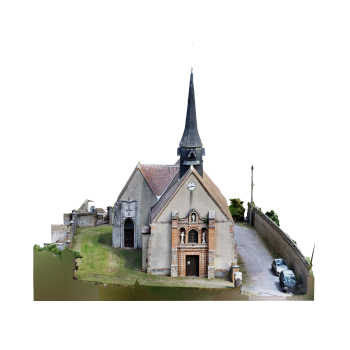
Maillebois Church in France

Maillebois Church in France

A historical religious building located in the city of Malbway in the Eure et Loire department of France. Classified as a first-class historical monument, it is an important component of the cultural and religious life in the region. Known for its unique architectural style and rich artistic decoration, it reflects the tradition and evolution of French religious architecture. Not only is it a place for local residents to engage in religious activities, but it is also an important place for tourists to learn about the history and culture of the region. Architectural and decorative details, such as stained glass windows and sculptures, showcase exquisite craftsmanship and artistic talent. In addition, its existence also witnesses the inheritance and development of religious beliefs in the region.
Ragnar Castle Farm Pig House

Ragnar Castle Farm Pig House

A historical site located in France, which is part of the Chateau de la Garde. This pigsty is part of the castle farm complex, showcasing an aspect of daily life in medieval castles. The castle itself has a rich history. At first, it was a defensive fortress, but over time, it gradually transformed into a noble residence that placed more emphasis on residential functions. The history of the castle can be traced back to the 12th century and was an important defense point during the Hundred Years' War. Farm facilities, including pigsties, provided us with a window to understand the agricultural practices and feudal socio-economic structure of that time.
Cosenza Medieval Castle, Italy

Cosenza Medieval Castle, Italy

A medieval castle located in Cosenza, Italy. This castle was built in the 11th century by the Normans after conquering the region as a symbol of their power and defensive fortifications. The design incorporates typical Norman architectural features, including sturdy stone walls and towers to resist enemy attacks. Not only is it an important location for military defense, but it is also the center of cultural and social activities in the region. It has witnessed many historical events, including wars, political changes, and social development. Nowadays, it is an important landmark in Kosenza city, where you can enjoy spectacular architectural art and gain a deeper understanding of its rich history.
Baltimore Sixth Fire Station

Baltimore Sixth Fire Station

Also known as the Sixth Engine Room, it is a historic fire station located in Baltimore, Maryland. This two-story brick building is famous for its unique truncated triangle shape and 103 foot high Italian Gothic tower, built between 1853 and 1854. It is said to be one of the oldest fire stations in the city and an important part of Baltimore's architectural and fire history. The design reflects the architectural style of that period and incorporates elements of Gothic revival unique to Italian Gothic style. For many years, it has been an important facility for the city's fire department.
Aberdeen B&O Railway Station

Aberdeen B&O Railway Station

Located in Aberdeen, Maryland, it is an ancient train station with rich historical heritage. This train station was built in 1885 and designed by the renowned 19th-century architect Frank Furness, who designed numerous train stations for the Baltimore and Ohio Railroad Company (B&O). It is a symbol of the golden age of railway transportation and a part of the Philadelphia branch that opened in 1886. For many years, the station has experienced a state of disrepair, but is currently undergoing restoration work to restore its original glory.
Taugfpilst Orthodox Church

Taugfpilst Orthodox Church

The Orthodox Church located in Daugavpils, Latvia is a historic religious building built in 1897. The construction funds come from businessman M. from St. Petersburg Chukasov provided, and the design and construction supervision were carried out by the war engineer Rashevski, while the specific construction work was completed by the craftsmen of the Daugavpil Fortress. The architectural style embodies typical characteristics of northern Russia and has significant religious and cultural value. Not only does it meet the religious needs of local residents, but it has also become an important historical and cultural symbol of the region.
Waldstein Castle

Waldstein Castle

It is one of the oldest castles in the Bohemian Paradise region of Czech Republic, located in the Liberec area, north of Prague. Located on sandstone rocks, it has become the second oldest accessible landmark in Bohemia due to its picturesque location. The history can be traced back to the mid-13th century, when it was established by the noble family of Maxwatice and later became the property of the Luxembourg family. The diverse architectural styles reflect the evolution of architecture over the centuries. Nowadays, it attracts over 70000 tourists every year and provides rich historical and cultural experiences. Visit the ruins of the castle, appreciate the unique rock formations around, and experience the medieval atmosphere.
St. Catherine's Church

St. Catherine's Church

Located near the village of Anopolis on the island of Crete, it is a historic landmark. Located at the foot of the White Mountain, overlooking the Libyan Sea, it is a picturesque place that blends natural beauty and historical relics. History can be traced back to the medieval period, witnessing the rich historical and cultural changes on the island. The architectural style reflects the architectural technology of that era, while also carrying the dual functions of religion and military defense. Nowadays, it is a popular tourist attraction and an important place for studying the history and culture of Crete. Showcasing its past glory and the resilience of the people of Crete to the world.
Nepal's traditional carved bronze bell

Nepal's traditional carved bronze bell

A part of Nepal's cultural heritage, this bell is not only used in religious ceremonies, but also often displayed as an artwork. It is usually made of copper and has exquisite patterns and symbols carved on the surface, which are often related to the religious beliefs of Buddhism or Hinduism. The shapes and sizes vary, but most have a top that can be shaken to produce a crisp and pleasant sound. In Nepal, bronze bells are not only used as ritual objects in religious ceremonies, but also an important embodiment of local handicraft skills and cultural traditions. Their existence not only enriches Nepal's cultural heritage, but also contributes to the world's handicraft arts.
Industrial factories during the Soviet era

Industrial factories during the Soviet era

The industrial buildings of the Soviet era were an important symbol of the Soviet industrialization process, with large conventional models and sturdy structures, reflecting the Soviet era's emphasis on industrial production and national power. Between 1950 and 1957, the Soviet Union supported China's so-called "156 technology transfer projects", which involved the construction of large capital intensive factories in the heavy industry sector, the transfer of advanced machinery and equipment from the Soviet Union, and the provision of technical assistance and knowledge dissemination. The design and construction of the building reflected the political and economic background of the time, and it was widely present in the Soviet Union and countries within its sphere of influence, becoming a symbol of industrialization and modernization during that era
St. Pancras Old Church, UK

St. Pancras Old Church, UK

A historic Anglican church located in Camden, London, United Kingdom. Named after the Roman martyr St. Pancras, it is believed to be one of the oldest Christian places of worship in England. The history can be traced back to the 4th century, and the existing main structure of the building was rebuilt during the Victorian era. Listed as a second-class protected building in 1954, it has a long history and contains relics from various historical periods, including Roman brick masonry. The courtyard has buried many famous figures and is an important part of London's history, as well as one of the city's famous landmarks. It is a place for religious activities and an important resource for understanding and studying London and British history.