


Freecreat category
Food & Beverage
Browse models in this category, preview details, then continue to download when ready.

Green Coconut
This is a fresh green coconut, also called coconut green. This coconut has a green appearance. The upper part of the shell fiber (peel) has been peeled off, revealing the softer white part inside, which is easy to open and drink. They are mainly used for drinking clear and sweet coconut water. Picked before it is ripe, the coconut inside is high in water and rich in electrolytes, vitamins and minerals.
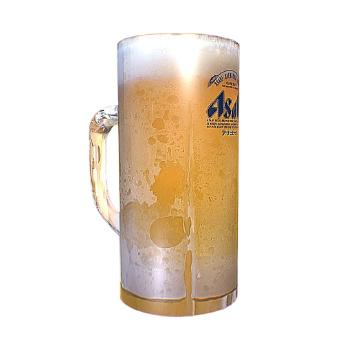
A glass of Asahi draft beer
Asahi (Asahi) brand draft beer (draft beer) served in a cold glass beer glass. Known for its crisp, dry taste and low bitterness, this beer is one of the most popular lager beers in Japan. Frost hanging over the wall of the cup shows that the beer is very icy and frothy.
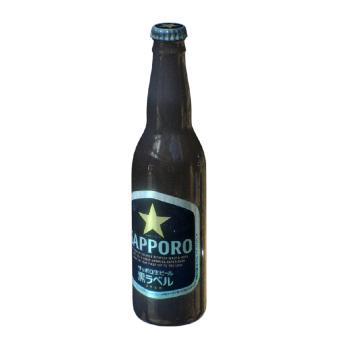
Sapporo Beer
Sapporo draft beer black label, Japan's Sapporo Beer Company (Sapporo Breweries) flagship lager beer products. It is known for its "perfectly balanced" taste. It is smooth, refreshing, easy to drink, with refined hop bitterness. It is one of the best-selling beers in Japan and is widely sold in domestic and foreign markets.

Caramel Cake
This is a caramel cake. It is a layered cake known for its golden-brown exterior and filling inside. The outside of the cake is an attractive golden to caramel color, decorated with crumbs on the sides. The core flavor of this cake is usually a rich caramel flavor, and the cake body itself may be a vanilla or butter cake, well balanced with a creamy filling.

Red Velvet Cake
The main body of the cake shows the iconic deep red or reddish-brown color, which is the most prominent feature of the red velvet cake. This is a double cake slice with a layer of light brown filling or icing between two layers of moist cake embryos. The sides and top of the cake are covered with red or brownish-red icing, and the top is decorated with two cream flowers squeezed out of a piping bag. Red velvet cakes usually have a silky texture with subtle cacao flavors and a slightly tactful taste of buttermilk.

Japanese red bean bread
This is a Japanese red bean bread (Anpan), this traditional Japanese sweet bread is one of the most popular bread in Japan. The inside of the bread is wrapped in a sweet bean paste filling (usually red bean paste). The dough is soft and golden yellow, and the top is usually sprinkled with black sesame seeds as a decoration and finishing touch. Soft and sweet on the palate, it is often enjoyed as a snack or breakfast in Japan and is very popular with milk. This bread originated in the Meiji era and was loved by the Emperor of Japan for its unique flavor, and has been popular in Japan ever since.

Hot Chocolate
It's a hot chocolate with marshmallows and cinnamon sticks. This warm drink is usually drunk in the colder months to provide comfort and warmth.
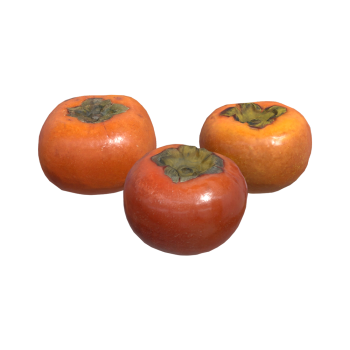
Persimmon
Persimmons are usually bright orange to orange-red and have a variety of shapes, ranging from spherical, oblate to conical. The persimmon originated in China and is one of the most commonly cultivated fruits in East Asia. They usually mature in autumn and winter (about October to January). Persimmons are rich in vitamins A and C, fiber and antioxidants. According to different varieties, persimmon is divided into astringent persimmon and sweet persimmon. Astringent persimmon needs to be completely softened and deastringent before it can be eaten, while sweet persimmon (such as rich persimmon) can be eaten when it tastes crisp and hard before it becomes soft.
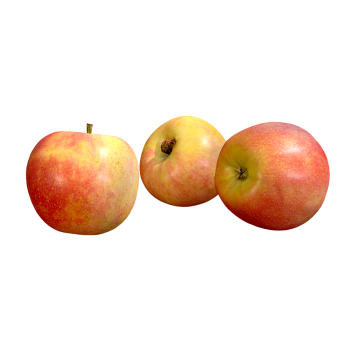
Gala Apple
The Gala apple originated in New Zealand and has a medium to small fruit with a golden or creamy yellow background and a distinct red stripe or flush on the surface. They are known for their crisp, juicy and very sweet flesh, with a hint of vanilla and floral notes. Its acidity is low and its sugar-acid balance is good, so it is very popular among children and adults.
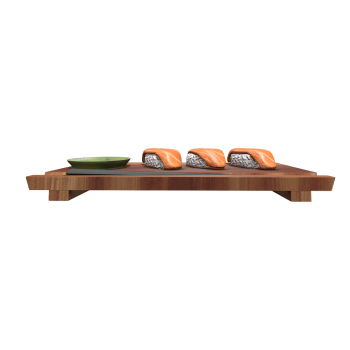
Salmon Sushi
Three pieces of hand-held sushi, each consisting of a vinegar rice ball and a slice of fresh salmon. This is a very common and popular type of sushi in Japanese cuisine. In traditional Japanese cuisine, the use of wooden boards for serving sushi helps absorb excess water from the rice and keeps the fish cool and fresh. There is a small green saucer on the left, which is usually used to hold sauces such as soy sauce or mustard.

One Egg
These are eggs, which are placed in an egg tray (or egg tray) made of pressed pulp. This packaging is often used in farms, supermarkets or homes to safely store, transport and place large quantities of eggs to prevent breakage.

Rum Bottle
Rum (Spanish: Ron, French: Rhum) is a distilled liquor made from sugar cane, also known as sugar wine. It originated in the Anglo-French colonies of the Caribbean in the 16th century, when it was discovered that it could be fermented and distilled from the remaining by-product of sugar production-molasses (or sugar cane juice). The core raw material of rum is sugarcane-related products such as molasses or sugarcane juice. This gives it a unique sweet taste and fragrant aroma. Historically, rum was closely associated with pirate culture and the slave trade period, and later replaced whiskey as the famous "pirate wine".
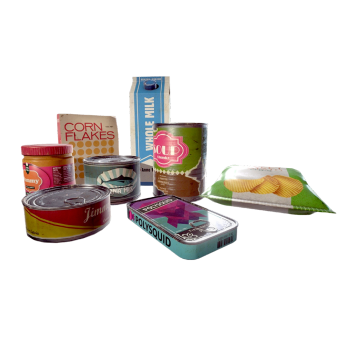
a group of assorted packaged foods
Includes several metal cans of different sizes and labels, such as red and yellow cans labeled "Jimmy's" and a brown can with "SOUP" (soup) written on it. One carton labeled "CORN FLAKES" and one carton labeled "WHOLE MILK. A clear plastic jar containing orange paste (probably peanut butter or jam).

Elizabeth Salon's Natural Peach Champagne
One bottle of "Cuvée Elisabeth Salmon (Elizabeth Salmon Special)" rosé champagne of the 2006 year produced by the winery "Billecart-Salmon (Salon Emperor). The wine was first brewed in 1988 to honor Elizabeth Sharon, co-founder of the winery. It is a blend of 50% Pinot Noir and 50% Chardonnay Chardonnay. The palate is rich and deep, with complex notes of red fruit, citrus peel, drupes (such as fresh figs, white peaches), almond biscuits, wild strawberries and roses.

a cup of pearl milk tea
Pearl milk tea (Bubble Tea) is also often called boba milk tea or cassava milk tea. A drink containing milk and tea, brownish in color, may be a dark sugar or chocolate-flavored milk tea. Many black globular tapioca pearls can be seen at the bottom of the cup, and the taste is usually chewy. Packed in a clear plastic cup, it is equipped with a black and white check pattern lid and a thick red straw, which is specially used to suck the pearls at the bottom.
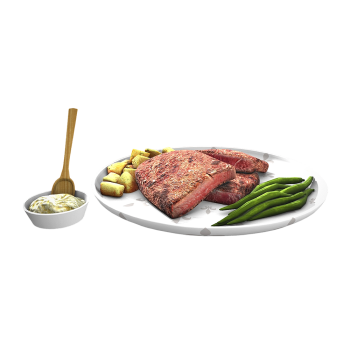
Steak Set Meal
This is a steak combo that includes several fried steaks (possibly sirloin steaks), a pile of golden baked potatoes or fried potatoes, a bunch of steamed or cooked green beans, a small bowl with a creamy white sauce (possibly potato salad, sour cream or garlic butter sauce), and a wooden spoon next to it. This dish is a classic American or European home cooking, taking into account the nutritional combination of protein, carbohydrates and vegetables.
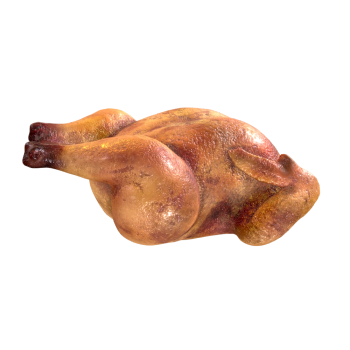
Roast chicken (also known as roast chicken)
Roast chicken is a whole chicken or chicken nuggets cooked using high-temperature equipment such as ovens and campfires. It is characterized by golden color and crispy skin. Roast chicken is very popular all over the world. In North America, tomato barbecue sauce is usually used. In Europe, a marinade mixed with vinegar and olive oil is often used.

Coconut
Shows the typical plant characteristics of coconut-may include complete coconut fruit (oval or nearly round, with fibrous shell), coconut shell (hard shell after removing the outer fiber, with three sprouting holes) or simplified coconut tree with branches and leaves; The outer fiber shell of the fruit is rough brown, the fiber texture is messy but natural growth pattern, and the surface is slightly wrinkled and depressed. The hard shell part is dark brown or light brown, and the texture is hard, the surface has natural texture and spots, and the details of the germination holes are clear. If pulp or coconut milk is included, the Milky White of coconut meat and the clear texture of coconut milk may be simulated by translucent effect, and fibers and juice can be seen in the cross section.
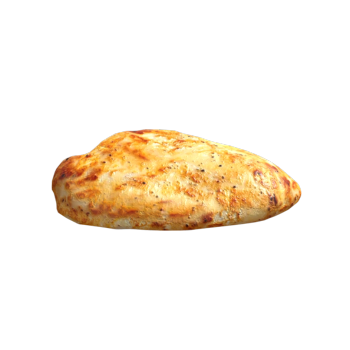
Grilled Chicken Breast
The theme of the model is grilled chicken breast, focusing on its natural form as cooking food-the thick outline of the whole chicken breast, the burnt texture formed by baking on the surface, the color change of the edge and the tender texture of the meat, restoring the real state of the food after baking, and transmitting the fireworks and visual appeal of cooking food.
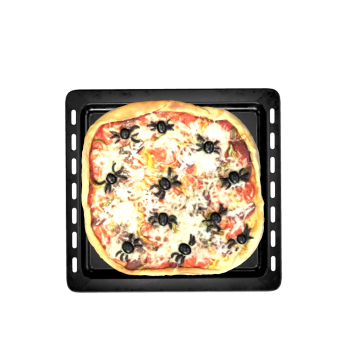
Halloween Spider Pizza
The core festive element is the "spider" decoration on the surface of the pizza-a simulated spider that may be made of icing, chocolate or sugar, with a realistic shape: the body is black oval with a fluffy texture, and 8 slender legs are bent and stretched. Some spiders may "climb" on the edge of the pizza, or "hide" in the gap between cheese and ingredients, and the legs may even wrap around sausages, vegetables and other ingredients, create a thrilling visual impact.
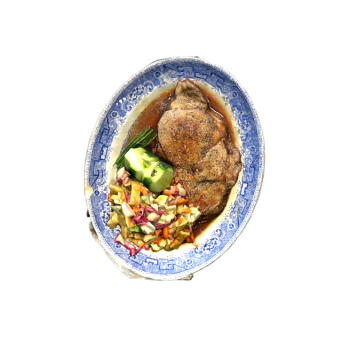
Lunch
The design restores the fireworks of daily lunch through the combination of multiple food materials, real texture description and natural placement, with rich and coordinated colors. It not only has the bright color of food materials, but also has the calm tone of tableware and scene, which conveys a relaxed and practical dining atmosphere as a whole.
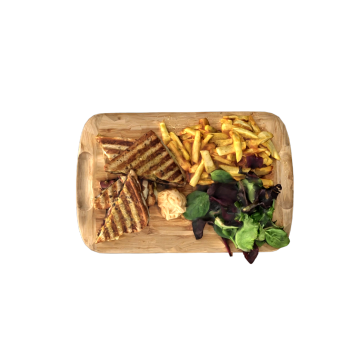
Grilled Sandwich
The surface of the bread slice is marked with clear roasting marks (e. g. grid-like roasting, scorched markings), the edges may have a slight crispness or natural cracking, and the filling spills slightly from the gaps in the bread (e. g. melted cheese or chopped vegetables), restoring the true state of food fusion during the roasting process. The proportion of bread and filling is coordinated to avoid the morphological imbalance caused by too much or too little filling.
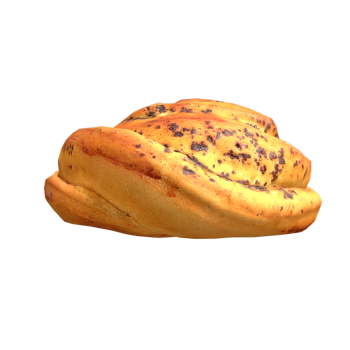
Poppy Seed Bread
It presents a round or oval outline of the bread, the top is slightly raised, the edge may have a natural curvature or slight cracking due to baking, the bottom is flat and easy to place, the overall proportion is full, and the fluffy feeling after the bread is baked. As a low-polygon model, the core outline of the bread is outlined with a concise number of faces, avoiding redundant details, while retaining key morphological features (such as top bumps, edge radians).
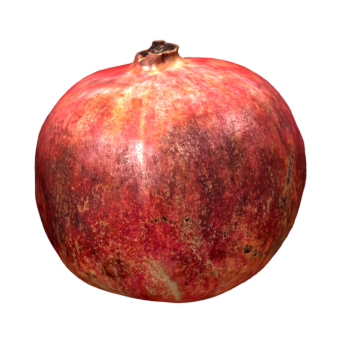
Pomegranate
Kami Rapacz's creation may incorporate the cultural symbolic meaning of pomegranate: in different cultures, pomegranate often symbolizes harvest, reproduction, auspiciousness and many children and blessings. The work may combine these meanings with natural texture through realistic portrayal or stylization. For example, warm tones are used to highlight the fullness and juiciness of the grains, light and shadow contrast is used to strengthen the thickness of the peel and the transparency of the grains, or pomegranate is placed in the life scene, related to its role in diet and festivals, and convey the simple and warm life aesthetics.
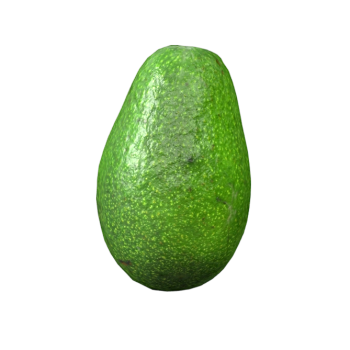
avocado
Kami Rapacz's creation may incorporate the association of life scenes: the practical value of avocado in table cooking, the cultural significance as a symbol of health, or the abstraction of avocado as a symbol of the blend of nature and life, conveying a simple and fresh aesthetic attitude. Whether it is realistic details or stylized expression with personality, the work may awaken people's perception of natural gifts and love for ordinary life through the daily image of avocado.
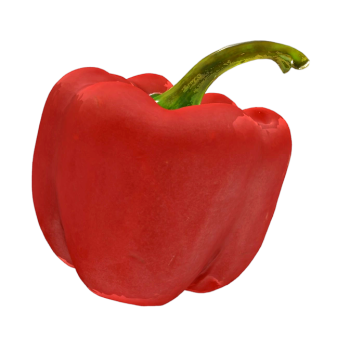
red pepper
nedo's creation may be full of strong color collision and surreal elements in the picture: distorted space, deformed objects, and characters walking on the edge of reality and dreams, which concretize the absurdity and reality in the subconscious. The story may revolve around the main character (dream detectives such as "Red Pepper"), in the process of preventing dreams from being maliciously abused, exposing the darkness and light in the depths of human nature. Whether it is text, visual art or other forms, the works may make the audience think about the boundary between reality and illusion in the fantasy experience with compact rhythm and profound metaphor.
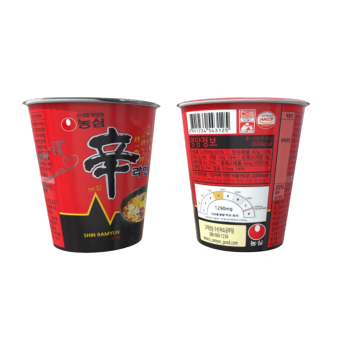
Sin ramen
The material of the packaging bag shows the characteristics of focused plastic composite film: the surface is slightly shiny (simulating the smooth texture of the film), but not excessively reflective; Wrinkles and stereoscopic impression are natural, which may be partially convex due to the support of the contents (noodle pieces), and the corners have natural drooping or folding marks (simulating the loose state of real bagged food); The edge of the easy-to-tear mouth has fine burrs, and the sealing embossing is clearly visible, delivers the true touch of the package-light but with a certain stiffness, smooth surface with printed texture.
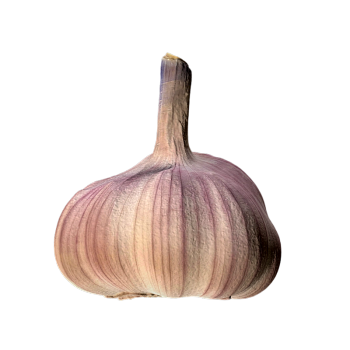
Garlic
Strictly follow the growth structure of garlic: the whole is a complete garlic bulb, tightly wrapped by multiple garlic cloves, with dry green flower stem residues (slender, fibrous, with natural bending or fracture marks) retained at the top, and dense fibrous root disks (brown, fibrous roots are small and messy, with lignified texture) at the bottom. Garlic cloves are arranged like petals, with different sizes. The outer layer is wrapped with thin skin. Some garlic cloves may be slightly raised due to extrusion, thus reducing the irregularity of natural growth. If the peeled form is included, the full radian of garlic cloves and the translucent texture of the inner thin skin can be clearly seen.
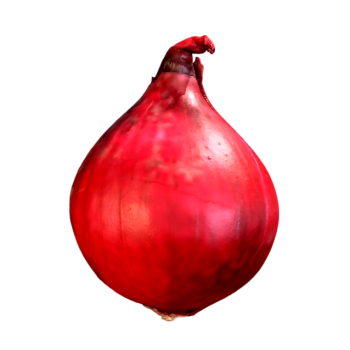
red onion
The texture shows both "freshness" and "nature". The outer skin is dry and hard, with a slight brittleness (simulating the characteristic of easy peeling). The inner scale presents a moist and slightly elastic texture, and the surface is slightly shiny due to moisture. The whole is mainly matte, only the edge or section of the inner fresh scale may have extremely light reflection, simulating the natural humidity of food materials; if the cut shape is included, the section will show a clear ring structure and juicy fiber texture, strengthening the tactile association of real ingredients.
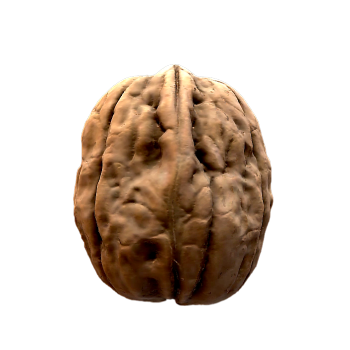
Walnut
The natural form of walnut is strictly followed. The complete walnut is nearly spherical or oval in shape. The surface of the shell has irregular raised ribs, concave gullies and natural growing texture. The top may retain traces of fruit pedicles, and the bottom is rounded and closed. If the cracked form is included, the edge of the crack will show rough fracture texture, and the fold and texture of the inner nut (walnut meat) are clearly visible, restoring the structural relationship between the shell and the nut.

canned beverage
The can body strictly follows the cylindrical proportion of the real can, and the curling structure and sealing indentation on the edge of the can lid are clearly identifiable. The details of the pull ring (or easy-to-open cover) are lifelike, including metal connection points, pressing grooves and traces of use (such as slight deformation); The concave design of the tank bottom, anti-skid lines and other practical structures are completely presented to ensure the rationality of the physical form.
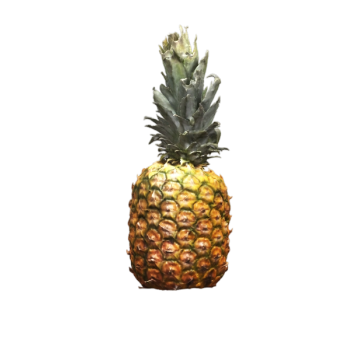
Pineapple
The complete pineapple presents an oval natural outline, with leaf-shaped fruit crown (with serrated edges and natural curved shape) retained at the top, rhombic scale-like protrusions covered with spiked fruit eyes at the top of each scale, accurately restoring the unique geometric texture of pineapple epidermis; If the cut state is included, the yellow pulp inside, the hard core in the center, and the residual traces of black fruit eyes distributed in the pulp will be clearly displayed, the structure is hierarchical.

Simple coke can
Low polygon modeling optimization, small file size, suitable for use in games, animation, scene demonstration and other scenes that need to run efficiently, and can also be used as entry-level material for novice Blender to learn the process of "basic rendering of modeling materials.

Watermelon
It can be used in 3D construction of food scenes, game props, e-commerce food display, cooking tutorial visualization and other fields, as natural elements or food props to enrich the living atmosphere of virtual scenes.

Turkish Pizza with Butter and Cheese

Random Model


Old Roman Style Solid Wood Low Stool
1186 View

Samsung Gear S2 Black Edition
921 View

Adidas Red Mesh sneaker
731 View

The Balance of the Soviet Era
1054 View