Bone Thrower

Bone Thrower

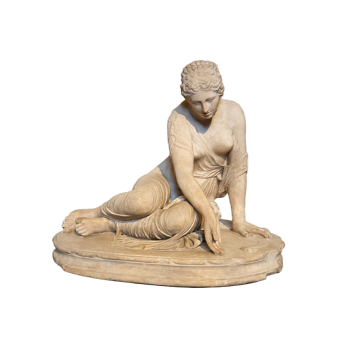
Shows the typical dynamics of bone-throwing players-the character may be sitting or squatting, leaning forward slightly, focusing on the domino/talus in the hand or on the ground, and looking focused (or with expectation and thinking); The hand movements are delicate, which may show the state of holding, placing before throwing or stretching just after throwing, and the contact details between fingers and talus are clear. The head is slightly low or turned sideways, the facial expression is natural (possibly with a smile or a focused sense of seriousness), the body is relaxed but the focus is focused on the game action, and the overall dynamics capture the vividness of the "moment in the game.
Amenemhat III Pyramid spire (3D printable)

Amenemhat III Pyramid spire (3D printable)

The Black Pyramid was the first true pyramid built by Pharaoh Amenemkht III of the Twelfth Dynasty of Egypt between 2055-1650 BC. The building is located in the heart of the desert in the Dahshur region. As an important part of the large royal cemetery, its original height is about 75 meters. The ground floor has an entrance to the atrium and the funeral temple. Although it belongs to the true pyramid type, it has now collapsed due to structural problems, leaving only the core of the black mound, which forms a prominent visual feature in the golden desert.
World War II Bunker Site

World War II Bunker Site

Song Dynasty Emperor's Tombs

Song Dynasty Emperor's Tombs

Ruins of Jizhou Ancient City

Ruins of Jizhou Ancient City

The site of the ancient city of Jizhou is located 500 meters northwest of Beiguan Village, Jizhou Town, Jizhou District, Hengshui City, Hebei Province, to Qianzhao Village in the west and Houzhao Village in the north. It is a section of earth wall on the northwest of the ancient city of Jizhou in the Han Dynasty. The site of the ancient city of Jizhou extends from northeast to southwest, with a total length of 4500 meters and a distribution area of 2.25 million square meters. The highest point is 8 meters, and the widest points at the bottom and top are 30 meters and 10 meters respectively. The ditch along the west and north of the city site is the moat of the original city. The ancient city was built during the reign of Emperor Gao of the Western Han Dynasty and has a history of more than two thousand years. In the Western Han Dynasty, the city was 12 weeks old. In the Northern Song Dynasty, the city week was expanded to 25 li. Yuan, Ming and Qing dynasties also added.
Italian-style three-story villa

Italian-style three-story villa

Antonia Trovelsi Monument

Antonia Trovelsi Monument

"Antonia Trovelsi Monument" (Monumento Funebre di Antonia Troversi) is a historical mausoleum in Milan, Lombardy region, northern Italy, built at the end of the 19th century to commemorate the prominent local aristocratic woman Antonia Trovelsi (Antonia Troversi,1827-1898). It is not only the carrier of personal commemoration, but also the important witness of the Italian aristocratic culture, the change of women's social role and the development of urban public space in the 19th century.
Little fountain of Becamo

Little fountain of Becamo

"Bergamo fountain" (Fontanella) is a public fountain with a long history in Bergamo (Bergamo), Lombardy, Italy. It is named for its small size and exquisite shape. It is located next to the "Our Lady Square" in the old city of Becamo, adjacent to medieval churches and Renaissance municipal buildings. It is a vivid testimony of the "upper city life" in the "two-city pattern" of Becamo. It is also an important public space for local residents and tourists to experience the fireworks of the ancient city.
Fountain of Kontarini, Upper Bégamo

Fountain of Kontarini, Upper Bégamo

The "Fountain of Kontarini in the Upper City of Bergamo" (Fontana Contarini) is a historic public fountain in the Upper City of Bergamo in Lombardy, Italy. It is located next to the "Old Square" in the center of the Upper City. It is adjacent to the medieval castle ruins and Renaissance municipal buildings. It is one of the core landmarks of Becamo's "twin cities pattern" and a "living heritage" that witnesses the transformation of Becamo from a medieval city-state to a modern cultural city ".
Upper City Santa Maria Grand Basilica

Upper City Santa Maria Grand Basilica

The construction of the Great Basilica of Santa Maria dates back to the mid-12th century (c. 1150-1200), coinciding with the golden age of Bergamo as the "free city-state of Lombardy. At that time, in order to consolidate their power, the city aristocracy and the church vigorously promoted the construction of religious buildings. The Santa Maria Hall was designed as the "spiritual center of the city", which not only served the needs of citizens' beliefs, but also symbolized the authority of the aristocracy and the church.
Bowa-Koutiye has a tomb gallery.

Bowa-Koutiye has a tomb gallery.

Bouva-Koutier (Bois-Couturier) is located in the Ille-Vilene department (Ille-et-Vilaine) of Brittany, France, in a low and gentle hilly area covered by forests. The "Bois" in its name means "forest", and "Couturier" may be derived from local place names or family names. The tomb was accidentally discovered by local farmers when they were reclaiming land in the early 20th century, and was subsequently recorded and initially excavated by archaeologists. It is now an important site in the French "Prehistoric Megalithic Relics Protection List.
Court of the Duke of Targovishti

Court of the Duke of Targovishti

"The Princely Court of Târgoviște" (The Court of Târgoviște) is the core historical relic of the famous historical city of Târgoviște in Romania. It was once the power center and political, religious and cultural hub of the ruler (duke/grand duke) of the Principality of Wallachia (1330-1859). It is not only a material witness of the "Golden Age" of Wallachia, but also an important symbol of Romanian national identity and the political pattern of the Balkans in the Middle Ages.
Santa Maria Church in Melk

Santa Maria Church in Melk

Santa María de Melque () is a historic Romanesque Catholic church in Castilla y León, in the town of Melque de Cercos in the present-day province of Toledo. It is one of the representatives of medieval religious architecture in Spain. It is famous for its well-preserved Romanesque style, unique architectural details and profound historical and cultural connotations. It is regarded as "a model of Castile rural churches".
Roman Temple of Evora

Roman Temple of Evora

The "Roman Temple of Évora" is a remnant of an ancient Roman religious building in the historic city of Évora () in southern Portugal, located near the "Roman Square" (Praça do Império) in the center of the city. It is one of the most well-preserved Roman temples in the Iberian Peninsula. It has witnessed the cultural penetration and religious spread of the Roman Empire in the Iberian Peninsula. It is also the core symbol of Evora as the "city of Roman heritage.
13 Petroglyphs, Zone 1, Hilo Dry Valley, Sharjah

13 Petroglyphs, Zone 1, Hilo Dry Valley, Sharjah

Rock painting No. 13, area 1, Shilogan Valley, Sharjah, is an important prehistoric rock painting relic in the Emirate of Sharjah (Sharjah Emirate), United Arab Emirates, located in an arid desert zone. This kind of rock painting is a symbol or image carved on the rock by early human beings, which records the life, belief and environment of ancient residents, and is the key physical evidence for the study of the early civilization of the United Arab Emirates and even the Arabian Peninsula.
Rock art No. 3, Area 2, Hilo Dry Valley, Sharjah

Rock art No. 3, Area 2, Hilo Dry Valley, Sharjah

Sharjah Hilogan Valley Area 2 Rock Painting (No. 3) "is an important prehistoric rock painting relic in the emirate of Sharjah, United Arab Emirates, located in an arid desert area. This kind of rock painting is a symbol or image carved on the rock by early human beings, which records the life, belief and environment of ancient residents, and is the key physical evidence for the study of the early civilization of the United Arab Emirates and even the Arabian Peninsula.
Rock Painting, Canyon 3, Hilo Dry Valley 1, Sharjah

Rock Painting, Canyon 3, Hilo Dry Valley 1, Sharjah

"Sharjah Hilogan Valley No. 1 Canyon Rock Painting (No. 3)" is an important prehistoric rock painting relic in the Emirate of Sharjah (Sharjah Emirate), United Arab Emirates, located in an arid desert zone. This kind of rock painting is a symbol or image carved on the rock by early human beings, which records the life, belief and environment of ancient residents, and is the key physical evidence for the study of the early civilization of the United Arab Emirates and even the Arabian Peninsula.
Spain Sigurn Sala Barola Church

Spain Sigurn Sala Barola Church

La Barbolla Church (La Church) is a Roman Catholic church with a long history in the city of Sigüenza (Sigüenza) in the autonomous region of Castile-La Mancha (Castilla-La Mancha) in northeastern Spain. It is famous for its unique architectural style, profound religious culture and local historical memory. As an important part of the "medieval religious buildings" in Siguenza, it is not only the belief center of the local community, but also an important physical carrier for the study of religious art and local society in Spain from the late Middle Ages to modern times.
Kirk Madeline Church, Linnes District, Galloway County, Scotland

Kirk Madeline Church, Linnes District, Galloway County, Scotland

Kirk Madeline Church is a historic village church in Linnes, Galloway County, southwest Scotland. Its name "Kirkmadrine" is derived from Scottish Gaelic and is a typical representative of the integration of Scottish "frontier culture" and Christian tradition. This church is not only the religious center of the local community, but also the living carrier of the history, architecture and folk culture of the Galloway area. It is known as the "living fossil of the Scottish rural church". The Kirk Madeline Church dates back to the 12th century and its origins are closely linked to the spread of "Celtic Christianity" in Scotland.
Baptistel of the Church of Bosancos, Spain

Baptistel of the Church of Bosancos, Spain

Translation: Church Baptistery in Bosancos, Spain (Baptismal font, Pozancos Church, Spain) Introduction: "Baptistery" (Baptismal font) is the core instrument of the christian church to hold the baptism ceremony, symbolizing "to wash the original sin with water and regain the new life". As an important religious utensils of Pozancos Church, the Baptists' Baptistal Pool in Spain is not only the material carrier of faith practice, but also reflects the artistic features and historical context of local churches in Spain.
Cathedral Baptistle in Canales del Ducado, Spain

Cathedral Baptistle in Canales del Ducado, Spain

"Baptistery" (Baptismal font) is the baptismal (especially Catholic, Protestant) church for the baptismal ceremony of the core equipment, symbolizing "clean original sin, reborn faith". The baptistery of Canales del Ducado Church in Spain, as an important carrier of the church's religious rituals, not only reflects the sanctity of Christian baptism tradition, but also reflects the artistic features and historical context of local churches in Spain.
All Souling Chapel, Cape Town, South Africa

All Souling Chapel, Cape Town, South Africa

The All Souls Chapel (All Souls Chapel) in Cape Town, South Africa is a small religious building with a central theme of "remembrance of the dead", usually associated with the Catholic or Anglican All Souls' Day (November 2 of each year) tradition. Although there are many chapels named after "all spirits" in Cape Town, the most commonly mentioned are small churches located in the urban area or surrounding historical districts that carry the faith memory of local communities.
Remains of the Fortress of Dibasisn

Remains of the Fortress of Dibasisn

The Dibba Sien Fortress is a historical defensive building in northern Oman. It is located in the Dibba Sien area (Dibba Al-Hisn) on the coast of the Gulf of Oman. It is located at the west entrance of the Strait of Hormuz between the Arabian Peninsula and Iran. It is an important sea passage node connecting the Persian Gulf and the Indian Ocean.
French Cultural Heritage Monument to the Dead of the First World War in Braille
French Cultural Heritage Monument to the Dead of the First World War in Braille

The Monument aux Morts de Bléré was created by Paul Lefebvre in 1923 and made of limestone to commemorate the French soldiers who died in the First World War.
Nepal Taleju Temple Building Taleju Temple Gate

Nepal Taleju Temple Building Taleju Temple Gate

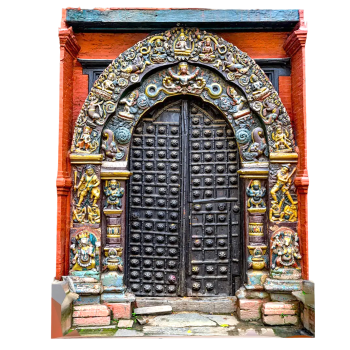
Gate of Taleju Temple in Durbar Square, Kathmandu. The temple, together with the gate, was built by Mahendra Malla in 1564 AD. This temple is one of the most sacred temples in Nepal because this temple or this gate is only opened once a year during the dashain Festival.
Nepal Temple Peak Temple

Nepal Temple Peak Temple

This is a small replica of an ancient Nepalese temple in the "Shikhar" architectural style. The name of this style, "Shikhar", means a mountain peak, because these temples are similar in appearance to the mountain, with a sharp peak-like structure at the top, which narrows down layer by layer. This architectural style was built using only stone, and wood was only possible for the production of doors. Every part of the temple, pillars, stairs and balconies are decorated with fine carvings. The famous Patan Krishna and Maha Baoda temples, as well as the Brahma temple of Pashupatinat, are representative temples of this style.
Philippines Donna Leonidas Park Fountain Leonidas Park Fountain Statue

Philippines Donna Leonidas Park Fountain Leonidas Park Fountain Statue

Donna Leonidas Park is located in San Pablo City, Laguna Province, Philippines. Named after Leonila Garcia, wife of former Philippine President Carlos P. Garcia, the park was built in the 1960 s and restored in 2019. The park is about 1.7 acres in size and is a great place for family activities and walks.
Japanese cultural heritage shrine traditional stone lamp

Japanese cultural heritage shrine traditional stone lamp

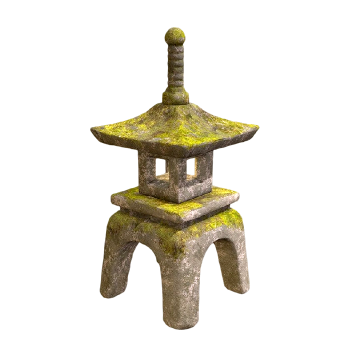
The traditional stone lanterns enshrined in the shrine in the city of Eight Prince. The lantern is nearly 200 years old and was originally installed in 1841.
Nepalese Cultural Heritage Svayambnath Temple Stupa

Nepalese Cultural Heritage Svayambnath Temple Stupa

A stupa is a Hindu and Buddhist temple monument with a stupa-like shape at the top. It is usually placed in the open space of the religious complex, which is between four and eight feet in height. These sculptures are usually carved from stone, but also made using clay or mortar. This particular Chaitya sculpture is located in the Swatambuenat temple (Swayambhunath) in Kathmandu, Nepal, and was built in the 16th century and sits on the hill in front of the temple, along the ancient route leading to the stupa.
Greek Crete Roman Architecture Hersonius Roman Mosaic Fountain

Greek Crete Roman Architecture Hersonius Roman Mosaic Fountain

The Roman fountain of Hersonisos is located on the Greek island of Crete in the shape of a pyramid. It is covered in mosaics depicting the motifs of the sea: fishermen, boats, sea snakes, squid, ducks and fish. The fountain was built in the 4th century, when Hersonius (Hersonissos) was an important Roman port.
Ancient Venetian Fountain Fountain of Crete, Greece

Ancient Venetian Fountain Fountain of Crete, Greece

The old Venetian fountain. It is named after Gianmatteo Bembo, the Venetian governor of Heraklion. It was the first time people in Heraklion had seen running water in the city. The fountain consists of a spout and a rectangular basin. Above the spout is a headless statue of a Roman official from the Ierapetra region of southeast Crete, while the entire monument is decorated with the coat of arms of the Venetian family.
Traditional stone lanterns, cultural heritage, Hagiangzi, Japan

Traditional stone lanterns, cultural heritage, Hagiangzi, Japan

The traditional stone lanterns enshrined in the shrine in the city of Eight Prince. The lantern is nearly 200 years old and was originally installed in 1841.
Kathmandu, Nepal Sixteenth Century Architecture Svayambnath Temple Stupa

Kathmandu, Nepal Sixteenth Century Architecture Svayambnath Temple Stupa

A stupa is a Hindu and Buddhist temple monument with a stupa-like shape at the top. It is usually placed in the open space of the religious complex, which is between four and eight feet in height. These sculptures are usually carved from stone, but also made using clay or mortar. This particular Chaitya sculpture is located in the Swatambuenat temple (Swayambhunath) in Kathmandu, Nepal, and was built in the 16th century and sits on the hill in front of the temple, along the ancient route leading to the stupa. This
Saint-Michel Fountain, a 19th century landmark in Paris, France

Saint-Michel Fountain, a 19th century landmark in Paris, France

The Fontaine de Saint Michel, located in the Latin Quarter of Paris, was built between 1855 and 1860 and is a landmark of historical and cultural significance. The fountain is themed with the triumph of Saint Michel over demons, and a magnificent sculpture in marble and bronze is displayed in the center of the fountain, symbolizing the triumph of good over evil. The fountain is surrounded by sculptures on both sides, lion nozzles and other exquisite artistic elements, reflecting the neoclassical and eclectic architectural style, and is a gathering place for tourists and art lovers.
Japanese cultural heritage traditional stone lanterns

Japanese cultural heritage traditional stone lanterns

A lantern (Tōrō) is a traditional Japanese lamp, usually made of metal, wood or stone. As a source of cultural light, it is mainly used as an offering to the Buddha, not to create strong light. This is related to the important traditional Japanese aesthetic concept of "yûgen", which shows the balance between light and dark worlds. It's a hidden beauty, and this fusion of elements is fascinating. Object, it was originally used in Buddhist temples and has a variety of functions.
1 2 3 Next