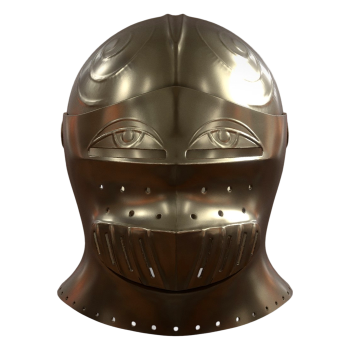
Bavarian warrior helmet (supports 3D printing)

Bavarian warrior helmet (supports 3D printing)

Ninja terracotta helmet (support 3D printing)
Ninja terracotta helmet (support 3D printing)

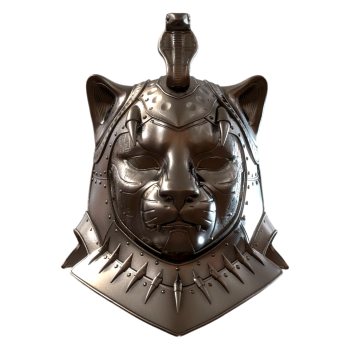
Ancient Egyptian Sehmet Helmet (supports 3D printing)
Ancient Egyptian Sehmet Helmet (supports 3D printing)

Saihmet (Sekhmet), a lioness god in ancient Egyptian mythology, was originally the goddess of war and the goddess of medicine in Upper Egypt. She is portrayed as a lioness, recognized by the Egyptians as the fiercest hunter. It was said that her breath formed a desert. She was seen as the patron saint of the pharaohs and guided them in war.
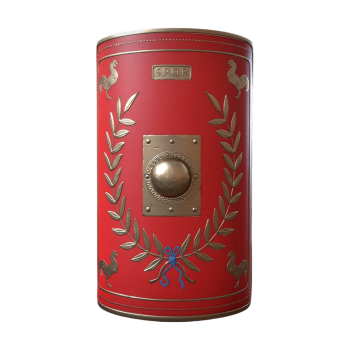
Laurel Shield (supports 3D printing)

Laurel Shield (supports 3D printing)
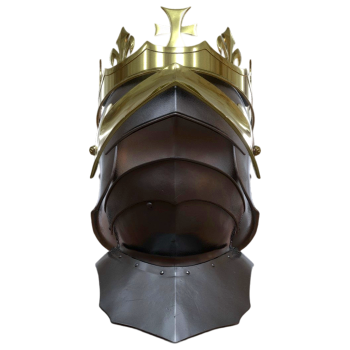
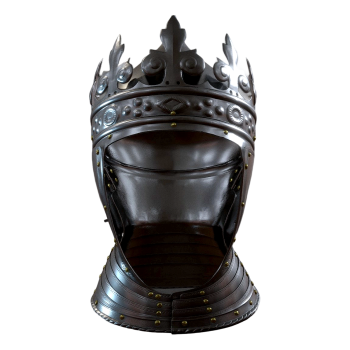
Richard III helmet (supports 3D printing)

Richard III helmet (supports 3D printing)

Richard III was the last king of York and the last king of the Plantagenet. Playwrights such as Shakespeare portrayed it as a "hunchbacked tyrant". However, Richard III made great achievements during his reign. He established a complete legal aid system and bail system, assisted universities, churches, and established the Northern Parliament. He enjoyed widespread love in the region at that time.
Posidon Trident (supports 3D printing)
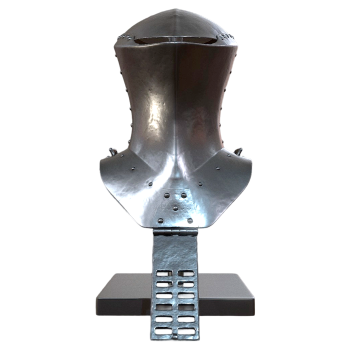
Posidon Trident (supports 3D printing)

Gun Rider Helmet (supports 3D printing)
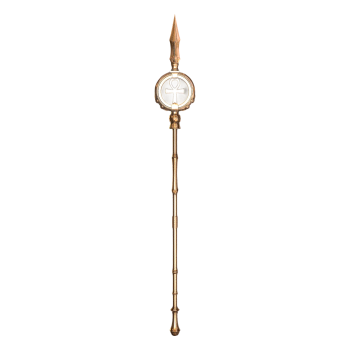
Gun Rider Helmet (supports 3D printing)

Egypt Horus long gun (support 3D printing)
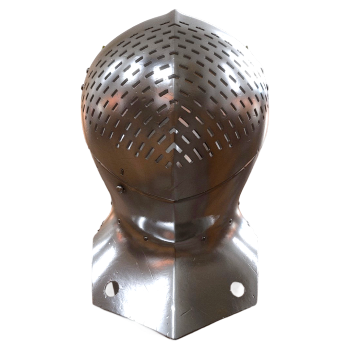
Egypt Horus long gun (support 3D printing)

Sir Gilles Capel's helmet (supports 3D printing)
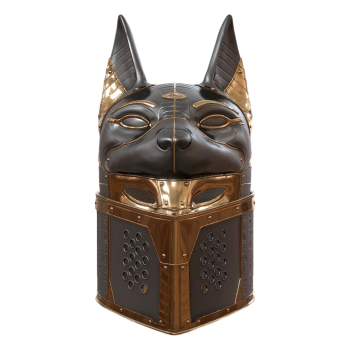
Sir Gilles Capel's helmet (supports 3D printing)

This helmet, or "Great Baschnet", was used for foot racing, and was formerly suspended above the grave of Sir Giles Capel (1485-1556) in the Church of Rennes, Essex, where, as stipulated in his will, his "best helmet" and his sword were placed.
Basteto Helmet (supports 3D printing)

Basteto Helmet (supports 3D printing)

Bastet (Bastet), also known as Goddess Isis or Lady of the East, is a cat god in ancient Egyptian mythology. She began to be worshipped as early as the Second Dynasty of Egypt (2890 BC). Before the unification of Upper and Lower Egypt, she used to be the goddess of war in Lower Egypt, as opposed to the goddess of the lion of Upper Egypt, Sehmet, because of her similarity, basteto's priesthood slowly transformed from the god of war to the patron saint of the family.
Samurai helmet (3D printable, assembled model)
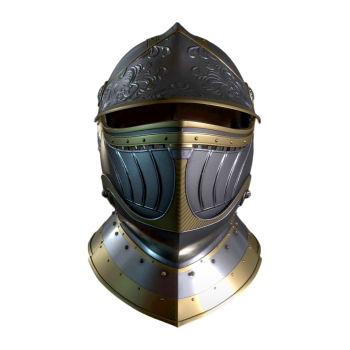
Samurai helmet (3D printable, assembled model)

Thames Knight Helmet (3D printable)
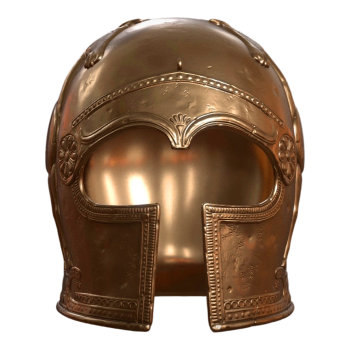
Thames Knight Helmet (3D printable)

Pegasus Helmet
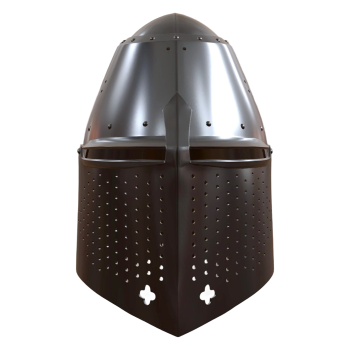
Pegasus Helmet

Pegasus (Pegasus, Greek Π-γασος), one of the most famous fantasy creatures in Greek mythology, was born to Poseidon, the god of the sea, and the character is the god of horses.
Sir Richard Pembridge's helmet (3D printable)
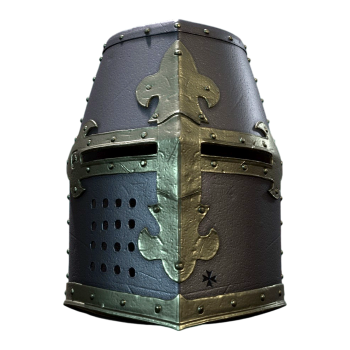
Sir Richard Pembridge's helmet (3D printable)

Sir Richard Pembridge (Pembridge Richard, died 1375),KG was one of the first knights of the Garter to be appointed. A man of uncertain family background from Herefordshire, he took part in the Battle of Sruiz (1340) and fought alongside Edward III in the Hundred Years' War at the Battle of Creasy (1346) and the Battle of Poitiers (1356). After that he became guardian of Southampton Castle in 1361 and then constable of Dover Castle and caretaker of the Cinque Harbour in 1370.
Crusader Knight Helmet (3D printable)
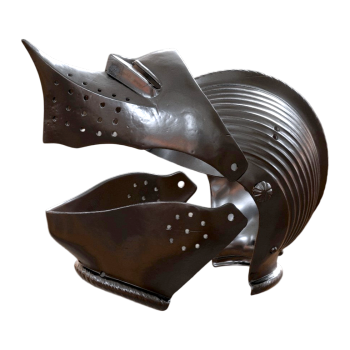
Crusader Knight Helmet (3D printable)

King Magnus Helmet (supports 3D printing, assembled models)
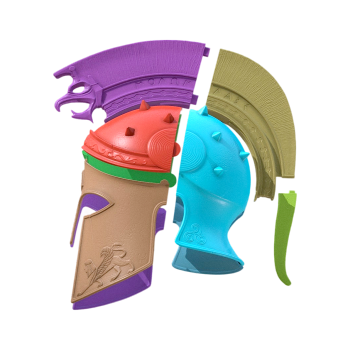
King Magnus Helmet (supports 3D printing, assembled models)

At the age of three, he succeeded to the King of Sweden (1319-1363) and the King of Norway (1319-1343), who were called IV and VII respectively. He officially ascended the throne in 1336 and let his son succeed the king of Norway in 1355, called Haakon VI. A series of reforms introduced by the Swedish king angered the powerful, who put Albert of Mecklenburg on the Swedish throne and launched an armed attack, imprisoning him until 1371. After his release, he left for Norway.
Perseus's helmet (supports 3D printing and assembling models)
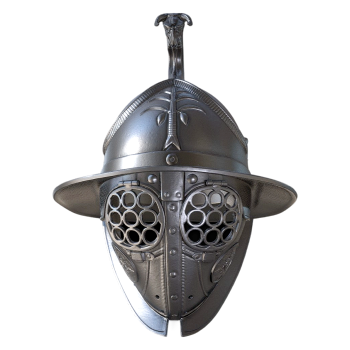
Perseus's helmet (supports 3D printing and assembling models)

Gladiator Swordsman Helmet (supports 3D printing)
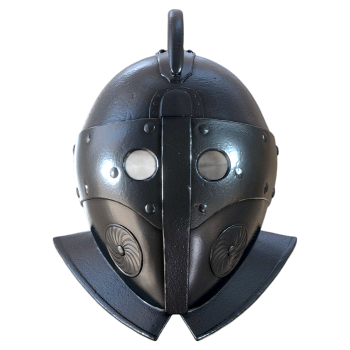
Gladiator Swordsman Helmet (supports 3D printing)

Gladiator Lance Helmet (support 3D printing)
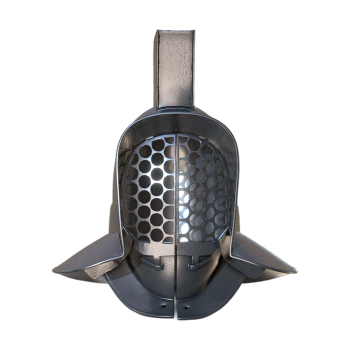
Gladiator Lance Helmet (support 3D printing)

Six-sided gladiatorial helmet (support 3D printing)
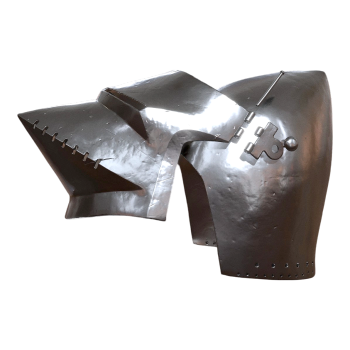
Six-sided gladiatorial helmet (support 3D printing)

Basin Hound Helmet (Support 3D Printing, Assembled Model)
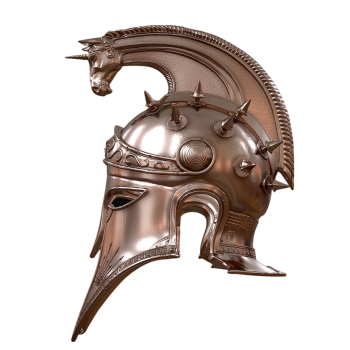
Basin Hound Helmet (Support 3D Printing, Assembled Model)

The Bashin Hound Helmet was one of the most popular and widely distributed medieval knight helmets of the fourteenth century.
Perseus's helmet (supports 3D printing)
Perseus's helmet (supports 3D printing)

Perseus (Perseus), the hero of ancient Greek mythology, son of Zeus and Danahe, is the source of the constellation Perseus. King Acresios of Argos learned from God that he would be killed by the son of his daughter Danahe, and imprisoned him. Zeus turned into golden rain and Danahe met to give birth to Perseus. With the help of Athena and Hermes, Perseus killed Medusa with Athena's shield and gave her head to Athena.
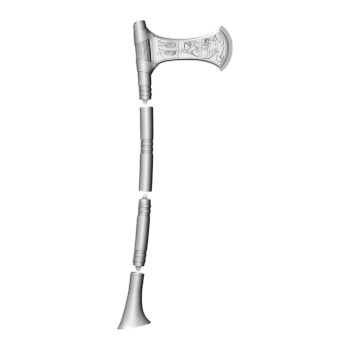
Assembled ancient Egyptian long handle axe (support 3D printing)
Assembled ancient Egyptian long handle axe (support 3D printing)

Ancient Egyptian Pharaoh Scepter (supports 3D printing)

Ancient Egyptian Pharaoh Scepter (supports 3D printing)

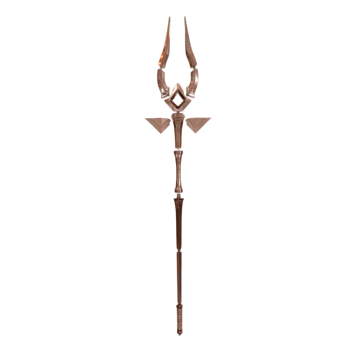
Sun God pike (support 3D printing)
Sun God pike (support 3D printing)

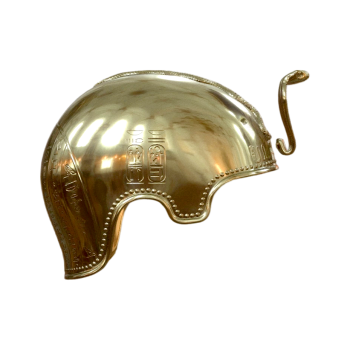
Pharaoh's Near Guard Helmet (supports 3D printing)
Pharaoh's Near Guard Helmet (supports 3D printing)

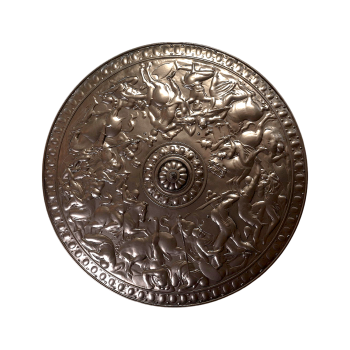
Eric XIV's Parade Round Shield (supports 3D printing)
Eric XIV's Parade Round Shield (supports 3D printing)

Eric XIV (1533-1577) was the second monarch of Sweden's Vasa Dynasty. After his coronation in 1560, he began to compete for Baltic hegemony. During his reign, he led the Seven Years War in the North (1563-1570). He pursued a centralized policy but was paranoid and brutal, and a power struggle broke out with his brother John III. He was deposed in 1568 and imprisoned for life. Although his rule was known for its military and artistic achievements, the internal turmoil eventually led to his dethronement.
Helmet of Gustav I (supports 3D printing)

Helmet of Gustav I (supports 3D printing)

King of Sweden (1496-1560). Born into a noble family, he took part in the struggle against Danish rule in 1517. After losing the war in 1518, he was taken to Denmark as a hostage and fled back the following year. In November 1520, the Danes created the "Stockholm murder" in Sweden, killing about 100 Swedish nobles, priests and citizens, which became the fuse of the Swedish independence movement. He led a popular uprising in Dalarna County in 1521, defeated the Danish occupation forces in 1523, was elected king, and established the Vasa Dynasty.
The steeple cap of Fernando Primo de Rivera

The steeple cap of Fernando Primo de Rivera

Fernando Primo de Rivera was born in the Spanish nobility and entered the military academy in 1884, emerging from the "bloody means" of suppressing the Cuban War of Independence. In September 1923, Primo de Rivera staged a military coup to overthrow the Liberal government of Prime Minister Manuel Garcia Prieto, declaring the establishment of a "military dictatorship" and self-appointed "head of state". Its rule is based on the slogan of "restoring order" and "combating separatism", but the essence is to suppress democracy and strengthen military participation in politics.
Meleha Neolithic Flint Arrow

Meleha Neolithic Flint Arrow

"Meliha Neolithic Flint Arrow" is a typical Neolithic (about 6000-3000 BC) stone weapon unearthed at the Mleiha Archaeological Site in central Oman. It is made of flint (Flint) and is a key tool for early human transition from gathering and hunting to agricultural settlement. It is also an important physical evidence for studying early technology, economy and society in the Arabian Peninsula.
Middle Bronze Age flanged flat axe

Middle Bronze Age flanged flat axe

"Flanged flat axe in the middle of the Bronze Age" is a metal tool/weapon popular in many parts of Eurasia in the middle of the Bronze Age (about 2000-1600 BC, depending on the region). Its core feature is that the axe head has a flange (Flange) (strip structure with the edge of the blade protruding outward) and a flat blade body (Palstave) (the blade is wide and thin, shovel-shaped or trapezoidal). It is a typical representative of the transition from stone tools to metal tools after the maturity of bronze smelting technology. It is not only a practical tool, but also a material witness of the complexity of early society.
Antique Mauser Bolt Rifle

Antique Mauser Bolt Rifle

"Mauser Bolt Action Rifle" (Mauser Bolt Action Rifle) is a series of manual rifles developed by German firearms designer Peter Paul Mauser (Peter Paul Mauser) and his family business (Mauser Company, Mauser-Werke). With "rotating rear pull bolt" (Bolt Action) as the core design, it is one of the most influential rifles from the 19th to the 20th century. Its history spans two world wars, and technological innovation and military applications have profoundly affected the development of global firearms.
Late 19th century Spanish lieutenant-general side cap

Late 19th century Spanish lieutenant-general side cap

This "Lieutenant General Side Hat (1869-1876)" is one of the treasures of the Spanish National Military Museum (Museo Nacional de Historia Militar, Toledo). Its history can be traced back to the Spanish military system reform in the middle and late 19th century. Critical period. As a headwear specially designed for the rank of lieutenant general (Lieutenant General), it is not only a visual symbol of Spain's "military hierarchy", but also a vivid witness to the integration of European military modernization and local culture in the 19th century.
Late Bronze Age with rings and axes

Late Bronze Age with rings and axes

The late Bronze Age was a critical stage in the transition from stone tools to metal tools. With the maturity of bronze (copper-tin alloy) smelting technology, humans broke through the limitations of early stone tools and began to mass produce more durable and efficient metal tools. The emergence of the axe (Socketed Axehead) was an important technological breakthrough in this period-compared with the earlier "Flat Axe" (Flat Axe, which is easy to loosen by binding and fixing the wooden handle), its mortise hole design (inserting the wooden handle into the conical or cylindrical hole of the axe head, and fixing it by the close fit of metal and wood) greatly improved the stability of the tool.
General Francisco Sarwar Masso Cap

General Francisco Sarwar Masso Cap

"Francisco Sarwar Masao General cap" (Kepi) is a representative officer's headdress in the 19th century Spanish military history, closely related to the history of Spain's "Carlist Wars" and local military strongmen. This cap is not only the dress of the general's daily and ceremonial occasions, but also the microscopic witness of the rise of local power and the changes of military culture in Spain in the 19th century, bearing the double memory of "military power and local identity.
1 2 3 Next