
The Bishop's Crown of Poland in the 18th Century

The Bishop's Crown of Poland in the 18th Century

In the collection of the Miekhov Land Museum, there is an 18th-century Polish bishop's crown (Miter). This bishop's crown is made of steel and cloth, decorated with gold thread, precious stones and other precious materials. Its exquisite decoration and unique design not only show the superb skills of religious art at that time, but also symbolize the religious authority and noble status of the wearer. This bishop's crown is not only a religious article, but also an important cultural and historical heritage.
Emblem of the Russian Empire

Emblem of the Russian Empire

It is a badge with rich history and symbolic significance, and its core element is the double-headed eagle. The design can be traced back to the 15th century AD. The double-headed eagle was originally the emblem of Constantine I of the Byzantine Empire, symbolizing the unity between the two continents and the union of various ethnic groups. On the chest is a small shield, above which is a knight and a white horse, representing the capital Moscow. The knight faced to the right, wearing silver armor and a pale blue cloak, holding a golden spear in his hand and stabbing a black serpent-like monster. The double-headed eagle, looking at the east and west, represents that Russia is a country that crosses the continents of Asia and Europe. Three crowns symbolize the unity of the Russian Federation
Gilded Record Hanging

Gilded Record Hanging

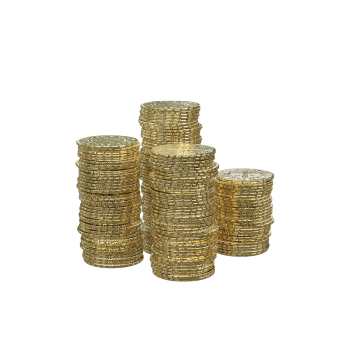
four stacks of gold coins

four stacks of gold coins

Kneeling Shooting Terracotta Warriors

Kneeling Shooting Terracotta Warriors

The kneeling shooting terracotta warrior is dressed in a battle robe and armor, with a bun tied on the left side of their head. Their feet are aligned with the square mouth and their head is raised with pointed shoes. Their left leg is crouched and bent, their right knee is on the ground, and their upper body is slightly turned to the left. Their hands are raised and lowered on the right side of their body in a bow holding posture, showing a solo practice movement of holding a bow. In the sculpture art of kneeling and shooting terracotta warriors, one thing that is very valuable is that their shoe soles and meticulously crafted stitches reflect an extremely strict realistic spirit, allowing future viewers to feel a strong sense of life from the Qin Dynasty warriors. Among all the Terra Cotta Warriors unearthed, the kneeling shooting Terracotta Warriors are the only Terra Cotta Warriors that were extremely complete when they were found.
Panzhuli Divine Bronze Mask

Panzhuli Divine Bronze Mask

The "Panzhuli Divine Bronze Mask" describes an artwork that showcases the head of a wild boar, adorned with exquisite headpieces and earrings. The headband is decorated with a row of cobra heads. The earrings on the mask are also decorated with cobra heads, with one earring featuring a character image and the other earring featuring an elephant head.
Venezuelan Football Confederation National Team Emblem

Venezuelan Football Confederation National Team Emblem

Bronze medal at the 2024 Paris Olympics

Bronze medal at the 2024 Paris Olympics

Silver medal at the 2024 Paris Olympics

Silver medal at the 2024 Paris Olympics

Gold medal at the 2024 Paris Olympics

Gold medal at the 2024 Paris Olympics

Peruvian Football Confederation National Team Emblem

Peruvian Football Confederation National Team Emblem

Paraguay Football Confederation National Team Emblem

Paraguay Football Confederation National Team Emblem

Panama Football Confederation National Team Emblem

Panama Football Confederation National Team Emblem

Honduras Football Confederation National Team Emblem

Honduras Football Confederation National Team Emblem

Guatemalan Football Confederation National Team Emblem
Guatemalan Football Confederation National Team Emblem

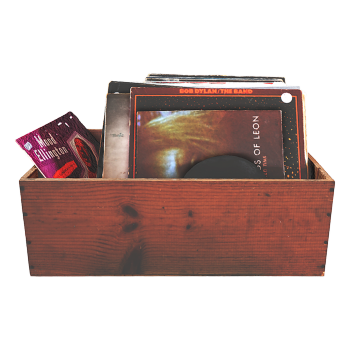
Old vinyl records

Old vinyl records

Taming Deer Antlers 3D Model

Taming Deer Antlers 3D Model

Italian Football Cup

Italian Football Cup

It is the highest level football cup tournament in Italy, hosted by the Italian Football Association and the Italian Serie A. This competition began in 1922, but was cancelled midway through the second edition and was not held again until 1935. The participating teams of the Italian Cup include teams from Serie A and Serie B. Since the 2007/08 season, the competition has undergone reforms, with the final being changed from a two legged format to a single elimination format and held at the Rome Olympic Stadium. Juventus has won the Italian Cup the most times in history, with a total of 15 titles. The event logo is composed of three colors: green, yellow, and white, with the text "CoppaItalia" at the bottom
Greek Football Super League Trophy

Greek Football Super League Trophy

It is the highest level professional football league in Greece, commonly known as the Greek Football Super League trophy. This league was established in 1927 and is managed by the Greek Football Association. The Super League consists of 14 teams, each of which plays a home and away double round robin game during the season, with a total of 26 matches played. The Greek Football Super League trophy is an honor presented to the champion team at the end of the season, symbolizing the team's highest achievement in the league. The champion of the league will not only receive a trophy, but also qualify for the next season's UEFA Champions League. In addition, the runners up and third place winners of the league will also qualify to participate in European leagues.
2021 Russian Super Cup

2021 Russian Super Cup

It is a traditional football tournament in Russia, where the champions of the Russian Premier League and the Russian Cup compete against each other. The Super Cup of that year was held on July 17th at the Kaliningrad Stadium, with Zenit St. Petersburg and Lokomotiv Moscow facing each other. Zenit St. Petersburg is the champion of the Super League, while Lokomotiv Moscow is the champion of the Russian Cup. In the end, Zenit St. Petersburg defeated Moscow Lokomotiv 3-0 and won the game. This trophy is made of brass and weighs 15 kilograms, symbolizing the efforts and achievements of last season's contestants.
The 1999 Russian Football Cup

The 1999 Russian Football Cup

The final of the 1999 Russian Football Cup was held on May 26, 1999. Zenit St. Petersburg defeated Dynamo Moscow 3-1 and won the championship of the Russian Cup. This is an important victory in the history of Zenit team, marking their rise in the field of Russian football. Zenit team demonstrated excellent athletic performance and teamwork during that season, ultimately winning the game with a clear advantage in the final. This victory not only brought honor to the team, but also brought great joy and pride to the team's fans.
Barclays Football Cup

Barclays Football Cup

The Barclays Cup is a long-standing football tournament sponsored by Barclays Bank in the UK. As one of the four major private banks in the UK and one of the largest banks in the world, its brand influence is extensive. Since its first hosting in 1960, the Barclays Cup has been regarded as one of the important events in British football, attracting numerous top football clubs to participate. Not only does it provide fans with a wonderful football feast, but it also promotes the popularization and development of football in the UK and even globally. By sponsoring such events, Barclays Bank not only enhances its brand image but also contributes to the promotion of football.
FIFA Club World Cup

FIFA Club World Cup

The Club World Cup, abbreviated as FIFA Club World Cup, is an international football tournament organized by FIFA. This competition brings together the top club teams from six continents around the world, as well as the champion team from the host country, to compete for the highest honor of the world club. The trophy design is unique, with the words "FIFAClub World Cup" engraved on the bottom, and six curved legs supporting the football, symbolizing the competition of teams from various continents for the championship. The tournament has a long history and has become an important platform for showcasing the competitive level of football clubs worldwide since its first event in Brazil in 2000.
Asian Football Cup

Asian Football Cup

It is a major men's football tournament hosted by the Asian Football Confederation (AFC), with the participation of adult national teams from member countries in Asia, aimed at determining the intercontinental champions of Asia. It is the second oldest intercontinental football tournament in the world after the Copa America. The Asian Cup is held every four years, with the first edition held in Hong Kong, China in 1956. It is not only a showcase of the level of Asian football, but also a stage for national teams of various countries to showcase their strength and team spirit. The competition is of great significance in promoting the development of Asian football and enhancing Asia's influence on the world football stage.
European Football Cup

European Football Cup

The official name is the European Football Championship, abbreviated as the "European Cup", which is a national team football tournament organized by the European Football Confederation (UEFA). This competition began in 1960 and was originally called the "European Championship". It is held every four years and is one of the highest level national team football competitions in Europe. Since 1960, it has been held every four years. 24 national teams advanced to the finals through preliminary rounds, and after the group stage, the top 16 teams competed for the championship through knockout rounds. The competition is not only a feast for football competition, but also a platform for cultural exchange among countries, attracting global fans' attention.
Protoetic Amphora Ancient Greek Pottery - Metropolitan Museum of Art

Protoetic Amphora Ancient Greek Pottery - Metropolitan Museum of Art

It is an ancient Greek pottery, whose style originated in Athens in the 7th century BC and belongs to the early Attic period. The characteristic of this pottery is that it began to abandon abstract geometric patterns and instead adopted a naturalistic style influenced by Near Eastern art. Common decorative themes include Greek mythological scenes, animal and floral patterns. It is currently housed in the Metropolitan Museum of Art. This work depicts the battle scene between Hercules and the centaur Nessus. Hercules holds a sword and is grabbing the hair of Nessus, who is attempting to kidnap his wife Daenera. The artistic expression of pottery during this period was innovative and of great cultural and historical significance.
Attic Red Painted Pottery Box - National Museum of Athens

Attic Red Painted Pottery Box - National Museum of Athens

Depicting Leto on Delos Island, preparing to give birth to Apollo and Artemis. Originating from Eretria in the 4th century BC, it is currently housed in the National Museum of Athens. It is an ancient Greek ceramic container commonly used to store jewelry, cosmetics, or other small items. The characteristic is that its surface is decorated with a red painting style, which fills the black outline of the pottery with red, while the rest of the pottery retains its natural color or is painted black. The red painting style developed between the late 6th century BC and the 5th century BC, replacing the early black painting style.
W ł oc ł awek Sanctuary - Krakow National Museum

W ł oc ł awek Sanctuary - Krakow National Museum

Also known as the Kruszwica Sanctuary, it is a religious artwork made in Swabia in the mid-12th century, closely related to the Zwiefalten studio. Swabia is located in southern Germany today and was one of the important centers of art and culture in medieval Europe. The exquisite craftsmanship and gorgeous decoration reflect the superb skills of medieval European gold and silver ware production. Carved with exquisite patterns, it showcases the artistic talent and creativity of medieval craftsmen. It is a religious artwork with significant historical, artistic, and cultural value. Currently housed in the Krakow National Museum
14th Century Ceramic Bowl - Minneapolis Museum of Art

14th Century Ceramic Bowl - Minneapolis Museum of Art

A ceramic bowl from the 14th century, now housed in the Minneapolis Museum of Art, is a historically significant piece of art. Not only does it showcase the exquisite craftsmanship of medieval ceramics, but it also reflects the culture and aesthetics of the society at that time. The material is earthenware, which is a ceramic made of clay and usually fired at lower temperatures to give it a unique texture and color. The appearance is simple and elegant, and its design may have been influenced by the popular art style at that time. The surface may be decorated with patterns or motifs, which not only look beautiful but also reflect the creativity and attention to detail of the craftsmen at that time.
Ferdinand Alvarez de Toledo Memorial Medal
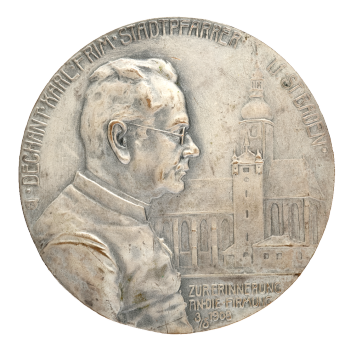
Ferdinand Alvarez de Toledo Memorial Medal

Fernando Á lvarez de Toledo, the third Duke of Alvarez. The commemorative medal features a bust of the Duke in armor, made in 1567 to commemorate his tenure as governor of the Netherlands in 1557. Duke Ferdinand Alvar (1507-1582) was a Spanish nobleman, general, and politician. During the Eighty Years' War, he suppressed a rebellion against Spanish rule in the Netherlands. He served as the Governor General of Spain and the Netherlands from 1567 to 1573.
Gottfried Marshall Memorial Medal

Gottfried Marshall Memorial Medal

The front displays a bust of Godfrey Marschall. EXZELL DR. GODFRED MARSCHELL WEIHBISHOF U. GENELLIKAR VON WIEN, meaning "Outstanding Dr. Gottfried Marcel, Bishop and General Agent of Vienna". Issued in 1908, the material is bronze and silver plated.
Emperor Joseph recites the seal in the first century

Emperor Joseph recites the seal in the first century

A silver medal in honor of Emperor Joseph I, commemorating the birth of Emperor Joseph I. The inscription on the edge of the medal reads "Memoria AVGVSTISSIMAE NATIVITATIS IOSEPHI ARCHIDVCIS AVSTRIAE D 26 IVLII A 1678", meaning "In memory of the birth of the most esteemed Joseph, Archduke of Austria, on July 26, 1678".
Ancient Chinese Blue Glazed Pottery Bowl - Minneapolis Institute of the Arts

Ancient Chinese Blue Glazed Pottery Bowl - Minneapolis Institute of the Arts

Ceramic art from the 12th century AD, now collected at the Minneapolis Institute of Art. It is one of the outstanding representatives of ancient Chinese ceramic art, showcasing the exquisite skills of Song Dynasty ceramic art with its unique colors and craftsmanship. Blue glaze, also known as blue color, is a glaze color formed by applying cobalt containing blue pigment to the surface of porcelain and firing it at high temperatures. It became popular in the Song Dynasty and was loved by people for its bright and pure blue color. Not only is it a masterpiece of ancient Chinese ceramic art, but it is also a bridge for cultural exchange between the East and the West. Enable people from all over the world to appreciate the charm of ancient Chinese ceramics and learn about China's long history of ceramic culture
Queen Mary's Scottish Treasure Chest

Queen Mary's Scottish Treasure Chest

Queen Mary's Scottish Treasure Chest is a beautifully decorated gold-plated silver box, made in Paris between 1490-1510, believed to have belonged to Queen Mary of Scotland. This is an extremely rare example of French silverware from the Renaissance period, as many silverware were melted down to extract precious metals from them. Its preservation proves its association with Mary, and as a relic of this unfortunate queen, it has been cherished by the Duke of Hamilton's family for over 340 years.
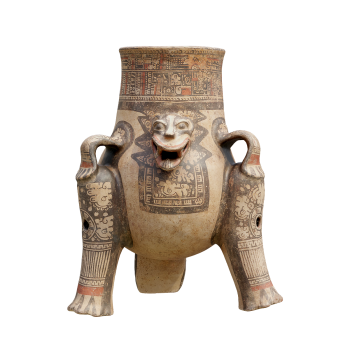
Zapotec Pottery - American Collection, University of Bonn

Zapotec Pottery - American Collection, University of Bonn

It is an ancient art form originating from the Oaxaca Valley in Mexico, and this humanoid pottery embodies the craftsmanship and creativity of the Zapotec civilization craftsmen. It can be traced back over two thousand years and is known for its diverse styles, including animal forms and humanoid patterns, as well as geometric and symbolic designs that incorporate the Zapotec cosmology. It is a proof of Zapotec's technical skills and a bridge to understand their society, beliefs, and intimate relationships with the environment. Formally, it usually appears in animal form or human form, sometimes associated with gods, ancestors, animals, or individuals of prominent status. It is currently housed in the American Collection at the University of Bonn.