The Three Legged Cauldron of the Shang Dynasty in China - Cleveland Museum of Art

The Three Legged Cauldron of the Shang Dynasty in China - Cleveland Museum of Art

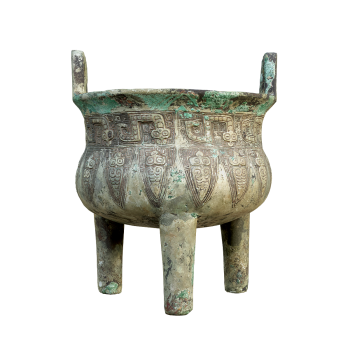
The tripod collected by the Cleveland Museum of Art is a bronze artifact from the Shang Dynasty in China, dating back to approximately 1200 to 1100 BC. With its exquisite craftsmanship and unique design, it showcases the superb skills of bronze ware production during the Shang Dynasty. The tripod was not only a practical tool for cooking and storing food at that time, but also had important ceremonial and symbolic significance, often used in religious and sacrificial activities. Exquisite attention to detail reflects the aesthetic characteristics and cultural value of Shang Dynasty bronze art. Donated by the John Huntington Institute of Art and Technology Trust to the Cleveland Museum of Art.
Pre Romanesque Sacred Box - Museum of Mireza

Pre Romanesque Sacred Box - Museum of Mireza

It is a precious artifact from the pre Romanesque period, consisting of a container and a lid, with a handle on top of the lid. The St. Mary's Delilet Church is located in the town of Lapo Bradley in the Begda region. It is currently preserved in the museum in Manza. This artifact box is a representative of pre Romanesque art, with a unique design that showcases the artistic style and craftsmanship of that era. Not only is it a religious artifact, but it is also an important physical material for studying the social, cultural, and religious life of that time. Through this work, people can better understand and appreciate the ancient civilization and artistic achievements of Catalonia and even the entire Europe.
Porcelain from the Qianlong period of the Qing Dynasty in China - Cleveland Museum of Art
Porcelain from the Qianlong period of the Qing Dynasty in China - Cleveland Museum of Art

It is a porcelain piece from the Qianlong period of the Qing Dynasty in China (1736-1795), with the mark of the Qianlong period. Decorated with colorful franc glaze, belonging to the style of Gu Yue Xuan. The Cleveland Museum of Art belongs to the John L. Severance Foundation. This porcelain represents the high level of porcelain production in the Qing Dynasty, and its exquisite franc glaze decoration and delicate craftsmanship showcase the prosperity of porcelain art at that time. The Qianlong period was one of the golden ages of Chinese porcelain development, and the porcelain of this period was famous for its exquisite craftsmanship and rich decoration.
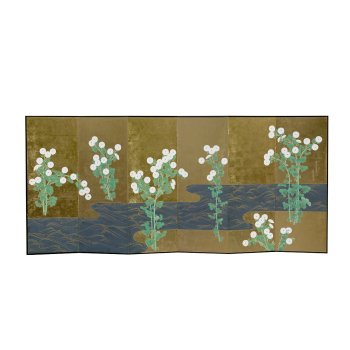
Riverbank Chrysanthemum Screen - Cleveland Museum of Art

Riverbank Chrysanthemum Screen - Cleveland Museum of Art

It is a work created by a follower of Mitsuru Ogata, a famous painter of the Edo period in Japan. This painting was created in the late 18th to early 19th century and is part of a set of works. It is a pair of six fold screens, using gold foil as the canvas, drawn with ink and color. The painting depicts chrysanthemums by the stream, showcasing the delicacy and elegance of traditional Japanese painting. Kobayashi Ogata himself lived between 1658 and 1716, and this artwork was created shortly after his death by his followers, reflecting his artistic style and influence. Currently collected at the Cleveland Museum of Art
Nanman Screen - Kobe City Museum
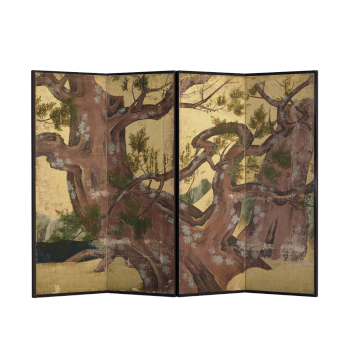
Nanman Screen - Kobe City Museum

It is a type of screen made in Japan from the late 16th century to the mid-17th century, mainly depicting scenes of communication with Portugal and Spain. This important cultural property created by Kano Uchiyama uses the technique of coloring gold on paper and consists of six pieces. It is currently collected at the Kobe City Museum. The creative background is closely related to Japan's foreign exchanges at that time. In the late 16th century, with the colonial expansion of Portugal and Spain in Asia, Western European countries began to enter Japan's trading circle, and the Japanese at that time referred to them as the "Southern Barbarians". From this work, we can see how Japanese people at that time understood and expressed their communication and interaction with foreign countries through art.
Kano Nagatoku's "The Cypress Screen" (right) - Tokyo National Museum

Kano Nagatoku's "The Cypress Screen" (right) - Tokyo National Museum

It is one of the representative works of the famous Japanese painter Nagatoku Kano during the Momoyama period, known for its magnificent obstacle screen painting style. Created in the late 16th century, it is an outstanding representative of art from the Azuchi Momoyama period in Japan. The background of the painting is almost covered with gold foil, highlighting the vigorous branches of the cypress tree. Kano Nagatoku inherited the painting style of his grandfather Kano Motonobu, blending ink paintings from China with colorful paintings from Japan, creating a powerful yet magnificent painting style that was deeply loved by military commanders at that time., Currently housed in the National Museum of Tokyo, it is an indispensable and valuable resource for studying the history of Japanese painting.
Kano Nagatoku's "The Cypress Screen" (left) - Tokyo National Museum
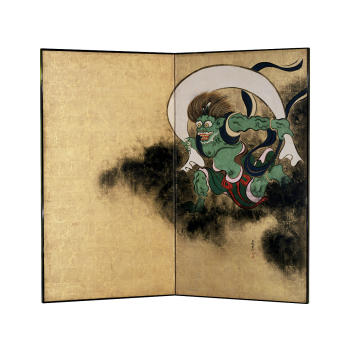
Kano Nagatoku's "The Cypress Screen" (left) - Tokyo National Museum

It is one of the representative works of the famous Japanese painter Nagatoku Kano during the Momoyama period, known for its magnificent obstacle screen painting style. Created in the late 16th century, it is an outstanding representative of art from the Azuchi Momoyama period in Japan. The background of the painting is almost covered with gold foil, highlighting the vigorous branches of the cypress tree. Kano Nagatoku inherited the painting style of his grandfather Kano Motonobu, blending ink paintings from China with colorful paintings from Japan, creating a powerful yet magnificent painting style that was deeply loved by military commanders at that time., Currently housed in the National Museum of Tokyo, it is an indispensable and valuable resource for studying the history of Japanese painting.
The Wind God and Thunder God Screen (Wind God Screen) - Tokyo National Museum

The Wind God and Thunder God Screen (Wind God Screen) - Tokyo National Museum

The "Wind God and Thunder God Screen" by Mitsuru Ogata is an important cultural property of the Edo period in the 18th century and is currently housed in the Tokyo National Museum. It was created by Mitsunari Ogata imitating the national treasure of Muneda Biaya. Using paper-based gold coloring techniques. One of the prominent features of this work is the intersection of the gaze of the Wind God and the Thunder God. The images of the Wind God and the Thunder God are vivid and powerful, with the Wind God holding a wind bag and the Thunder God holding a drum, both of which have dynamic movements and expressions. In addition, after the death of Mitsuhide, Sakai Takaichi added the "Summer Autumn Sketch Screen" to the back of the screen, but for preservation reasons, these two works are now stored separately in different screens.
Wind God and Thunder God Screen (Thunder God Screen) - Tokyo National Museum

Wind God and Thunder God Screen (Thunder God Screen) - Tokyo National Museum

The "Wind God and Thunder God Screen" by Mitsuru Ogata is an important cultural property of the Edo period in the 18th century and is currently housed in the Tokyo National Museum. It was created by Mitsunari Ogata imitating the national treasure of Muneda Biaya. Using paper-based gold coloring techniques. One of the prominent features of this work is the intersection of the gaze of the Wind God and the Thunder God. The images of the Wind God and the Thunder God are vivid and powerful, with the Wind God holding a wind bag and the Thunder God holding a drum, both of which have dynamic movements and expressions. In addition, after the death of Mitsuhide, Sakai Takaichi added the "Summer Autumn Sketch Screen" to the back of the screen, but for preservation reasons, these two works are now stored separately in different screens.
The Pine Forest Screen Painting - Tokyo National Museum

The Pine Forest Screen Painting - Tokyo National Museum

The Pine Forest Painting "is one of the representative works of famous Japanese painters such as Hasegawa. Created in the late 16th century during the Azuchi Momoyama period, it is a large screen painting consisting of six panels. The painting is drawn in ink on paper and then pasted onto a wooden frame, depicting a pine forest shrouded in mist, with snow capped mountains faintly visible in the distance. Using black ink, create rich visual effects by mixing and combining different stroke lengths, intensities, and humidities. With its unique composition and style, it reflects an important contribution to the traditional Japanese ink painting and is a milestone in the history of Japanese art. The painting is currently housed in the National Museum of Tokyo.
Opium pipe

Opium pipe

Also known as opium pipe or opium smoking gun, it is a device used for smoking opium. Usually made of metal or bamboo, equipped with a long and thin tube, one end used for smoking and the other end connected to a container containing opium. Opium is heated in a container during use, and smoke is inhaled into the user's mouth through a tube. During the Opium War, the opium trade not only caused serious social problems, but also triggered conflicts between China and Britain, ultimately leading to the outbreak of the Opium War. It also reflects the society's dependence and abuse of opium at that time. Be vigilant against any form of drug abuse and committed to protecting people's health and social stability
John Adam Moser Clan Emblem Seal

John Adam Moser Clan Emblem Seal

John Adam Moser was an 18th century German jurist, administrative official, and writer who had a profound understanding and contribution to the legal and administrative system of his time. This seal not only serves as proof of personal identity, but also reflects the level of seal art and craftsmanship at that time. The handle is engraved with the words "1751" to indicate the year of production.
Seal of the 17th Century Craftsmen's Guild
Seal of the 17th Century Craftsmen's Guild

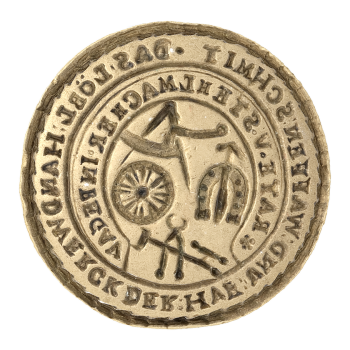
This seal is the seal of the blacksmith and armored craftsman, as well as the wheel manufacturing and car making guild of Pugao, which dates back to the 17th to 18th centuries. The seal represents the guilds of blacksmiths and armors (Huf - und Waffenshmiede) and wheel makers and wheelmakers (Rad - und Stellmacher) in Pugao.
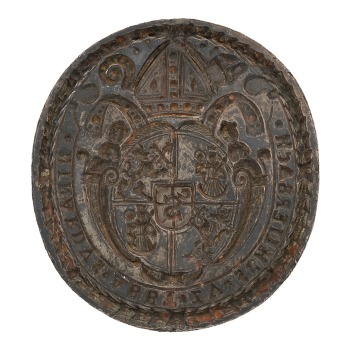
Seal of the abbot of Schlierbach Monastery

Seal of the abbot of Schlierbach Monastery

This seal is part of the history of the Schlierbach Monastery, and its design and decoration reflect the religious art and badge studies of the late 17th century. The emblem and dean's emblem on the seal indicate the religious status of the monastery and the authority of the dean. The Baroque style decoration added artistic beauty and also reflected the popular art style at that time.
Baron von Schreck's silver seal

Baron von Schreck's silver seal

This seal is the family emblem of Baron von Schreck, usually featuring elements such as unicorns and lions representing the nobility and power of the noble family, while the knowledge tree may symbolize the wisdom or knowledge inheritance of the family. The helmet with a crown is a symbol of aristocratic status, while the intricate decorative patterns showcase artistic and craftsmanship.
Seal of the Society of Kellenberger Seymandel
Seal of the Society of Kellenberger Seymandel

The design of this postal seal reflects a certain social phenomenon or sense of humor in 19th century Austria, expressing a joke about a certain social role or family relationship by placing characters in cages. Simandel is an Austrian proverb used humorously to refer to a spouse who is obedient to the mistress of the household.
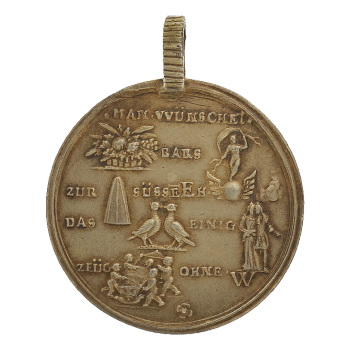
18th Century Gilded Gold and Silver Medal Commemorative Medal

18th Century Gilded Gold and Silver Medal Commemorative Medal

The inscription on this 18th century medal expresses good wishes for love and marriage, and the design of the visual puzzle adds artistic and entertaining elements. The material and exquisite craftsmanship of gilded gold and silver indicate that this is a customized souvenir for special occasions or important figures. At that time, such medals were given as gifts to show respect or celebrate. It is currently housed in the Heiligenkreis Monastery Museum.
Karl Liebertner Memorial Medal

Karl Liebertner Memorial Medal

Karl Liebertner is a figure who has made significant contributions in the fields of music or art, and the design of this medal reflects his achievements and influence. The inscription and pattern on the back indicate a close connection between Liebleitner and children's music, as he was a composer, music educator, or figure related to children's music activities. Laurel leaves usually symbolize victory and honor, while vines and rose bushes add artistic and decorative elements.
Ancient Chinese Bronze Tripod - Minneapolis Museum of Art

Ancient Chinese Bronze Tripod - Minneapolis Museum of Art

Ding is a bronze container used for cooking and worship in ancient China, with a history dating back to the 11th century BC to the 10th century BC. The characteristic is a flat bottom, three legged support, and high artistic and historical value. During the Shang Dynasty, the legs of bronze tripods were mostly flat, usually designed in the shape of dragons. In the early Western Zhou Dynasty, tripod legs began to be popular in the form of birds. The tripod collected by the Minneapolis Museum of Art features a bird shaped design with three legs, standing on claws and tail, and decorated with cicada patterns above the legs. It reflects the bronze casting technology of ancient China, as well as the aesthetic and cultural beliefs of the society at that time.
Qing Dynasty Ding Kiln Incense Burner - Krakow National Museum

Qing Dynasty Ding Kiln Incense Burner - Krakow National Museum

Known for its exquisite craftsmanship and unique design, especially the incense burner with hollowed out carved lids and dragon shaped handles. Not only is it a practical fragrance tool, but it is also an exquisite artwork. A Ding kiln incense burner collected in the Krakow National Museum features a translucent carving technique on its lid, adorned with exquisite patterns, and a dragon shaped handle, reflecting the nobility and power of the dragon in traditional Chinese culture. Made between 1736 and 1795, it showcases the superb craftsmanship of Qing Dynasty porcelain production. It is a witness to the exchange of Chinese and Western cultures, and an outstanding representative of traditional Chinese crafts.
Chinese Porcelain Salt Bottles - Krakow Salt Museum

Chinese Porcelain Salt Bottles - Krakow Salt Museum

It is a Chinese porcelain item collected in the Krakow Salt Museum. It is a representative of early white blue porcelain, decorated with cobalt blue, and is a rare form of Far Eastern porcelain imported to Europe. Created during the Kangxi reign of China (1662-1722), it is an outstanding representative of ancient Chinese porcelain art. The porcelain of the Kangxi period is famous for its exquisite craftsmanship and unique aesthetics. This porcelain not only showcases the traditional craftsmanship of Chinese porcelain, but also reflects the cultural exchange and trade between China and Europe at that time.
Beijing carved lacquer wooden box - Yagailong University Museum

Beijing carved lacquer wooden box - Yagailong University Museum

Beijing carved lacquer craftsmanship, as one of the "Three Treasures" of Chinese arts and crafts, is renowned alongside Hunan embroidery and Jingdezhen porcelain in Jiangxi for its unique skills and exquisite carving. The art of carved lacquer originated in Yunnan and Sichuan in southern China and was widely known during the Tang and Song dynasties. In the Yuan Dynasty (1271-1368), it was introduced to Beijing, and many skilled craftsmen in lacquer carving migrated here as Beijing became the capital. The Jagiellonian University Museum houses a carved lacquer box from the Qianlong period of the Qing Dynasty, which embodies the exquisite craftsmanship and pursuit of beauty of royal workshops in the Qing Dynasty. It is a precious heritage of traditional Chinese arts and crafts.
Chinese Qing Dynasty Incense Burner - Jimei National Museum of Asian Art

Chinese Qing Dynasty Incense Burner - Jimei National Museum of Asian Art

It is a utensil used for burning spices, commonly used in religion, worship, and daily life for incense burning. During the Qing Dynasty in the 18th century (1644-1912), this type of incense burner was widely produced and used in China. It is a copper, gilded, and enamel decorated artwork. The decorative theme includes the head of a glutton and the image of a lion, which have symbolic significance in ancient Chinese art. Gluttons are usually associated with power and mysterious power, while lions symbolize majesty and courage. It is currently housed in the National Museum of Asian Art in Jimei, France, showcasing the exquisite metal and enamel craftsmanship of the Qing Dynasty in China.
Betel Nut Scissors - Shevelin Udila Museum of Ethnology

Betel Nut Scissors - Shevelin Udila Museum of Ethnology

Betel nut scissors, also known as kacip, are one of the collections of the renowned Polish zoologist Professor Mihaw Szczyrzky. He lived in Java from 1907 to 1908, located in the famous Buetenzor Botanical Garden (now known as Bogor). He was interested in Javanese culture and brought many ethnographic exhibits back to his homeland Poland. This is a tool specifically designed for cutting nuts from betel nut and palm trees. Now housed in the Shevelin Udila Museum of Ethnology in Krakow, Poland, it serves as a witness to cultural exchange and fascination with the Javanese way of life in the early 20th century.
A pile of old Japanese coins known as "Kan'ei Tongbao"

A pile of old Japanese coins known as "Kan'ei Tongbao"

It is an important currency in the early Edo period of Japan (1603-1868), named after the era name "Kan'ei" at that time. This type of coin was first minted in the third year of Kan'ei (1626) by the Tokugawa shogunate in order to standardize the monetary system and maintain sufficient supply of copper coins. The casting of Kan'ei Toho marks an important period in the history of Japanese currency, with a huge amount of casting, a long casting time span, numerous versions, and materials including copper, iron, etc. Over time, the Kan'ei Tongbao gradually withdrew from circulation, but it held an important position in the currency history of Japan and even East Asia.
Trajanas Coin

Trajanas Coin

This is an AS coin with Trajan printed on it, minted in Rome and used for Syria. On the front of this coin, there is a portrait of Trajan. His portrait is facing to the right, and when viewed from the back, there is light shining on the portrait and it is covered by a cloak. Next to the avatar is the inscription "IMP CAES NER TRAIANO OPTIMO AVG GER", which is Latin and means "Supreme Commander, Caesar, Nilva Trajan, the best emperor, conquered the Germanic people". Trajan, the second emperor of the Antonic dynasty in ancient Rome, was one of the Five Wise Emperors of Rome and reigned from 98 to 117.
Austrian Tourist Club 25th Anniversary Commemorative Medal

Austrian Tourist Club 25th Anniversary Commemorative Medal

This commemorative medal is the 25th anniversary medal of the Austrian Tourist Club. The front depicts the personification of Austria, sitting in front of a landscape adorned with the Vienna emblem and the emblem of the Austrian Tourist Club. The Austrian Tourist Club celebrated its 25th anniversary in 1894. Heart and hand for the Alps. On the back, there are five grand dukes, including Archduke Karl Ludwig.
Saint Pulten Savings Bank 50th Anniversary Commemorative Medal

Saint Pulten Savings Bank 50th Anniversary Commemorative Medal

This is a medal made to celebrate the 50th anniversary of the establishment of St. Pulten Savings Bank. The diameter of the medal is 7 centimeters and it was made in 1904. On the front of the medal, there is a view of the savings bank building designed by Eugene Cener, as well as a cinnamon tree branch. The inscription reads: 'SAVE TO WORK'. On the reverse side of the medal, there are beehives and cinnamon branches. The inscription reads: "THE SAVING BANK IN ST. P Ö LTEN ON THE OCCASION OF ITS 50TH ANNIVERSARY1854-1904.
Franz Golden Wedding Commemorative Medal

Franz Golden Wedding Commemorative Medal

This commemorative medal was made to celebrate the golden wedding anniversary of Maria Theresa Frein Leibzeltern and Joseph Franz Hieronymus Prince Koloredo Mansfield. This commemorative medal has a diameter of 8.3 centimeters and was made around 1891. On the front of the commemorative medal, there is a pair of side portraits of two people with the inscription: "JOSEPHUS PRINCEPPS DE COLLOREDO MANNSFELD - MARIA THERESIA PRINCEPPS E.
Seal of the coat of arms of the Russian Empire
Seal of the coat of arms of the Russian Empire

This seal is known as the "Great Seal of the Russian Empire", with a diameter of about 4 centimeters and a height of about 7.8 centimeters. Its seal field is engraved with the emblem of Russia, and below it is a line of inscriptions written in Cyrillic letters. This seal is made of wood and brass.
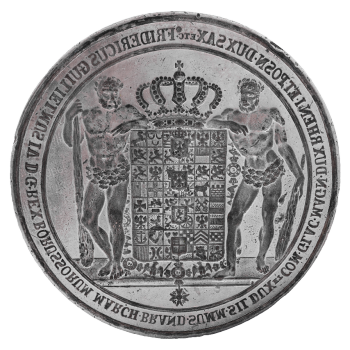
Seal of the Great Emblem of the Kingdom of Prussia
Seal of the Great Emblem of the Kingdom of Prussia

This is a seal with the emblem of the Kingdom of Prussia engraved on it. There are 4 central shields and 48 main domain shields on the coronal shield, with 2 male shield holders. The inscription reads "FRIEDERRICUS GUILIELMUS IV D. G. REX BORUSSORUM MARCH. Below the horizontal bar on the opposite side, there is the first mining foreman H W. The Berlin silver emblem of Zamack and goldsmith Heinrich Wilm Jun. This seal has a diameter of 7.8 centimeters and was made in 1817.
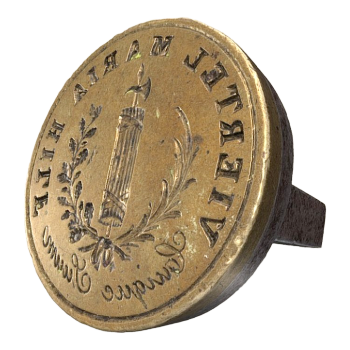
Maria helps with the district seal

Maria helps with the district seal

This is a stamp on the iron handle of the Maria Help Zone, with a copper stamp plate engraved with fasces and laurel branches, and "Cuique Sum" written in cursive script below, surrounded by "VIERTEL MARIA HILF". This seal has a height of 5.2 centimeters and was made in the 18th or 19th century.
Traditional Korean Incense Burner

Traditional Korean Incense Burner

It is a traditional Korean incense burner known for its exquisite design and craftsmanship. Usually made of ceramics or metal, with elegant curves and decorative details, reflecting the pursuit of beauty in Korean culture. The design aims to evenly spread the aroma while emitting a peaceful and tranquil atmosphere. This type of incense burner is not only used in religious ceremonies, but also commonly used in daily life, such as meditation, yoga, or tea ceremony, to create a peaceful and relaxing environment. The production combines traditional craftsmanship with modern design elements, making it one of the representatives of Korean culture and art.
Ceramic containers in animal form - Bonn Collection in the Americas
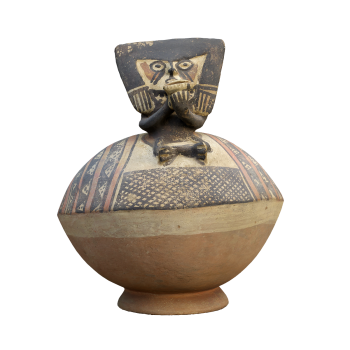
Ceramic containers in animal form - Bonn Collection in the Americas

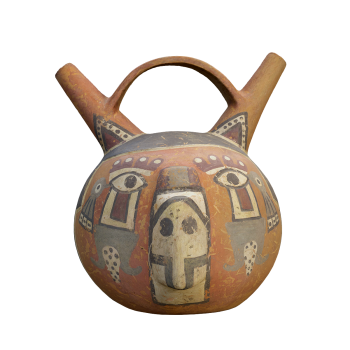
It is a type of pottery with animal characteristics, usually designed in the shape of animals or decorated with animal images. It is a work from the Bonn Collection in the Americas, which is a circular expansion casting container with angled spout connected in a stirrup shape. It was painted in colorful colors. The eye area, as well as the nose and ears in animal form, were depicted in detail and painted with additional eye and facial decorations. The origin is unknown, but it is collected in Teddy Hahn's collection. Not only does it have practical functions, but it also reflects the artistic aesthetics and cultural characteristics of ancient civilization.
Colorful oval anthropomorphic pottery - Bonn Collection of the Americas

Colorful oval anthropomorphic pottery - Bonn Collection of the Americas

On a colorful oval pottery in the Bonn Collection in the Americas, there is a human figure sitting on it with legs crossed. This image is depicted on a black body with a white face, holding a musical instrument or corn in the hand. The main body is decorated with geometric patterns on both sides of the character, consisting of deep stripes and light reddish brown dotted triangles, which are alternately surrounded by red stripes and black lines. At the bottom of the character, an element is drawn as an oblique black line, forming a mesh like pattern. The origin of this pottery is unknown and belongs to Teddy Hahn's collection.