Women's World Cup Winners' Trophy

Women's World Cup Winners' Trophy

The 2023 FIFA Women's World Cup is the 9th edition of the FIFA Women's World Cup hosted by the International Federation of Association Football. The tournament will be held in Australia and New Zealand from July 20 to August 20, 2023. The competition is hosted by 9 cities, including Auckland, Dunedin, Hamilton, and Wellington in New Zealand; Australia has five cities: Adelaide, Brisbane, Melbourne, Perth, and Sydney. In this tournament, China will be in Group D along with England, Denmark, and Haiti.
U-20 World Cup Champion Trophy

U-20 World Cup Champion Trophy
The FIFA U-20 World Cup is the FIFA World Youth Football Championship for men under the age of 20, often referred to as the "World Youth Championship" or "World Youth Cup", held every two years. In 2007, FIFA renamed the World Junior Championships in Canada as the Under-20 World Cup.
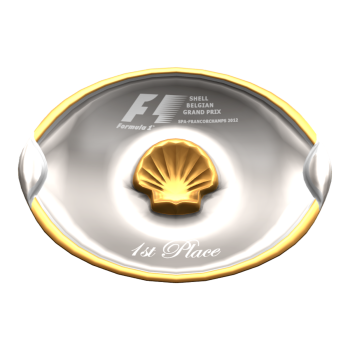
Shell Formula One Sponsor - F1 Trophy

Shell Formula One Sponsor - F1 Trophy

The sponsor trophy is awarded to the winners of various Belgian Grand Prix races in the 2010 Formula One Championship.
In 1928, during the Soviet era, the currency was 0.5 kobi

In 1928, during the Soviet era, the currency was 0.5 kobi

The smallest denomination Goby coin issued by the Soviet Union. 1 ruble equals 100 kobi. The denominations of banknotes are 5, 10, 50, 100, 200, 500, 1000, 2000, 5000 rubles, and there are also 50, 10, 5, and 1 kobi coins. Face value: 0.5. Year of Issue: 1991. Material: Copper nickel alloy.
In 1991, the currency of the Soviet Union was 5 kopecies

In 1991, the currency of the Soviet Union was 5 kopecies

The last Goby coin issued by the Soviet Union. 1 ruble equals 100 kobi. The denominations of banknotes are 5, 10, 50, 100, 200, 500, 1000, 2000, 5000 rubles, and there are also 50, 10, 5, and 1 kobi coins. Face value: 15. Year of Issue: 1991. Material: Bronze.
1699 Old Swiss Confederation Medal 3 Taylor Commemorative Coins

1699 Old Swiss Confederation Medal 3 Taylor Commemorative Coins

On the front is Saint Leodegia sitting, facing left, looking right, raising his right hand to bless, wearing gloves and a bishop's crown, and holding a cross in his left hand. In the front, the Lucerne emblem on the gorgeous vortex flower decoration is supported by two Putti. Putto on the left is sitting, holding a drill bit in his right hand and palm leaves in his left hand. Hold a sword in your right hand and a palm leaf in your left hand. St. Maurice stood behind, wearing armor, a feathered helmet, and holding a spear with a flag in his left hand. The background is the University Church in Lucerne. On the opposite side is an aerial view of Lucerne city from the south, including the Reus River, Lake Verwaldstedt, Church Bridge, and Museger Wall.
During the 1920s, the Soviet currency was 1 ruble

During the 1920s, the Soviet currency was 1 ruble

Ruble, also known as Russian ruble, symbol: ₽. Currency code: RUB. Usage areas: Russia and self declared independent Abkhazia and South Ossetia. Inflation rate: 7%. The Russian ruble is the base currency unit of Russia. The subsidiary currency is Gobi. 1 ruble equals 100 kobi. The denominations of banknotes are 5, 10, 50, 100, 200, 500, 1000, 2000, 5000 rubles, and there are also 50, 10, 5, and 1 kobi coins. Denomination: 1. Year of Issue: 1920. Material: Silver 500/1000.
In 1922, the Soviet currency was 1 ruble

In 1922, the Soviet currency was 1 ruble

Ruble, also known as Russian ruble, symbol: ₽. Currency code: RUB. Usage areas: Russia and self declared independent Abkhazia and South Ossetia. Inflation rate: 7%. The Russian ruble is the base currency unit of Russia. The subsidiary currency is Gobi. 1 ruble equals 100 kobi. The denominations of banknotes are 5, 10, 50, 100, 200, 500, 1000, 2000, 5000 rubles, and there are also 50, 10, 5, and 1 kobi coins. Denomination: 1. Year of Issue: 1922. Material: Silver 500/1000.
The 50 Sentesimo silver coin issued by Uruguay in 1869

The 50 Sentesimo silver coin issued by Uruguay in 1869

The denomination is 50 Sentesimo, the coin weighs 12.5 grams, and the diameter is 33 millimeters. There are nine stars below the coat of arms, four leaves on the top of a wide wreath, and two leaves on the top of a normal sized wreath. Inscribed on the front: LA UNION HACE LA FURZA
The currency issued by Paraguay in 1869 was the 2 Real silver coin
The currency issued by Paraguay in 1869 was the 2 Real silver coin

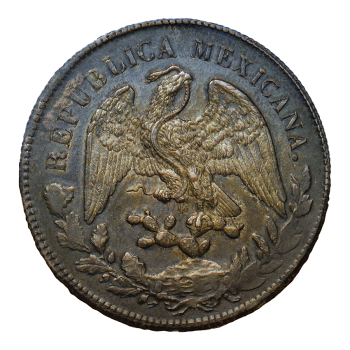
1897 Mexican currency 1 peso (Eagle Ocean)

1897 Mexican currency 1 peso (Eagle Ocean)

Eagle Ocean can be roughly divided into two types: the lace Eagle Ocean before 1897 and the straight edged Eagle Ocean after 1898. The lace eagle ocean has a face value of 8 riels, while the straight edged eagle ocean has a face value of 1 peso. On the front of the silver dollar is an eagle with outstretched wings, holding a long snake in its mouth (the lace eagle snake tail is connected to the eagle wing, while the straight edge eagle snake tail is not connected to the eagle wing), standing on a cactus (the national flower) with one leg, and the Spanish word "REPUBLIKAMEXIKANA" written above the edge. In the center of the back is a free soft hat. The pattern symbolizes strength, loyalty, peace, and freedom.
The currency issued by England in 1793 was 1 penny for George III

The currency issued by England in 1793 was 1 penny for George III

On the front, there is a half body portrait of King George III with the inscription "GEORGIVS III · D · G · REX" facing to the right. Reverse printed with sailboat, land on the right horizon, Bermuda on top, engraved with: BERMUDA1793. Made of copper nickel alloy.
The Victory Goddess gold coin issued by Mexico in 1917

The Victory Goddess gold coin issued by Mexico in 1917

This 50 peso gold coin, also known as the "Centennial Coin," was minted by the "Mexican Mint" (Casa de Moneda) in 1921 to commemorate the 100th anniversary of Mexico's independence from Spain on August 24, 1821. Coins are not minted as currency; The face value of 50 pesos is for legal purposes only and does not reflect the true value of the gold content. It weighs about 41.7 grams, has a diameter of 37 millimeters, and contains 37.5 grams of pure gold. On the front of the coin, we can see the independent angel representing the Greek goddess of victory, Nike.
1907 Saint Gaudens $20 gold coin

1907 Saint Gaudens $20 gold coin

The Saint Gaudens $20 coin was produced by the United States Mint from 1907 to 1933. This gold coin is named after Augustus Saint Gaudens, who designed it. This coin is undoubtedly one of the most popular and beautiful coins in the United States. The $20 gold coin is a coin that is highly valued by investors and numismatists, and is almost loved by anyone who manages to obtain gold coins. For collectors, finding a well preserved 1907 Saint Gaudens $20 gold coin has always been a goal, but it is not an easy one to achieve.
In 1941, the Soviet currency was 3 kopecies
In 1941, the Soviet currency was 3 kopecies

Ruble, also known as Russian ruble, symbol: ₽. Currency code: RUB. Usage areas: Russia and self declared independent Abkhazia and South Ossetia. Inflation rate: 7%. The Russian ruble is the base currency unit of Russia. The subsidiary currency is Gobi. 1 ruble equals 100 kobi. The denominations of banknotes include 5, 10, 50, 100, 200, 500, 1000, 2000, 5000 rubles, as well as 50, 10, 5, 3, and 1 kobi coins. Face value: 3. Release year: 1941. Material: Copper.
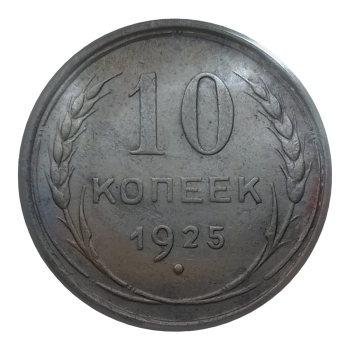
During the 1925 period, the Soviet currency was 10 kopecies

During the 1925 period, the Soviet currency was 10 kopecies

Ruble, also known as Russian ruble, symbol: ₽. Currency code: RUB. Usage areas: Russia and self declared independent Abkhazia and South Ossetia. Inflation rate: 7%. The Russian ruble is the base currency unit of Russia. The subsidiary currency is Gobi. 1 ruble equals 100 kobi. The denominations of banknotes are 5, 10, 50, 100, 200, 500, 1000, 2000, 5000 rubles, and there are also 50, 10, 5, and 1 kobi coins. Face value: 10. Release year: 19295. Material: Silver 500/1000.
Gold coin of King Bactria Eucratis I in ancient Greece

Gold coin of King Bactria Eucratis I in ancient Greece

The coin of the Bactrian king, Eucratis I (c. 171-145 BC) - The Greek Bactrian king who overthrew the House of Eusidmedes and conquered all their property, including Indian property. He misappropriated the title of King of Kings, possibly because not only the rulers of various regions of the Greco Bactrian country obeyed him, but also the local kings of India and other regions of the country obeyed him.
During the period of 1929, the Soviet currency was 15 kopecies

During the period of 1929, the Soviet currency was 15 kopecies

Ruble, also known as Russian ruble, symbol: ₽. Currency code: RUB. Usage areas: Russia and self declared independent Abkhazia and South Ossetia. Inflation rate: 7%. The Russian ruble is the base currency unit of Russia. The subsidiary currency is Gobi. 1 ruble equals 100 kobi. The denominations of banknotes are 5, 10, 50, 100, 200, 500, 1000, 2000, 5000 rubles, and there are also 50, 10, 5, and 1 kobi coins. Face value: 15. Year of Issue: 1929. Material: Silver 500/1000.
In 1921, the Soviet currency was 15 kopecies

In 1921, the Soviet currency was 15 kopecies

Ruble, also known as Russian ruble, symbol: ₽. Currency code: RUB. Usage areas: Russia and self declared independent Abkhazia and South Ossetia. Inflation rate: 7%. The Russian ruble is the base currency unit of Russia. The subsidiary currency is Gobi. 1 ruble equals 100 kobi. The denominations of banknotes are 5, 10, 50, 100, 200, 500, 1000, 2000, 5000 rubles, and there are also 50, 10, 5, and 1 kobi coins. Face value: 15. Year of Issue: 1921. Material: Silver 500/1000.
The currency of the Romanov dynasty in Russia, the Emperor Nicholas II silver coin
The currency of the Romanov dynasty in Russia, the Emperor Nicholas II silver coin

Ruble, also known as Russian ruble, symbol: ₽. Currency code: RUB. Usage areas: Russia and self declared independent Abkhazia and South Ossetia. Inflation rate: 7%. The Russian ruble is the base currency unit of Russia. The subsidiary currency is kobi, 1 ruble equals 100 kobi. The currency unit is the ruble. The denomination is 1 ruble, issued in 1897, made of silver material, with a diameter of 33.65 millimeters. A total of 26000000 items were issued.
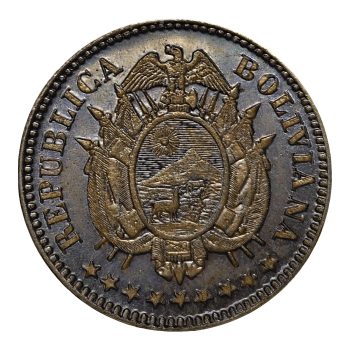
In 1833, Bolivia issued a 10 cent coin
In 1833, Bolivia issued a 10 cent coin

Boliviano is the circulating currency of Bolivia. The unit of subsidiary currency is cents, 1 Boliviano=100 cents. Boliviano was also the name of the currency in circulation in Bolivia from 1833 to 1963. The year of issuance is 1883. The material is copper nickel alloy. The front bears a flag and weapon crossed behind a bald eagle, with an oval shaped arm at the top and stars at the bottom. The reverse side features a treasure trove and fascia on both sides of a star shape. The text on the front: REPUBLICA BOLIVIANA. The text on the back is: LA UNION ES LA FURZA.
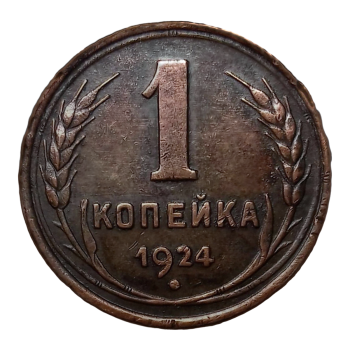
1 kobi of Soviet currency during the 1924 period

1 kobi of Soviet currency during the 1924 period

Ruble, also known as Russian ruble, symbol: ₽. Currency code: RUB. Usage areas: Russia and self declared independent Abkhazia and South Ossetia. Inflation rate: 7%. The Russian ruble is the base currency unit of Russia. The subsidiary currency is Gobi. 1 ruble equals 100 kobi. The denominations of banknotes are 5, 10, 50, 100, 200, 500, 1000, 2000, 5000 rubles, and there are also 50, 10, 5, and 1 kobi coins.
Academy Award Trophy

Academy Award Trophy

The appearance of the Hong Kong Film Awards is that of a naked man, with his hands crossed in front of his chest, holding a long sword, standing on a five ring film disc, each ring representing an important department of the Academy of Film and Arts: production, director, screenwriter, actor, and technician. The original trophy was awarded $500 by Mayer to George Stanley for production. It was thirteen and a half inches tall, weighed six and three-quarters of a pound, and was made of alloy. The exterior was silver with a layer of gold foil, which looked shiny, hence it was called the Golden Statue Award.
Bells, musical instruments, ornaments, antiques, miscellaneous items, pure copper bells, ornaments, pendants, vintage collectibles, musical instruments, bronze bells

Bells, musical instruments, ornaments, antiques, miscellaneous items, pure copper bells, ornaments, pendants, vintage collectibles, musical instruments, bronze bells

Chongning Zhongbao

Chongning Zhongbao

Chongning Chongbao is one of the ancient Chinese coins. Cast during the Chongning period of Emperor Huizong of the Northern Song Dynasty (1102-1106 AD). The face inscription "Chongning Chongbao" is read in the clerical script, with a simple and square style, mostly with a light back, and a few with stars, moons, crosses, etc. on the back. Chongning Chongbao is one of the more important coins in the late Northern Song Dynasty, and also the coin with the most plate types in the Northern Song Dynasty. According to statistics, there are about 300 different versions of Chongning Zhongbao, and every year, different versions of Chongning Zhongbao are discovered by experts or Tibetan friends.
Kaiyuan reign

Kaiyuan reign

Kaiyuan Tongbao is a copper currency minted in the Tang Dynasty, and coins began to have "Tongbao" in the Tang Dynasty. In the early Tang Dynasty, the Sui Five Zhu system was used, which was light and confusing. In the fourth year of Wude reign of Emperor Gaozu of Tang Dynasty (621 AD), in order to rectify the chaotic currency system, Sui coins were abolished and the "Kaiyuan Tongbao" was minted, following the strict regulations of the Western Han Wuzhu, replacing the remaining Wuzhu in society.
During the reign of Emperor Xuantong of the Qing Dynasty, the currency was Qing Xuantong silver coins

During the reign of Emperor Xuantong of the Qing Dynasty, the currency was Qing Xuantong silver coins

Xuantong Yuanbao was a silver coin minted by Zhang Zhidong, the Governor General of Guangdong and Guangxi, who established a mint in Guangdong, In the center of the coin is the Chinese character "Guangxu Yuanbao", surrounded by nine Chinese characters "Guangdong Province Kuping Seven qian and Three fen", later changed to seven qian and two fen; The back features a coiled dragon pattern and is commonly referred to as "Dragon Ocean" in English. This silver coin not only has high collectible value, but also serves as an important material for studying the history of the Qing Dynasty.
Da Bu Huang Qian Bu Coin (Ancient Currency)

Da Bu Huang Qian Bu Coin (Ancient Currency)

After Wang Mang usurped power in the late Western Han Dynasty, coins were minted instead. In addition to using the square hole round coins from the Han Dynasty, he also ordered the casting of a batch of cloth coins. Da Bu Huang Qian is one of them, which is now rare. Xinmang currency has delicate inscriptions, exquisite craftsmanship, and multiple versions. The general Qian script is mainly composed of hanging needle seal script. This large yellow thousand cloth coin has a flat head, flat shoulders, and flat feet, with a slightly tapered waist. Drill a hole at the head for tying with a rope. Both sides of the front and back are cast as non piercing (i.e. there is no midline between the round piercing and the front end). Qian Wen is read on the right, arranged on both sides of the center line, evenly and appropriately, with smooth strokes.
Han Dynasty's "one knife equals five thousand" coin
Han Dynasty's "one knife equals five thousand" coin

This exhibit is a metal artifact from the Han Dynasty, commonly known as the Golden Cuo Knife. Each piece is worth five baht and five thousand pieces. It was minted during Wang Mang's first currency reform. It is currently housed in the Zhengzhou Museum.
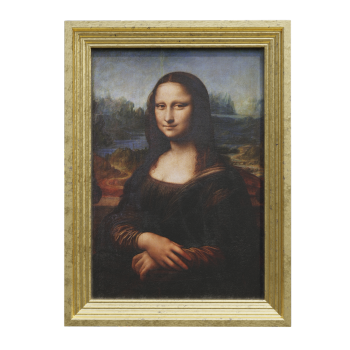
Mona Lisa "Mona Lisa" Mona Lisa portrait gold basket hanging painting

Mona Lisa "Mona Lisa" Mona Lisa portrait gold basket hanging painting

The Mona Lisa is an oil painting created by Italian Renaissance painter Leonardo da Vinci and is currently housed in the Louvre Museum in France. This painting mainly depicts the typical image of elegance and tranquility of women, shaping the image of a woman from the urban bourgeoisie during the rise of capitalism.
Gold Coin Bitcoin Foreign Coin Commemorative Coin

Gold Coin Bitcoin Foreign Coin Commemorative Coin

Greek King Heraeus IV Drachma Silver Coin

Greek King Heraeus IV Drachma Silver Coin

The drachma silver coin of King Heraeus of ancient Greece, a half crown bust of King Heraeus from around 40 BC to AD 0, with the left hand holding a long scepter. Drachma is the most commonly used large denomination coin, typically made of silver. The weight of the coin is about 17 grams and the diameter is about 24 millimeters.
The circulating currency of the ancient Greek Macedonian period was the Macedonian Shield and Silver Coin
The circulating currency of the ancient Greek Macedonian period was the Macedonian Shield and Silver Coin

This silver coin was minted in the city of Amphipolis in Macedonia under Roman control. The diameter of this silver coin is 3.3 centimeters. Artemis is a hunting goddess in Greek mythology, whose image is embedded in a delicate Macedonian shield. On the reverse side is a stick, surrounded by a wreath, with a line of inscriptions indicating that this coin belongs to the first region of the Roman vassal state. This Macedonian shield silver coin is in the collection of the Minneapolis Museum of Art.
The currency of the classical period in ancient Greece, the drachma silver coin

The currency of the classical period in ancient Greece, the drachma silver coin

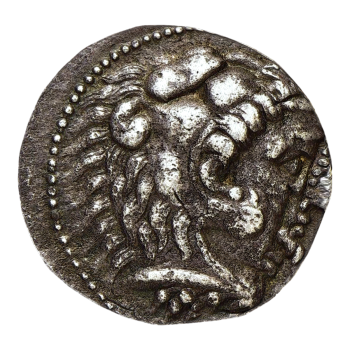
The obverse of this coin features the portrait of a young Hercules wearing a lion skin helmet. Hercules is a hero in Greek mythology known for his strength and courage. On this coin, he is depicted as a young man wearing lion skin, which is his emblem. Coins are made of silver. In ancient times, the ten drachma was the most commonly used large denomination coin, usually made of silver. The weight of the coin is about 17 grams and the diameter is about 24 millimeters.
The Ten Drachma Silver Coin, a currency from the classical period of ancient Greece

The Ten Drachma Silver Coin, a currency from the classical period of ancient Greece

The obverse of this coin features the portrait of a young Hercules wearing a lion skin helmet. Hercules is a hero in Greek mythology known for his strength and courage. On this coin, he is depicted as a young man wearing lion skin, which is his emblem. Coins are made of silver. In ancient times, the ten drachma was the most commonly used large denomination coin, usually made of silver. The weight of the coin is about 17 grams and the diameter is about 24 millimeters.