
17th Century Polish Commemorative Medal "Sobieski Commemorative Medal"

17th Century Polish Commemorative Medal "Sobieski Commemorative Medal"

This commemorative medal is in honor of King John III Sobieski of Poland. The front of the commemorative medal features a side portrait of Sobieski, with the words' IOAN: III D. G. REX POLONIARUM 'written on it, meaning' John III, God's Grace, King of Poland '. On the back of the commemorative medal are two eagles, with the left eagle wearing a Rudolf crown and the right eagle wearing a Polish crown. This commemorative medal can be visited at the Uppsala University Commemorative Coin Museum in Sweden.
Bronze Commemorative Medal of the Habsburg Dynasty: Commemorative Medal for 600 Years of Habsburg Family Rule

Bronze Commemorative Medal of the Habsburg Dynasty: Commemorative Medal for 600 Years of Habsburg Family Rule

This commemorative medal is to celebrate the 600 year reign of the Habsburg family. The front of the commemorative medal features Rudolf I sitting, holding a scepter and the flag of the Austrian Duchy with five eagles. After the Habsburg family entered Austria in the late 13th century, their power gradually increased and they established a wide empire based in Austria. Rudolf I was the lord of southern Alsace and northern Switzerland. With the help of secular and ecclesiastical princes, Rudolf I successfully launched several campaigns against his main competitor, the most powerful German vassal, King Ottokar II of Bohemia, and ultimately achieved his goal in one battle.
Austrian Entrepreneur Commemorative Medal "Faber's New Year Commemorative Medal"

Austrian Entrepreneur Commemorative Medal "Faber's New Year Commemorative Medal"

This commemorative medal was made to celebrate the New Year of 1907 by the brewery owner Moritz Faber, his son Carl, and grandson Theodore. The front bust of the commemorative medal features Moritz, Carl, and Theodore, as well as the coat of arms of the Fir Branch and the Brewers Guild. Moritz Faber was born on March 14, 1837, Karl Faber was born on August 30, 1866, and Theodore Faber was born on February 1, 1897. The commemorative medal is made of copper, measuring 9.9 x 6 cm, and was made in 1906. The commemorative medal is now located at the State Museum in Lower Austria, Austria.
Albanian Lek Currency - Lek Commemorative Coin for the 25th Anniversary of World War II Liberation

Albanian Lek Currency - Lek Commemorative Coin for the 25th Anniversary of World War II Liberation

The original currency used in Albania was the franc. In July 1947, currency reform was implemented, replacing the franc with the current circulating new currency, the lek, with 1 lek=100 kunta. The lek replaced the old currency franc, with an exchange rate of 9 leks to 1 franc, and an exchange rate of 50 leks to 1 dollar against the US dollar. One lek commemorative coin, commemorating the 25th anniversary of the liberation from World War II.
Albanian Lek Currency Fifty Kunta Commemorative Coin for the 25th Anniversary of World War II Liberation
Albanian Lek Currency Fifty Kunta Commemorative Coin for the 25th Anniversary of World War II Liberation

The original currency used in Albania was the franc. In July 1947, currency reform was implemented, replacing the franc with the current circulating new currency, the lek, with 1 lek=100 kunta. The lek replaced the old currency franc, with an exchange rate of 9 leks to 1 franc, and an exchange rate of 50 leks to 1 dollar against the US dollar. 50 Kunta commemorative coin, commemorating the 25th anniversary of the liberation from World War II.
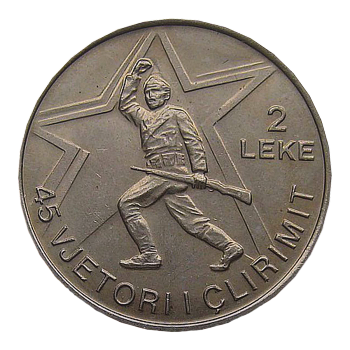
Albanian Lek Currency Two Lek Commemorative Coin for the 45th Anniversary of World War II Liberation

Albanian Lek Currency Two Lek Commemorative Coin for the 45th Anniversary of World War II Liberation

The original currency used in Albania was the franc. In July 1947, currency reform was implemented, replacing the franc with the current circulating new currency, the lek, with 1 lek=100 kunta. The lek replaced the old currency franc, with an exchange rate of 9 leks to 1 franc, and an exchange rate of 50 leks to 1 dollar against the US dollar. Erlek commemorative coin, commemorating the 45th anniversary of the liberation from World War II.
Albanian Lek Currency Five Kunta Coin

Albanian Lek Currency Five Kunta Coin

The original currency used in Albania was the franc. In July 1947, currency reform was implemented, replacing the franc with the current circulating new currency, the lek, with 1 lek=100 kunta. The Lek replaced the old currency franc, with an exchange rate of 9 Lek to 1 franc, and an exchange rate of 50 Lek to 1 dollar against the US dollar
Albanian Lek Currency Ten Kunta Coin

Albanian Lek Currency Ten Kunta Coin

The original currency used in Albania was the franc. In July 1947, currency reform was implemented, replacing the franc with the current circulating new currency, the lek, with 1 lek=100 kunta. The Lek replaced the old currency franc, with an exchange rate of 9 Lek to 1 franc, and an exchange rate of 50 Lek to 1 dollar against the US dollar
Albanian Lek Currency Twenty Kunta Coin

Albanian Lek Currency Twenty Kunta Coin

The original currency used in Albania was the franc. In July 1947, currency reform was implemented, replacing the franc with the current circulating new currency, the lek, with 1 lek=100 kunta. The Lek replaced the old currency franc, with an exchange rate of 9 Lek to 1 franc, and an exchange rate of 50 Lek to 1 dollar against the US dollar
Albanian Lek Currency Fifty Kunta Coin

Albanian Lek Currency Fifty Kunta Coin

The original currency used in Albania was the franc. In July 1947, currency reform was implemented, replacing the franc with the current circulating new currency, the lek, with 1 lek=100 kunta. The Lek replaced the old currency franc, with an exchange rate of 9 Lek to 1 franc, and an exchange rate of 50 Lek to 1 dollar against the US dollar
Albanian Lek currency 100 Lek coin

Albanian Lek currency 100 Lek coin

The original currency used in Albania was the franc. In July 1947, currency reform was implemented, replacing the old currency with the new currency, the franc, which was now in circulation. The exchange rate was 9 leks to 1 franc, and the exchange rate against the US dollar was 50 leks to 1 dollar.
Albanian Lek Currency Fifty Lek Coin

Albanian Lek Currency Fifty Lek Coin

Albanian Lek Currency Twenty Lek Coin
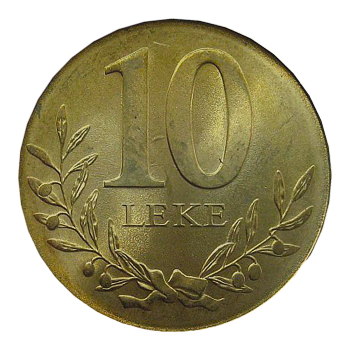
Albanian Lek Currency Twenty Lek Coin

The original currency used in Albania was the franc. In July 1947, currency reform was implemented, replacing the old currency with the new currency, the franc, which was now in circulation. The exchange rate was 9 leks to 1 franc, and the exchange rate against the US dollar was 50 leks to 1 dollar.
Albanian Lek Currency Ten Lek Coin

Albanian Lek Currency Ten Lek Coin

The original currency used in Albania was the franc. In July 1947, currency reform was implemented, replacing the old currency with the new currency, the franc, which was now in circulation. The exchange rate was 9 leks to 1 franc, and the exchange rate against the US dollar was 50 leks to 1 dollar.
Albanian Lek Currency Five Lek Coin

Albanian Lek Currency Five Lek Coin

The original currency used in Albania was the franc. In July 1947, currency reform was implemented, replacing the old currency with the new currency, the franc, which was now in circulation. The exchange rate was 9 leks to 1 franc, and the exchange rate against the US dollar was 50 leks to 1 dollar.
Albanian Lek currency - one Lek coin

Albanian Lek currency - one Lek coin

The original currency used in Albania was the franc. In July 1947, currency reform was implemented, replacing the old currency with the new currency, the franc, which was now in circulation. The exchange rate was 9 leks to 1 franc, and the exchange rate against the US dollar was 50 leks to 1 dollar.
Albanian Lek Currency Two Lek Coins

Albanian Lek Currency Two Lek Coins

The original currency used in Albania was the franc. In July 1947, currency reform was implemented, replacing the old currency with the new currency, the franc, which was now in circulation. The exchange rate was 9 leks to 1 franc, and the exchange rate against the US dollar was 50 leks to 1 dollar.
Albanian Lek Currency Half Lek Coin

Albanian Lek Currency Half Lek Coin

The original currency used in Albania was the franc. In July 1947, currency reform was implemented, replacing the old currency with the new currency, the franc, which was now in circulation. The exchange rate was 9 leks to 1 franc, and the exchange rate against the US dollar was 50 leks to 1 dollar.
The commemorative medal of the Holy Roman Empire period, the "George Gynge Medal"

The commemorative medal of the Holy Roman Empire period, the "George Gynge Medal"

The obverse of the medal features a middle-aged bearded bust of George Gynge. In 1538, he was appointed as the newly established Deputy Prime Minister of the Holy Roman Empire. Jean Baptiste was a supporter of church reform in the Catholic sense and repeatedly provided advice to King Ferdinand I on religious affairs. Since 1563, he has served as the Chief Marshal of the Court.
The commemorative medal of the Prussian Austrian struggle period, the Ernst Gideon von Laudong Memorial Medal

The commemorative medal of the Prussian Austrian struggle period, the Ernst Gideon von Laudong Memorial Medal

Ernst Gideon von Laudon was a Marshal of Austria, and this commemorative medal was issued after his death. On the back is the Honorary Cemetery of Lauden located in Hardsdorf, next to a knight in armor leaning against his sword, with a helmet, shield, and a broken spear on the ground. Ernst Gideon von Laudong, as a military commander in Austria, was the most successful commander of the Habsburg family during the Seven Years' War and the Austro Turkish War. He defeated King Frederick II of Prussia in the battles of Kunesdorf in 1759 and Landhut in 1760.
The commemorative medal of the Austrian Empire, "Franz Joseph I Commemorative Medal at the Age of 80"

The commemorative medal of the Austrian Empire, "Franz Joseph I Commemorative Medal at the Age of 80"

The Emperor Franz Joseph I 80th Birthday Commemorative Medal was issued by Emperor Franz Joseph I of Austria in 1910. The obverse of this medal depicts a side portrait of the emperor, while the reverse displays the architecture of the Franz Joseph I Emperor Museum located in Baden near Vienna. Franz Joseph I was the Emperor of Austria, who ascended to the throne on December 2, 1848 and remained there until his death in 1916. During his reign, his territories and territories were known as the Austrian Empire, but were reorganized as the Austro Hungarian Empire in 1867. The British Museum, currently located in London.
The oval bronze plaque of the Governor General of the Netherlands in 1557

The oval bronze plaque of the Governor General of the Netherlands in 1557

This plaque is in honor of Fernando Á lvarez de Toledo (1507-1582), Duke of Alvar III, who was a Spanish nobleman, general, and politician. In the Netherlands, he was known for suppressing uprisings against Spanish rule, especially during the Eighty Years' War. He served as the Governor General of Spain and the Netherlands from 1567 to 1573. In Spain, he is regarded by some as a great and successful military leader. However, outside of Spain, he is usually considered the 'executioner of the Netherlands'.
Seal of Austrian diplomat Heinrich von Gudenhof
Seal of Austrian diplomat Heinrich von Gudenhof

This is a seal with a wooden handle and a circular brass sealing plate. The seal board is engraved with the coat of arms of the Count's family, carried by two griffins. Above the coat of arms is the Count's crown, below is a knight's helmet, and at the top is a left facing wolf head. The diameter of the seal is 38.5 centimeters and the height is 11.8 centimeters. Heinrich von Kudenhof (1859-1906) was an Austrian diplomat who was proficient in 18 languages and held diplomatic positions in Athens, Rio de Janeiro, Constantinople, and Buenos Aires.
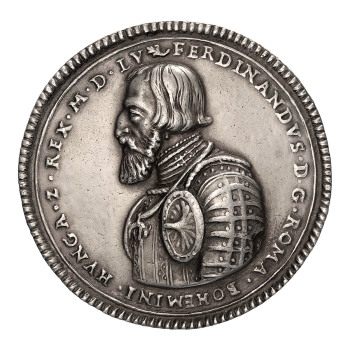
The Silver Medal of Ferdinand I of Rome
The Silver Medal of Ferdinand I of Rome

The Silver Medal of Ferdinand I in 1555. On the front is an armored bust, and on the left is a folded Golden Fleece Medal. On the back is a single headed eagle, adorned with the coat of arms of Bohemia/Hungary, and on the chest is the central coat of arms of Austria/Castile.
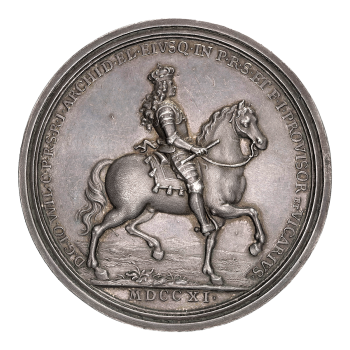
John William Medal

John William Medal

John William Medal (1658-1716). This medal from 1711 was awarded by P H. M ü ller's design was created for the Imperial Archdiocese after the death of Emperor Joseph I. On the front is the Elector wearing armor, wearing an Elector hat, holding a Marshal's baton, and riding a horse to the right. On the other hand, Hercules and Atrant shoulder the earth together. This medal is silver, with a diameter of 66 millimeters and a weight of 152.26 grams
Athenian Tradrachm silver coin, made between 450-430 BC
Athenian Tradrachm silver coin, made between 450-430 BC

The obverse of this silver coin bears the portrait of Athena, while the reverse features a small owl. This silver coin was minted in Athens and weighs 17.13 grams. The Athenian Tradrachm silver coin is a classic work in the collection of ancient coins. These silver coins were produced on a large scale in the mid to late 5th century BC, combining the image of the helmet wearing goddess Athena with her owl standing figure
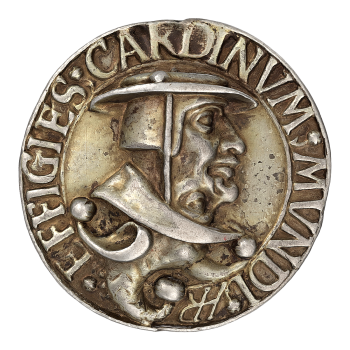
Mocking Medal, made in 1544

Mocking Medal, made in 1544

The Mock Medal was created by Hans Reinhardt at the Council of Trent in 1544. The obverse of this medal is engraved with the portraits of a cardinal and a clown, surrounded by the Latin inscription 'EFFIGIES CARDINVM MUNDI HR'. The reverse side is engraved with five elements of text and the year. This medal is silver and plated with gold, with a diameter of 28 millimeters and a weight of 5.58 grams.
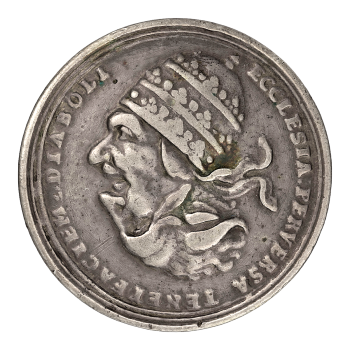
The Mocking Medal of the Catholic Church

The Mocking Medal of the Catholic Church

The mocking medal of the Catholic Church. In the mid-16th century, the Reformation (Church Restoration Movement) created medals to mock the prominent figures of the Catholic Church. These medals have two patterns on the front and back. If you rotate the medal 180 degrees, the Pope will become a devil and the Cardinal will become a fool with donkey ears. The medal is made of silver and has a diameter of about 3. 7 centimeters.
The currency of ancient Greek classical period, Alexander the Great silver tetradrachma

The currency of ancient Greek classical period, Alexander the Great silver tetradrachma

Alexander the Great's silver tetradrachm coin was made between 325 BC and 320 BC. Coins were minted in Side (now Türkiye). The obverse of this coin features the portrait of a young Hercules wearing a lion skin helmet. Hercules is a hero in Greek mythology known for his strength and courage. On this coin, he is depicted as a young man wearing lion skin, which is his emblem. Coins are made of silver. In ancient times, the tetradrachma was the most commonly used large denomination coin, usually made of silver. The weight of the coin is about 17 grams and the diameter is about 24 millimeters.
Gold round brooch, first half of the 7th century AD

Gold round brooch, first half of the 7th century AD

This gold brooch, decorated with Nile, has a diameter of 8.4 centimeters and a height of 2.7 centimeters, dating back to the first half of the 7th century AD. Excavated in K ö lked Feketekapu, Hungary, this place was inhabited from the mid-6th century AD to the Avar period. This cultural relic is now housed in the Hungarian National Museum.
Belt buckle, first half of the 7th century AD
Belt buckle, first half of the 7th century AD

This belt buckle can be traced back to the first half of the 7th century AD, measuring 8.4 centimeters in length, 6.8 centimeters in width, and 1.5 centimeters in height. Excavated in K ö lked Feketekapu, Hungary, this place was inhabited from the mid-6th century AD to the Avar period. This cultural relic is now housed in the Hungarian National Museum.
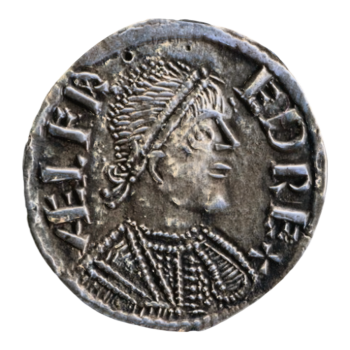
Alfred the Great's Silver Coins

Alfred the Great's Silver Coins

Alfred the Great (849-899 October 26, 1999) was the king of the Kingdom of Wessex during the Anglo Saxon period of England, and the first person in British history to call himself the "King of the Anglo Saxons" and truly live up to his name. In 886 AD, Alfred recaptured London from Danilao and began issuing silver pence featuring his portrait. This is considered the beginning of the continuous development history of the Royal Mint. To celebrate the 1150th anniversary of one of the most influential monarchs in British history becoming king, the Royal Mint announced today the launch of a commemorative coin collection in honor of Alfred the Great.
Italian aluminum-magnesium alloy 1 lira
Italian aluminum-magnesium alloy 1 lira

The lira (L.1) is a minted coin that represents the basic unit of the Italian lira. The 1-lire coin and the 50-cent, 2-lire and 5-lire coins have been minted since 1861 and were originally made of 900 ‰ silver. After the First World War, 1 lira coins were minted in nickel from 1921 to 1938; from 1939 it was minted in Italian coin steel with a diameter of 26.7mm. After the fall of the monarchy, one lire coins were cast in 17.2mm and 0.625g (1951-1959) of Italian aluminum-magnesium alloy.
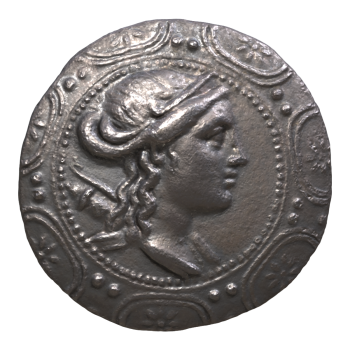
Ancient Greek Macedonian Period Currency Macedonian Shield Silver Coin (Four Drachmas)

Ancient Greek Macedonian Period Currency Macedonian Shield Silver Coin (Four Drachmas)

It is a silver Macedonian shield with the head of Artemis (obverse) and a stick (reverse), minted around 158-150 BC. This silver coin was minted in the city of Amphipolis in Macedonia under Roman control. The silver coin has a diameter of 3.3cm. Artemis is a hunting goddess in Greek mythology, and her image is embedded in a delicate Macedonian shield. On the reverse side is a stick, surrounded by a wreath and surrounded by a line of inscriptions attributing this coin to the first area of the Roman vassal state. This Macedonian shield silver coin is in the collection of the Minneapolis Museum of Art.
50 euro cent coin

50 euro cent coin

The 50 euro cent coin, which is a denomination in the euro monetary system. The 50-cent coin is usually made of brass alloy and has a diameter of 24.25mm. A map of Europe is printed on the front, and denomination numbers and euro symbols are printed on the back.