The mechanism of action of corticosteroids (micro animated 3D model)

The mechanism of action of corticosteroids (micro animated 3D model)

Chlamydomonas reinhardtii (microscopic 3D profile)

Chlamydomonas reinhardtii (microscopic 3D profile)

Chlamydomonas, also known as "unicellular algae". Chlorophyta, Chlamydomonas family. The algal body is a single cell, spherical or oval in shape, with two equally long flagella at the front end, and can swim. There are two flexible vesicles at the base of the flagella; There is also a red eye spot near the front end of the cell. Large cup-shaped color carrier with one starch core. Asexual reproduction produces 2, 4, 8, or 16 motile spores; Sexual reproduction includes homogamy, heterogamy, and ovogenesis. Under unfavorable living conditions, cells stop swimming and undergo multiple divisions, forming a temporary population called an "indeterminate population" with a thick glial sheath on the periphery.
Synthesis formula of hydrogen peroxide (chemical reaction 3D schematic diagram)

Synthesis formula of hydrogen peroxide (chemical reaction 3D schematic diagram)

Human vascular structure (medical 3D structural diagram)

Human vascular structure (medical 3D structural diagram)

Archaea Profile (Microscopic 3D Model)

Archaea Profile (Microscopic 3D Model)

As a group, archaea are diverse in physiology and morphology. They can be aerobic, facultative anaerobic, or strictly anaerobic. Nutritionally, they range from chemoautotrophic inorganic organisms to organic trophic organisms. Some are mesophilic organisms; Others are hyperthermophiles that can grow above 100 ℃. Archaea are also diverse in morphology, and some archaea can proliferate through mechanisms such as binary division, budding, or others. Some of them are single cells, but they can also form mycelia or aggregates.
Inner wall villi and capillary structure (medical 3D structural diagram)

Inner wall villi and capillary structure (medical 3D structural diagram)

Structure of seeds (3D sectional structure diagram)

Structure of seeds (3D sectional structure diagram)

The structure of flowers (3D sectional structure diagram)

The structure of flowers (3D sectional structure diagram)

Stella's large manatee skeleton

Stella's large manatee skeleton

The Stella manatee is a member of the pangolin family in the order Manatees. Its body is huge, with a length of 600-1000 centimeters and a weight of 5000-6400 kilograms; The head is small, the front end is flat, the kiss is extended forward, the mouth is opened downwards, densely covered with mustaches, and there are no teeth; The eyes and ears are very small, without ear shells; The body is brownish gray, the skin is thick, hard, and solid, with many wrinkles; The sparse fur on the back often attracts shellfish parasites, which often attract seabirds to help clean these shellfish; The forelimbs are very short, resembling eels, with horseshoe shaped toe hooves remaining at the ends. It is distributed along the North Pacific coast.
Human stomach (medical 3D sectional view)

Human stomach (medical 3D sectional view)

Ketone-1,5-diphosphate carboxylase oxygenase (chemical reaction 3D schematic diagram)

Ketone-1,5-diphosphate carboxylase oxygenase (chemical reaction 3D schematic diagram)

Rubisco is one of the most abundant enzymes in nature, playing an important role in carbon fixation and photorespiration processes. Specifically, Rubisco participates in the dark reaction process after the light reaction in the photosynthetic reaction, catalyzing the carboxylation of ribulose-1,5-diphosphate (RuBP) and then cleavage to form two glycerol-3-phosphate (PGA) molecules. This reaction is a crucial step in the Calvin cycle.
Neural plexuses in the intestine (microscopic 3D schematic)

Neural plexuses in the intestine (microscopic 3D schematic)

Hacker Bird (Restoring 3D Model)

Hacker Bird (Restoring 3D Model)

Phorusrhacidae is a large carnivorous bird species. The closest relative to them today is the crane family. The terror bird, also known as the terror bird, is a bird like carnivorous animal that lived alone during the same period as the saber toothed tiger. It is about 1-3 meters tall. Terror birds have hard leg bones and strong muscles, which can completely crush the bones of medium-sized prey and slowly feed on the nutrient rich bone marrow in the prey's bones. According to scientists' estimates, terror birds can reach speeds of up to 97 kilometers per hour, and the extinction of terror birds is believed to be related to wolf packs and disasters.
Lung Movement Animation (Medical 3D Perspective Model)

Lung Movement Animation (Medical 3D Perspective Model)

Human shoulder ligaments (medical 3D structural diagram)
Human shoulder ligaments (medical 3D structural diagram)

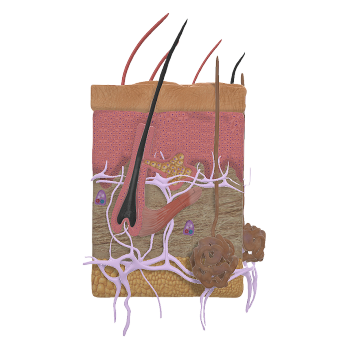
Human Skin Epidermal System (Microscopic 3D Model)

Human Skin Epidermal System (Microscopic 3D Model)

Cross section of eukaryotic cells (microscopic 3D model)

Cross section of eukaryotic cells (microscopic 3D model)

Internal structure of the Earth

Internal structure of the Earth

Psittacosaurus mongoliensis
Psittacosaurus mongoliensis

Mongolian parrot billed dragon is a kind of parrot billed dragon with regional characteristics found in the the Inner Mongolian Plateau, which belongs to the suborder ceratops, parrot billed dragon family, and parrot billed dragon genus. It has a small number of teeth on its skull, short forelimbs, long and strong hind limbs, walks on two legs, and feeds on plants.
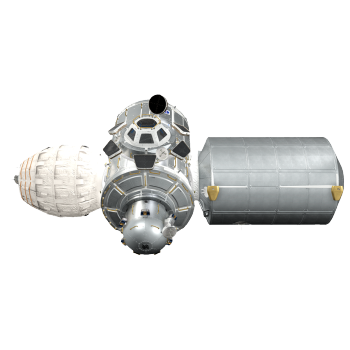
International Space Station Serenity Node Three

International Space Station Serenity Node Three

Node 3 Tranquility is a module of the International Space Station (ISS). It was launched by the Space Shuttle Endeavour on February 8, 2010 and docked with the International Space Station on February 12, 2010.
㺢㹢狓 specimen

㺢㹢狓 specimen

㺢㹢狓 (hu ò ji ā p ī) (Latin name: Okapia johnstoni, English name: Okapi), also known as the African unicorn, is a chordate animal of the genus Hoga in the family of deer. It is listed as an endangered species on the IUCN Red List and is one of the few mammals that can lick its own ears.
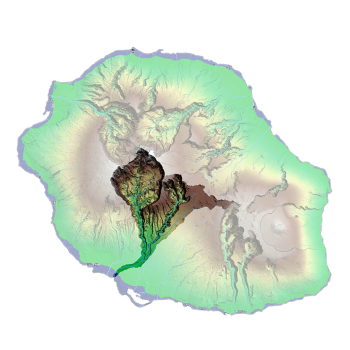
Hydrological map of Reunion Island

Hydrological map of Reunion Island

Migvie Kirk Monument in Aberdeenshire

Migvie Kirk Monument in Aberdeenshire

Migvie Kirk is located on a small road northwest of Tarland in Aberdeenshire. This irregularly shaped stone is made of gneiss and is 2.1 meters high. The front of the stone faces east, away from the gate you just walked through. The front is mostly occupied by carved crosses and decorative patterns. The outline of the cross is unusual, with four arms intersecting at the center. The upper corner is carved into the shape of a metal ring, as if this cross is a pendant depiction. Appropriate lighting and a little imagination are needed to see clearly, but there are other carvings on the area left by the angle of the cross.
Lunar probe 25

Lunar probe 25

In October 1998, Russian Academy of Sciences academician Galimov proposed the concept of conducting another lunar exploration mission after Luna 24 at the Moscow International Lunar Exploration Conference, which is regarded as the beginning of modern Russia's return to the moon program. However, based on budget constraints, the authorities have listed the Phobos Earth probe and the Spectral Astrophysics Observatory as higher priority tasks, and lunar exploration has been temporarily put on hold. In early 2018, the Space Research Institute of the Russian Academy of Sciences announced that the probe was scheduled to be launched in 2019 and a possible landing site had been selected.
Left knee ligament (medical 3D structural diagram)

Left knee ligament (medical 3D structural diagram)

Fossil of jawbone under horse

Fossil of jawbone under horse

Dodo Bird (3D Restoration Model)

Dodo Bird (3D Restoration Model)

The dodo bird (Raphus cuculatus) is an extinct bird species in the pigeon family of the pigeon order. The body shape is comparable to that of a swan, and there are also obvious sexual dimorphism. Body length 70-90 centimeters, weight 17-28 kilograms. It is a large bird with a plump body, covered with soft gray feathers, which are brown or gray in color. The female bird has lighter fur than the male bird. There is a white feather on the tail. Their wings are too small and weak to lift the Dodo off the ground. Because they cannot fly, the female bird lays one egg at a time, which is co hatched by the female and male birds. Eating fruits and seeds.
Crustal Plate Collision (3D Animation Demonstration)

Crustal Plate Collision (3D Animation Demonstration)

Allosaurus skeleton

Allosaurus skeleton

Allosaurus is one of the most famous large carnivorous dinosaurs, occupying the top of the food chain in late Jurassic terrestrial ecosystems. Its model species, the fragile Allosaurus, was created by the great American paleontologist Osnil in the 20th century Marsh described the naming in 1877. They are also the most abundant and widely distributed predators discovered in the Late Jurassic period. Adult Allosaurus can grow up to 9 meters in length, with a few individuals believed to reach up to 12 meters. Although not as robust as the Tyrannosaurus rex, the body proportions of the Allosaurus are more symmetrical, with more developed forelimbs, making it appear more agile.
Earth 3D Animation Model

Earth 3D Animation Model

It is the third planet in the solar system, a vibrant and beautiful planet with a unique blue appearance and abundant natural resources. With a diameter of approximately 12742 kilometers, it has the only known environment in the solar system with widespread liquid water. Most of these water resources are concentrated in the oceans on Earth, forming the well-known 'Blue Planet'. The atmosphere is mainly composed of nitrogen and oxygen, suitable for biological respiration. It is the home of humanity. Human civilization has developed a rich and diverse culture, technology, and social structure on Earth. Earth is the only known planet in the universe capable of nurturing and sustaining life.
Logarithmic functions (3D animation demonstration)

Logarithmic functions (3D animation demonstration)

Lateral pharyngeal space (medical 3D sectional view)

Lateral pharyngeal space (medical 3D sectional view)

Medical model of laryngeal muscles and ligaments
Medical model of laryngeal muscles and ligaments

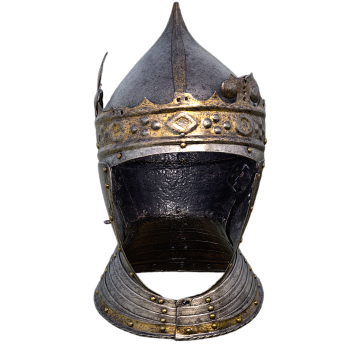
King Gustav Vasa's gilded crown helmet

King Gustav Vasa's gilded crown helmet

The gilded crown adopts a medieval style, symbolizing Gustav Vasa as both a part of the old alliance and a part of the newly established hereditary monarchy. The helmet was used at Gustav Vasa's funeral in 1560, when witnesses mentioned a helmet decorated with a gilded crown. The helmet was purchased for the king by Klaus Heigel, the king's agent, in Augsburg.
The European continent during the Ice Age

The European continent during the Ice Age