Hippopotamus Skull (with 3D animation)

Hippopotamus Skull (with 3D animation)

Snail (3D schematic diagram of internal structure)

Snail (3D schematic diagram of internal structure)

Prehistoric Stone Tombs Site in Kilmatin Canyon

Prehistoric Stone Tombs Site in Kilmatin Canyon

The prehistoric stone tomb site in Kilmatin Gorge, Scotland, has a history of approximately 4000 years and is a large circular tomb.
Terror bird skeleton

Terror bird skeleton

The terror bird is a bird of the ostrich order, terror bird family. The abdominal feathers are yellow, and the other parts are yellow and black in color. Enlarged body, degeneration of upper limbs, and short and thick lower limbs; The neck is covered with feathers and is relatively short; There are three toes. In 1843, it was named the terror bird by Owen, meaning a large bird that can scare people. The terror bird inhabits the primitive lowlands and coastal forest grasslands of the southern islands of New Zealand. Living as a couple, each pair has their own territory. Cannot fly and run slower than ostriches. They feed on berries, grass seeds, and roots, as well as some insects. Only one egg is laid per reproduction, no nest is built, and the egg is laid in a concave area on the ground. The egg is about 250 millimeters long and 180 millimeters wide.
Roman currency Denar

Roman currency Denar

Denarius is an ancient Roman silver coin that was first introduced around 211 BC. Widely used during the Roman Republic and Roman Empire, it became the main currency unit at that time. Octavianus, later known as Augustus, was the first emperor of the Roman Empire and ruled from 27 BC to 14 AD. On the Denard coins issued between 44 BC and 27 BC, his portrait and various symbols of Roman power and victory were usually engraved.
Chromosome Structure (Microscopic 3D Schematic)

Chromosome Structure (Microscopic 3D Schematic)

Internal structure of bacteria (microscopic 3D schematic diagram)

Internal structure of bacteria (microscopic 3D schematic diagram)

Roman currency Antoninian

Roman currency Antoninian

Antoninianus is a silver coin from the Roman Empire period, introduced by Emperor Caracalla in 215 AD. Although its face value is two Denarius, its weight is much lower than that of two Denarius. Antoninian initially contained about 49.5% silver, but over time its silver content continued to decrease, reaching only 2.5% silver by 274 AD.
Ancient Kikushi (3D Restoration Animation)

Ancient Kikushi (3D Restoration Animation)

Kikushi, a collective term for cephalopods and ammonites in the phylum Mollusca, is a group of extinct marine organisms. Kikushi lived from the early Devonian to the late Cretaceous period, and its shell is often preserved in the form of fossils in the strata. The outer shell of ammonite is a single petal, consisting of three parts: the fetal shell, the gas shell, and the living room. It usually spirals around the fetal shell along a plane, with each revolution forming a spiral ring. Adult ammonite shells generally have 5 to 9 spiral rings, symmetrical on both sides, and can be straight, curved, or even irregular.
Apollo 11 Command Module

Apollo 11 Command Module

Apollo 11 was the fifth manned mission in NASA's Project Apollo program and the first human lunar landing mission. On July 20, 1969, Armstrong and Aldrin became the first humans to step on the moon.
Adult cardiopulmonary resuscitation - artificial respiration (medical emergency 3D demonstration animation)

Adult cardiopulmonary resuscitation - artificial respiration (medical emergency 3D demonstration animation)

Adult cardiopulmonary resuscitation - chest compressions (medical emergency 3D demonstration animation)
Adult cardiopulmonary resuscitation - chest compressions (medical emergency 3D demonstration animation)

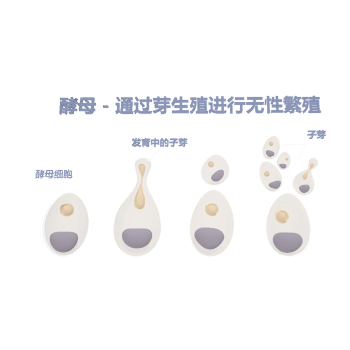
Yeast Asexual Reproduction (Microscopic 3D Schematic)

Yeast Asexual Reproduction (Microscopic 3D Schematic)

Human Medical Spinal Model

Human Medical Spinal Model

Swedish King Eric XIV's Parade Armor

Swedish King Eric XIV's Parade Armor

This armor may have been manufactured in Alboga, Sweden around 1562 and sent to Antwerp, Belgium for decoration by goldsmith Elisaeus Libaerts. This armor was worn by King Eric XIV on October 2, 1564, when he returned to Stockholm with his military entourage after launching a military operation in Blekinge, southern Sweden.
Rabbit skeleton

Rabbit skeleton

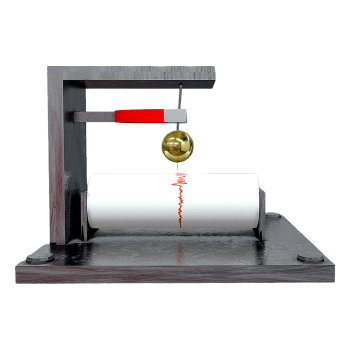
Simple seismic recorder (3D demonstration animation)
Simple seismic recorder (3D demonstration animation)

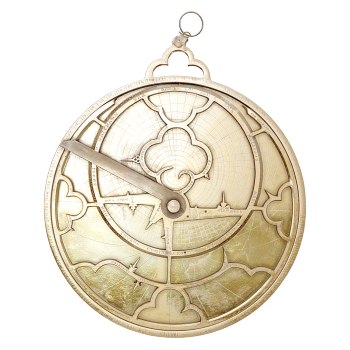
Medieval flat star chart

Medieval flat star chart

The star chart is an ancient astronomical instrument, which can be said to be a handheld model of the universe. Its various functions also make it a sophisticated inclinometer and an analog computing device capable of solving several problems in astronomy. In its simplest form, it is a metal disk with patterns of wires, cuts, and perforations, allowing users to accurately calculate the position of celestial bodies. Astronomers throughout history have used it to measure the height of celestial bodies on the horizon, both during the day and at night; It can be used to identify stars or planets, determine the local latitude at a given local time, measure or conduct triangulation.
Abel Pinsdorf's Footprints

Abel Pinsdorf's Footprints

This is the name of a fossil footprint, a footprint fossil left by ancient animals.
The seal of the Diocese of John and Paul
The seal of the Diocese of John and Paul

The seal of the Diocese of John and Paul bears the inscription of Lake Eger and Krems on the banks of the Danube River. The 17th century seal depicts the martyrs John and Paul, both wearing armor and helmets, one holding a sword and the other holding a palm branch.
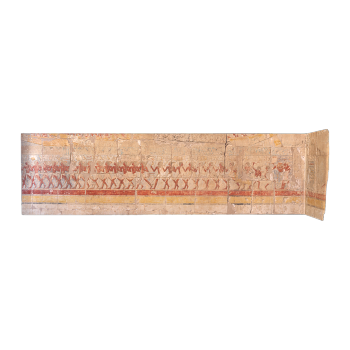
Soldiers' Parade Relief at Deir ez Zor Bari Temple

Soldiers' Parade Relief at Deir ez Zor Bari Temple

Western European bison skeleton
Western European bison skeleton

The Western bison is a member of the family Oxidae in the order Artiodactyla. The body length is 220-300 centimeters, the tail length is 40-60 centimeters, and the weight is 450-1000 kilograms. Both female and male animals have horns, which are slender and elongated. The horns first turn inward, then turn upward, and then bend forward. The tips of the horns then bend inward. Female animals have shorter and thinner horns. Small head, exposed snout, small eyes, and short ears. The neck is relatively short, with obvious hanging hair from the lower cheeks to the chest.
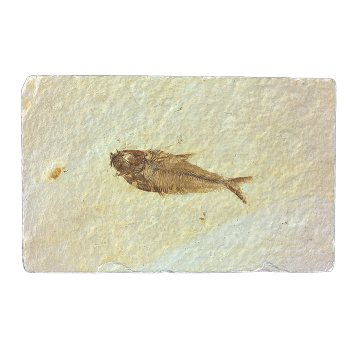
Fossil of ray finned fish

Fossil of ray finned fish

Ray finned fish, a major evolutionary branch of bony fish, is characterized by its fins being fan-shaped membranes supported by spoke shaped bony/keratinous spines, which differ from the paddle shaped fleshy fins supported by multi jointed appendicular bones in meat finned fish or by cartilage columns in cartilaginous fish.
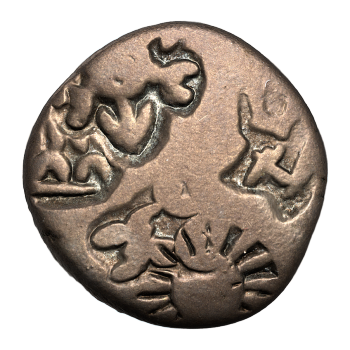
Silver Tapping of Karshapana during the Peacock Dynasty
Silver Tapping of Karshapana during the Peacock Dynasty

Karshapana is a silver currency in ancient India, which first appeared around the 6th century BC. They are usually issued by merchants and bankers, not by the state. These coins usually have one to five or six symbols, initially only stamped on the front of the coin. During the Peacock Dynasty (approximately 322-185 BC), the Kalshapana coin was widely used. The weight of these coins is usually around 3.4 grams. Coins usually have symbols such as the sun on them. These silver struck coins ceased to be minted in the 2nd century BC and continued to have a wide-ranging impact on trade and economy for the next five centuries.
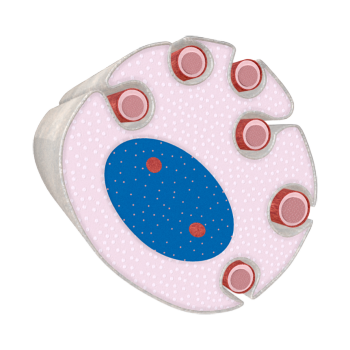
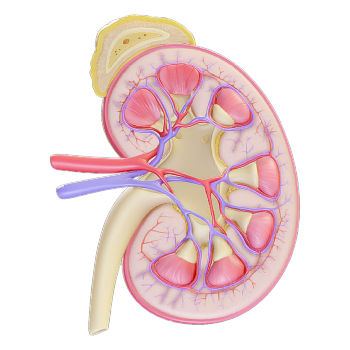
Transverse section of human kidney

Transverse section of human kidney

The Victory of Crassus Greek Coloane
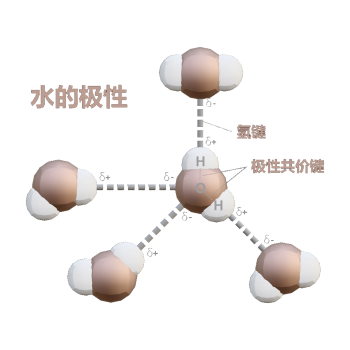
The Victory of Crassus Greek Coloane

The Victory of Krates Greek Stoa is an ancient Greek architectural relic. This colonnade is located in the Holy Land of Delphi, near the Temple of Apollo. It was built between 478 BC and 470 BC to commemorate the Athenians' victory in the Persian Wars.
Polarity of Water (Microscopic 3D Schematic)
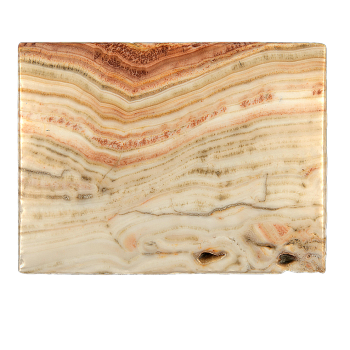
Polarity of Water (Microscopic 3D Schematic)

Water is a polar compound, and due to the strong electronegativity of oxygen atoms, electron pairs tend to lean towards the oxygen side, resulting in the accumulation of negative charges around oxygen atoms and positive charges around hydrogen atoms.
Limestone limestone

Limestone limestone

Limestone, also known as calcareous limestone, is a sedimentary rock formed by the deposition of calcium carbonate. It is usually formed in hot springs, rivers, or lakes and is known for its porous and lightweight properties. The formation process of limestone involves mineral rich water flowing over the surface, and as the water evaporates, calcium carbonate gradually deposits, forming a layered rock structure. It is currently housed in the UAIC Museum of Minerals and Petrography.
Structure of flagella (microscopic 3D schematic)
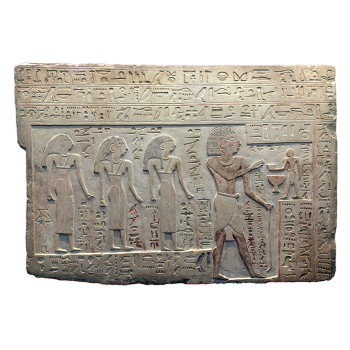
Structure of flagella (microscopic 3D schematic)

The Monument of Intef

The Monument of Intef

The Intef Stele is a stone tablet from the Middle Kingdom period of ancient Egypt, dating back to around 2000-1988 BC. It records the life and achievements of Intef. The top of the stone tablet bears the name of Nebhepetre Mentuhotep II, the founder of the Middle Kingdom. Intef claimed to be his servant and served as the fortress supervisor.
Sun, Shield UY and Stevenson 2-18 (3D model with proportional comparison)
Sun, Shield UY and Stevenson 2-18 (3D model with proportional comparison)

UY Scuti, also known as UY Scuti, is a red supergiant located in the constellation of Scuti. The radius is approximately 1708 ± 192 times that of the Sun. Despite its large volume, its mass is only about 7-10 times that of the Sun,. The brightness of UY in the constellation of Shield is 340000 times that of the Sun, making it one of the most luminous stars. Stevenson 2-18 is a red supergiant located in the direction of the constellation of Shield. It is about 20000 light-years away from Earth and is located in the line of sight of the Stephenson open star cluster. The diameter of this star is about 2158 times that of the Sun, making it one of the largest known stars in terms of volume.
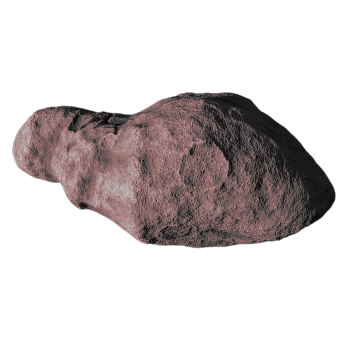
Tutatis asteroid

Tutatis asteroid

Toutatis, asteroid number 4179, is a slender rocky asteroid and slow-moving body classified as a potentially hazardous near Earth asteroid in the Apollo and Alinda groups, with a diameter of approximately 2.5 kilometers. In 1989, French astronomer Christian Pollas discovered this asteroid in Koussors, named after Toutatis in Celtic mythology. Tutotis approached Earth again in 2016, but there is no risk of impact before 2069.
Bismuth ore

Bismuth ore

Bismuth is a chemical element with the chemical symbol Bi, atomic number 83, and atomic weight 208.98040 u. Bismuth is a poor metal with chemical properties similar to arsenic and antimony, both belonging to the nitrogen group. Bismuth can be found in nature, and its sulfides and oxides are important commercial ores. The density of pure bismuth is 86% of that of pure lead. When it is first produced, it is a silver white brittle metal, but its surface turns pink after oxidation. Bismuth is a natural diamagnetic metal and one of the elements with the lowest thermal conductivity among metals.
The Theban stone tablet from the 3rd century BC
The Theban stone tablet from the 3rd century BC

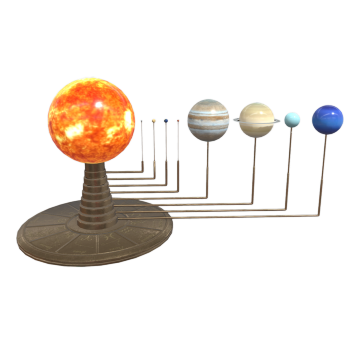
A moving solar system model (3D demonstration animation)

A moving solar system model (3D demonstration animation)