Popular Science Education
Saber toothed tiger skeleton
The saber toothed tiger is a carnivorous mammal belonging to the genus saber toothed tiger in the order Felidae. The saber toothed tiger was once widely distributed on the continents of Asia, Europe, and America. It appeared in the Oligocene 35 million years ago and became extinct in the Pleistocene one million years ago. Their living period was during the Quaternary glacial period, when herbivores were slow-moving and easily hunted. But the ice age has ended, and cold resistant large herbivores cannot adapt to climate change and migrate northward, dying due to insufficient food. The saber toothed tiger lost its food source, did not have an advantage in hunting, and even became a prey for humans. In the end, it could only go extinct with the extinction of large thick skinned animals.
The painted reliefs of the Bakhrihat Shepsut Temple
The pictographic characters carved by colored painting have repeated lintel reliefs with the words neb ankh, djed, and was written on them; All life, stability, and governance. The relief is located in the northwest corner of the column hall of the Hassel Church in the Hadbahrihat Shepsut Temple in Egypt.
Neural cell bundle (microscopic 3D schematic diagram)
A nerve tract is a bundle like structure formed by the aggregation of nerve fibers with similar functions and starting and ending points in the central nervous system, also known as a conduction tract.
Juvenile Tyrannosaurus Rex skull
Tyrannosaurus rex, also known as Tyrannosaurus rex, is a type of theropod dinosaur and the most representative large theropod dinosaur. Tyrannosaurus rex once roamed an island continent called Laramidia (now located on the eastern foothills of the Rocky Mountains in western North America). The distribution range of tyrannosaurs is wider than other members of the tyrannosauridae family. Its fossils were discovered in various strata of the Late Cretaceous Maastrichtian stage (approximately 68 to 66 million years ago). Tyrannosaurus is the last known member of the Tyrannosauridae family before the Cretaceous Paleogene extinction event, and is also one of the latest non avian dinosaurs to go extinct. Tyrannosaurus rex is currently the heaviest known carnivorous dinosaur.
Canglong (3D Restoration Animation)
Canglong is a marine reptile belonging to the family Canglong in the order Scales. Its largest individual can reach about 20 meters, with a long barrel shaped body, a strong tail, and a snake like appearance. It has high fluid dynamics; Teeth are curved, sharp, and conical in shape; The forelimbs of Canglong have five toes, while the hind limbs have four toes. The limbs have evolved into fin like limbs, with the forelimbs being larger than the hind limbs.
Giant lemur skeleton
The weight of the giant lemur is about 50 kilograms, making it one of the largest lemurs in history. It is a slow-moving, bulky creature with a body posture similar to modern koalas. These animals used to inhabit the island of Madagascar. 2300 years ago, humans arrived on the island, causing the species to rapidly decline and eventually become extinct approximately 500 years ago. This skeleton is housed in the Vienna Museum of Natural History.
Horus Statue
This stone amulet of the Holy Falcon of Horus in ancient Egypt from the 21st to the 16th century BC is very common. The eyes are made of semi precious stones, dark blue lapis lazuli, and black obsidian.
Fossil of true palm fin fish
The Eusthenopteron lived in the Devonian period 400 million years ago. It is a freshwater fish that feeds on aquatic animals.
Ankhu Stone Tablet
The Ankhu Stele, housed in the Nelson Atkins Museum of Art, depicts an early artwork of a deceased husband and wife standing at a table filled with food, a necessary ritual for the continuation of the afterlife.
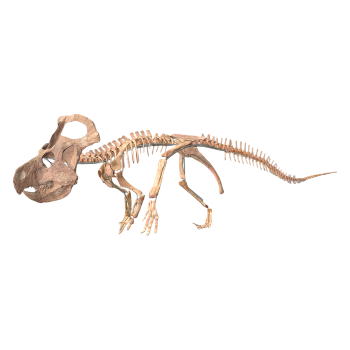
Ancestral ceratopsian skeleton
Anshihara ceratopsian is less than 3 meters long, with no horns on its head, small protrusions on its nose bone, and a neck shield; The mouth and nose resemble those of a parrot billed dinosaur, with teeth on the front of the mouth; Short limbs and obese body.
The spacesuit worn by Franz Vierb ö ck
Franz Vierb ö ck was Austria's first astronaut who traveled to the MIR space station on October 2, 1991 aboard the Soyuz TM-13 rocket. The Sokol spacesuit he is wearing is a soft pressure suit designed and manufactured by NPP Zvezda. The main purpose of this spacesuit is to maintain the life of astronauts in the event of an unexpected depressurization of the spacecraft.
Exocrine gland (sectional schematic diagram)
Exocrine gland is a gland that secretes externally, usually composed of two parts: the gland surrounded by glandular epithelium and the excretory duct that excretes secretions, hence also known as ductal gland. It can be divided into single-cell glands and multicellular glands, and can also be called sweat glands, mucous glands, serous glands, etc. according to the type of secretion.
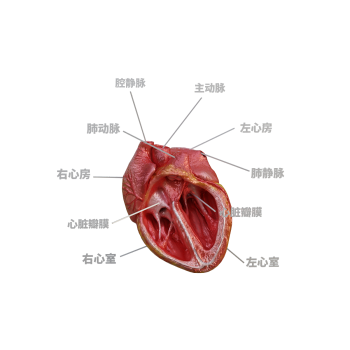
Heart structure diagram 3D animation model glb
The heart is the core organ of the human circulatory system, located slightly to the left in the center of the chest cavity, roughly the size of a person's fist. By regular contractions and relaxations, blood is pumped to various parts of the body, providing oxygen and nutrients to cells while carrying away metabolic waste. The heart is mainly composed of myocardium, which has automatic rhythmicity and can autonomously control the heart rate and intensity. The four chambers of the heart include two atria and two ventricles. The right atrium and right ventricle are responsible for receiving and pumping blood to the lungs for oxygenation, while the left atrium and left ventricle are responsible for delivering oxygenated blood throughout the body.
Random Model
Egyptian Style Sphinx Statue
154 View
Chloride silver ore
303 View
Rafale fighter jet
430 View
wooden table
125 View
Antimony ore
274 View
cardiac conduction system
117 View
Japan Shokaku aircraft carrier
221 View