Popular Science Education
Serval Antelope Skull Specimen
Serval Antelope (scientific name: Tragelaphus scriptus): body length 100-125cm, shoulder height 90cm, weight 45-80kg. Males are slightly larger. Mainly brownish red or yellowish brown. They have distinct vertical markings and the males have long spiral horns. There are 11 subspecies, with different patterns of fur and white streaks and spots on the face, depending on the subspecies with geographically different distribution.
Stamnos Pottery of Ancient Greece
Stamnos is a form of pottery common in ancient Greece and Rome, often used to hold wine or other liquids. This exhibit is now in the Museo Palazzo Corboli (Colbury Palace Museum).
spinel crystal
Spinel (Spinel) is a beautiful and durable gem mineral, which usually occurs together with the marble parent rock (Marble matrix), forming a unique ore combination. The chemical composition of spinel is magnesium aluminum oxide (MgAl₂ Ogo), which has a variety of colors, from red, blue, green to colorless. Spinel crystals have a high degree of transparency and a bright color, usually in the shape of octahedra or rhombohedra.
Southern Elephant Seal Skull
The southern elephant seal is a mammal of the elephant seal family. The male beast is 6.5 meters long and weighs 4000 kilograms. The female is slightly smaller, 3.5 meters long and weighs 1000 kilograms. The reproductive male is about four times as large as the female. The body is spindle-shaped, very thick and fat, but the body is soft and can be bent into a U-shape towards the back. The male has a long cockscomb-shaped nose that swells when excited or angry. The body color is silver gray, the old beast is pale brown and yellowish, into a filthy tone, the dorsal side is deeper than the ventral side. The incisors are small and the male canines are large.
silverite
Pyroxene ore is an ore containing metallic silver. The symbol of silver in the periodic table of chemical elements is Ag, and the atomic number is 47. It is a soft, white, shiny precious metal that occurs primarily in mineral form in nature, such as silver ore.
UV-irradiated ruby
Ruby (Ruby) is a gem-grade corundum mineral variant, the chemical composition of alumina (Al₂ O), its unique red is due to the crystal structure contains trace amounts of chromium. Ruby is a very hard and durable gemstone, with a hardness of on the Mohs scale, second only to diamonds. The color of ruby ranges from pink to deep red, and the intensity of the color depends on the amount of chromium in the crystal structure. Ruby usually exhibits a hexagonal crystal structure, and the crystal is usually prismatic with a flat base end face. Due to its beautiful color and high hardness, rubies are widely used in jewelry, such as rings, necklaces and bracelets.
Quartz crystals of hydrothermal deposits
Quartz crystals from hydrothermal deposits are very important mineral specimens in geology. Quartz is a common mineral with the chemical composition of silicon dioxide (SiO₂), which is widely found in the earth's crust. In hydrothermal deposits, quartz crystals are usually precipitated from silicon-rich hydrothermal solutions under high temperature and high pressure conditions. These crystals can exhibit complex growth textures, such as oscillatory banded textures, mosaic textures, and concentric ring-banded textures. Quartz crystals often contain fluid inclusions, which can provide important information about the formation conditions of the deposit, such as temperature, pressure and fluid composition.
Polished Amethyst
Polished amethyst is a popular gemstone specimen. Amethyst is a purple variety of quartz that ranges in color from light purple to dark purple and is determined primarily by the presence of iron and other trace elements. Quartz is a common mineral with the chemical composition of silicon dioxide (SiO₂), which is widely found in the earth's crust. Polished amethyst and quartz are often used in jewelry and ornaments because their luster and beautiful color make them very attractive.
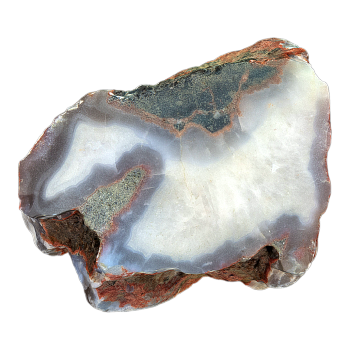
Gurasada agate
Gurasada agate is a beautiful mineral specimen from the Gurasada region of Romania. Agate is a ribbon-shaped chalcedony (a subspecies of quartz), the strips of which can be parallel or concentric. This agate is usually embedded in diabase, a fine to medium-grained intrusive igneous rock that is usually dark gray to black in color. This polished agate specimen measures 9 x 8.5 x 8cm and has a chemical composition of silicon dioxide (SiO₂).
Peruvian cubic pyrite
Peruvian pyrite is mainly produced in Peru's famous Huanzala mine. This pyrite is known for its brass-colored luster and distinctive striated surface. Pyrite derives its name from the Greek word pyr, which means fire, because it produces sparks when it collides with other minerals or metals. This pyrite is usually in the shape of a cube, with a highly glossy surface, giving a mirror-like visual effect. Not only are they of great value in mineralogical research, they are also favored by collectors and mineral lovers for their beautiful appearance.
calcite
Calcite (Calcite) is a common calcium carbonate mineral with a chemical formula of CaCO. It is widely found in sedimentary rocks, metamorphic rocks and igneous rocks. Calcite has unique optical properties such as birefringence and birefringence. Veins usually form when calcite is intergrown with ore minerals. In these veins, calcite may be the main component, but may also contain other valuable ore minerals, such as pyrite, sphalerite, barite, etc. These ore minerals are usually formed in low temperature hydrothermal veins.
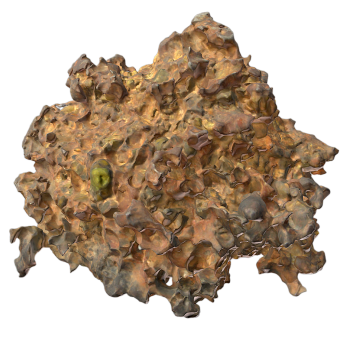
Cabin Creek Meteorite
The Cabin Creek meteorite is a well-known iron meteorite that landed in Arkansas, United States, in 1886. It belongs to Class IIIAB iron meteorites with a mass of about 48.5kg. The directional landing characteristics of this meteorite are very obvious, with different depths of air marks and flow lines on the surface, and it maintains a fixed flight orientation when passing through the atmosphere.
Basalt of the Canary Islands, Spain
Basalt is a volcanic magmatic rock with relatively low silicon content. The rock is usually dark black. This basalt has no visible crystals. Therefore, it is made of volcanic glass and microlith (crystals that cannot be distinguished by the naked eye).
fault breccia
Fault breccia is formed in the fault zone. They consist of angular rock fragments from rocks on either side of the fault. These angular detritus elements are usually surrounded by cements, usually calcite or siliceous, which are deposited in pores created by fragmentation caused by fault replay.
clinopyroxene
Pyroxene (pyroxene,augite) is a common single-chain silicate rock-forming mineral, which widely exists in igneous rocks and metamorphic rocks. The main framework is composed of silicon-oxygen molecular chains. The crystal structure is monoclinic or orthorhombic, and the main component is XY(Si,Al)2O6, where X represents calcium, sodium, magnesium and divalent iron, there are also some kinds of ions such as zinc, manganese and lithium. Y represents smaller ions such as chlorine, aluminum, trivalent iron, vanadium, scandium, etc.
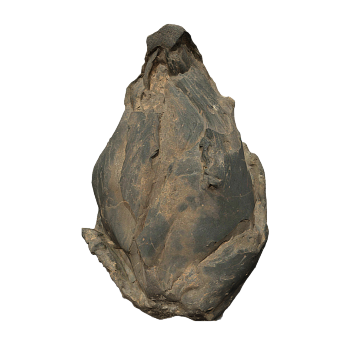
The volcanic bomb on Tenerife Island
The volcanic bomb from Tenerife is a type of igneous rock formed during volcanic eruptions. These volcanic bombs are formed by the cooling and solidification of molten magma in the air, usually with unique shapes and textures. During a volcanic eruption, molten magma ejected from the volcano is formed by flying and cooling in the air. These rock blocks undergo rapid cooling and solidification in the air before finally falling to the ground. Volcanic bombs come in various shapes and sizes, usually presenting streamlined, spindle shaped, or irregular shapes.
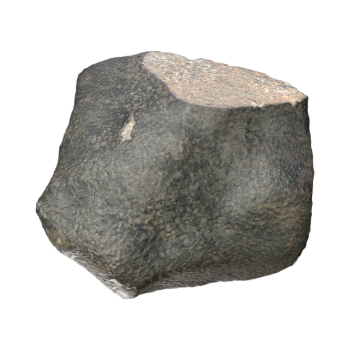
Stein meteorite
The Stein meteorite fell on May 22, 1808, in the Moravian village of Stonarov (known as Stein in German) in today's Czech Republic. This type of meteorite is classified as part of the HED meteorite family, possibly from asteroid 4 Vesta, and belongs to the gabbro achondrite subgroup.
Sphalerite
There are various colors of sphalerite, including white, gray, yellow (yellow patterned stone), blue, green, pink, and brown, while the stripes are white. The zinc in the composition is sometimes replaced by iron or manganese, and occasionally by small amounts of magnesium, calcium, cadmium, copper, cobalt, or lead. Similar to most carbonate minerals, it dissolves in hydrochloric acid and produces bubbles. In the calcite group, sphalerite belongs to a type with high hardness and specific gravity. In nature, zinc containing minerals are mostly sphalerite, and the production of sphalerite is relatively much lower. In addition to extracting zinc, it can also be used as semi transparent green or green blue gemstone jewelry.
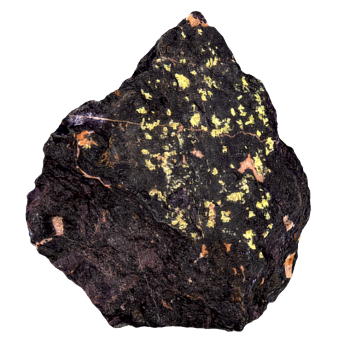
C ă limani sulfur
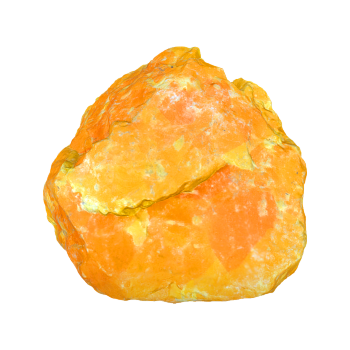
The large chunks of sulfur from the C ă limani open-pit mine in Romania are a mineral found in the C ă limani volcanic mountain range. This open-pit mine is located in Suceava County, Romania. It was once a large sulfur mine that began in 1969 and was closed from 1992 to 1995. The chemical formula of sulfur is S, and pure sulfur appears bright yellow. Pure sulfur is usually bright yellow, but its color may change due to impurities such as clay and selenium impurities, which can cause it to appear red, green, brown, or gray. The C ă limani open-pit mine is a volcanic sulfur deposit.
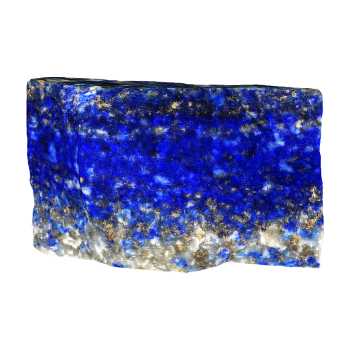
Celestite containing shiny pyrite
Lapis Lazuli with sparkling pyrite is a beautiful mineral combination mainly composed of lapis lazuli and pyrite. The chemical formula of lapis lazuli is (Na, Ca) ₈ (AlSiO ₄) ₆ (S, SO ₄, Cl) ₂, usually appearing dark blue, while pyrite is distributed in lapis lazuli with its golden yellow spots. lapis lazuli belongs to the equiaxed crystal system and usually exists in block form.
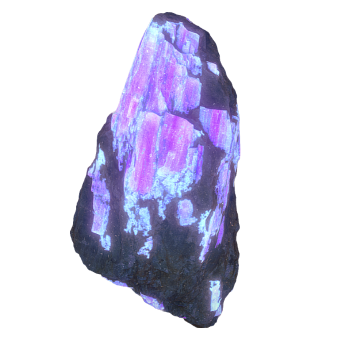
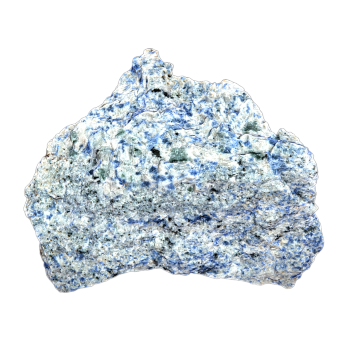
Blue crystal mineral under ultraviolet irradiation
Kyanite crystals on matrix are a common mineral combination commonly found in metamorphic rocks. Blue sapphire is an aluminosilicate mineral with unique blue or blue-green crystals, commonly used in gemstones and industrial applications. The chemical formula of kyanite is Al ₂ SiO ₅, with a color range from light blue to dark blue, sometimes appearing green or gray. The crystal is usually in the shape of long columns or blades, with obvious cleavage planes. Blue spar is usually formed in high-pressure and low-temperature metamorphic environments, commonly found in gneiss and schist.
Blue crystal
Kyanite crystals on matrix are a common mineral combination commonly found in metamorphic rocks. Blue sapphire is an aluminosilicate mineral with unique blue or blue-green crystals, commonly used in gemstones and industrial applications. The chemical formula of kyanite is Al ₂ SiO ₅, with a color range from light blue to dark blue, sometimes appearing green or gray. The crystal is usually in the shape of long columns or blades, with obvious cleavage planes. Blue spar is usually formed in high-pressure and low-temperature metamorphic environments, commonly found in gneiss and schist.
Krasnoyarsk meteorite
The Krasnojarsk meteorite is a famous type of stony iron meteorite, belonging to the Pallasite category. It was discovered in the Krasnoyarsk Krai of Russia in 1749. In 1749, local blacksmith Yakov Medvedev and mining foreman Yi Kai Metich discovered this meteorite about 145 miles south of Krasnoyarsk. In 1772, this meteorite was presented to scholar P.S. Pallas and was named after it.
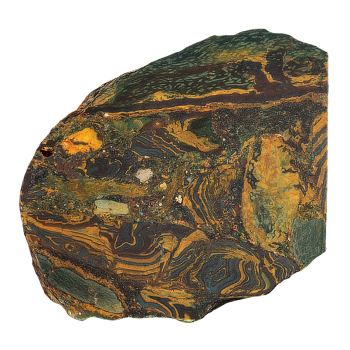
Techereu Jade
Jasper from Techereu is a mineral discovered in the Bal ș a area of Hunedoara County, Romania. Jade is an opaque rock that can appear in almost any color, depending on the mineral composition of the original sediment or volcanic ash. In the Techereu region, jadeite mainly exists in the conglomerates of the Cretaceous period, forming multicolored jadeite.
Syenite in alkaline rock masses
It is a type of magmatic rock that belongs to neutral deep-seated intrusive rocks. Light gray, with equigranular and spotted structures. Its silica content (about 60%) is comparable to diorite, but its alkaline content (sodium oxide, potassium oxide) is slightly higher than diorite. It is mainly composed of feldspar, amphibole, and biotite, with little or no quartz. Alkaline feldspar (usually orthoclase, plagioclase, and plagioclase) accounts for over 70% of feldspar. Often appearing as small rock masses, it forms a complex with basic and alkaline rocks.
Random Model
Striped Bass 3D Model Animation
122 View
Chess
137 View
3D model of Windsor Castle in the UK
327 View
Modern style wooden frame armchair
180 View
Hadley Castle, England
309 View
road version of super run
136 View
United States Navy aircraft carrier
247 View