
Popular Science Education
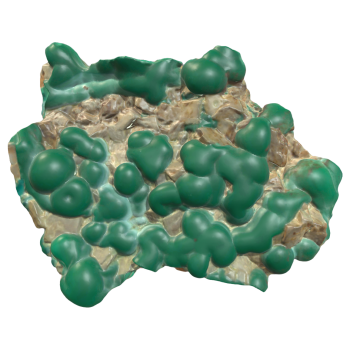
Cerussite
The composition of white lead ore is lead carbonate, which is sometimes partially replaced by silver or chromium. It belongs to the carbonate, aragonite group, and orthorhombic crystal system, and reacts with dilute acid to produce carbon dioxide bubbles, containing 77.6% Pb. The crystal is in the form of a plate-like or pseudo hexagonal bipyramidal shape, and it is common to run through twin crystals. Generally, it is a dense block like aggregate, bell like emulsion, or soil like structure. White or light yellow, brown, and other colors. Diamond luster. Hardness of 3-3.5, density of 6.4-6.6. Bubbling when encountering hydrochloric acid. It is a secondary mineral of galena that has been oxidized on the surface. Usually used together with galena to extract lead or prepare various lead compounds
Wurtzite
Wurtzite, also known as wurtzite, is a zinc and iron sulfide mineral with the chemical formula (Zn, Fe) S. It is a rare polymorphic form of sphalerite structure. The iron content changes by up to 8%. It is a homomorphic isomer of sphalerite. It appears in hydrothermal deposits associated with sphalerite, pyrite, chalcopyrite, barite, and pyrite, as well as in clay iron nodules at low temperatures.
White tailed sea eagle specimen
The White tailed Eagle, scientific name Haliaeetus albicilla, is a large raptor widely distributed in temperate Eurasia. They usually live near large open water bodies, such as coastal saltwater areas, inland freshwater lakes, wetlands, and rivers. The white tailed sea eagle is known for its strong hunting ability and opportunistic scavenging behavior, mainly preying on fish and waterbirds.
Weinsberg granite
Weinsberg granite is a type of granite named after the Weinsberg region in Germany. Usually appears gray or light pink with small black spots. Widely used in architecture and decoration, such as flooring, countertops, and monuments. It has a long history of use in architecture and sculpture, and is favored for its beauty and durability.
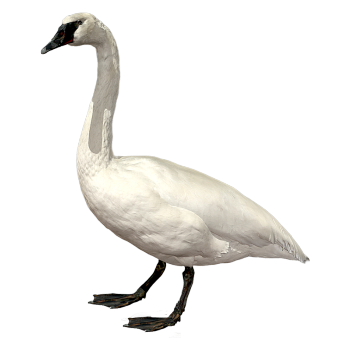
Black billed swan specimen
The black billed swan, also known as the trumpet swan, is the largest native waterfowl in North America and is named after its unique horn like call. The body length is usually between 138 and 165 centimeters, the wingspan can reach 185 to 304.8 centimeters, and the weight is between 7 and 13.6 kilograms. They are the heaviest flying birds in North America. Due to overfishing and habitat loss, the population sharply declined in the early 20th century. By implementing protective measures and reintroducing the project, the population has now recovered to some extent
Wolverine specimen
The thylacine, also known as the Tasmanian wolf, is an extinct carnivorous marsupial. They once lived on the Australian mainland, Tasmania, and New Guinea. Due to being considered a threat to farm livestock, the wombat was heavily hunted and killed in the late 19th and early 20th centuries. The last known wolverine passed away in Hobart Zoo, Tasmania in 1936.
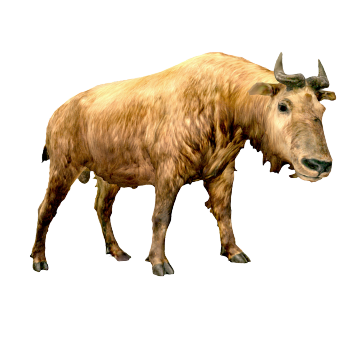
Takin specimen
Takins are also known as takins. This large ungulates are mainly distributed in the eastern the Himalayas, including Bhutan, China, India and Myanmar. It is a large ungulates belonging to the Bovidae family and Caprinae subfamily. They usually live in mountainous areas with an altitude of 2000 to 4500 meters and enjoy activities on the edges of forests and grasslands.
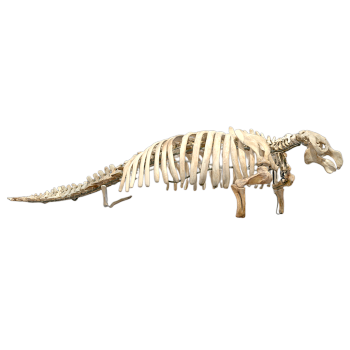
Stella manatee skeleton
The Steller manatee, also known as the giant dugong, is an extinct species of manatee, first described by German naturalist Georg Wilhelm Steller in 1741. This giant marine mammal once lived near the Command Islands in the Bering Sea, mainly distributed in the waters between Alaska and Russia. Due to its slow movement and fearlessness of humans, the Stella manatee was overhunted within 27 years of its discovery and eventually became extinct in 1768.
Stannern meteorite
Stannern meteorite is a type of achondrite belonging to the HED meteorite, originating from asteroid 4 Vesta. The meteorite fell around 6am on May 22, 1808, in the village of Stona ř ov in Moravia, Czech Republic today. These meteorites are mainly composed of silicate minerals such as pyroxene and plagioclase, similar to basalt on Earth. The total weight of the meteorite is about 52 kilograms, with the largest fragment weighing 6 kilograms. This is the largest fragment preserved in the Vienna Museum of Natural History.
Dinosaur skull fossil of Euphorbia
Halbersaurus, also known as Spiny Shield Ceratopsian, lived in the late Cretaceous period and is a type of herbivorous ceratopsian dinosaur. The neck shield halbersaurus had a large head and beautiful shield shaped circular decorations on its neck. Around the shield shaped ornament, there are six long horns of different sizes, which form the terrifying neck shield of the halberd dragon. This neck shield can not only scare the enemy. This neck shield usually looks spectacular and beautiful on strong and powerful males, but is not well-developed on females, so experts speculate that its main function is to showcase and attract the attention of the opposite sex. Because this neck shield looks very similar to a halberd in ancient Chinese weapons, it was named Jilong figuratively.
Southern giant terror bird skeleton
The southern giant terror bird (Dinornis robustus) is a species of terror bird, also known as the South Island giant terror bird. Like other terror birds, they cannot fly. The origin of these birds may be due to the early ancestors of terror birds being able to fly and reach the South Island of New Zealand. The southern giant terror bird is the largest among terror birds. Adult female birds can reach a shoulder height of up to 2 meters and a total height of 3.6 meters, making them the tallest known bird species. It lives in the lowlands of the South Island of New Zealand. It may have become extinct as early as the 13th century.
Snow leopard specimen
The snow leopard, also known as the grass leopard, lotus leaf leopard, or mugwort leopard, is a species of the feline leopard genus in the carnivorous order. The body size of snow leopards is slightly smaller than that of ordinary leopards, with a tail length of about 3/4 of the head length. Its relatively long and thick tail is a significant feature that distinguishes it from other similar species. Its head is small and round, its snout is short, and its limbs are relatively short. The whole body is covered with long and dense fluffy hair, mainly gray white in color; The back and ribs are scattered with fuzzy or irregular large black circular patches, presented in a sparse arrangement of five vertical rows, with small spots dotted inside the patches; Black circular spots arranged in rows can be seen below the head, neck, and limbs.
serpentine
Serpentine is a general term for a type of magnesium rich silicate mineral that contains water, such as serpentine, serpentine, and fibrous serpentine. Their color is usually green, but there are also shades of green, light gray, white, or yellow. Serpentine stones are named because they are often green and green in color, resembling snake skin. Serpentine rocks are often distributed at the top of larger ultrabasic rocks in a cap like or edge like manner, and sometimes in a vein like or irregular shape. Smaller rock masses often completely erode into serpentinite. The minerals related to serpentinite include chromium, nickel, cobalt, platinum, asbestos, talc, magnesite, etc. Serpentine rock is also a good fertilizer ingredient.
Green Bird's Nest Coral Specimen
Green Bird's Nest Coral is a group of hard corals belonging to the Pocilloporidae family. It usually forms a shrub like cluster structure and is mainly distributed in East Africa, the Red Sea, and the West Indo Pacific region. This type of coral has thicker branches and blunt ends. The coral holes are mostly arranged in rows and have a cover like structure similar to Stylophora. They usually grow on shallow reef slopes, especially on the back reef slopes, with a depth of up to about 25 meters.
Green Bird's Nest Coral Specimen
Green Bird's Nest Coral is a group of hard corals belonging to the Pocilloporidae family. It usually forms a shrub like cluster structure and is mainly distributed in East Africa, the Red Sea, and the West Indo Pacific region. This type of coral has thicker branches and blunt ends. The coral holes are mostly arranged in rows and have a cover like structure similar to Stylophora. They usually grow on shallow reef slopes, especially on the back reef slopes, with a depth of up to about 25 meters.
14 million year old scorpionfish fossils
Scorpion fish is one of the most venomous and inconspicuous fish species in the ocean. These ambushing predators are experts in integrating into the environment, sitting patiently at the top of coral reefs waiting for unsuspecting prey to swim over. The color of scorpionfish ranges from dull brown and yellow to bright red and orange, perfectly matching the surrounding coral and even exhibiting feather like fins or flaps to better camouflage with neighboring corals.
Red ochre
Ochre is a collection of oolitic, bean shaped, and kidney shaped aggregates, often in irregular flat blocks. Ochre is an oxide mineral belonging to the corundum group hematite, mainly containing iron oxide (Fe2O3). It is a collection of oolitic, bean shaped, and kidney shaped aggregates, often in irregular flat blocks. Dark brownish red or gray black, with cherry red or reddish brown stripes, some with metallic luster. There are many circular protrusions on one side, commonly known as "nail heads"; There are dimples of the same size on the other side corresponding to the protrusion. Weight, hard texture, and a layered cross-section after crushing. The air is faint and the taste is light.
Phosphate chloride lead ore
Phosphorus chloride lead is produced in the oxidation zone of lead deposits and is a product of the interaction between phosphoric acid and lead minerals in surface water. Phosphate chloride lead ore has good ornamental value due to its bright color and dense hexagonal columnar crystals. The quantity of this type of mineral is also small, making it precious.
Przewalski's Mustang specimen
The Przewalski's horse is a mammal belonging to the mammalian family Macroma in the order Neodactyla; Its body shape is similar to that of a domestic horse, with a large head and thick neck, short and round ears, no long frontal hair, short and upright mane, a black ridge line in the center of the back, short tail base hair, and black front of the lower limbs; Its summer fur is light brown on the back, light on the sides, and yellow white on the abdomen; its winter fur is long and thick, with a lighter color, appearing light yellow. The Przewalski's wild horse is also known as the Mongolian wild horse or the Junggar wild horse. Due to multiple reasons such as ruthless hunting by humans and the deterioration of the ecological environment in their habitats, Przewalski's horses became extinct in the wild in the mid-20th century.
Titan python fossil
The Titan Python belongs to the Python family. Titan pythons lack external and middle ears, resulting in delayed hearing; The olfactory organ grows on the tongue; Without eyelids, one cannot close their eyes; There are lungs. The fossils of the Titan Python can be traced back to the Guajira Peninsula in northeastern Colombia, South America, approximately 60 to 58 million years ago. The Titan Python dominated the Earth for at least 10 million years. Titan pythons are cold-blooded animals with a habit of sunbathing and hunting after their bodies become warm. According to researchers' analysis, the food of the Titan Python includes blunt nosed crocodiles weighing half a ton, lungfish up to three meters long, and some large turtles.
Black tungsten ore
The chemical composition is (Fe, Mn) WO4, which is an important tungsten ore and the main mineral raw material for extracting tungsten. Named after the presence of different proportions of iron tungstate and manganese tungstate, it is called tungsten iron ore when the iron content is high and tungsten manganese ore when the manganese content is high. Usually brown or black in color, with metallic or semi metallic luster, often found together with tin ore in granite and quartz mines. Hardness is 4-5.5, specific gravity is 7.1-7.5, brittle, and has weak magnetism. It is generally produced in high-temperature hydrothermal quartz veins and their surrounding rocks of quartzite. The regions of southern Jiangxi, eastern Hunan, and northern Guangdong in China are world-renowned areas for black tungsten mineral deposits.
Cauliflower coral specimen
This type of coral lives in tropical and subtropical regions of the Indian Ocean and Pacific Ocean. They usually form clustered groups up to 30 centimeters in height, with irregular wart like protrusions on the surface. Cauliflower coral comes in a variety of colors, including green, pink, yellow brown, or light brown. This type of coral is the main builder of reefs, growing rapidly and having strong competitiveness. Their tentacles extend at night to prey on plankton.
Panosaurus fossil
Banlong is an ancient dinosaur from the Triassic period, which lived between 222 million and 200 million years ago. It was the first giant dinosaur to appear on Earth. Before the appearance of the Banosaurus, the largest herbivore had a body size as big as a pig, while the Banosaurus was much larger, with a body the size of a bus. Banlong, meaning "flat reptile," is an ancient dinosaur that lived 210 million years ago during the Late Triassic period. It has a body length of 6-8 meters, a height of 3.6 meters, and a weight of about 5 tons. According to archaeological research, it was the first giant dinosaur that lived on Earth and ate plants.
Megalite rock
Weijing rock is a coarse-grained to coarse-grained vein like or blocky rock mass that is closely related to various deep-seated rocks in terms of genesis. It is generally flesh red, gray white, and has a coarse-grained or coarse-grained structure, ranging from acidic to alkaline veins. Often in the form of veins and produced in groups. The mineral crystals are very coarse, ranging from several centimeters to several meters, with banded structures.
Random Model
Japanese Salmon Sushi
191 View
Mercedes Benz G63 AMG (red)
478 View
Soviet MiG-23UB trainer
203 View
Saki Hound (with 3D animated model)
353 View
The Viking flagship warship set sail
365 View
F-22 Raptor fighter jet
438 View